A low-maintenance dog is not a no-maintenance dog. Every dog needs daily food, water, walks, attention, and company. What changes from breed to breed is how much of your time and money the routine eats: a short-coated dog that is happy with two short walks costs you minutes a day, while a long-coated, high-energy breed can cost you an hour of brushing and exercise plus regular grooming bills. This guide measures "low maintenance" the practical way — grooming minutes per week, exercise minutes per day, how long the dog copes alone, and what the upkeep typically costs — so you can pick a breed that fits your real life, not just your wish list.
If you share your home with a cat too, our companion guide to low-maintenance cat breeds uses the same honest scoring, so you can compare both species side by side.
How We Picked These 10 Breeds
Every breed below passes the same four tests. If a breed failed even one, it did not make the list — no matter how popular it is.
- Grooming under 15 minutes a week. A quick brush once or twice a week, a bath every month or two, and no professional clipping schedule.
- Exercise under 60 minutes a day. Most dogs here are content with 30–45 minutes of walking and play. None needs a daily run or a job to stay sane.
- Copes alone for a normal workday stretch. With a walk before and after work, these breeds settle quietly. (No dog should be left alone all day, every day — but these breeds handle a typical 4–6 hour stretch better than most.)
- Simple, predictable costs. Short coats mean fewer grooming bills, and smaller appetites mean smaller food bills.
We also list each breed's honest trade-off. A breed that is easy on grooming can still be stubborn to train, noisy, or fussy about weather. Low maintenance means less work overall, not a perfect dog.
The 10 Best Low-Maintenance Dog Breeds
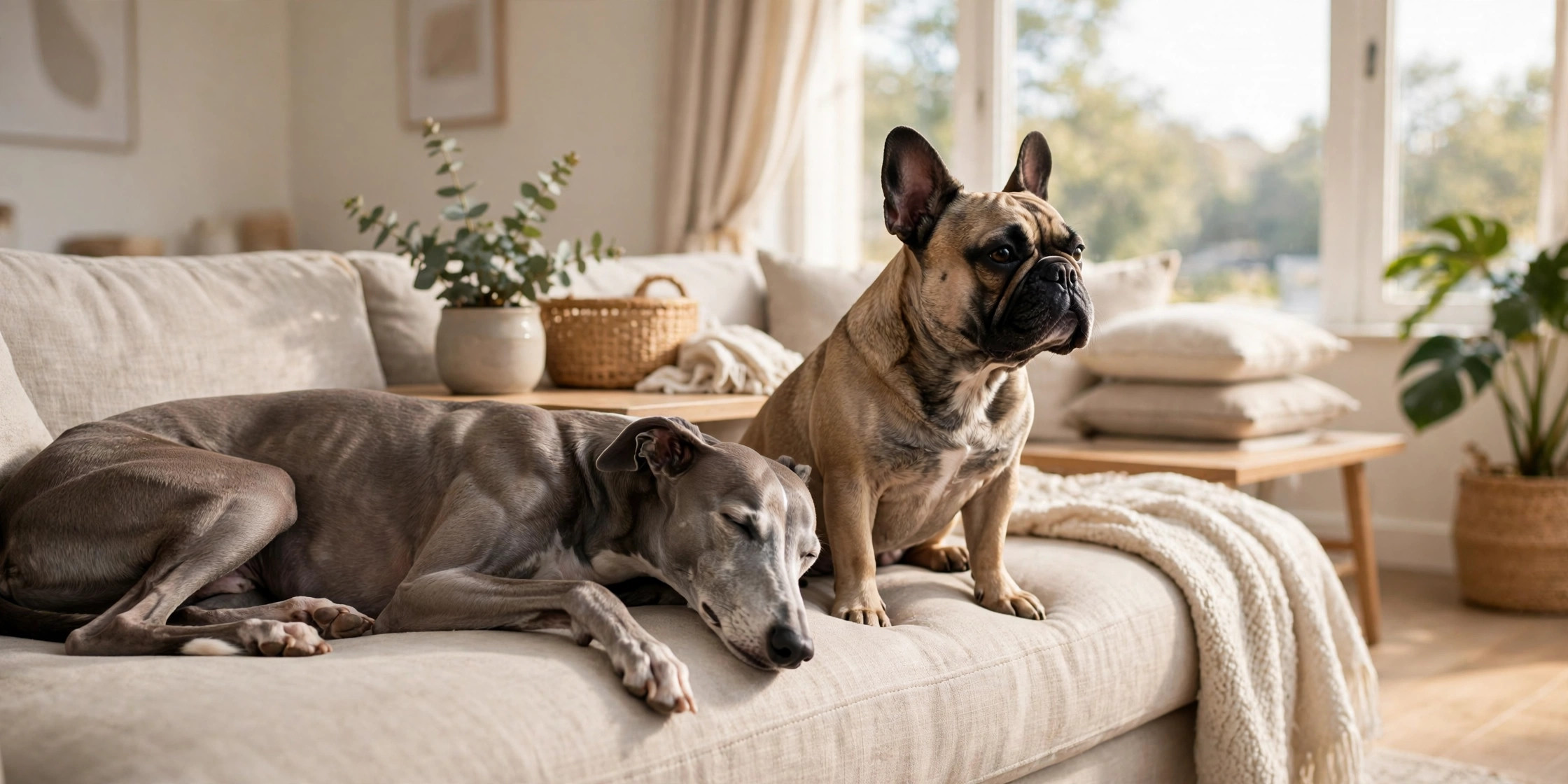
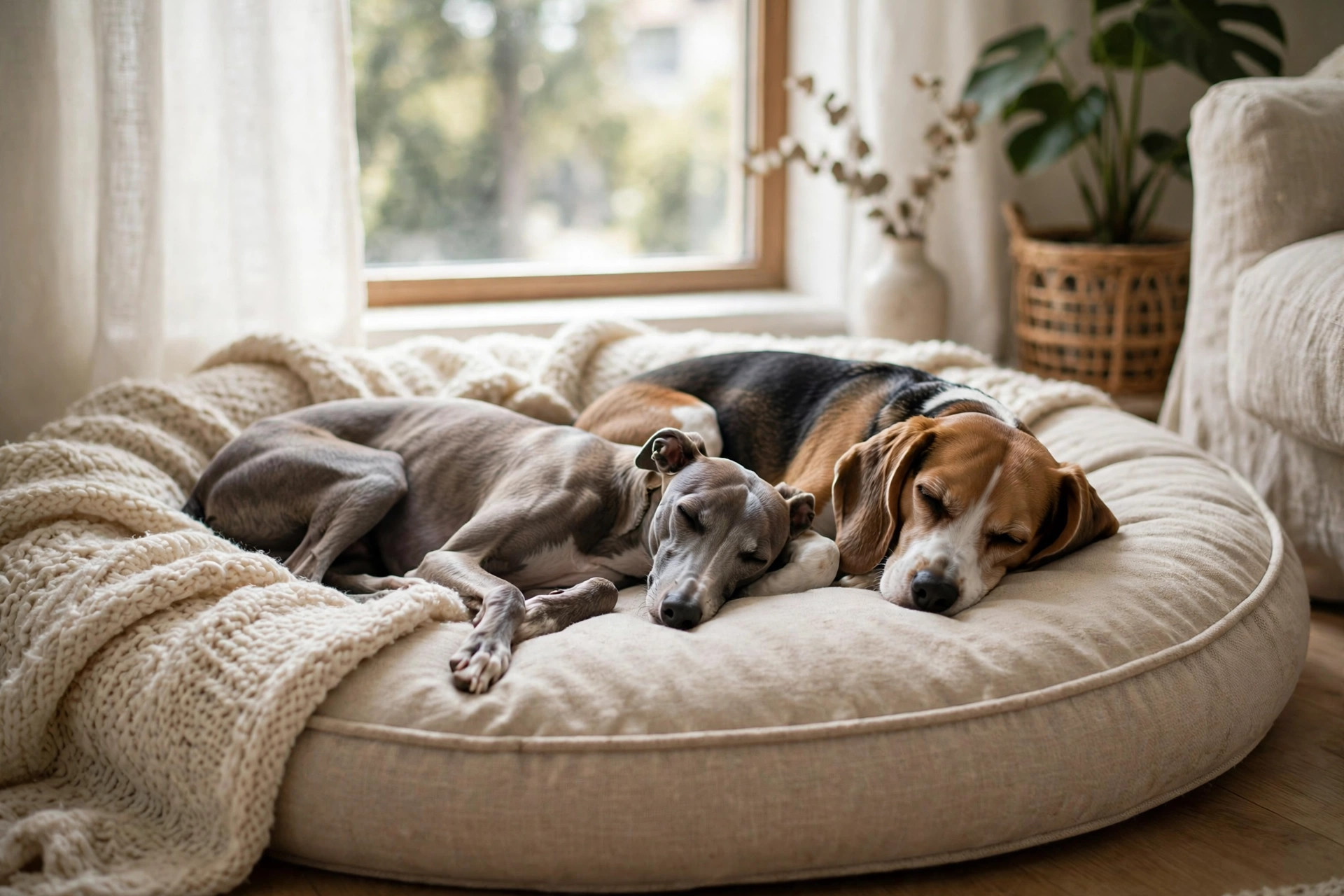
1. Greyhound
Size: Large (60–70 lb) · Grooming: 5 minutes a week · Exercise: 30–40 minutes a day · Alone time: 5–6 hours with a walk first
The surprise champion of this list. Retired racing greyhounds are famous couch potatoes: a short sprint or a brisk walk, then they sleep for hours. A weekly wipe-down is often enough grooming. Best for: calm homes and first-time owners who want a big dog without big-dog energy. Watch out for: they feel the cold, so a coat on winter walks helps, and they need a fence or a leash off-lead — a greyhound that spots a squirrel does not come back on voice alone.
2. Whippet
Size: Medium (25–40 lb) · Grooming: 5 minutes a week · Exercise: 30–45 minutes a day · Alone time: 4–5 hours with a routine
A greyhound in a smaller, softer package. Whippets are quiet indoors, clean almost to a fault, and happy with two short walks plus a chance to sprint somewhere safe a few times a week. Best for: apartment dwellers who want a medium dog that behaves like a small one indoors. Watch out for: thin coats mean they chill easily; a jumper in cold weather is normal whippet gear.
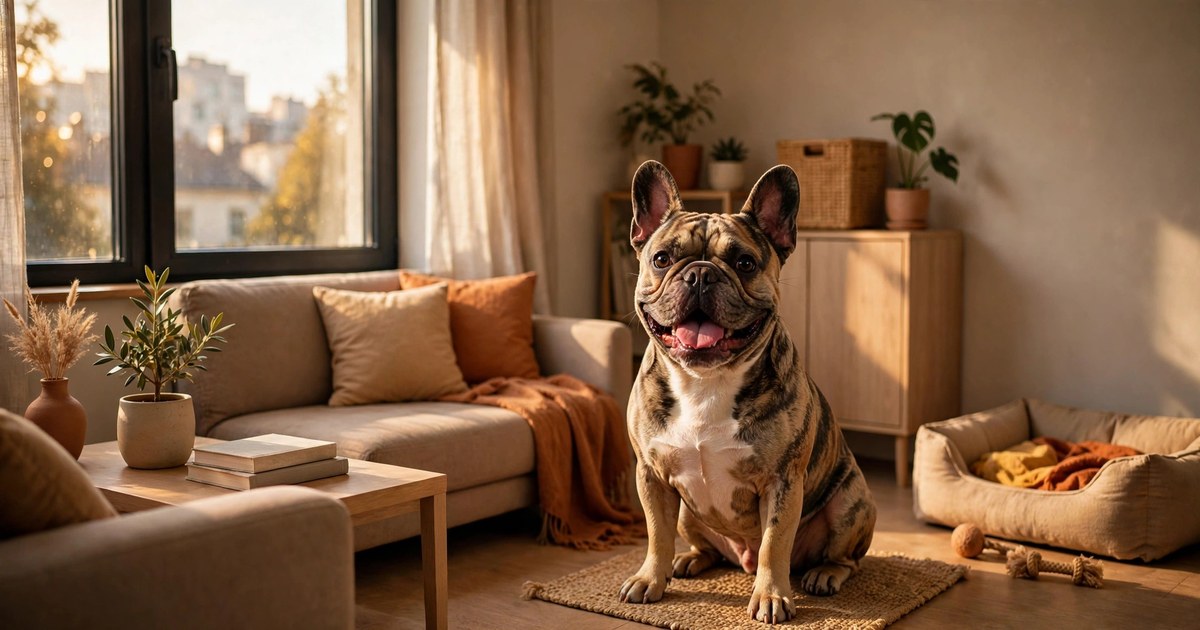
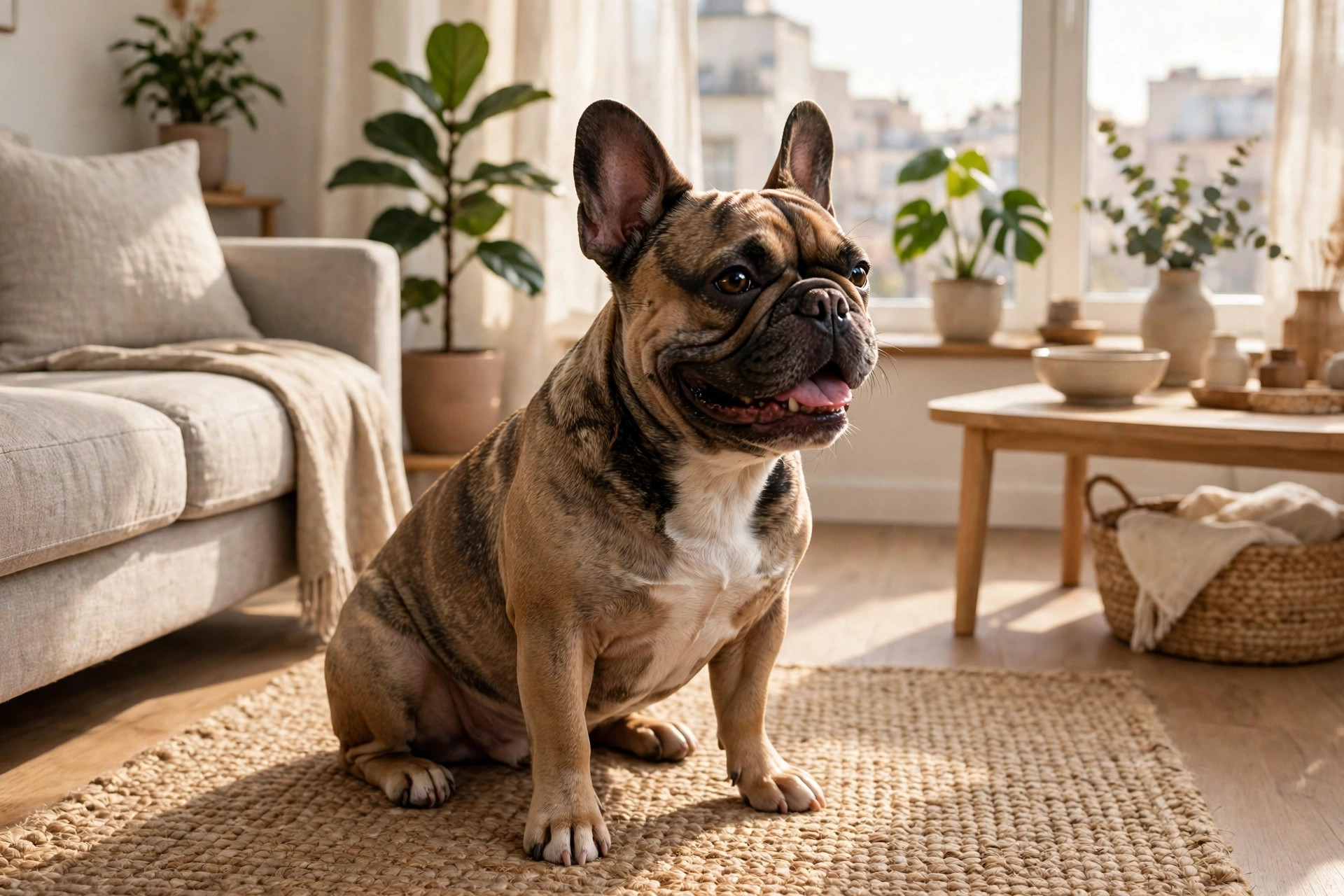
3. French Bulldog
Size: Small (under 28 lb) · Grooming: 5–10 minutes a week · Exercise: 20–30 minutes a day · Alone time: 3–4 hours
The most popular small dog in America for a reason: short coat, short walks, and a calm, clownish temperament that fits flats and busy households. A weekly brush and a wipe of the face folds is the whole grooming routine. Best for: city living, small homes, and owners who want a companion dog rather than a project. Watch out for: short-nosed breeds overheat faster than long-nosed ones, so walk them early or late in summer. They also snore and follow you from room to room — charming, but not a dog for someone who wants space.
4. Boston Terrier
Size: Small (12–25 lb) · Grooming: 5 minutes a week · Exercise: 30–45 minutes a day · Alone time: 4–5 hours with a routine
Nicknamed the American Gentleman, and the manners match: a smooth tuxedo coat that needs a weekly brush, a friendly nature, and energy that fits a normal day rather than a marathon. Bostons are quick learners, which keeps training sessions short. Best for: families and first-time owners who want a small, social dog. Watch out for: like Frenchies, they are short-nosed, so skip midday summer exercise.
5. Beagle
Size: Small to medium (20–30 lb) · Grooming: 10 minutes a week · Exercise: 45–60 minutes a day · Alone time: 3–4 hours, better with another dog or a long walk first
The beagle is the highest-energy dog on this list, and it still earns its place: the coat is wash-and-wear, the temperament is cheerful and sturdy, and the dog is famously hardy. A weekly brush and an occasional bath are enough. Best for: active families who walk daily and want a robust, funny dog. Watch out for: the nose rules the dog — a secure garden and a leash on walks are non-negotiable, and their baying can annoy neighbours in thin-walled flats.
6. Chihuahua (Smooth Coat)
Size: Toy (under 6 lb) · Grooming: 5 minutes a week · Exercise: 20–30 minutes a day · Alone time: 3–4 hours
Pick the smooth-coat variety and grooming is nearly zero: a weekly brush, tiny baths, tiny food bills. A couple of short walks and indoor play cover their exercise needs, which makes the breed a genuine option for small flats and owners with limited mobility. Best for: small homes and anyone who wants the smallest possible upkeep footprint. Watch out for: small does not mean simple. Chihuahuas bond hard to one person, can be wary of strangers and children, and need the same consistent training as a big dog.
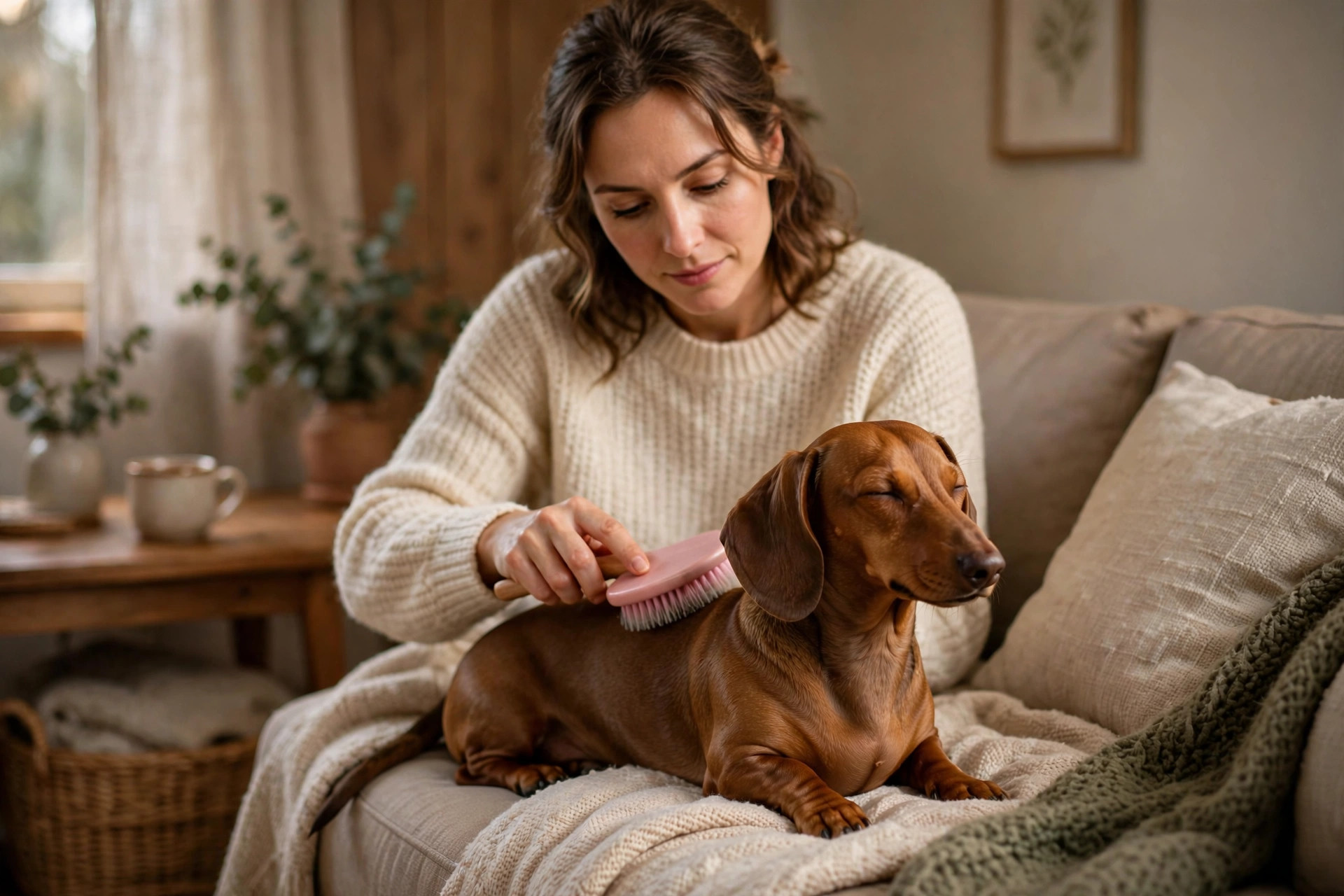
7. Dachshund (Smooth Coat)
Size: Small (16–32 lb) · Grooming: 5 minutes a week · Exercise: 30–45 minutes a day · Alone time: 4–5 hours with a routine
The smooth-coated dachshund is the wash-and-wear version of the breed: a weekly brush and you are done. They are playful, stubborn in a charming way, and content with moderate walks and plenty of sniffing time. Best for: owners who want a small dog with a big personality and no grooming schedule. Watch out for: that long back needs respect — use ramps or steps for the sofa and bed and skip games that involve jumping down from heights.
8. Basset Hound
Size: Medium (40–65 lb) · Grooming: 10 minutes a week · Exercise: 30–45 minutes a day · Alone time: 5–6 hours
Nothing hurries a basset hound, and that is the point. Short coat, slow pace, long naps, and a temperament that takes life as it comes. They are among the most independent dogs on this list, happy to doze while you work. Best for: laid-back households and owners who work from home and want quiet company. Watch out for: those long ears need a weekly wipe, and bassets drool and shed more than the other breeds here. They are also food-driven to a fault — keep bins shut and treats counted.
9. Pug
Size: Small (14–18 lb) · Grooming: 10 minutes a week · Exercise: 20–30 minutes a day · Alone time: 3–4 hours
A pug's job is to be a professional lap dog, and it takes the job seriously. Short coat, short walks, endless affection, and a personality that makes even a dull evening feel like a party. Grooming is a weekly brush plus a quick wipe of the face folds. Best for: owners who want constant companionship and a dog that thrives on attention. Watch out for: like other short-nosed breeds, pugs struggle in heat — walk early, walk late, and never in midday summer sun. They also shed more than their short coat suggests.
10. Italian Greyhound
Size: Toy (7–14 lb) · Grooming: 5 minutes a week · Exercise: 30 minutes a day · Alone time: 3–4 hours
Nearly zero grooming, minimal shedding, and a calm, clean nature — the Italian greyhound is the lowest-maintenance coat on this list. They are gentle, quiet, and happy with short walks and a warm lap. Best for: warm homes, gentle owners, and anyone who wants a tiny dog with almost no shedding. Watch out for: they are delicate — fine bones break more easily than a sturdier breed's, so rough play needs supervision, and they feel the cold badly.
Low-Maintenance Dog Breeds at a Glance
| Breed | Size | Grooming / week | Exercise / day | Alone time | Best for |
|---|---|---|---|---|---|
| Greyhound | Large | 5 min | 30–40 min | 5–6 hrs | Calm big-dog lovers |
| Whippet | Medium | 5 min | 30–45 min | 4–5 hrs | Apartments |
| French Bulldog | Small | 5–10 min | 20–30 min | 3–4 hrs | City living |
| Boston Terrier | Small | 5 min | 30–45 min | 4–5 hrs | First-time owners |
| Beagle | Small–med | 10 min | 45–60 min | 3–4 hrs | Active families |
| Chihuahua (smooth) | Toy | 5 min | 20–30 min | 3–4 hrs | Small homes |
| Dachshund (smooth) | Small | 5 min | 30–45 min | 4–5 hrs | Big personality, small dog |
| Basset Hound | Medium | 10 min | 30–45 min | 5–6 hrs | Laid-back homes |
| Pug | Small | 10 min | 20–30 min | 3–4 hrs | Constant companionship |
| Italian Greyhound | Toy | 5 min | 30 min | 3–4 hrs | Warm, gentle homes |
Match a Breed to Your Schedule
The right breed is the one that fits the hours you actually have, not the hours you wish you had. Match yourself honestly:
- Out all day, home evenings: Greyhound, Basset Hound, or Whippet. They sleep while you are gone and are ready for one good walk when you get back. Add a dog walker on long days — our guide to dog walker costs shows what a midday visit typically runs.
- Small flat, no garden: French Bulldog, Chihuahua, or Italian Greyhound. Small dogs, small exercise needs, and no garden required. Our apartment dog breeds guide covers the space question in more depth.
- First dog ever: Boston Terrier, Greyhound, or Beagle (if you walk daily). All three forgive beginner mistakes. Our first-time owner breeds guide compares them with nine other beginner-friendly breeds.
- Want the lowest grooming bill: Whippet, Greyhound, or Italian Greyhound. Five minutes a week at home, and many owners never need a professional groomer at all.
The 10-Minute Daily Routine
Even the easiest dog needs a daily rhythm. This one takes about ten minutes of your time, plus the walks:
- Morning (2 minutes): fresh water, breakfast, and a quick look at eyes, ears, and paws while the dog eats.
- Walk one (15–30 minutes): the main walk of the day. Let the dog sniff — sniffing tires a dog out more than marching does.
- Midday: a toilet break and a few minutes of play or a puzzle feeder if you are home.
- Walk two (15–20 minutes): a shorter evening walk, then dinner.
- Evening (5 minutes): a quick brush once or twice a week, a wipe of ears or face folds where needed, and a calm settle-down routine.
What Low Maintenance Really Saves You
Time is the obvious saving, but money follows it. A short-coated breed typically needs a professional groom every 8–12 weeks at roughly $30–$50 a session, where a long-coated breed often needs one every 4–6 weeks at $60–$100 or more — so the yearly grooming bill can differ by several hundred dollars. Food follows size: a toy breed typically eats $20–$40 of food a month, a medium breed $40–$60, and a large breed $50–$80. For the full picture, our monthly dog cost breakdown puts every line item into one budget.
5 Mistakes That Turn an Easy Dog Into a Hard One
- Skipping training because the dog is small. A chihuahua that is never trained is still a dog with opinions — just a louder, snappier one. Train every breed the same way.
- Choosing on looks alone. A French bulldog is adorable and also heat-sensitive; a beagle is cute and also loud. Read the "watch out for" line before the photo.
- Buying the long-coated version by accident. Long-haired chihuahuas, long-haired dachshunds, and unclipped Shih Tzus are not low-maintenance. Check the coat variety before you commit.
- Leaving any dog alone all day, every day. "Copes alone" means a normal workday stretch with walks at both ends — not ten hours alone with nothing to do.
- Skipping the weekly brush. Five minutes a week prevents the matting, shedding, and skin grime that turn into a groomer visit and a bill.
FAQs
What is the lowest-maintenance dog breed overall?
The greyhound and the whippet are the strongest all-round answers: almost no grooming, 30–40 minutes of exercise a day, and a calm indoor temperament. For a small dog, the smooth-coat chihuahua and the Italian greyhound need the least daily work of all.
Are low-maintenance dogs good for first-time owners?
Yes — most of them. Boston terriers, greyhounds, and beagles (for owners who walk daily) are forgiving of beginner mistakes. But "low maintenance" does not mean "no training": every breed still needs consistent house training and basic manners from day one.
Do low-maintenance dogs still shed?
Yes. Short coats shed too — pugs and beagles shed more than many owners expect. What you save is brushing and grooming time, not vacuuming time. A weekly brush keeps loose hair under control.
Can low-maintenance breeds live in apartments?
Most of them can, and several are ideal for it: French bulldogs, chihuahuas, Italian greyhounds, and whippets all do well in flats. Beagles and basset hounds need more thought — beagles bay, and bassets are large and food-driven — so check your building's noise rules first.
How much does a low-maintenance dog cost per month?
Food follows size: roughly $20–$40 a month for toy breeds, $40–$60 for medium breeds, and $50–$80 for large breeds. Grooming adds little for short-coated breeds — often $30–$50 every two to three months, or nothing at all if you brush at home. See our monthly dog cost guide for the full budget.
Is a low-maintenance breed the same as a hypoallergenic breed?
No. Low maintenance is about grooming and exercise time; hypoallergenic is about how much dander a breed produces, and no breed is truly allergy-free. Allergies depend on the person, not the breed label — spend time with the breed before deciding.
Conclusion
The best low-maintenance dog is the one whose needs match the time you honestly have. A greyhound or whippet suits a calm home, a French bulldog or Boston terrier suits city life, a beagle suits an active family, and a smooth-coat chihuahua suits the smallest of spaces. Pick by schedule first and looks second, keep the 10-minute daily routine, and the "easy" dog stays easy for years.
Still torn between two breeds? Take our dog breed quiz — it matches your home, schedule, and experience level to the right breed in two minutes. And once you know your dog's age in human years, our dog age calculator shows exactly where they are in life.
Further reading: the ASPCA dog care guide covers everyday care basics, the AKC breed directory has full profiles for every breed above, and the AKC grooming guide explains brushing and bathing schedules in detail.