Work long hours, travel for the weekend, or just want a cat that fits a busy life instead of running it? The right breed makes all the difference. Some cats demand an hour of brushing, play and attention every single day. Others are perfectly happy with a clean litter box, a full bowl and ten quiet minutes with you in the evening.
This guide covers the 10 cat breeds that genuinely ask the least of a busy owner — with honest numbers: how many minutes of grooming each breed needs per week, how well it handles a normal workday alone, and where each breed is not actually low maintenance.
What "Low Maintenance" Actually Means
The phrase gets thrown around a lot, so here is the test every breed on this list passes. A genuinely low-maintenance cat scores well on all three of these — not just one:
- An easy coat. A short, dense coat that needs a brush once a week at most, with no daily detangling and no mats forming within days.
- Comfort alone. A cat that naps through a normal 8–9 hour workday without distress, destructive behaviour or loud complaining when you get home.
- A sturdy constitution. A breed with no heavy grooming ritual and no care routine that eats your evenings — just normal feeding, a clean litter box and routine vet visits.
One honest floor applies to every breed below: even the easiest cat needs about 10–15 minutes of your day — scoop the tray, refresh the water, and one short play session. If that sounds like too much, a cat is not the right pet yet.
Quick Comparison: 10 Breeds at a Glance
Use this table to shortlist, then read the breed notes below for the honest caveats — two breeds on this list are low-grooming but not low-attention, and that distinction matters more than the coat.
| Breed | Grooming | Alone time | Energy | Shedding |
|---|---|---|---|---|
| British Shorthair | ~5 min/week | Excellent | Low | Moderate |
| Russian Blue | ~5 min/week | Excellent | Low–moderate | Light |
| American Shorthair | ~5 min/week | Very good | Moderate | Moderate |
| Chartreux | ~10 min/week | Excellent | Low | Moderate |
| Bombay | ~5 min/week | Good | Moderate | Light |
| Exotic Shorthair | ~10 min/week | Very good | Low | Moderate |
| Scottish Fold | ~5 min/week | Very good | Low–moderate | Moderate |
| Ragdoll | ~15 min/week | Fair | Low–moderate | Moderate |
| Birman | ~15 min/week | Good | Low–moderate | Moderate |
| Cornish Rex | ~5 min/week | Good | High | Very light |
The 10 Best Low-Maintenance Cat Breeds
1. British Shorthair
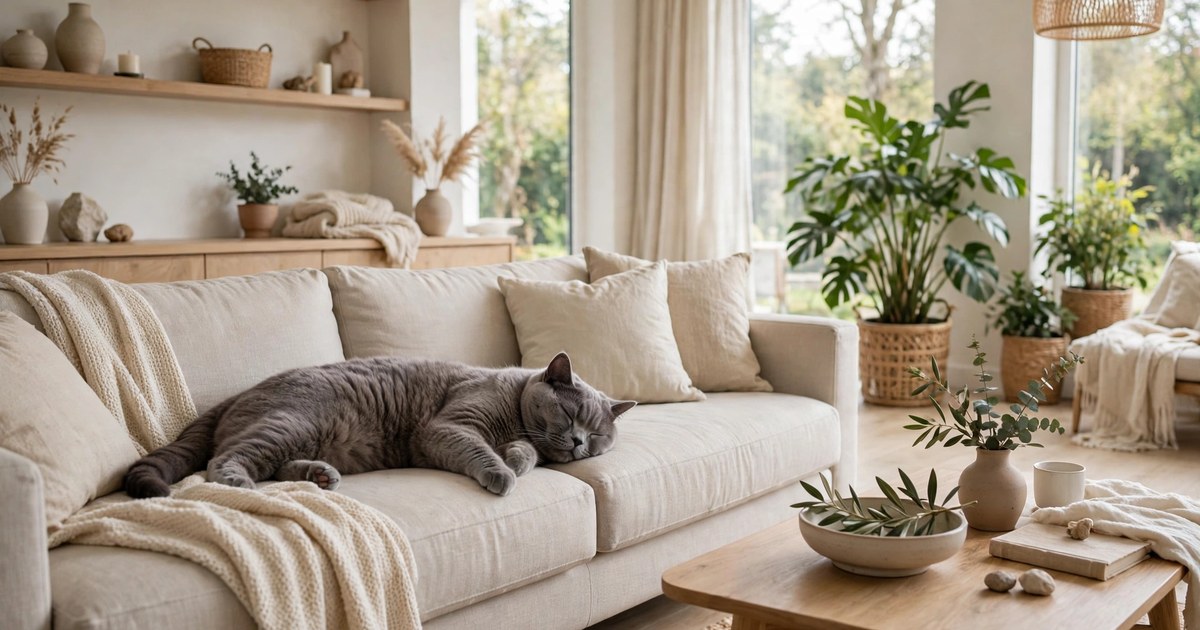
The gold standard of easy cats. British Shorthairs are calm, dignified and genuinely undemanding: happy to lounge nearby while you work, without following you from room to room demanding attention. The dense plush coat needs a quick brush once a week — about five minutes — and they tolerate a normal workday alone better than almost any breed. Best for: busy professionals and quiet households. Watch out for: they are not lap cats. If you want a cat that sleeps on you, this is the wrong breed.
2. Russian Blue
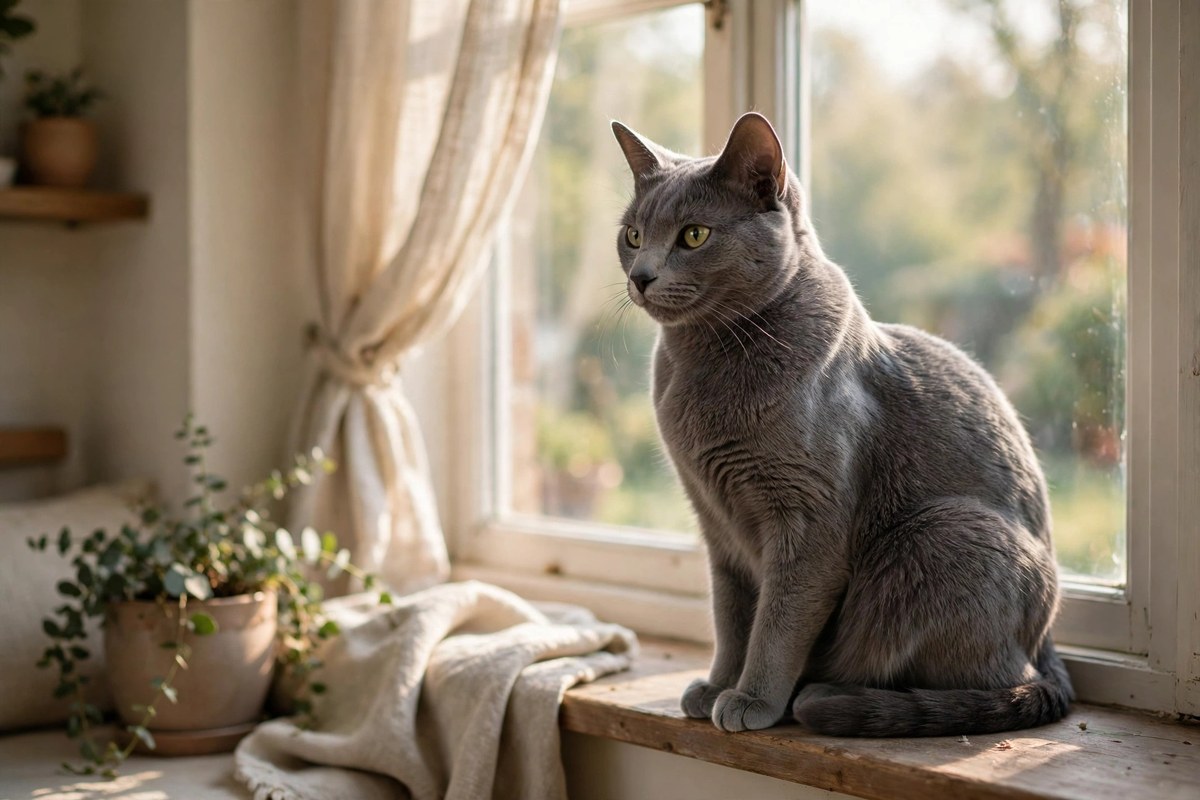
The introvert of the cat world. Russian Blues bond deeply with their person but are perfectly content entertaining themselves while you are out, and they are famously quiet about it. The short double coat sheds lightly and needs a weekly brush. They can be shy around guests — in a busy household, a feature, not a problem. Best for: peaceful homes and first-time owners. Watch out for: they like routine. Big schedule changes unsettle them more than most breeds.
3. American Shorthair
Sturdy, cheerful and adaptable — one of the hardiest breeds you can own. American Shorthairs are friendly without being needy, adjust well to variable schedules, and their short coat needs only a weekly brush. They are a touch more playful than the British Shorthair, so a short evening play session keeps them happy. Best for: families and anyone whose hours are not the same every day. Watch out for: they love food. Measure meals and count the treats, or the waistline creeps up.
4. Chartreux
France's quiet blue cat barely uses its voice and never wastes energy. The Chartreux is undemanding to the point of being easy to forget — in a good way. Its woolly coat wants a comb-through once a week, a little more during the spring moult. Best for: calm homes that want a loyal cat without the noise. Watch out for: the woolly coat can mat if you skip brushing for weeks, so the weekly comb is not optional.
5. Bombay
The Bombay's patent-leather black coat is as close to zero-grooming as cats get: a weekly wipe with a soft cloth keeps the shine. The honest caveat — "low maintenance" describes the coat, not the company. Bombays are heat-seeking people-lovers that want to be near you in the evening. Best for: owners who are out all day but home and present in the evening. Watch out for: if your evenings are also out, pick a more independent breed from this list.
6. Exotic Shorthair
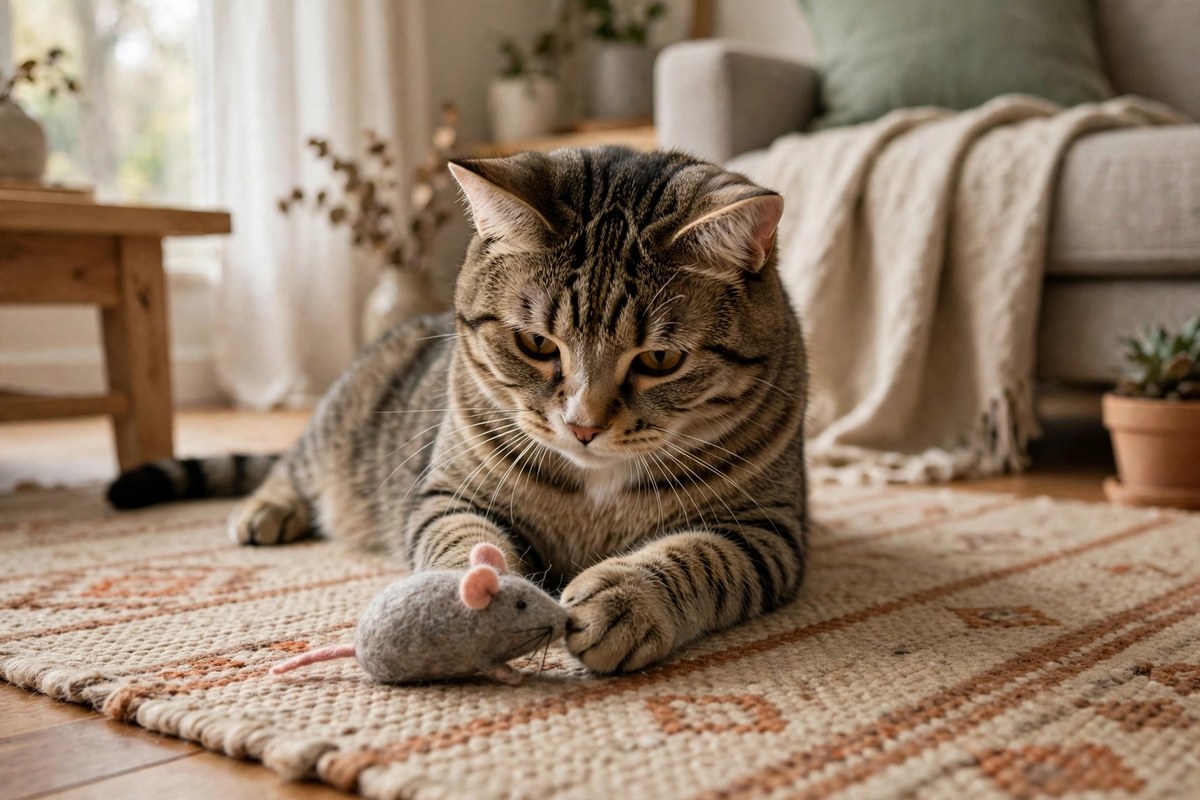
All of the Persian's calm, sweet personality in a short coat. Exotic Shorthairs are quiet, affectionate lap cats that need brushing about twice a week — far less than a Persian's daily session. They are happy to nap the day away and greet you softly in the evening. Best for: owners who want a cuddly cat without a daily grooming ritual. Watch out for: the flat face means watery eyes for some cats, so a quick wipe of the eye area becomes part of the routine.
7. Scottish Fold
Gentle, quiet and famously easy to live with. Scottish Folds adapt well to apartments, play in short bursts and settle happily on their own. The short coat needs a weekly brush and little else. Know before you choose: the folded-ear gene can affect cartilage, so only consider a Fold from a breeder who health-checks the parents, and ask your vet what to watch for — such as reluctance to jump or stiff movement. Best for: quiet apartments and first-time owners who do their homework.
8. Ragdoll
Ragdolls have a silky semi-long coat with almost no undercoat, so despite the length it rarely mats — a ten-minute comb once or twice a week is enough. They are famously relaxed and flop happily into your arms. The honest caveat: Ragdolls are people cats. They cope with a workday, but they do not thrive on very long or frequent absences. Best for: owners who work normal hours and want a genuinely affectionate cat. Watch out for: not the pick for 12-hour days or frequent overnight trips.
9. Birman
The Birman carries a silky medium-long coat with a very light undercoat, so shed hairs do not get trapped against the skin and tight knots rarely form. A ten-minute session once or twice a week with a steel comb keeps the coat glossy. Birmans are calm, gentle and quietly social — present without being demanding. Best for: owners who like a longer-haired look without the daily brushing bill. Watch out for: the white-gloved paws show dirt, so indoor living suits them best.
10. Cornish Rex
The lowest-shedding cat on this list. The Cornish Rex's curly coat barely sheds at all and needs little more than an occasional gentle wipe. The trade-off is energy: this is an athletic, curious cat that needs real play every day — about 20 minutes — rather than grooming time. Best for: active owners who want personality without fur on everything. Watch out for: the thin coat means they feel the cold, so a warm sleeping spot is essential.
Match the Breed to Your Schedule
Pick by the time you actually have, not the cat you like the look of:
- Under 10 minutes a day? British Shorthair, Russian Blue or Chartreux. All three treat your absence as nap time.
- 20–30 minutes a day? American Shorthair, Bombay, Ragdoll or Birman. They repay play time with real personality.
- Want almost no shedding? Cornish Rex first, Russian Blue second. No cat is truly non-shedding — anyone promising that is selling something.
- First cat ever? British Shorthair, Russian Blue and American Shorthair are the most forgiving starters. Our guide to the best cat breeds for first-time owners covers the full beginner shortlist.
Breeds to skip if low maintenance is the goal: Persians — daily brushing is non-negotiable or mats appear within days. Siamese — vocal, attention-hungry and anxious alone. Maine Coons — wonderful cats, but food, litter and space costs all scale with size.
The 10-Minute Daily Routine for Busy Owners
Here is the whole job, morning and evening, for any breed on this list:
- Morning (3 minutes): scoop the litter box, refresh the water bowl, top up food.
- Evening (5–7 minutes): one short play session — a wand toy or a tossed mouse — then a calm cuddle or a brush on brush days.
- Weekly (10–15 minutes): full brush-out, wash the food and water bowls, change the litter completely, rotate the toys so the old ones feel new.
- Monthly (5 minutes): check the scratching post, the carrier and the litter-box count. The standing rule is one box per cat, plus one extra — it prevents most litter-box problems before they start.
That is it. If a breed needs more than this, it does not belong on a low-maintenance list — and the ASPCA's cat care guide is a good second opinion on the basics if you ever want one.
5 Mistakes That Turn a Low-Maintenance Cat Into a High-Maintenance One
- Confusing low maintenance with no maintenance. Even a British Shorthair needs its 10–15 minutes a day. Skip the litter box for a week and any cat becomes a problem cat.
- Picking by looks. Choosing a Persian because it is beautiful, then discovering the daily brushing, is the most common regret in this category.
- Skipping play entirely. Independent does not mean self-entertaining forever. A bored cat invents its own fun — usually your sofa or your curtains.
- Ignoring the alone-time limit. A normal workday is fine. Routine 12-hour absences are not, for any breed on this list. At that point the honest answer is a bonded pair, a sitter, or a different pet.
- Treating routine care as optional. "Low maintenance" is about your daily time, not about skipping checkups. The Cornell Feline Health Center is a reliable place to check what routine care actually involves.
Frequently Asked Questions
What is the lowest maintenance cat breed?
The British Shorthair: the calmest temperament, the most independent streak, and a coat that needs about five minutes of brushing a week. The Russian Blue is a close second for quieter homes.
Can low-maintenance cats be left alone while I work?
Yes, for a normal 8–9 hour workday — that is exactly what these breeds were picked for. Leave fresh water, a clean litter box and a couple of toys, and they will mostly sleep. Routine absences of 12 hours or more are a different story for any cat.
Do low-maintenance cats still need grooming?
Yes — less grooming, not zero grooming. Even the easiest short-coated breeds need a weekly brush to remove loose hair. The only difference is five minutes instead of thirty.
Are low-maintenance breeds good for first-time owners?
Most of them, yes. British Shorthairs, Russian Blues and American Shorthairs are forgiving of beginner mistakes, which is why they also top our first-time-owner list. The exceptions are the breeds with a caveat in this guide — the Scottish Fold needs a careful breeder choice, and the Cornish Rex needs daily play.
Which low-maintenance breed sheds the least?
The Cornish Rex sheds the least by a clear margin, thanks to its thin curly coat, followed by the Russian Blue. No breed is truly non-shedding, and seasonal shedding still happens — it is just far lighter.
Do low-maintenance cats need less vet care?
No. "Low maintenance" describes your daily time — grooming, attention and alone-time tolerance — not medical care. Every cat needs the same routine checkups, and the Cat Fanciers' Association breed pages are a good place to check the typical care profile of any breed before you commit.
The Bottom Line
For most busy owners, the safest answer is the British Shorthair: calm, independent, five minutes of brushing a week, and happy with your workday routine. If you want something quieter and a little more bonded, take the Russian Blue. If you have 20–30 minutes a day and want more personality, the American Shorthair or the Bombay will repay you. Whatever you pick, budget the honest 10–15 minutes a day — and if you are still torn, take our cat breed quiz to match a breed to your home and schedule, or check how old your cat is in human years once they are home.