Dog hair on the sofa, on your clothes, in the car, drifting across the floor like tumbleweed — if that picture sounds familiar, you are not alone. Shedding is one of the top reasons people hesitate before getting a dog, and it is also one of the most misunderstood topics in dog ownership. The good news: some breeds genuinely shed far less than others. The honest news: no dog sheds literally nothing, and the breeds that shed the least usually ask for something else in return — regular grooming.
This guide covers 12 dog breeds that don't shed (much), with real sizes, coat types, grooming needs, and the trade-offs nobody mentions in the listicles. Use it to find a breed that fits your home, your schedule, and your tolerance for lint rollers.
The Honest Truth First: "No-Shed" Does Not Mean "No Hair"
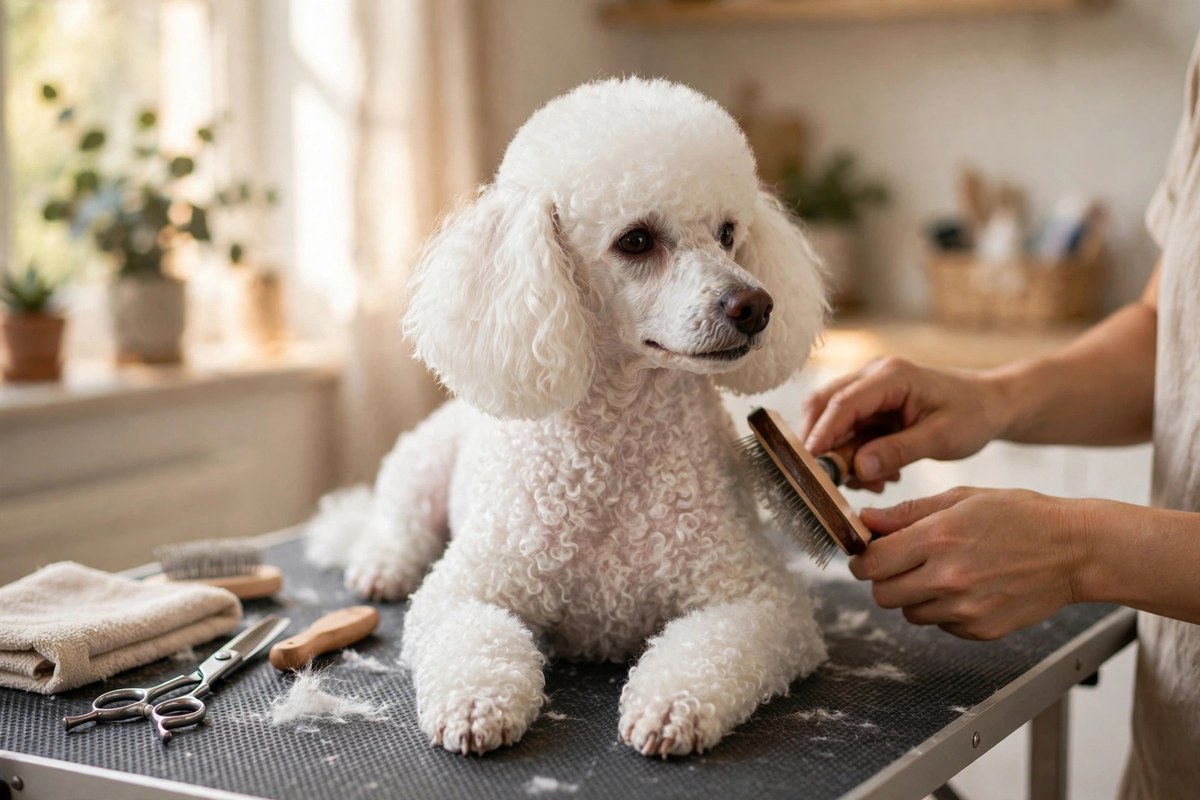
Every dog loses some hair. What makes a breed "low-shedding" is usually one of three things: hair instead of fur (it grows continuously and falls out less), a coat that traps loose hairs instead of dropping them, or very little coat at all. A poodle's curly coat, for example, catches shed hairs inside the curls — which is why your floor stays cleaner but your brush fills up fast.
Two things worth knowing before you fall in love with a breed on this list:
- Low shedding does not mean low maintenance. Trapped hair mats. Matted hair hurts. Most low-shedding breeds need brushing several times a week and a professional clip every 6 to 8 weeks.
- Low shedding does not mean allergy-proof. No dog breed is 100% hypoallergenic. Allergies are usually triggered by dander and saliva, not just hair, so spend time with a breed before committing if allergies are your main concern.
With that out of the way, here are the 12 breeds that keep the fur situation most manageable — and what living with each one is really like.
12 Dog Breeds That Don't Shed (Much): At a Glance
| Breed | Size | Coat | Brushing | Shed level |
|---|---|---|---|---|
| Poodle | 10–70 lb | Curly, dense | 2–3x per week | Very low |
| Bichon Frise | 12–18 lb | Soft, double | Daily | Very low |
| Maltese | 4–7 lb | Long, silky | Daily | Very low |
| Shih Tzu | 9–16 lb | Long, double | Daily | Low |
| Yorkshire Terrier | About 7 lb | Silky, single | Daily | Very low |
| Miniature Schnauzer | 11–20 lb | Wiry, double | 2–3x per week | Very low |
| Portuguese Water Dog | 35–60 lb | Curly or wavy | 2–3x per week | Low |
| Havanese | 7–13 lb | Silky, double | Several times a week | Low |
| Basenji | 22–24 lb | Short, fine | Weekly | Very low |
| Chinese Crested | 8–12 lb | Hairless or powderpuff | Weekly | Minimal |
| Afghan Hound | 50–60 lb | Long, silky | Several times a week | Low |
| Xoloitzcuintli | 10–50 lb | Hairless or short | Weekly | Minimal |
1. Poodle (Toy, Miniature, and Standard)
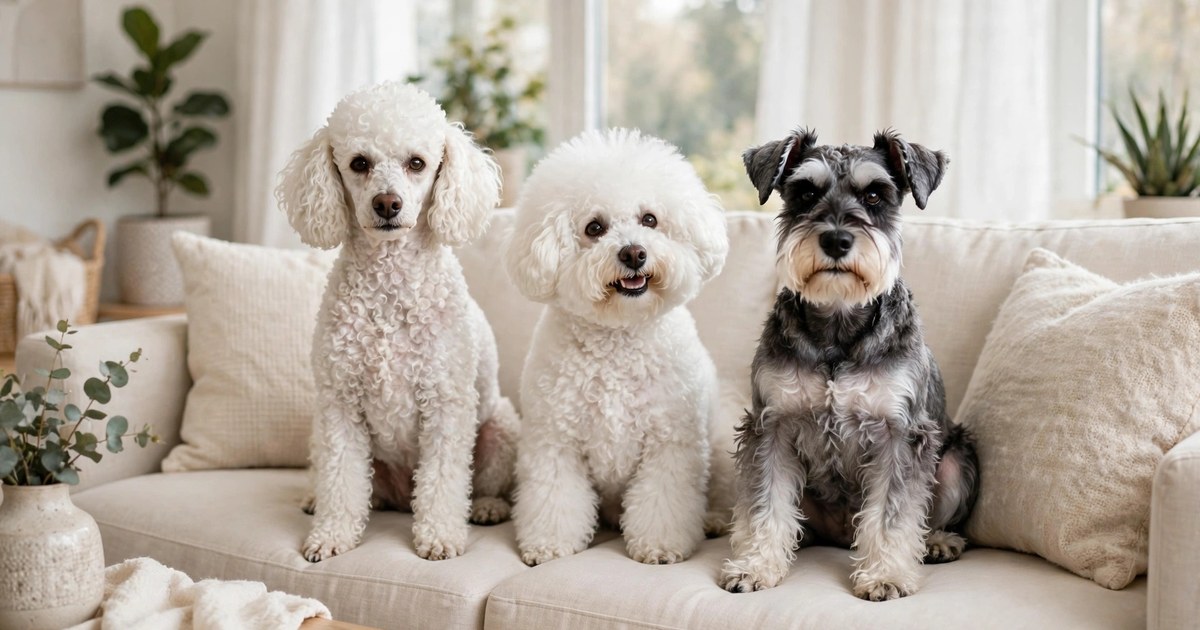
The poodle is the gold standard of low-shedding dogs, and the only breed on this list that comes in three sizes — Toy (10 lb and under), Miniature (10–15 lb), and Standard (40–70 lb) — so there is a poodle for almost every home. The dense, curly coat traps loose hairs instead of dropping them on your floor, which is exactly why poodles are a go-to recommendation for tidy homes.
Poodles are also among the smartest, most trainable breeds you can own, which makes the grooming routine easier: a poodle that stands calmly for brushing is a poodle whose coat stays mat-free. Budget for a professional clip every 6 to 8 weeks and brush 2 to 3 times a week in between. Skip the brushing and the curls mat fast — that is the real price of a low-shed coat.
2. Bichon Frise
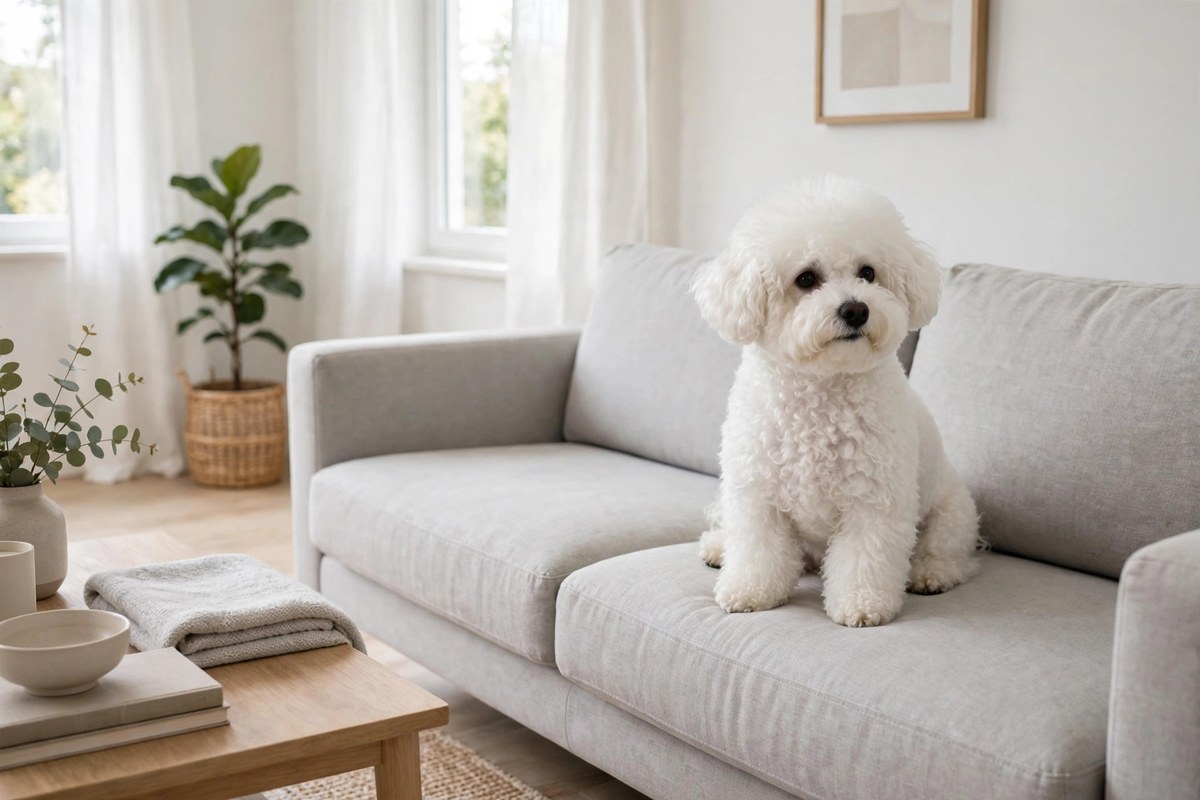
The Bichon Frise is a small, cheerful companion with a soft double coat that sheds very little. Its powder-puff look is the trade-off: that fluffy coat needs daily brushing and a clip every 4 to 6 weeks, or it tangles into mats. Bichons are famously friendly, good with children, and happy in apartments, which makes them one of the most popular low-shed family dogs.
One practical tip: keep a Bichon in a short "puppy cut" if daily brushing does not fit your routine. The cut keeps the low-shed benefit while cutting grooming time in half.
3. Maltese
Maltese have charmed their owners for centuries, and their long, silky white coats shed very little — Maltese hair grows like human hair, with no undercoat to blow out seasonally. At 4 to 7 lb, they are one of the smallest breeds on this list and a natural fit for apartments and lap time.
The catch is the same as with every long-coated low-shedder: daily brushing, or a short clip. Many owners choose the puppy cut and never look back. Maltese are gentle and affectionate, but they do best in calm homes rather than rough-and-tumble households with very young children.
4. Shih Tzu
The Shih Tzu was bred as a companion dog, and it shows — friendly, sturdy for its size at 9 to 16 lb, and happy in apartments. Its long double coat sheds little, but it needs daily brushing in full coat or regular clipping in a shorter style. Shih Tzus are a good pick if you want a low-shed dog that is also genuinely sociable and easygoing with visitors.
5. Yorkshire Terrier
Yorkies are tiny — around 7 lb — with a single coat of long, silky hair and no undercoat, which is why they shed so little. The famous silky coat needs daily brushing if kept long, but most pet owners keep Yorkies in a short puppy cut that takes minutes to maintain. Yorkies are bold, confident, and far tougher than their size suggests, though they can be vocal, so early training matters in apartments.
6. Miniature Schnauzer
The Miniature Schnauzer's wiry double coat barely sheds at all, and it comes with a built-in bonus: that famous bearded, eyebrows look. At 11 to 20 lb, Miniature Schnauzers are sturdy, alert, and good with families. Their coat needs brushing 2 to 3 times a week plus hand-stripping or clipping every few months to keep the wiry texture. They are also one of the easiest low-shed breeds to keep tidy — a quick brush after walks handles most of the maintenance.
7. Portuguese Water Dog
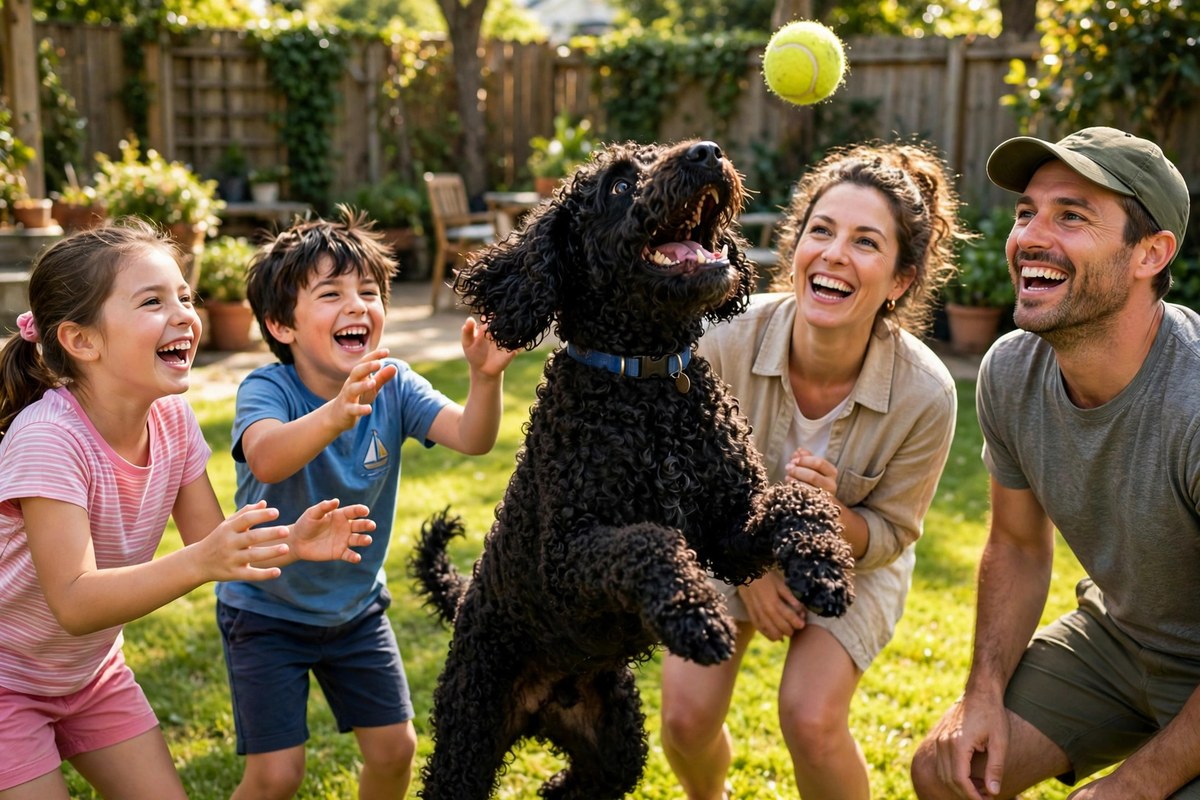
If you want a larger low-shedding dog, the Portuguese Water Dog is the pick. At 35 to 60 lb, this athletic, curly- or wavy-coated breed was bred to work alongside fishermen, and it is strong, smart, and eager to please. The waterproof coat sheds little but needs brushing 2 to 3 times a week and a clip every 6 to 8 weeks.
Be honest about exercise before choosing this one: Portuguese Water Dogs need real daily activity and mental work. A bored one will invent its own entertainment, and it usually involves your shoes. For active families, though, it is one of the best low-shed, high-energy companions available.
8. Havanese
The Havanese is the only dog breed native to Cuba, and it is one of the friendliest small breeds you will meet — playful, people-oriented, and happy to adapt to apartment life. Its long, silky coat sheds little, and brushing several times a week (or a short puppy cut) keeps it in shape. At 7 to 13 lb, Havanese are sturdy enough for families with children and calm enough for quieter homes.
9. Basenji
The Basenji is the minimalist of this list: a short, fine coat that sheds very minimally, almost no doggy odor, and a habit of grooming itself like a cat. Weekly brushing is genuinely enough. Basenjis are intelligent, independent, and famously quiet — they do not bark, though they do yodel when excited.
The trade-off is temperament, not grooming. Basenjis have a high prey drive and an independent streak, so they suit experienced owners and homes with secure fencing better than first-time owners looking for an off-leash dog.
10. Chinese Crested
The hairless Chinese Crested takes low shedding to its logical conclusion: almost no hair to shed. The hairless variety has hair only on its head, tail, and feet, while the powderpuff variety has a full coat of fine hair that sheds very minimally. Either way, shedding is a non-issue.
What replaces shedding is skin care. Hairless Cresteds need protection from sun and cold, and regular skin care. At 8 to 12 lb, they are affectionate lap dogs and a good fit for people who want the lowest-shedding dog possible and do not mind the extra skin routine.
11. Afghan Hound
Do not let the long, silky coat fool you — the Afghan Hound hardly sheds at all. What it does demand is grooming: several brushing sessions a week to keep that luxurious coat tangle-free. At 50 to 60 lb, Afghans are elegant, independent, and a little aloof with strangers, but deeply loyal at home. This is a low-shed breed for owners who enjoy grooming as a ritual rather than a chore.
12. Xoloitzcuintli (Mexican Hairless Dog)
The Xoloitzcuintli — shortened to Xolo — is a 3,000-year-old breed that comes in three sizes (toy, miniature, standard) and two coat types. The hairless Xolo barely sheds at all; the coated variety sheds minimally. Like the Chinese Crested, hairless Xolos need their skin protected from sun and cold. Xolos are devoted watchdogs and constant companions — loyal, alert, and happiest close to their people.
The Real Cost of a Low-Shed Coat
Low shedding is never free — the cost just moves from your vacuum cleaner to your groomer. Before choosing any breed on this list, budget honestly for both:
- Brushing time: 10 to 15 minutes, several times a week, for curly and long-coated breeds. Daily for Bichons, Maltese, Shih Tzus, and Yorkies in full coat.
- Professional grooming: a full groom typically runs about $40 to $90 a session for small to medium breeds, every 6 to 8 weeks. Check local groomers for exact prices — rates vary by city and coat condition.
- Tools: a slicker brush, a steel comb, and a detangling spray. A comb that glides through the coat to the skin is the real test — if it snags, there is a mat forming.
- The matting rule: mats form fastest behind the ears, under the collar, and in the armpits. Check those three spots every brushing session and you will catch most problems early.
If daily brushing sounds like too much, pick a breed with a short coat (Basenji, Xolo, Chinese Crested) or commit to a short puppy cut on a long-coated breed. Both routes keep the low-shed benefit with far less upkeep.
Which Low-Shed Breed Fits Your Home?
Use shedding as a filter, not the whole decision. Match the breed to your life:
- Apartment living: Bichon Frise, Maltese, Havanese, Yorkshire Terrier, Miniature Schnauzer — small, quiet-ish, and happy indoors.
- Families with children: Bichon Frise, Portuguese Water Dog, Miniature Schnauzer, Havanese — sturdy, social, and tolerant.
- First-time owners: Bichon Frise, Maltese, Miniature Schnauzer — forgiving temperaments and straightforward grooming.
- Active owners who want a bigger dog: Portuguese Water Dog, Standard Poodle, Afghan Hound — low shed with real energy to burn.
- Lowest grooming effort overall: Basenji, Chinese Crested (hairless), Xoloitzcuintli — minimal coats, minimal brushing.
For a fuller picture of family-friendly options, see our guide to the best dog breeds for families with kids, and if easy care matters as much as low shedding, our low-maintenance dog breeds guide covers the overlap.
5 Mistakes to Avoid With Low-Shed Breeds
- Skipping brushing because "they don't shed." Low-shed coats trap hair — that is the whole point. Unbrushed, the trapped hair becomes painful mats.
- Choosing purely on shedding. A high-energy Portuguese Water Dog in a quiet apartment will be unhappy no matter how clean your sofa stays. Match energy and temperament first.
- Assuming "hypoallergenic" means allergy-free. No breed is 100% hypoallergenic. If allergies drive your choice, spend time with the breed first and read our hypoallergenic dog breeds guide for the honest picture.
- Bathing too often. Frequent baths dry out skin and coats. Most low-shed breeds do well with a bath every 4 to 6 weeks unless they get genuinely dirty.
- Shaving a double-coated breed. Clipping is fine, but shaving some double coats down to the skin can damage the coat's regrowth. Ask your groomer for a short trim, not a shave.
FAQs
Do any dog breeds truly not shed at all?
No. Every dog loses some hair. The breeds on this list shed the least — hairless breeds like the Xoloitzcuintli and Chinese Crested come closest to zero visible shedding, while curly-coated breeds like poodles trap shed hair in the coat instead of dropping it.
Which low-shedding dog is best for apartments?
The Bichon Frise, Maltese, Havanese, and Miniature Schnauzer are the strongest apartment picks: small, low-shed, and content indoors. The AKC's guide to small dogs that don't shed covers several of these in more detail.
Are low-shedding dogs good for allergy sufferers?
They can help, but they are not a cure. Allergies are usually triggered by dander and saliva, not hair alone, and no breed is 100% hypoallergenic. The AKC's hypoallergenic dog breeds guide explains the distinction honestly — spend time with a breed before committing.
How often do low-shedding dogs need grooming?
Most need brushing several times a week and a professional clip every 6 to 8 weeks. Short-coated low-shedders like the Basenji need only a weekly brush. For coat-care basics, the VCA's grooming and coat care guide is a solid reference.
Do low-shedding dogs shed more in certain seasons?
Most low-shedding breeds shed fairly evenly year-round rather than blowing their coat in spring and autumn like heavy shedders. Hairless breeds barely shed in any season; curly-coated breeds may drop a little more hair when the coat is neglected.
Is a poodle or a Bichon Frise better for a first-time owner?
Both are excellent. Bichons are slightly more forgiving and lower-energy, which suits relaxed first-time owners. Poodles are smarter and more trainable, which suits owners who enjoy training. Either way, commit to the brushing routine — that is what keeps a low-shed coat healthy.
Conclusion
The best low-shedding dog is not the one with the least hair on your floor — it is the one whose grooming needs, energy level, and temperament fit your life. A poodle or Bichon Frise suits most homes; a Basenji or Xolo suits owners who want minimal grooming; a Portuguese Water Dog suits active families who want a bigger companion.
Pick the breed that fits your home first and your vacuum cleaner second, keep up with the brushing, and the low-shed life is genuinely as good as it sounds. And once you know your dog's age in human years, try our dog age calculator to see where your new companion is in life — it takes less than a minute.