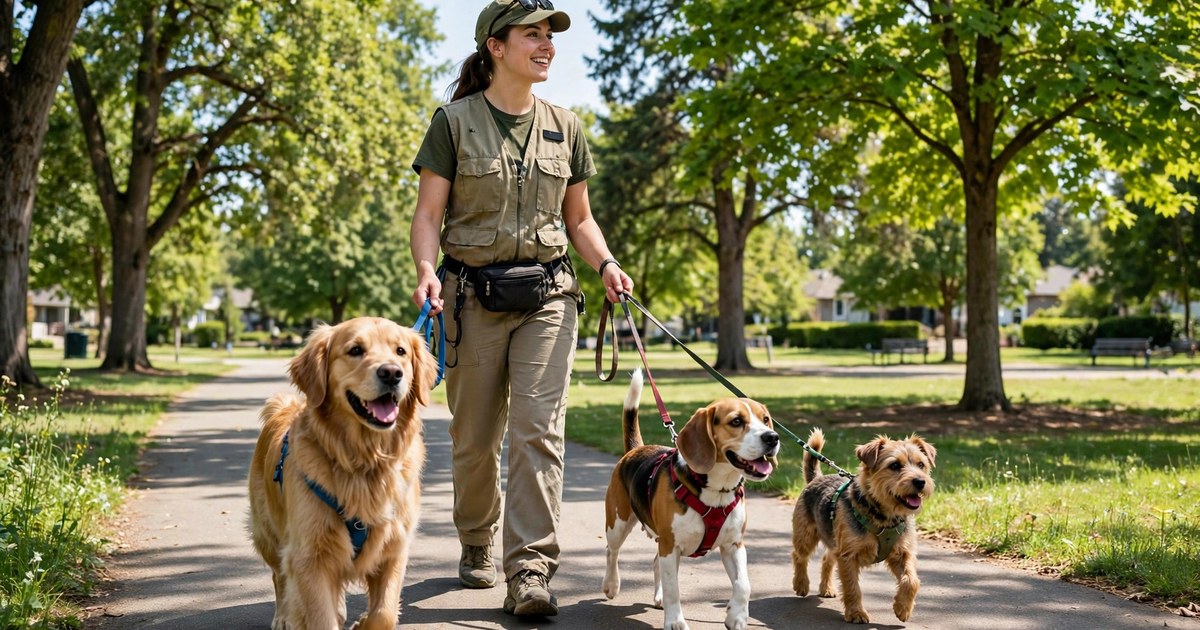
How Much Do Dog Walkers Charge in 2026? Prices, What's Included & Saving Tips
If you work long hours or can't get home at midday, a dog walker can be the difference between a bored, restless dog and a happy, settled one. But before you book, the big question is cost: what should you expect to pay, what does the price actually cover, and how do you tell a fair rate from an overpriced one?
This guide breaks down real 2026 prices — per walk, per week, and per month — the factors that move them, the extra fees to watch for, and five ways to save.
How Much Do Dog Walkers Charge in 2026? The Quick Answer
Most dog walkers in the US charge $15 to $30 for a 30-minute walk and $25 to $50 for a 60-minute walk. Group walks, where your dog walks with two or three other dogs, usually cost less per dog — typically $12 to $25 for 30 minutes. Big cities run higher; small towns and rural areas often run lower, sometimes by a lot.
| Service | Typical price (US, 2026) | Best for |
|---|---|---|
| 15-minute potty break | $12–$18 | Puppies and senior dogs who need a quick break |
| 30-minute solo walk | $20–$35 | Most dogs; the standard midday walk |
| 30-minute group walk | $12–$25 | Friendly, social dogs on a budget |
| 60-minute solo walk | $25–$50 | High-energy breeds and active dogs |
| 60-minute group walk | $20–$35 | Social dogs who need real exercise |
| Two 30-minute walks a day | $35–$60 per day | Puppies and dogs left alone 10+ hours |
Your actual quote depends on where you live, who you hire, and what the walk includes — covered in detail below.
What Affects the Price of a Dog Walker?
Two owners can pay very different amounts for what sounds like the same service. Here are the six factors that matter most.
1. Where you live
Location is the single biggest price driver. A 30-minute walk in New York, San Francisco, or Los Angeles can cost $30 or more, while the same walk in a small Midwestern town might cost $15.
2. Solo walks vs. group walks
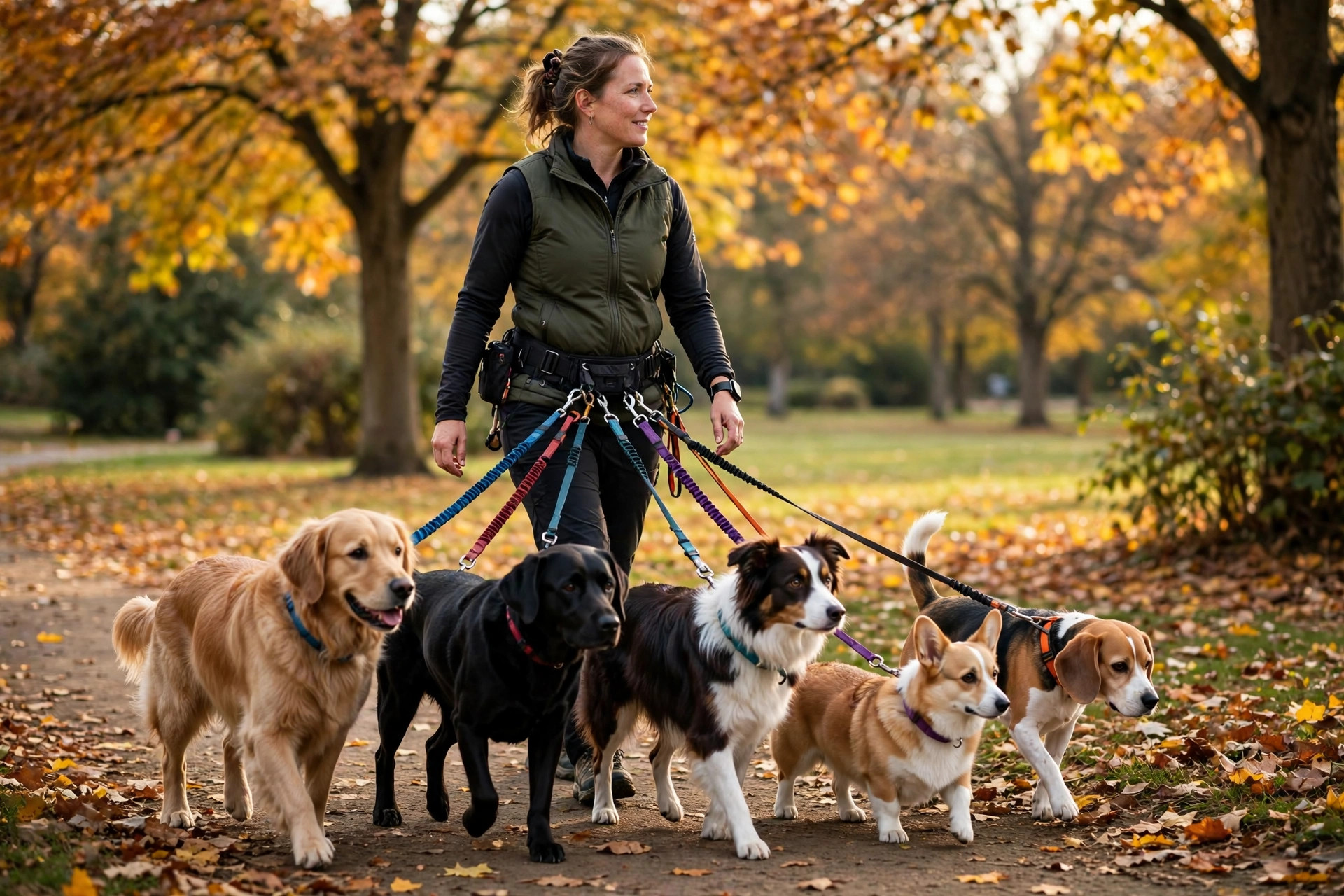
A solo walk means the walker's full attention is on your dog for the whole time, so it costs more. A group walk splits the walker's time — and the cost — across several dogs, so it is cheaper per dog. Group walks suit friendly, well-behaved dogs of similar size and energy. Puppies, reactive dogs, anxious dogs, and dogs still learning leash manners are usually better on solo walks.
3. Walk length
Longer walks cost more, but not in a straight line. A 60-minute walk is rarely double the price of a 30-minute one, because the walker saves on travel time by staying out longer.
4. How often you book
Regular weekly schedules almost always cost less per walk than one-off bookings. Many walkers offer weekly packages at a small discount. Occasional or last-minute walks usually carry a premium.
5. Your dog's needs
Walkers may charge extra for dogs that need special handling: very large or strong dogs, reactive dogs, puppies that need extra patience, or dogs that need help on the walk — but any extra charge should be stated up front.
6. The walker's experience and setup
A walker with pet first-aid training, professional insurance, bonding, and years of experience will usually charge more than a neighbour doing it casually — and the difference is usually worth it. You are handing someone your house key and your dog's safety.
What's Usually Included in the Price?
Before you compare prices, check what each quote actually covers:
- The walk itself — the stated time, on a route suited to your dog's age and energy.
- Fresh water and a quick check — most walkers refill the water bowl and check paws and coat after the walk.
- Feeding or treats — if you ask for it, many walkers will feed your dog or give a treat after the walk at no extra charge.
- Photo and text updates — a short message and a photo after each walk, so you know it happened and how your dog did.
- Key handling — secure pickup and drop-off, with your key stored safely.
- Poop bags and cleanup — always included; if a walker charges extra for this, walk away.
Extra Fees to Ask About Before You Book
Surprise fees are the most common complaint about dog walking services. Ask about each of these before your first booking:
- Extra dog fee: a second dog from the same household usually adds $5–$10 per walk, not a full second walk price.
- Holiday surcharge: many walkers add $5–$15 per walk on major holidays. This is normal — just confirm it in advance.
- Last-minute booking fee: booking with less than 24 hours' notice can add $5–$10.
- Cancellation fee: cancelling with less than 24 hours' notice may still cost you the full walk price.
Get the full fee list in writing before your first booking.
How Much Does Dog Walking Cost Per Week and Per Month?
Most owners book a regular weekday schedule. Here is what that looks like in real money, using a typical $20–$25 rate for a 30-minute solo walk:
| Schedule | Weekly cost | Monthly cost (approx.) |
|---|---|---|
| 3 walks a week | $60–$75 | $260–$325 |
| 5 walks a week (every weekday) | $100–$125 | $430–$540 |
| 5 group walks a week | $75–$100 | $325–$430 |
| 5 walks a week, 60 minutes | $150–$200 | $650–$870 |
If a full weekday schedule is more than your budget allows, book walks only on your three longest days. Our guide to how much a dog costs per month in 2026 puts walking alongside food, insurance, and grooming so you can see the full picture.
Dog Walker vs. Daycare vs. Pet Sitter: Which Costs Less?
Walking is not the only way to cover a long workday. Here is how the options compare:
- Dog walker: $15–$30 per 30-minute walk. Best for dogs that need a midday break and some exercise, then are happy to rest at home.
- Doggy daycare: roughly $25–$50 per full day. Best for social, high-energy dogs that need company and play all day. See our full breakdown of dog daycare costs in 2026.
- Pet sitter (drop-in visit): around $20–$30 per 30-minute visit, similar to a walk but with more time at your home. See our guide to what pet sitters charge per night for overnight rates.
- Dog boarding: $35–$65 per night for overnight care while you travel. See our dog boarding cost guide.
A walker is usually the cheapest option for a regular workday and the least disruptive for your dog. A walker plus a day or two of daycare each week is a popular middle ground.
How to Find a Good Dog Walker (Step by Step)
Price matters, but trust matters more. Follow these steps and you will end up with a walker you can rely on.
Step 1: Ask for recommendations first
Ask other dog owners in your neighbourhood, your vet's office, and your local pet store. A walker that someone you trust already uses is a much safer bet than a random listing. The American Kennel Club's guide to finding a dog walker is a solid starting point for what to look for and which questions to ask.
Step 2: Check insurance, bonding, and references
A professional walker should be insured and bonded, and happy to show you proof. Insurance covers accidents on the walk; bonding protects you if something goes missing from your home. Ask for two or three client references and actually call them.
Step 3: Do a meet and greet
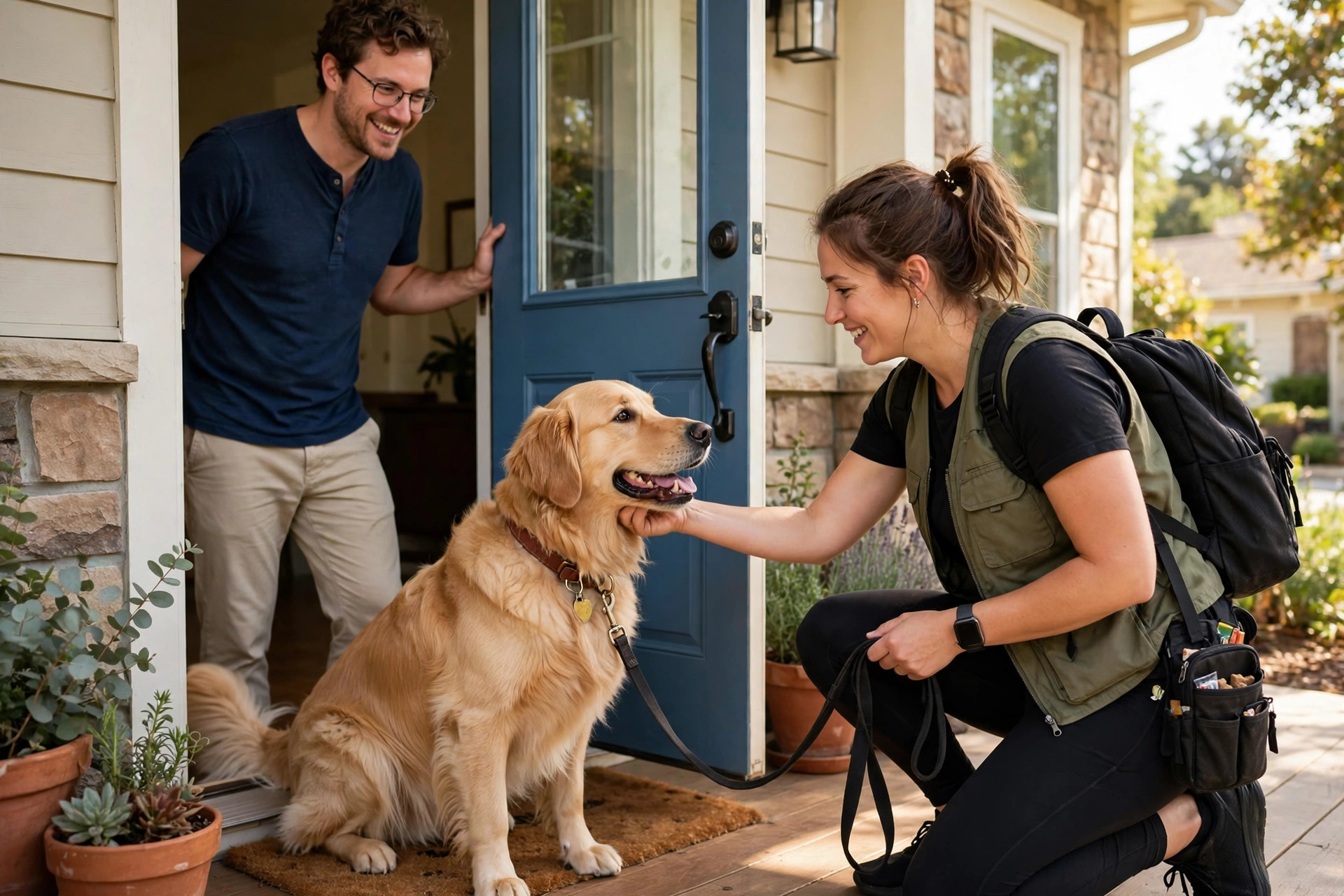
Any good walker will offer a free meet and greet — at your home, with your dog present. Watch how they interact with your dog, how they handle the leash, and whether your dog relaxes around them.
Step 4: Start with a trial week
Book three to five walks before committing to a monthly schedule. Check that the walker arrives on time, sends updates, and that your dog comes home happy and settled.
Step 5: Agree on the routine in writing
Confirm the walk times, the route or area, what happens in bad weather, who to call in an emergency, and how cancellations work.
5 Ways to Save Money on Dog Walking
1. Book a regular weekly schedule. Walkers give their best rates to regular clients. A fixed weekday schedule is almost always cheaper per walk than ad-hoc bookings.
2. Try group walks. If your dog is friendly and well-socialised, a group walk can save $5–$10 per walk — $100 or more a month on a weekday schedule.
3. Buy a package of walks. Many walkers offer 10-walk or monthly packages at a small discount.
4. Share walks with a neighbour. If a neighbour's dog is a similar size and temperament, some walkers will walk both dogs together for a reduced combined rate.
5. Mix walking with your own exercise. Book a walker only for the midday break on your longest days — three walks a week instead of five can cut the monthly bill by 40%.
Red Flags: When a Cheap Dog Walker Is Too Cheap
A very low price is not always a bargain. Watch out for these warning signs: no insurance, no bonding, and no references — or reluctance to show them; no meet and greet offered; too many dogs walked at once (more than four or five per walker is hard to manage safely); no photo updates or communication after walks; no plan for emergencies, bad weather, or what happens if the walker is sick.
The ASPCA's general dog care guide is a useful reminder of what good daily care looks like.
Frequently Asked Questions
How much should I tip a dog walker?
Tipping is not required, but it is common and appreciated. A typical tip is 10–20% of the walk price, or a little extra at the holidays.
Is $25 too much for a 30-minute dog walk?
No — $25 sits comfortably in the normal US range of $15–$30 for a 30-minute walk. In a big city, or for an insured, experienced walker who sends photo updates, $25 is a fair and common price. What matters is what is included: updates, insurance, and reliability are worth paying for.
Are group walks safe for my dog?
Group walks are safe for most friendly, well-socialised dogs, especially when the group is small (two to four dogs) and matched by size and energy. They are not a good fit for reactive, anxious, or very young dogs. A good walker will assess your dog first and tell you honestly if a group walk suits them.
How long can a dog be left alone without a walk?
Most adult dogs can manage four to six hours alone comfortably; puppies, senior dogs, and small breeds usually need a break sooner. If you are away for eight hours or more on a regular basis, a midday walk is one of the best investments you can make in your dog's comfort. The AKC's daycare guide can also help you judge whether your dog needs more company during the day.
Should I use an app or an independent dog walker?
Both can work well. Apps offer booking convenience, payment protection, and reviews, but take a cut of the walker's fee. Independent walkers often keep more of what you pay and can offer more personal, flexible service.
What happens if it rains or snows?
Most professional walkers walk in all weather, with shorter routes in heavy rain or extreme cold. Agree on the bad-weather plan in advance: a shorter walk, a quick potty break plus indoor play, or a reschedule. Your dog still needs a break on a rainy day — they just might not need a full hour of it.
The Bottom Line
Expect to pay $15–$30 for a 30-minute dog walk and $25–$50 for an hour, with group walks and regular weekly schedules bringing the price down. The cheapest walker is rarely the best value — what you are really paying for is a reliable, insured person who shows up on time, handles your dog well, and keeps you in the loop.
Do a meet and greet, start with a trial week, and get the fees in writing. And if you are still working out your dog's age in human terms — handy for judging how much exercise they really need — try our free dog age calculator to see where your dog sits in their life stage.