The new puppy setup, without the panic
Bringing home a puppy is equal parts wonderful and overwhelming. The secret that experienced owners all share: almost everything that matters happens in three phases — what you buy before pickup, what you do on day one, and what you build in week one. Get those right and the rest is just enjoying the chaos.
Before pickup: shop like a minimalist
Pet stores are designed to make you buy everything. You need far less than it looks like. The non-negotiables: food that matches what the puppy already eats (sudden food changes and new-home stress are a rough combo), bowls, a crate that will fit the adult dog, a collar with your phone number on it, and enzyme cleaner. That last one is not optional — regular cleaners mask odors from you but not from a puppy nose, and the same spot becomes the favorite spot.
First day: small world, calm energy
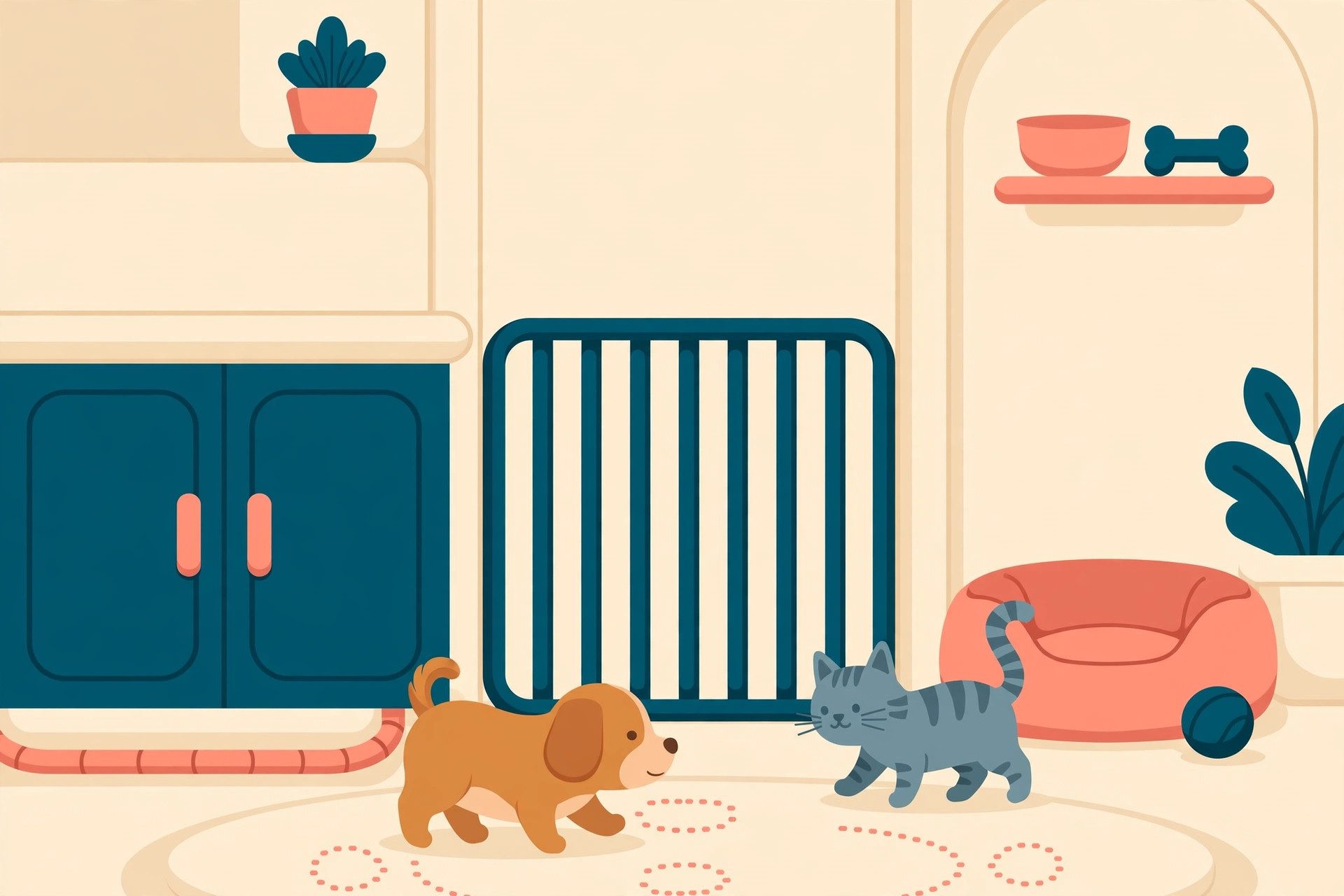
A new home is the biggest place your puppy has ever seen, and it is full of strangers. Shrink their world on purpose: one puppy-proofed room, one quiet sleep corner, calm introductions one family member at a time. Let the puppy come to people rather than the other way around. And start the feeding schedule immediately — same times, same spot. Routine is a love language for dogs.
First week: build the foundation
Week one is not about perfect behavior; it is about patterns. Short crate sessions with treats teach the puppy that the crate is a bedroom, not a punishment. Name games and a single cue (“sit”) start the habit of training being fun. Gentle socialization — new sounds, surfaces, and friendly people — pays off for years. Keep sessions tiny and always end on a win.
The two things new owners underestimate
Sleep and patience. Puppies sleep up to 18 hours a day, and an overtired puppy is a bitey, wild puppy — enforced naps in the crate solve an astonishing number of “behavior problems.” And patience: everything takes longer than you think and then suddenly clicks. The puppy you have at week eight is not the dog you will have at year two. Enjoy the small one; the good dog is already in there.
What week one actually feels like
Days one and two are a honeymoon of sniffing and naps. Days three and four are when reality lands: the accidents, the 2 a.m. whimpers, the chewed shoe. This is normal and it passes. By day six or seven, the feeding rhythm clicks, the crate starts feeling like a bedroom, and you get your first unprompted tail wag that is clearly just for you. If you are struggling on day four, you are exactly on schedule.
Your household is the curriculum
Every person in the home should use the same words for the same things — if “down” means off the couch to you and lie down to your partner, the puppy learns confusion. Agree on five shared words in week one: the puppy's name, sit, down, come, and a release word like “okay.” Consistency across humans is the fastest training hack there is.