When the first cold snap arrives, summer routines stop working. The dog who loved long evening walks now shivers after ten minutes. Winter changes what your pet needs every day — and the owners who prepare in October enjoy a calm, cosy season while everyone else scrambles in January.
This checklist covers the gear to buy before the first frost, the daily routine that keeps paws and coats in good shape, the indoor setup that keeps your pet comfortable, and the holiday hazards most people forget.
Why Winter Calls for Its Own Pet Checklist
Cold weather does not just mean colder walks. It changes feeding, exercise, grooming, travel, and even where your pet sleeps. Short-haired dogs, small dogs, older pets, and kittens feel the cold much sooner than a thick-coated adult dog.
The good news is that almost every winter problem has a simple, cheap fix if you catch it early: a warm coat, a dry towel by the door, a raised bed away from draughts, and a cleared walking route. The expensive problems — cracked paws, a pet who refuses to go outside, a ruined trip — almost always come from skipping the basics.
The Winter Pet Care Checklist
Go through this list in order: the first group is one-time preparation, the rest is your daily and weekly routine for the whole season.
Before the Cold Arrives
- Book a routine check-in with your vet. A quick once-over before winter confirms your pet is in good shape for the cold months, especially seniors and puppies or kittens in their first winter.
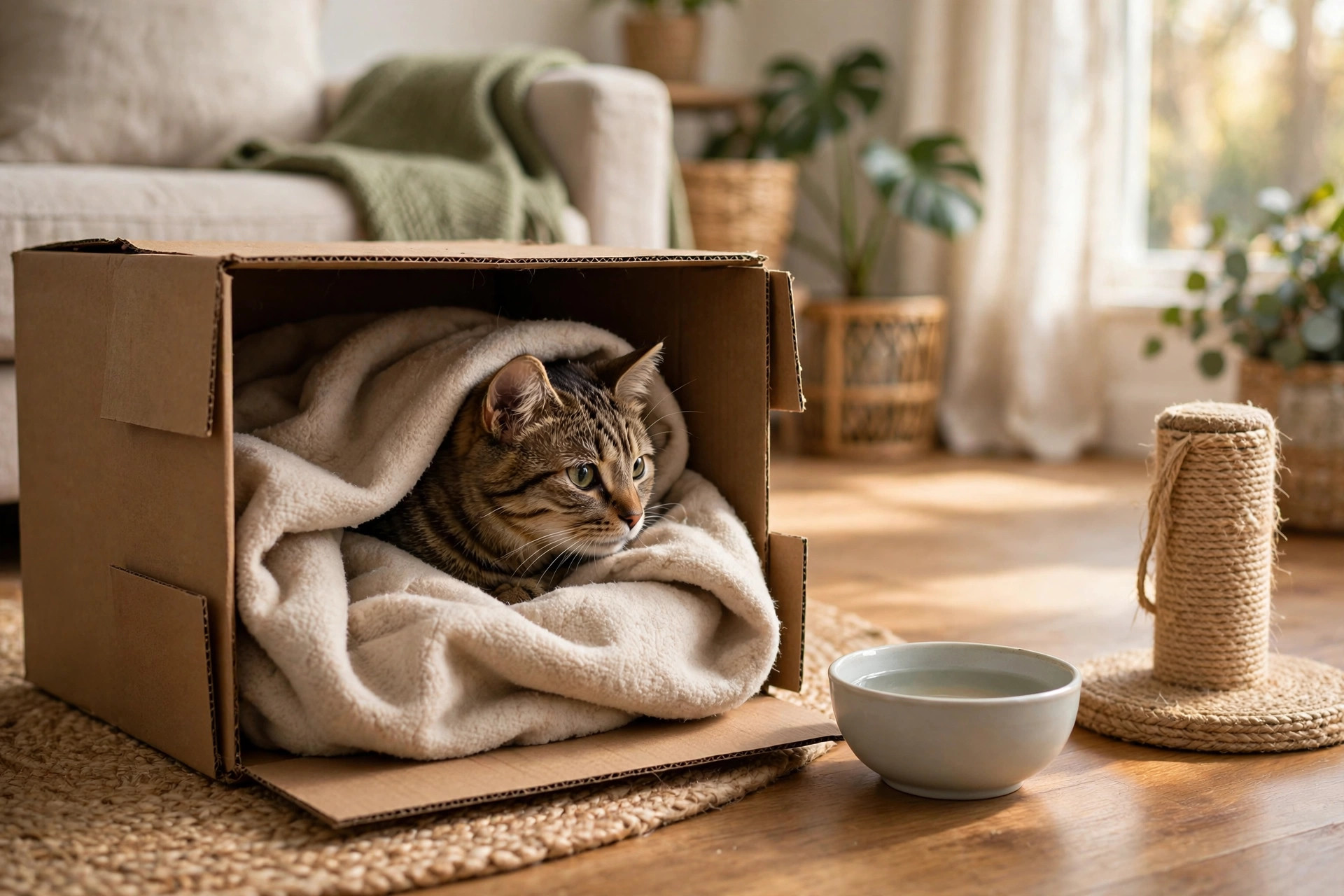
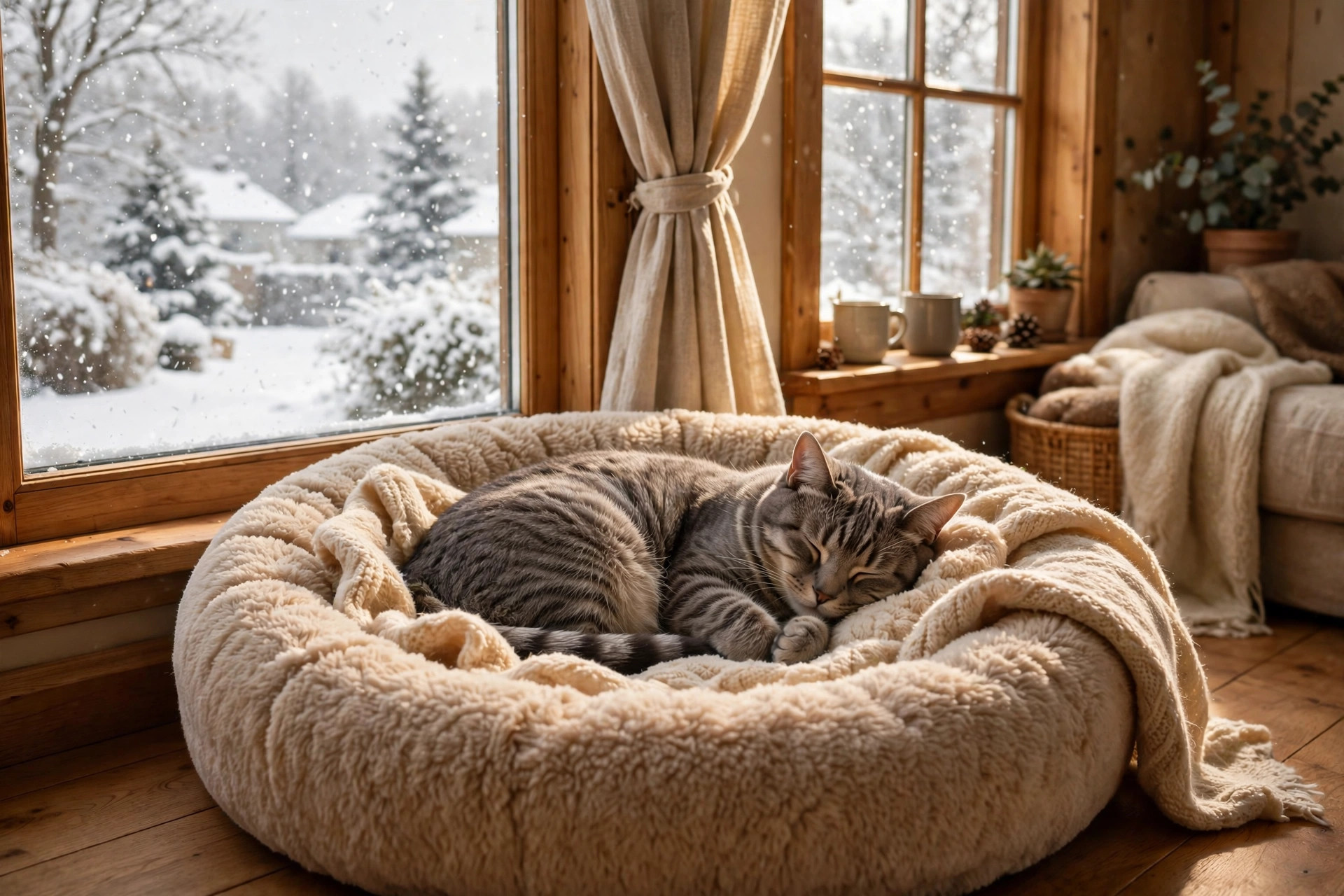
- Find the warmest sleeping spot in your home. Move your pet's bed away from draughty doors and cold tile floors — a raised bed, a thick blanket, or a self-warming mat makes a real difference on cold nights.
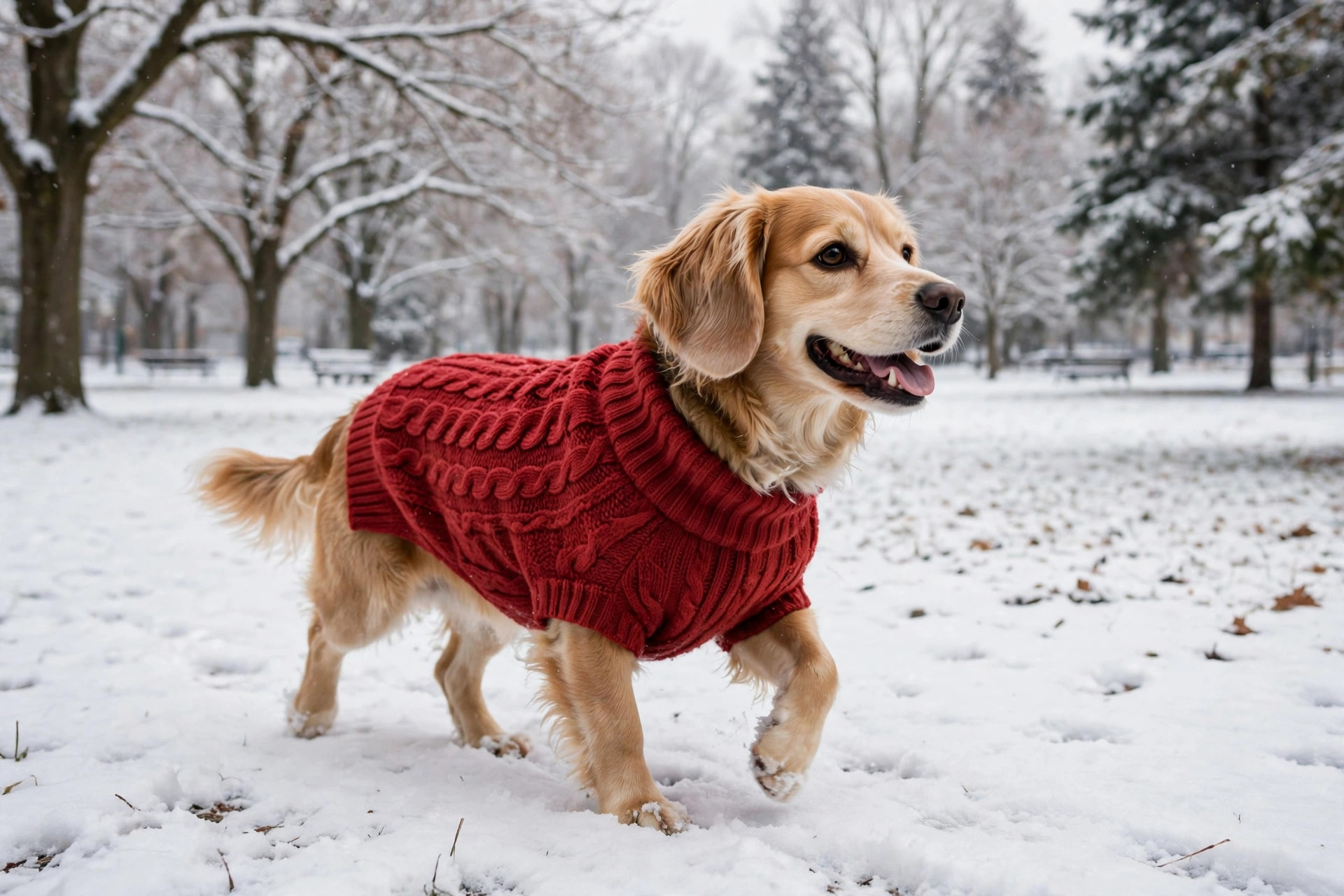
- Stock up on winter gear. A well-fitting coat or sweater for short-haired dogs, booties or paw balm for icy pavements, and a warm blanket for the car — buy in October, not during the first snowstorm when sizes sell out.
- Check your pet's ID and microchip details. Confirm the phone number on the tag and microchip register is current.
- Prepare an indoor play kit. Puzzle feeders, sturdy toys, and a scratching post for cats keep boredom — and the chewing that comes with it — under control.
- Store antifreeze and ice melt safely. Keep containers sealed and out of reach, wipe up spills immediately, and use pet-friendly ice melt on your own paths. The ASPCA's cold weather safety tips cover the main seasonal hazards in one place.
Daily Cold-Weather Routine
- Shorten walks, do not skip them. Most dogs still need daily exercise in winter, just in shorter bursts — two 15-minute walks beat one long, freezing one. Shivering or lifted paws mean it is time to head home.
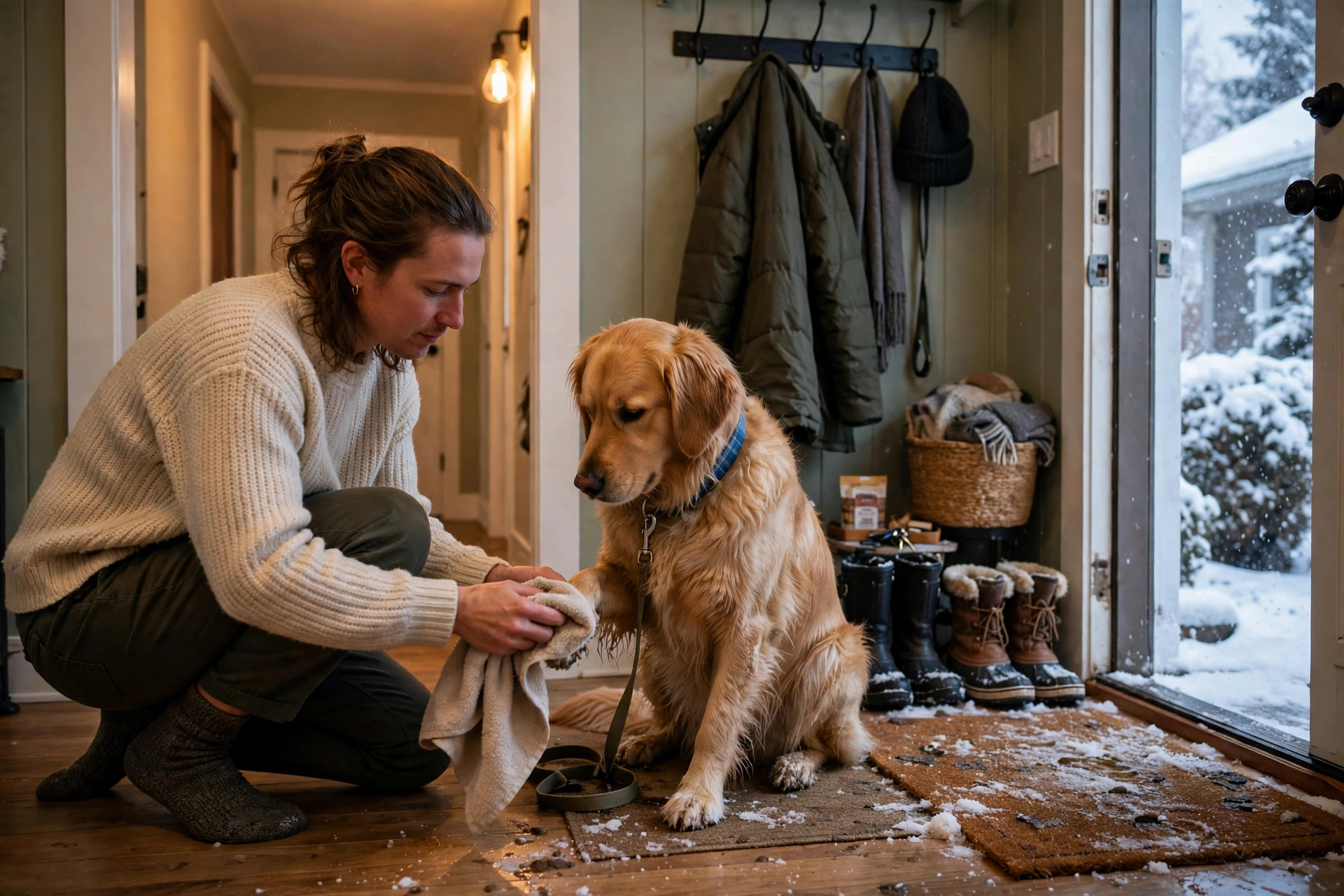
- Wipe paws after every outing. Salt, grit, and ice-melt chemicals cling to paws and get licked off later, so a quick wipe with a damp towel at the door takes thirty seconds.
- Check paws and ears once a day. Look for redness, cracks, or ice clumps between the toes, and trim the fur there if ice builds up.
- Keep fresh water available and unfrozen. Pets drink just as much in winter, so if yours spends time in a cold porch or garage, check the bowl twice a day so it never freezes.
- Stick to the normal feeding routine. Winter is no reason to pile on extra food for most indoor pets. Very active outdoor dogs may need a little more, but for the average house pet the usual meals are right.
Indoor Comfort Setup
- Give cats a high, warm perch. Cats love warmth and height — a bed on a sunny windowsill, with a blanket, is often all a cat wants.
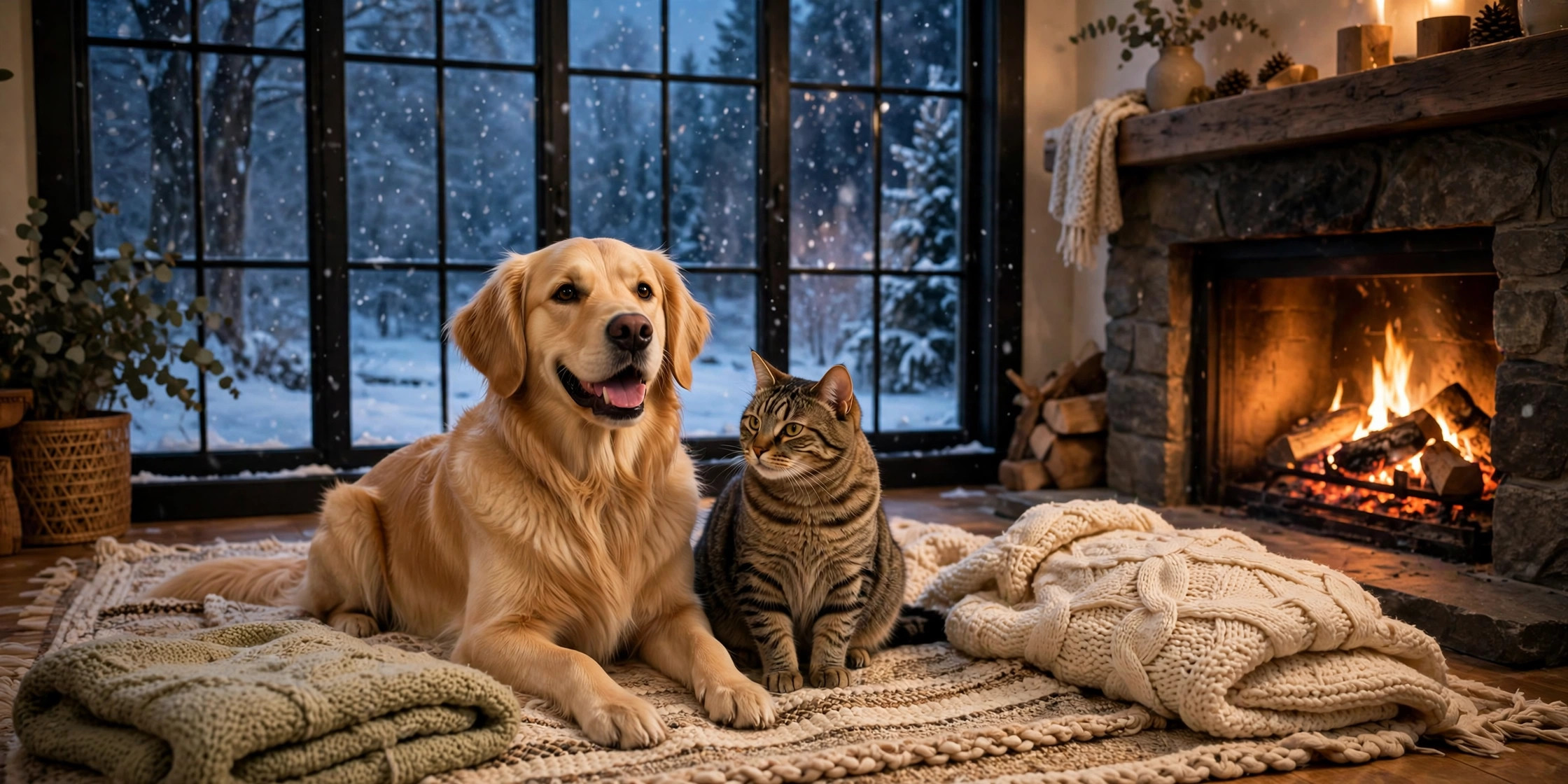
- Keep beds away from radiators and open fires. Warm is good; direct heat is not — keep the bed a safe distance from the heat source.
- Watch the dry air. Heated indoor air dries skin and coats, so regular brushing spreads natural oils through the coat and doubles as a quick daily check.
- Keep the litter box area warm and accessible. Cats avoid cold, draughty litter areas. If the box is in a chilly garage or basement, move it somewhere warmer.
- Create a quiet retreat for holidays. Parties, visitors, and fireworks make winter the noisiest season, so a familiar bed in a quiet room gives nervous pets somewhere to escape to.
Outdoor Time and Walks
- Walk in daylight when you can. Late-morning walks are warmer, and if you must walk after dark, reflective gear keeps you both visible.
- Clear a small toilet area in the garden. Small dogs especially hate wading through deep snow to find a spot — shovelling a patch near the door takes two minutes.
- Never leave a pet in a cold car. A parked car loses heat fast in winter — no safer than a hot car in summer for a pet left alone.
- Keep cats indoors at night. Night temperatures drop sharply and cats can get locked out of garages and sheds, so call them in before dark.
- Know your pet's limits. A thick-coated husky and a slim greyhound have completely different cold tolerance, so judge by your own pet's behaviour. The AKC's cold weather safety guide has breed-by-breed pointers worth a read.
Travel and Holiday Preparation
- Plan holiday travel early. If your pet travels with you, confirm pet-friendly stays and transport rules weeks ahead. Our holiday pet travel checklist covers the full plan.
- Prepare a sitter handover if you travel without your pet. Written feeding times, walk routes, the vet's number, and the spare key's location, so a sitter never has to guess.
- Keep decorations out of reach. Tinsel, ribbons, fairy lights, and chocolate are all part of winter holidays, so secure the tree against a climbing cat. The AKC's holiday safety tips list the seasonal foods and decorations to watch.
- Protect pets from fireworks and loud gatherings. Close curtains, put on background music, and let your pet retreat to its safe room.
Winter Gear Worth Buying — and What to Skip
You do not need a pet shop's worth of winter kit — here are the items that earn their money, and the ones that usually do not.
Worth buying: a waterproof coat that fits properly (measure the back length), booties or paw balm for salty pavements, a raised or insulated bed, a reflective lead, and a good towel by the door. For cats, a heated or self-warming bed is the single best winter purchase.
Usually skippable: novelty jumpers that restrict movement, heated water bowls for indoor pets, and expensive "winter grooming" kits that are just repackaged shampoo. A normal brush, a towel, and a basic coat cover 95% of winter needs.
Fit matters more than brand: a coat that rubs the armpits or slips sideways will be hated and unused, so let your pet try it indoors first and check for rubbing after the first walk.
5 Common Winter Mistakes Pet Owners Make
1. Assuming a fur coat is enough. Fur insulates, but it does not stop wind chill, wet snow, or salted pavements. Even thick-coated dogs have limits.
2. Skipping walks entirely. Cold days are not rest days: bored, under-exercised pets chew furniture and gain weight. Shorten the walk, add indoor play, and keep the routine.
3. Forgetting about water. Frozen bowls and dry heated air add up — check water twice a day and keep the bowl somewhere warm.
4. Leaving pets alone with holiday hazards. Chocolate, cooked bones, tinsel, and open flames are all more common in December. A little tidying prevents most holiday emergencies.
5. Ignoring the older pet. Senior dogs and cats feel the cold first and stiffen up fastest. A warm bed, shorter walks, and ramps instead of jumps make a visible difference — our senior cat comfort checklist covers the home adjustments.
Frequently Asked Questions
How cold is too cold for a dog walk?
There is no single number that fits every dog. As a rule, if you would not stand outside in a light jacket for the length of the walk, your short-haired or small dog should not either. Watch for shivering, whining, or held-up paws, and head home when you see them.
Do indoor cats need anything special in winter?
Mostly warmth and routine: a warm sleeping spot away from draughts, a litter box that is not in a freezing room, and regular playtime. Cats often sleep more in winter — watch for one who stops eating, drinking, or using the litter box normally.
Should I change my pet's food in winter?
For most indoor pets, no — keep the usual food and portions. Dogs active outdoors for long hours in genuinely cold weather burn more energy and may need a little extra, but adding food to a house pet who is exercising less will only add weight.
Are dog booties really necessary?
Not for every dog, but they help a lot on salted pavements and deep snow. If your dog walks mainly on grass or cleared paths, a wipe-down and paw balm may be enough; on heavily salted city streets, booties or a good rinse after every walk are worth it.
How do I keep my pet calm during fireworks and holiday parties?
Give them a safe room with their bed, water, and a familiar toy, close the curtains, and keep background noise on. Do not force them to socialise with guests — keeping the same feeding and walk times, even on party days, helps more than any gadget.
What should I pack for winter travel with my pet?
Food and water for the journey plus one extra day, any medication in its original packaging, a lead and harness, a blanket that smells of home, waste bags, a towel for wet paws, and your vet's number saved in your phone.
Your Winter-Ready Pet
Winter with a pet is mostly small habits done consistently: shorter walks, dry paws, a warm bed, and a little extra attention to the older or smaller members of the family. Tick off the checklist once, keep the routine going, and the season becomes the cosy part of the year it should be.
Older pets feel the cold sooner than younger ones, so it helps to know where your dog stands. Try our free dog age calculator to see your dog's age in human years — if the number surprises you, a warmer bed and shorter walks are the easiest winter upgrade you can make.