
Bringing home a rescue cat is one of the kindest things you can do — and the first week sets the tone for everything that follows. Most rescue cats arrive with a past you will never fully know: a shelter kennel, a foster home, a street, or a home that could no longer keep them. What they need from you in week one is not a grand gesture. It is a quiet room, a predictable routine, and the freedom to come to you at their own speed.
This guide is a day-by-day plan for the first seven days, plus a 25-item checklist to tick off before adoption day. Follow it, and your cat gets the calm start every rescue deserves.
The 25-Item Rescue Cat Checklist (Before Adoption Day)
Do the shopping and the setup before your cat arrives. A rescue cat's first hours in a new home should be calm, not a trip to the pet store with a frightened cat waiting in the car.
Safe-Room Essentials
- A litter box plus litter — the same type the shelter used, if you can find out
- Food and water bowls, placed far apart from each other and away from the litter box
- Cat food — the same brand and recipe the shelter was feeding, so the change of home is not also a change of diet
- A soft bed or a blanket folded into a cosy nest
- A cardboard box with a cat-sized entrance hole, turned on its side — the best hideaway costs nothing
- A sturdy scratching post at least three feet tall
- A cat carrier, left open in the room with a blanket inside so it smells familiar, not frightening
- A litter scoop and small waste bags
Comfort and Play
- A wand toy for hands-off play that keeps your fingers out of the action
- Two or three small toys: a crinkle ball, a soft mouse, and a spring toy
- A scratching pad for the floor, in case your cat prefers horizontal scratching
- A window perch or a cleared windowsill — watching the world is free entertainment
- A blanket or towel that smells of the shelter or foster home — ask for one on adoption day
- An optional plug-in pheromone diffuser for the safe room, started a day before arrival
Safety and Paperwork
- A breakaway safety collar with an ID tag carrying your phone number
- The microchip transfer form, so the chip is registered to you from day one
- A vet appointment booked for the first week, plus the clinic's phone number saved in your phone
- The adoption paperwork and any records the shelter gave you, kept together in one folder
- An enzyme-based cleaner and paper towels for accidents — never ammonia-based cleaners near a litter area
- A pet insurance quote compared before adoption day, so the decision is made calmly
Household Prep
- Loose cables and charging cords tucked away or covered
- Window screens checked and secure, with no gaps a determined cat can push through
- Houseplants that are unsafe for cats moved to a closed room for now
- Small swallowable objects — hair ties, rubber bands, string, ribbon — picked up off the floor
- One quiet room chosen as the safe room, with a door that closes properly
Day 1: Arrival and the Safe Room
Carry the closed carrier straight into the safe room and set it down on the floor. Open the carrier door, then step back and leave the room for a while. Some cats walk out in five minutes; some stay inside the carrier for hours. Both are normal. The worst thing you can do on day one is reach in and pull the cat out.

Keep the first day boring on purpose. No visitors, no house tour, no introductions to other pets. Visit the room every couple of hours, sit on the floor, and read or scroll your phone. Talk softly so your cat learns the sound of your voice. Leave a worn T-shirt near the bed so your scent becomes familiar. Refill food and water quietly, scoop the litter box, and otherwise let the cat set the pace.
If your cat hides all day and does not eat, do not panic — and do not hover. Offer food again at bedtime and leave the room dark and quiet overnight. Many rescue cats do their first real exploring after midnight, when the house is still. The ASPCA's general cat care guide covers the same basics: a clean, dry resting place, fresh water at all times, and a litter box in a quiet, accessible spot.
Days 2–3: Build a Routine Your Cat Can Trust
Cats are creatures of habit, and a rescue cat's world has just changed completely. A predictable routine is the fastest way to make the new home feel safe. Feed at the same times every day — morning and evening works for most adult cats — and keep the food, water, and litter box in exactly the same places. Scoop the litter box at least once a day and refresh the water daily.
Keep sitting with your cat, but let the cat decide the distance. Read a book, work on a laptop, or just sit quietly for 20 to 30 minutes at a time. If the cat comes closer, stay still and let it sniff your hand. If the cat retreats, let it go — chasing a nervous cat backwards is the surest way to lose trust. Short, calm visits several times a day beat one long, intense session.
Start a simple log on your phone: when the cat eats, drinks, uses the litter box, and comes out of hiding. It takes 30 seconds and it gives you a real picture of how the first week is going. If you need a refresher on the bigger picture of settling a cat into a new space, the VCA guide to moving to a new home with cats explains why confining a cat to one room for the first several days works so well.
Days 4–5: Earn Trust One Small Step at a Time
By day four, most rescue cats have mapped the safe room and know where everything is. This is the time to start gentle, positive contact. Offer a treat from your open hand, or place it on the floor halfway between you and the cat. If the cat takes it, wait a beat, then offer another. Do not reach for the cat's head yet — let the cat bump into your hand first, which is how cats greet each other.
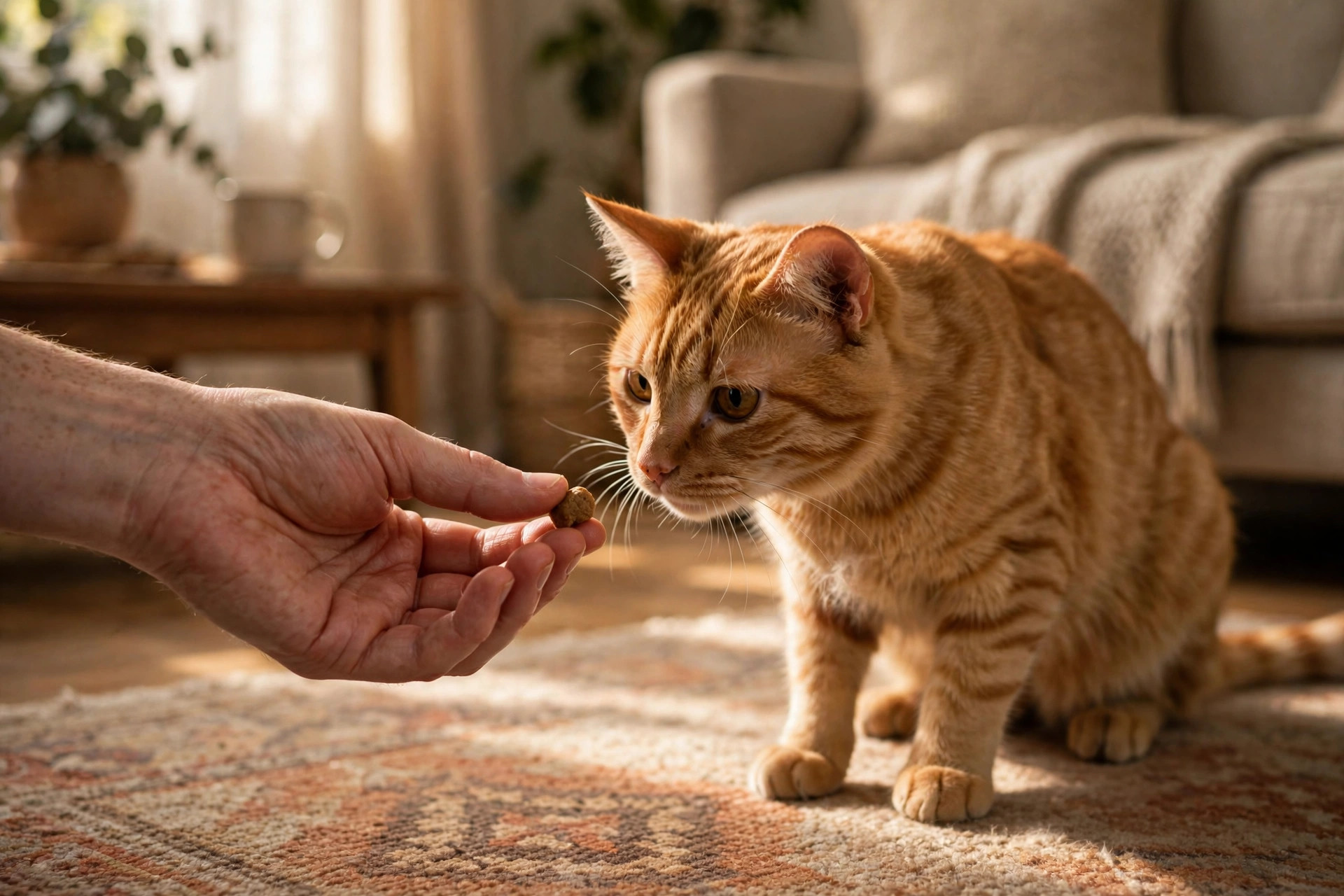
Introduce the wand toy now, dragging it slowly across the floor rather than waving it in the cat's face. Play is a trust-builder: a cat that plays with you is a cat that is starting to feel safe. Keep sessions short — five to ten minutes, two or three times a day — and always end while the cat is still enjoying it. Put the toy away between sessions so it stays exciting.
Try the slow blink. When your cat looks at you, close your eyes slowly, hold them shut for a second, and open them again. Cats read this as a friendly, non-threatening signal, and many will slow-blink back once they are comfortable. It sounds silly and it works.
Day 6: First Introductions to Resident Pets
If you have other pets, day six is the earliest to start introductions — and only if your rescue cat is eating well, using the litter box, and moving around the safe room with reasonable confidence. If the cat is still hiding all day, wait. There is no prize for rushing this step.
Start with scent, not sight. Swap bedding between the new cat and your resident pet so each learns the other's smell. Feed both animals on opposite sides of the closed safe-room door, so good things happen near the new smell. After a day or two of that, crack the door open a few inches with a door stop, or use a baby gate, so they can see each other but neither can rush the other.
Watch body language, not the calendar. Calm curiosity, looking away, and going back to eating are good signs. Prolonged staring, flattened ears, growling, or one animal blocking the other's path to food or litter means you moved too fast — close the door, go back to scent-only for a day, and try again. The RSPCA Victoria guide to bringing your new cat home lays out the same staged approach: separate room first, scent exchange, then short, controlled meetings.
Day 7: Opening Up the House
On day seven, if the week has gone well, open the safe-room door and let your cat explore the rest of the house at its own pace. Leave the safe-room door open so the cat can retreat to its familiar base whenever it wants. Most cats explore in short bursts — out for a few minutes, back to the safe room, out again — often at night.

Cat-proof as you go: check that windows are closed, that there are no gaps behind appliances, and that anything fragile is off open shelves at cat height. Set up a second litter box and a second water station somewhere in the main living area, so the cat does not have to trek back to the safe room every time. And keep the first play session of the week going — a daily wand-toy game is now part of the routine, and it is the easiest way to burn off a rescue cat's nervous energy.
Day seven is not the finish line. It is the end of the beginning. Some cats will be sleeping on your lap by now; others will still be cautious for weeks. Both are completely normal, and the cat that takes longer is not a failed adoption — it is a cat that needs a little more of what you have already been giving it: time, space, and patience.
5 Mistakes New Rescue Cat Owners Make
1. Giving the cat the whole house on day one. A big empty house is overwhelming, not generous. One room first, the rest later.
2. Forcing affection. Picking a hiding cat up, cornering it for cuddles, or staring into its eyes all read as threats. Let the cat come to you.
3. Changing the food immediately. A new home, new people, new smells — and new food on top of it is too much change at once. Switch foods gradually over a week or two, later, if you want to change brands.
4. Punishing hiding or litter-box misses. A cat that hides or misses the box in week one is stressed, not naughty. Punishment destroys trust and fixes nothing.
5. Introducing pets on day one. A face-to-face meeting with a resident cat or dog before the new cat even knows the house is a recipe for a bad first impression that can take months to undo.
Signs Your Rescue Cat Is Settling In
Look for these small wins across the first week: eating and drinking regularly, using the litter box reliably, coming out of hiding while you are in the room, slow-blinking at you, kneading a blanket, playing with a toy, sleeping stretched out instead of curled tight, and grooming in your presence. You will not see all of them in seven days, and that is fine. Two or three of them by the end of week one means the plan is working.
The other side of the coin: if your cat has not eaten at all for more than a day, or has not used the litter box for more than a day, call your vet for advice rather than waiting it out. That is what the first-week vet appointment is for.
Frequently Asked Questions
How long should a rescue cat stay in the safe room?
Most cats need at least three to seven days, and shy or older cats may need two weeks. The right moment to open the door is when the cat is eating well, using the litter box, and moving around the room calmly — not a date on the calendar.
Should I let my rescue cat sleep in my bedroom in the first week?
Not yet. Keep the cat in the safe room overnight for the first week so it has one place that is entirely its own. Once the cat is confident in the house, you can invite it into the bedroom — and it will probably invite itself.
My rescue cat hides all day. Is something wrong?
Usually not. Hiding is a normal coping strategy in a new home. As long as the cat eats, drinks, and uses the litter box — even if only at night — it is adjusting. Give it the full week before worrying, and keep visits calm and short.
When can I introduce my rescue cat to my dog?
After the scent-swap and door-feeding stages, and only when the cat is confident in the safe room — usually the second week at the earliest. Keep the dog on a lead for the first meetings, keep them short, and always give the cat an escape route to a high perch or back to its safe room.
What if my rescue cat will not eat the food the shelter gave me?
Try warming the food slightly, offering it on a flat plate instead of a deep bowl, and placing it near the hiding spot rather than across the room. If the cat still refuses food for a full day, call your vet for advice.
Do rescue cats need a second litter box?
Yes, once the cat has access to more than one room. The general rule is one box per cat plus one extra, spread across the home so the cat is never far from one. In week one, one box in the safe room is enough.
Your First Week, Done Right
Seven days, one quiet room, one steady routine, and a cat that gets to choose its own pace. That is the whole secret of a good first week with a rescue cat — and it costs nothing but patience. If you work through the checklist above and follow the day-by-day plan, you will end the week with a cat that knows where its food is, where it is safe, and that the person who brings both is worth trusting.
Once your rescue cat is home and settled, it is fun to find out how old your new friend really is in human years — try the cat age calculator and see where your cat lands. For the dog side of the family, our guide to the first week with a rescue dog follows the same day-by-day approach, and if a kitten joins the household later, the new kitten checklist covers the first week with a young cat. If you are still planning the move itself, read bringing home a new cat: the first 30 days for the longer view.