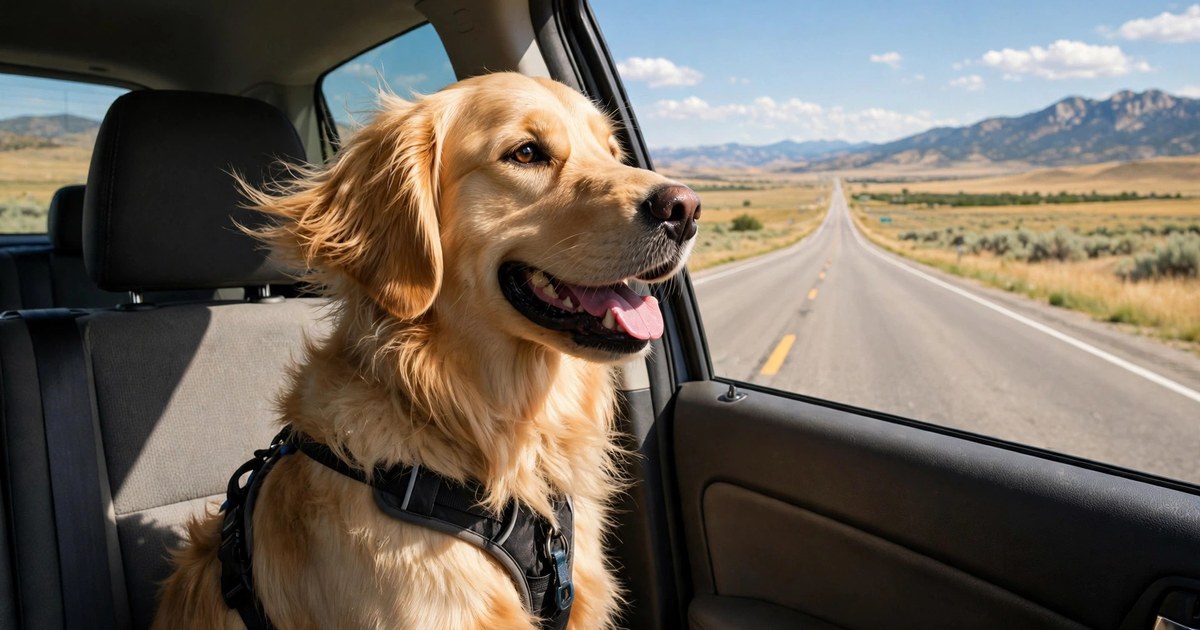
Moving across the country is stressful enough. Add a dog and one question comes up fast: how much does it actually cost to get your dog from one coast to the other? The gap between the cheapest and priciest options is thousands of dollars.
For a typical cross-country move of about 2,500–3,000 miles, expect $700–$2,500 for shared ground transport, $1,500–$3,500 for a private ground transporter, and $125–$2,000 by air depending on your dog's size and whether they fly in the cabin or as cargo. Driving your dog yourself usually lands between $900 and $2,100 once you add up fuel, hotels, and food.
Every Way to Move a Dog Across the Country, Compared
No single option wins for everyone. A 10-pound dog flying in the cabin with you is the cheapest and fastest move there is. A 90-pound dog, or a snub-nosed breed most airlines will not fly, really has one practical choice: the ground.
| Method | Typical cost (one way) | Trip time | Best for |
|---|---|---|---|
| Shared ground transport | $700–$2,500 | 4–7 days | Most dogs; best balance of price and comfort |
| Private ground transport | $1,500–$3,500 | 3–5 days | Large, anxious, senior, or snub-nosed dogs |
| Fly in-cabin (small dogs) | $125–$200 pet fee + your ticket | 6–8 hours | Dogs under ~20 lb with their carrier |
| Fly as cargo | $275–$2,000 | 1 day | Medium and large dogs on airlines that still accept pets |
| Flight nanny | $1,000–$3,500 | 1 day | Owners who want a person with their dog the whole way |
| Drive yourself | $900–$2,100 | 4–5 days | Owners already relocating by car |
Ground Transport Costs: Shared vs Private
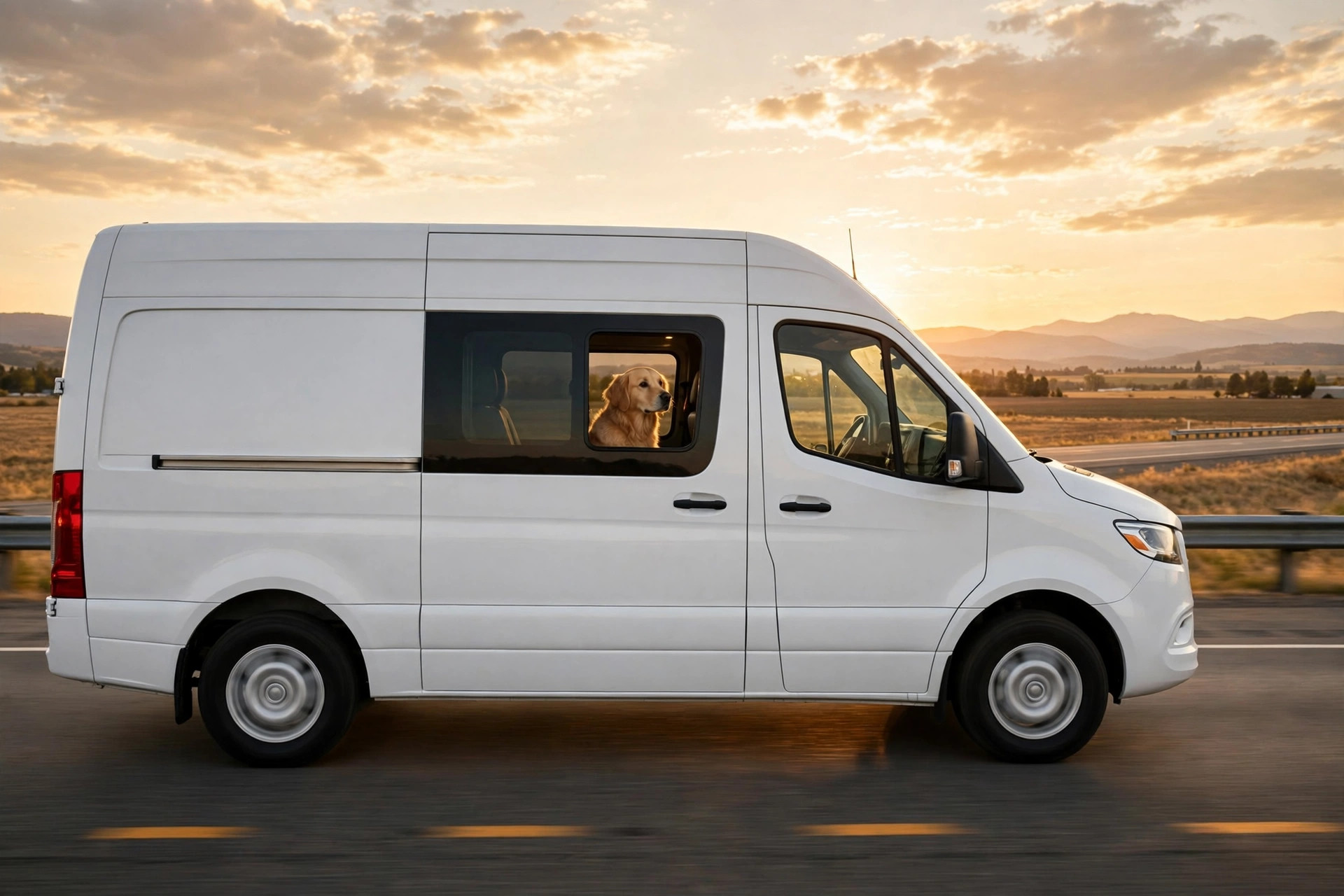
Ground transport is the most common way dogs cross the country. A driver moves your dog door to door in a climate-controlled van or SUV, stopping every few hours for water, walks, and bathroom breaks. Most operators price by the mile, typically $0.50–$1.60 per mile, with a base fee of roughly $200–$400.
The biggest price lever is whether your dog shares the ride. On a shared (consolidated) route, several dogs travel together and the driver loops between pickups and drop-offs. On a private (dedicated) route, the driver carries only your dog on a direct route — and it costs roughly double.
| Distance | Example route | Shared ground | Private ground |
|---|---|---|---|
| 500–1,000 miles | New York to Chicago | $400–$900 | $800–$1,400 |
| 1,000–1,500 miles | Denver to Chicago | $700–$1,200 | $1,200–$1,800 |
| 1,500–2,500 miles | Los Angeles to New York | $1,000–$1,800 | $1,800–$2,800 |
| 2,500–3,000 miles | Full coast to coast | $1,400–$2,200 | $2,500–$3,500 |
Ground transport is also the right call when flying is not an option at all: snub-nosed breeds, giant dogs whose crates exceed aircraft door dimensions, anxious dogs, and senior dogs. Expect a coast-to-coast ground trip to take 4–7 days, and ask the operator how often the driver stops — every 3–4 hours for walks and water is a reasonable standard. The ASPCA's travel safety tips are a good pre-trip read whatever method you choose.
Flying With Your Dog: In-Cabin, Cargo, or Flight Nanny
Flying is the fastest option, but the rules narrow quickly with your dog's size. The AKC's travel guidance covers the airline rules and paperwork in more detail.
In-cabin (small dogs only)
If your dog fits in a carrier under the seat in front of you — usually under about 20 pounds including the carrier — the pet fee is $125–$200 each way. American, Delta, and United each charge $150 per segment, and Southwest charges $125. You must be on the same flight. This is the cheapest professional option by a wide margin, and the only one where your dog is never out of your sight. Our flying with a dog checklist walks through every step before takeoff.
Air cargo
Medium and large dogs fly in a temperature-controlled cargo hold. Expect $275–$2,000 depending on weight, crate size, and route, with a cross-country flight for a 40–70 pound dog typically landing around $850–$1,400. Availability is the catch: many airlines have cut back or stopped accepting pets as cargo, and most will not fly snub-nosed breeds at all. Always confirm the route accepts pets before you book anything else around it.
Flight nanny
A flight nanny flies in the cabin with your dog and hands them to you at arrival. Expect $1,000–$3,500 all in, including the nanny's ticket. It costs more than cargo, but your dog has a person with them the entire trip — the main reason owners choose it for puppies, seniors, and anxious dogs.
Driving Your Dog Yourself: The Real Cost
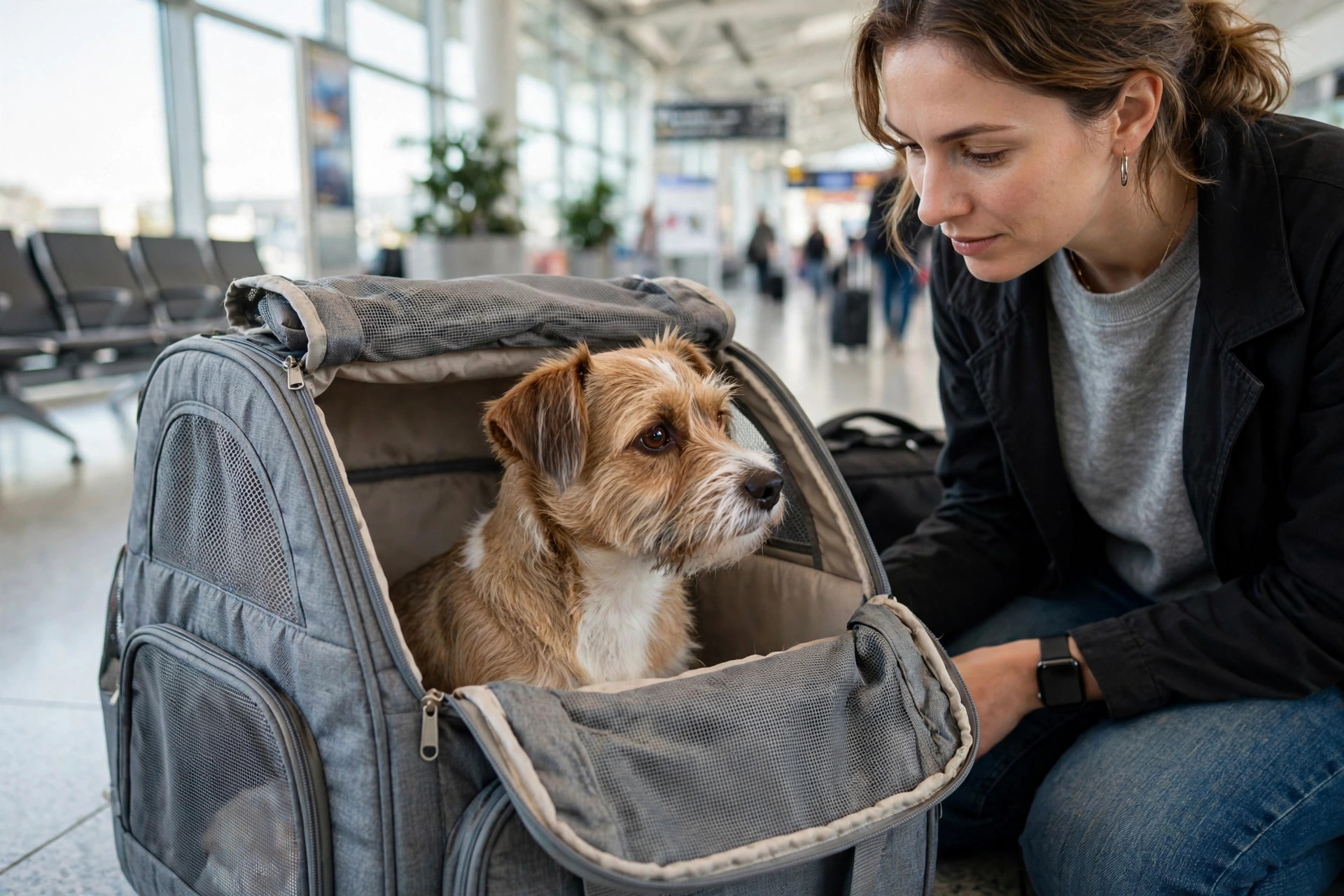
Driving looks free because there is no invoice. Add it up and it rarely is — and it costs four or five days behind the wheel. For a 2,800-mile drive, the out-of-pocket math typically looks like this:
- Fuel: about 112 gallons at 25 mpg — roughly $350–$450 at typical 2026 prices.
- Hotels: 4 nights in pet-friendly hotels at $100–$180 a night, plus pet fees of $25–$75 a night — roughly $500–$900.
- Food and stops: $150–$300 for meals and snacks over 4–5 days.
- Total out of pocket: roughly $900–$1,500, before you count 4–5 days off work.
Plan stops every 2–3 hours, never leave your dog alone in a parked car, and pack with our road trip with a dog packing checklist.
The Hidden Costs Nobody Quotes You
The transport fee is rarely the whole bill. These extras apply to most cross-country dog moves, and they can add $200–$800 before your dog even leaves. A quote that looks $300 cheaper than the competition often just leaves the crate, the certificate, and the door-to-door fee off the page.
| Extra cost | Typical range | When it applies |
|---|---|---|
| Travel crate (airline-approved) | $50–$400 | Almost always for air; often for ground too |
| Health certificate from your vet | $35–$200 | Most interstate moves; all flights |
| Extra pet on the same trip | $150–$400 each | Multi-pet households |
| Oversized crate / giant breed surcharge | $100–$300 | Dogs over ~100 lb |
| Door-to-door pickup (vs meeting point) | $200–$500 | Ground transport in rural areas |
| Rush or date-specific booking | $200–$500+ | Tight timelines, holiday weeks |
Get every quote in writing with these line items broken out. The VCA guide to traveling with your pet also covers what to prepare before any long trip.
What Decides Your Price: 5 Factors
If two owners get wildly different quotes for the same route, one of these five things is usually the reason:
- Distance. The per-mile rate falls as the trip gets longer, but the total still climbs with every mile.
- Your dog's size. Size sets the crate, the vehicle space, and the airline weight bracket. A 15-pound dog and a 90-pound dog are different jobs at different prices.
- Shared vs private. A private, direct route costs roughly double a shared one. Worth it for urgent moves and dogs that do not travel well with others.
- Timing. Summer and holiday weeks cost more, and a date-specific booking costs more than a flexible window. Booking 3–4 weeks ahead is usually the cheapest point.
- Breed and age. Snub-nosed breeds and very senior dogs often cannot fly, which removes the cheapest air options — and some ground operators add a senior-care fee of $300–$800.
How to Vet a Transporter (Red-Flag Checklist)
Pet transport has its share of scams: fake listings, brokers who take a deposit and vanish, and uninsured drivers. Run every transporter through this checklist before you pay anything:
- Check the USDOT number. Any company moving pets across state lines for hire should have an active USDOT number you can verify. No number, no booking.
- Read reviews off their own site. Look for recent, detailed reviews on Google or the transport marketplace — not only the testimonials on the company's homepage.
- Ask for proof of insurance. A legitimate operator carries cargo and liability insurance that covers your dog. Get the policy details in writing.
- Never pay 100% upfront. A deposit of 20–50% is normal. Full payment before pickup, especially by wire transfer or gift card, is a red flag.
- Get a written contract. It should state the pickup and delivery windows, the total price, what happens if the trip is delayed, and who pays if your dog needs a vet on the road.
- Ask how the trip actually runs. How often does the driver stop? Where does your dog sleep overnight? Will your dog be crated the whole trip, or exercised at stops?
- Trust the quote gap. A quote hundreds of dollars below every other operator is not a bargain — it is usually a broker who will re-list your job, or a scam.
Marketplaces that hold payment in escrow until delivery add a layer of protection. Whatever route you choose, keep your vet's number and your dog's records with you — not in a box on the moving truck.
Your Booking Timeline: What to Do and When
4 weeks before the move
Decide the method, collect 3 quotes, and check your dog's ID tags and microchip registration. If you are flying, confirm the airline accepts pets on your exact route and book the pet spot — in-cabin spots are limited per flight. If you are moving house as well, our moving with pets checklist covers the rest of the move.
2 weeks before the move
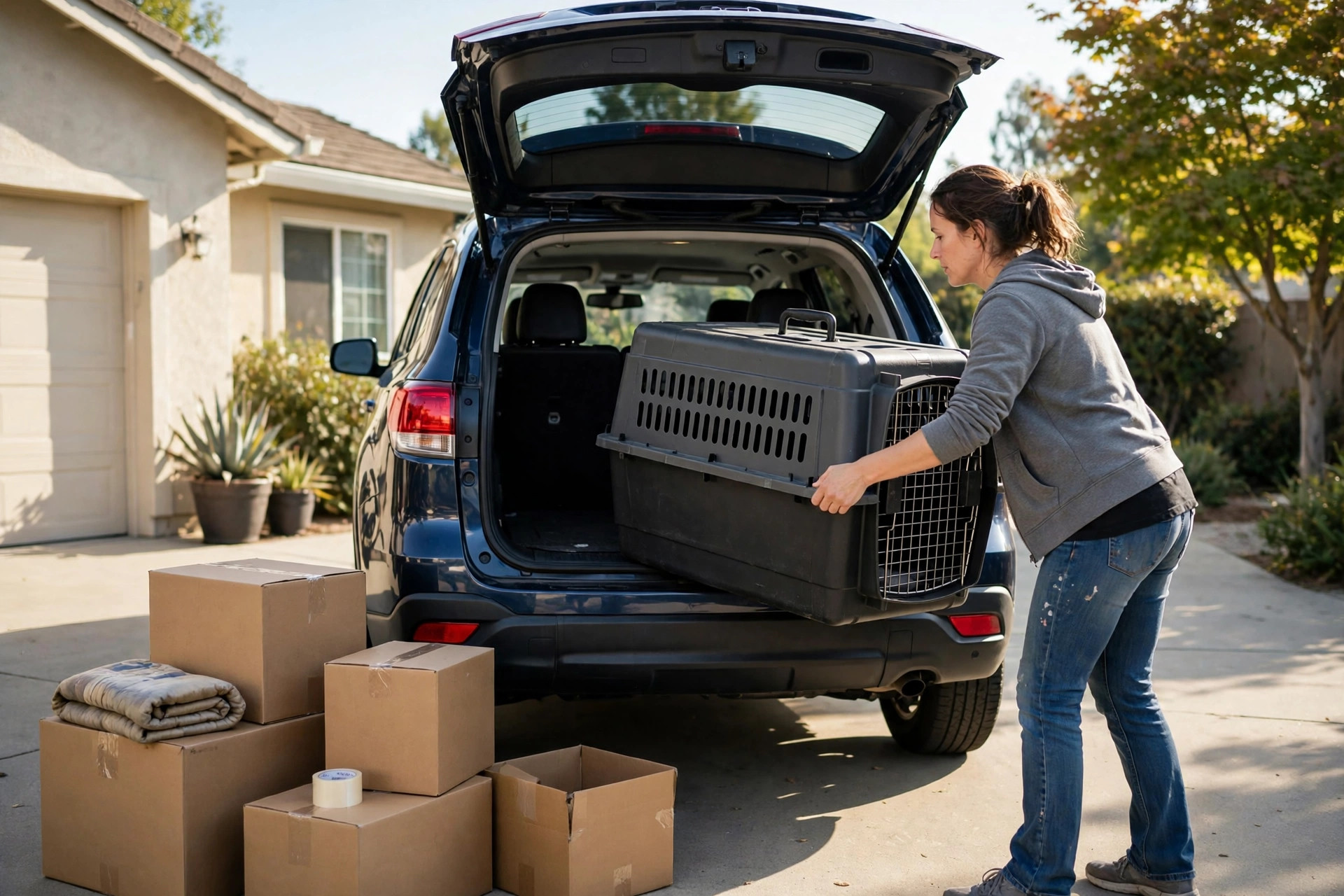
Book the transporter or the flight, buy or borrow the right crate, and do a few practice car rides or crate sessions so the trip itself is not your dog's first time in the carrier.
1 week before the move
Visit your vet for the health certificate (most are valid for 10–30 days, so do not get it too early), pack your dog's food, medication, and a familiar blanket, and confirm pickup times in writing.
Moving day
Feed a light meal a few hours before departure, offer water right up to pickup, attach a tag with your new address and phone number, and keep your dog's leash, food, and records in your own bag — never in checked luggage or the moving truck.
FAQ: Transporting a Dog Across the Country
What is the cheapest way to transport a dog across the country?
For a small dog, flying in the cabin with you at $125–$200 each way. For a medium or large dog, driving yourself ($900–$1,500 out of pocket) or shared ground transport ($700–$2,500) are the cheapest options — shared ground usually wins once you count the days off work that driving costs you.
How long does ground transport take coast to coast?
Expect 4–7 days for shared ground transport and 3–5 days for a private, direct route. The driver covers roughly 400–500 miles a day with regular stops for water, walks, and bathroom breaks.
Can my dog fly cargo across the country?
Often yes, for medium and large dogs, at $275–$2,000 depending on weight and route. But availability is limited in 2026, many airlines restrict the summer months, and most will not fly snub-nosed breeds. Confirm your exact route accepts pets before booking anything else.
Do I need a health certificate to transport my dog?
Most interstate moves and all flights require a health certificate from a USDA-accredited veterinarian, usually issued within 10–30 days of travel. Budget $35–$200 for the exam and paperwork.
Is ground transport safe for an older dog?
For most senior dogs, ground is the gentlest option — no altitude changes, no cargo hold, and regular stops. Tell the operator about your dog's age and any mobility or comfort needs upfront; some add a senior-care fee of $300–$800, so ask early.
How far ahead should I book a pet transporter?
Book 3–4 weeks ahead for the best price and widest choice. Last-minute and date-specific bookings cost more, and summer and holiday weeks fill up first. A flexible pickup window is one of the easiest ways to cut the quote.
The Bottom Line
Transporting a dog across the country costs anywhere from $125 in the cabin to $3,500 for a private ground run — and the right answer depends on your dog's size, breed, temperament, and timeline. Start with the method that fits your dog, get three written quotes, vet the operator with the checklist above, and budget $200–$800 extra for the crate, the health certificate, and the add-ons.
Want a number for your exact trip? Try CalcPet's pet travel cost estimator — enter your route, your dog's size, and your method, and it will estimate the total before you start collecting quotes.