A road trip with your dog sounds simple until departure morning. That is when you discover the leash is still hanging by the front door, the water bowl is in the dishwasher, and nobody knows where the vaccination records are. Dogs do not pack for themselves, so the whole trip depends on the bag you pack the night before.
This checklist fixes that. It covers everything your dog needs on the road — food, water, ID, comfort, cleanup and first aid — with real quantities, a 7-day prep timeline, and a quick-reference list you can tick off before you leave. Use it for a weekend drive or a two-week tour: the same core list works for both, and the extras section tells you what changes with the trip.
Start With the 7-Day Countdown
Packing goes wrong when it all happens in the last hour. Spread it over a week and nothing gets forgotten.
7 days before: Book any pet-friendly stays and check their dog rules — size limits, extra fees, whether dogs can be left alone in the room. Confirm your dog's ID tag has your current mobile number and that the microchip registration details are up to date. If a routine vet visit is due before a long trip, book it now rather than the day before.
3 days before: Test the travel setup. Clip the harness into the seat belt or strap the crate down and take a short drive so your dog gets used to it. Wash the travel blanket and bed so they smell familiar, not like the laundry shelf. Charge any car chargers and check the tyre pressure and fuel — boring, but a breakdown with a dog on board is far worse than one without.
The day before: Pack the dog bag (the full list is below), portion the food into labelled bags, and freeze a couple of water bottles — they double as ice packs and drinking water as they melt. Put the bag by the door so it leaves with you, not after you.
Departure morning: Give a small meal a few hours before you leave rather than right before the drive, and take a proper walk before loading up. A dog that has already had a toilet break and a stretch settles far faster in the back seat.
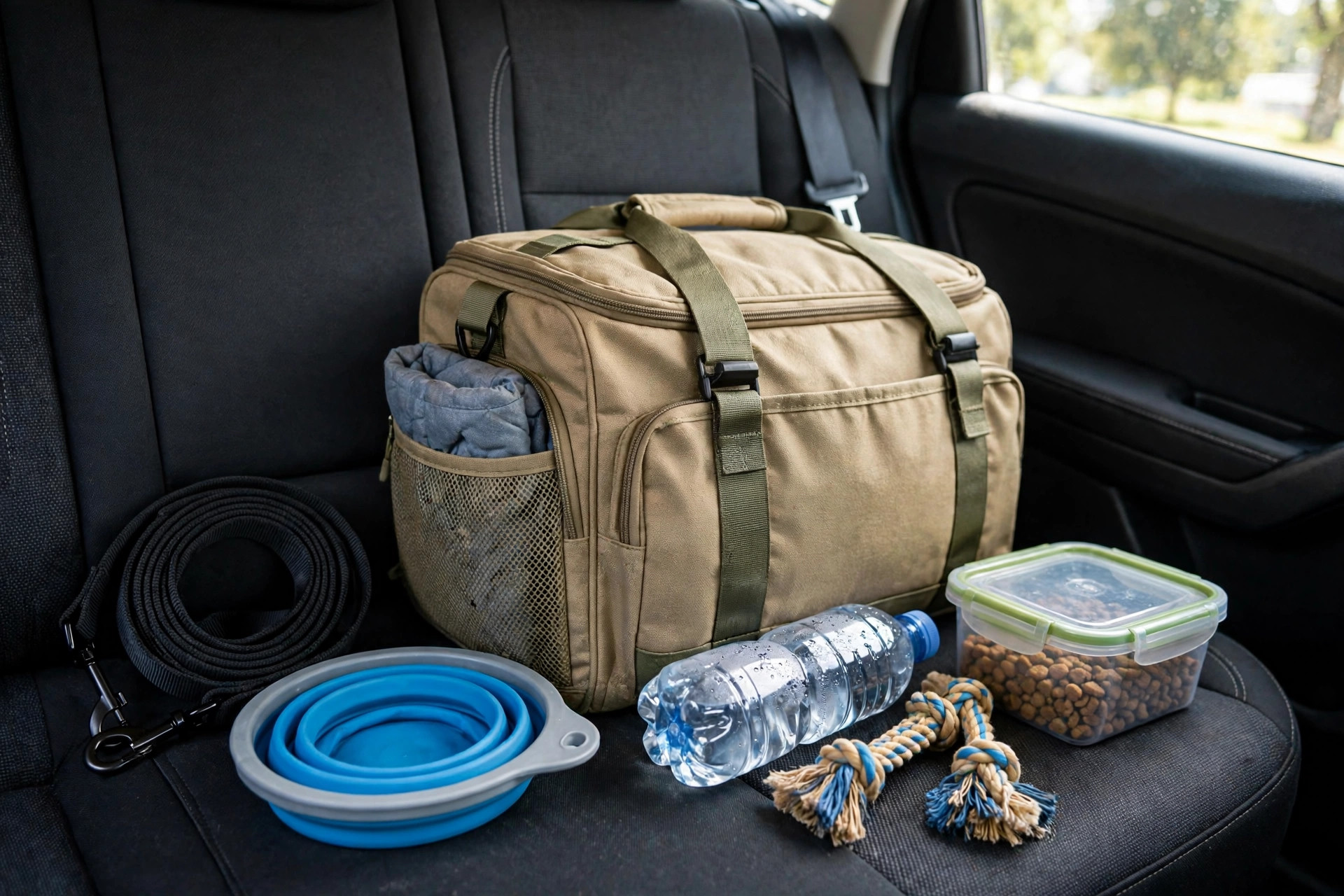
The Complete Packing Checklist
Work through each group and tick it off. The quantities assume one medium-sized dog; scale food and water up for large breeds and down for small ones.
Food and Water
- Your dog's usual food — enough for the whole trip plus two extra days, in case plans change. A sudden switch to a new food on the road is a common cause of an upset stomach.
- Pre-measured portions in labelled zip bags, so feeding at a rest stop takes seconds.
- Water from home or bottled water — at least a 2-litre bottle per dog per travel day as a starting point, more in hot weather. Some dogs refuse unfamiliar-tasting water.
- Two collapsible bowls (one for food, one for water) and a scoop or measuring cup.
- Treats for good behaviour at stops, plus one long-lasting chew for long stretches.
ID and Documents
- Collar with current ID tags showing your mobile number.
- Microchip details confirmed up to date with the registry.
- A copy of vaccination records — many pet-friendly hotels, kennels and parks ask for proof.
- A recent photo of your dog on your phone, in case you get separated.
- Your vet's number and the number of a 24-hour emergency vet near your destination, saved in your phone.
- Hotel and booking confirmations, with the pet policy noted.
Walking and Restraint
- A crash-tested car harness that clips into the seat belt system, or a secured crate that cannot slide. Never attach a car restraint to the collar alone.
- Everyday leash plus a spare — the leash is one of the most commonly forgotten items, so pack the spare first.
- A long line for open spaces and unfamiliar parks.
- Waste bags — at least one roll per travel day, plus a spare roll in the glove box.
Comfort and Sleep
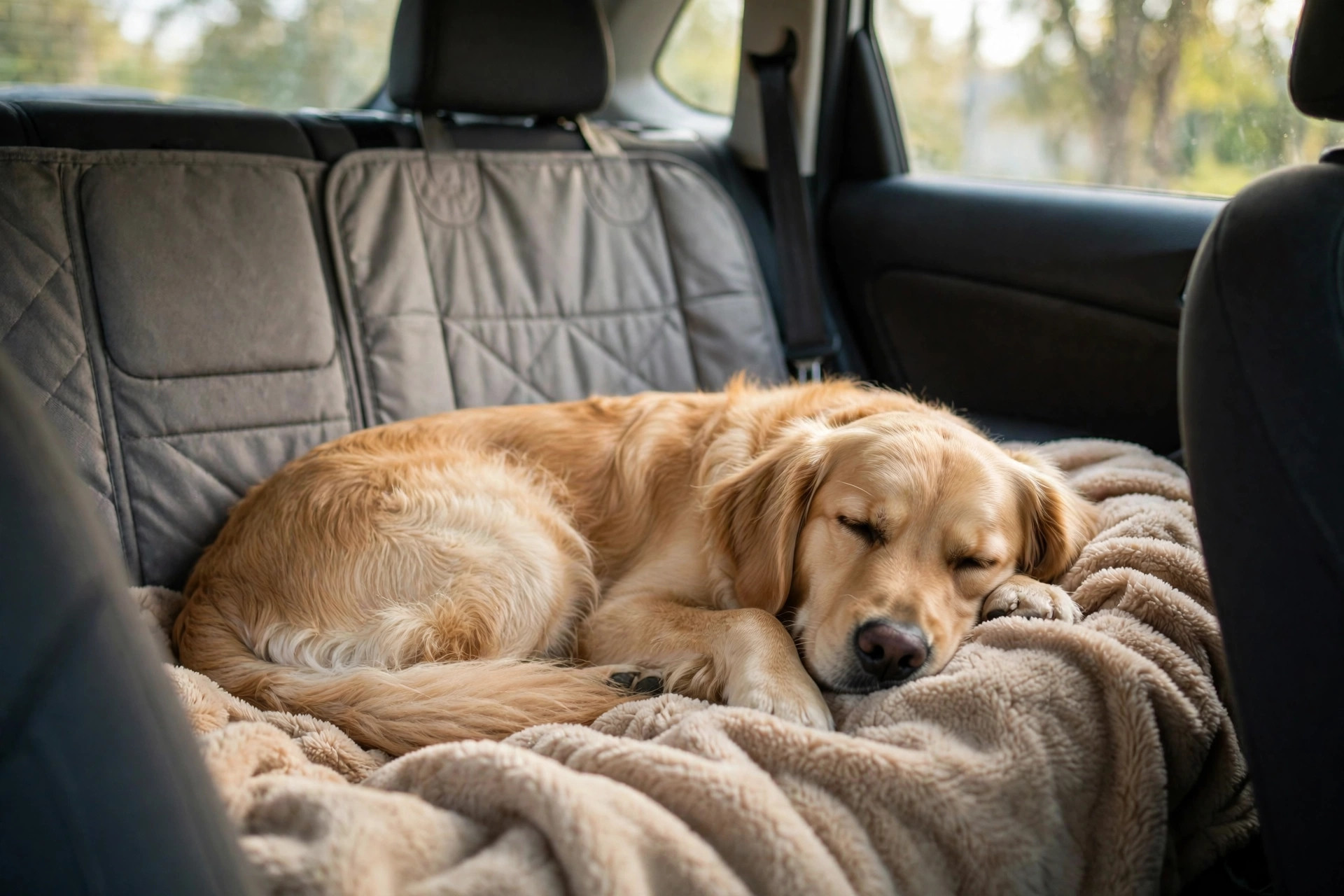
- Your dog's bed or a familiar blanket. A familiar smell helps a dog settle in a strange room.
- A favourite toy and one chew — old favourites, not new ones, so the car feels familiar.
- A seat cover to protect the upholstery and give your dog a non-slip surface.
- A window shade for sunny stretches, and a non-slip mat if your dog rides in the cargo area.
Cleanup
- Two old towels — one for muddy paws, one for the car.
- Paper towels, pet-safe wipes and an enzyme cleaner for accidents.
- Trash bags for used wipes and waste.
- A spare blanket in case the first one gets soaked or muddy.
First Aid and Medications
- Any medication your dog already takes — the full trip's supply plus two extra days. Pack it in the cabin, not the boot, so it stays within reach.
- A basic dog first-aid kit: gauze, a self-adhesive bandage, saline, a pet-safe antiseptic, a tick remover and tweezers.
- Your vet's phone number written on a card in the kit, not just in your phone.
Weather and Extras
- A coat for cold destinations, or a cooling mat or damp towel for hot ones.
- Booties if you will be walking on hot pavement or rough ground.
- A flashlight for night stops.
- A phone charger and a car charger — your phone is your map, your hotel key and your emergency line.
- A dog life jacket if swimming or boating is on the itinerary.
How Much Food and Water to Pack
Guessing is how dogs go hungry or bags overflow. Use this table as a starting point, then adjust for your dog's size and the weather — hot days need more water, and big dogs need more of everything.
| Trip length | Food to pack | Water to pack |
|---|---|---|
| Day trip | One day's food + one extra meal | 2–3 litres |
| Weekend (2 days) | Food for 4 days, pre-portioned | 4–6 litres |
| One week | Food for 9 days, pre-portioned | 14 litres, plus refill stops |
| Two weeks | Food for 16 days, or plan a pet-store stop mid-trip | Daily refills — carry 4 litres at a time |
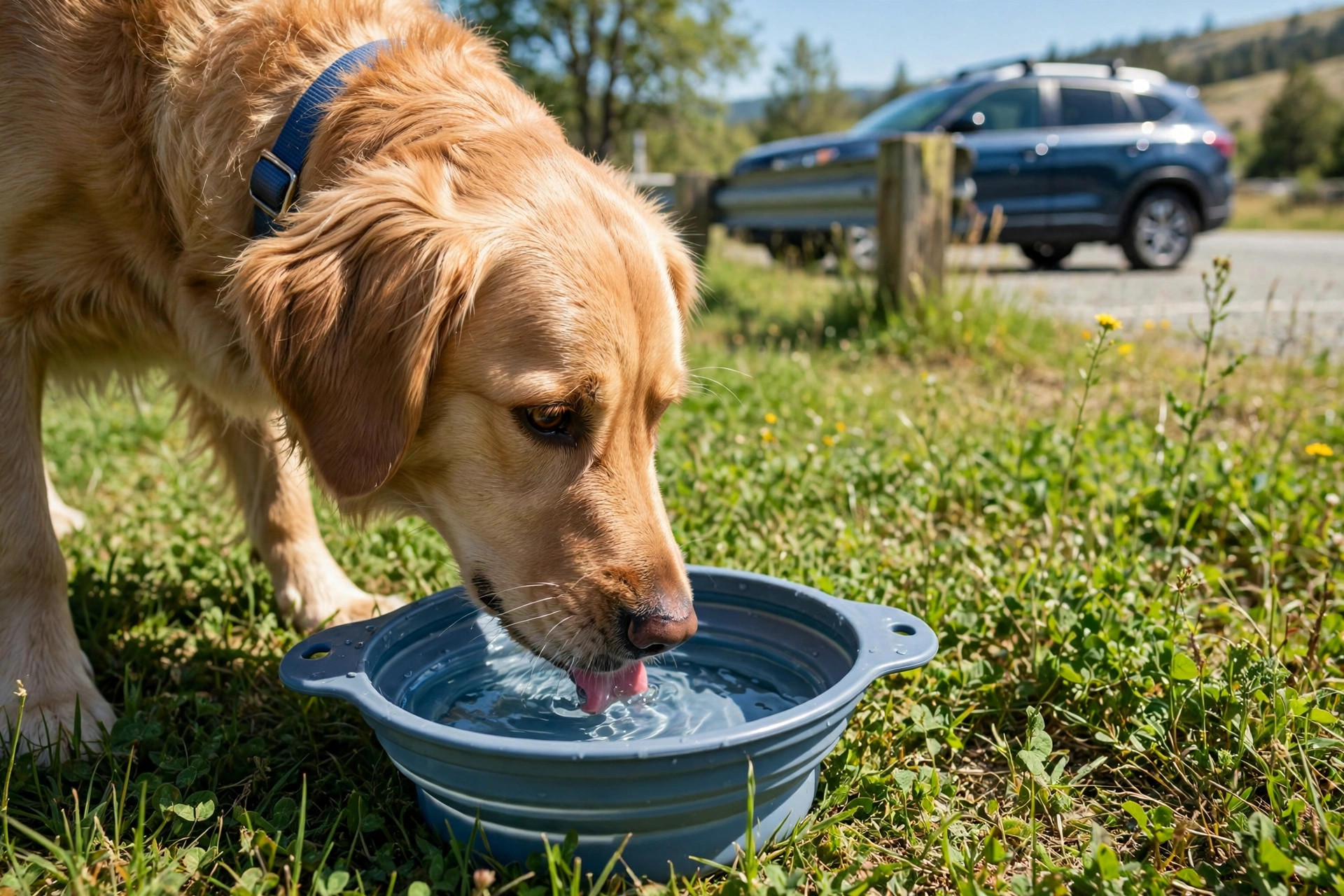
Offer water at every stop, not just at mealtimes. Dogs drink less in a moving car, so rest stops are when they catch up. Keep the water and one bowl in the cabin within reach — if it is buried in the boot, you will skip offering it.
Packing the Car: What Goes Where
Where things sit matters as much as what you pack. Keep the items you need at the next stop within reach, and put the rest away properly.
In the cabin: water and one bowl, the everyday leash, waste bags, a towel, the first-aid kit, the phone charger and a chew. Everything on this list gets used at a rest stop, so it should be reachable without unloading the car.
In the boot: the food container, the bed or spare blanket, the spare leash, the crate (if it is not in use), cleaning supplies and the bulk water supply.
Your dog rides in the back seat, secured in a harness or a strapped-down crate — never loose, never in the front passenger seat where an airbag can injure them, and never in an open truck bed. Loose items in the cabin become projectiles in a sudden stop, so stow anything heavy low and tight.
Before a long drive, do a test load. Put the dog, the restraint, the seat cover and the luggage in together and check that your dog can lie down and turn around without blocking your mirrors or the handbrake. Finding out the setup does not fit on the driveway is far better than finding out on the motorway.
5 Mistakes That Ruin a Dog Road Trip
1. Packing a new food. A new brand or flavour on the road is the fastest route to an upset stomach and a messy car. Stick to the food your dog already eats, and save diet experiments for home.
2. Forgetting the spare leash. Leashes get wet, muddy and tangled, and they are the single most forgotten item on road trips. A spare in the glove box costs nothing and saves the trip.
3. Leaving your dog alone in a parked car. On a warm day the inside of a parked car heats up far faster than the air outside — cracking the windows barely helps. Never leave your dog in a parked car, even for a few minutes. Take turns with your travel companions or skip the stop.
4. No stops planned. Plan a stop every two to three hours for a toilet break, water and a short walk. Dogs that hold it for five hours arrive stressed, stiff and far more likely to have an accident at the hotel.
5. Skipping the practice run. A dog that has never worn a car harness or ridden in a crate will spend the first hour of the trip panicking. A few short practice drives in the week before the trip are worth more than any gadget.
Quick-Reference Checklist (Tick Before You Leave)
Print this section or screenshot it — it is the whole list on one screen.
- ☐ Usual food + 2 extra days, pre-portioned
- ☐ Water (2 litres per travel day) + 2 collapsible bowls
- ☐ Collar with current ID tags + microchip details checked
- ☐ Vaccination records copy + recent photo
- ☐ Vet number + emergency vet number saved
- ☐ Crash-tested harness or secured crate, tested on a short drive
- ☐ Everyday leash + spare leash + long line
- ☐ Waste bags (1 roll per day + spare)
- ☐ Bed or familiar blanket + favourite toy + chew
- ☐ Seat cover + window shade
- ☐ 2 towels + wipes + enzyme cleaner + trash bags
- ☐ Regular medications + 2 extra days + first-aid kit
- ☐ Coat or cooling mat + booties + flashlight
- ☐ Phone charger + car charger
- ☐ Hotel confirmations + pet policy noted
FAQs
How often should I stop on a road trip with my dog?
Every two to three hours. Each stop should include a toilet break, fresh water and a short walk of five to ten minutes. Puppies, senior dogs and dogs that get restless in the car may need stops more often — watch your dog rather than the clock.
How much water does a dog need on a road trip?
As a packing figure, carry at least 2 litres per dog per travel day and offer water at every stop. Hot weather, large breeds and active rest stops all push that figure up. Bringing water from home helps dogs that refuse unfamiliar-tasting water.
Can my dog ride in the front seat?
No — the back seat is the safe place. A front-seat airbag can seriously injure a dog in a crash, and a dog in the front is a distraction for the driver. Secure your dog in the back with a crash-tested harness or a strapped-down crate.
What if my dog gets carsick?
Short practice rides in the week before the trip help many dogs get used to the car, along with fresh air and a light meal a few hours before driving rather than right before you leave. If carsickness keeps happening on every trip, ask your vet for advice before your next journey.
Do I need my dog's vaccination records on a road trip?
Yes — carry a copy. Pet-friendly hotels, kennels, dog parks and some campgrounds ask for proof of vaccination, and if your dog needs an unexpected vet visit on the road, the records save time and repeat vaccinations.
What should I do if I lose my dog on the road?
Act fast: search the immediate area, call your dog calmly, and alert nearby businesses and the local animal shelter. This is exactly why the ID tag, up-to-date microchip and a recent photo matter — they are what bring a lost dog home from an unfamiliar town.
The Bottom Line
A good road trip with a dog comes down to three things: a secure way to ride, a stop every two to three hours, and a bag packed the night before — not the morning of. Pack the usual food with a two-day buffer, keep water and waste bags within reach, and never leave your dog alone in a parked car. Do that, and the drive becomes part of the holiday instead of the stressful bit before it.
If your trip involves flying instead of driving, read our flying with a dog checklist next — it covers airline rules, carrier sizes and the same 20-step timeline format. And if you are leaving your dog behind instead, our boarding checklist covers everything to sort before drop-off. For the season ahead, the holiday travel checklist has the festive version of this list, and our car-travel carriers guide will help you pick the right restraint for your dog. Once you are home, find out how old your dog really is with our free dog age calculator — and for the road ahead, the American Kennel Club's road-trip safety tips and the ASPCA's travel safety tips are worth a read before you set off. The AKC's ten tips for travelling with your dog covers the same ground in a shorter format.