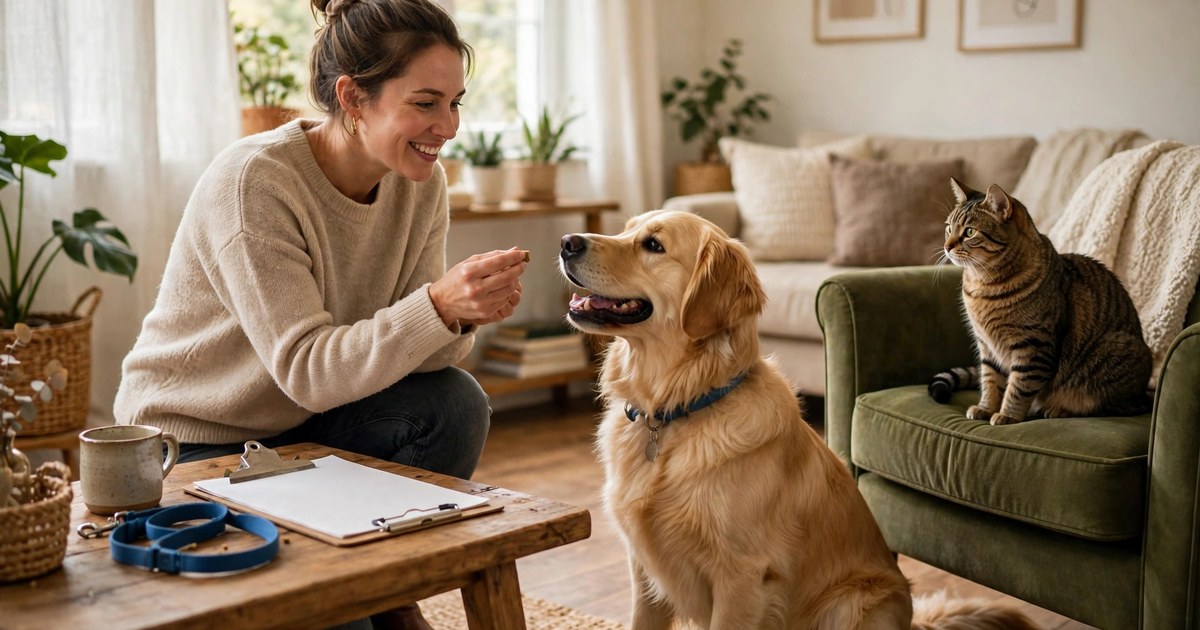
A good pet sitter can handle almost anything — if they have the right information. Most sitting problems come from small gaps: nobody wrote down that the dog gets fed in the laundry room, the cat hides inside the box spring, or the spare key is with the neighbour, not under the mat. A clear pet sitter instructions checklist closes those gaps before you leave, so your sitter never has to guess, and you never have to answer panicked texts from the airport.
This guide gives you a complete checklist you can copy, fill in, and hand over — for dogs, cats, or a home with both. It covers feeding, medications, the daily routine, quirks, emergency contacts, and house notes, plus a day-before timeline and a printable one-page template. Nothing here is medical advice: for anything about your pet's health, your vet's written instructions are the only source your sitter should follow.
The One-Page Core: What Every Sitter Needs First
Keep the most urgent information on a single page at the very top of your handover. In a rush, nobody wants to scroll through five pages to find a phone number. Your one-page core should list:
- Your phone number and the best way to reach you while you are away — and your time zone if you are travelling far.
- A local backup person who has a key and can make decisions if you cannot be reached.
- Your regular vet: clinic name, address, and phone number.
- The nearest 24-hour emergency vet clinic: name, address, and phone number. Many regular clinics close at night and on weekends.
- Your pet's name, a recent photo, age, breed, and weight — a photo speeds up a search if a pet ever slips out.
- Your written permission for vet care — tell your vet in advance that a sitter may bring your pet in, and write down how much the sitter can approve without reaching you.
Everything else in this guide is detail that supports that one page. Print the core page and stick it on the fridge; keep the full checklist beside it or in a shared note on your sitter's phone.
1. Feeding: Write Down Exactly What You Already Do
Feeding mistakes are the most common sitting mix-up, and they are the easiest to prevent. Do not write "feed as usual" — your sitter does not know what "usual" means. Write it like a recipe:
- Brand and type of food for each pet, and exactly where it is stored.
- The amount per meal — measured with the scoop or cup you actually use. Leave that scoop on top of the food container.
- Meal times. Pets expect food at the same times every day; a late dinner is a stressed pet.
- Treats allowed, how many, and which foods are off limits. Name the forbidden foods plainly — chocolate, grapes, onions, and anything with xylitol are common examples many owners list, but write down your own household's full list.
- Water: which bowls or fountains to refill, and how often. If you use a fountain, say where the spare filters live.
- Separate feeding: if pets eat apart (for example, the dog must not reach the cat's food), say where each pet eats and whether a door stays shut during meals.
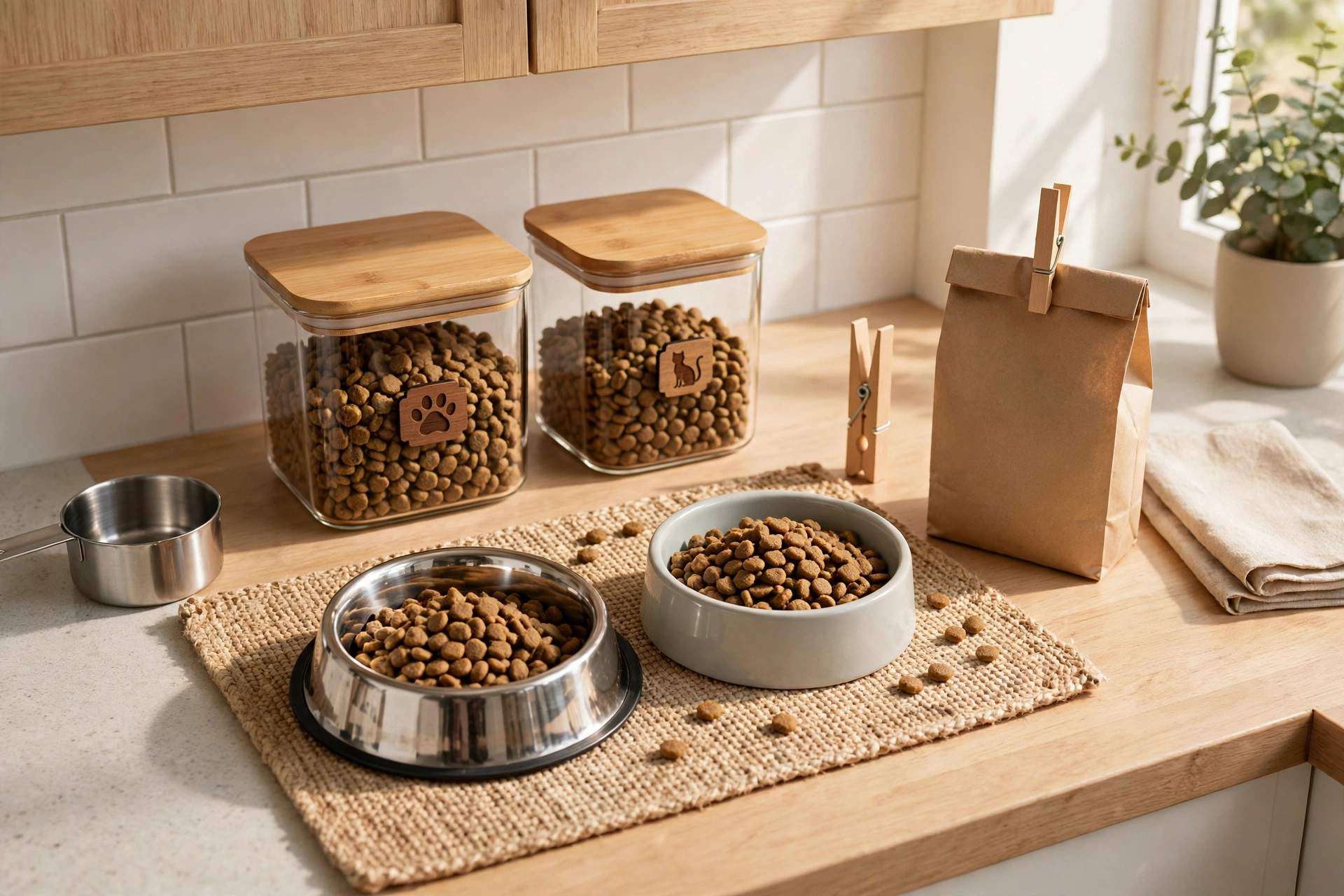
Stock check before you go: make sure there is enough food, treats, and litter for the whole trip plus two extra days. A sitter should never have to make an emergency shop run on your behalf.
2. Medications: Copy the Vet's Label, Word for Word
Medication is where a sitter most needs precision — and where you should add nothing of your own. Do not write your own instructions from memory. Copy each item exactly as written on the label your vet provided:
- Name of each medication and what it is for.
- Dose, form, and timing exactly as the label states it.
- How you give it — in a pill pocket, wrapped in a treat, or by hand — and where the supplies for that are kept.
- Where the medication is kept and how much is left.
- What to do if a dose is missed or refused: write down your vet's own instruction for that situation, or simply "call the vet" with the number right there. Never invent a catch-up rule yourself.
If your pet takes no medication, write "No medication" on the sheet anyway. A blank space looks like something forgotten; "none" is an answer.
3. The Daily Routine: Walks, Toilets, Litter, and Sleep
Pets settle fastest with a sitter when the day runs on its normal rhythm. Write the routine as a timeline, not a paragraph:
- Walk times and length — which leash and harness, the usual route, and whether your dog pulls or reacts around other dogs.
- Potty habits — where your dog prefers to go, the cue word you use, and where the waste bags are.
- Litter box details — how many boxes, where they are, and how often to scoop. For multi-cat homes, note which box each cat tends to use.
- Sleep and crate routine — where each pet sleeps, whether the crate door closes, and what time lights go out.
- Play and quiet time — favourite games, favourite toys, and when your pet usually naps.
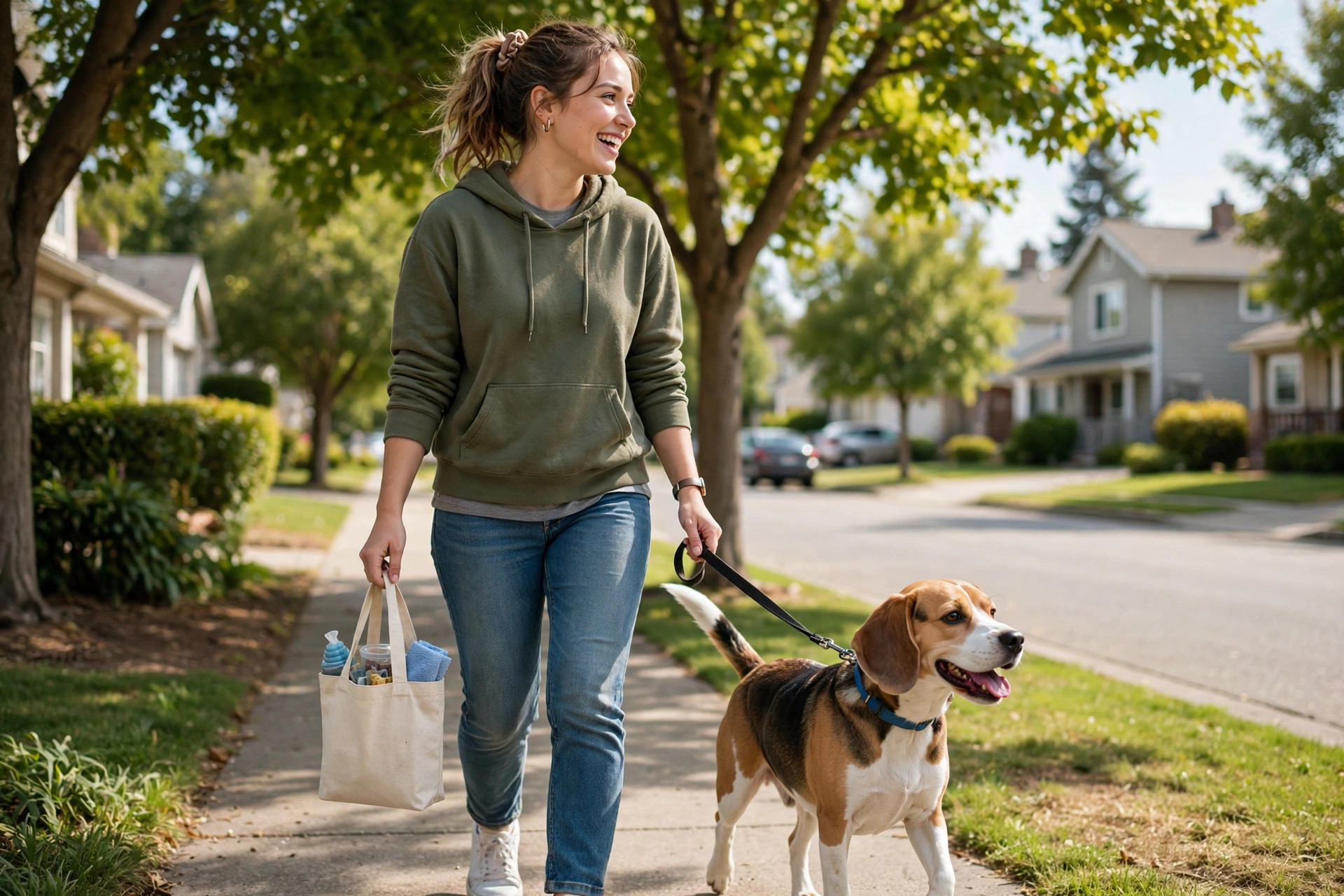
A simple example routine fits on a few lines: "7:00 — out for a 20-minute walk, feed breakfast in the kitchen. 12:30 — garden break, fresh water. 17:30 — walk, then dinner. 21:00 — last garden break, crate door closed, lights out." Your sitter can follow that without a single phone call.
4. Quirks, Triggers, and House Rules
This is the section only you can write, and it is the one sitters value most. Think about everything a stranger would not know:
- Hiding spots, especially for cats — the box spring, the top of the wardrobe, behind the washing machine. A sitter who cannot find the cat will assume the worst.
- Fears and triggers — thunderstorms, the vacuum, bikes, fireworks, strangers at the door, other dogs on walks.
- Door habits — does your dog bolt for an open door? Does the cat slip out when the front door opens? Say which doors must be shut before another is opened.
- How your pet shows stress — hiding, pacing, refusing food, over-grooming — so the sitter knows what is normal for your pet and what is worth a call.
- House rules — off-limits rooms, furniture rules, and whether the pet can be left alone in the garden.
- People rules — is your dog friendly with children and other dogs, or should greetings be avoided?

Write down your pet's cues too: the words they already know ("sit", "wait", "leave it", "come"), and the one trick that gets them back inside. A sitter who speaks your pet's language is a sitter your pet will trust.
5. Vet, Emergency Contacts, and Permission to Treat
Emergencies are rare, but when they happen, minutes matter and nobody should be hunting for a phone number. Your contacts section should include:
- Your vet — name, address, phone, and opening hours.
- The nearest 24-hour emergency clinic — name, address, and phone.
- ASPCA Animal Poison Control — (888) 426-4435, open 24 hours. A consultation fee may apply. List it as a contact only; your vet or the clinic should guide any actual care.
- Your backup person — name, phone, and what they are allowed to decide.
- People authorised to collect your pet — name them; a sitter should not hand a pet to someone you have not named.
- Your written vet-care authorisation — a signed line saying the sitter may seek care up to an amount you set, with the date. Tell your vet in advance so the clinic expects it.
Also note your pet's microchip number and the registry it is listed with, plus your pet insurance provider and policy number if you have one. The ASPCA's general pet care guide is a useful reference for the everyday care basics behind this checklist, and the VCA guide to boarding your dog covers what to confirm with any caregiver before you travel.
6. House Notes and Supplies: Keys, Codes, and Where Things Live
Half of sitting is housekeeping. Leave a short "where things live" map so your sitter never opens the wrong cupboard:
- Keys and codes: spare key location, door code, and alarm code. Share alarm codes in person or in a message, not on a printed sheet left out in the open — and change them when you return if you prefer.
- Supplies map: food, treats, litter, waste bags, cleaning spray, towels, leashes, harnesses, carrier, and the first-aid basics.
- Wifi name and password if the sitter is staying over.
- Thermostat setting you want kept, and which lights stay on at night.
- Trash and recycling day and where the bins go.
- Off-limits areas — rooms, cupboards, or the garden shed the sitter should not enter.
- Plants and hazards: any houseplants, cleaning products, or storage the pets must not reach.
For cat owners, the Cornell Feline Health Center's health topics are a good reference for understanding everyday cat care needs when you write your cat's section.
7. Multi-Pet Homes: One Row Per Pet
If you have a dog and a cat — or two dogs, or three cats — do not write one blended list. Give each pet its own row, because their needs are different and a sitter will mix them up otherwise. A simple table works:
| Pet | Food & amount | Times | Routine note |
|---|---|---|---|
| Bella (dog, 4 yrs) | Chicken kibble, 1 cup, kitchen bowl | 7:00 & 17:30 | Two 20-min walks; sleeps in crate, door closed |
| Milo (cat, 2 yrs) | Salmon wet food, half a tin, laundry-room bowl | 7:00 & 18:00 | Litter scooped morning and evening; hides in wardrobe |
Note any separation rules in the same table: who eats where, which doors stay shut at mealtimes, and whether the dog can reach the cat's food or litter. Homes with more than one pet are where written instructions pay for themselves fastest.
The Day-Before Timeline: Prepare in Order
Do not write the checklist on the morning you leave. Work through it in stages:
- A week before: confirm the sitter's dates and times, share your vet's name and number, and tell your vet a sitter may bring your pet in. Check food, litter, and medication stocks.
- Three days before: write the full checklist, fill in the template below, and send your sitter a copy so they can ask questions while you are still home.
- The day before: do a walk-through with your sitter. Show them where the food, litter, leashes, carrier, cleaning supplies, and spare key live. Let them practise fitting the harness and finding the litter scoop.
- The morning you leave: feed and walk the pets on the normal schedule, leave the printed one-page core on the fridge, top up water bowls, and put the full checklist beside it. Text your sitter once you are on your way.
Copy-Paste Fill-In Template
Copy this template, fill it in, and hand it to your sitter. One filled copy on the fridge beats a perfect document left on your laptop.
| Section | Fill in |
|---|---|
| Owner name & phone | |
| Dates away | |
| Backup person & phone | |
| Vet: name, address, phone | |
| 24-hour emergency clinic | |
| Pet 1: name, age, breed, weight, photo | |
| Pet 2: name, age, breed, weight, photo | |
| Food: brand, amount, times, where stored | |
| Treats allowed & foods off limits | |
| Medications (copy the vet label exactly) | |
| Walk times, route, leash & harness | |
| Litter boxes: where & how often scooped | |
| Sleep & crate routine | |
| Quirks, fears & hiding spots | |
| House notes: keys, codes, wifi, bins | |
| Vet-care authorisation & spending limit |
5 Mistakes to Avoid
- Writing "as usual" anywhere. If the sitter has to guess, the instruction has failed. Every line should be specific enough for a stranger.
- Leaving medication instructions from memory. Copy the vet's label exactly, or write "call the vet" — never invent a dose or a catch-up rule.
- Forgetting the cat's hiding spots. A sitter who cannot find the cat will panic. List every hiding place, even the odd ones.
- Hiding the emergency numbers in the middle of the document. Contacts go on page one, at the top, in large print.
- Never doing a walk-through. A five-minute rehearsal — find the food, fit the harness, locate the carrier — catches more gaps than an hour of editing.
FAQs
What should I leave for my pet sitter?
Feeding amounts and times, medications copied exactly from the vet's label, the daily routine, your vet and the nearest 24-hour emergency clinic, your contact details plus a local backup, your pet's quirks and house rules, foods that are off limits, and house notes like the door code and wifi. Put the contacts on page one.
Should I leave a vet authorisation letter for the sitter?
Yes. A short signed note saying the sitter may seek veterinary care up to an amount you set saves critical time if you cannot be reached. Tell your vet in advance that a sitter may bring your pet in, and include the spending limit and the date on the note.
How do I write feeding instructions for two pets?
Give each pet its own row: food brand, measured amount, meal times, bowl location, and any separation rule. Note where each pet eats and whether a door stays shut during meals, so the dog cannot reach the cat's food or the pets cannot swap bowls.
What if my cat hides from the sitter?
List every hiding spot on the checklist and tell the sitter it is normal for your cat. Ask them to leave food and water out, scoop the litter as usual, and not to drag the cat out of hiding. If the cat is still hidden after a day, they should call you — but in most cases the cat appears once the house is quiet.
Should alarm codes go on the printed checklist?
Share alarm and door codes with your sitter in person or in a private message, rather than on a printed sheet left in the open. The printed sheet can say "code shared by text" so there is no confusion about where to find it.
How early should I prepare the checklist?
Write the full checklist three days before you leave and send your sitter a copy, then do a walk-through the day before. That leaves time for questions and a practice run while you are still home to answer them.
Conclusion
A pet sitter instructions checklist is a small job that prevents the biggest sitting headaches. Write the one-page core first, then fill in feeding, medications copied from the vet's label, the daily routine, quirks, and house notes — one row per pet if you have more than one. Do the walk-through the day before, leave the printed sheet on the fridge, and you can enjoy your trip knowing your sitter has everything they need.
Planning a trip with your pet instead of leaving them behind? Our holiday pet travel checklist covers that side of the trip, and our guide to pet sitter costs helps you budget for the sitter in the first place. And if you want a quick bit of fun before you go, try the dog age calculator to find out your dog's age in human years.