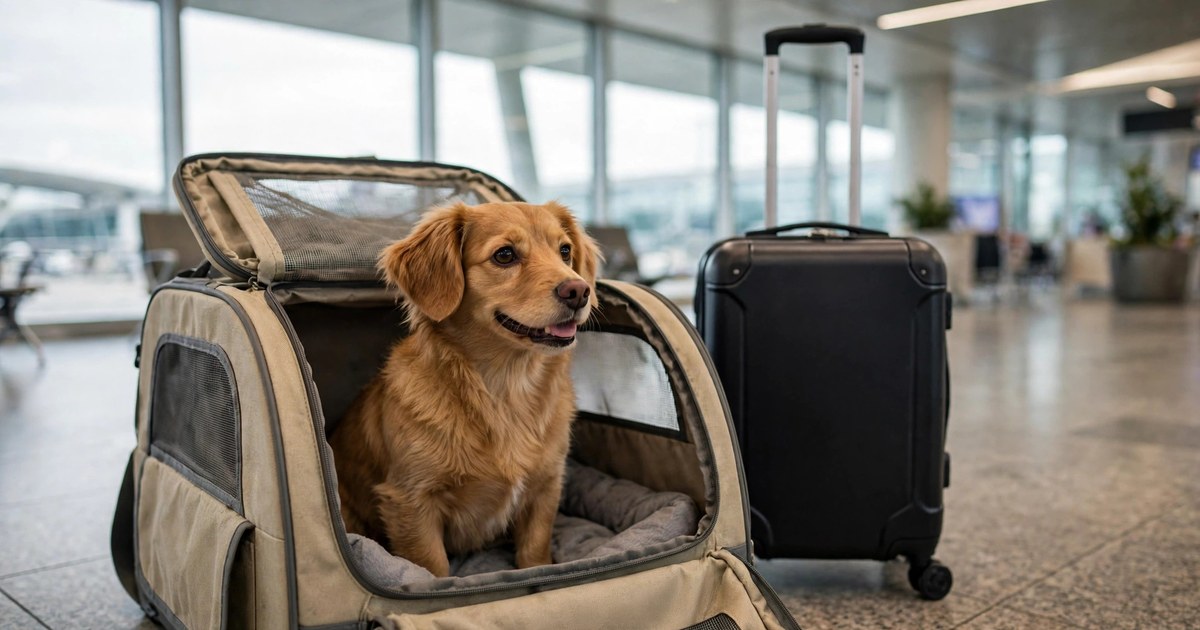
Flying with your dog for the first time means keeping track of a lot at once — carrier rules, paperwork, fees, packing, security, and what happens after you land. Miss one step and you can be turned away at the gate. This checklist gives you 20 steps in order, from four weeks before your flight to after you land.
Know this up front: the airline sets the rules, not the airport and not the government. Carrier size, weight limits, breed restrictions, and fees all vary by airline and aircraft. Confirm the current rule with your airline before you travel.
Cabin or Cargo? Decide First
Before anything else, work out how your dog will travel. The answer shapes every other step, from the carrier you buy to the documents you need.
| Option | Who it fits | What to expect |
|---|---|---|
| In-cabin | Small dogs that fit in a carrier under the seat — most US airlines cap dog plus carrier at around 20 lbs | Your dog stays with you; you pay a pet fee each way (roughly $95–$200 on most US airlines); only a few pets per flight, so book early |
| Checked baggage / cargo | Larger dogs that cannot fit under a seat | Climate-controlled hold in a rigid IATA-approved crate; rules vary by airline, and some major US carriers no longer accept dogs as checked baggage |
| Service dogs | Trained service dogs only — emotional support animals are no longer a legal category for US flights | Different rules and paperwork, including the DOT Service Animal Air Transportation Form, due before your airline's deadline |
If your dog is close to the in-cabin limit, measure honestly — dog plus carrier together — and check the limit for your exact aircraft. For flat-faced (brachycephalic) breeds such as French Bulldogs and Pugs, check for breed embargoes first.
The 20-Step Flying With a Dog Checklist
Work through these in order. Steps 1–5 start four weeks out; the rest follow the countdown to your flight.
4 Weeks Before the Flight
- Read your airline's pet policy, word for word. Note the carrier size limit, weight limit, fee, pets allowed per flight, and breed restrictions. Save or screenshot the page.
- Buy the actual carrier your dog will fly in. In-cabin needs a soft-sided carrier that fits under the seat and lets your dog stand, turn, and lie down. The hold needs a rigid IATA-approved crate with ventilation and an attached water dish.
- Check your destination's entry rules. Domestic US flights are the simple case. International travel may need a health certificate, a rabies vaccination at least 21 days before travel, and weeks of lead time. Returning to the US needs a CDC Dog Import Form receipt.
- Book a vet visit. Confirm your dog is fit to fly and that vaccinations and records are up to date. If you need a health certificate, ask when to come back — it is usually issued by a USDA-accredited vet and valid for about 10 days.
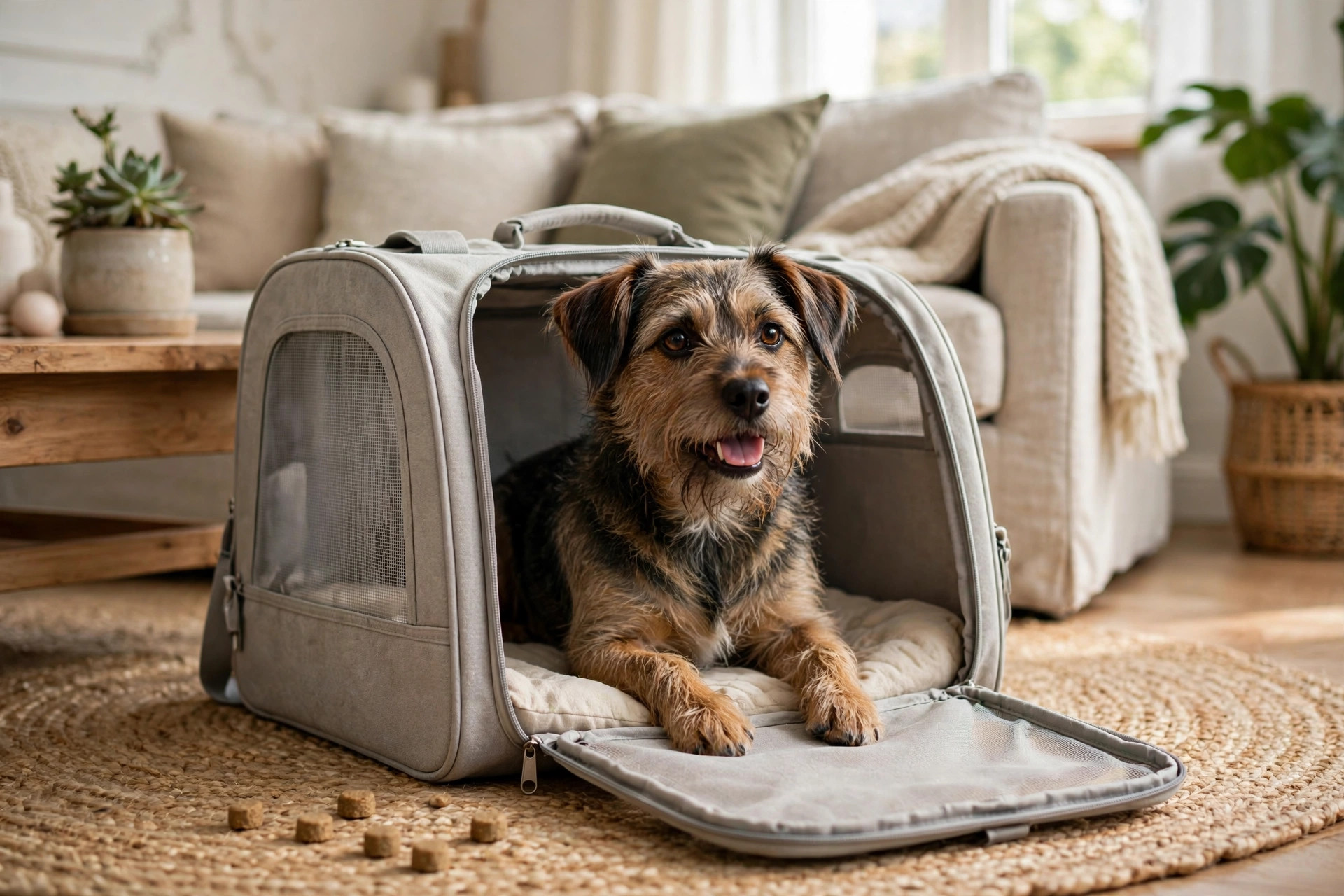
- Start carrier practice on day one. Put the carrier in your living room with the door open and a treat inside. Let your dog walk in and out freely for a few days, so the carrier feels like a safe den, not a trap.
2 Weeks Before the Flight
- Close the door for short sessions. Once your dog walks in happily, close the door for 30 seconds, then 2 minutes, then 5, then 15, then 30 — over several days, ending each session with a treat.
- Check ID and microchip details. Make sure the ID tag has your current phone number and the microchip registration is up to date — a microchip only helps if the registry can reach you. Carry a recent photo of your dog on your phone, too.
- Book your dog's spot on the flight. Most airlines cap in-cabin pets per flight, first-come, first-served. Add your pet to the reservation when you book — buying your own ticket does not reserve a spot for your dog.
- Practise motion. Put the carrier in the car and drive for 5 minutes, then 15, then 30, to get your dog used to moving in a confined space and to spot travel sickness early.
1 Week Before the Flight
- Get the health certificate, if you need one. For international travel, visit your USDA-accredited vet this week — the certificate is usually valid for only 10 days. For domestic flights, most US airlines just need vaccination records.
- Pack the dog's carry-on bag. Use the packing list below and pack it the week before, not the night before. Everything your dog might need mid-journey goes in this bag, not checked luggage.
- Plan food and water. A light meal a few hours before the flight is the usual advice — a full meal right before take-off often causes air sickness. Plan a small meal 3–4 hours before departure and keep water available until you board.

The Day Before the Flight
- Tire your dog out. A long walk or good play session the day before — and a shorter one on flight morning — helps your dog settle and sleep through the journey.
- Prepare the documents folder. Put everything in one folder: vaccination records, health certificate, the airline's pet confirmation, your dog's photo, and your vet's phone number. Print paper copies too.
- Check in and confirm the pet again. When you check in online, confirm your pet is still listed on the booking. If anything looks wrong, call the airline now, while there is time to fix it.
Flight Day
- Arrive early and use the relief area. Give yourself at least an extra hour beyond what you would allow without a dog. Find the airport pet relief area before security — most major US airports have one.
- Go through security the right way. Your dog comes out of the carrier and walks through the metal detector on a leash (or is carried through), while the empty carrier goes through the X-ray machine. Keep the leash on.
- Board calmly and settle in. Slide the carrier fully under the seat in front of you and leave it there for take-off and landing. A familiar blanket and a chew help your dog settle. Do not open the carrier in the cabin.
After You Land
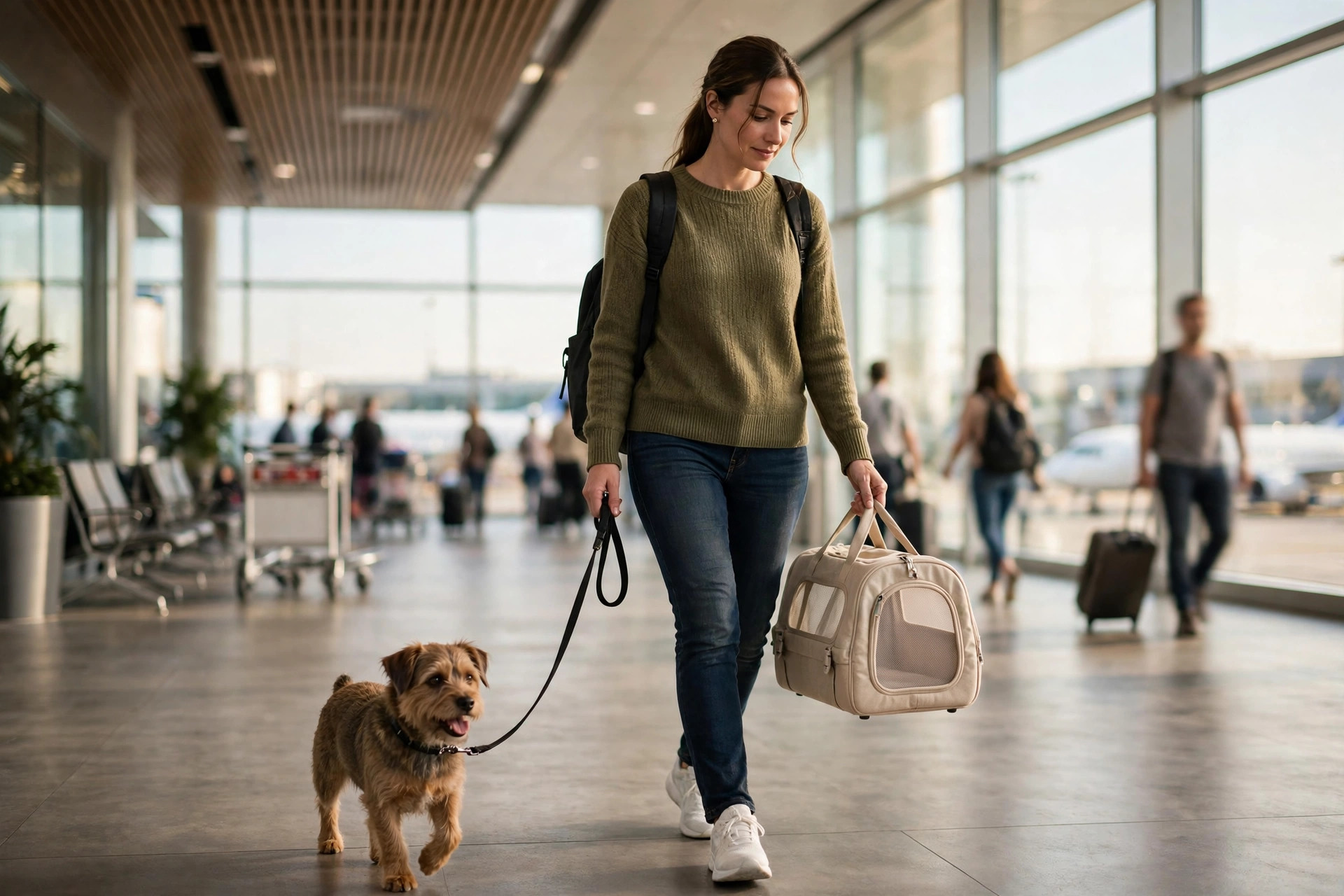
- Relief first, everything else second. Head straight for the pet relief area as soon as you are off the plane. Offer water, then a small meal once you are settled.
- Give your dog a day to recover. Travel is tiring, and it can take a day or two for your dog to feel normal again. Keep the first day quiet: familiar food, a comfortable sleep spot, a short walk, and no big new experiences.
What to Pack in Your Dog's Carry-On
Pack this bag the week before and keep it with you in the cabin. If your dog flies in the hold, pack a second small bag with the essentials for the other end.
- Soft-sided carrier (in-cabin) or the crate's paperwork and water dish (cargo)
- Leash and harness — never rely on the carrier handle alone in a busy airport
- Collapsible water bowl and a small bottle of water
- A small portion of your dog's usual food, plus a few treats
- Pee pads and odour-free wet wipes for accidents
- A familiar blanket or a worn T-shirt that smells like home
- A favourite chew toy or a long-lasting chew for take-off
- Vaccination records, health certificate, airline pet confirmation, vet's phone number
- A recent photo of your dog
- Any regular medication, clearly labelled, in its original packaging
One packing rule: if your dog might need it before you reach your hotel, it goes in the carry-on. Checked luggage can be delayed; your dog cannot wait for it.
5 Mistakes That Ruin a Flight With a Dog
1. Buying the wrong carrier. The most common failure at the gate is a carrier that does not fit under the seat or is too small for the dog to turn around in. Measure your dog and the carrier against your airline's published limits.
2. Booking the pet spot too late. In-cabin pet spaces are capped per flight. If you buy your ticket and add your dog a week later, the pet spaces may already be gone.
3. Feeding a full meal before the flight. A full stomach plus cabin pressure plus stress is the classic recipe for air sickness. A small meal 3–4 hours before departure is enough.
4. Skipping carrier practice. A dog that has never sat in a closed carrier will not learn to like it at the gate. Four weeks of short, positive sessions turn the carrier into a safe place.
5. Having no backup plan. Flights get cancelled and delayed, and dogs cannot wait in a terminal indefinitely. Know the nearest pet-friendly hotel and keep your vet's number handy. If flying looks too risky, boarding your dog while you travel is a perfectly good alternative.
Domestic vs International: What Changes
| Requirement | Domestic US flight | International flight |
|---|---|---|
| Health certificate | Not always required, but many airlines ask for vaccination records | Almost always required, usually from a USDA-accredited vet, valid about 10 days |
| Rabies vaccination | Keep records handy | Often must be given at least 21 days before travel |
| Microchip | Recommended | Usually required, and it must be registered before the rabies vaccination |
| Import paperwork | None | CDC Dog Import Form receipt for US re-entry; EU animal health certificate or pet passport for Europe |
| Lead time | Days | Weeks to months for some destinations |
International rules change often and vary by country, so confirm every requirement with the destination country's official pet-import page and your airline before you book anything non-refundable.
Frequently Asked Questions
How much does it cost to fly with a dog?
On most US airlines, an in-cabin pet fee is roughly $95–$200 each way. Cargo fees vary much more by airline, route, and crate size — check your airline's pet page. Budget for the carrier, any vet visit, and the return-flight fee too.
How big can a dog be to fly in the cabin?
Most US airlines cap the combined weight of dog and carrier at around 20 lbs, and the carrier must fit completely under the seat. The dog must be able to stand, turn, and lie down naturally inside it.
Do I need a health certificate to fly with my dog?
For international travel, almost always yes — usually issued by a USDA-accredited vet and valid for about 10 days. For domestic flights, most airlines only need vaccination records.
Can my dog fly in cargo?
It depends on the airline. Larger dogs usually travel in a climate-controlled hold in a rigid IATA-approved crate. But several major US carriers have stopped accepting dogs as checked baggage or cargo, so confirm availability for your exact route before you book. The AKC's guide to flying with dogs has more detail.
Can I sedate my dog for a flight?
Do not sedate your dog without your vet's direction. Sedation can suppress breathing at altitude, and many airlines refuse to carry sedated dogs. Carrier practice and a calm routine are the safer answer.
What happens at airport security with a dog?
Your dog comes out of the carrier and walks through the metal detector on a leash, or is carried through, while the empty carrier goes through the X-ray machine. The ASPCA's travel safety tips cover security, car travel, and what to do if your pet gets lost on a trip.
The Bottom Line
Flying with a dog is mostly preparation, not luck. Buy the right carrier early, practise with it for a few weeks, book your dog's spot the moment you book your own seat, gather the paperwork in one folder, and pack a carry-on your dog could live out of for a day. Do those five things and the flight itself is the easy part.
Before your next trip, it is also worth knowing your dog's age in human years — it helps you judge how much rest and recovery they will need after travel. Try the dog age calculator to see where your dog stands. And if you are still choosing a carrier, our guide to the best pet carriers for air travel compares the airline-approved picks, while the holiday pet travel checklist covers the rest of a trip with your dog.