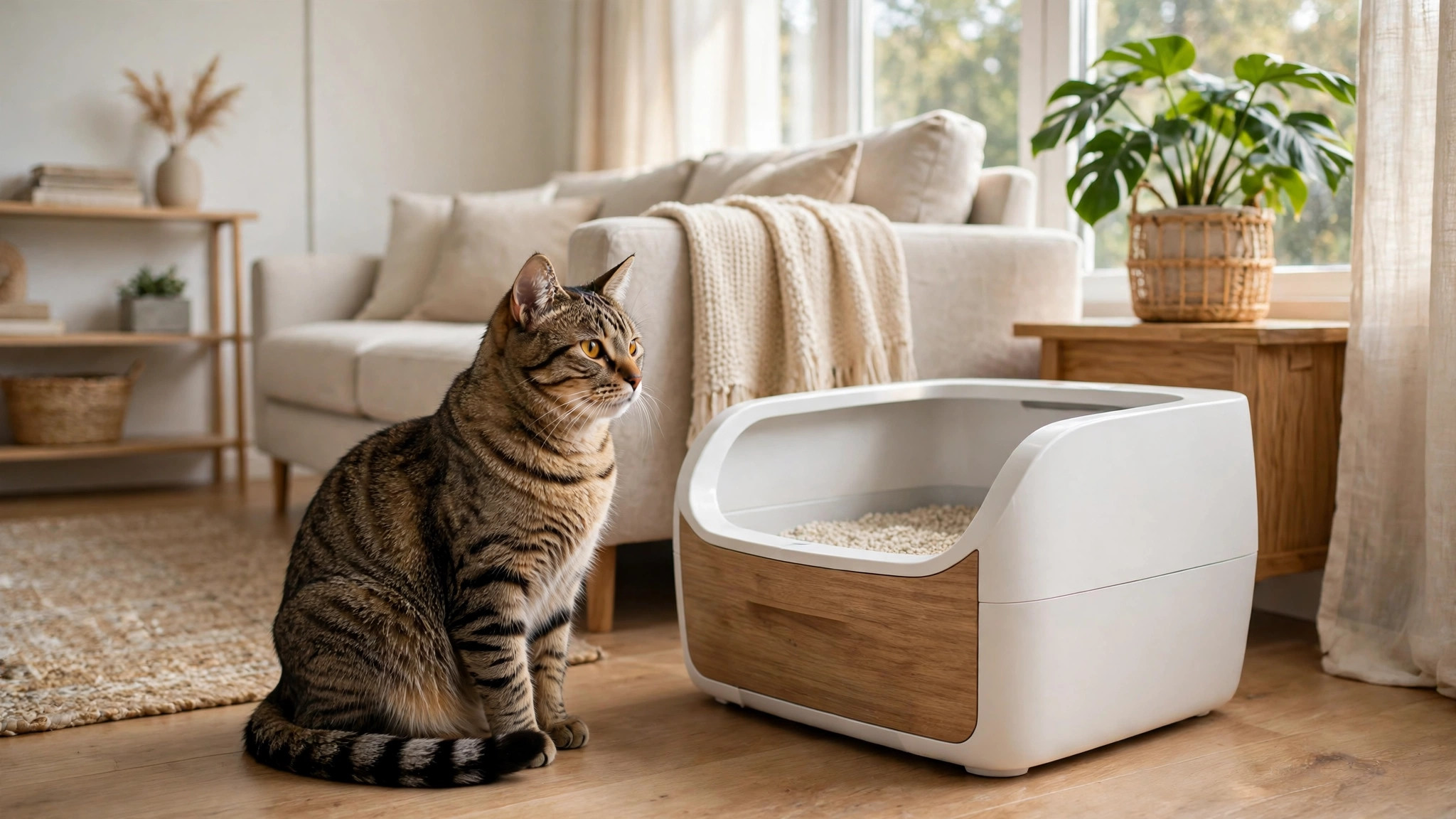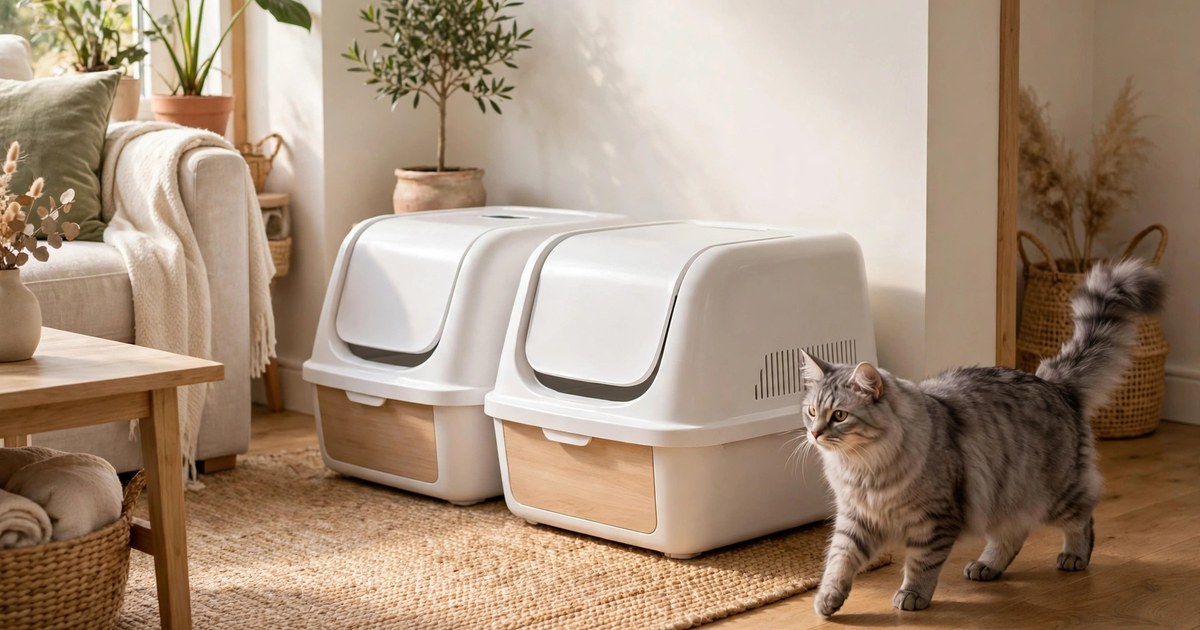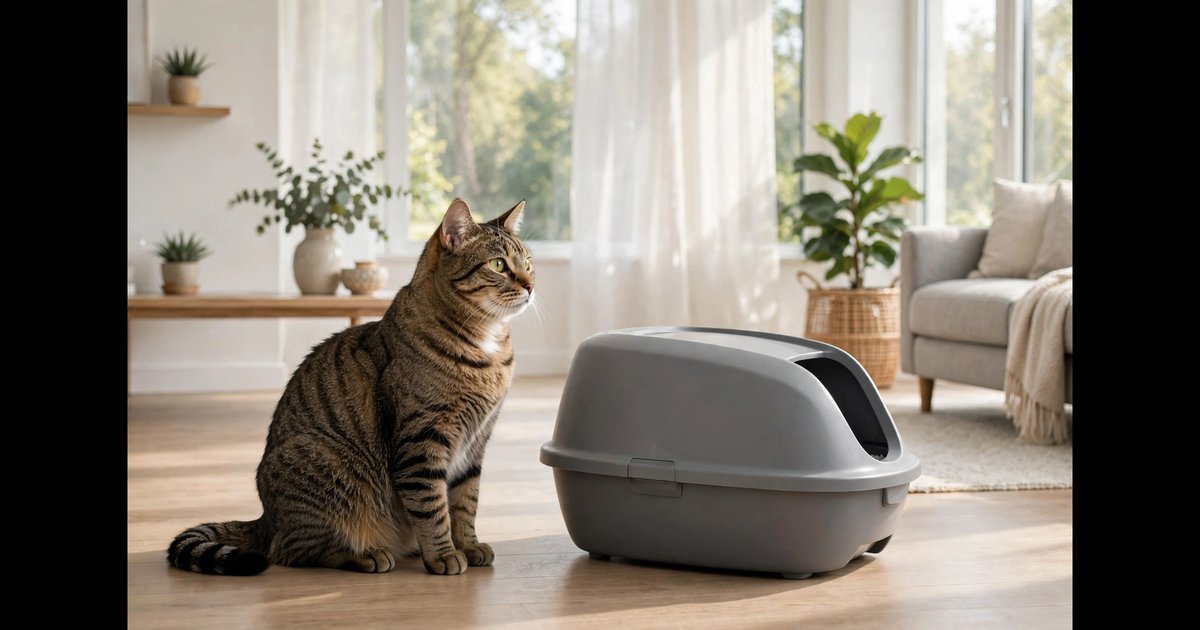
Finding poop next to the litter box is frustrating, especially when the box looks fine to you. But to your cat, the box and the bathroom area tell a different story. A box a day past its cleaning schedule, a hallway that got noisier, or a box your kitten simply outgrew can all send your cat looking for an alternative.
The good news: this is usually a litter-box management problem, not a behavior problem — and it is fixable. Cats are fastidiously clean by nature; when they eliminate outside the box, they are telling you something about the box, the litter, the location, or the stress around it. The ASPCA notes that at least 10% of all cats develop elimination problems, most tracing back to the box setup, litter, or placement. Below are 7 fixes in the order to try them, plus a cleanup protocol and a 5-minute audit checklist.
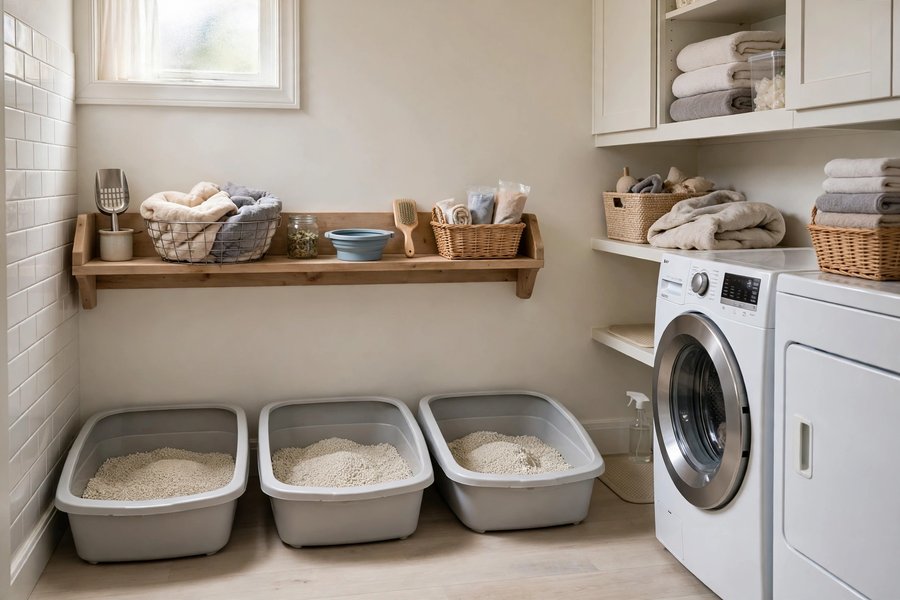
First: it is not spite
Get this out of the way first, because it changes how you fix it. Cats do not eliminate outside the box out of anger or revenge. What looks like spite is almost always one of three things: a box that no longer meets your cat's standards for cleanliness or accessibility, a stressor you have not spotted yet, or a painful experience that taught the cat to avoid the box. Punishing the cat does nothing — it only adds fear to the mix and usually makes the problem worse. The fix is to change the setup, not the cat.
Fix 1: Scoop on a real schedule
This is the #1 cause and the #1 fix. Many owners scoop "most days," but cats make their own judgment: a box that smells used is a box some cats refuse. The ASPCA recommends scooping at least once daily, removing all waste.
Set a non-negotiable schedule:
- Scoop once every morning — make it part of your routine, like making coffee.
- Scoop a second time in the evening if you have two or more cats sharing boxes.
- Do a full litter change weekly: empty the box completely, wash it with hot water and unscented soap (never bleach or ammonia-based cleaners — the smell drives cats away), and refill with fresh litter.
- Replace the box itself every 1–2 years. Plastic develops scratches that trap odor no amount of washing removes.
If you fix nothing else, fix the schedule — many owners see the problem disappear within 2–3 days of consistent twice-daily scooping.

Fix 2: Add more boxes — the n+1 rule
The golden rule from the ASPCA and Cornell's Feline Health Center: one box per cat, plus one extra. Many cats refuse to use a box that another cat has already used, and in multi-cat homes a single dominant cat can effectively "guard" the only box.
Practical setup for a two-cat home:
- Three boxes total, spread across at least two rooms (not lined up side by side — a guarded hallway can block all three).
- If your home has two floors, put at least one box on each floor.
- Never cluster every box in one spot; cats need to feel they can reach a box without passing a rival.
Not sure how many boxes your household needs? Try our litter box calculator — it factors in your cat count and home layout. For the budget side, the cat litter cost comparison tool shows which litter types cost least per month.
Fix 3: Size up the box
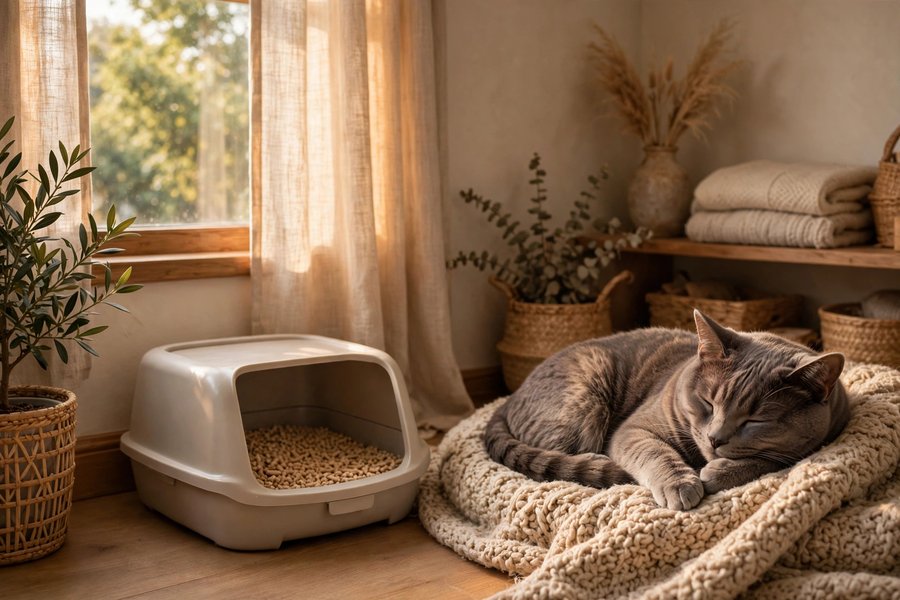
Many adult cats outgrow the box they were given as kittens, and a cramped box is a top reason cats go right next to it — they are trying, but the box is too small to be comfortable. The standard guideline, backed by the ASPCA, is a box at least 1.5 times your cat's body length (nose to base of tail), with room to turn around fully.
Quick test: watch your cat use the box. If any of these happen, the box is too small:
- The cat balances on the edge or perches with front paws outside.
- It scratches at the box walls instead of digging in the litter.
- It enters, sniffs, and immediately leaves without going.
For large or long-bodied cats, skip small boxes entirely and use a large uncovered storage tote. See our guide on how many litter boxes per cat for size and placement math matched to your home.
Fix 4: Rethink the location
Cats want a bathroom that is quiet, easy to reach, and has an escape route. Common location mistakes:
- Next to the food and water bowls. Cats do not like to eliminate where they eat — keep boxes and feeding stations in opposite areas.
- In a dead-end corner or behind a closed door. A cat that felt cornered, or got trapped by a closed door once, may avoid the spot permanently.
- In high-traffic zones. Laundry rooms are popular with owners, but a sudden washer spin cycle terrifies many cats.
- Too far away. Senior cats and kittens should not have to trek across the house or climb stairs.
Best practice: quiet corners with two ways out, away from food, on every floor the cat uses. If you recently moved a box, move it back — many cats need two weeks to accept a new spot.
Fix 5: Change the litter — the right way
Most cats prefer fine-grained, unscented, clumping litter about 1–2 inches deep. Heavily scented litters, pellets, and crystals work for some cats but turn many others away — a cat that chooses your bath mat over its box may simply prefer a softer surface under its paws.
If you recently switched litter brands and the accidents started around the same time, that is your likely culprit. Mix old and new over 7–10 days (75/25, then 50/50, then 25/75). And never "test" three new litters in a week — rapid changes teach the cat the box is unpredictable, which drives them to pick their own spot.
Fix 6: Make the box easier to enter
Covered boxes with high entry walls, liners that shift underfoot, and top-entry boxes all create barriers some cats quietly refuse. Two changes fix most entry problems:
- Remove the hood. Covered boxes trap odor inside (great for your nose, terrible for your cat's) and block the cat's view of approaching threats. Most cats strongly prefer uncovered boxes.
- Lower the walls. For senior cats, kittens, and any cat that hesitates at the rim, a low-entry box or a cut-down storage tote removes the obstacle. A cat that poops right at the box entrance is often telling you the entrance itself is the problem.
Ditch liners too — they bunch up and feel unstable under the cat's feet. Bare plastic, unscented soap, and a shallow layer of fine litter is the setup most cats accept.
Fix 7: Reduce stress around the box area
Even a perfect box setup fails if the cat is stressed. Common stressors that trigger house soiling:
- A new pet, new baby, houseguests, or a move.
- Construction noise or a changed daily routine.
- Another cat staring at or ambushing the box-user (watch for this — it is quiet and easy to miss).
- Outdoor cats visible through the window near the box area.
Fix the environment first: give the stressed cat a box in a second, calmer location; add vertical space and hiding spots; keep routines predictable. The box problem usually resolves once the stressor fades. For the same box-management basics from the urine angle, see our guide to cats peeing outside the box.
Cleanup protocol: stop the spot from becoming a habit
Once a cat eliminates somewhere, the lingering scent marks it as an approved toilet — so cleanup is half the fix:
- Pick up and blot all waste first; never rub stains deeper.
- Treat with an enzymatic pet-stain cleaner — not vinegar, bleach, or ammonia. Enzymatic cleaners break down the proteins that tell the cat "this is the spot." Ammonia-based products can attract the cat back.
- Saturate fully and wait the full contact time on the label (usually 10–15 minutes); half-hearted sprays leave scent behind.
- Block access temporarily. Put a box — even a temporary one — right on the accident spot for a week, then inch it daily toward your preferred location. Cornell's Feline Health Center lists this retraining method among the most reliable for stubborn cases.
The 5-minute litter-box audit checklist
Run through this list once and fix everything that fails — most households find 2–3 problems in a single pass:
- ☐ Scooped today (and yesterday)? If not, start a twice-daily schedule.
- ☐ Box count = number of cats + 1? Add boxes if you are short.
- ☐ Boxes in at least two different rooms (or floors)? Spread them out.
- ☐ Each box at least 1.5× the cat's body length? Size up if the cat perches on the rim.
- ☐ Litter unscented, fine-grained, 1–2 inches deep? Switch gradually if not.
- ☐ Box uncovered and easy to enter? Remove hoods and lower tall walls.
- ☐ Box away from food, water, and loud appliances? Relocate if needed.
- ☐ Accident spots cleaned with enzymatic cleaner? Re-treat any spot you only wiped.
If every box passes and the problem started suddenly or persists beyond a few days, book a vet visit to rule out anything medical — your vet can check for underlying causes that box fixes cannot solve. Cornell's house soiling guide and the ASPCA's litter box problems page are solid further reading.
Frequently asked questions
Is my cat pooping outside the box to punish me?
No. Cats lack the concept of revenge elimination. The mess is communication, not punishment — it almost always points to a box, litter, location, or stress issue you can fix. Punishment only adds fear and typically makes the problem worse.
Why does my cat poop RIGHT next to the litter box?
This is the most common pattern, and it is actually encouraging: the cat knows where it should go but something about the box is wrong. The usual suspects are a dirty box, a box that is too small, high entry walls the cat dislikes, or a hooded box trapping odor. Work through Fixes 1, 3, and 6 above first.
Should I switch litter brands to fix it?
Only if the litter itself is the suspect — accidents started right after a switch, or the cat clearly prefers soft surfaces like rugs. Most cats prefer fine-grained, unscented clumping litter. When you change, blend old and new over 7–10 days — an abrupt switch can cause the very problem you are trying to fix.
Will a covered box fix the smell and the accidents?
No — covered boxes usually make both worse. The hood traps odor inside the box, which repels the cat, while doing little for the room, and many cats feel trapped inside them. An uncovered, properly scooped large box beats a covered small one every time.
How quickly should the fixes work?
Scooping-schedule and box-count fixes often show results within 2–3 days. Location and litter changes need 1–2 weeks for the cat to rebuild trust in the setup. If nothing changes after two consistent weeks of correct setup — or if the change was sudden — book a vet visit.
The bottom line
A cat pooping outside the litter box is almost never a "bad cat" problem — it is a setup problem. Scoop twice daily, give each cat a box plus one spare, size the boxes up, keep them uncovered and easy to enter, place them in quiet accessible spots, and clean every accident with an enzymatic cleaner. Run the 5-minute audit above, fix what fails, and give it two weeks.
Want the math done for your household? Use CalcPet's free litter box calculator to get the right box count, sizes, and placement for your cats — it takes about a minute and removes the guesswork.