Ask any group of cat owners how many litter boxes you need and you will hear one answer more than any other: one per cat, plus one extra. It sounds simple, maybe even excessive — but this "N+1 rule" is the one piece of litter box advice that veterinarians, feline behaviorists, and major cat-care organizations all agree on. In this 2026 guide, we break down exactly what the rule means for your home, when to adjust it, how to size and place your boxes, and the cleaning routine that makes the whole setup actually work.

The Short Answer: The N+1 Rule
The N+1 rule is exactly what it sounds like: take the number of cats in your home (N), add one, and that is your minimum number of litter boxes. One cat needs two boxes. Two cats need three. Three cats need four. Here is the quick reference most owners use:
| Number of Cats | Minimum Litter Boxes |
|---|---|
| 1 | 2 |
| 2 | 3 |
| 3 | 4 |
| 4 | 5 |
| 5 | 6 |
The rule comes from how territorial cats are about elimination. A cat that has to compete for box access, or walk up to a box that is already used and unappealing, is far more likely to go somewhere else in the house. The extra box is a backup and a choice — it means there is always a clean, available option no matter what is happening in the home. The ASPCA's litter box problem guide covers why box access and cleanliness sit at the heart of most litter box issues.
Why One Box Per Cat Is Not Enough
If you have two cats and two boxes, you technically have "one each" — but cats do not divide property that way. One cat may claim a favorite box and guard it, leaving the other cat with nowhere comfortable to go. Even a single cat benefits from a second box: while you are scooping one, the other is available, and if one box ends up soiled while you are at work, the backup keeps the day on track.
Think of the extra box as insurance for the two moments that cause the most trouble: when a box is dirty and when a box is occupied. Both happen constantly in real homes, and both are solved instantly by having one more box than cats. Multi-cat homes feel this most, but the logic holds for a single cat too — which is why the rule is written as N+1 instead of "one per cat."
When to Adjust the Rule for Your Home
The N+1 rule is a starting point, not a law of physics. Your home's layout, your cats' ages, and the type of boxes you use all change what "enough" looks like. Here is how to adjust it.
Small apartments
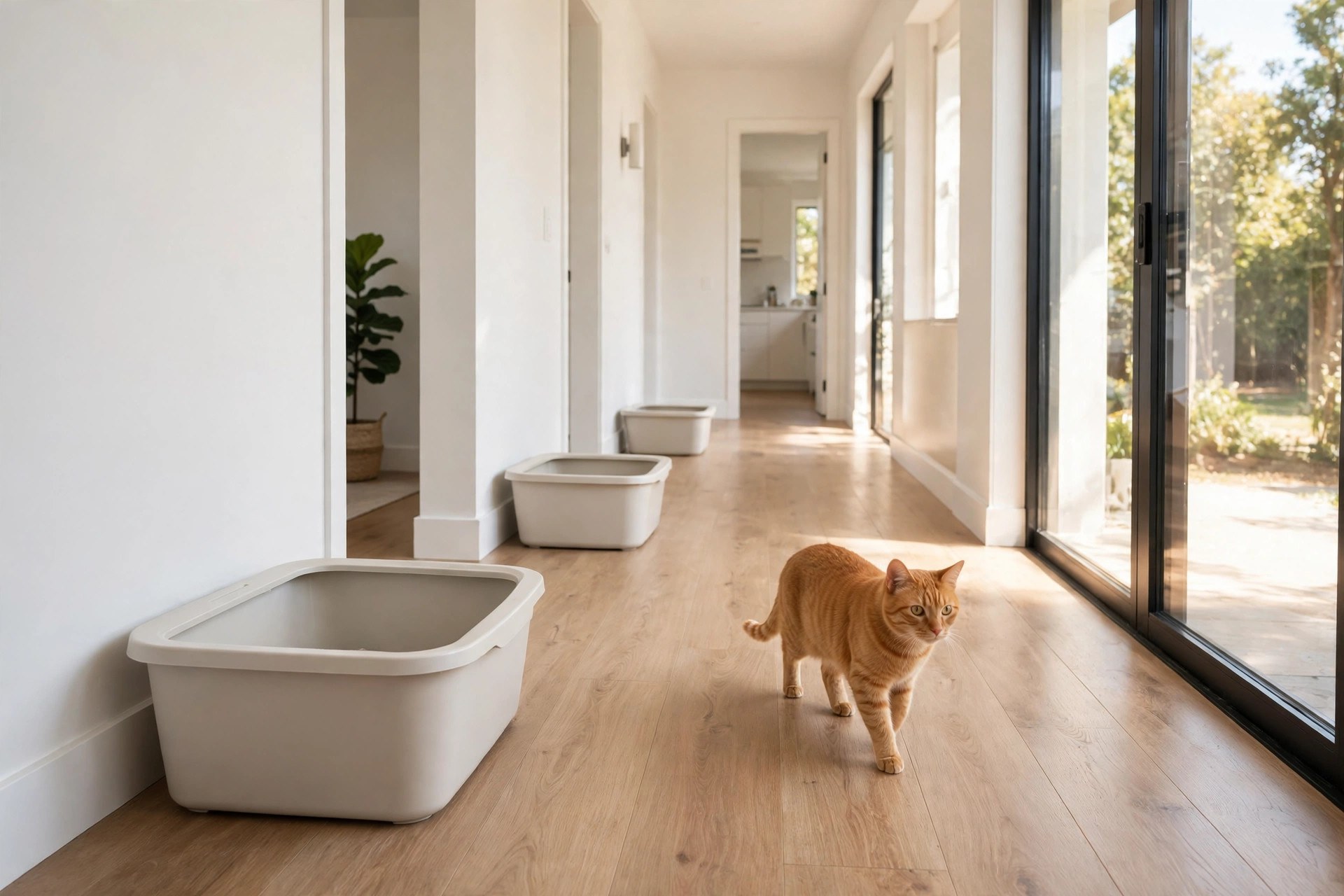
In a studio or one-bedroom apartment, three or four boxes can feel like a lot of real estate. The rule still applies, but placement matters more than raw count. Two boxes in different rooms beat three boxes crammed side by side in the bathroom, because the point is giving each cat a genuinely separate option. If space is truly tight, prioritize two well-placed boxes for one cat over one box plus clutter — and scoop twice a day to make up the difference.
Multi-floor homes
Cat behaviorists strongly recommend at least one litter box per floor. A cat should never have to climb a full flight of stairs to reach the only box in the house — many cats simply will not bother, and the upstairs carpet pays the price. For two cats in a two-story home, that means at least three boxes with one on each floor, which conveniently matches the N+1 count.
Kittens
Kittens are still learning, and small bladders plus short attention spans mean they need boxes close by. A kitten in a large home can "forget" where the box is if it is two rooms away. Keep at least one box on each floor or in each main area the kitten roams, use shallow, low-sided boxes a kitten can climb into easily, and keep the N+1 count as your baseline — you can consolidate later as the kitten grows. Our step-by-step litter box training guide walks through the full training process.

Senior cats
Older cats may move less easily and reach the box less urgently, so accessibility beats count. Keep boxes on every floor the cat uses, choose low-sided or ramp-entry boxes that are easy to step into, and never place the only box somewhere that requires jumping or stair-climbing. Cornell's house-soiling behavior guide notes that box access problems are one of the most common reasons older cats eliminate outside the box.
Self-cleaning and automatic boxes
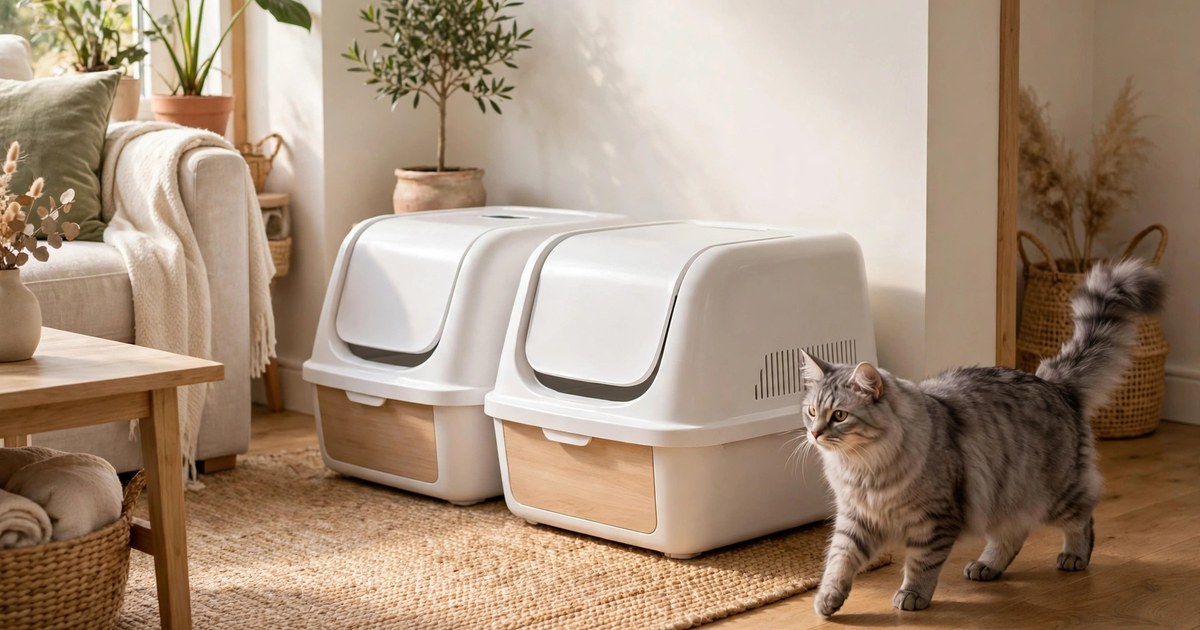
A self-cleaning litter box still counts as one box in the N+1 math — it does not replace the extra. Automatic boxes handle waste well, which means each box stays fresher longer, but they do not solve the core reasons behind the rule: territory, choice, and backup access. If anything, automatic boxes make the rule easier to follow, because two self-cleaning boxes stay reliably clean with less daily effort from you.
Size and Placement Matter as Much as Count
Three boxes will not help if all three are too small or hidden in the wrong corner. Most standard litter boxes sold in stores are actually too small for an adult cat. The widely used sizing guideline is that the box should be at least 1.5 times your cat's length, measured from nose to the base of the tail — for a typical adult cat, that means a box noticeably larger than the "standard" size on the shelf.
For placement, follow three practical rules. First, keep boxes away from food and water bowls — cats strongly prefer their bathroom far from their dining area. Second, pick quiet but accessible spots: a laundry room corner works, a dead-end closet that traps the cat does not. Third, avoid high-traffic hallways where a startled cat gets ambushed mid-use, and skip spots next to loud appliances that cycle on unexpectedly. Uncovered boxes are the safer default — many cats dislike the trapped air and limited escape routes of covered boxes.
The Cleaning Routine That Makes Any Number Work
Even the perfect box count fails without a cleaning routine. Waste buildup is the number one reason cats reject a box they previously used happily. This simple routine keeps any N+1 setup working:
- Scoop every box at least once a day. Twice a day is better in multi-cat homes, where boxes fill fast.
- Top up litter after scooping to keep the depth your cat prefers — most cats like one to two inches.
- Do a full litter change and box wash every one to four weeks, depending on the litter type and how many cats share each box. Wash with unscented soap and hot water.
- Replace the box itself about once a year. Scratched plastic holds odor no amount of washing removes.
- Keep a spare bag of litter and a spare scoop where you do the chore, so skipping "because supplies are in the garage" never happens.
Quick Checklist: Your Litter Box Setup
- Count your boxes: cats + 1, minimum.
- At least one box per floor in multi-level homes.
- Each box at least 1.5x your cat's nose-to-tail length.
- Boxes placed away from food and water, in quiet accessible spots.
- Low-sided boxes for kittens and senior cats.
- Scoop daily, full change and wash every 1–4 weeks.
- One spare box stored flat for emergencies or travel.
Frequently Asked Questions
Can I put two litter boxes side by side?
You can, and it is better than having just one — but it only half-counts. Cats treat two adjacent boxes as a single bathroom location, so you lose the "separate option" benefit that makes the N+1 rule work. If you are short on rooms, put them on opposite sides of the same room or in two different rooms entirely.
Does a self-cleaning litter box count as one box?
Yes — one automatic box equals one box in the count. Self-cleaning boxes do not change the N+1 math, because the rule is about territory and backup access, not just waste removal. A household with two cats still needs three boxes even if one of them cleans itself.
How many litter boxes do I need for two cats in a small apartment?
Start with three, per the N+1 rule. In tight spaces, place two in genuinely different spots (for example, bathroom and bedroom corner) rather than lining up all three together, and scoop twice daily. If three truly will not fit, two well-separated boxes with diligent twice-daily scooping is the workable compromise.
Do kittens need their own litter box?
Kittens follow the same N+1 rule, with one adjustment: add extra boxes temporarily in the rooms the kitten actually roams, because kittens will not travel far to find one. Use shallow, low-sided boxes, and pair the setup with consistent training — see our new kitten checklist for the full first-week plan.
How often should I scoop if I follow the N+1 rule?
At least once a day per box, and twice a day if you have more than one cat. The extra box only helps if it is actually clean when a cat needs it — a soiled backup box is the same as no backup box.
What size litter box should I buy?
Choose a box at least 1.5 times your cat's length from nose to base of tail. When in doubt, go bigger — oversized boxes are one of the cheapest upgrades you can make, and cats almost never complain that a box is too roomy. The Cat Fanciers' Association is a good starting point for general cat-care standards.
The Bottom Line
One litter box per cat, plus one extra, sized generously, placed thoughtfully, and scooped daily — that is the entire formula. Most litter box trouble in real homes is not mysterious: it is too few boxes, boxes that are too small, or boxes that are not clean enough. Fix the count first with the N+1 rule, then fix size and placement, and you have solved the problem for the vast majority of cats.
Want to learn more about your cat as they grow? Try our free Cat Age Calculator to see your cat's age in human years — and explore more practical guides on the CalcPet homepage.