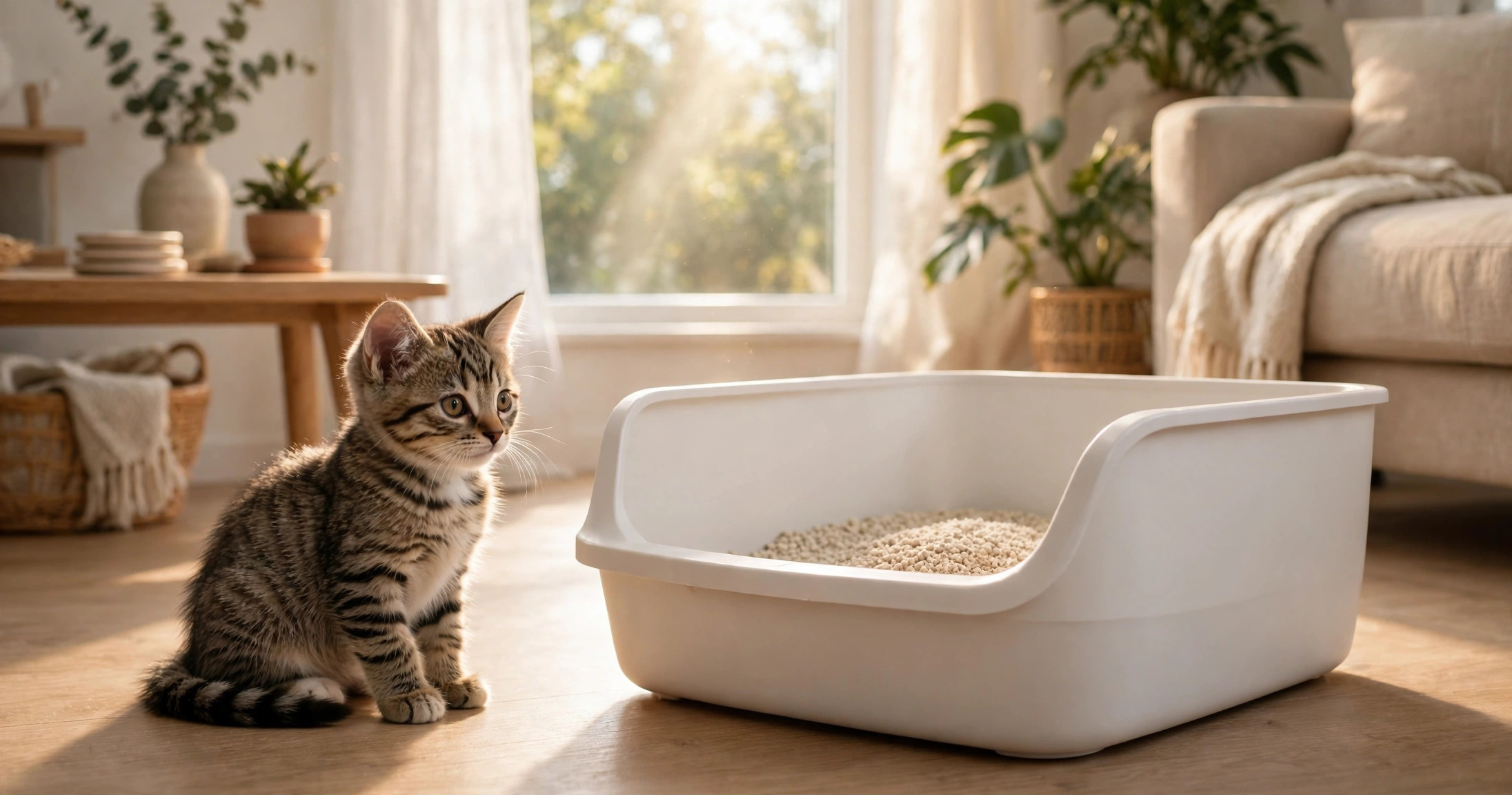
Most cats learn to use a litter box almost on their own — it is one of the easiest parts of living with a cat. But kittens, newly adopted adult cats, and rescue cats sometimes need a little guidance before the habit clicks. The good news: litter training is not a battle. It is a setup job. Get the box, the litter, the placement, and the routine right, and almost every cat figures it out within days.
This guide gives you a complete, printable-style 7-step checklist that works for both kittens and adult cats, plus a troubleshooting section for the moments when things go sideways. Follow the steps in order and you will cover everything a cat needs to succeed.
Step 0: What You Need Before Training Starts
Gather these before your cat arrives (or before you restart training). Trying to train while you are missing basics is the most common reason the process stalls.
- Litter box: open-top, at least 1.5 times your cat's body length so she can turn around easily. For kittens, choose a shallow box or a cardboard tray with low sides she can climb into.
- Litter: plain unscented clumping litter to start. For kittens under 8 weeks, use a non-clumping paper or clay litter since kittens may taste-test the litter.
- Scoop + waste bags: for daily scooping.
- Enzyme-based cleaner: for any misses outside the box — it breaks down the scent so the cat is not drawn back to the same spot.
- A quiet corner: away from food bowls, laundry machines, and heavy foot traffic.
Step 1: Set Up the Box Before Your Cat Arrives
If the box is ready when your cat walks in, she starts learning immediately. Fill the box with about 2–3 inches of litter — enough for digging and covering, not so much that it spills everywhere. Place the scoop nearby so scooping becomes an easy daily habit from day one. Many owners skip this and spend the first week scrambling; a 10-minute setup on day one saves a week of frustration.
Step 2: Choose the Right Box Size and Type
Big mistake: buying the cutest box instead of the right box. Cats care about access and space, not style.
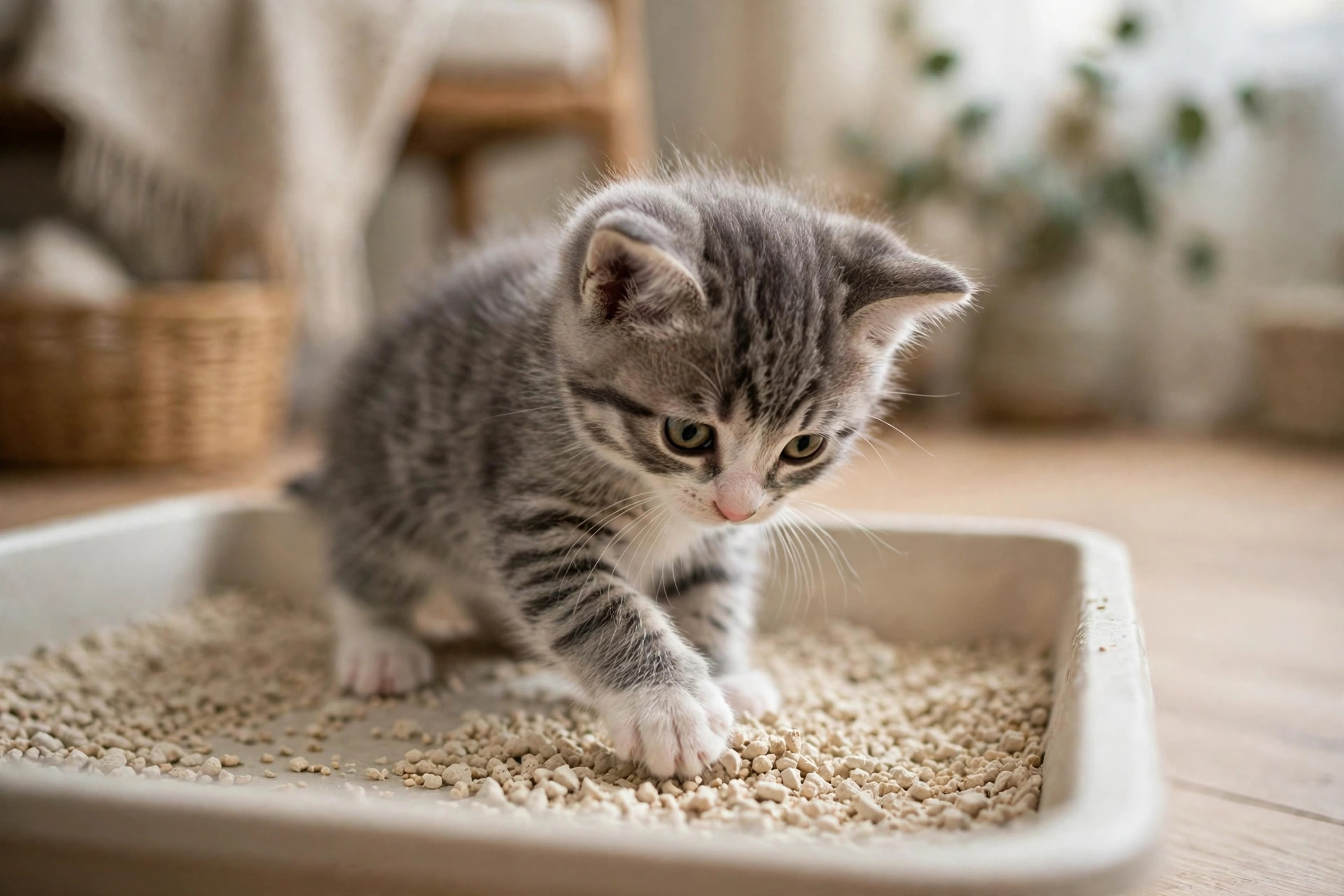
- Kittens: low-entry tray, shallow sides, open top. Skip covered boxes and self-cleaning boxes for now — they can be intimidating.
- Adult cats: open-top box 1.5× body length. Larger cats need bigger boxes; cramped boxes are a top reason cats avoid them.
- Multi-cat homes: one box per cat, plus one extra, spread across different areas of the house — not all in one room.
You can upgrade to covered or automatic boxes later, but always start open and simple during training.
Step 3: Pick a Cat-Friendly Litter
Cats are picky about texture and smell — and litter preferences can make or break training.
- Start unscented. Cats have far sharper noses than we do; scented litter that smells "fresh" to us can smell overpowering to a cat. The ASPCA's litter box guide notes that most cats prefer unscented litter to scented.
- Fine-grained texture wins. Most cats prefer soft, sand-like litter under their paws over large pellets.
- Change gradually. If you want to switch litter brands later, mix the new litter in slowly over a week — sudden swaps are a classic training setback.
Step 4: Put the Box in the Right Spot
Placement matters more than most owners expect. Use this mini-checklist:
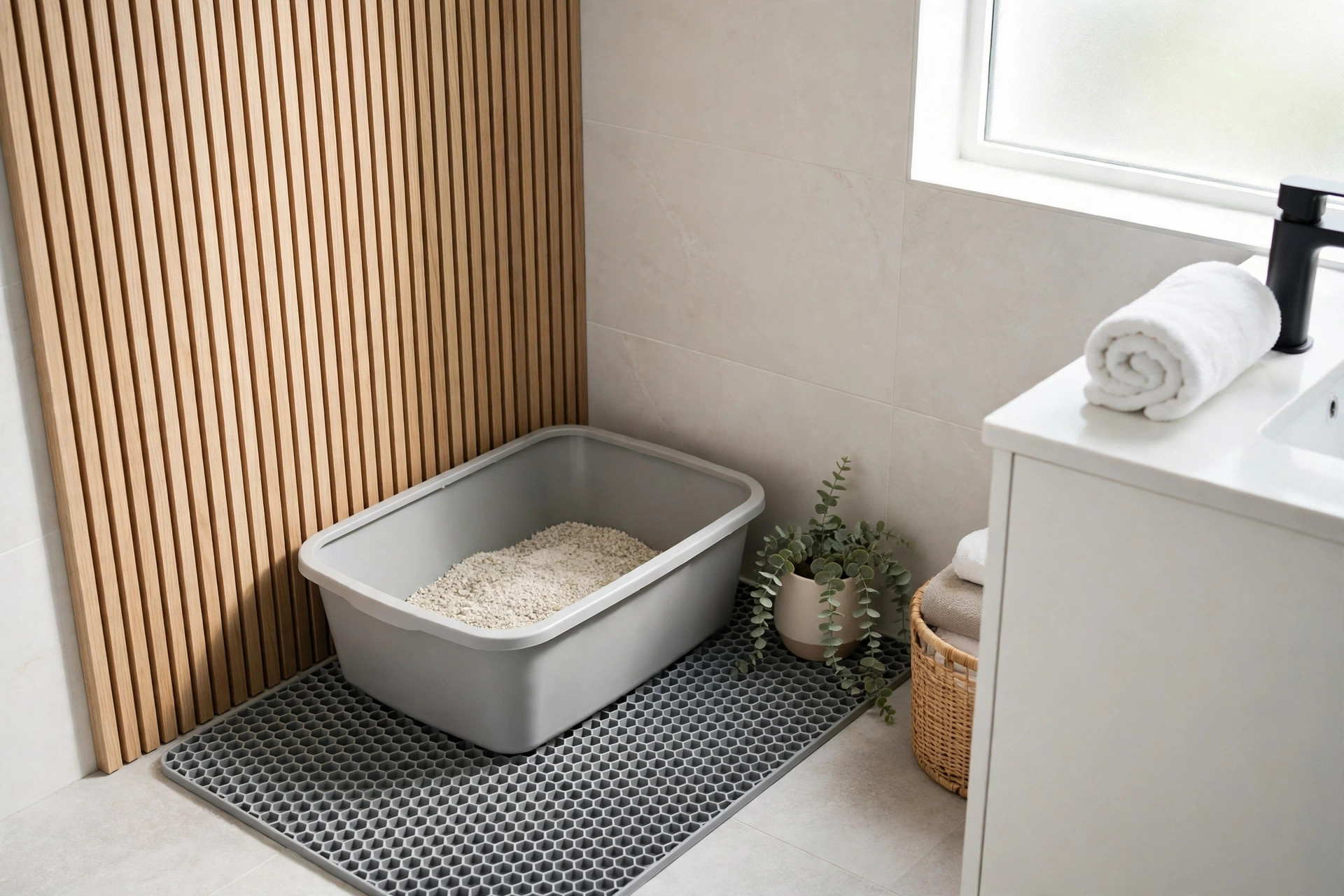
- ✅ Quiet corner with low foot traffic — not next to the washing machine or a busy hallway.
- ✅ Away from food and water bowls — cats do not like to eat next to the bathroom.
- ✅ Easily reachable at all times — never trap the box behind a closed door.
- ✅ For kittens in a big house: put boxes on every floor at first, or keep the kitten in one room with the box until she is reliable.
- ✅ For new cats: keep the box in the same place during training. Move it later only by shifting it a few feet per day.
Step 5: Introduce Your Cat to the Box Gently
On day one, carry your cat to the box and set her in it so she knows it exists. Gently scratch the litter surface with your finger — the sound and texture show her what it is for. Some owners gently move the kitten's front paws through the litter to mimic digging. Keep this calm and brief: 30 seconds of showing is better than five minutes of hovering.
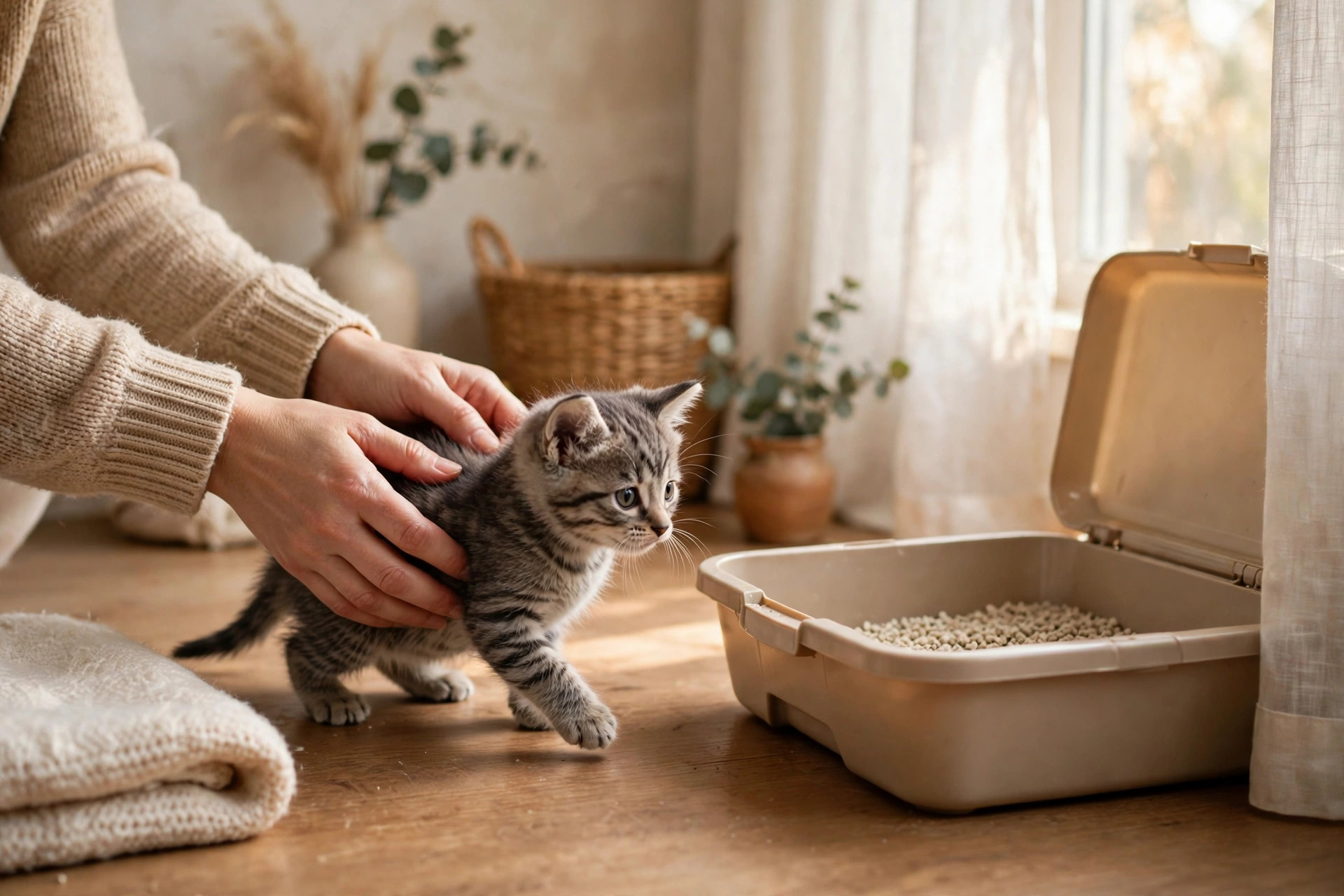
For rescue cats or former strays adjusting to indoor life, start in one small room (a bathroom or spare room) with the box, food, water, and a bed. Cats naturally avoid soiling near where they sleep and eat, so a small space speeds learning to a day or two.
Step 6: Build a Reward-Based Routine
Cats use the box most reliably after three moments: waking up, eating, and playing. For the first week, place your cat in the box at those times — every couple of hours for a kitten. Then reward success immediately: a small treat, warm praise, a favorite toy. Rewards build a positive association faster than anything else. For more on feline behavior, the Cornell Feline Health Center is an excellent authority resource.
Phase out the treats once the habit is steady (usually 1–2 weeks for kittens), but keep the schedule a while longer. And never punish misses — cats cannot connect punishment with the act, and fear only makes training slower. If you catch her starting in the wrong spot, calmly lift her to the box instead.
Step 7: Keep the Box Clean — The #1 Training Killer
More training attempts fail from a dirty box than from anything else. Cats simply refuse dirty boxes.
- Scoop daily (twice daily in multi-cat homes).
- Top up litter to keep 2–3 inches after scooping.
- Full refresh weekly: empty the box, wash it with unscented dish soap and warm water, refill with fresh litter.
- Clean misses with enzyme cleaner so no scent trail pulls the cat back to the wrong spot.
Treat the box like a toilet you would want to use — because your cat judges it exactly that way.
Training Kittens vs. Adult Cats: What's Different
The 7 steps are the same, but the timeline and focus shift:
- Kittens (3–12 weeks): Most pick it up within days, often just by copying their mother or being shown once. Keep the box shallow, repeat the after-meals routine often, and supervise early so you can redirect misses fast.
- Adult rescues: Former outdoor or stray cats may never have seen a box. The confinement method (Step 5) plus unscented litter and patience usually does it in a week or two. Mixing a little clean potting soil into the litter at first can help an ex-outdoor cat recognize it as a toilet spot.
- Adult cats new to your home: Usually the issue is placement or preference, not training — re-check Steps 2–4 before assuming anything else.
Troubleshooting Checklist: 6 Common Misses and Fixes
- Box is too small or hard to enter. → Size up; switch to an open low-entry box.
- Litter was switched suddenly. → Go back to the old litter and transition gradually over a week.
- Box placement is noisy or exposed. → Move to a quiet, low-traffic corner with an escape route on at least one side.
- Not enough boxes. → Add boxes: one per cat plus one extra, in different rooms.
- Box is dirty. → Scoop daily, full wash weekly, and see if the problem disappears within 48 hours.
- A new automatic box scared her. → Turn it off, let her use it manually for 1–2 weeks, then reintroduce the automatic cycle.
One honest boundary: this guide covers training. If an already litter-trained cat suddenly stops using the box, that is not a training problem — run through the checklist above, and if nothing changed on your end, a vet visit is the sensible next step.
What NOT to Do
- ❌ Never rub your cat's nose in a miss or punish her — it creates fear, not understanding.
- ❌ Don't move the box every few days during training.
- ❌ Don't start with a covered or self-cleaning box for kittens or nervous rescues.
- ❌ Don't skip scooping because the litter "looks fine" — your cat's nose disagrees.
FAQ
How long does it take to litter train a cat?
Most kittens learn within a few days to two weeks. Adult cats new to boxes usually take one to three weeks. Rescue cats adjusting from outdoor life may take a few weeks longer — consistency matters more than speed.
At what age can kittens start using a litter box?
Kittens start using a box around 3–4 weeks of age. Use a very shallow tray with low sides and kitten-safe non-clumping litter at that stage, since young kittens explore with their mouths.
How many litter boxes do I need?
The standard rule is one box per cat, plus one extra. A single cat does best with two boxes; two cats need three. Spread them across different areas rather than lining them up in one spot. For general cat care guidance, see the Cat Fanciers' Association.
Should I get a covered or uncovered litter box for training?
Start uncovered. Open boxes are less intimidating, easier to enter, and let you see at a glance whether the box needs scooping. You can add a cover later once the habit is solid.
My cat used the box before but now avoids it — is this a training problem?
Usually not. Work through the troubleshooting checklist above: box cleanliness, a recent litter or location change, or too few boxes. If everything checks out and the change was sudden, book a vet visit — trained cats that quit the box are telling you something changed.
Conclusion: Set It Up Right, and the Cat Does the Rest
Litter training is 90% preparation and 10% patience. Pick an open, roomy box, fill it with fine unscented litter, place it somewhere quiet, introduce your cat calmly, reward the wins, and keep it clean. That is the whole system — no tricks, no gimmicks, and no punishment required.
Once the box habit is solid, the next step is getting to know your cat's personality and needs. Try our Cat Breed Quiz to explore which traits fit your lifestyle, or check the Cat Age Calculator to see exactly what life stage your cat is in. And if you just brought your kitten home, our New Kitten Checklist: First Week Survival Guide pairs perfectly with this training plan.