Christmas changes everything about your home for a few weeks: new smells, strange objects at pet-nose height, a tree that was not there yesterday, and a parade of guests opening and closing the front door. Dogs and cats are creatures of routine, and the holidays break every routine they have. This Christmas pet safety checklist walks you through each hazard — food, tree, decorations, plants, gifts, guests, and travel — with practical steps you can act on today, so Christmas stays calm for everyone in the house.
Why Christmas Is Riskier for Pets Than a Normal Week
A normal week has a fixed rhythm: same feeding times, same rooms, same quiet house. At Christmas, three things change at once. First, the environment changes — shiny objects, dangling cords, lit candles, and plants appear at exactly the height pets explore with their mouths. Second, the food changes — rich dishes, chocolate, and alcohol sit unattended on low tables. Third, the people change — visitors arrive who do not know your pet's rules, open doors without thinking, and drop coats containing sweets or medication on the floor.
The ASPCA's holiday safety tips confirm the pattern: most holiday pet emergencies come from these three categories, and almost all are preventable with a little planning. That planning is what the rest of this guide covers.
The Complete Christmas Pet Safety Checklist
Work through these eight sections in the week before Christmas. Each one takes just a few minutes but closes a door on a real risk.
1. Holiday Foods: What Stays Off the Floor
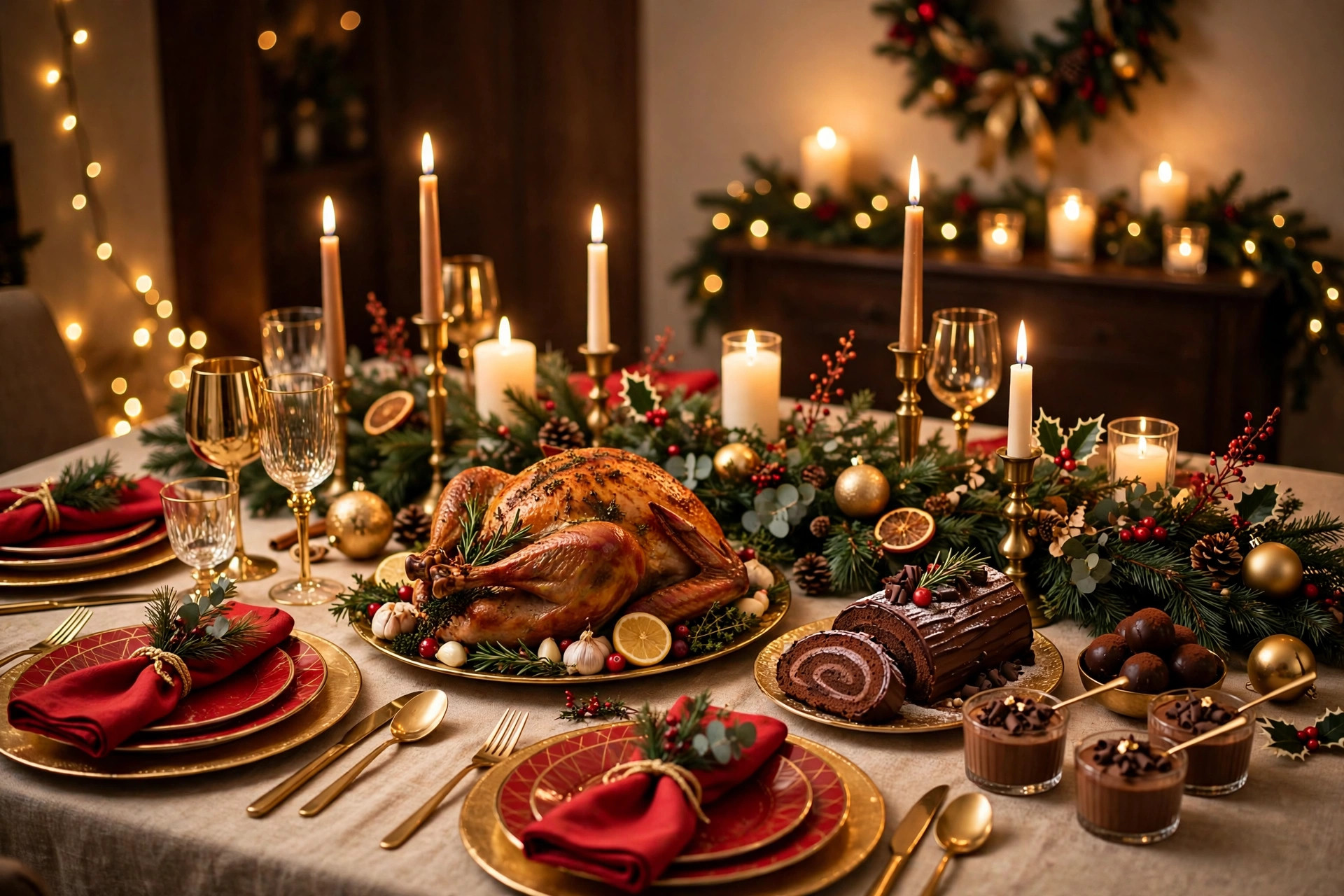
Rich, fatty, spicy, and sweet foods are everywhere at Christmas, and they are also the number one reason pets get into trouble. The AKC warns that holiday foods like chocolate, grapes, raisins, and cooked bones can cause serious problems for dogs, even in small amounts, and fatty foods such as turkey skin can upset digestion badly.
- Keep all food, treats, and edible gifts out of reach — not under the tree and not on the coffee table.
- Secure bin lids and take rubbish out promptly; turkey carcasses and food-smeared wrapping are a magnet.
- Tell every guest the rule before they arrive: no handouts from the plate, no exceptions.
- Keep alcoholic drinks up high and never leave them unattended — pets lap them faster than you think.
- Store chocolate, sweets, and dried-fruit items (mince pies, fruitcake, chocolate coins) in closed cupboards.
- Set aside a few safe pet treats in advance so guests can give your pet something without breaking the rules.
2. The Christmas Tree
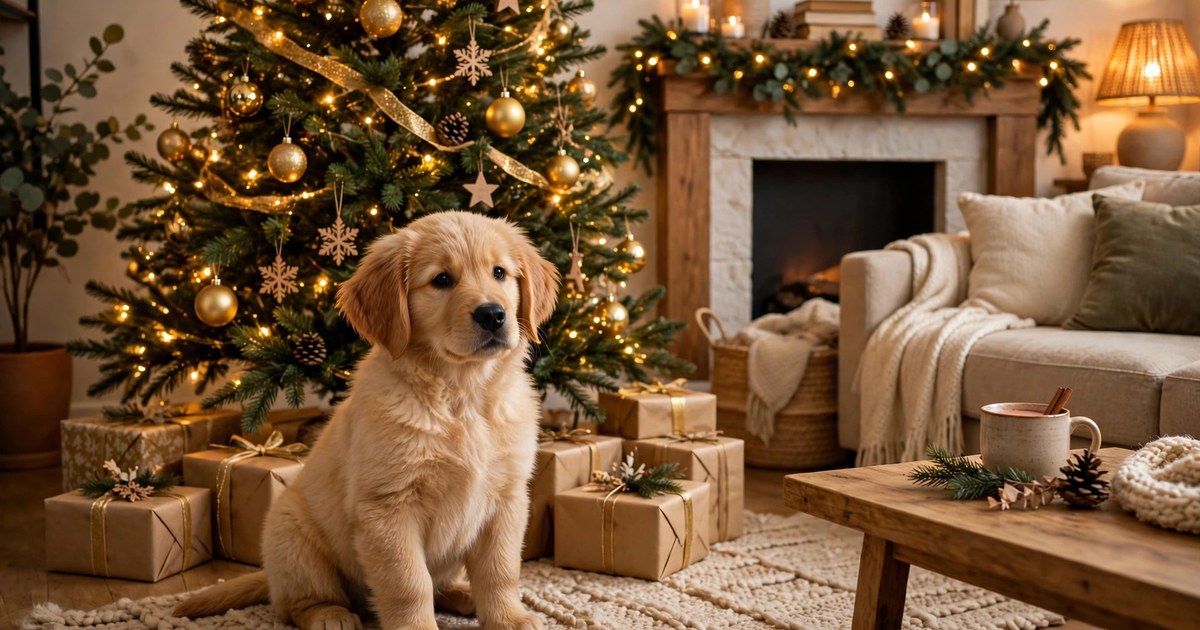
A tree is the most exciting new object your pet has seen in months — and the most dangerous. Secure it so it cannot topple onto a curious dog or a climbing cat: use a sturdy weighted stand, and if your cat climbs, anchor the top to the wall or ceiling with discreet wire. Cornell's veterinary team recommends restricting access to decorated rooms when pets are unsupervised, and a baby gate is an easy way to do it.
- Cover or block the tree-water reservoir — tree water can contain fertilizers and bacteria.
- Sweep up fallen needles daily; sharp needles can injure mouths and digestive tracts.
- Hang fragile and food-decorated ornaments (candy canes, chocolate, popcorn strings) on high branches only — or skip edible decorations entirely.
- Consider a smaller tabletop tree in the first year with a new puppy or kitten.
3. Decorations, Lights, and Candles
Shiny, dangling, and flickering things pull pets like magnets. Tinsel and ribbon are especially risky for cats — swallowed strands can wrap around the tongue or block the intestine, and the ASPCA specifically advises skipping tinsel altogether.
- Skip tinsel and curly ribbon, or use only garlands hung well above pet height.
- Route light strings along walls and secure loose cords; unplug decorations when you cannot supervise.
- Swap real candles for flameless LED ones, especially at tail-wagging height.
- Keep snow globes on high shelves — the liquid inside can contain ethylene glycol, which is highly toxic to pets.
- Pick up popped balloons and confetti strings promptly — cats chew and swallow them.
4. Plants and Floral Arrangements
Holiday greenery looks festive but belongs out of reach. Mistletoe and holly can cause stomach upset and worse if eaten; many holiday bouquet flowers, including lilies, are seriously dangerous for cats. Poinsettias are only mildly irritating, but are still best kept away from nibbling mouths. The simplest fix is placement: faux alternatives on low shelves, real plants on high shelves or in closed rooms.
5. Gifts, Ribbons, and Wrapping
- Do not wrap pet-toxic treats (chocolate boxes, food hampers) and leave them under the tree — pets smell what you cannot see.
- Cut ribbons short and bin wrapping-paper scraps the same day.
- Keep batteries for new gadgets and toys in a closed drawer, out of reach of dogs and cats.
- Choose pet gifts thoughtfully: sturdy toys with no small parts that can be chewed off, and sized for your pet.
6. Guests and Visitors
Visitors are the wildcard. They leave doors ajar, drop handbags containing sweets and medication, and feed your pet scraps while you are distracted. Brief your guests the day before with three short rules:
- Door discipline: watch for the pet when arriving or leaving; call out before opening the front door.
- Bag check: coats and handbags go in a closed bedroom, not on the floor — they often contain chocolate, chewing gum, or medication.
- Feeding rule: only treats from the jar you provide, nothing from plates.
If children are visiting, supervise every interaction with your pet — an adult should be in the room.
7. Set Up a Safe Room
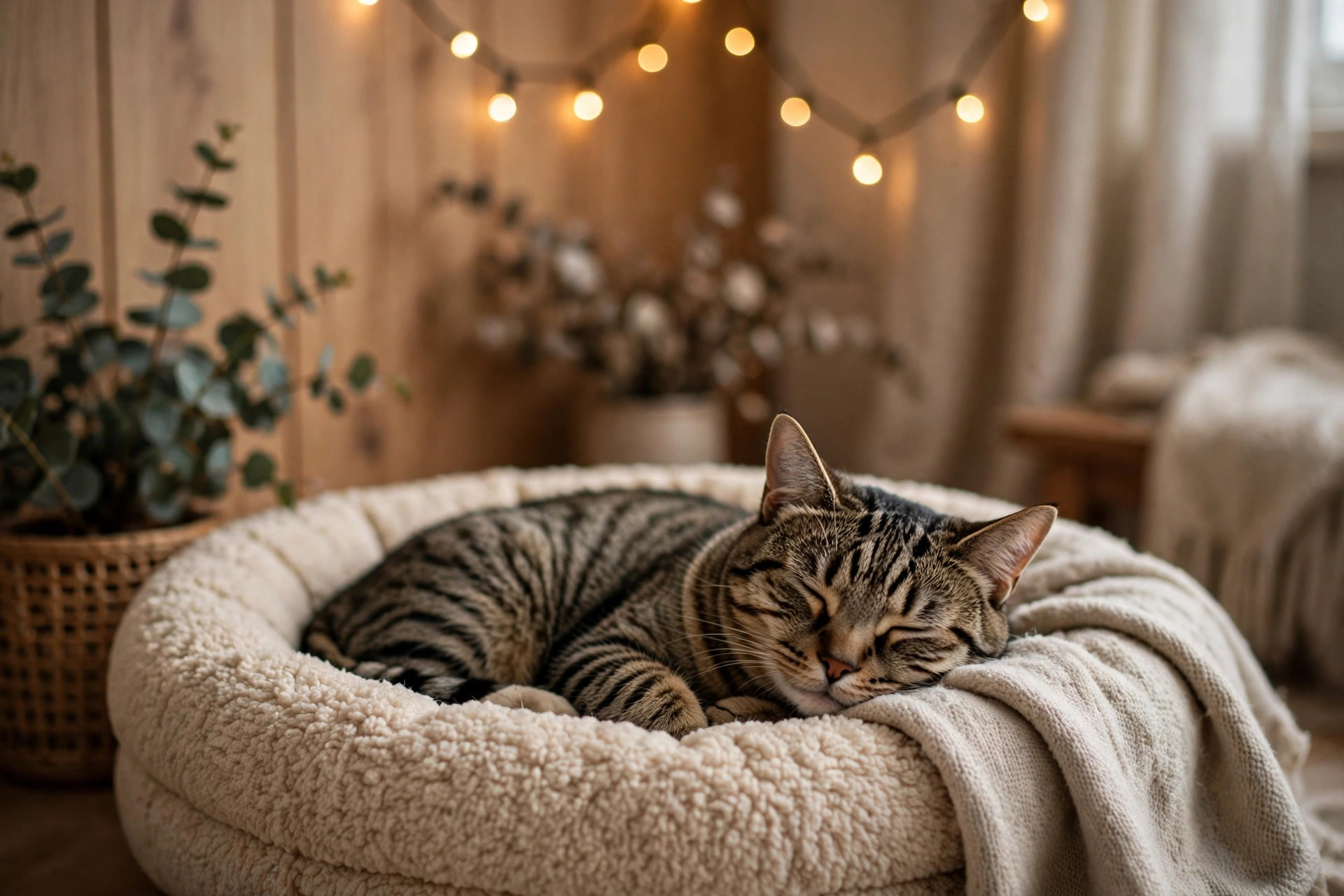
Even with all hazards removed, a full house on Christmas Day is loud and tiring for pets. It helps to confine pets to a safe space while entertaining visitors rather than leaving them to cope with the crowd.
- Choose a quiet interior room away from the front door and the dining table.
- Stock it before guests arrive: bed or crate, water bowl, litter tray for cats, and a familiar-smelling blanket.
- Leave background sound on — a radio or TV at low volume masks doorbells and party noise.
- Give the pet a long walk or play session earlier in the day so it is ready to rest.
- Check in every hour or two, but let the pet decide when it wants to join the family.
8. Travel, Boarding, and Pet Sitters
If you are spending Christmas away from home, book your arrangements early — quality boarding and sitters fill up weeks ahead. Whether you board your pet, hire a sitter, or take your pet along, write down a one-page handover note: feeding times and amounts, walk routine, house rules, your vet's number, and your emergency contact. Our holiday pet travel checklist covers the packing and journey side in full.
Your Christmas Day Game Plan
Theory is good; a timeline is better. Here is how the day can run:
- Morning: walk or play session before anything else; set up the safe room; secure bins.
- Guests arrive: brief everyone in 30 seconds — door discipline, no plate handouts, bags in the bedroom.
- Meal time: feed your pet its normal food first so it is not begging; keep the dining room door managed.
- Afternoon lull: let the pet rest in its safe room while guests chat; check water.
- Evening: unplug tree lights, extinguish or switch off candles, bin leftovers, close the tree-water cover.
- Next morning: sweep fallen needles and wrapping scraps before the pet's first wander.
Quick Reference: The Whole Checklist on One Screen
- Food, chocolate, and alcohol out of reach; bins secured
- Tree anchored; water covered; needles swept daily
- No tinsel at pet level; cords secured; candles flameless
- Mistletoe, holly, and lilies out of reach
- Ribbons and batteries cleaned up; gifts smelled by pets get stored high
- Guests briefed: doors, bags, no handouts
- Safe room ready with bed, water, and familiar blanket
- Boarding/sitter booked early with a written handover note
- Emergency contacts saved: your vet and the ASPCA poison-control number
Frequently Asked Questions
Can I give my dog or cat any Christmas dinner?
The safest answer is no. Rich foods, fatty skin, gravy, stuffing, and desserts can upset digestion or contain ingredients that are dangerous for pets. Serve your pet its normal meal at the normal time, plus a couple of pet-safe treats. If a guest slips your pet something, take it away and call your vet if you are worried.
Are real Christmas trees safe for pets?
A real tree can work if you manage it: anchor it so it cannot tip, cover the water, sweep needles daily, and keep fragile or edible ornaments high. Artificial trees remove the needle and water issues but still need anchoring if your cat climbs. Both types need cord management for the lights.
How do I stop my cat climbing the Christmas tree?
You cannot reason a cat out of climbing, but you can make the tree boring: anchor it firmly, hang breakables high, skip tinsel and dangling ribbons at low level, and provide an appealing alternative like a scratching post with a view nearby. A baby gate around the tree during unsupervised hours removes the temptation entirely.
Should I keep my pet in a separate room when guests arrive?
For most pets, yes — at least at first. A quiet room with their bed, water, and a familiar blanket lets them decompress. Confident, social dogs can join once guests settle, with door discipline in place. If your pet keeps retreating or hides, let it stay in its safe space without guilt.
What should I do if my pet eats something it should not have?
Act quickly but calmly: take away the remaining food or item, note exactly what was eaten and how much, and call your veterinarian or the ASPCA poison-control helpline (1-888-426-4435) for guidance. Do not try home remedies or attempt to make your pet vomit unless a professional tells you to.
When should I book a pet sitter or boarding for Christmas?
As early as possible — the best sitters and boarding places are usually full weeks before Christmas. If you leave it late, a trusted friend doing home visits is better than a last-minute facility you have not checked. Either way, leave a written handover note with feeding times, routine, and your vet's number.
Conclusion: A Calm Christmas for You and Your Pets
Planning more winter fun with your pet? Our winter pet care checklist covers cold-weather essentials, and if you are curious about your furry companion, find out how old your dog really is in human years or check your cat's age with our free calculators — a small treat of knowledge this Christmas.