Why Pet Owners Need a Second Apartment Checklist
Most renters tour an apartment and ask about square footage, parking, and kitchen appliances. Pet owners need a second checklist — one that covers the pet policy, the hidden fees, the escape routes, and the daily logistics of sharing a small space with a dog or a cat. Skip this step and you can end up with a lease you can't afford to keep (because the "refundable" pet deposit wasn't), a balcony your cat shouldn't be allowed near, or a ground-floor unit where every passing dog sets off yours.
This guide gives you 25 checks across three steps: reading the pet policy, touring the apartment with fresh eyes, and vetting the neighborhood. Work through them before you sign, and the apartment you choose will be one your pet can genuinely thrive in.
And if you're moving across town or across the country, pair this with our moving with pets checklist so the relocation itself goes smoothly too.
Step 1: Read the Pet Policy Like a Lease Lawyer
Pet-friendly and pet-welcoming are not the same thing. Before you fall in love with a unit, pin down these seven policy details — ideally in writing from the property manager.
- Breed and weight restrictions. Many buildings cap dogs at 25–50 lbs or ban specific breeds outright. If your dog is a 90-lb mix, confirm acceptance before touring — AKC's guide to pet-friendly apartments explains what to ask.
- How many pets are allowed. Some leases say "two pets," others say "one dog or two cats." If you're a multi-pet household, get the exact wording.
- Pet deposit vs. pet fee vs. pet rent. These three are often confused. A deposit (often $200–$500) is refundable; a fee (often $200–$500) is a one-time non-refundable charge; pet rent ($25–$100/month) keeps charging every month you live there. Ask which ones apply and add them to your budget — our pet deposit and pet rent guide breaks down the real numbers.
- The pet addendum. Most pet-friendly leases include a separate addendum spelling out the rules — leashing, waste cleanup, noise limits, restricted areas. Read it fully; violations can trigger fines or a demand to remove the animal.
- Vague language. Phrases like "no aggressive breeds" or "pets at management's discretion" give the landlord room to change their mind later. Ask for specifics in writing.
- Renewal terms. Policies can change at renewal. Ask whether the pet terms are locked for your lease term and what happens if the building's policy changes next year.
- Renter's insurance requirements. Some buildings require pet-liability coverage as part of your renter's insurance. Factor the cost in before you commit.
Step 2: The 12-Point Apartment Tour Checklist
Tour the apartment as your pet: check things at their eye level — doors, gaps, and floor surfaces matter more than countertops.
Windows, Balconies, and Railings
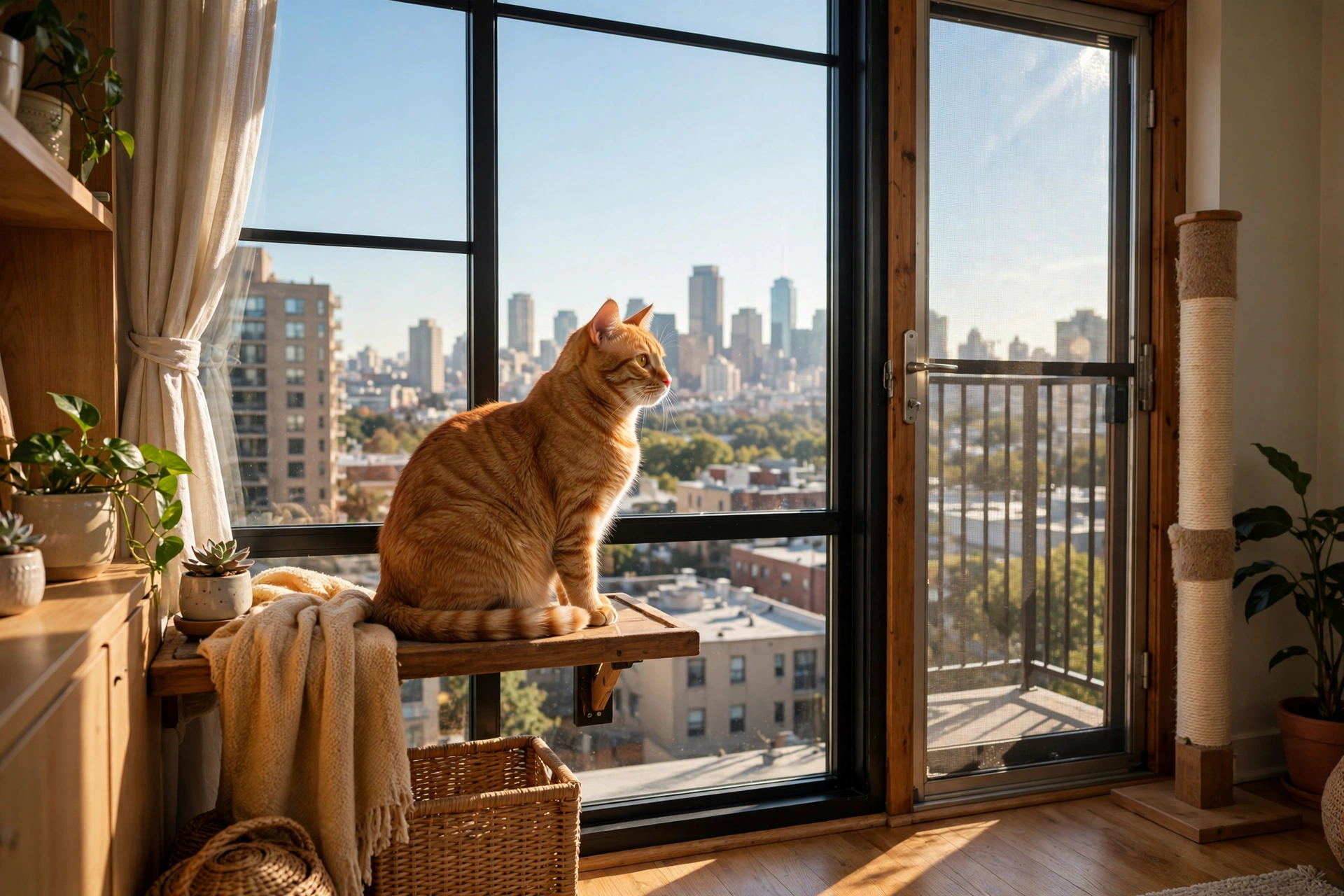
Cats and high-rise balconies are a dangerous combination, and dogs have jumped through second-story windows. Check these:
- Window screens: Are they sturdy and securely fastened? Flimsy screens pop out under a cat's weight. Ask if you may install pet-proof window guards.
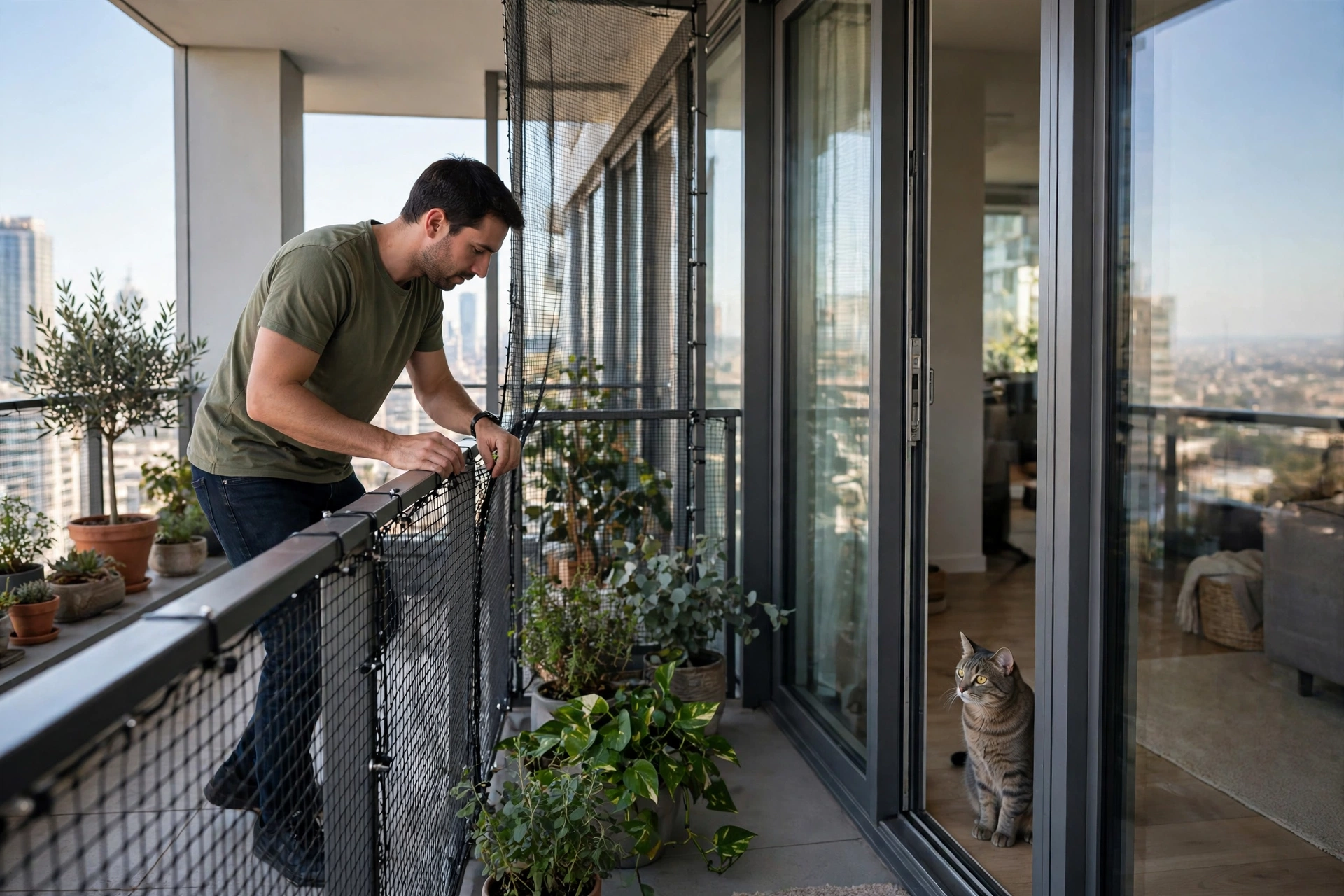
- Balcony railings: Are the gaps narrow enough that a small dog's head can't fit through? If the balcony is open, plan for mesh netting (and get written permission before installing anything).
- Sliding doors: Do they latch firmly? A cat or clever dog can nose open a loose slider.
Floors, Doors, and Chew-Proofing
- Flooring: Tile or laminate is far more pet-forgiving than carpet (and cheaper at move-out — no carpet-replacement deductions). Ask what floor-cleaning rules the lease sets.
- Interior doors: Solid doors that latch give you a safe room for introductions, crate training, or storm-day calm. Hollow doors a big dog could damage are a liability.
- Wall and trim condition: Photograph everything before you move in. That scratch on the baseboard wasn't your dog's — and you'll want proof at move-out.
Noise, Walls, and Neighbors
- Sound insulation: Thin walls mean your dog's excitement barking becomes your neighbor's formal complaint. During the tour, listen for how much sound carries between units.
- Quiet hours and noise rules: Some buildings set quiet hours as early as 9 pm. If your dog alerts at hallway noise, know the rules before you sign.
- Neighbor pets: Ask if nearby units have reactive dogs or outdoor cats. Shared hallways and stairwells become daily logistics when everyone has an animal.
Space, Layout, and Ground Access
- Ground-floor vs. high-rise: A ground-floor unit makes 6 a.m. bathroom trips dramatically easier for a dog — but brings street noise and window-level foot traffic that can stress a cat. Weigh the tradeoff honestly.
- Elevator and stairs: If the unit is on the 15th floor, how does potty access work? Some dogs won't use a balcony pad; know your dog's limits before committing.
- Laundry access: With a pet, you're washing bedding, towels, and muddy-paw cloths constantly. In-unit laundry is a genuine quality-of-life feature for pet owners.
Step 3: Vet the Neighborhood
Spend one afternoon walking the block and checking:
- Dog parks and green space. How far is the nearest off-leash area or decent walk route? A 20-minute drive to the nearest park will wear thin fast.
- Vet clinics and emergency vets. Note the nearest clinic and the nearest 24-hour emergency animal hospital. You never want to be Googling one at 2 a.m.
- Walking routes. Are sidewalks clean and well-lit? Busy roads, broken glass, or unfenced lots change how safe evening walks feel.
- Pet services nearby. Groomers, pet stores, and boarding facilities within easy reach save real time over a lease term.
- Trash and rodent pressure. Poor waste management attracts rodents — and rodent bait stations are a hazard for curious pets. Ask neighbors how it looks in summer.
10 Move-In Must-Haves for a Pet-Friendly Apartment
Set up the apartment for your pet before moving day — these ten items make a rental work for both of you:
- Window guards or pet-proof screens — installed before the cat ever reaches a window.
- Baby gates — for creating a safe zone, protecting new furniture, and managing introductions.
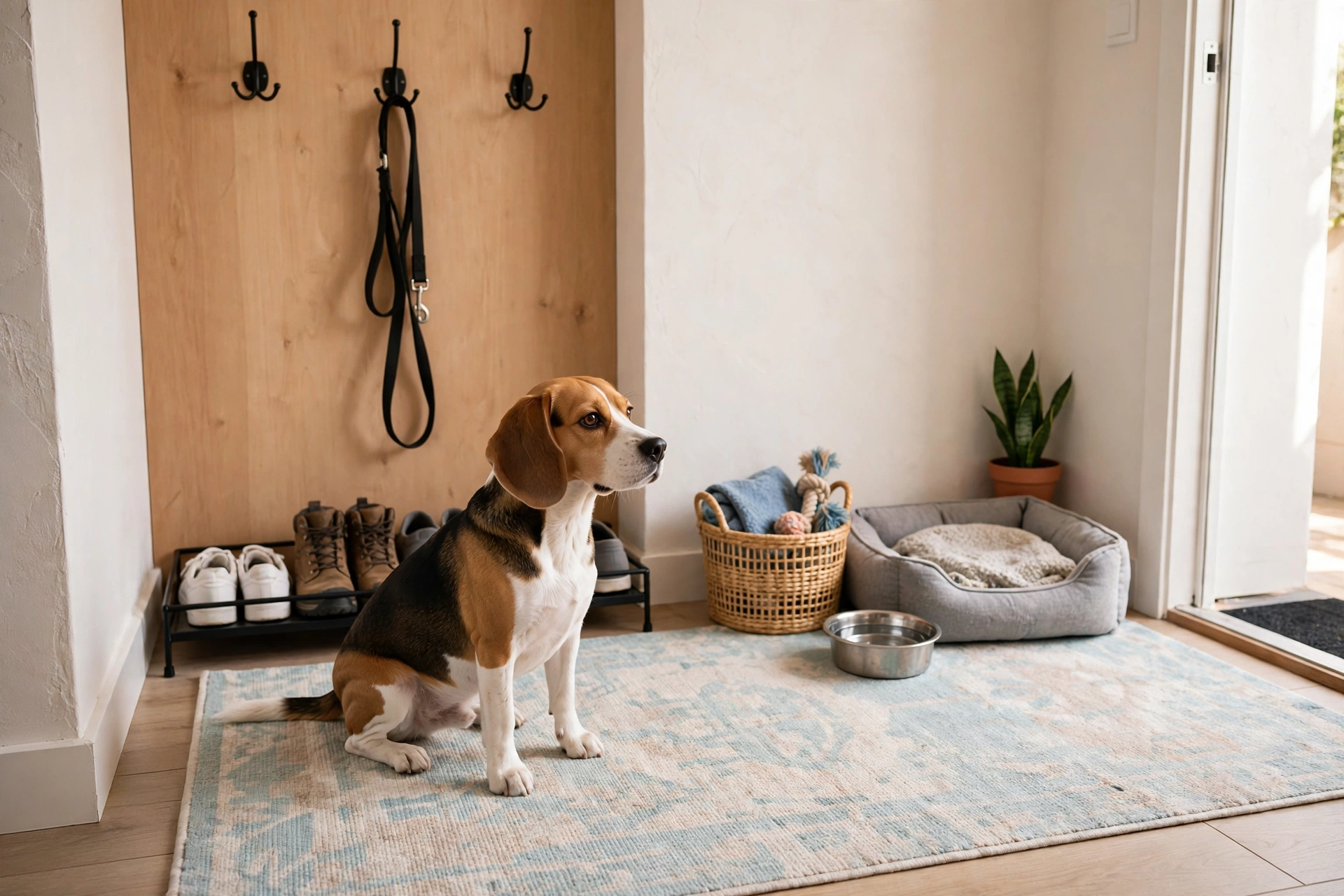
- Washable entryway rugs and runners — catch muddy paws and protect floors; cheap to replace at move-out.
- A designated pet corner — bed, crate, or perch in a consistent spot so your pet knows where "home base" is from day one.
- Sturdy scratching post or cat tree — near where the cat likes to stretch, not hidden in a corner. This protects your furniture and your deposit.
- Litter box placement plan — away from food and water, in a quiet but accessible spot. One box per cat, plus one extra, is the standard setup.
- Cord covers and outlet caps — kittens and puppies chew cords; covers are cheap insurance.
- A cleaning caddy — enzyme cleaner, lint rollers, a handheld vacuum, and extra trash bags. Accidents and shedding are daily life.
- Move-in photo documentation — photograph every wall, floor, and trim detail on day one. Store the photos with your lease.
- A routine from day one — feeding, walks, and play on a consistent schedule help a pet settle into a new space fast. The cat age calculator is a fun way to learn how old your cat really is while you settle in.
For more on the first days in a new home, see our ASPCA's pet care resources on settling pets into new environments.
5 Mistakes Pet Owners Make When Apartment Hunting
1. Assuming "pet-friendly" means pet-welcoming. A building can technically allow pets while having weight limits that exclude your dog and balconies your cat can't use. Always read the actual terms.
2. Budgeting for rent but not pet costs. Pet rent of $50/month is $600/year; a $400 non-refundable fee plus $75/month pet rent is $1,300 in year one. Run the real numbers — renter budgets usually underestimate by hundreds.
3. Touring without the pet in mind. Most renters tour once, looking at kitchens. Tour twice: once for you, once thinking only about the animal — windows, floors, noise, access.
4. Ignoring the move-out math. Carpet replacement, scratched doors, and "pet odor" treatments are where deposits disappear. Document everything on move-in and choose washable, durable setups.
5. Forgetting about the neighbors. Your lease is with the landlord, but your daily life is with the neighbors. A reactive dog next door or paper-thin walls can make a perfect apartment miserable. Ask around before you sign.
Frequently Asked Questions
Can a landlord change the pet policy in the middle of my lease?
Generally, no — the terms you signed apply for the lease term. Changes typically arrive at renewal. That's why getting the pet terms in writing at signing matters more than anything a manager tells you verbatim.
What is the difference between a pet deposit and a pet fee?
A pet deposit (usually $200–$500) is refundable at move-out if there's no damage. A pet fee (usually $200–$500) is a one-time non-refundable charge. Many buildings charge one, some charge both, and several add monthly pet rent on top.
Do I need renter's insurance because of my pet?
Some landlords require it — especially for dog owners — as part of the pet addendum. Even when not required, liability coverage is worth considering, since you're responsible if your pet injures someone or damages the building.
Is a ground-floor apartment better for dog owners?
For potty access, usually yes — especially for puppies, senior dogs, and anyone doing 6 a.m. trips. The tradeoff is more street noise and foot traffic past the windows, which can stress cats and alert-barking dogs.
How can I make a high-rise balcony safe for my cat?
The safest approach is preventing unsupervised access: a latched door or baby gate, plus mesh netting on railings if your landlord allows it. Never assume a cat "knows better" — falls from height are a real and common emergency.
What should I photograph before moving in with a pet?
Every room's floors, walls, baseboards, door frames, window screens, and balcony surfaces — in daylight, with dates. This documentation is what protects your deposit from damage you didn't cause. Store the photos with your signed lease.
The Bottom Line
The right apartment for a pet owner isn't just "pets allowed." It's clear written policies, fees you can actually afford, windows and balconies that are safe at pet height, a layout that survives daily life, and a neighborhood with green space and a vet nearby. Run these 25 checks before you sign, and you'll move into a home — not a compromise.
Want a fun number to celebrate the new place? Find out how old your dog really is with our free dog age calculator — and start the new lease knowing your best friend a little better.