
If your cat is creeping past their tenth birthday, you have probably noticed the bills creeping up too. Senior cats need more frequent checkups, more bloodwork, and often pricier food — but how much should you actually budget in 2026? This guide breaks down the real costs of senior cat care, line by line, so you can plan ahead instead of getting blindsided.
Quick Answer: The 2026 Senior Cat Budget at a Glance
For a healthy senior cat (roughly 11 years and older), most owners spend about $1,000–$1,800 per year on routine care — around 10–20% more than a middle-aged adult cat. That range lines up with published industry data: the ASPCA estimates roughly $634 per year for basic adult cat care, Rover's 2026 report puts median lifetime cat costs near $32,500, and the Bureau of Labor Statistics reported veterinary services up 5.3% year over year. If a chronic condition develops, annual costs can climb to $2,500–$6,000.
| Cost category | Typical low | Typical high |
|---|---|---|
| Veterinary care (exams, bloodwork, dental) | $400 | $1,200 |
| Food and treats | $300 | $700 |
| Litter and basic supplies | $180 | $360 |
| Medications and supplements | $0 | $600 |
| Grooming and comfort items | $50 | $250 |
| Emergency savings buffer | $200 | $1,000 |
Every cat is different, so treat these as planning ranges, not quotes — each line item below comes with practical tips for keeping costs under control.
1. Veterinary Care: The Biggest Line Item ($400–$1,200+/year)
Vet care is where senior cat budgets grow fastest. Most vets recommend checkups every six months for cats over 11 ($100–$300 per visit), plus senior bloodwork ($150–$300 per panel) once or twice a year — routine care alone can reach $400–$600 annually before anything goes wrong.
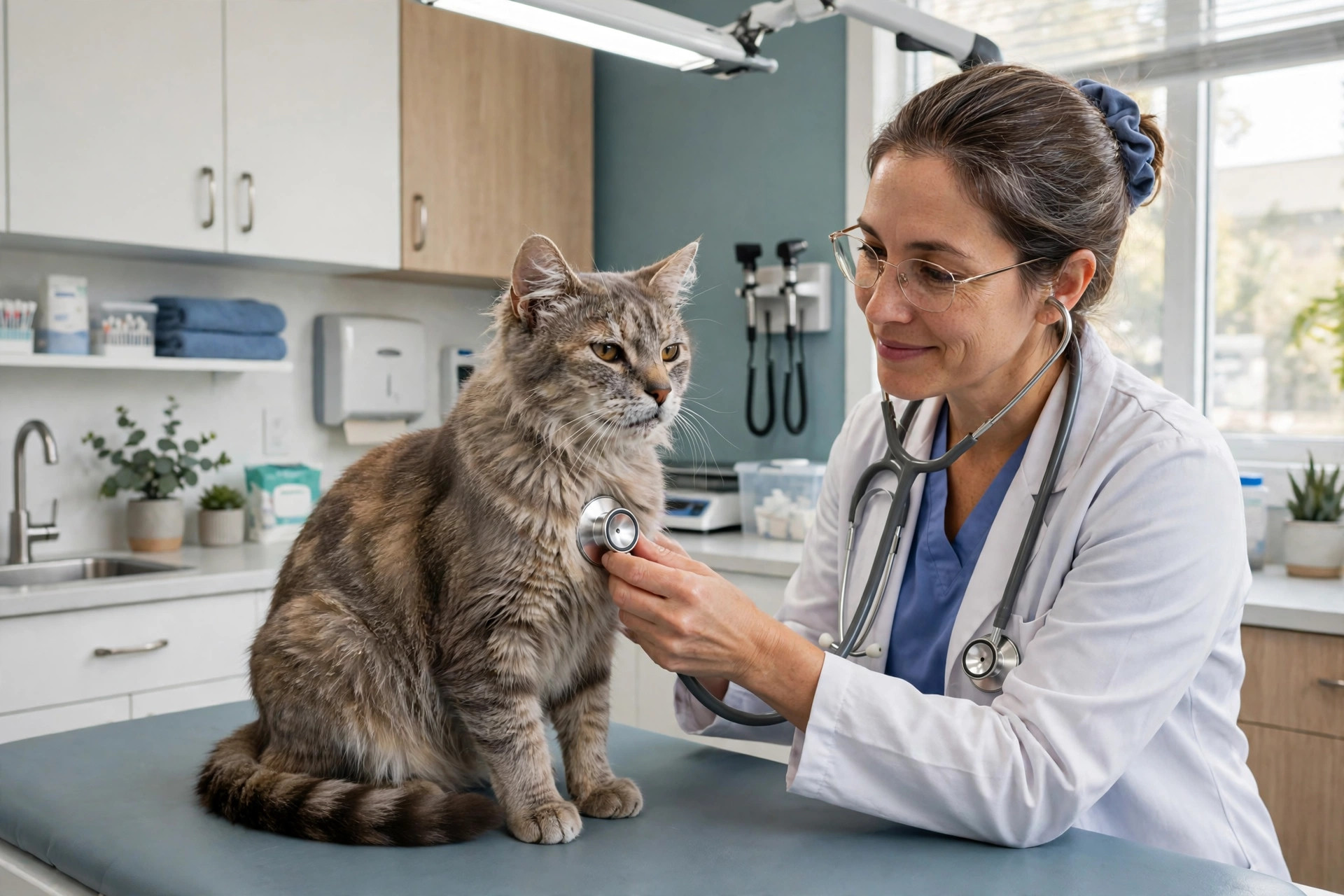
Dental care surprises most owners: a professional cleaning under anesthesia commonly costs $500–$1,200, and senior cats frequently need one. Spreading costs is possible: many clinics offer payment plans, and veterinary teaching hospitals often charge 30–50% less than private practices for the same procedures, since students perform the work under faculty supervision.
For trustworthy guidance on what senior cats actually need from their vet visits, VCA's senior cat care resources and Cornell University College of Veterinary Medicine's guide to caring for older cats are both excellent starting points — discuss anything you read there with your own veterinarian before acting on it.
Money-saving checklist for vet bills
- Ask for an itemized estimate before any procedure — it is normal to ask, and it prevents bill shock.
- Compare prices between 2–3 clinics for planned procedures like dentals; prices vary widely even in the same city.
- Look into wellness or membership plans — some chains bundle unlimited exams, vaccines, and bloodwork for $35–$65/month, which can beat paying per visit for a senior cat.
- Check veterinary school clinics near you; all accredited US vet schools run teaching hospitals with discounted rates.
- Schedule proactively — planned care costs far less than emergency care for the same problem.
2. Food and Nutrition ($300–$700/year)
Senior cats often do best on formulas designed for older animals, which typically cost more than standard adult food. A mid-range senior dry food runs roughly $25–$45 per month, while premium or prescription-style senior diets can reach $55–$70 per month. Rover's 2025 data puts senior cat food and treats at $260–$1,790 per year across the full range of feeding styles.
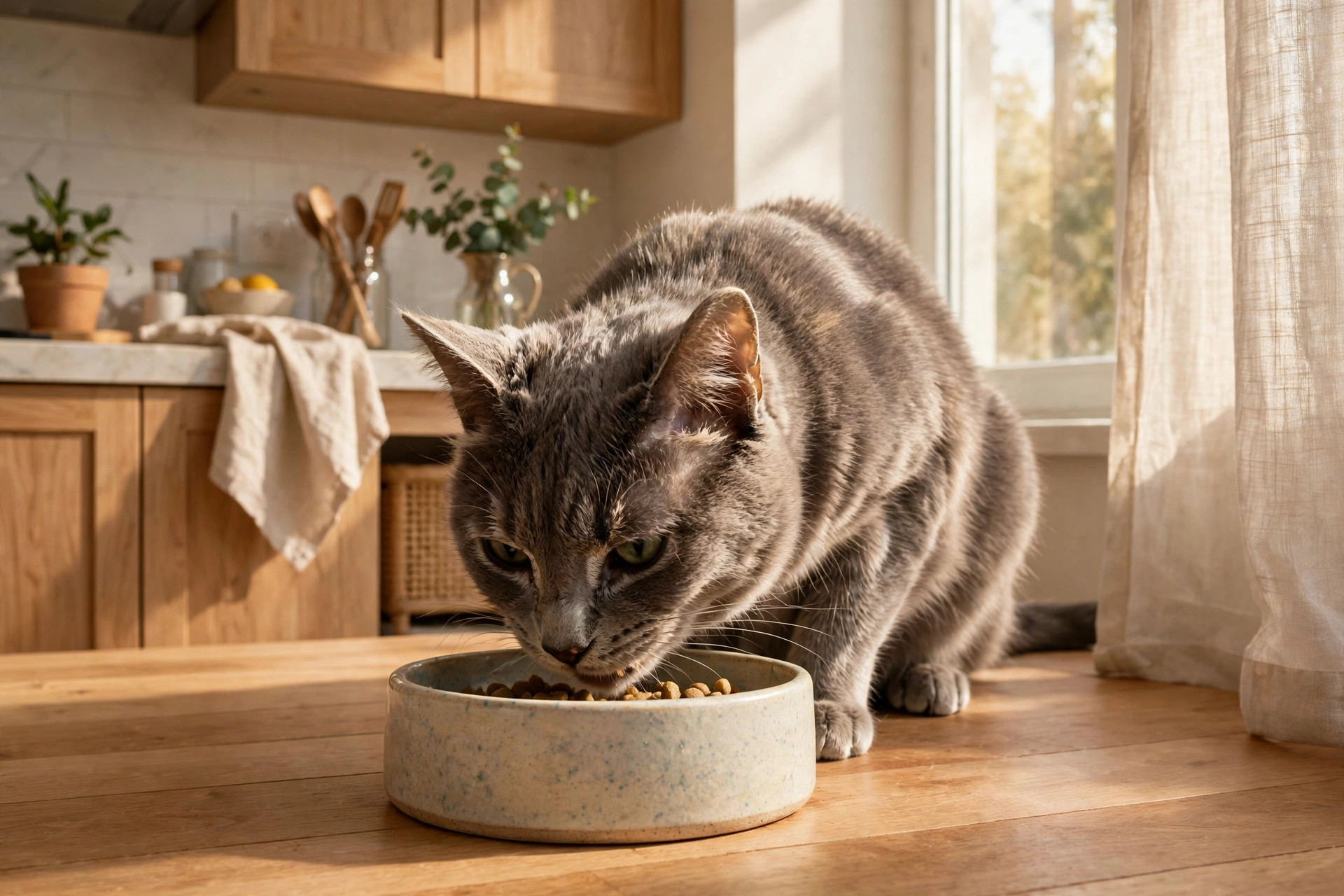
Compare cost per serving, not cost per bag: a $60 bag that lasts 10 weeks ($6/week) beats a $35 bag that lasts 4 weeks ($8.75/week). Feeding guidelines differ by calorie density, so do the math with your cat's actual daily portion. Mixing wet and dry food is also worth discussing with your vet — canned food adds hydration, which matters more as kidney function naturally declines with age.
You can also run your own numbers with our cat cost calculator to see how food, litter, and vet care stack up for your household.
Ways to trim the food bill
- Buy the largest bag size your cat will finish before it goes stale — the per-pound price drops significantly.
- Set up autoship subscriptions, which commonly save 5–10% per order.
- Compare the same formula across two or three retailers before every big purchase; prices move around.
- Never switch foods abruptly to chase a sale — a gradual transition over 7–10 days avoids stomach upset and wasted food.
3. Litter and Everyday Supplies ($180–$360/year)
Litter is the quiet budget line nobody thinks about until they add it up: standard clumping litter costs about $15–$25 per month for one cat. Senior cats sometimes need a litter box with lower sides for easy entry ($15–$30, one-time), and many owners add an extra box per floor as mobility declines. Buying litter in bulk boxes instead of small bags typically cuts the monthly cost by 20–30%.
4. Medications and Supplements ($0–$600/year)
Many senior cats take no daily medication at all, which is why this line starts at zero. But age-related conditions are often managed with long-term medication: a single daily medication commonly costs $15–$50 per month, and cats on two or three can reach $100+/month.
Two moves that genuinely save money:
- Ask your vet whether a prescription can be filled at a regular pharmacy — many common pet medications are the same drugs humans take, and pharmacy prices can beat clinic prices by a wide margin.
- Compare online pet pharmacies against your clinic's price for refills — but buy only from licensed, verified pharmacies, and always with your vet's prescription.
Never start, stop, or adjust a medication without your veterinarian's say-so — skipping doses to stretch a bottle can turn a manageable condition into an emergency bill.
5. Grooming and Comfort ($50–$250/year)
Older cats often groom themselves less effectively, so owners pick up the slack. A good slicker brush ($10–$15), nail clippers ($8–$12), and gentle grooming wipes ($8–$12) cover the basics for the whole year. Long-haired seniors may need professional grooming at $50–$80 a session if matting becomes a problem.

Comfort spending also rises with age, and this is money well spent: an orthopedic or heated bed ($30–$60) helps stiff joints, pet stairs or a ramp ($25–$50) keeps favorite spots reachable, and a raised food-and-water stand ($15–$25) is easier on an arthritic neck. These are mostly one-time purchases that pay off for years.
6. The Emergency Buffer: The Line Most People Skip ($200–$1,000/year)
The ASPCA's 2026 reporting found that 6 in 10 pet owners are not confident they could afford a pet medical emergency. A single emergency visit — an overnight stay, imaging, or urgent surgery — can cost $1,000–$3,000, and senior cats are simply more likely to need one. You have three realistic options:
- A dedicated savings buffer: set aside $25–$50 per month in a separate account. After a year you have $300–$600 earmarked for the unexpected.
- Pet insurance: for senior cats, expect roughly $30–$60 per month for accident-and-illness coverage. Enroll while your cat is still relatively healthy — pre-existing conditions are typically excluded.
- A credit line reserved for emergencies: options like CareCredit exist specifically for veterinary bills. Only use this as a backup plan, not a first resort.
Decide before the emergency — the worst time to figure out financing is in a clinic waiting room at midnight.
7 Smart Ways to Lower Senior Cat Costs Without Cutting Care
- Do the wellness-plan math. If your cat needs two exams, annual bloodwork, and a dental cleaning, a $45/month membership plan can cost half of retail. If your cat needs only one exam a year, skip it.
- Time big purchases to sales. Food, litter, and beds go on predictable sale cycles — stock up during major sale events.
- Stay ahead of preventive care — a $200 cleaning caught early beats a $1,500 extraction-and-infection bill later.
- Ask about every discount. Multi-pet discounts, senior-citizen owner discounts, and new-client offers exist at many clinics — but you usually have to ask.
- Track spending for 3 months. Most owners underestimate litter and food costs and overestimate vet costs. Real numbers beat guesses when you build a budget.
- Maintain a healthy weight. Extra weight worsens joint and mobility problems in older cats, which leads to more vet visits. Portion control is free.
- Build the emergency fund first. One avoided financing charge or one negotiated payment plan saves more than a year of coupon clipping.
Frequently Asked Questions
At what age is a cat considered a senior?
Most vets consider cats seniors from around 11 years old (15+ is often called "super senior"). Cornell's veterinary college notes that cats are now considered older at 12 to 14, thanks to better nutrition and indoor living. Our cat age in human years chart maps every cat age to its human equivalent.
How much more does a senior cat cost than a younger adult cat?
Plan on roughly 10–20% more per year for a healthy senior cat, driven by twice-yearly exams and senior bloodwork. If a chronic condition develops, costs can double or triple — which is why the emergency buffer matters more as cats age. Our monthly cat cost guide covers the adult baseline.
What is the single most expensive part of senior cat care?
Veterinary care, by a wide margin — dental cleanings ($500–$1,200) and the monitoring that chronic conditions require. Food is the second-largest line item.
Is pet insurance worth it for a senior cat?
It makes the most sense if you could not comfortably cover a $2,000–$3,000 emergency bill out of pocket. Get quotes before your cat develops a diagnosed condition, compare deductibles and annual limits carefully, and weigh the yearly premium against building an emergency fund instead.
Can I save money by buying cheaper senior cat food?
Sometimes, but compare cost per serving rather than bag price, and check the feeding guidelines — a cheaper food with lower calorie density can cost more per day. Any diet change for a senior cat is worth a quick discussion with your vet, since older cats have less margin for nutritional gaps.
Should I switch to a vet that offers a wellness plan?
Only if the math works for your cat's actual needs. Add up what you spent on exams, vaccines, bloodwork, and dentals last year, then compare against the plan's annual cost and coverage. Plans favor cats that use a lot of routine services — healthy seniors needing just one annual visit often do better paying per visit.
Final Thoughts
A senior cat costs more than a younger one — there is no way around that. But the gap between a stressful $4,000 surprise and a manageable $1,500 planned year usually comes down to three things: honest budgeting, catching problems early with regular checkups, and planning for emergencies before they happen.
Want a quick sense of where your cat is in life? Try the Cat Age Calculator to see your cat's age in human years — it takes ten seconds and helps you plan what stage of care (and cost) comes next.