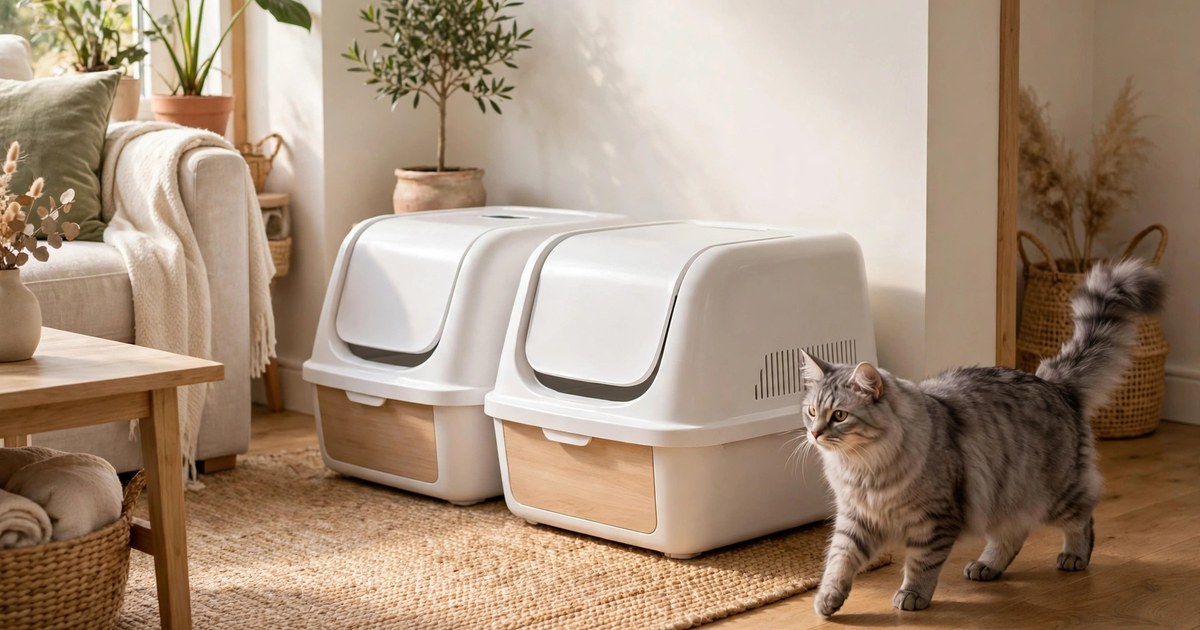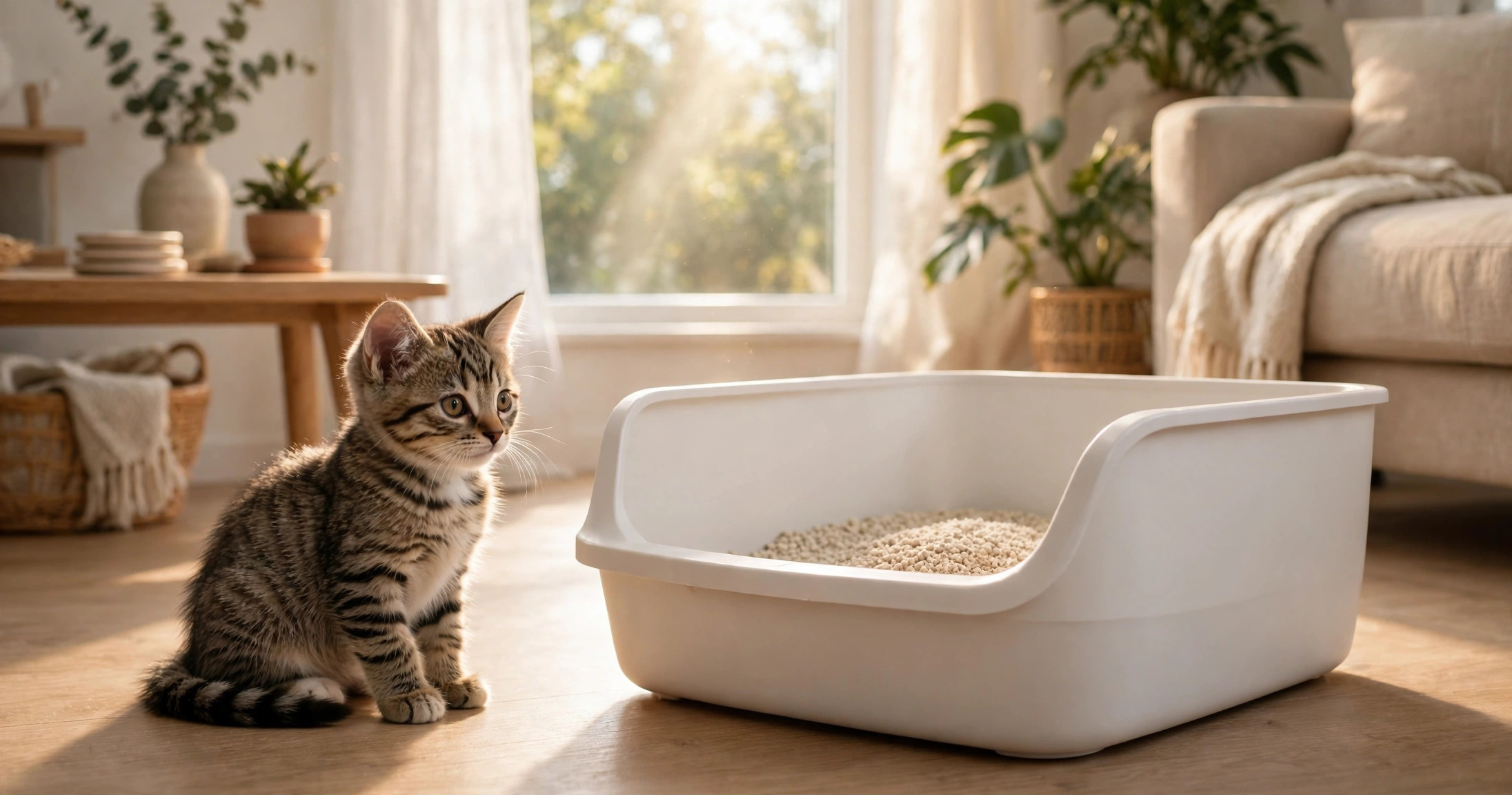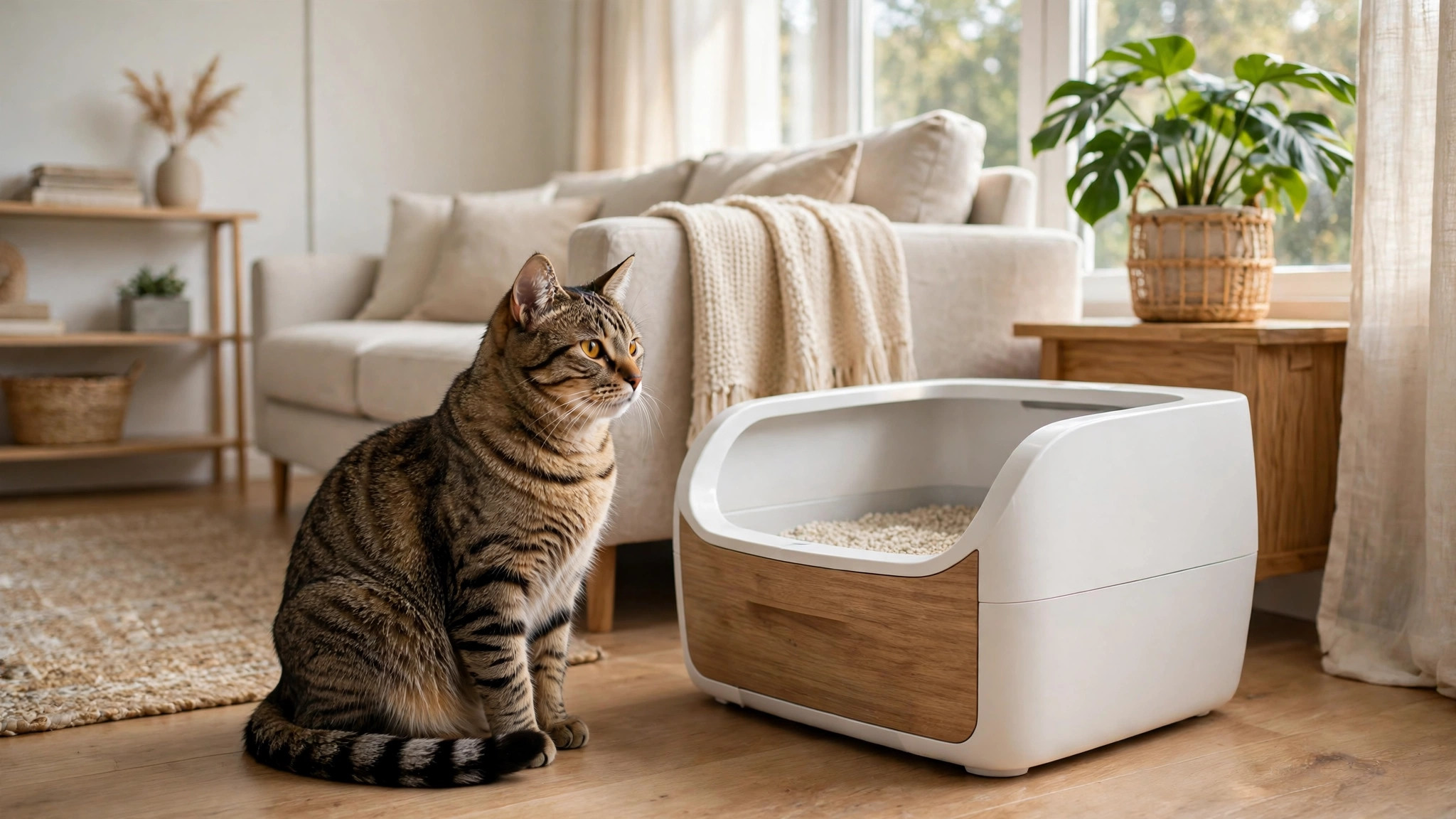
If you're finding puddles where they don't belong, here's the honest truth most articles skip: the vast majority of cats who pee outside the box aren't being spiteful, stubborn, or "bad." They're telling you something about their bathroom setup is wrong. Cats are fastidious creatures with strong opinions about their toilet — and when the box is dirty, crowded, badly placed, or just unpleasant to use, they vote with their paws.
The good news: setup problems are completely fixable, usually within days, and every fix below costs little or nothing. Let's work through them one by one.
Step 0: Rule out a health issue first
This is the one thing every reputable source agrees on, so it comes before everything else: if your cat suddenly starts peeing outside the box — especially if they strain, cry, make frequent trips with little result, or the urine looks unusual — book a vet visit first. Health issues are a real and common cause of sudden litter box changes, and no setup fix can substitute for a checkup. If your cat is straining with no urine output at all, especially a male cat, that is an emergency — go to the vet immediately.
Once your vet has cleared your cat (or if this is a long-standing habit rather than a sudden change), the fixes below will almost certainly solve it.
Why cats skip the box: the setup reasons
Cats avoid their litter box for a short list of predictable reasons, all of which you can fix at home:
- The box is dirty — a cat's nose is far more sensitive than yours.
- There aren't enough boxes for the number of cats.
- The litter type, depth, or smell is wrong for them.
- The box is in a bad spot — noisy, exposed, or too far away.
- Something changed in the home and they feel stressed.
Now let's fix each one.
9 litter-box fixes that actually work
1. Add more boxes — one per cat, plus one extra
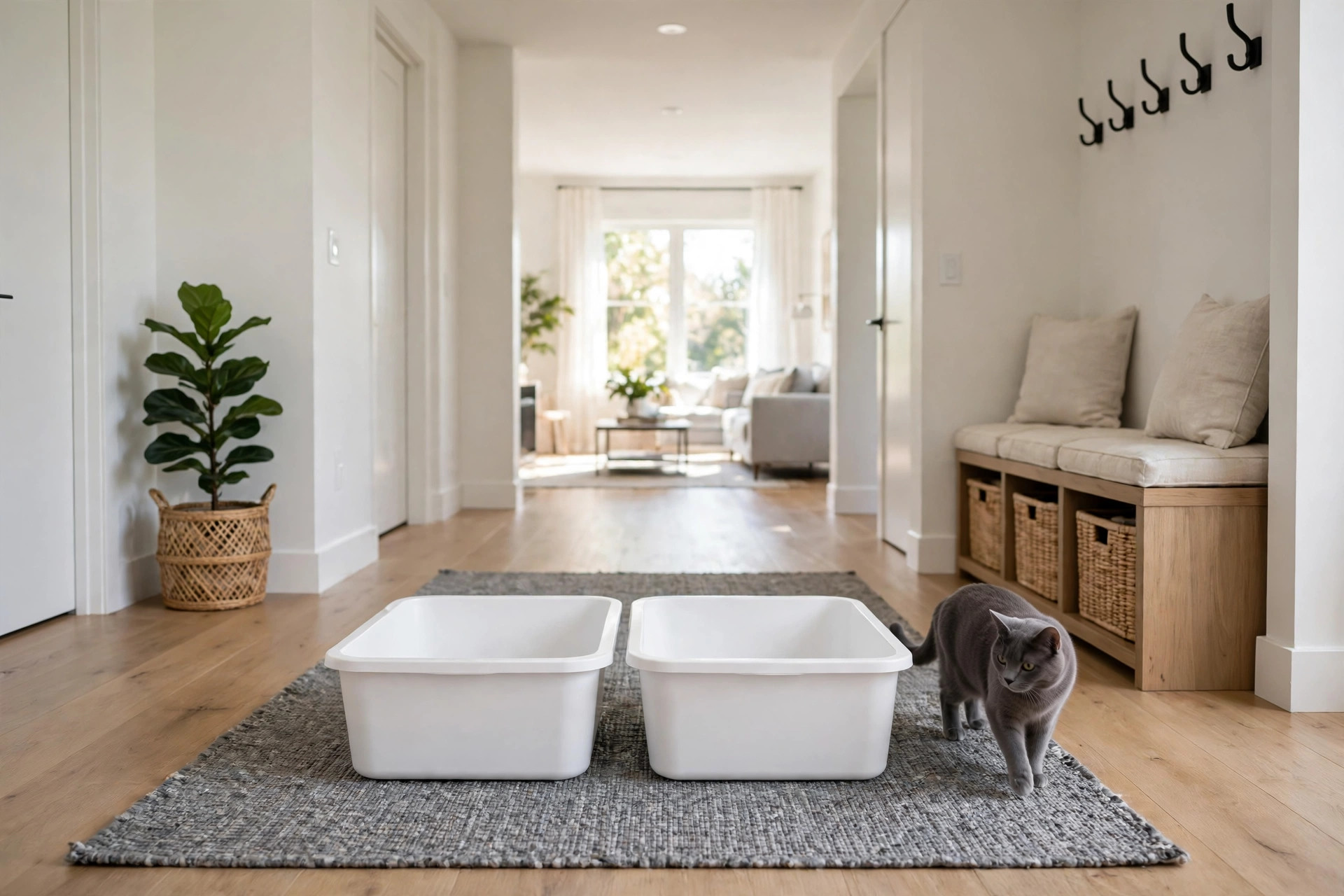
The classic rule from feline behaviorists is simple: one box per cat, plus one extra. A single-cat home does best with two boxes; two cats need three. Why? Many cats refuse to use a box another cat has already used, and some cats prefer to urinate and defecate in separate boxes. Spread the boxes around the house in different locations — lining three boxes up in one corner counts as one spot in a cat's mind. For a multi-level home, keep at least one box on each floor.
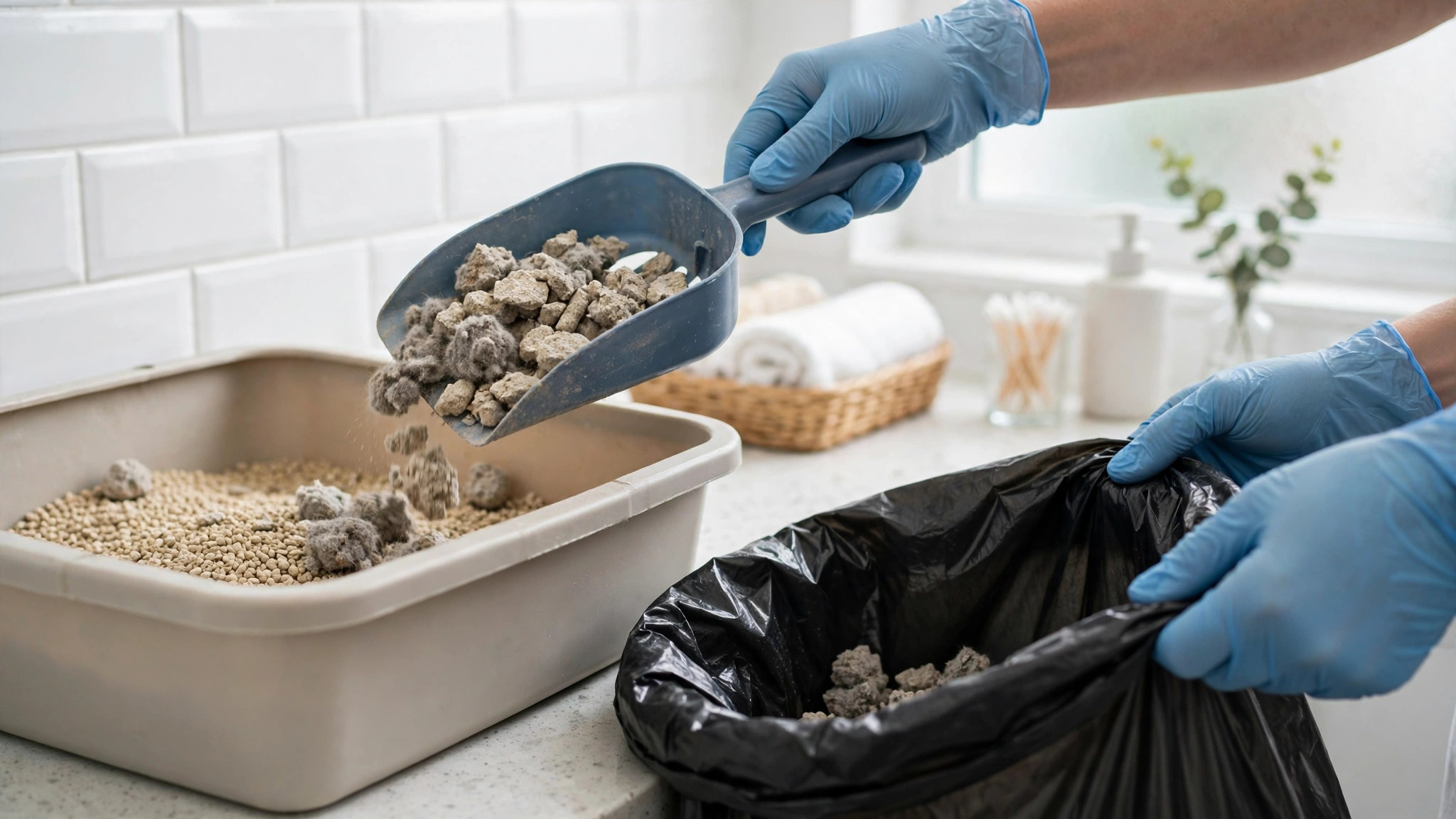
2. Scoop twice a day, do a full reset every week
Ask yourself honestly: would you use a toilet that hadn't been flushed since yesterday? The ASPCA recommends scooping at least once a day, and twice a day is better in multi-cat homes. Once a week, dump all the litter, rinse the box with warm water and unscented soap or baking soda, dry it fully, and refill. Skip bleach and strong scented cleaners — harsh chemical smells can drive a cat away from the box. Also plan to fully replace litter boxes about every two years, or sooner if the plastic is deeply scratched (scratches trap odor).
3. Switch to litter cats actually like
Most cats strongly prefer unscented, clumping litter with a soft, sandy texture — it's the closest thing to the loose soil their instincts expect. Strongly scented litters are made for human noses, not cats', and many cats avoid them. Keep the depth to about 1–2 inches — deeper beds feel unstable underfoot. If you switch litter types, do it gradually: mix the old and new litter for a week or two so the change isn't a shock. For kittens under six months, use a litter specifically labeled safe for kittens.
4. Move the box to a cat-approved spot
Location is one of the most overlooked causes. Cats want a bathroom that is:
- Quiet and low-traffic — not next to the washing machine, a barking dog's bed, or a slamming door.
- Private but with escape routes — a dead-end corner where another pet can ambush them feels like a trap. An uncovered box against a wall with a clear line of sight is ideal.
- Away from food and water — cats don't like eating where they eliminate.
- On the same floor they spend time on — a senior or lazy cat won't trek downstairs twice a day.
Once you find a spot that works, leave the box there. Moving it around the house daily resets your cat's learning every time.
5. Go big and open
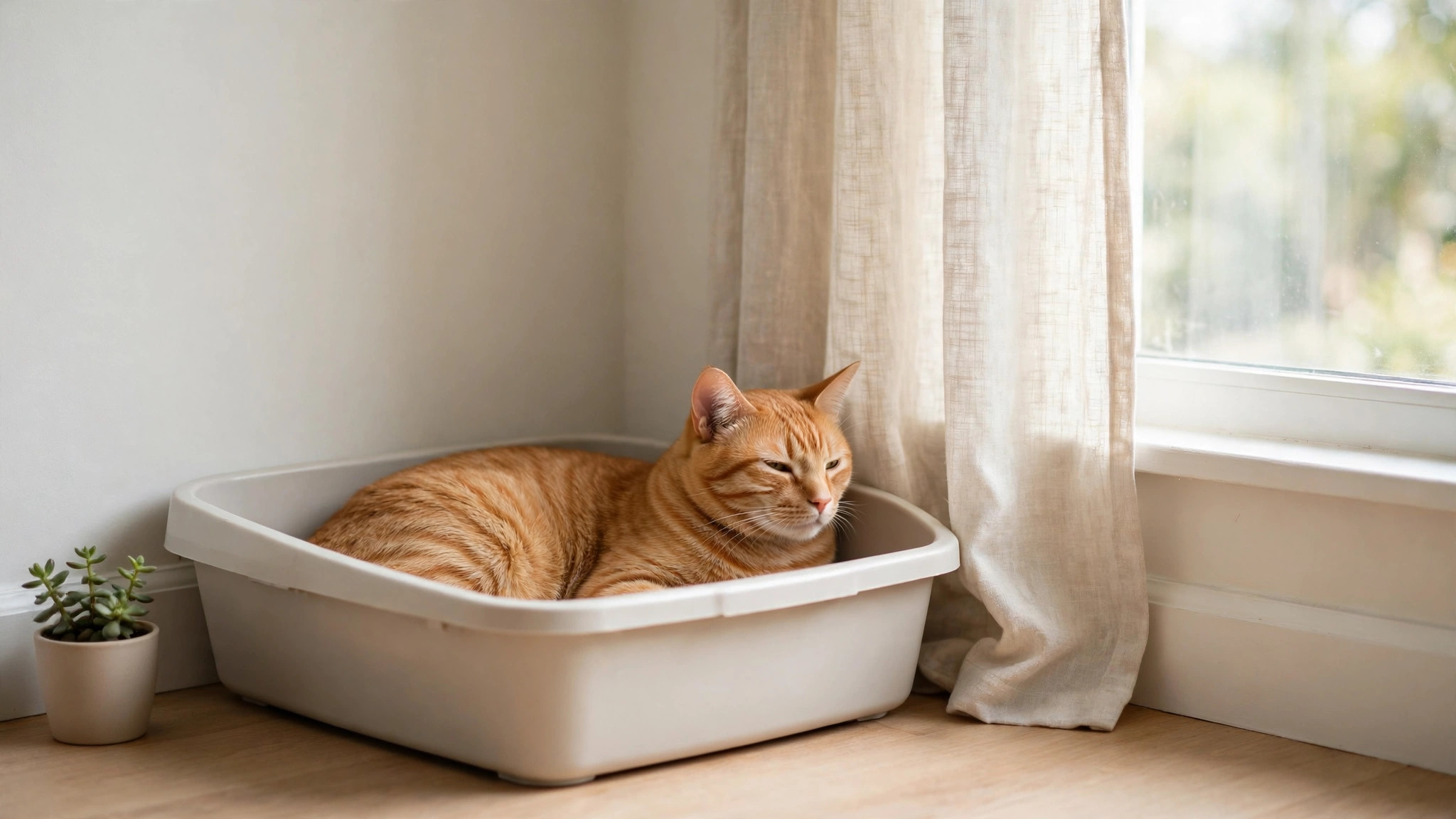
A box that's too small makes a cat feel cramped and increases the chance they hang their rear over the edge. An ideal box is about one and a half times your cat's body length, big enough to stand and turn around in comfortably — cheap plastic storage containers make excellent oversized litter boxes. Most cats also prefer uncovered boxes: covered boxes trap odor inside (fine for you, awful for them) and limit escape routes. For senior cats or cats with stiff joints, choose a low-entry box they can step into easily.
6. Clean old spots the right way (or they'll come back)
If you don't fully remove the urine odor from old accident spots, your cat's nose will keep leading them back to the same place. The protocol:
- Blot up as much urine as possible with paper towels — press firmly, don't rub.
- Saturate the area with an enzymatic pet-urine cleaner (these contain bacteria that actually break down the odor molecules regular cleaners leave behind).
- Let it stay wet for the time on the label, then blot again and air-dry.
- Use a blacklight in the dark to find any spots you missed — dried urine glows.
Important: never use ammonia-based cleaners on urine spots — ammonia smells like urine to a cat and can mark the spot as a toilet. And don't use bleach on the accident area either.
7. Break the surface habit by blocking the spot
Cats can develop a preference for a specific surface — the laundry pile, the couch, the rug. While the enzymatic cleaner dries, make the spot unappealing: cover it with aluminum foil, a plastic mat (smooth side up), or move a piece of furniture over it. If the spot is far from any box, place a temporary box right there, then move it a few inches a day back toward where you want it. Removing access to the old spot while the new setup improves is how the habit breaks.
8. Lower the stress in the house
Cats hate unpredictability. New pet, new baby, houseguests, moving furniture, loud renovations, or even a changed work schedule can push a sensitive cat to pee outside the box — especially on soft things that smell like their favorite person (beds, laundry, the couch), which is their way of mixing scents to feel safe. To help:
- Keep routines predictable — feeding, play, and bedtime at the same times.
- Add vertical space and hiding spots: cat trees, window perches, a cardboard box "fort" in a quiet room.
- Play with them daily — 10–15 minutes of interactive play burns off anxiety.
- If another pet guards the box or the hallway, give the bullied cat their own box in their own territory.
9. Figure out if it's spraying or peeing — they need different fixes
This one matters because the solution differs. Spraying (marking) is usually small amounts of strong-smelling urine deposited on vertical surfaces — walls, furniture sides, curtains — while the cat stands with a quivering tail. It's a territorial behavior, most common in unneutered males but possible in any cat. Regular peeing outside the box means squatting and leaving a larger puddle on a horizontal surface, which points back to the box-setup issues above. If your cat is spraying, neutering or spaying dramatically reduces it in most cats, and reducing territorial stress (see fix 8) is the other half of the solution.
Your 24-hour action checklist
If you only have today, do it in this order:
- Hour 1: Scoop every box now. If you have fewer than one-per-cat-plus-one, buy or improvise extras (even a shallow storage bin works).
- Hour 2: Hit every old accident spot with enzymatic cleaner and blacklight-check it.
- Today: Move boxes to quiet, accessible spots — away from appliances, food, and dead ends. Add 1–2 inches of unscented clumping litter if you're not using it.
- Tonight: Block the old favorite spot (foil, furniture, closed door) and keep the bedroom/laundry doors shut if those were targets.
- This week: If the problem is sudden or hasn't improved in a few days, book that vet visit.
What NOT to do
- Don't punish your cat — yelling, nose-rubbing, or confinement as punishment creates fear and stress, which makes the problem worse, not better. Your cat cannot connect the punishment to an accident that happened hours ago.
- Don't use ammonia or bleach-based cleaners on accident spots (see fix 6).
- Don't keep moving the box hoping they'll "find" a better spot — pick a good spot and be consistent.
- Don't add strongly scented litter, air fresheners, or deodorizers to mask the smell — they usually make cats avoid the box more.
- Don't give up on the cat — inappropriate elimination is one of the top reasons cats are surrendered, but it's also one of the most fixable behavior problems when the setup is corrected.
Frequently asked questions
Why is my cat peeing on my bed specifically?
Beds and laundry smell like you, and stressed cats pee on scent-soaked soft things to mix their scent with yours — it makes them feel safer. It's almost never spite. Clean with enzymatic cleaner, keep the bedroom door closed during the retraining period, and work on fix 8 (stress reduction).
How long does it take for a cat to start using the box again?
Most cats return to the box within a few days to two weeks once the real problem is fixed — provided old spots are properly cleaned so they don't keep drawing the cat back. If nothing improves after two weeks of correct setup, loop your vet back in.
Should I get a second box or a bigger box?
Ideally both. Add the extra box first (the n+1 rule is the single highest-impact fix for multi-cat homes), and make sure every box is large enough for the cat to turn around in — about 1.5 times their body length.
Will changing litter brands fix it?
Sometimes, especially if you currently use heavily scented litter or a rough, pellet-style texture the cat dislikes. Switch gradually over 1–2 weeks, and start with unscented, soft, clumping litter. But change the litter alongside the other fixes — litter alone rarely solves a dirty-box or bad-location problem.
Why does my cat pee right next to the box but not in it?
That's a classic sign the box itself is the problem: too small, too dirty, covered when they want open, or hard to step into. It's also sometimes a box that smells like bleach or strong cleaner. Fix the box and the "near misses" usually stop the same week.
Can I confine my cat to one room until they use the box again?
A short, calm confinement can help as a retraining reset — one room with the box, food and water at the other end, a bed, and toys — but keep it positive, not punitive. A few days of consistent box success rebuilds the habit. Don't use confinement as punishment.
The bottom line
A cat peeing everywhere is a cat with a bathroom complaint. Count the boxes, clean them like you mean it, give them litter and locations they actually like, clean old spots properly, and give it a few days — you'll be surprised how fast this resolves once the setup is right. And if the change was sudden or anything else seems off about your cat, your vet is always step one.
Want to check your setup in seconds? Try CalcPet's free Litter Box Calculator — it tells you exactly how many boxes your household needs and the right box size for your cat, based on the n+1 rule. Pair it with our guide on how many litter boxes per cat for the full picture.