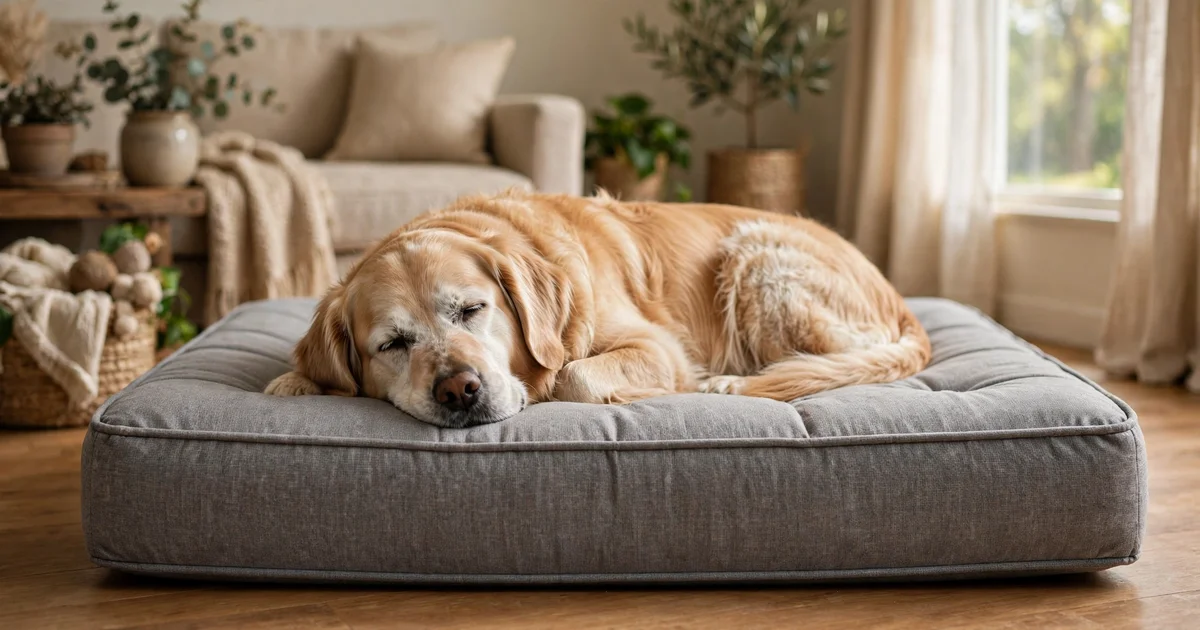
Orthopedic dog beds cost two to four times more than a regular pillow bed, so the question is fair: are orthopedic dog beds worth it, or is it just marketing? The honest answer is sometimes yes, sometimes no — it depends entirely on your dog's age, size, and how they sleep. This 2026 guide breaks down real price tiers, the cost-per-year math most articles skip, and a clear checklist to decide in about two minutes.
Short answer: An orthopedic bed is usually worth the money for senior dogs, large and giant breeds, and any dog that sinks through cheap foam to the hard floor. For a young, healthy, lightweight dog that curls up anywhere, a standard bed is fine for now.
What "Orthopedic" Actually Means in a Dog Bed
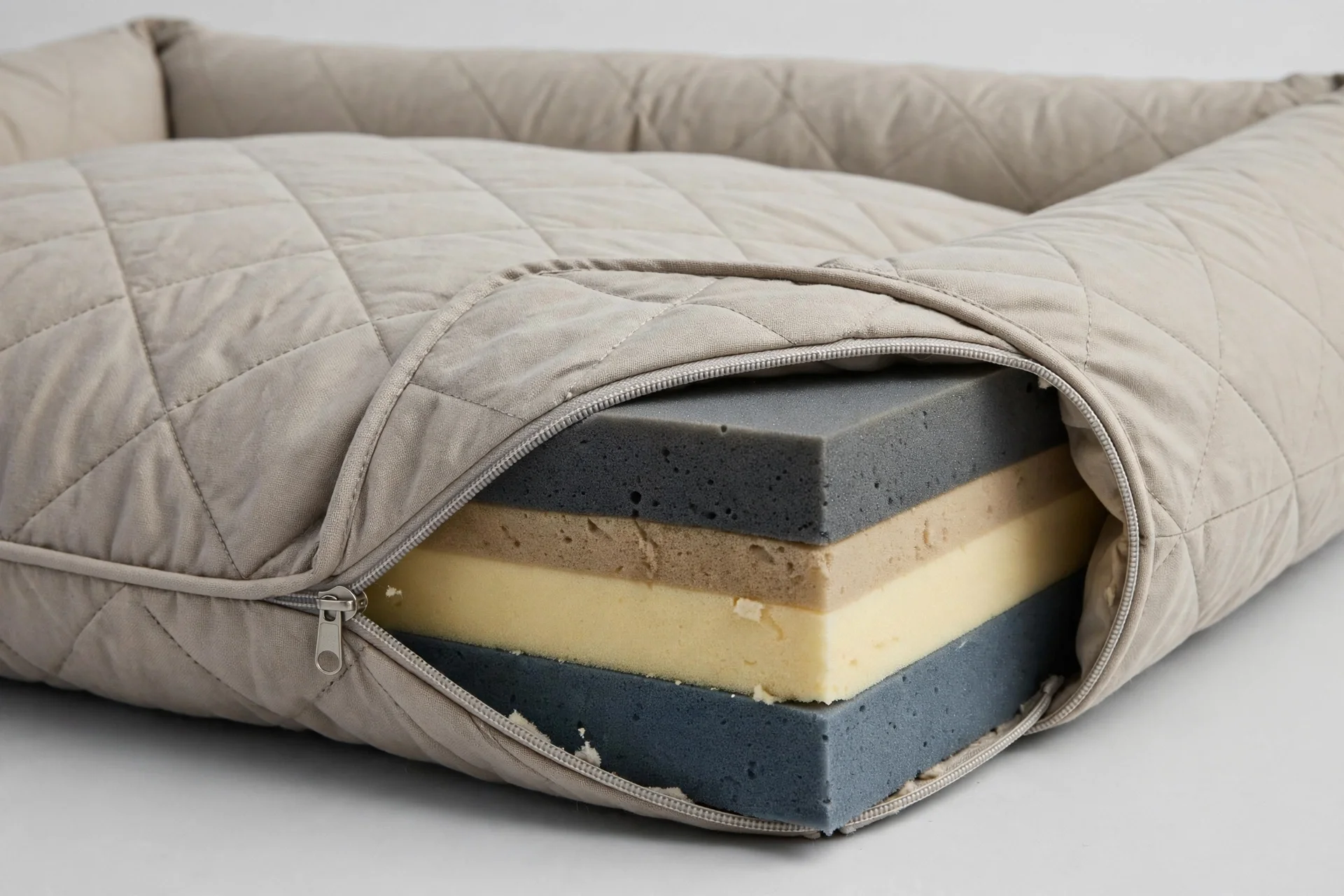
"Orthopedic" is not a regulated label — any brand can print it on the tag. What separates a genuinely supportive bed from a marketing trick is the inside, not the name. A real orthopedic dog bed has:
- Dense, supportive foam (usually memory foam) that holds the dog's weight instead of flattening to the floor. Press your hand in — quality foam springs back slowly; cheap foam stays dented or bottoms out immediately.
- Thickness matched to the dog's weight. A 90-pound Labrador needs 4+ inches of dense foam; a 15-pound terrier is fine with 2–3 inches. This is why one-size beds fail large dogs.
- A washable cover plus a waterproof inner liner. Foam you can't protect is foam you'll replace. This detail matters more for older dogs and puppies.
Egg-crate foam, shredded memory foam, and solid memory-foam slabs all appear in beds sold as "orthopedic." The solid or layered dense-foam versions support heavy dogs best; shredded fill compresses faster. Price alone doesn't tell you which is which — the press test above does.
How Much Do Orthopedic Dog Beds Cost in 2026?
Here are the typical price ranges you'll see from mainstream pet retailers in 2026. These are approximate bands, not quotes for any specific product:
- Small (up to 25 lbs): typically $40–$70
- Medium (25–60 lbs): typically $70–$130
- Large / XL (60+ lbs): typically $120–$220
Compare that with standard pillow-style beds, which usually run $25–$60 depending on size. The orthopedic premium is real — roughly double the price at the same size. The question is whether it lasts long enough to justify it.
The Cost-Per-Year Math Nobody Shows You
Sticker price is the wrong number. What matters is what the bed costs you per year of use. Here's a simple worked example:
- Cheap pillow bed, $45: flattens within a year for a medium dog. Replaced annually → $45/year.
- Mid-range orthopedic bed, $150: dense foam holds shape for about 5 years → $30/year.
- Premium large orthopedic bed, $200: lasts 6+ years for a big dog → about $33/year.
These are illustrative numbers, but the pattern holds in real life: a quality orthopedic bed often costs less per year than repeatedly replacing cheap beds. The catch? This math only works if your dog actually uses the bed — which brings us to the real decision.
Which Dogs Benefit the Most
Dogs sleep 12 to 18 hours a day, according to the American Kennel Club's guide to choosing the right dog bed — seniors sleep even more. That's a lot of hours on one surface. An orthopedic bed is most worth it when your dog is in one of these groups:
- Senior dogs (roughly 7+ years for large breeds, 9+ for small): they sleep the most and get up the stiffest. A supportive surface makes those long rest hours genuinely more comfortable. Not sure where your dog stands? Our dog age calculator converts their age to human years in seconds.
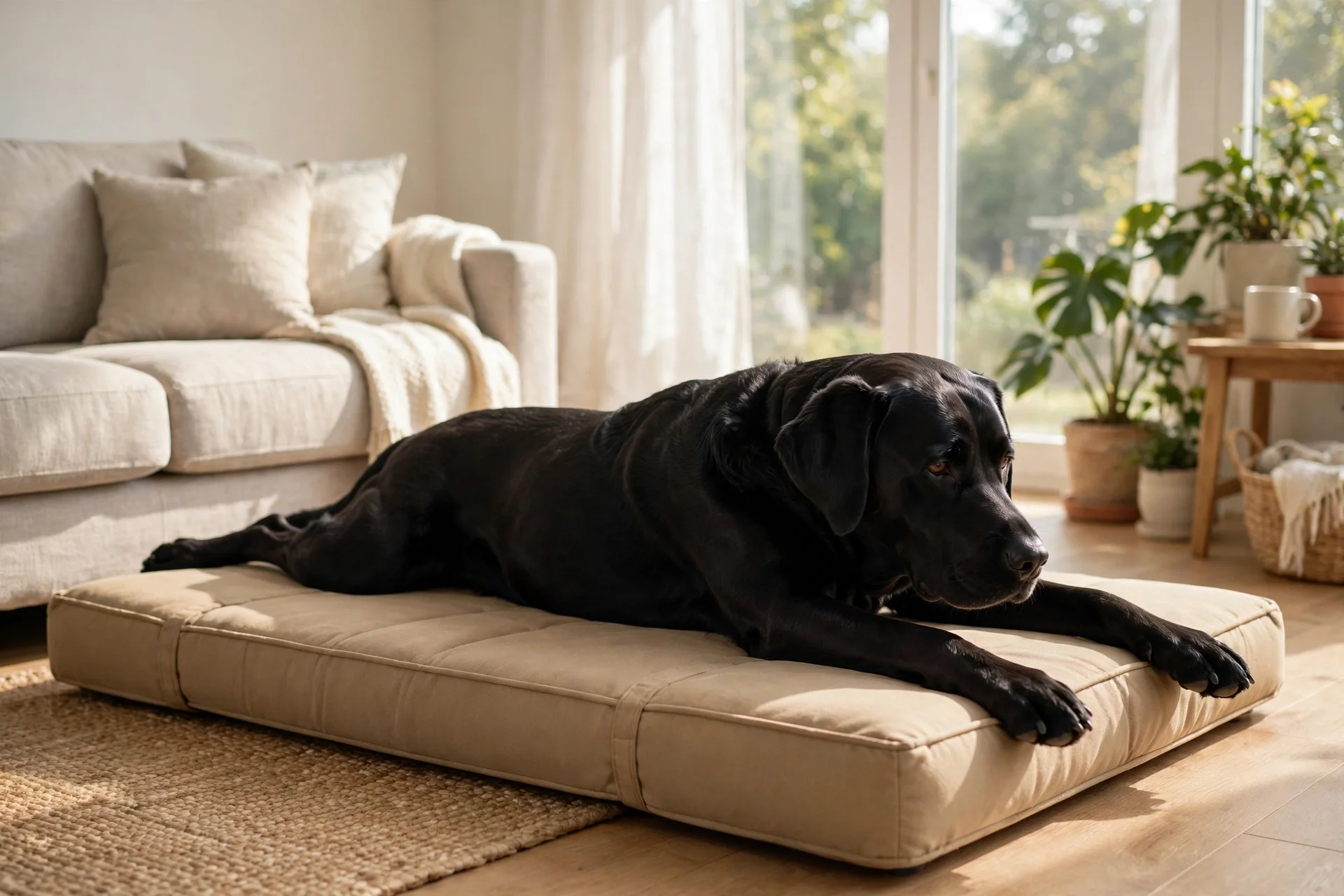
- Large and giant breeds: heavy bodies sink straight through thin foam to the floor. If your dog's bed has a permanent body-shaped dent, they need denser foam.
- Dogs that sleep stretched out on their side: side-sleepers put concentrated pressure on hips and shoulders — exactly what even weight distribution helps with.
- Dogs recovering from surgery or injury: a stable, supportive surface is simply more comfortable during long rest periods. (Always follow your vet's recovery plan — a bed supports rest, it doesn't replace treatment.)
- Lean, bony breeds (Greyhounds, Whippets, senior dogs that have slimmed down): less natural padding means the floor is harder on them.
If you're shopping for a bigger dog specifically, see our best orthopedic dog beds for large dogs roundup, and check orthopedic beds for senior dogs for age-specific picks.
When an Orthopedic Bed Is NOT Worth It
Honesty matters here — plenty of articles never say this part. Skip the orthopedic upgrade (for now) if:
- Your dog is young, light, and healthy. A 20-pound two-year-old doesn't need joint support yet. A decent standard bed is fine; revisit the question around age 7.
- Your dog destroys beds. Power chewers will shred a $180 memory-foam bed as happily as a $30 one. Solve the chewing first, upgrade later.
- Your dog refuses to use beds at all. Some dogs genuinely prefer the cool tile floor or your couch. An expensive bed they walk past is the worst value of all — borrow or buy cheap first to test whether they'll use one.
- The budget is genuinely tight. A clean, thick standard bed beats a thin "orthopedic" bed with a fancy label. Never stretch your budget for the word on the tag; save up and buy the real thing once.
How to Buy One Without Overpaying
If your dog is in the "worth it" group, use this six-point checklist so you pay for foam, not marketing:
- Do the press test. Press your full hand into the foam in-store (or check return policies when buying online). Quality dense foam resists and springs back; cheap foam bottoms out to the base.
- Match thickness to weight. Under 25 lbs: 2–3 inches is fine. 25–60 lbs: 3–4 inches. Over 60 lbs: 4+ inches of dense foam. See our orthopedic dog bed size guide for measuring help.
- Look for foam safety certifications. Labels like CertiPUR-US on the foam mean it's been tested for harmful chemicals — a good sign you're buying real foam, not mystery fill.
- Demand a washable cover AND a waterproof liner. The liner protects the foam from accidents and drool; the cover goes in the machine. Both should be standard at orthopedic prices.
- Check the entry height for older dogs. Low sides or a low step-in edge matter when getting up is the hard part.
- Verify the warranty and return policy. Reputable brands offer at least a 1-year warranty on the foam keeping its shape. A 30-day "dog must love it" return window removes the risk of buying a bed your dog ignores.
The ASPCA's tips for settling a new dog at home also recommend giving every dog a dedicated comfortable resting spot from day one — even a simple one while you decide on the upgrade.
Frequently Asked Questions
Do orthopedic dog beds actually work?
They do what they're built to do: distribute weight evenly so heavy or older dogs don't press into the hard floor, and hold their shape for years instead of flattening in months. What they can't do is treat joint problems — if your dog is limping or stiff, see your vet. Think of the bed as better rest, not medicine.
How long does an orthopedic dog bed last?
A quality dense-foam bed typically lasts 4–6 years for an average dog, longer for small dogs and less for giant breeds or heavy chewers. The foam warranty is your best clue — brands confident in 4+ years say so in writing.
Can a puppy use an orthopedic dog bed?
Yes, it's safe — but it's rarely worth the money for a young puppy. Puppies chew, have accidents, and outgrow beds fast. Buy an affordable washable bed now and invest in orthopedic support when they're fully grown (and past the destructive phase).
Is memory foam the same as orthopedic?
Not exactly. Memory foam is a material; "orthopedic" describes what the bed does (support weight evenly). Most true orthopedic beds use memory foam or high-density support foam, but a thin memory-foam topper on a cheap base doesn't make a bed orthopedic.
Are expensive orthopedic dog beds worth more than mid-range ones?
Usually only at the extremes. The jump from a $40 thin bed to a $120 dense-foam bed is huge; the jump from $120 to $220 mostly buys brand name, nicer covers, and longer warranties. For most dogs, the sweet spot is the mid-range tier with dense foam, a waterproof liner, and a washable cover.
The Bottom Line
Are orthopedic dog beds worth it? For senior dogs, large breeds, and any dog sleeping 12+ hours on a flattened-out bed — yes, and the per-year math usually favors buying quality once. For young, small, healthy dogs — save your money for now. Use the press test, buy dense foam with a waterproof liner, and let your dog's actual sleep habits make the final call.
Wondering if your dog has reached the age where joint comfort matters? Try our free dog age calculator — it takes ten seconds and might settle the decision for you.