How to Clean a Petkit Water Fountain (Step by Step)
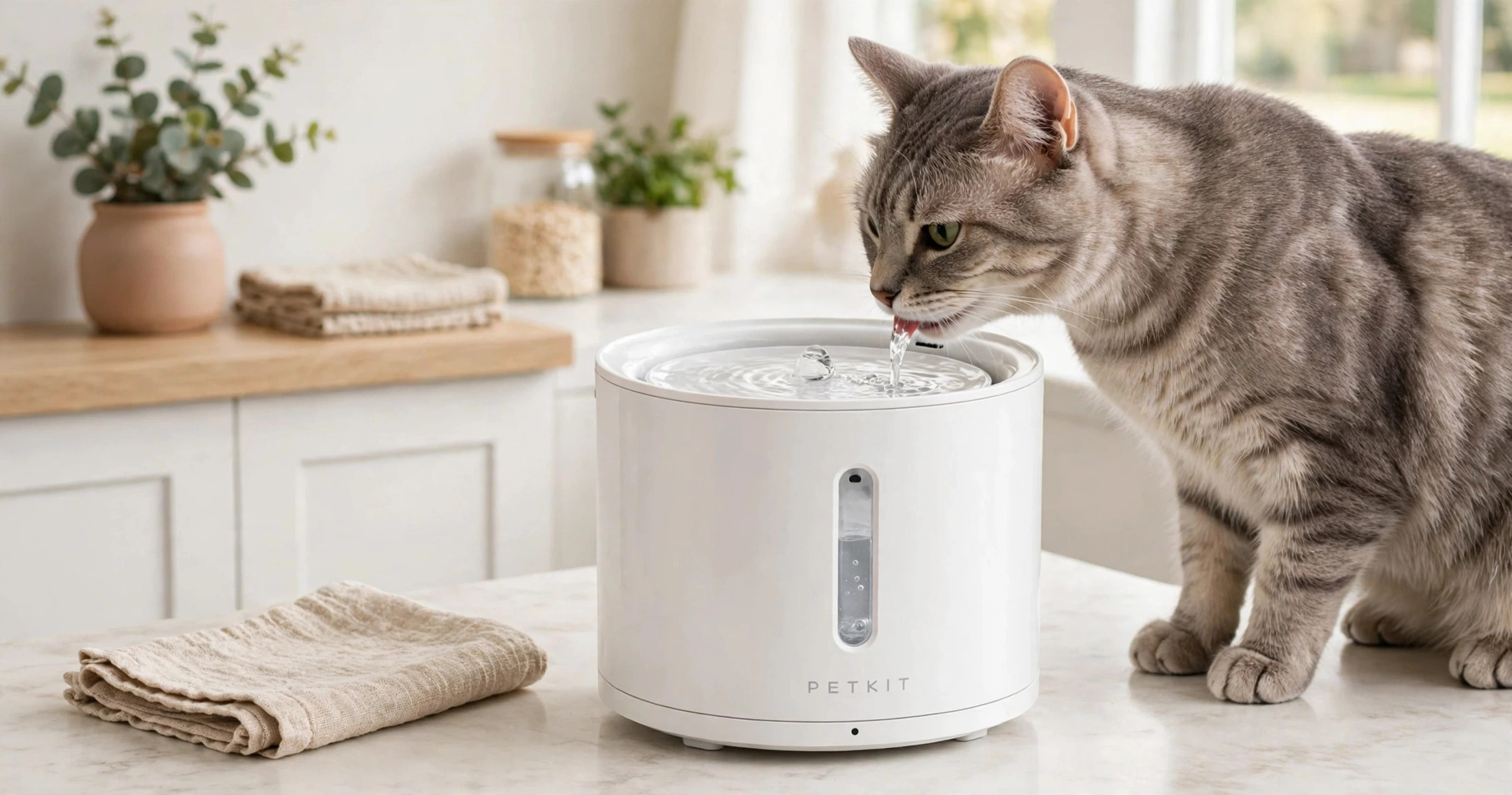
A Petkit water fountain is one of the easiest ways to keep your cat drinking — moving water stays fresher, and most cats prefer it to a still bowl. But the same water that attracts your cat also circulates everything that lands in it: kibble crumbs, dust, loose fur, and the thin slippery film that builds up on every wet surface over time. Skip cleaning for a couple of weeks and you will feel it the moment you touch the tray.
The good news: a full clean takes about 15 minutes, needs no special tools, and follows the same pattern on every Petkit model — Eversweet 2S, Eversweet 3 Pro, Eversweet MAX, Solo, Solo 2.0, and the ceramic models — with model-specific quirks noted in the steps. This guide walks you through the whole job, part by part, including the pump — the one part most owners forget, and the one behind most weak-flow and noise problems.
If you are still deciding which fountain suits your home, our best pet water fountains guide compares the popular options side by side. For a general routine that works on any brand, see pet fountain cleaning 101.
Why a Petkit Fountain Needs Regular Cleaning
Petkit fountains recirculate the same water through a filter, a pump, and a drinking tray. That closed loop is efficient, but anything that enters the water keeps going around until you remove it. Four things build up between cleans:
- Biofilm: the slippery, slightly slimy coating on the tray and tank walls. It is the main reason a fountain starts to smell stale even when the water looks clear.
- Hair and debris: cat hair wraps around the pump impeller and collects in the filter tray, slowly strangling water flow.
- Mineral deposits: white chalky marks, especially with hard tap water. They crust onto the tray and the pump housing.
- Filter wear: the carbon filter traps odours and particles, but after two to four weeks it is saturated and stops helping.
A weekly clean keeps all four under control. Leave it a month, and the pump works harder, the water tastes stale, and your cat may quietly go back to drinking from the tap. The ASPCA's general cat care guide notes that fresh, clean water should always be available to cats — and a fountain only delivers on that promise when it is clean.
What You Need Before You Start
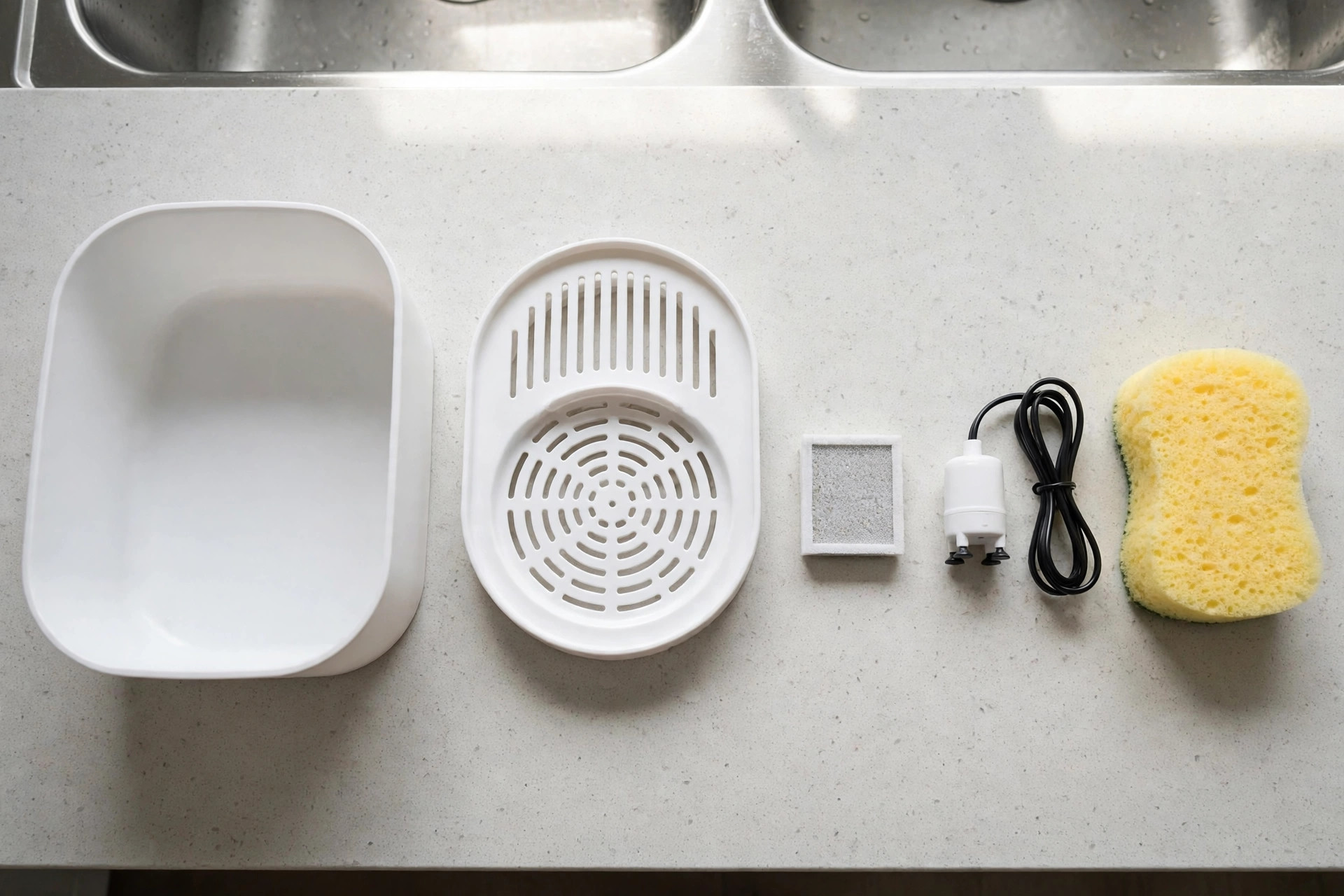
Gather everything first so you are not hunting for a brush with wet hands:
- A soft sponge or cloth (nothing abrasive — scratches give biofilm somewhere to grip)
- A small soft brush — the cleaning brush Petkit includes, or a spare soft toothbrush
- A pair of tweezers (for pulling the pump impeller out)
- Mild dish soap — plain, unscented, pet-safe
- A clean towel for drying
- A fresh filter, if yours is due for replacement (every 2–4 weeks, or when the app indicator lights up)
- A jug of fresh drinking water for the refill
What NOT to use: no bleach, no vinegar soaks on the pump, no harsh chemical cleaners, no boiling water on plastic parts, and no dishwasher for the pump or filter. Petkit's own manuals are clear: harsh chemicals and boiling water can damage the plastic components and leave residues your cat will taste.
How to Clean a Petkit Water Fountain: The 8-Step Routine
Step 1: Unplug the Fountain
Always disconnect the power first. On corded models, unplug from the wall. On cordless models like the Eversweet MAX and 3 Pro, lift the tank off the power base. Never clean a fountain while it is plugged in, and never submerge the power base or the main pump body with electronics in water — wipe those with a damp cloth only.
Step 2: Empty the Water and Take the Fountain Apart
Pour out the remaining water, then separate the parts in this order:
- Lift off the top tray cover (on the 3 Pro, twist it counter-clockwise first).
- Remove the drinking tray and the filter tray underneath it.
- Lift out the filter and set it aside — note whether it is due for replacement.
- Lift out the wireless pump from its slot in the filter tray or basin.
- Separate the water tank from the base.
Lay the parts out on a clean towel in the order you removed them. Reassembly is simply the reverse, and having them in order removes all guesswork.
Step 3: Wash the Tank, Tray, and Cover
Wash the water tank, drinking tray, tray cover, and filter tray with warm water and a drop of mild dish soap. Use the soft sponge for flat surfaces and the small brush for corners, grooves, and the underside of the tray where slime collects first. Rinse every part thoroughly — soap residue is the most common reason cats refuse a freshly cleaned fountain, so rinse until the water runs completely clear and the plastic no longer feels slick. Ceramic models clean the same way, but be gentler with the brush and never use anything abrasive on the glaze.
Step 4: Clean the Pump (The Step Most People Skip)
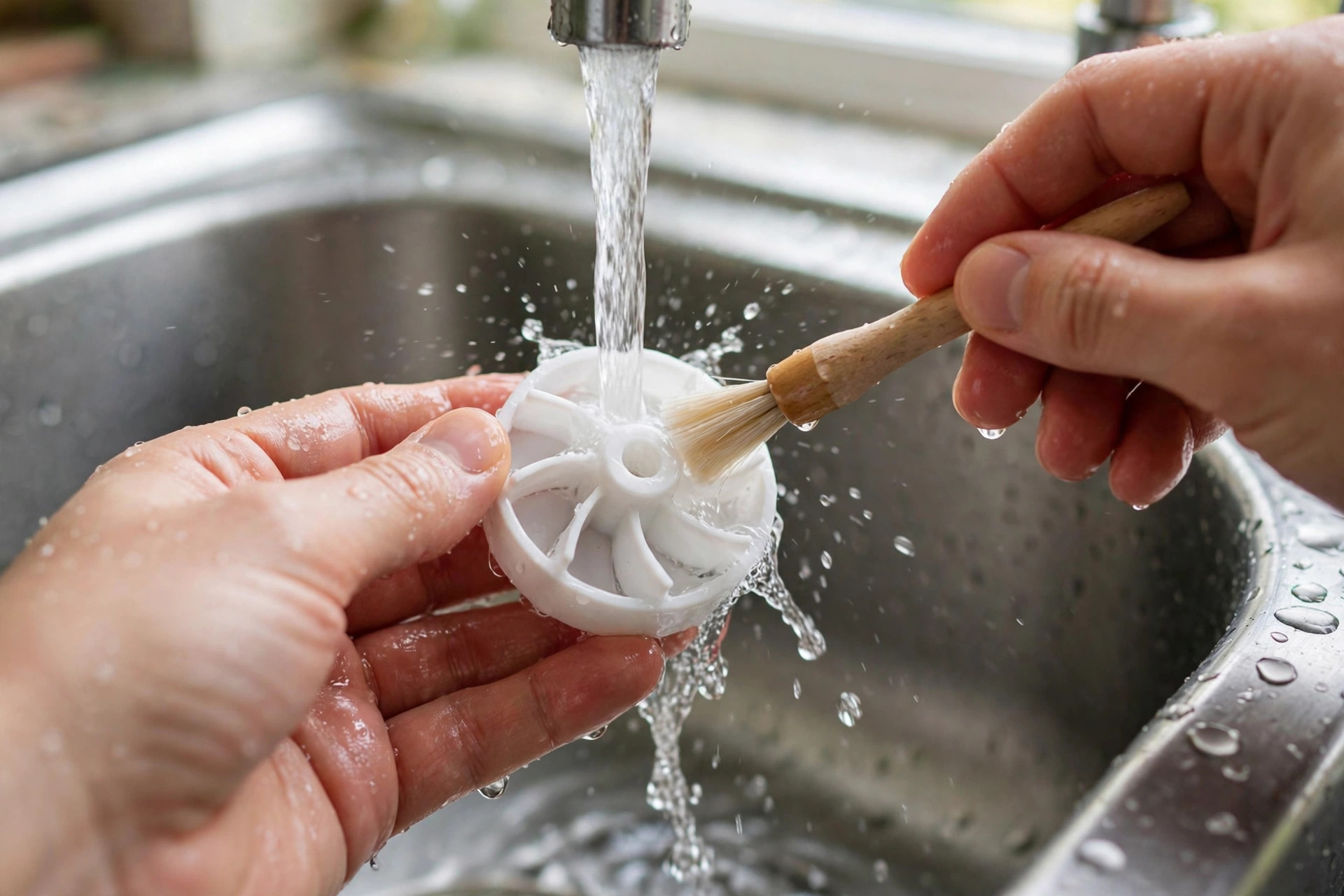
The pump is where most fountain problems start. Hair wraps around the impeller, slime coats the inside, and flow gets weaker and noisier until the pump gives up. Cleaning it takes two minutes:
- Pull the foam filter off the pump and rinse it under running water. If it is torn or falling apart, replace it.
- Open the pump's front cover and use tweezers to lift out the impeller — the small magnetic spinning piece inside.
- Rinse the impeller, the front cover, and the pump body under running water, brushing away hair, slime, and any white mineral crust.
- Use a cotton swab or the small brush for the narrow channel inside the pump body.
- Put the impeller back, making sure it sits flat and spins freely with a flick of your finger, then close the front cover and refit the foam filter.
If the impeller does not spin freely after cleaning, it may be worn out — a replacement pump is cheaper than a new fountain, and it is the fix for most "weak flow" complaints.
Step 5: Rinse or Replace the Filter
If the filter is not yet due, rinse it under running water for a few minutes to flush loose carbon dust — never use soap on a filter. If it is due (roughly every 2–4 weeks, or when the PETKIT app's indicator lights up), fit a fresh one: soak the new filter in clean water for 5–10 minutes first to release loose carbon dust, then seat it firmly in the filter tray. A filter that is not seated properly lets unfiltered water bypass it, so press it in until it sits flat.
Step 6: Wipe the Power Base
Wipe the power base and any electrical contacts with a damp cloth, then dry them. Check the charging contacts on cordless models for white mineral crust and wipe it away — crusty contacts are a common cause of charging problems on the MAX and 3 Pro.
Step 7: Dry and Reassemble
Let the parts air-dry for a few minutes, or towel-dry them. Then reassemble in reverse order: pump back into the filter tray (check it sits in its groove), filter tray into the basin, filter in place, drinking tray on top, cover twisted back on. Everything should click or sit flush — if a part wobbles, it is not seated right.
Step 8: Refill With Fresh Water and Restart
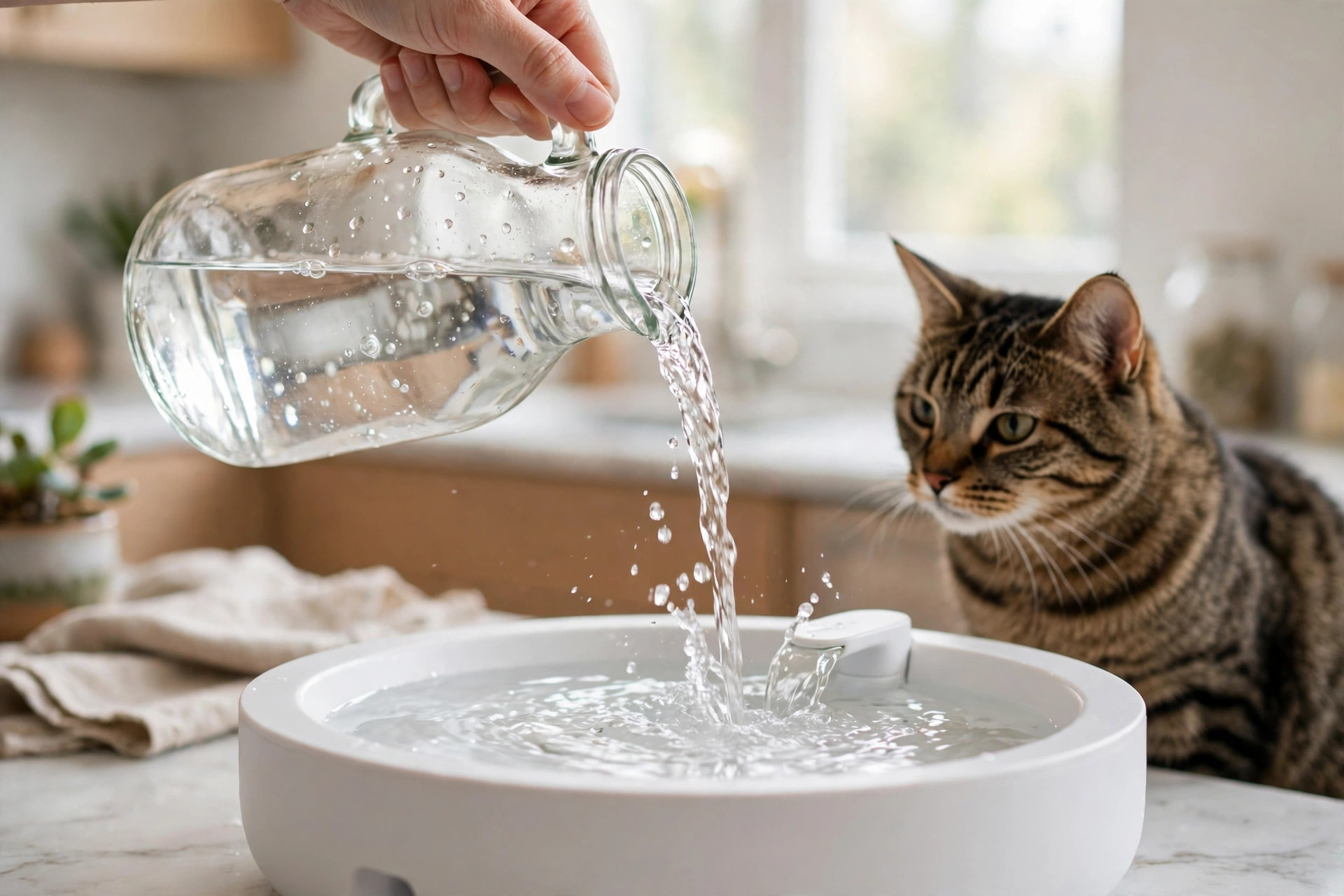
Fill the tank with fresh drinking water up to the MAX line — never overfill. Reconnect the power, or set the tank back on its base, and check the water flow. It should run strong and quiet within a few seconds. If the flow is weak or the pump rattles, unplug it and recheck the impeller seating from Step 4. Never let the fountain run dry — a pump running without water overheats and burns out fast, so keep the level above the MIN line between cleans. Cornell University's feline health guidance on feeding your cat stresses that cats should always have clean, fresh water available — a freshly cleaned fountain is the easiest way to deliver that.
Petkit Cleaning Schedule: How Often to Clean Each Part
| Task | How often | Why it matters |
|---|---|---|
| Top up the water | Daily | Keeps the pump submerged and the water fresh |
| Wipe the tray and exterior | Daily | Removes dust, hair, and spills before they enter the water |
| Full wash — tank, tray, and pump | Weekly | Stops biofilm and keeps flow strong |
| Replace the carbon filter | Every 2–4 weeks | A saturated filter stops trapping odours and particles |
| Replace the foam pump filter | When torn or clogged | Protects the impeller from hair and debris |
| Deep clean + mineral descale | Monthly | Removes chalky buildup in hard-water homes |
Multi-cat homes should clean on the shorter end of every interval — more cats means more hair, more crumbs, and faster biofilm. Our guide to the best pet water fountains for multi-cat homes explains which models cope best with heavy use.
Troubleshooting: Common Problems After Cleaning
Weak or no water flow
Almost always the pump. Reopen it, pull the impeller out again, and check for a strand of hair wound around the spindle or a grain of grit in the channel. Also check the water level — below the MIN line, the pump can suck air. If the impeller is chipped or wobbles, replace the pump.
Pump is noisy or rattling
Noise after a clean usually means the impeller is not seated flat, the foam filter is missing, or the water is low. Reseat the impeller so it spins freely, refit the foam filter, make sure the pump sits in its groove, and top the water up. Persistent rattling in an older pump means the impeller is worn.
Slimy tray again within days
Biofilm returns fast in warm rooms and hard-water homes. Shorten the wash interval to every 4–5 days, and brush the underside of the tray and the grooves — a rinse alone leaves the film in place. White chalky deposits are limescale from hard tap water; a monthly wipe and a thorough brush of the pump channel keeps it under control, and using filtered water for the refill slows new deposits.
Cat will not drink after cleaning
Almost always soap residue, a new-filter taste, or a moved fountain. Rinse the parts again until the water runs clear, soak a new filter for the full 10 minutes before fitting it, and put the fountain back in exactly the same spot — even moving it a foot can put a cat off for a day. VCA Hospitals' feeding guidelines for cats make the same point about routine: cats do best when food and water stay predictable.
Quick-Reference Cleaning Checklist
- ☐ Unplug the fountain / lift the tank off the base
- ☐ Empty the water and remove tray cover, tray, filter tray, filter, and pump
- ☐ Wash tank, tray, cover, and filter tray with warm water + mild soap
- ☐ Rinse everything until the water runs clear
- ☐ Clean the pump: foam filter, front cover, impeller (tweezers), brush the channel
- ☐ Rinse or replace the carbon filter (soak a new one 5–10 minutes first)
- ☐ Wipe the power base and charging contacts with a damp cloth
- ☐ Dry, reassemble in reverse order, and check every part sits flush
- ☐ Refill to the MAX line with fresh water and restart
- ☐ Check flow is strong and quiet — if not, reseat the impeller
Frequently Asked Questions
How often should I clean my Petkit water fountain?
Do a full wash — tank, tray, and pump — once a week, top the water up daily, and wipe the tray daily. Replace the carbon filter every 2–4 weeks. In multi-cat homes or warm rooms, clean every 4–5 days instead of weekly.
Can I put Petkit fountain parts in the dishwasher?
No. Petkit manuals recommend hand-washing with mild soap and water. Dishwasher heat and harsh detergents can warp plastic parts, damage seals, and leave residues. The pump and power base must never go in the dishwasher — or under water at all.
Can I use vinegar to clean a Petkit fountain?
Plain warm water and mild dish soap are all you need for the weekly clean, and they are what Petkit recommends. For stubborn limescale, a thorough brush and rinse usually does the job. Avoid soaking the pump or filter in vinegar or any acidic cleaner — it can damage seals and leave a taste cats dislike.
How do I know when to replace the Petkit filter?
Every 2–4 weeks, depending on use and water quality. The PETKIT app shows an indicator when a change is due, and some models flash an alternating light. If the water starts to smell stale or the flow drops even after a clean, the filter is the first thing to change.
Why is my Petkit fountain so noisy?
Usually a dirty or badly seated impeller, a missing foam filter, or a low water level. Clean the impeller, refit the foam filter, seat the pump in its groove, and top the water up above the MIN line. If the rattle continues after all of that, the impeller is likely worn and the pump needs replacing.
Can I clean the pump with soap?
Rinse the pump parts under running water and brush them clean — that is enough. Petkit's manuals specifically warn against using soap on the pump, because soap residue inside the pump is hard to rinse out and ends up in the drinking water. Soap is fine for the tank, tray, and cover, where you can rinse it away completely.
The Bottom Line
Cleaning a Petkit water fountain is a 15-minute weekly habit: unplug, take it apart, wash the tank and tray, clean the pump impeller, rinse or replace the filter, reassemble, and refill. Do it weekly and the fountain stays quiet, the water stays fresh, and your cat keeps drinking — which is the whole point of owning one.
Want to know how old your pet really is in human years? Try our dog age calculator, or read our cat age in human years chart. And if you are comparing fountains before you buy, start with our best pet water fountains guide. For more practical pet-care guides, visit the CalcPet homepage.