If you have just brought a dog home, one of the first practical questions is also one of the hardest to answer online: how much does dog training actually cost? Search results throw wildly different numbers at you. One page says a group class costs $20, another says $80. One says private lessons start at $45 an hour, another says $400. Both can be right, because they are describing different formats, cities, and levels of experience — and very few of them add the numbers up into a total you can actually budget for.
This guide fixes that. It compares every mainstream training format side by side, reconciles the conflicting price ranges you will find online, and turns them into three realistic first-year budgets. You will also get a step-by-step way to choose the right format, a checklist of hidden extras, and the red flags that mean you should walk away before paying.
The Short Answer: Dog Training Costs at a Glance
For a typical pet dog learning everyday manners — sit, down, stay, coming when called, and walking without pulling — most owners spend between $150 and $600 in the first year. That range covers a multi-week group course, or a handful of private lessons. Anything far below it is usually a do-it-yourself option, and anything far above it is usually board-and-train, where your dog lives with a trainer.
| Training format | Typical cost (US, 2026) | Best for |
|---|---|---|
| Group class | $20–$80 per class; $120–$600 for a 6–8 week course | Puppies, socialisation, basic manners |
| Private lesson | $75–$200 per hour (some experienced trainers charge more) | Specific problems, shy or reactive dogs, busy schedules |
| Board-and-train | $1,500–$5,000+ for a 2–4 week program | Intensive help when you cannot train daily yourself |
| Online course or app | $0–$30 per month, or a one-off course fee | Confident owners on a tight budget |
| Do-it-yourself (free resources) | $0, plus treats and a leash you probably own | Basic manners with a motivated owner |
Treat every figure in this guide as a planning range, not a quote. Real prices move with your city, your trainer's experience, and what your dog needs. A private lesson in a small town and a private lesson in a major city are not the same product, even when they share a name.
Group Classes: The Best Value for Most Dogs
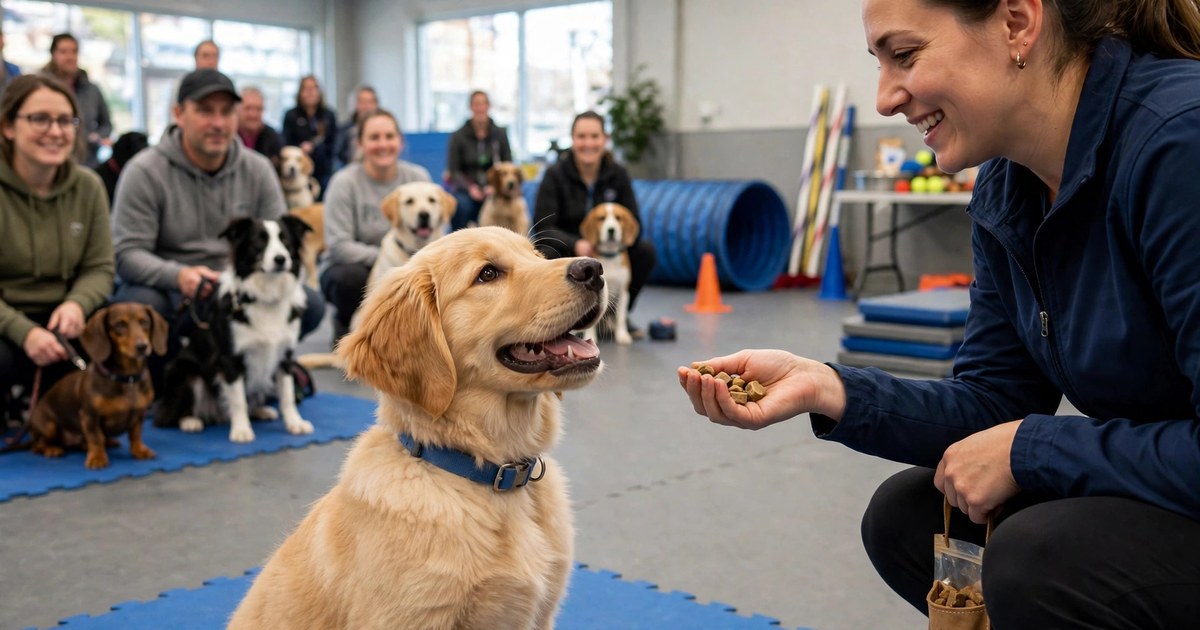
Group classes are the cheapest structured option, and for most puppies and friendly adult dogs they are also the best starting point. A standard course runs four to eight weekly sessions of about an hour each, and the class itself doubles as socialisation: your dog learns to listen to you while other dogs and people are around, which is exactly the skill that matters on a real walk.
Published chain pricing gives a useful anchor. PetSmart and Petco both list six-week group courses at around $149, which works out to roughly $25 per class. Independent trainers usually charge more — commonly $30 to $50 per session — because their classes are smaller and their schedules are less standardised. At the top end of the range, $80 per class usually means a small class, a specialist topic, or a high-cost city.
Group classes work best when your dog is comfortable around other dogs and people, and when your goals are everyday manners rather than one stubborn problem. If your dog is frightened or reactive around other dogs, a group setting can make things worse before it makes them better — that is a case for private lessons first, not a reason to skip training altogether.
Private Lessons: One Dog, One Plan, One Higher Price
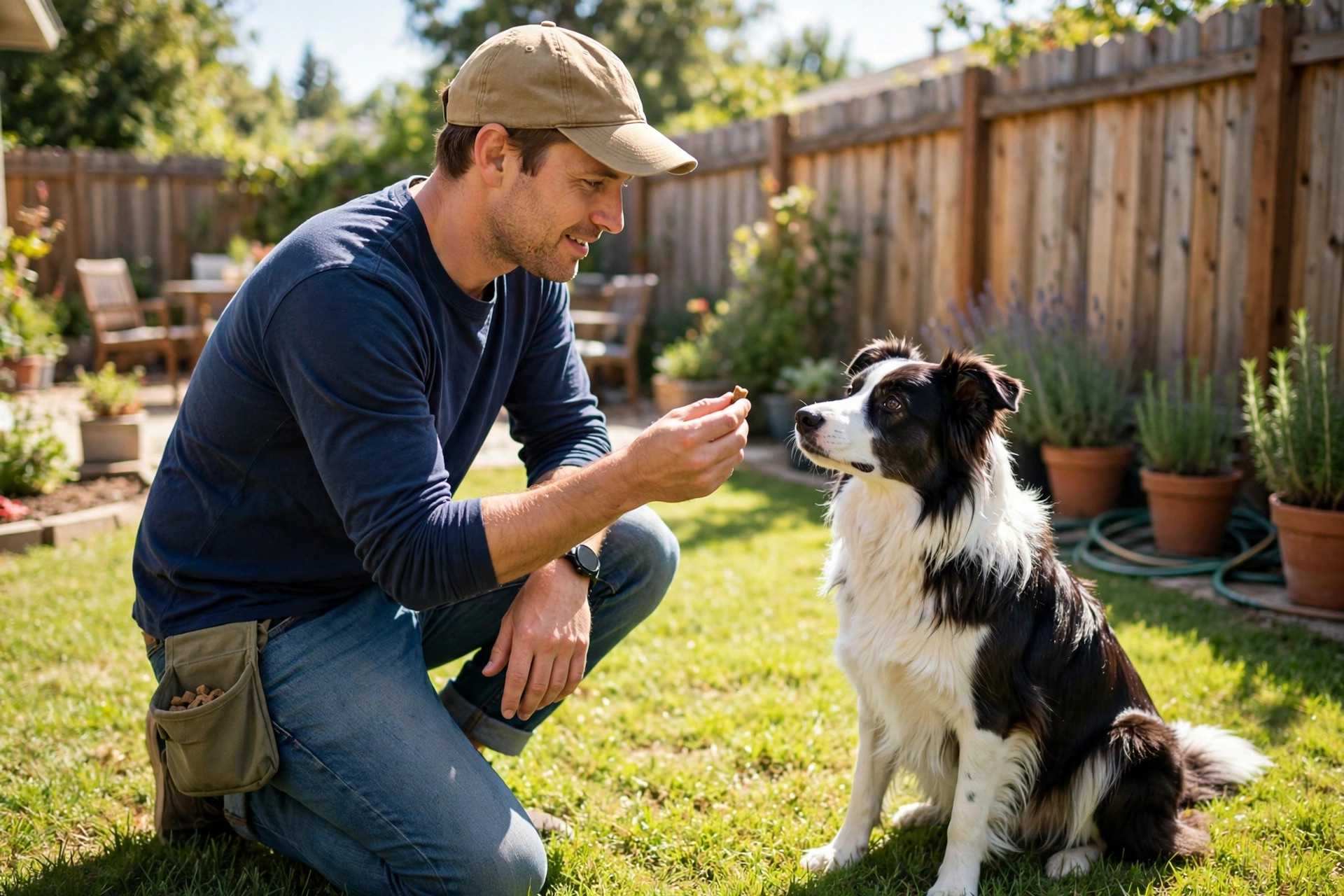
Private lessons cost more because you are buying undivided attention. The trainer builds a plan around your dog, works in your home or at their facility, and adjusts week by week. Published ranges for private lessons run from about $45 to $400 per session, and that spread is the single biggest source of confusion online — so here is how to read it.
The low end, around $45 to $89 an hour, is typically a chain store private session or a newer trainer building a client base. The middle, roughly $75 to $200 an hour, is where most experienced independent trainers sit. The high end, $250 to $400, is usually a long session — 90 minutes rather than 60 — in a major city, or a specialist working on a difficult behaviour problem. When you compare quotes, always compare the session length as well as the price, or you will compare a 45-minute session with a 90-minute one and draw the wrong conclusion.
Private lessons are worth the premium when you have a specific problem to solve, a dog who cannot cope in a group yet, a schedule that does not fit weekly classes, or a household where several people need to handle the dog the same way. Most owners need fewer private lessons than they expect: three to six sessions, plus daily practice at home, is a common pattern for basic manners.
Board-and-Train: Why It Costs Thousands
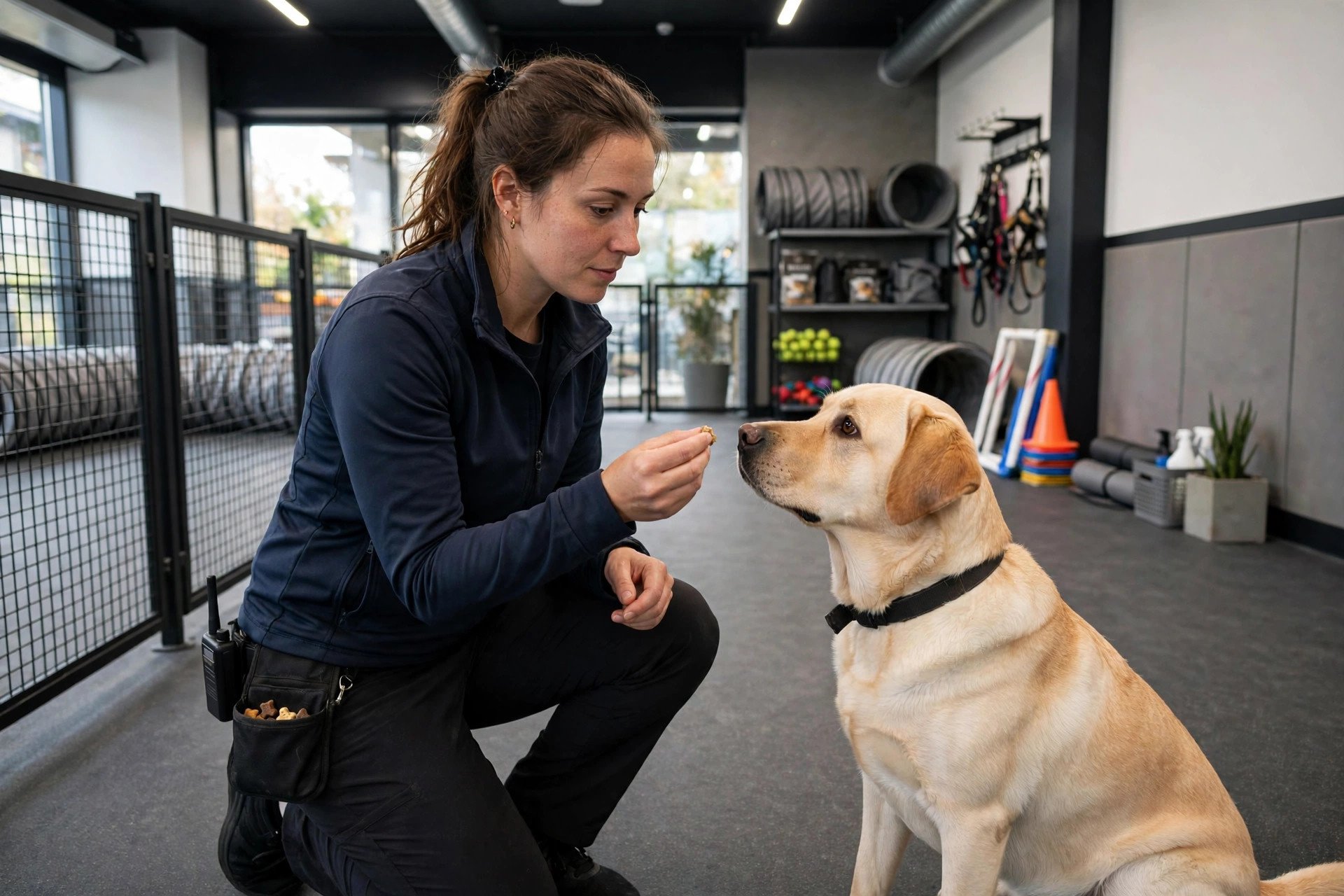
Board-and-train is the priciest mainstream option because you are paying for three things at once: boarding, daily care, and intensive one-on-one training compressed into a few weeks. Published two-week programs commonly run $1,500 to $2,900, and two-to-four-week programs can reach $5,000 or more. Weekly rates are often quoted at $500 to $2,500, with premium programs higher still.
The honest trade-off is this: board-and-train can jump-start a dog who needs intensive daily work, but the training only sticks if you learn to maintain it. Every reputable program includes handover lessons where the trainer teaches you what your dog learned and how to keep it going. If a program offers no handover lessons, no follow-up support, and no way for you to see how your dog is handled, that is a red flag, not a bargain.
Before choosing board-and-train, ask yourself whether the problem is really a lack of training hours, or a lack of a plan you can follow at home. For most everyday manners, a group course plus a couple of private lessons costs a tenth as much and teaches you the skills too.
Online Courses, Apps, and DIY: The Budget Routes
Online training is the fastest-growing budget option. Apps typically cost about $10 to $30 per month, and one-off video courses vary widely. The American Kennel Club's online Canine College, for example, sells puppy training video series for a one-off fee, and its S.T.A.R. Puppy program shows what a structured beginner course covers: socialisation, basic manners, and responsible ownership over at least six weeks of classes.
Free do-it-yourself training can genuinely work for basic manners if you are consistent. The cost is not zero — you will use treats, and you will spend 10 to 15 minutes a day — but it is close. DIY works best when your dog is confident, your goals are simple, and you enjoy the process. It works worst when you are guessing: if you have tried for a month with no progress, paying for one private lesson to diagnose the problem is usually cheaper than another month of guessing.
What Actually Drives the Price Up or Down
Six factors explain almost all of the price spread you see online. Knowing them helps you judge whether a quote is fair or inflated.
1. Format
Group is cheapest per hour of instruction, private costs more, and board-and-train costs most, because you are paying for boarding as well as training.
2. Location
Trainers in major cities charge more, largely because rent and demand are higher. The same lesson can easily cost double in a large city compared with a small town.
3. Trainer experience and credentials
Certified, experienced trainers charge more, and for behaviour problems that premium is usually money well spent. For basic puppy manners, a newer trainer supervised by an experienced one can be excellent value.
4. Your dog's needs
Basic manners are the cheapest goal. A specific behaviour problem, a fearful dog, or a dog who needs a custom plan takes more assessment time and more sessions.
5. Session length and class size
A 90-minute private session is not comparable with a 45-minute one, and a class of four dogs is not comparable with a class of twelve. Always ask both before comparing prices.
6. What is included
Some prices include follow-up support, homework sheets, and refresher sessions; others charge for each separately. A slightly higher price that includes follow-up is often the cheaper deal overall.
Three First-Year Budget Plans You Can Actually Use
Here is how the ranges add up in practice. Pick the plan closest to your situation, then adjust for your city.
Budget plan: about $150–$300
One six-week group course at a chain store or community class (around $149), plus treats and a treat pouch you may already own. Best for a confident puppy or friendly adult dog whose owner can practise daily. This plan is also a sensible first step even if you later add private lessons — you will know exactly what you still need help with.
Mid-range plan: about $300–$600
One group course ($150–$300) plus two to four private lessons ($75–$200 each) for the one or two things the group class did not fix — loose-leash walking is the classic example. This is the sweet spot for most owners, and it matches what many owners actually spend to reach reliable everyday manners.
Intensive plan: $1,500–$5,000+
A two-to-four-week board-and-train program, plus handover lessons. Reserve this for intensive needs or for owners who genuinely cannot train daily. Budget for follow-up lessons too, because the handover is where the investment is protected.
For context, training is only one part of the first year. Our first-year dog costs breakdown puts training alongside food, routine care, and supplies, so you can see the full picture before you commit.
How to Choose the Right Format in 5 Steps
Do not start by shopping for the cheapest price. Start by matching the format to your dog, then compare prices within that format.
Step 1: Name one goal
Write down the single behaviour that matters most right now — for example, "walk without pulling" or "come when called in the park." A clear goal makes it obvious whether you need a group class, a private lesson, or a specialist.
Step 2: Judge the group setting honestly
If your dog is relaxed around other dogs and people, start with a group class. If your dog panics, lunges, or shuts down around other dogs, start private. Choosing the wrong setting wastes money and can set your dog back.
Step 3: Compare like with like
For every quote, write down the format, session length, number of sessions, class size, and what follow-up is included. Only then compare the price. A $149 six-week course and a $300 six-week course may differ in class size, not quality — ask.
Step 4: Ask these questions before paying
- What training methods do you use, and can I watch a session first?
- What exactly will my dog learn by the end of the course?
- How much daily practice will you expect from me?
- What follow-up support is included if we get stuck?
- What is your refund or rescheduling policy if my dog is ill?
Step 5: Book the smallest commitment first
One course, or two private lessons, is enough to judge a trainer. If it works, book more. If it does not, you have lost little and learned what to look for next time.
Hidden Extras: The Costs Nobody Puts in the Headline Price
- Treats and a treat pouch: a small but real ongoing cost, especially during the first months.
- A well-fitting harness or head halter, if your trainer recommends one for loose-leash work.
- Travel to the training venue, and parking, for weekly classes.
- Follow-up or refresher lessons after a board-and-train program.
- Replacement sessions if you miss a class — some providers charge, others do not, so ask in advance.
- A second course for the next level: puppy class graduates often move on to a beginner or intermediate course.
None of these extras is a reason to avoid training. They are a reason to budget $50 to $100 on top of the headline course price, so the total never surprises you.
Red Flags: When to Walk Away Before Paying
- Guaranteed results in a fixed number of days. Dogs are not appliances, and no honest trainer promises a fixed outcome.
- No chance to watch a session, meet the trainer, or ask about methods before paying.
- Pressure to pay for a large package upfront before a single lesson.
- Board-and-train with no handover lessons and no follow-up support.
- Methods you are uncomfortable with, or a trainer who will not explain what they do and why.
Ways to Save Without Cutting Corners
Community classes, kennel club classes, and shelter-run courses are often the cheapest structured option in an area. The AKC's S.T.A.R. Puppy steps give a useful benchmark for what a beginner course should cover, so you can judge a cheap course by its syllabus, not just its price. Ask about multi-dog or multi-course discounts, practise daily so you need fewer sessions, and start early: a puppy class at the right age is cheaper than fixing a habit later. Finally, remember that grooming, food, and supplies are separate budget lines — our dog grooming cost guide helps you plan those alongside training.
Frequently Asked Questions
How much does dog training cost per session?
Group classes typically cost $20 to $80 per session, and private lessons typically cost $75 to $200 per hour. The wide private range reflects session length, city, and trainer experience, so always compare session length as well as price.
Is a $149 six-week course good value?
Yes, for basic manners. Chain stores list six-week group courses at around $149, which is roughly $25 per class — the cheapest structured route. Independent classes cost more but are usually smaller, which suits some dogs better.
How many private lessons will my dog need?
For everyday manners, three to six private lessons plus daily home practice is a common pattern. Behaviour problems take longer and should be quoted after an assessment, not guessed in advance.
Is board-and-train worth $1,500 or more?
It can be, for intensive needs or owners who cannot train daily — but only with handover lessons and follow-up support. Without those, the training often fades, and the money is wasted.
Can I train my dog myself for free?
Yes, for basic manners, if you are consistent and your dog is confident. Free resources plus 10 to 15 minutes of daily practice go a long way. If you make no progress in a month, one private lesson to diagnose the problem is usually the cheapest next step.
Does training cost more for a puppy or an adult dog?
Puppy classes and adult beginner classes are usually priced the same. What changes the price is the goal and the format, not the dog's age — although a puppy class bought early often prevents a more expensive problem later.
Conclusion: Spend on the Format That Fits, Not the Biggest Package
Dog training does not have to be expensive, and expensive does not automatically mean better. For most owners, a $150 group course, plus a couple of private lessons for the stubborn bits, buys reliable everyday manners for $150 to $600 in the first year. Start with one clear goal, compare like with like, ask the questions in this guide, and book the smallest commitment first. Your dog will thank you — probably by walking past another dog without dragging you into the bushes.
Want a quick sense of where your dog is in life before you book? Try CalcPet's dog age calculator to see your dog's age in human years, then match the training plan to their stage of life. You can also browse more money guides on the CalcPet homepage.