How to Choose an Automatic Pet Feeder: The 10-Point Buying Checklist (2026)
Walk into the automatic pet feeder aisle — online or in a store — and you will face dozens of options that all promise the same thing: perfectly timed meals for your cat or dog. Gravity models, Wi-Fi app feeders, camera feeders, microchip feeders, refrigerated wet-food trays — prices run from under $30 to over $300.
Here is the uncomfortable truth most buying guides skip: the "best" feeder is the one that matches your pet, your food, and your daily routine. A $250 camera feeder is wasted money if you never open the app. A cheap gravity feeder is the wrong tool entirely if you need strict portion control.
This guide gives you a practical 10-point checklist to work through before you spend a cent — plus the mistakes buyers actually make, a feeder-type comparison table, and a first-week setup plan.
Step 0: Start With Your Pet and Food, Not the Feeder
Before you look at a single product, answer these three questions. They eliminate half the wrong choices instantly.
1. What food will go in it? Dry kibble, wet food, or both? Most automatic feeders only handle dry kibble. If wet food is part of your pet's normal diet, you need a refrigerated tray-style feeder or a rotating compartment feeder — a standard kibble hopper cannot be persuaded to become a refrigerator.
2. Who is eating? A cat, a small dog, a large dog — or several pets? Cats need small, precise portions and a low bowl outlet. Large dogs need a stable base that survives an enthusiastic nose, bigger per-meal output, and a wide bowl. Multi-pet homes face food stealing, which points toward microchip or RFID feeders. The Cat Fanciers' Association's walkthrough of feeding challenges in multi-cat homes shows why one feeder rarely fits every cat.
3. What problem are you solving? Early-morning wake-up calls? Irregular work hours? Portion control? Name the actual job. If you only need breakfast handled on slow Saturdays, a simple timed feeder beats a subscription camera feeder every time.
The 10-Point Automatic Feeder Buying Checklist
Work through these in order. Any feeder that fails an early point is out — no matter how good its reviews are.
1. Food-type compatibility
Confirm the feeder is designed for the food you actually feed: dry only vs wet-capable, approved kibble size and shape range, and whether semi-moist food is supported (many feeders jam on it). Kibble larger than about half an inch causes jams in some mechanisms, so measure your kibble if it looks chunky.
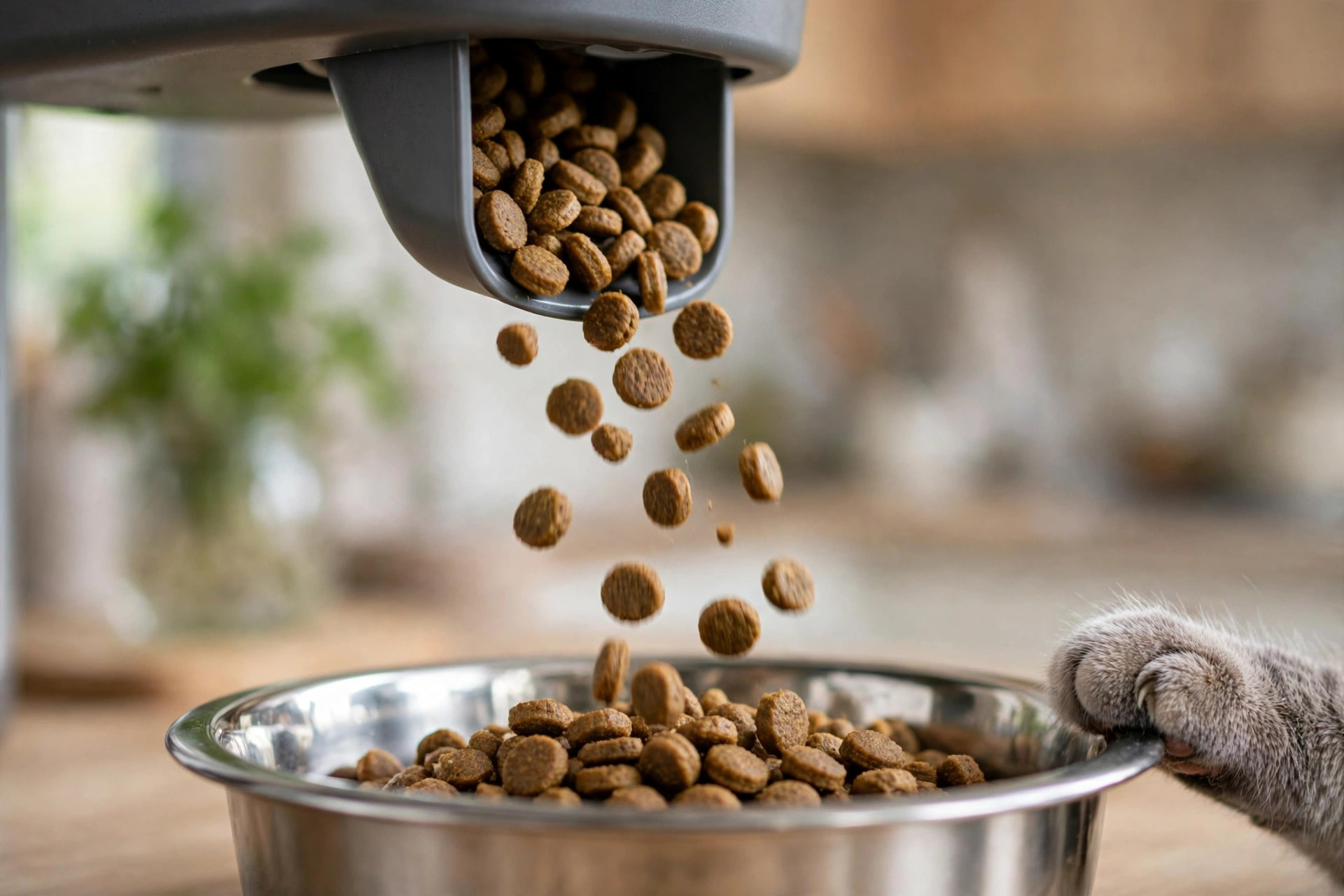
2. Portion range that fits your pet
Look for the minimum portion per meal — cats and small dogs often need as little as 1/8 cup — and the maximum per scheduled event. Compare both against your pet's real meals, not the marketing photos.
3. Schedule flexibility
Count the meals per day the feeder supports and how finely you can time them. Basic timed feeders offer a handful of daily slots; app-connected models often allow 8–12+ meals with custom times.
4. Anti-jam and kibble-tolerance design
Jams are the number one complaint in feeder reviews. Look for an anti-jam dispensing mechanism (rotating impeller or auger designs clog less than simple flap doors), and check the manufacturer's stated kibble size range. If you rotate between food brands, pick a feeder with the widest tolerance.
5. Backup power behavior
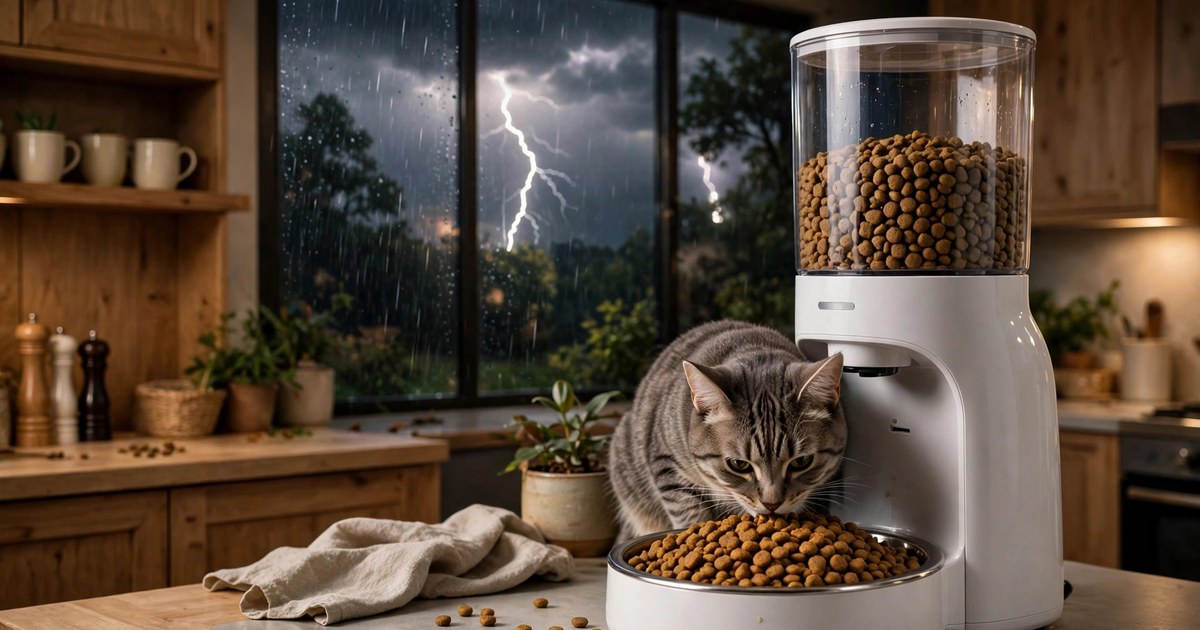
Ask the question most product pages bury: what happens when the power or Wi-Fi goes out? The good answers are battery backup that keeps scheduled meals running, and local scheduling that does not depend on the cloud. A feeder that stops working the moment your internet drops is a feeder you cannot trust on a travel day. We covered one brand's specific behavior in our power-outage feeder guide — apply the same test to any model you consider.
6. Materials and cleanability
The hopper, bowl, and chute touch food every day. Food-grade, BPA-free materials and a removable, dishwasher-safe bowl make weekly cleaning realistic instead of aspirational. Stainless steel bowls resist the biofilm buildup plastic can develop. If a feeder cannot be fully disassembled for cleaning, that is a red flag.
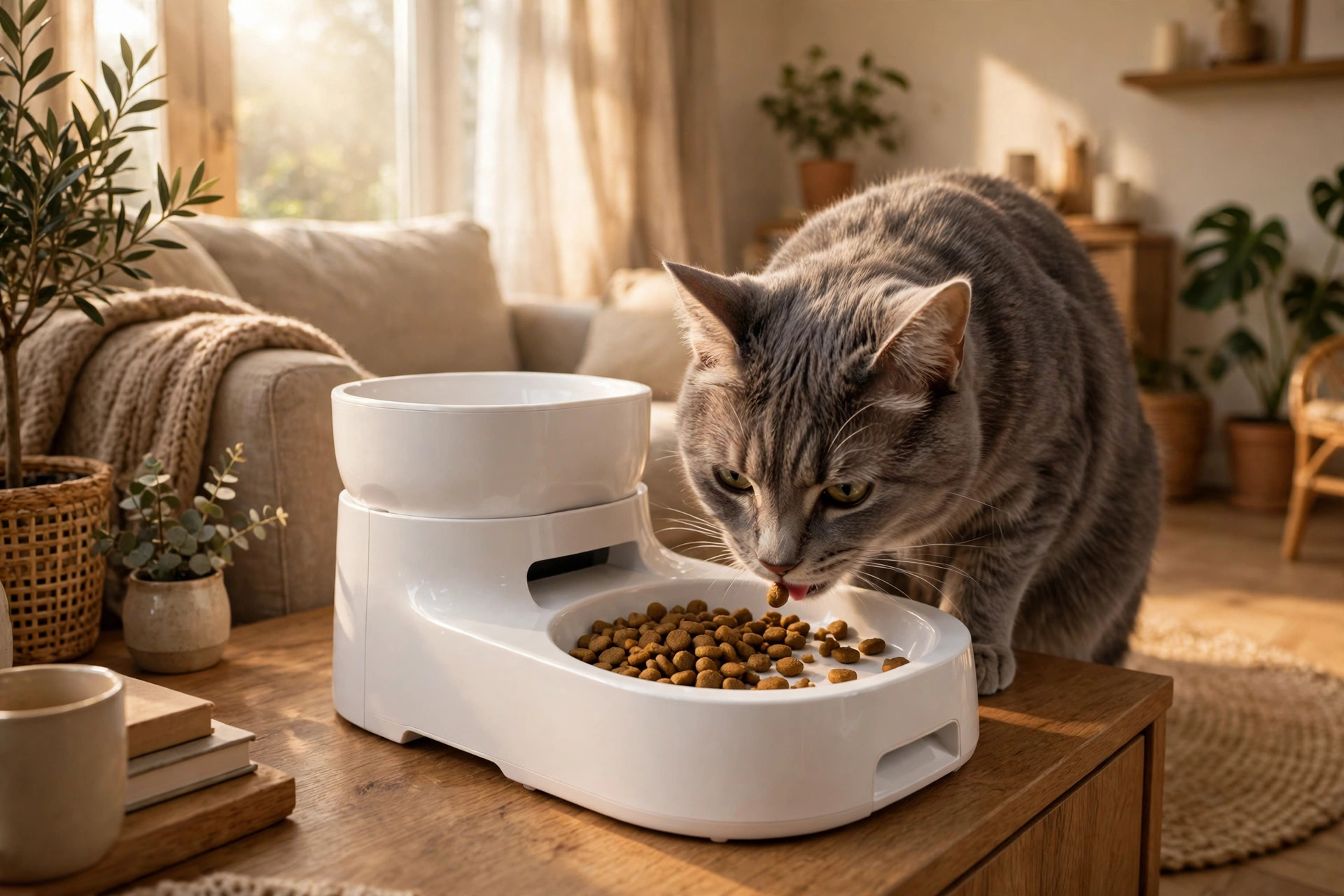
7. Pet-proofing and stability
Your pet will test this device. Cats flip loose lids; determined dogs shove, tip, and chew. Check for a locking lid, a heavy or wide base, and chew-resistant cords or cord management. If you own a food-motivated dog, search reviews specifically for the words "broke into" before buying. The American Kennel Club's guide on whether an automatic feeder is right for your dog is a good reality check on supervision and safety.
8. Multi-pet suitability
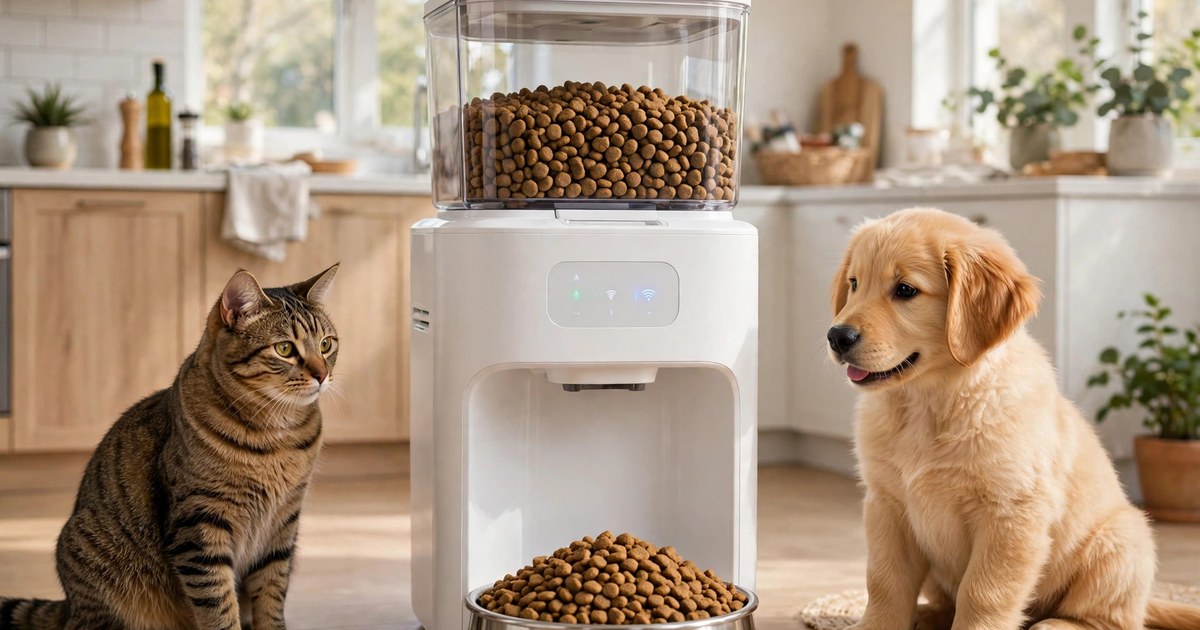
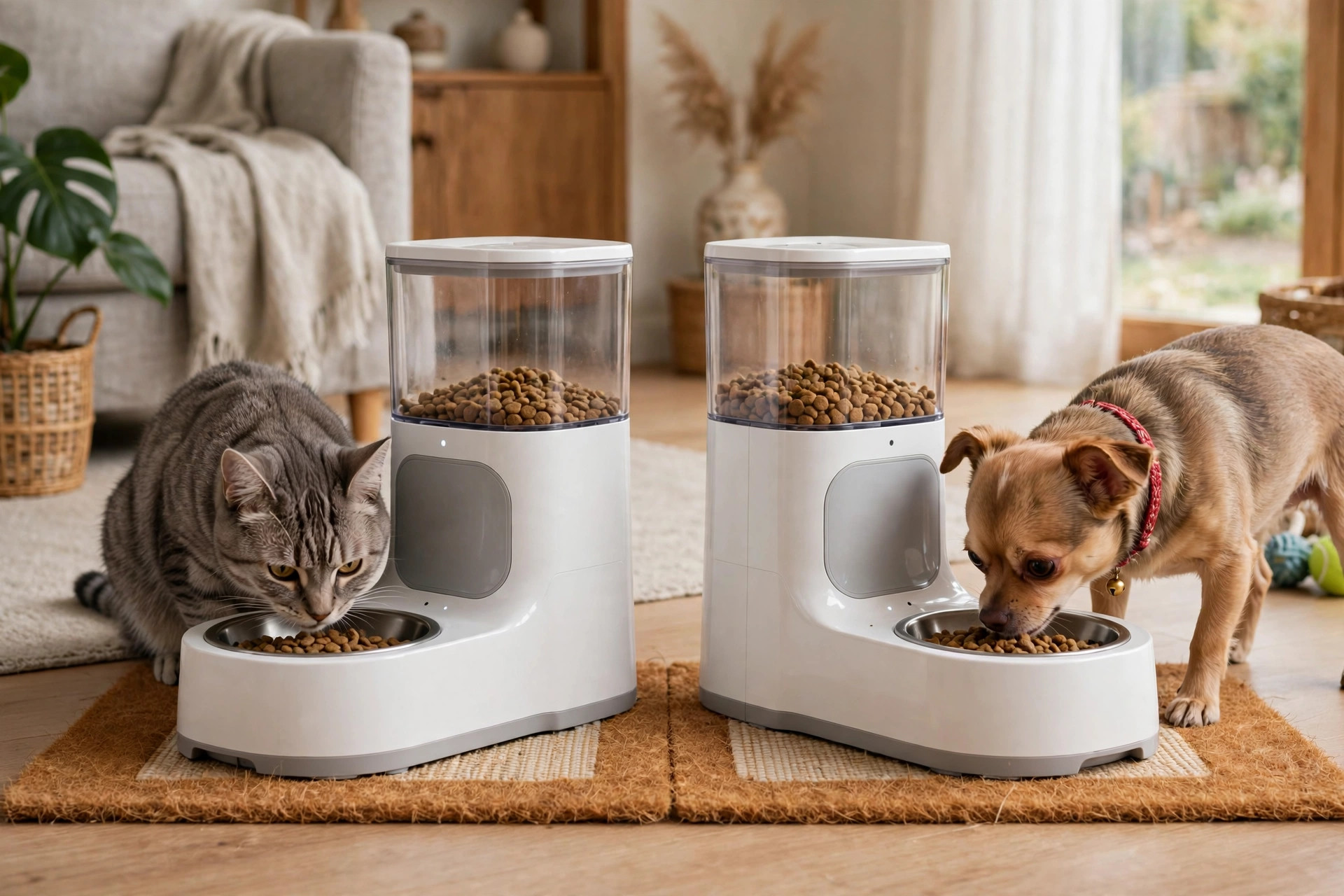
If more than one pet eats in your home, decide how you will stop food stealing: one feeder per pet in separate spots, a dual-bowl feeder (only if both pets eat the same food on the same schedule), or a microchip/RFID feeder that opens only for the authorized pet. VCA Animal Hospitals notes that timed and microchip feeders are among the most practical tools for households with a fast eater.
9. Capacity matched to your refill routine
Big hoppers look convenient, but capacity should match how often you will actually inspect, clean, and refill the unit. A good rule: size the hopper for one week of normal feeding, and clean it on the same weekly schedule. Our feeder size guide walks through the math for cats and dogs.
10. Total cost, not sticker price
Add it up honestly: the feeder, any required app subscription, replacement filters or desiccant packs, and spare parts. A $60 feeder with a $5/month subscription costs more than a $120 feeder with no subscription within the first year. Check whether core scheduling works without paying — some feeders lock basic features behind a paywall.
Feeder Types Compared: Which Fits Your Home?
| Feeder type | Best for | Watch out for |
|---|---|---|
| Gravity feeder | Always-available dry food, tight budgets | No portion control or scheduling — a fast eater will overeat |
| Timed/programmable feeder | Reliable scheduled meals without Wi-Fi | Few meal slots on basic models; no remote control |
| Wi-Fi app feeder | Flexible schedules, remote adjustments | Dead during outages without local scheduling + battery backup |
| Camera feeder | Owners away from home wanting visual confirmation | Higher price, possible subscription, privacy considerations |
| Microchip/RFID feeder | Multi-pet homes with food thieves or different diets | Higher cost; each pet may need a tag or chip registration |
| Refrigerated/rotating wet-food feeder | Pets on wet food diets | Usually covers one day only; daily loading and cleaning |
If you want specific product picks after choosing a type, our best automatic pet feeders roundup covers the strongest options for 2026.
5 Mistakes Buyers Make (and How to Avoid Them)
Mistake 1: Buying features instead of solving the problem. A camera, voice recording, and app are fun — but if the feeder cannot dispense your cat's 1/8-cup breakfast reliably, none of it matters. Checklist points 1–3 first, gadgets last.
Mistake 2: Ignoring kibble size. The most common one-star review theme is jamming. If your kibble is large or irregularly shaped, confirm the feeder's approved size range in the manual — not the marketing page.
Mistake 3: No outage plan. Feeders are most valuable on the day something goes wrong. If yours needs Wi-Fi and wall power with no backup, the easy days are automated and the hard ones are uncovered.
Mistake 4: Treating the feeder as a substitute for care. Feeders support your routine; they do not replace daily check-ins, fresh water, cleaning, and attention. The AKC is explicit on this: automatic feeders are a tool for maintaining routine, not a replacement for being involved in your pet's nutrition.
Your First Week With the New Feeder
Never load a feeder and leave town on day one. Run this plan first:
- Day 1–2: Calibrate. Program your schedule, then measure what actually lands in the bowl for two full days. Adjust portion settings until the output matches your pet's normal meals.
- Day 3–4: Supervise. Watch your pet eat from it. Is the bowl height comfortable? Is a paw reaching into the chute? Is anyone guarding it from another pet?
- Day 5: Test the failure modes. Unplug it (or kill the Wi-Fi) for ten minutes and confirm backup behavior matches the manual.
- Day 6–7: Clean and settle. Do the first full clean — hopper, chute, bowl. If cleaning takes more than 15 minutes, decide now whether that is a routine you will actually keep.
Frequently Asked Questions
Can I use an automatic feeder for wet food?
Only with a feeder designed for it. Standard hopper feeders handle dry kibble only — wet food will spoil and clog them. For wet diets, use a refrigerated tray feeder or a rotating compartment feeder, and expect to load it daily since most cover about 24 hours.
Do automatic feeders work during a power outage?
It depends on the model. Feeders with battery backup keep dispensing on schedule; Wi-Fi models may stop without cloud connectivity unless they store schedules locally. Check the manual's outage behavior before you buy, and test it during your first week.
How many meals per day should the feeder dispense?
Most owners split their pet's normal daily food into two to four smaller meals. Keep the total daily amount the same as what you would serve by hand — the feeder changes timing, not quantity. If your pet is on a managed feeding plan, follow your veterinarian's guidance for amounts.
Is it safe to rely on a feeder while I travel for the weekend?
A feeder covers meals, but not everything else: fresh water, a malfunction, or a pet that stops eating. For anything longer than a day trip, arrange for a person to check in daily. Feeders are a backup for your routine, not a replacement for a sitter.
How do I stop my dog from breaking into the feeder?
Choose a model with a locking lid and a heavy, stable base, place it where the dog cannot get leverage to tip it, and manage cords. For persistent food thieves in multi-pet homes, a microchip or RFID feeder that only opens for the right pet is the most reliable fix.
Conclusion
Choosing an automatic pet feeder is a matching problem, not a shopping problem. Work the 10-point checklist — food type, portion range, schedule, anti-jam design, backup power, materials, pet-proofing, multi-pet needs, capacity, and true cost — and you will buy the right feeder the first time.
Once it is set up, keep the routine honest: measure what it dispenses, clean it weekly, and never let it replace your daily check-in with your pet. Want more feeding help? Start at the CalcPet homepage and explore our free pet tools — including the dog age calculator, a handy reference when you are setting feeding schedules around your dog's life stage.