
A microchip is the cheapest lifetime protection you can buy for your dog. The short answer to the question every owner asks first is $25 to $60 at most US vets in 2026, and often much less at a shelter or low-cost clinic. But the price list is rarely the price you pay: registration fees, office visits, and where you live all change the total.
How Much Does It Cost to Microchip a Dog in 2026?
Typical US prices in 2026:
| Where you go | Typical price | What is usually included |
|---|---|---|
| Private vet clinic | $25–$60 | Chip, implant, registration |
| Low-cost clinic | $10–$28 | Chip + implant; registration sometimes extra |
| Animal shelter / rescue | $10–$25, sometimes free | Often in adoption fee |
| Pet-store vaccine clinic | $15–$25 | Chip, implant only |
| Community microchip event | Free | Chip, implant; registration extra |
The median published price at US practices is about $52, according to a 2026 price index covering 119 practices, with most lists falling between $40 and $68. Low-cost clinics in the same index had a median of just $28. That gap is the whole story: the chip is cheap, and the price mostly reflects where you have it done.
In the UK, microchipping costs £10 to £30 at most practices, with a median listed price of £30 across nearly 2,500 practices. Charity clinics and council microchip days often do it free or for under £10, and adding the chip to another visit usually costs £10 to £15.
What the Price Actually Includes
You are paying for three things, not one:
1. The chip itself
The microchip is a tiny capsule about the size of a grain of rice. It holds a unique 15-digit ID number and nothing else — no battery, no GPS, no transmitter — so there is nothing to charge or replace, and one chip lasts for life.
2. The implant
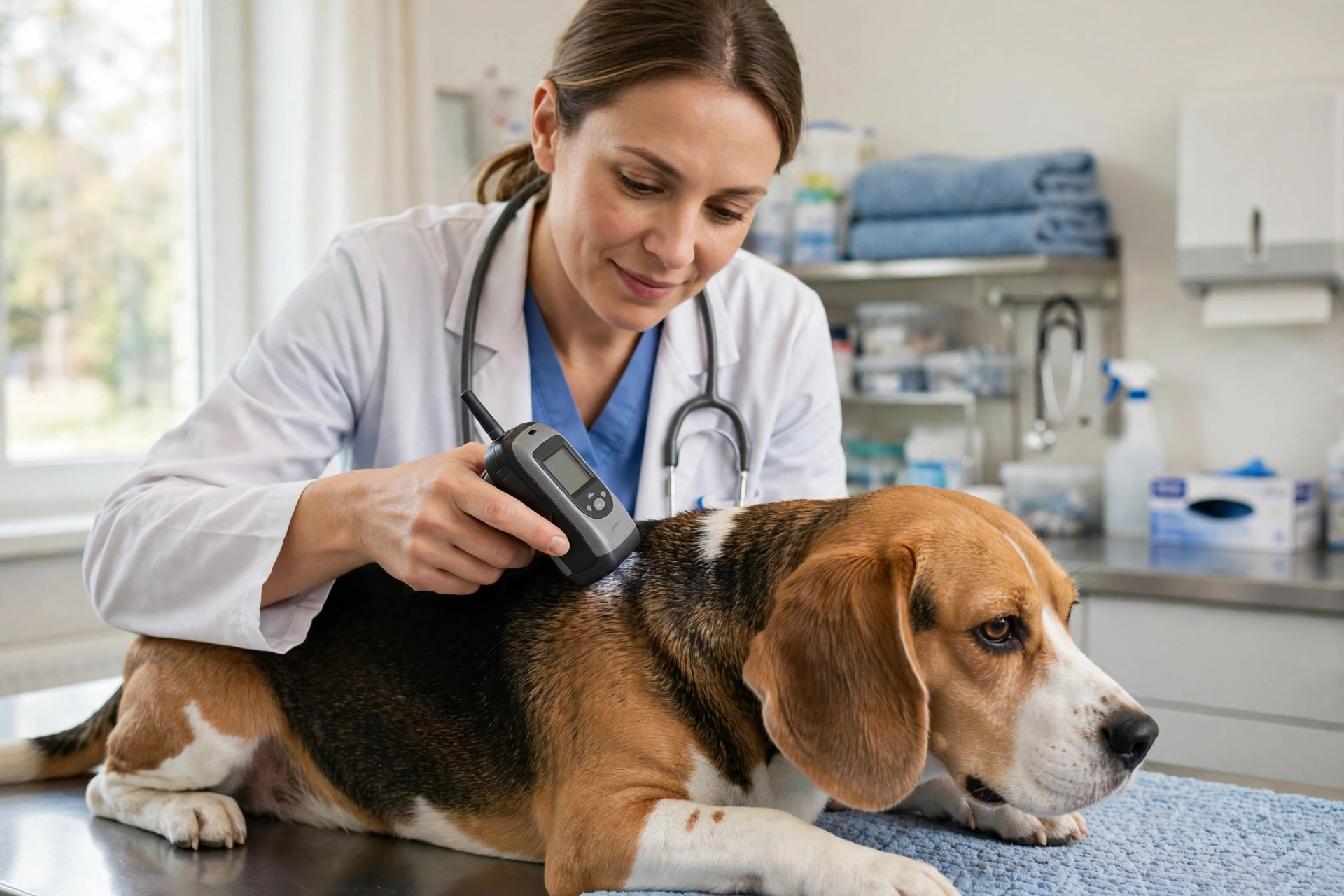
A vet or trained implanter injects the chip under the skin between your dog's shoulder blades. It takes seconds, needs no anaesthetic, and most dogs react with little more than a brief flinch.
3. Registration
This is the step people forget — and the one that brings a lost dog home: the chip number means nothing until it is linked to your contact details in a recovery database. Some vets register it for you; others hand you the paperwork. Always ask which applies before you leave.
The Hidden Costs Nobody Mentions
The chip price is only part of the bill:
- Office visit fee: if you book a standalone appointment just for the chip, many vets add an exam fee of roughly $50 to $80 on top. This is the single biggest reason a "$25 chip" turns into a $100 visit.
- Registration fee: some registries charge a one-time lifetime fee of $20 to $30 with free contact updates afterwards; others include basic registration free and charge only for premium extras. Ask exactly what your fee covers.
- Contact-update fee: a few databases charge an admin fee (around $6 to $20) when you move house or change your phone number. Free registries exist, so this fee is avoidable.
- ID tag: a microchip does not replace a collar tag. An engraved tag costs about $5 to $15 and is still the fastest way for a neighbour who finds your dog to reach you without a scanner.
All told, the honest first-year total runs from $25 to $185: $25–$60 for the chip, $0–$80 for a standalone visit, $0–$30 for registration, and $5–$15 for a tag. That is why it pays to bundle the chip with a visit you are already making.
US vs UK vs Europe: Microchip Prices at a Glance
| Country | Typical vet price | Legal status for dogs |
|---|---|---|
| United States | $25–$60 | Not federally required |
| United Kingdom | £10–£30 | Required from 8 weeks old |
| France | €40–€70 | Required from 4 months old |
| Germany | €30–€50 | Required in some states |
| Ireland | €20–€40 | Legally required since 2016 |
| Spain | €10–€50 | Legally required from 3 months old |
In the UK, an unchipped dog can lead to a fine of up to £500. In the US, the rules vary by city and state, so check your local animal-control rules — and remember a chip is also required for most international travel with a dog.
What Happens at the Appointment: Step by Step
- Book it with something else. Adding the chip to a visit you are already making is the cheapest move — ask when you book whether the visit fee still applies.
- Bring your contact details. The vet needs your current phone number, address, and an emergency contact — this is what gets linked to the chip number, so double-check every digit.
- The implant takes seconds. The vet scans your dog first to confirm there is no existing chip, then injects the new one between the shoulder blades. No sedation, no recovery time.
- Scan to confirm. The vet scans the chip again to confirm it reads correctly — ask to see the number on the scanner screen and write it down.
- Register before you leave. Confirm whether the vet registers the chip or you need to do it yourself — if it is on you, do it the same day, not 'later'.
- Check it yourself at home. A few days later, look up the chip number on the AAHA Universal Pet Microchip Lookup tool to confirm which registry holds it and that your details are there.

Registration: The Step That Actually Matters
Here is the uncomfortable fact: the chip only works if it is registered. The AVMA has pointed out that only about six in ten microchips in pets are registered — roughly four in ten chipped pets carry a chip that points nowhere.
Registration is simple, but it is separate from the implant — and that is where people slip up. Use this checklist on chipping day:
- Write down the 15-digit chip number and keep it with your dog's records.
- Confirm the chip is registered — by the vet, or by you online the same day.
- Check the registry has your current mobile number, not just your home number.
- Update the registry the week you move house or change your number.
Why does it matter? In a study of 7,704 animals across 53 US shelters, microchipped dogs were returned 52.2% of the time, versus 21.9% without a chip. The chip does not find your dog. The registration does.
Microchip vs GPS Tracker vs ID Tag: What Does What
Owners often mix these three up:
| Option | What it does | Typical cost |
|---|---|---|
| Microchip | Permanent ID, readable by shelter/vet scanners | $25–$60 once |
| GPS tracker (collar) | Live location on your phone | $50–$200 + monthly fee |
| ID tag | Your phone number, readable by anyone | $5–$15 once |
A microchip is not a GPS device — it cannot track your dog or show a location. The safest setup is all three: chip, tag, and a GPS tracker only if you want live location.
Cheapest Ways to Get Your Dog Microchipped
If the vet price stings, try these in order — most owners can get it done for under $25, or free:
- Adoption day: most shelters chip every dog before it goes home, with the cost inside the adoption fee. Ask if you are adopting — you may already be covered.
- Community microchip events: shelters and charities run free or $10 microchip days, especially around National Check the Chip Day on August 15. Follow your local shelter on social media to catch them.
- Low-cost clinics: humane societies and non-profit clinics chip dogs for $10 to $28; the ASPCA's own community clinics list it at $10.
- Bundle it: adding the chip to a visit you are already paying for wipes out the standalone office-visit fee.
- Pet-store vaccine clinics: weekend clinics typically charge $15 to $25 for a chip with no appointment fee.
One warning: if a "free" chip comes with a registry that charges for every contact update, it is not really free. A chip on a free, no-annual-fee registry such as AKC Reunite will cost less over your dog's life than a free chip tied to a paid registry.

Frequently Asked Questions
How much does it cost to microchip a dog at the vet?
Most US vets charge $25 to $60 for the chip and implant, often including basic registration; the median published price is about $52. A standalone visit may add an office-visit fee of $50 to $80.
Is microchipping a dog a one-time cost?
Yes. The chip has no battery and nothing to renew, so the implant is a one-time cost that lasts your dog's whole life. The only possible ongoing cost is a registry fee — and many registries, including AKC Reunite, charge no annual fees at all.
Can I get my dog microchipped for free?
Often, yes. Shelters usually chip dogs before adoption at no extra charge, community microchip events are frequently free, and charity clinics charge $10 or less. Check your local shelter's event calendar first.
Does a microchip track my dog's location?
No. A microchip is a passive ID chip, not a GPS device — it only stores a 15-digit number a shelter or vet can read with a scanner. Live tracking needs a separate collar-mounted GPS tracker.
What if my dog already has a chip but I never registered it?
Ask your vet to scan your dog for the chip number, then register it yourself with a pet recovery registry the same day. An unregistered chip cannot reunite you with your dog — the AVMA notes only about six in ten microchips are registered.
How much does it cost to microchip a dog in the UK?
UK vets typically charge £10 to £30, median £30; charity clinics and council events often do it free or for under £10. Microchipping is legally required for all UK dogs from 8 weeks old, and owners of unchipped dogs can face a fine of up to £500.
Conclusion
Microchipping a dog costs $25 to $60 at most US vets in 2026 — or $10 to $25 at a shelter or clinic, sometimes nothing at all. It is a one-time cost, it lasts for life, and it more than doubles the odds of a lost dog coming home. But the chip is only half the job: register it the same day, keep your details current, and pair it with a simple ID tag. That small bit of admin turns a $25 chip into a ticket home.
Want the bigger picture of dog ownership costs? Use our free dog age calculator, then read our average cost of owning a dog per year breakdown, first-year dog costs guide, and new puppy dog-proofing checklist. For more on registration, see the AVMA's microchip identification policy and the ASPCA's disaster preparedness guide, which recommends microchipping as permanent identification.