Start With the Puppy-Height Rule
Before you buy a single gate or cord cover, get down on your hands and knees and look at every room from puppy height. That is the most useful advice in this guide, and the American Kennel Club's puppy-proofing guide puts it first. From the floor you will spot dangling chargers, shoes under the coffee table, the gap behind the TV stand, and the houseplant at nose level.
Puppies explore the world with their mouths. Anything they can reach, they will taste, chew, or swallow. Dog-proofing means removing the real hazards in each room, setting up one safe starter room, and giving your puppy clear boundaries from day one. Work through this checklist a few days before arrival day. Most fixes are removable — cord covers, gates, latches, bins — so renters can use them all.
The 25-Point Dog-Proofing Checklist
Keep this open on your phone while you walk the house — each check takes a minute or two.
1. Kitchen: 5 Checks
The kitchen holds food, chemicals, and sharp tools at nose height, so start here.
- Lock the trash away. Switch to a bin with a locking lid, or keep the bin inside a latched cupboard. Chicken bones and food wrappers are the classic trash-raid finds.
- Move cleaning products up high. Dishwasher pods, floor cleaner, and sprays belong in a high cupboard or behind a childproof latch — never under the sink at puppy height.
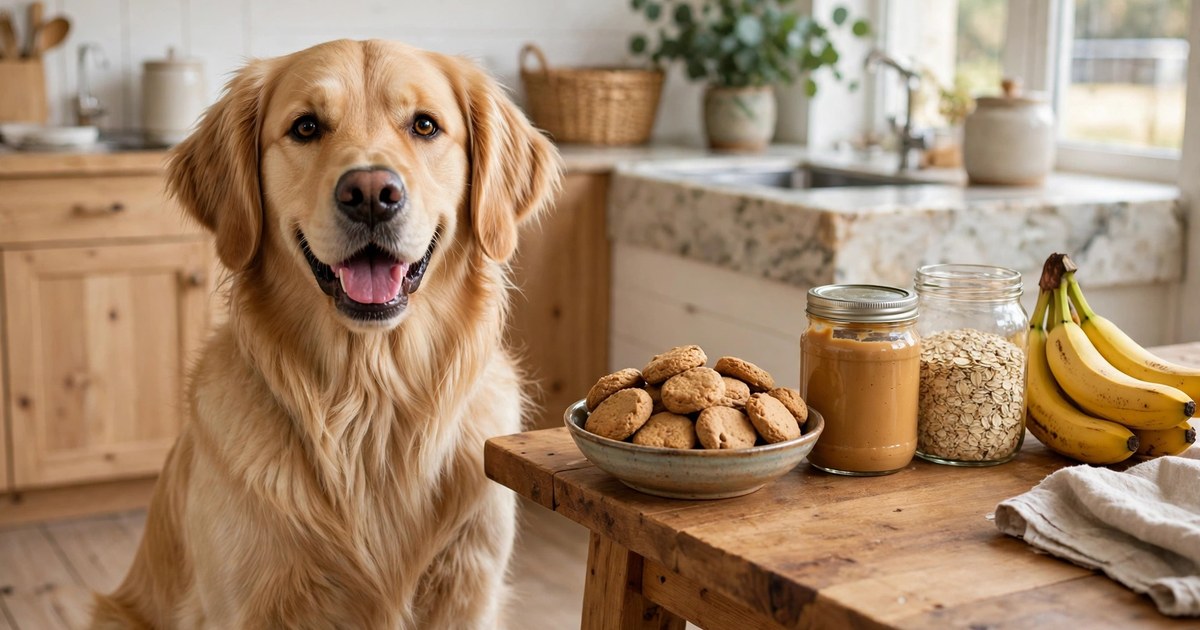
- Clear the counters of food. Chocolate, grapes and raisins, onions and garlic, and anything sweetened with xylitol (sugar-free gum, some peanut butters) must stay out of reach.
- Secure the lower cupboards. Fit childproof latches on any cupboard holding food, bins, or chemicals. Puppies learn to nose cupboard doors open fast.
- Hide appliance cords. Unplug kettles and toasters when not in use and push cords back, so a tug cannot pull anything off the counter.
2. Living Room and Bedrooms: 5 Checks
Your puppy will spend the most time here, so sweep these rooms with extra care.
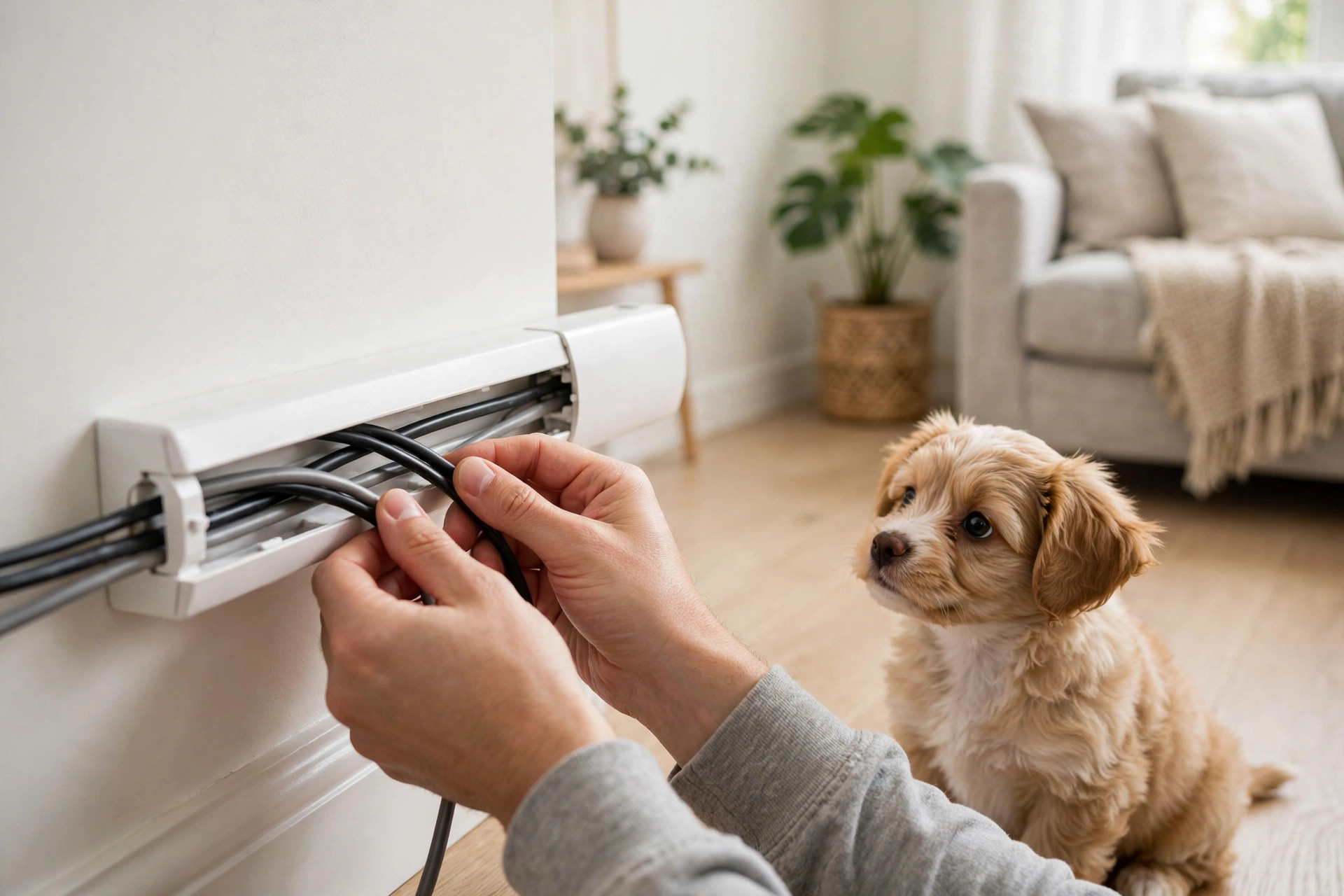
- Cover or lift every cord. Phone chargers, lamp cords, TV cables, and extension leads are the number one chew target in most homes. Run them through cord covers, clip them behind furniture, or unplug them.
- Pick up small swallowable objects. Coins, hair ties, rubber bands, buttons, jewellery, kids' small toys, and remote-control batteries all fit in a puppy's mouth. Sweep the floor and put them in closed drawers.
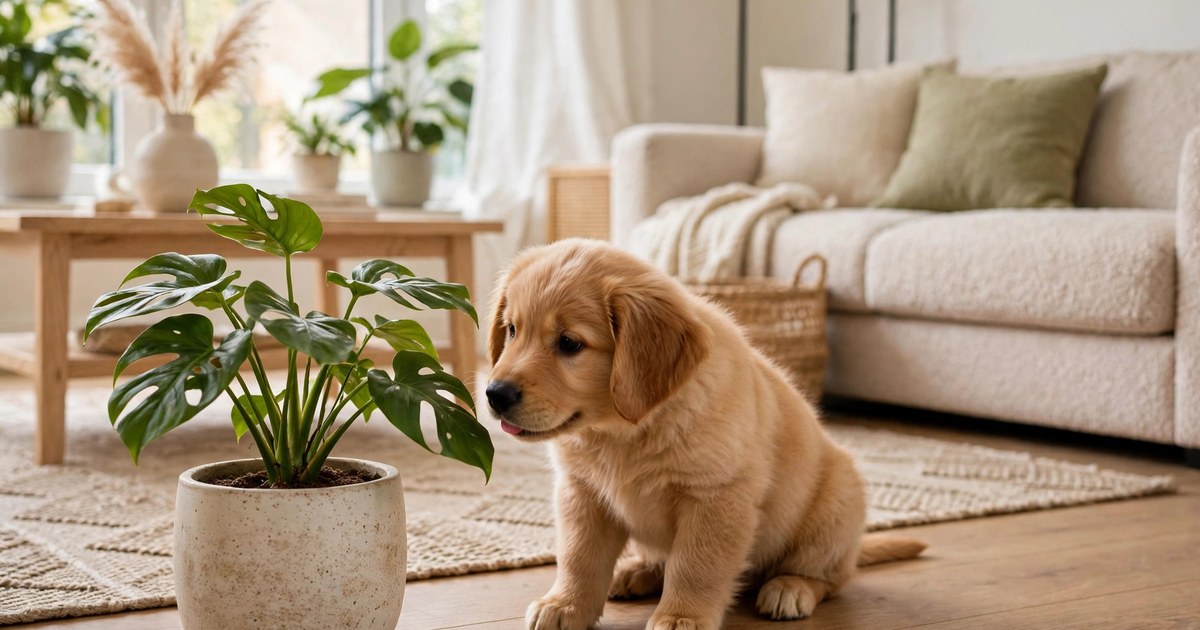
- Move houseplants out of reach. Sago palm, pothos, philodendron, aloe, and dieffenbachia are common houseplants that are not safe for dogs to chew. Check any new plant against the ASPCA's general dog care guidance first.
- Put shoes and laundry behind closed doors. Shoes, socks, and underwear are classic puppy prizes, and socks are a well-known swallowing hazard. Keep them in closed closets and lidded hampers.
- Protect furniture and valuables. Move vases, framed photos, and books you care about to higher shelves for the first few months. Puppies knock things over with wagging tails long before they learn to move carefully.
3. Bathroom and Laundry: 4 Checks
These rooms hold the most chemicals and medicines: keep doors closed or everything locked away.
- Lock medicines and vitamins away. Human medicines, including ibuprofen and acetaminophen, belong in a high, latched medicine cabinet. Childproof lids do not stop a puppy from chewing through a bottle.
- Keep laundry products off the floor. Detergent pods, stain removers, and fabric softener sheets look like toys to a puppy. Store them on a high shelf, and keep the laundry basket behind a closed door.
- Close toilet lids and bath doors. A puppy can fall into a toilet or a filled bath and struggle to climb out. Keep lids down and bathroom doors shut when the room is not in use.
- Secure razors and small toiletries. Clear low shelves and the sides of the bath. Anything small enough to swallow belongs in a closed cabinet.
4. Stairs, Doors, and Hallways: 3 Checks
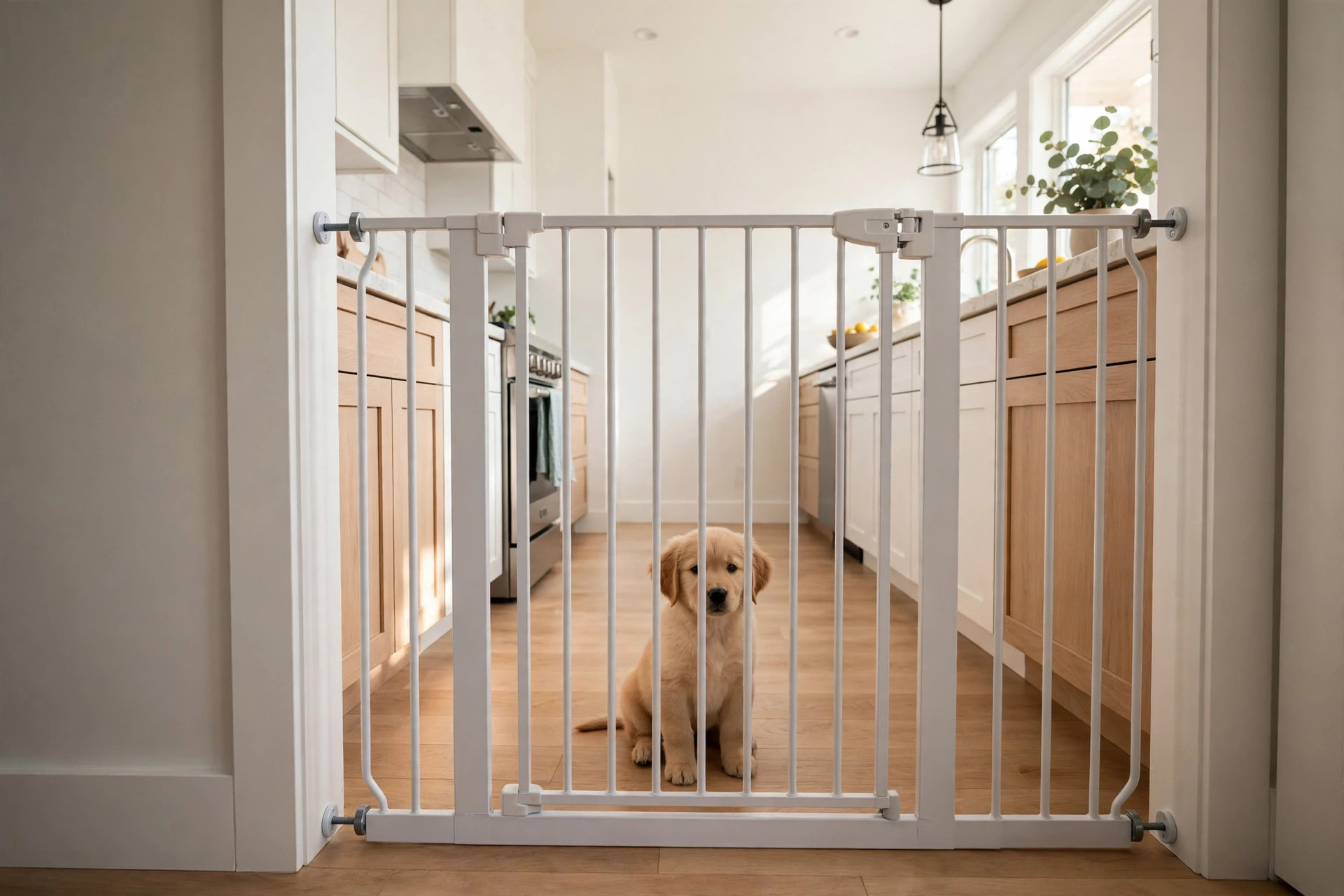
- Fit gates at the stairs. A pressure-mounted baby gate at the top and bottom keeps a clumsy puppy from tumbling down or wandering into rooms you have not proofed yet.
- Check doors and windows latch properly. A door that does not latch is an open invitation to the street. Test every exterior door and ground-floor window, and fit simple locks or screens where needed.
- Block gaps and hiding spots. Check for gaps behind appliances, under low furniture, and between banister rails where a small puppy could squeeze through or get stuck. A rolled towel closes most gaps.
5. Yard and Garage: 5 Checks
The yard looks safe, but it hides the hazards most new owners miss — walk the boundary first.
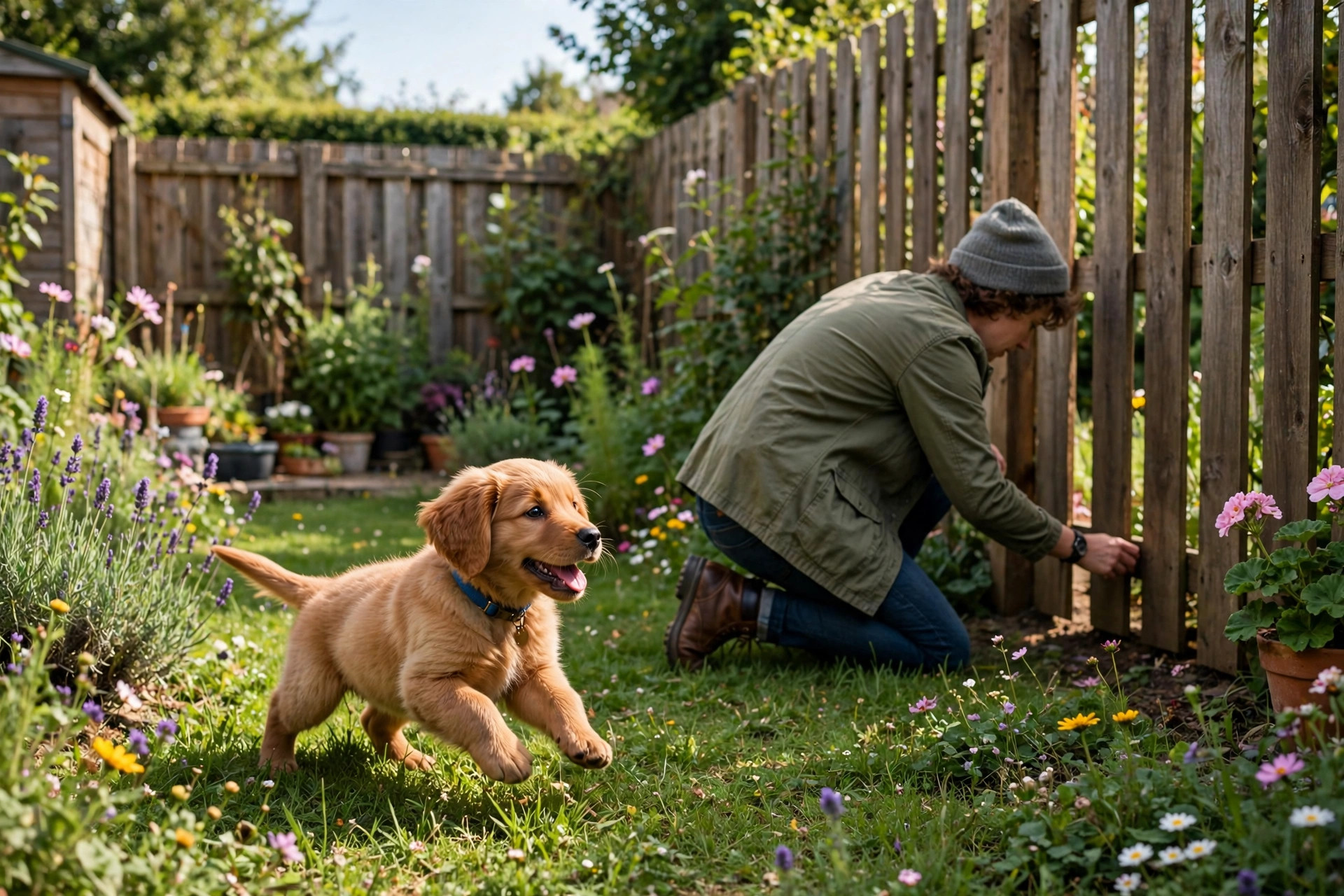
- Walk the fence line. Look for gaps under the fence, loose boards, and holes a puppy could squeeze through. Puppies fit through openings you would never believe, so fix gaps now.
- Fence off pools and ponds. Puppies cannot always climb out of water. Fence off or cover any pool, pond, or water feature until your puppy is a confident swimmer under supervision.
- Lock the garage chemicals away. Antifreeze, rat poison, slug bait, fertiliser, and paint belong on high shelves behind closed doors, with spills wiped up straight away. Antifreeze tastes sweet to dogs, so never leave a puddle on the driveway.
- Check the plants and mulch. Sago palm, azalea, oleander, and foxglove are common garden plants that are not safe for dogs, and cocoa mulch carries the same risk as chocolate. Use plain wood or pine mulch, and pick up mushrooms after rain.
- Remove sharp tools and small debris. Clear the yard of fish hooks, nails, broken glass, and small stones your puppy could swallow. Store tools on shelves or in closed boxes, never on the garage floor.
6. Your Puppy's Starter Room: 3 Checks
You do not need to proof the whole house on day one — one safe room, done properly, is enough.
- Set up the sleep spot. Place the crate or bed in a quiet corner away from the main walkway, with a washable blanket inside. A crate with a divider lets you size the space so your puppy can stand, turn, and lie down comfortably.
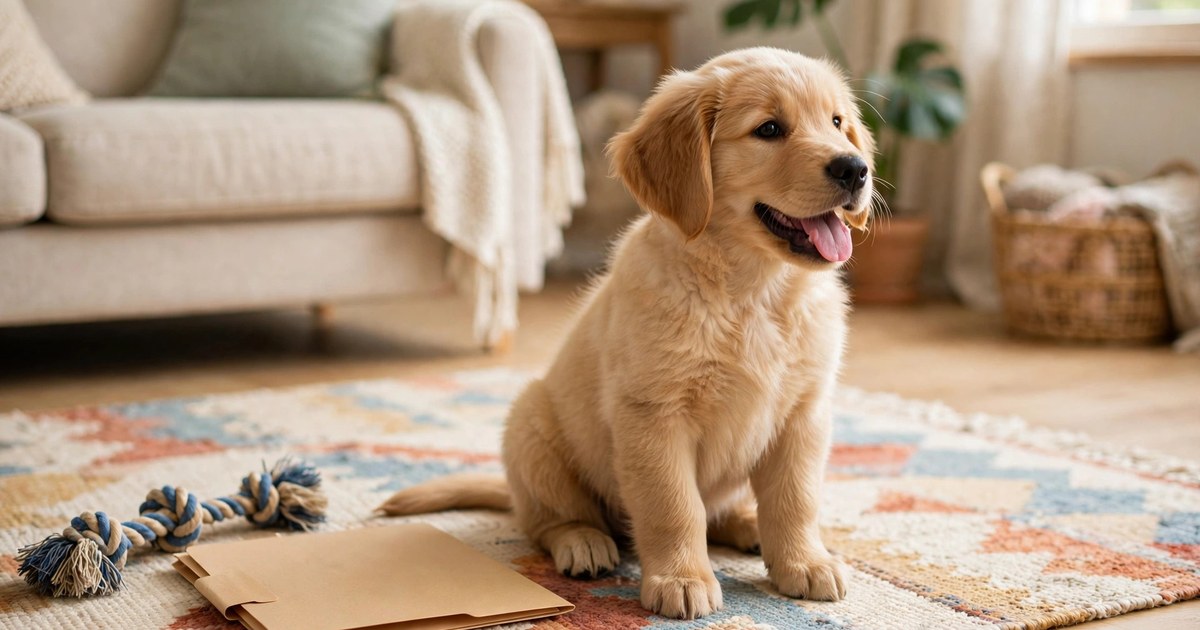
- Stock a chew basket. Put two or three puppy-safe chew toys within reach in the starter room. Puppies chew because they need to, not because they are naughty, and a full chew basket prevents most furniture chewing before it starts.
- Keep the essentials in one place. Food and water bowls, the lead and harness, waste bags, and enzyme cleaner for accidents should all live in or near the starter room. Enzyme cleaner matters: regular cleaners leave a smell only your puppy can find.
What to Do in the First Week After Proofing
Keep your puppy in the starter room and one or two proofed rooms for the first few days, and expand their freedom one room at a time. A good rhythm is one room in week one, a second in weeks two and three, and the rest by the end of the first month. When you cannot watch your puppy, use the crate or a playpen as their safe den. Puppies sleep most of the day, and most trouble happens when a tired, bored puppy is left unsupervised.
Keep a list on the fridge: your vet's phone number, the nearest emergency vet clinic, and the ASPCA Animal Poison Control Center number (888-426-4435). If your puppy swallows something they should not have, call your vet or the poison helpline straight away. Our puppy socialization checklist covers the experiences worth introducing early, and our puppy training supplies checklist covers the gear on a budget.
5 Mistakes New Puppy Owners Make
1. Proofing the whole house at once. One safe starter room, done well, beats a half-finished whole house.
2. Forgetting the yard. Most owners proof the inside and forget the fence, the garage chemicals, and the garden plants. Walk the yard the same week you proof the kitchen.
3. Leaving chargers plugged in. Phone chargers are the most commonly chewed item in new-puppy homes — they sit at exactly puppy height. Unplug them or cover them.
4. Assuming childproof means puppy-proof. A puppy chews through packaging, noses doors open, and squeezes through gaps a child never would. Check everything from puppy height, not adult height.
5. Skipping the re-check. Around six to twelve months, puppies get taller, bolder, and more inventive, and counters, bins, and fences all need a second look. The VCA's puppy-proofing guide makes the same point: proofing is a process, not a one-day job.
Frequently Asked Questions
When should I start dog-proofing my home?
Start at least a week before your puppy arrives, and finish the starter room two or three days early so you can test gates, latches, and cord covers without rushing.
Do I need to puppy-proof the whole house?
No. Proof one starter room properly, gate off the rest, and expand your puppy's access one room at a time over the first month. This is safer, and far less work than making every room perfect on day one.
What is the most important thing to puppy-proof first?
Electrical cords, medicines, and cleaning products, in that order. Cords are the most commonly chewed hazard, and medicines and cleaners are the most dangerous things a puppy can reach.
How do I keep my puppy out of the kitchen?
A pressure-mounted baby gate across the doorway is the simplest answer, and it lets your puppy see you while keeping them out of the danger zone during cooking. Add a locking-lid bin and latched lower cupboards, and the kitchen stops being a worry.
Are baby gates safe for puppies?
Yes. Pressure-mounted gates are the standard tool for blocking stairs and doorways, and most puppies respect them from day one. Choose one with narrow bar spacing so a small puppy cannot squeeze through.
When can I stop puppy-proofing?
Most owners relax the gates and latches gradually between six and twelve months, once the chewing phase eases and the puppy has learned the house rules. Some habits stay for life: tucked-away cords, high medicine cabinets, and a locking-lid bin.
Conclusion
Dog-proofing is a weekend of small jobs that pays off for months. Walk the house at puppy height, work through the 25 checks room by room, and re-check the yard and the fence. Your puppy gets a safe place to learn and grow, and you get to enjoy the first week.
Once the house is ready, the fun part starts. Try our dog age calculator to see how your puppy's age translates into human years. And if you share your home with a cat too, our guide on how to pet-proof your home for a cat covers the feline side of the same job. Welcome home, puppy — the house is ready.