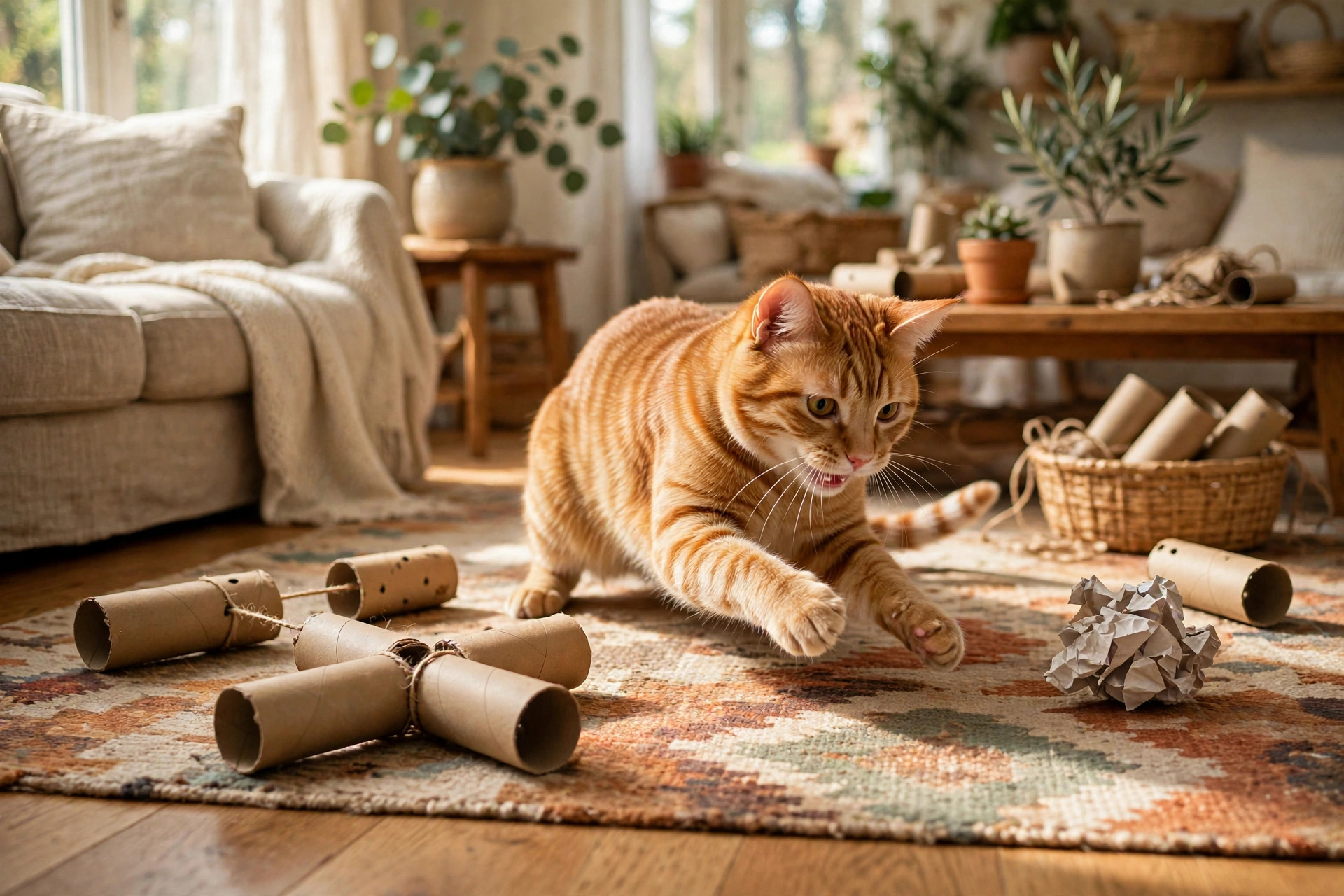
Every cat owner knows the joke: you buy a $20 toy and your cat plays with the box it came in. The good news is that the box — and the toilet rolls, old socks, and paper bags in your recycling bin — can become a whole toy chest. These 15 DIY cat toys cost next to nothing, take minutes to make, and cover every kind of play: chasing, pouncing, puzzle-solving, and scratching. All you need is stuff you already have at home.
Before you start, read the safety rules below — homemade toys are only fun when they are safe.
Safety Rules First: 5 Non-Negotiables for Homemade Cat Toys
1. Never leave string, yarn, or ribbon toys unsupervised. Cats can swallow linear materials, which can cause serious intestinal blockages. Wand toys are for supervised play only — put them in a drawer when playtime ends.
2. Skip small parts that can be chewed off. No buttons, beads, googly eyes, sequins, or bells that can detach. If a part is smaller than your cat's throat, leave it out.
3. No plastic bags, rubber bands, hair ties, or twist ties. They are easy to chew and swallow, and bags carry a suffocation risk. Cut the handles off paper bags before giving them to your cat.
4. Use non-toxic materials only. Plain cardboard, cotton fabric, felt, and paper are safe. Skip glitter glue, scented markers, painted surfaces, and anything with essential oils.
5. Inspect toys weekly and retire torn ones. A toy that is falling apart is one your cat can swallow pieces of — throw it out and make a fresh one.
What DIY Cat Toys Actually Save You
Store-bought cat toys are not expensive one at a time, but a full toy box adds up fast. Here is what the same fun costs when you make it yourself:
| Toy | Store-bought (typical) | DIY cost |
|---|---|---|
| Crinkle ball | $8–$12 | $0 |
| Catnip kicker toy | $12–$18 | $0–$1 |
| Treat puzzle | $15–$25 | $0 |
| Wand toy | $10–$15 | $1–$2 |
| Cardboard maze or castle | $25–$40 | $0 |
Fifteen store-bought toys easily run $150–$250. The DIY versions below cost about $0–$5 in total, mostly for a bag of dried catnip if you do not already have one. Prices above are typical US retail ranges.
5-Minute Toys: Zero Crafting Required
1. Crumpled Paper Ball
You need: one sheet of scrap paper or packing paper. How: crumple it into a loose ball about the size of a walnut and toss it across the floor. The crinkle sound alone hooks most cats. Best for: kittens and high-energy cats that love chase games.
2. Paper Bag Hideout
You need: a plain paper shopping bag. How: cut off the handles, lay the bag on its side, and let your cat discover it. Drop a crumpled paper ball inside for extra temptation. Best for: shy cats that like to hide before they pounce.
3. Toilet Roll Treat Ball
You need: an empty toilet paper tube and a few treats. How: fold one end closed, drop in 3–4 treats, fold the other end, and let your cat bat it around until the treats fall out. Best for: food-motivated cats and rainy-day boredom.
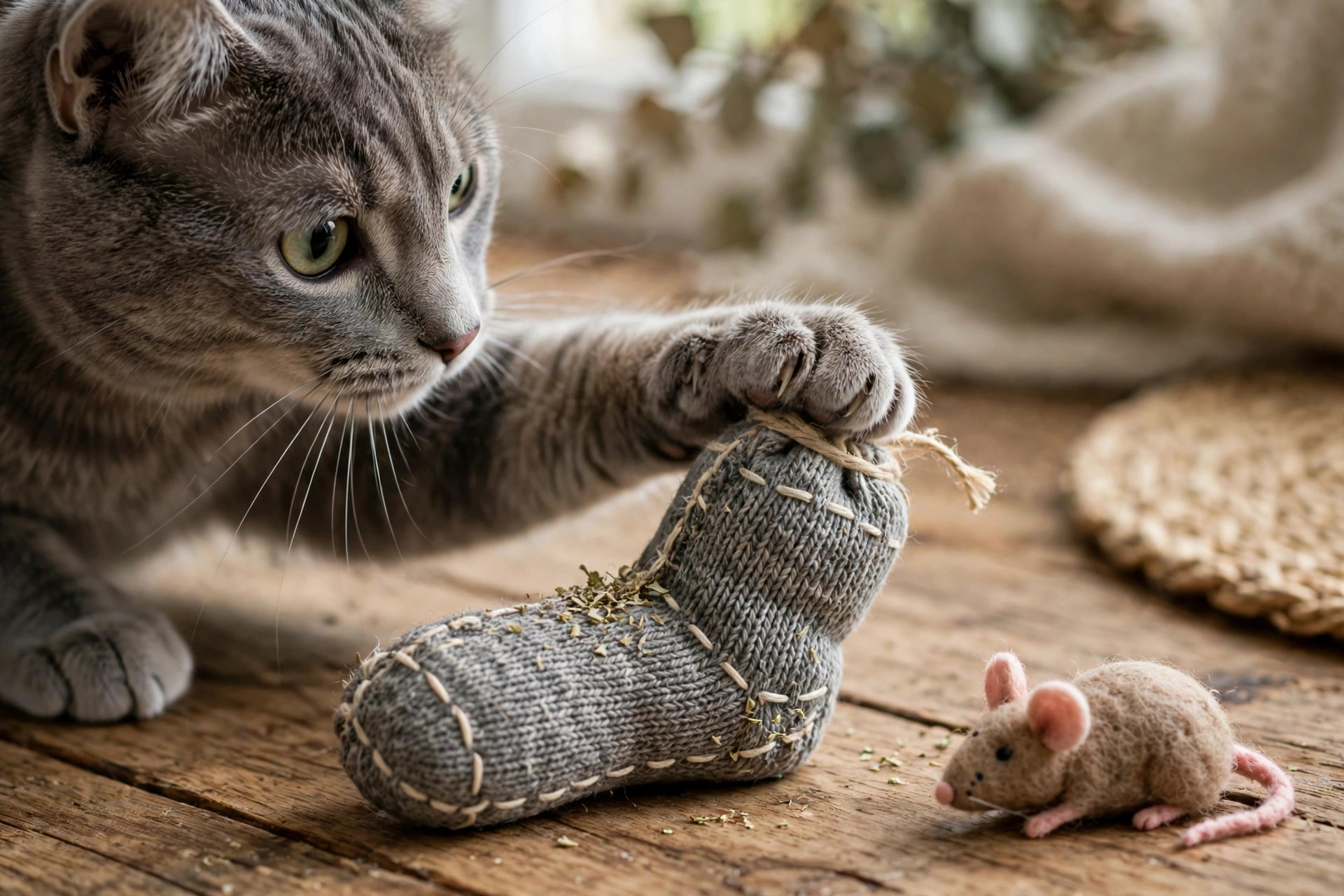
4. Sock Catnip Kicker
You need: one clean old sock, fabric scraps, and a teaspoon of dried catnip. How: stuff the toe firmly with scraps, sprinkle the catnip in the middle, and tie the open end in a tight knot — or sew it closed if you can. Best for: cats that love to bunny-kick their toys.
5. Egg Carton Treat Puzzle
You need: a cardboard egg carton and a few treats or pieces of kibble. How: cut off the lid, drop a treat into some of the cups, and close the lid for a harder puzzle. Your cat lifts the lid and fishes treats out with a paw. Best for: clever cats that finish meals too fast.
Puzzle and Foraging Toys That Tire Out Busy Cats
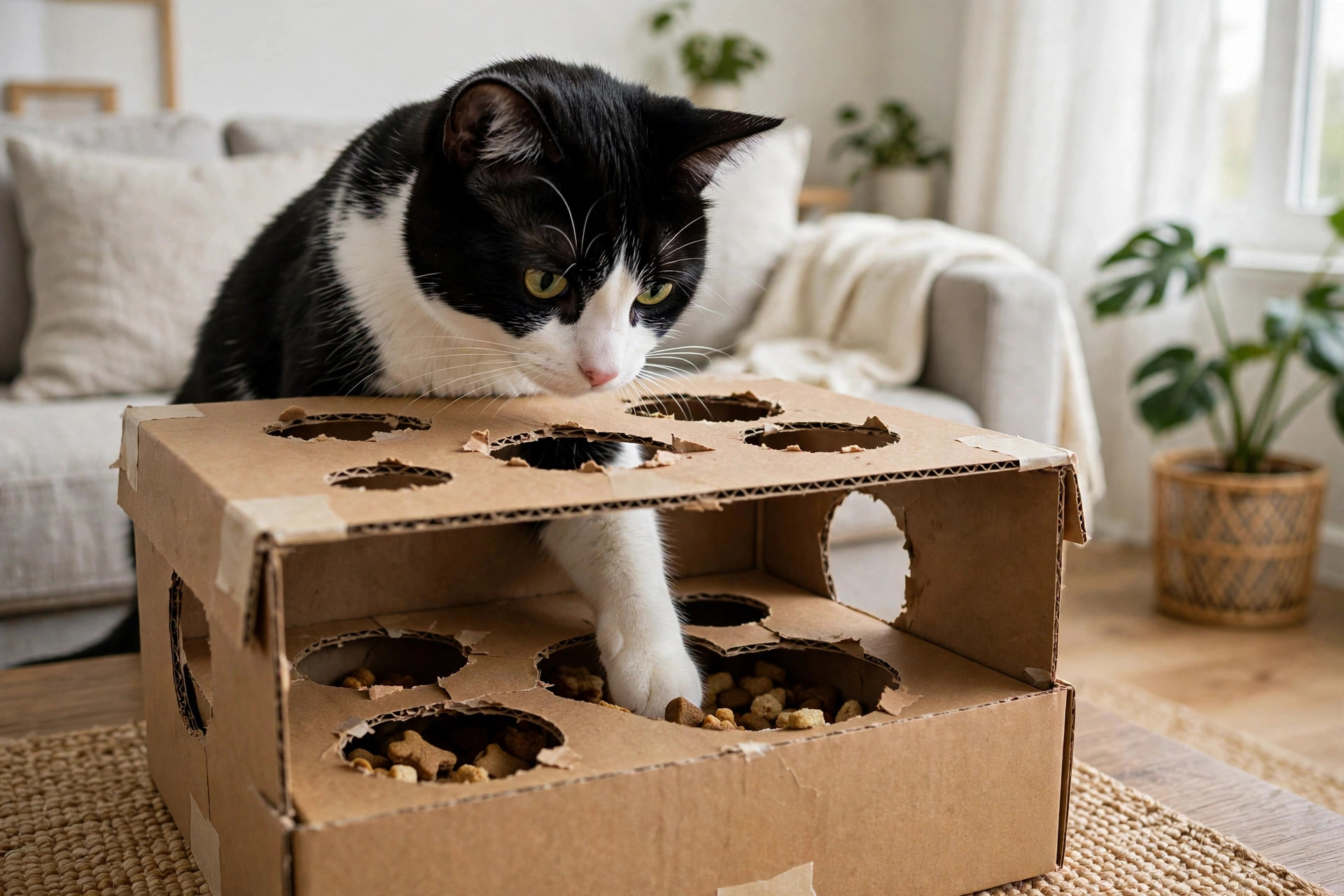
6. Cardboard Box Ball Maze
You need: a shallow cardboard box, a craft knife (adults only), tape, and a ping pong ball. How: cut several paw-sized holes in the lid, tape the lid on, and drop the ball inside. Your cat bats the ball around without ever catching it. Best for: indoor cats that need mental exercise while you are at work.
7. Tissue Box Fishing Game
You need: an empty tissue box with the plastic film removed and a handful of crumpled paper balls. How: drop the balls in the box and let your cat fish them out one by one. Best for: cats that love reaching into things.
8. Muffin Tin Treat Hunt
You need: a muffin tin, a few treats, and some tennis balls or crumpled paper balls. How: put a treat in each cup and cover the cups with balls. Your cat has to nose the balls aside to find the food. Best for: slow-feeding and mealtime enrichment.
9. Plastic Bottle Treat Roller
You need: a clean, dry plastic bottle with the label removed and a few treats. How: cut 4–5 small holes around it, fill it with treats, screw the cap on tight, and let your cat roll it to release them. Best for: cats that bat toys across the room.
Wand and Chase Toys for High-Energy Cats
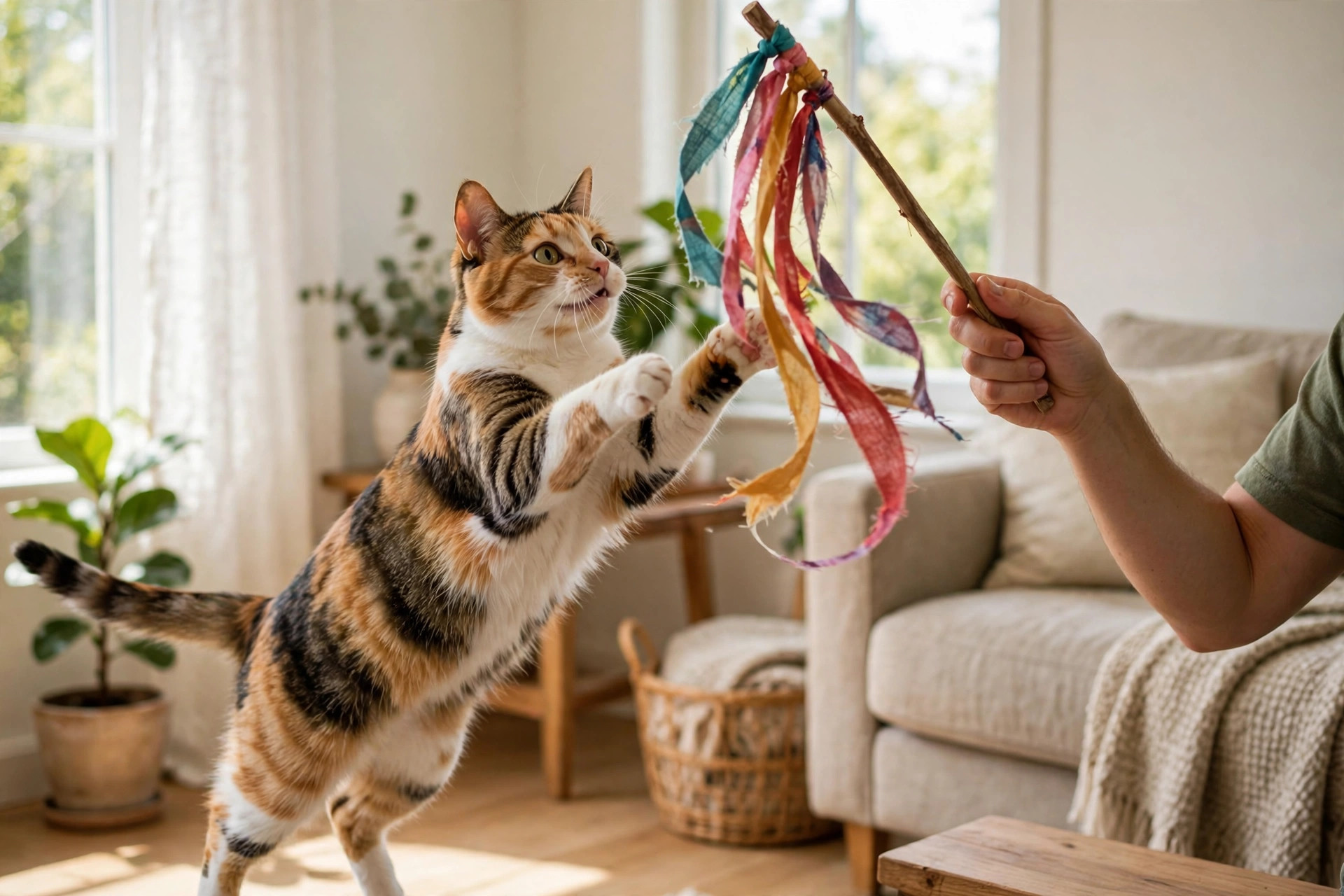
10. Fabric-Strip Wand
You need: a wooden dowel or unsharpened pencil, a short length of cotton cord, and strips of an old t-shirt. How: tie the cord to the dowel, knot 5–6 fabric strips to the other end, and drag it along the floor in quick, unpredictable zigzags. Best for: daily interactive play — and remember, this one is supervised play only.
11. Cardboard Ring Chase Toy
You need: a toilet paper roll and scissors. How: cut the tube into 4 rings, then slide two rings together so they form a rough ball shape. It rolls unpredictably and makes a satisfying sound on hard floors. Best for: cats that chase anything that moves.
12. T-Shirt Braid Tug Toy
You need: one old t-shirt and scissors. How: cut three long strips, braid them tightly, and knot both ends. Drag it slowly across the floor for your cat to stalk, or let them carry it around like a prize. Best for: cats that like to carry toys in their mouths.
Scratch, Rest, and Comfort Projects
13. Rolled Cardboard Scratcher
You need: several cardboard boxes and strong tape. How: cut the cardboard into long strips, roll them tightly into a flat spiral, tape the outside, and set it on the floor. Sprinkle a little catnip on top the first time. Best for: cats that scratch your furniture — give them a legal target.
14. Sweater Donut Bed
You need: an old sweater and a small pillow or rolled towel. How: lay the sweater flat, place the pillow in the center, fold the sleeves around it, and tuck the bottom up to form a soft donut nest. It smells like you, which cats love. Best for: senior cats and cats that sleep curled up tight.
15. Cardboard Box Castle
You need: 2–3 cardboard boxes, a craft knife, and tape. How: tape the boxes together, cut an entrance and windows in each, and add a hole in the top so your cat can pop up between levels. Best for: multi-cat homes — one cat per level, zero arguments.
Which Toy for Which Cat?
Not every toy suits every cat. Match the toy to your cat's age and personality: kittens love the crumpled paper ball, cardboard ring, and egg carton puzzle; senior cats prefer the sweater donut bed, sock kicker, and gentle wand play at a slow pace; high-energy cats need the wand, ball maze, and treat roller; shy cats do best with the paper bag hideout and box castle, where they can play on their own terms. If your cat ignores a new toy, try a pinch of catnip or a different room — location matters as much as the toy. For more ideas on keeping an indoor cat busy, see our guide to automatic cat toys for busy owners.
How to Keep Homemade Toys Fresh
Rotate toys weekly: keep 4–5 out, store the rest, then swap them so old toys feel new again. Wash fabric toys in hot water every couple of weeks and dry them completely. Replace cardboard toys monthly — sooner if damp or chewed — and refresh catnip toys with a fresh pinch every few weeks.
FAQs
Are DIY cat toys safe?
Yes, if you follow the safety rules above: no loose string unsupervised, no small detachable parts, no plastic bags or rubber bands, and non-toxic materials only. Supervise any new toy the first few times.
What household items make safe cat toys?
Plain cardboard boxes, paper bags with handles removed, toilet paper tubes, crumpled paper, clean old socks, cotton t-shirts, and towels are all safe choices under supervision.
How do I make a cat toy out of a sock?
Stuff the toe of a clean sock with fabric scraps, add a teaspoon of dried catnip in the middle, then tie the open end in a tight knot or sew it closed. Trim any loose threads before giving it to your cat.
Do cats prefer DIY toys or store-bought toys?
Most cats do not care about the price tag — they care about movement, texture, and smell. A crumpled paper ball often beats an expensive toy because it moves unpredictably and smells like home.
How often should I replace homemade cat toys?
Inspect them weekly. Replace cardboard toys about once a month, or sooner if they are damp or chewed. Retire any toy with frayed fabric, loose threads, or split seams right away.
Can kittens play with DIY cat toys?
Yes — kittens love simple toys like paper balls and cardboard rings. Just be extra careful with size: every part should be too big to swallow, and wand toys should always be supervised. Our litter box training guide is another good first-week read for new kitten owners.
Conclusion
Fifteen toys, almost zero cost, and an afternoon of fun for your cat. Start with the 5-minute toys — the paper ball, the sock kicker, and the toilet roll treat ball — and see which style your cat loves before you build the box castle. The best toy is the one your cat actually plays with, and now you can find out for free. Want to know more about your cat? Try our cat age calculator to find out your cat's age in human years, and check the ASPCA's cat care guide for expert advice on play and enrichment.
For more on feline behavior and play, see the Cornell Feline Health Center and the VCA cat behavior and training guide — and our cat cost calculator can help you budget for the fun stuff too.