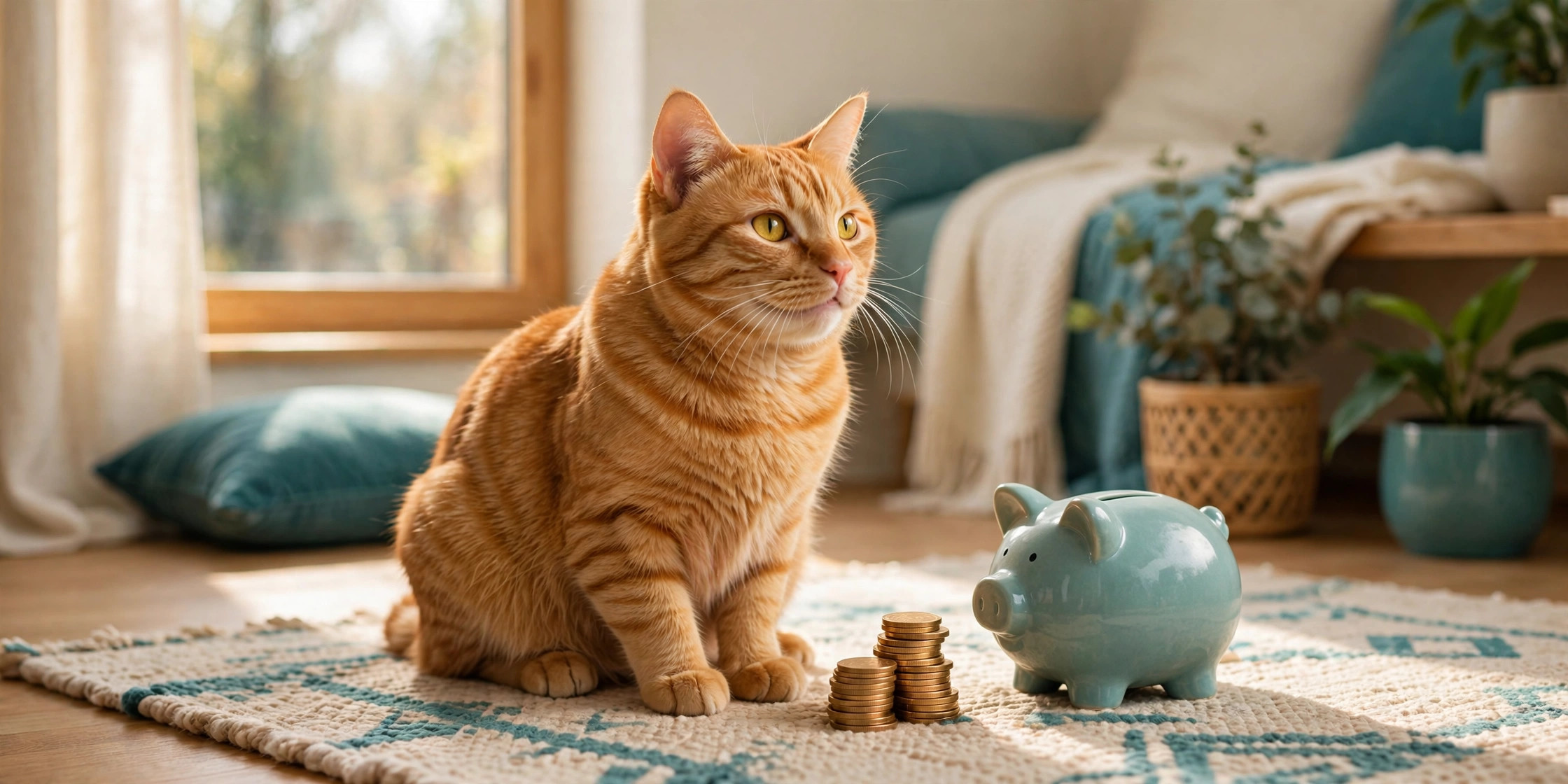
Before you bring a cat home — or budget for the one already asleep on your keyboard — you need one honest number: what does a cat actually cost per year? A healthy indoor cat typically costs $1,000–$2,450 a year in 2026. The range is wide, and where you land inside it depends on food, litter, vet care, and whether you carry insurance. This guide breaks every cost down, category by category, so you can build a budget that fits your cat and your wallet.
Quick answer: Plan on $85–$205 a month for one healthy adult indoor cat. The ASPCA's long-standing estimate puts routine care at about $634 a year before emergencies, while the APPA's 2026 survey puts average annual spending closer to $1,400–$1,900. Both are right — they just measure different baskets. The table below shows where the money actually goes.
The Annual Cost Breakdown: Every Category, Itemized
Here is a realistic 2026 budget for one healthy adult indoor cat, built from published ASPCA, APPA, NAPHIA, and Rover figures. "Low" is a budget-conscious owner buying store brands; "typical" is where most owners land; "high" covers premium food, insurance, and a dental cleaning.
| Category | Low | Typical | High |
|---|---|---|---|
| Food | $240 | $360–$600 | $900 |
| Litter | $120 | $180–$300 | $400 |
| Routine vet care | $200 | $250–$450 | $650 |
| Pet insurance | $0 | $300–$540 | $600 |
| Treats, toys & supplies | $100 | $150–$300 | $450 |
| Grooming & misc. | $30 | $60–$120 | $200 |
| Annual total | $690 | $1,300–$2,310 | $3,200 |
Two things jump out. First, food and litter are the steady monthly drain — together roughly half of a typical year's spending. Second, the single biggest variable is not food at all: it is whether your cat has one unexpected vet visit. One emergency can add $1,000–$3,000 in a single week, which is why the insurance-or-emergency-fund decision matters more than any brand choice in this guide.
Food: The Biggest Monthly Bill

What you pay depends on dry vs. wet food and on brand tier:
- Budget dry food: about $20–$30 a month ($240–$360 a year). Store brands and large bags keep the per-meal cost low.
- Mid-range mix (dry + some wet): about $30–$50 a month ($360–$600 a year). This is where most owners land.
- Premium wet food: about $60–$75 a month ($720–$900 a year). Wet food costs more per calorie, and a cat fed wet food exclusively will sit at the top of the range.
Three practical ways to keep food costs sane: buy the largest bag your cat will finish before it goes stale (usually 7–15 lb bags for one cat), measure portions with a scoop instead of free-feeding from a full bowl, and resist switching brands every month — a settled stomach wastes less food. The ASPCA's cat nutrition tips are a solid starting point if you are unsure what a balanced diet looks like for your cat's age and size.
Litter: The Hidden Recurring Cost
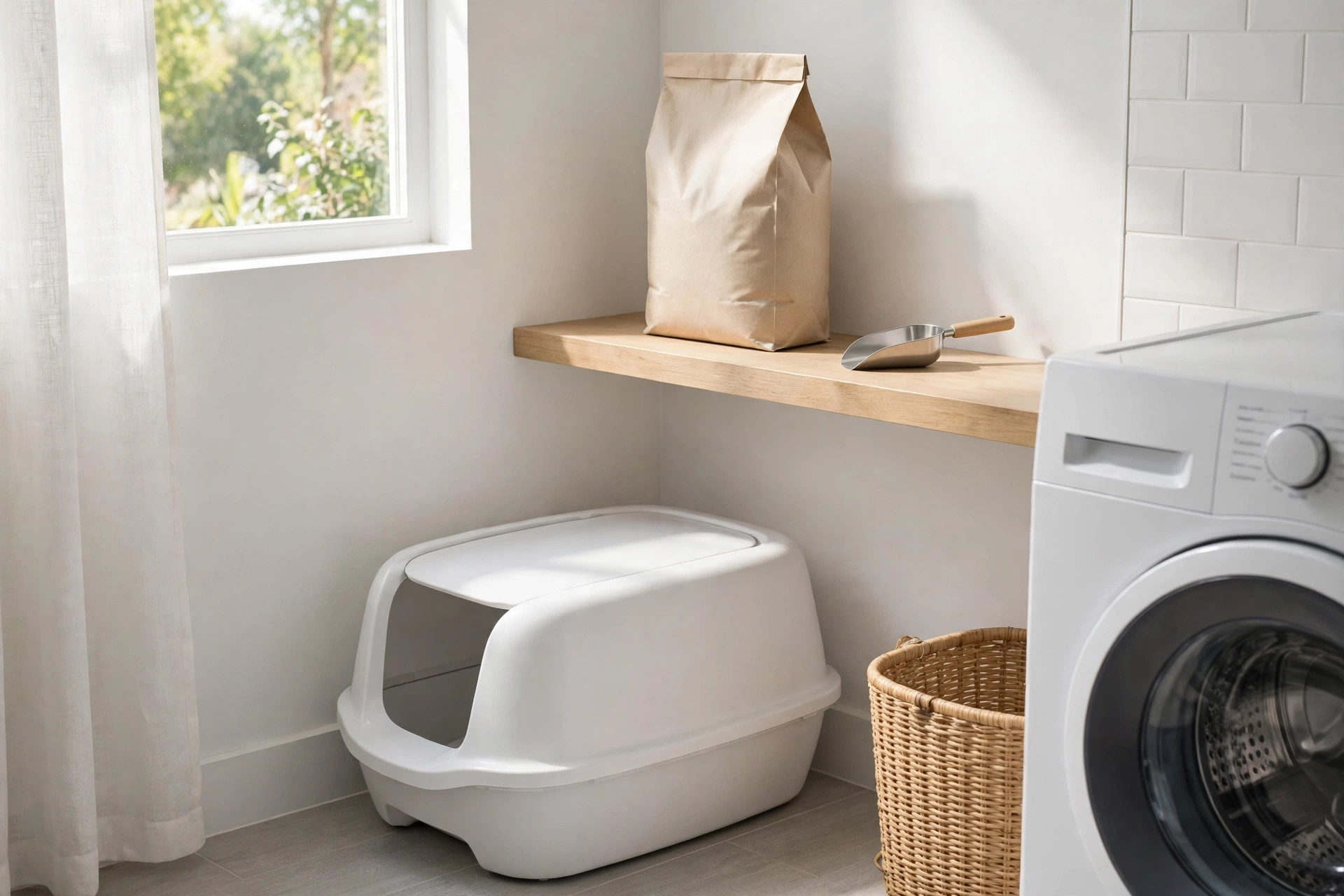
Litter adds up quietly: about $10–$25 a month, or $120–$300 a year for one cat. The type you choose moves the number more than the brand does:
- Clay clumping litter: $10–$15 a month. The cheapest per pound, but heavier to carry and dustier.
- Natural litter (pine, paper, walnut): $15–$25 a month. Lighter and lower-dust, but you go through it faster.
- Crystal/silica litter: $15–$20 a month. Lasts longer per fill, which offsets the higher bag price.
Remember the litter-box rule that also protects your budget: one box per cat, plus one extra. A two-cat home needs three boxes, and that means roughly double the litter spend — a detail that surprises first-time multi-cat owners. Scooping daily stretches each fill by days, and a litter mat under the box cuts the "litter tracked across the house" problem that makes people over-pour.
Routine Vet Care: What a Normal Year Looks Like

A healthy adult cat's routine vet year usually costs $200–$450: one annual wellness exam ($50–$100), core preventive care, and a dental check. Kittens cost more in year one because of their first series of visits, and seniors cost more because exams and bloodwork become twice-yearly. What routine care does not cover is the unexpected — a urinary blockage, a broken tooth, or an overnight stay can run $800–$3,000.
Keep the annual exam, measure food portions, and scoop daily — small habits that keep routine costs low. The Cornell Feline Health Center publishes clear guidance on what routine care should include at each life stage.
Pet Insurance vs. an Emergency Fund
NAPHIA's 2026 data puts average accident-and-illness premiums for cats at $25–$45 a month ($300–$540 a year) when enrolled young. The alternative is self-insuring: putting the same $30 a month into a dedicated savings account.
| Option | Yearly cost | Best for | Watch out for |
|---|---|---|---|
| Accident-and-illness insurance | $300–$540 | Owners who want a cap on surprise bills | Deductibles, exclusions, and premiums that rise with age |
| Emergency fund ($30/month) | $360 saved | Healthy young cats; disciplined savers | A $2,000 emergency in month three empties the fund |
| Neither | $0 | No one, honestly | One emergency can mean a $3,000+ bill with no cushion |
Our honest take: if your cat is young and healthy, either option works — but pick one and start it now. The expensive mistake is having neither.
Costs by Life Stage: Kitten, Adult, Senior
The annual number changes a lot with age. A kitten's first year is the most expensive single year of a cat's life, an adult's steady years are the cheapest, and a senior's years creep up again.
- Kitten (first year): $1,000–$2,500. Adoption fee, first vet series, spay/neuter, and all the one-time setup — carrier, scratcher, litter boxes, bowls, bed. See the full first-year kitten cost breakdown for the itemized list.
- Adult (ages 1–10): $1,000–$2,450 a year. The steady state this article is built around. Food, litter, one annual exam, and the occasional toy replacement.
- Senior (ages 11+): $1,500–$3,000+ a year. Twice-yearly exams, more frequent bloodwork, and a higher chance of a chronic condition that needs ongoing management.
Cat vs. Dog: The Annual Gap
Cats are cheaper than dogs — not slightly, but by roughly half. Our companion guide found the average cost of owning a dog per year lands around $1,600–$3,000, against roughly $1,150 at the midpoint for an indoor cat. The gap comes from three places: dogs eat more, dogs need more grooming and walking gear, and dogs' routine vet bills run higher.
7 Ways to Lower Your Cat's Yearly Cost
You do not need to buy the cheapest of everything to save real money. These seven moves cut $200–$500 a year for most owners without touching quality of care:
- Buy food and litter in bulk. Large bags and subscribe-and-save discounts typically cut 10–20% off the shelf price.
- Measure every meal. A scoop stops overfeeding, which saves food money and keeps weight — and vet bills — down.
- Scoop the box daily. Clean litter lasts longer, so you use less of it per month.
- Start the emergency fund (or insurance) while your cat is young. Premiums are lowest before age two.
- DIY the enrichment. Cardboard boxes, paper bags, and a $5 wand toy entertain most cats as well as a $30 gadget.
- Compare vet prices once a year. Exam fees vary widely by clinic; one phone call can save $20–$40 a visit.
- Keep the annual exam. Skipping it to save $60 is the most expensive "saving" in this list — small problems caught early cost a fraction of late ones.
Monthly Budget Worksheet
Copy this into your notes app and adjust it to your cat.
| Line item | Budget | Typical | Premium |
|---|---|---|---|
| Food | $20 | $35 | $65 |
| Litter | $10 | $18 | $28 |
| Vet (monthly share) | $17 | $30 | $50 |
| Insurance or emergency fund | $0 | $35 | $45 |
| Treats, toys & supplies | $8 | $18 | $35 |
| Monthly total | $55 | $136 | $223 |
| Yearly total | $660 | $1,632 | $2,676 |
One last number worth knowing: Synchrony's 2025 Pet Lifetime of Care study puts the lifetime cost of a cat over 15 years at roughly $20,000–$48,500 — up almost 20% since 2022. That is the real frame for this decision. A cat is not a $60-a-month pet; it is a $1,000–$2,450-a-year commitment for a decade and a half.
Frequently Asked Questions
How much does a cat cost per year on average?
A healthy indoor cat typically costs $1,000–$2,450 a year in 2026, or about $85–$205 a month. The ASPCA's baseline is about $634 a year before emergencies, while the APPA's 2026 survey puts average spending at $1,400–$1,900. Your exact number depends on food, litter, vet care, and insurance.
How much does a cat cost per month?
Most owners spend $85–$205 a month on one adult indoor cat: roughly $35 for food, $18 for litter, $30 for the monthly share of routine vet care, $35 for insurance or an emergency fund, and $18 for treats, toys, and supplies.
What is the most expensive part of owning a cat?
Food is the largest predictable cost, at $240–$900 a year. But the biggest variable is unexpected vet care — one emergency visit can cost $800–$3,000, which is why insurance or a dedicated emergency fund matters more than any food brand choice.
Is it cheaper to own a cat or a dog?
A cat is cheaper by roughly half. An indoor cat averages about $1,150 a year at the midpoint, while a medium dog averages $1,600–$3,000 a year — dogs eat more, need more grooming and walking gear, and run higher routine vet bills.
How much does a cat cost in the first year?
The first year typically costs $1,000–$2,500, including the adoption fee, first vet visits, spay/neuter, and one-time setup items. After year one, costs settle into the $1,000–$2,450 annual range.
Is pet insurance worth it for a cat?
For most owners, yes — or the equivalent emergency fund. Average accident-and-illness premiums run $25–$45 a month when enrolled young, and one emergency can cost $1,000–$3,000. The costly mistake is having neither insurance nor savings when something unexpected happens.
Conclusion: Budget Honestly, Then Enjoy the Cat
Owning a cat costs real money — $1,000–$2,450 a year for most indoor cats — but almost none of it is a surprise once you see the breakdown. Food and litter are the steady monthly costs, routine vet care is predictable, and the only true wild card is the emergency you hope never happens. Pick a monthly number from the worksheet above, set up insurance or an emergency fund, and the budget takes care of itself.
Want your exact number? Use our free cat cost calculator to build a personalized yearly estimate for your cat's age, food, and lifestyle — and if you are curious how old your cat is in human years, try the cat age calculator next.
By Qaisar Aqeel, CalcPet — November 2026. Cost ranges in this guide are drawn from published 2025–2026 figures from the ASPCA, APPA, NAPHIA, Rover, and Synchrony's Pet Lifetime of Care study, and will vary by location, brand, and your cat's needs.