You've seen the word "socialization" in every puppy guide. In practice it means giving your puppy a long list of calm, positive first experiences with the everyday world: people, places, sounds, surfaces, and handling.
Here is that list: a puppy socialization checklist of 100 experiences to work through week by week. Tick off a few a day, and you'll build the foundation of a confident, easygoing adult dog.
What "Socialization" Actually Means
Socialization is introducing your puppy to the sights, sounds, smells, people, and situations of normal life — in a way that feels safe and fun. The goal: your adult dog meets new things with curiosity, not fear.
It is not letting your puppy play with every dog (that's play), dragging them through overwhelming places (that's flooding), or something that ends at 12 weeks — the work continues through the first year.
Why Early Socialization Matters So Much
Puppies have a prime socialization period in the first few months of life, when their brains are especially open to forming lasting associations. Experiences in this window permanently shape adult temperament, according to the American Kennel Club's socialization guide.
The stakes are real: the American Veterinary Society of Animal Behavior notes that behavior problems — not disease — are the number one cause of death for dogs under three years old, and poor socialization is a leading cause. A puppy who never heard a vacuum or walked on a metal grate can grow into a dog who panics in everyday situations.
The good news: socialization costs nothing and takes minutes a day. You just need a plan — the checklist below.
The Ground Rules: How to Socialize the Right Way
Lock in these five rules first — they matter more than the checklist itself.
1. Keep sessions short and positive
Five calm minutes beat an overwhelming hour. One new thing, treats, a cheerful voice, end while your puppy is still happy. If they look unsure, add distance or let them watch from afar.
2. Treats do the teaching
Carry small, soft treats everywhere. New person appears? Treat. Weird sound? Treat. The lesson: new things predict good things.
3. Let your puppy set the pace
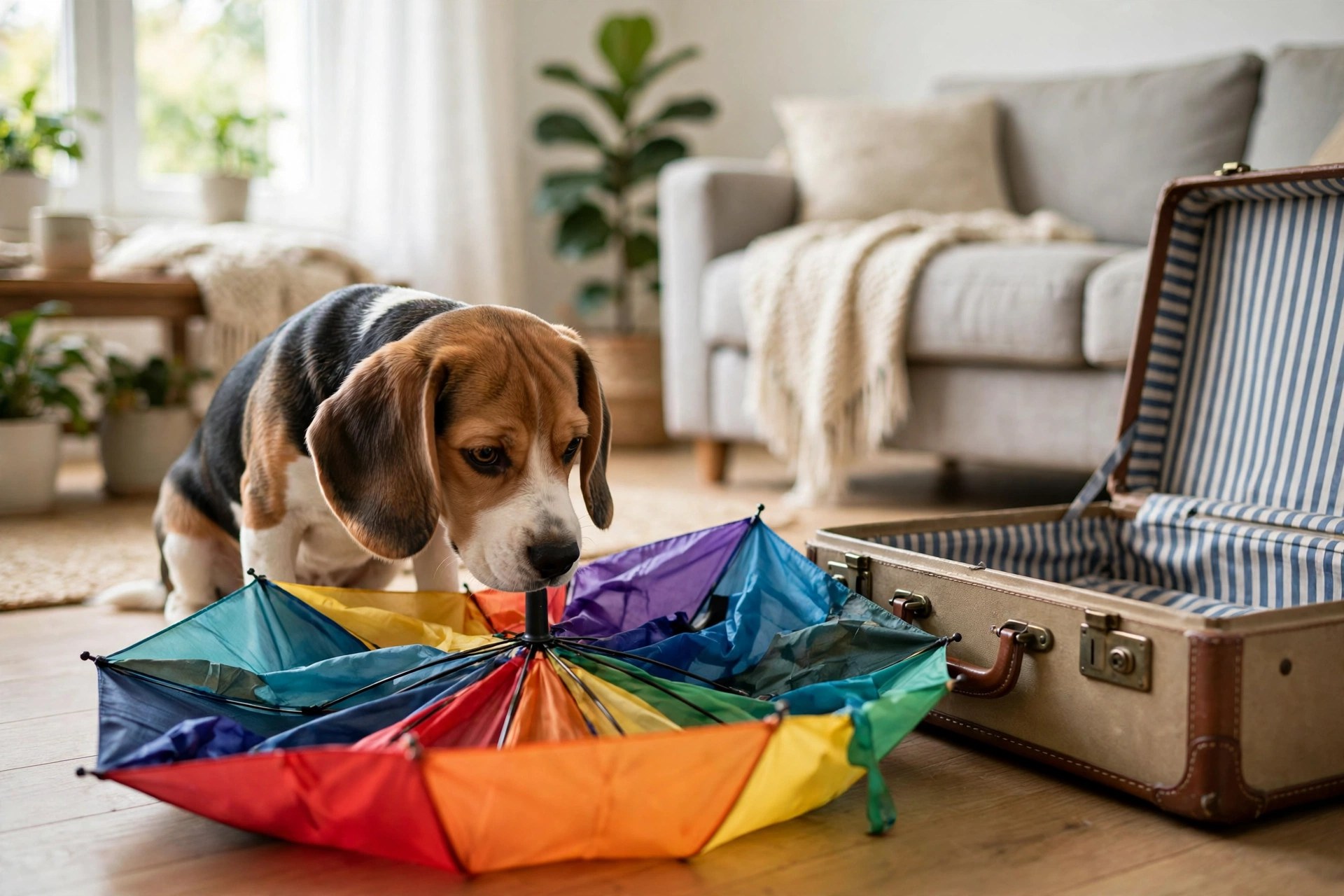
Never drag or push a frightened puppy toward something scary. Let them approach on their own terms — a puppy who chooses to sniff the umbrella learns confidence; one who is forced learns fear. Retreat is always allowed.
4. Calm exposure beats chaotic exposure
Twenty easy, controlled experiences teach more than one chaotic afternoon at a crowded festival. Aim for brief, controlled, and chosen by the puppy.
5. Include the whole family
Have different family members take part so your puppy learns new experiences can happen with anyone. Make it a game for kids: write down every new thing the puppy met today.
The 100-Experience Puppy Socialization Checklist
Here's your master list, organized into five groups of 20. You don't need to finish it in order — aim for 3 to 5 new experiences per day, repeat the easy ones, and keep a note of what you've covered. Save this page, screenshot the lists, or print them out and stick them on the fridge.
Group 1: People (20)
Dogs meet people daily, so this group matters most. Calm, treat-filled meetings with:
- Children of different ages (always supervised)
- Tall men and deep voices
- Women with animated voices
- Elderly people moving slowly
- Someone in a hat or baseball cap
- Someone in sunglasses
- Someone with a beard
- Someone in a hoodie, hood up
- Uniformed workers (delivery, postal)
- Someone using a cane or walker
- Someone in a wheelchair
- A passing jogger
- A passing cyclist
- Someone carrying big bags
- Someone holding an open umbrella
- A baby in a stroller (from a distance)
- Friends visiting your home
- An unfamiliar neighbor
- Someone laughing or speaking loudly
- Someone offering a treat from a flat hand
Group 2: Places (20)
New environments teach your puppy that novelty is normal.
- A pet-friendly store (short visit)
- The vet clinic lobby (treats only, no exam)
- A quiet neighborhood park
- A busier sidewalk
- A friend's house and yard
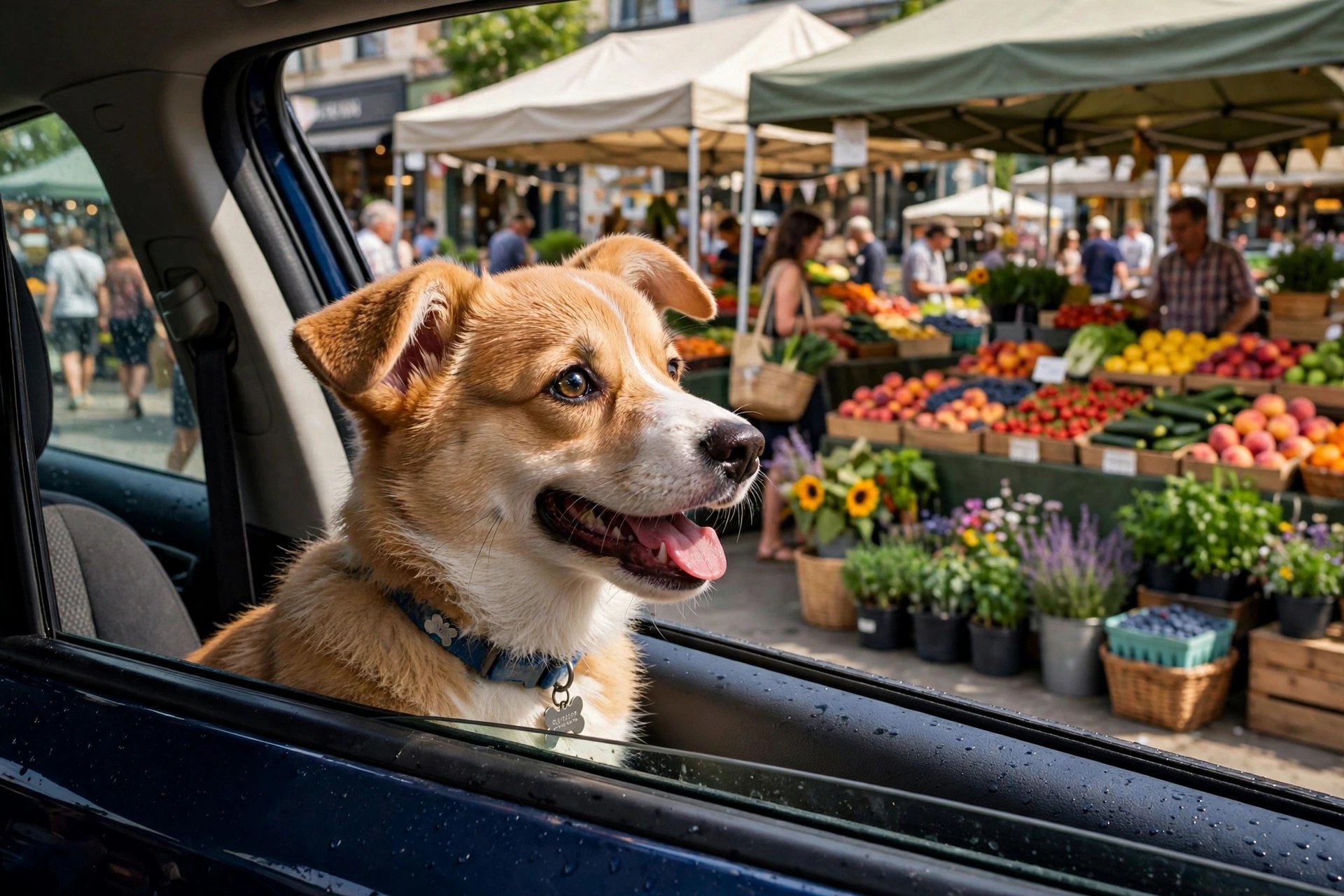
- The edge of a farmers market
- An outdoor cafe patio (settle on a mat)
- A pet-friendly hardware or garden store
- A short, calm car ride
- A parking lot
- A playground, watched from a distance
- A riverside or lakeside path
- A busy street corner (from a comfortable distance)
- An elevator ride
- A flight of stairs
- A parking garage (echoes, new surfaces)
- Outside a train or bus station
- A school area at pickup time (from a distance)
- A beach or sandy area
- A calm camping or picnic spot
Group 3: Sounds (20)
Sound sensitivity is one of the most common adult-dog fears — and one of the easiest to prevent. Play sounds at low volume first, always with treats.
- Doorbell ringing
- Vacuum cleaner (start in another room)
- Blender or food processor
- Hair dryer
- Washing machine and dryer
- Traffic noise
- A distant siren
- Thunder (recording, played quietly)
- Fireworks (recording, played quietly)
- Clapping and cheering
- A whistle
- A crying baby (recording or another room)
- Dogs barking (recording, then real dogs at a distance)
- Construction noise (from a distance)
- A door slamming
- An alarm clock beeping
- Music with bass
- A squeaky toy
- An umbrella snapping open
- A coffee grinder
Group 4: Surfaces and Objects (20)
Variety under the paws builds physical confidence.
- Dry grass
- Wet grass after rain
- Gravel or pebbles
- Sand
- Tile or linoleum
- Hardwood floors
- Carpet and rugs
- A metal grate or manhole cover
- Carpeted stairs, then wooden stairs
- A wobbly cushion
- A tarp on the ground
- Cardboard boxes to climb through
- A crinkly bag on the floor (supervised)
- Balloons (tied down, supervised)
- A stationary skateboard, then one rolling past
- A wheelchair or stroller moving past
- A bicycle (standing, then rolling)
- A mirror
- A puddle to splash through
- A low ramp or gentle hill
Group 5: Handling and Everyday Routines (20)
This group prepares your puppy for grooming, vet visits, and daily life.
- Ears gently touched and lifted
- Paws held, toes touched
- Nails clipped (one nail at a time, with treats)
- Mouth opened gently, teeth checked
- Collar put on and taken off
- Harness put on and taken off
- A short bath with lukewarm water
- Being towel-dried
- Blow dryer on low, from a distance
- Being picked up and held briefly
- Riding in a crate in the car
- Being left alone for a few minutes (build up gradually)
- Brushed with a soft brush
- Wearing a raincoat briefly
- Standing on a scale (like at the vet)
- Being examined on a raised table
- A gentle, brief hug
- A "trade" game: toy for a treat
- Feeling light leash pressure (never a yank)
- Settling on a mat while life goes on around them
Finished all 100? Repeat the tricky ones — socialization continues through the first year.
How to Use This Checklist Week by Week
- Weeks 8–10: Groups 1 and 5 — gentle people meetings and handling at home.
- Weeks 10–12: Add Groups 3 and 4 — sounds at low volume, new surfaces at home.
- Weeks 12–16: Add Group 2 — stores, parks, car rides, busier places, at your puppy's pace.
- 4–12 months: Keep refreshing. Revisit the tricky ones.
Tick items off as you go. Ones that got a freeze go back on the list for a calmer retry.
6 Signs You're Going Too Fast
Socialization should feel like a game. Slow down, add distance, or stop for the day if you see:
- Freezing in place — overwhelmed, not "being good."
- Tucking the tail or crouching low — classic stress signals.
- Hiding behind your legs or trying to bolt — they want out.
- Refusing treats — a food-loving puppy who won't eat is over threshold.
- Excessive panting, yawning, or lip-licking when it's not hot — "I'm uncomfortable."
- Shutting down — flat, unresponsive, "giving up." End the session immediately and give quiet time.
These don't mean socialization has failed — just that this experience was too much, too soon. Smaller step, more distance, more treats, another day. For persistent fear, the ASPCA's guide to common dog behavior issues is a good starting point, and a certified trainer can build a tailored plan.
5 Mistakes New Puppy Owners Make
1. Waiting to start
You don't need dog parks. Carry your puppy through pet-friendly stores, invite friends over, play sound recordings at home, and explore new surfaces in your yard. Safe exposure starts day one.
2. Only socializing with people
Sounds, surfaces, places, and handling matter just as much as people.
3. Flooding instead of introducing
One chaotic hour at a street festival teaches fear. Short, calm, puppy-chosen experiences build confidence.
4. Stopping at 12 weeks
Socialization is a first-year project — many dogs get spookier at 6–10 months without continued exposure.
5. Forgetting the boring stuff
Nail trims, ear checks, baths, vet-style handling — the Group 5 items pay off for 12+ years. Practice weekly.
Frequently Asked Questions
When should I start socializing my puppy?
Day one. Gentle handling, low-volume sounds, new surfaces, and calm visitors can all start in week one. Carry your puppy in public places where unknown dogs go, and let them walk in safe, clean areas.
How many new experiences per day?
Aim for 3 to 5 short, positive new experiences daily rather than one big outing. Twenty easy experiences beat one overwhelming one.
What if my puppy is scared of something?
Don't force it. Add distance until they relax, offer treats, let them watch from afar, and retry a smaller version another day. Never punish fear.
Do I need puppy classes?
You can cover most of this list yourself, but a good class adds supervised puppy play and a trainer who spots problems early. The VCA's new puppy guide covers what to expect.
Is it too late at 5 or 6 months?
No — just slower. Same principles apply: short sessions, treats, their own pace, no flooding. Steady work pays off at any age.
Is socialization the same as play dates?
Not quite. Play dates teach dog-to-dog manners, but true socialization is broader: calm exposure to the whole world. A puppy with 50 play dates but no experience of traffic noise, umbrellas, or vet-style handling is only partly socialized.
Start Today
A well-socialized puppy becomes a dog you can take anywhere without stress. Your roadmap: 100 small, positive experiences, a few minutes at a time. Pick three items and do the first one today.
Want another fun way to understand your dog better? Try the CalcPet dog age calculator to find out how old your puppy really is in human years — and if you're still choosing your companion, take our lifestyle quiz to find the dog breed that matches you. Stocking up for training? Our puppy training supplies checklist keeps it budget-friendly.