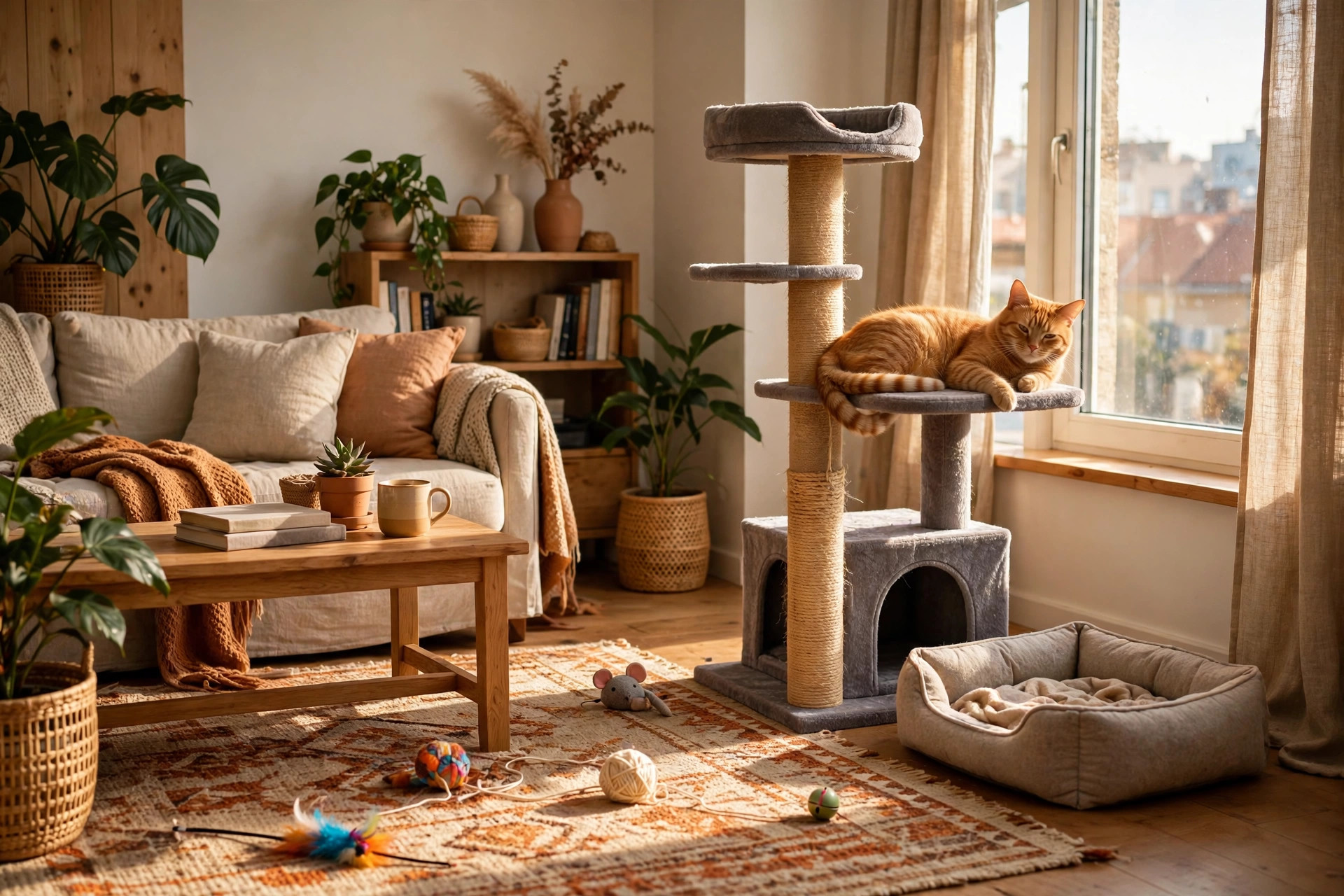
Bringing a cat home to an apartment is exciting — and a little nerve-wracking. Unlike a house, an apartment gives your new cat one compact space to explore, one set of neighbours to keep happy, and usually no garden to escape into. The good news: cats are brilliant apartment pets, as long as the essentials are ready before adoption day. This checklist covers everything you need to buy, set up and check, so your cat's first days feel calm instead of chaotic.
Work through it in order: first the apartment checks, then the shopping list, then the safe-room setup. By the end you will have a home that is ready, not just hopeful.
Before Adoption Day: 4 Apartment Checks First
Shopping is the fun part, but these four checks come first. Sorting them now prevents awkward conversations with your landlord later.
1. Read your lease's pet clause
Check whether cats are allowed, whether there is a breed or size restriction, and whether you need written permission. If the clause is vague, get permission in writing — a short email confirmation from your landlord is enough. Keep a copy with your adoption paperwork.
2. Budget for the pet deposit and fees
Many rentals charge a refundable pet deposit, a one-off pet fee, or a small monthly pet rent. Ask for the exact figures before you sign an adoption agreement, so the cost does not surprise you. Our guide to pet deposits and pet rent explains the typical ranges.
3. Check windows and balconies
Make sure every window has a secure screen and that balcony doors latch properly. Cats love window-watching, and a sturdy screen turns a window into safe entertainment. If your balcony is open, treat it as off-limits until you can supervise — or keep the door closed.
4. Warn your neighbours (nicely)
A quick heads-up to next-door neighbours — "we're adopting a cat this week" — buys a lot of goodwill if your cat meows on the first night. Most new cats settle within a few days, and neighbours who were warned rarely complain.
The First Apartment Cat Checklist: 25 Must-Haves
Here is the full list, grouped so you can shop it in one trip. Tick each item off as it arrives, and keep everything in one corner until setup day.
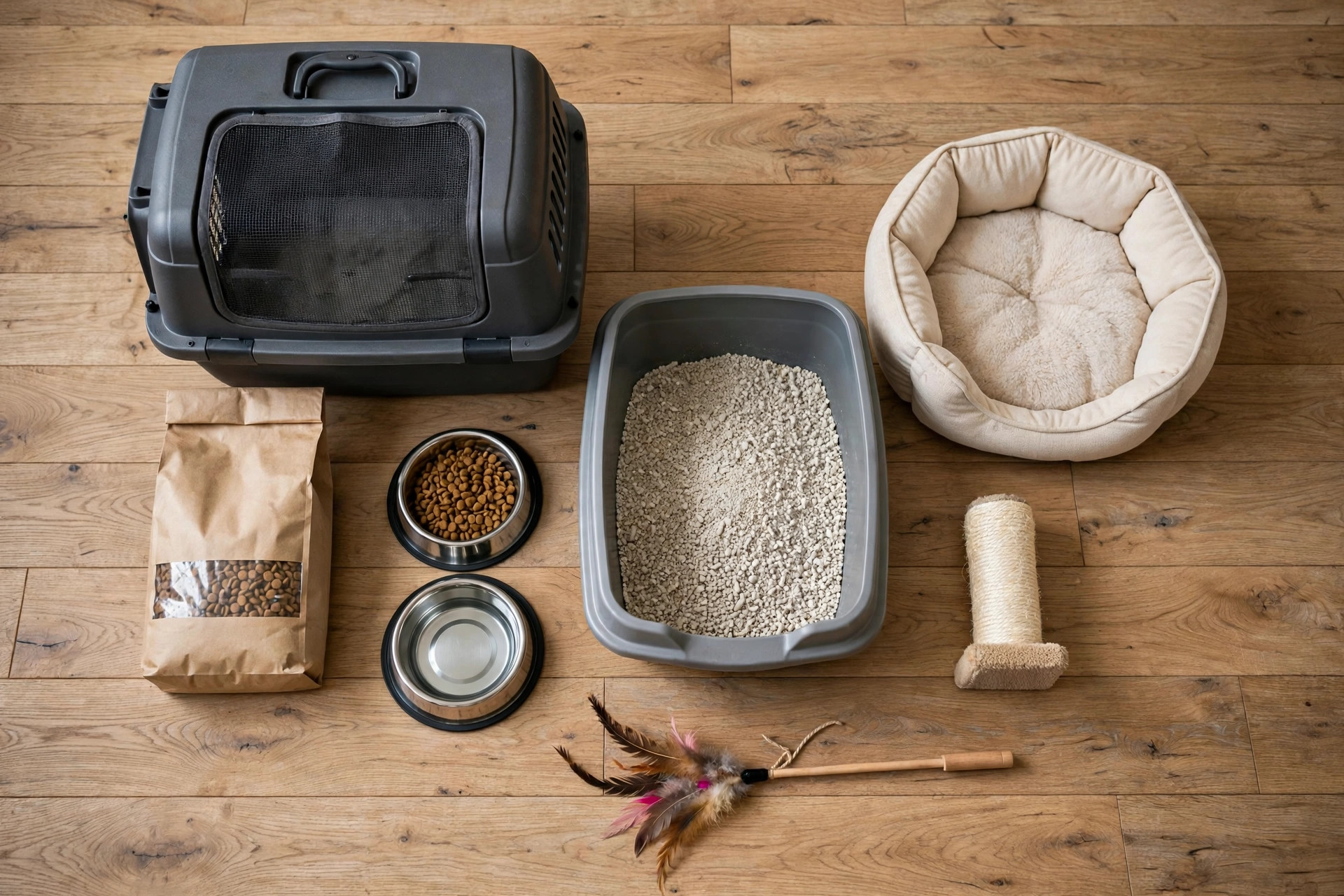
Essentials (buy these first)
- ☐ Cat carrier — a hard-sided carrier with a secure latch; leave it out at home so it becomes furniture, not a scary box.
- ☐ Litter box — one large, uncovered box is the best starting point for most cats; the rule of thumb is one box per cat, plus one extra if you have space.
- ☐ Cat litter — an unscented, clumping litter is the safest first choice; you can experiment later once your cat is settled.
- ☐ Litter scoop and a small bin — scooping daily keeps smells down, which matters a lot in a small space.
- ☐ Food bowl and water bowl — ceramic or stainless steel, wide enough that whiskers do not touch the sides.
- ☐ Cat food — ask the shelter or breeder what your cat currently eats, and buy a small bag of the same food to start with.
- ☐ Treats — small, soft treats for rewarding brave behaviour and carrier training.
Comfort and rest
- ☐ Cat bed — a washable bed with raised edges, placed somewhere quiet and warm.
- ☐ Blanket or towel — one that smells like home; drape it over the carrier or bed on day one.
- ☐ Cardboard box with a doorway cut in — the cheapest hideaway, and often the one cats love most.
- ☐ Window perch or a sturdy stool by a window — apartment cats spend hours watching the world go by.
Play and enrichment
- ☐ Scratching post — tall and sturdy enough for a full stretch; place it near where your cat sleeps.
- ☐ Cardboard scratcher — flat scratchers suit cats that prefer scratching horizontally.
- ☐ Feather wand toy — the single best toy for bonding and burning off evening energy.
- ☐ A few small toys — crinkle balls, a catnip mouse and a spring toy; rotate them so they stay interesting.
- ☐ Cat tree or wall shelves — vertical space is gold in an apartment; even one tall tree doubles your cat's territory.
Safety and admin
- ☐ Breakaway collar with an ID tag — engraved with your phone number, in case your cat slips out the door.
- ☐ Grooming brush — a soft brush suited to your cat's coat length; short, calm sessions build trust.
- ☐ Nail clippers — or a scratching board that does the job naturally; ask your vet to demonstrate at the first visit.
- ☐ Pet-safe cleaning supplies — an enzymatic cleaner for accidents, plus a lint roller (you will use it daily).
- ☐ Cord covers or cable tidies — for phone chargers and lamp cords at cat-chewing height.
- ☐ Adoption paperwork folder — adoption agreement, landlord permission, and your vet's contact details in one place.
- ☐ A vet picked in advance — choose a nearby clinic and save its number before adoption day.
- ☐ Carrier training treats stash — keep a small jar by the carrier for daily treat drops.
- ☐ A simple daily routine written down — feeding times, play sessions and litter scooping, so everyone in the household is consistent.
That is 25 items. You do not need the fanciest version of any of them — a plain litter box and a cardboard box beat an expensive gadget your cat ignores.
Set Up the Safe Room in 6 Steps
Cats settle fastest when they start in one small room — a bedroom or bathroom — and expand from there. Here is how to set it up:
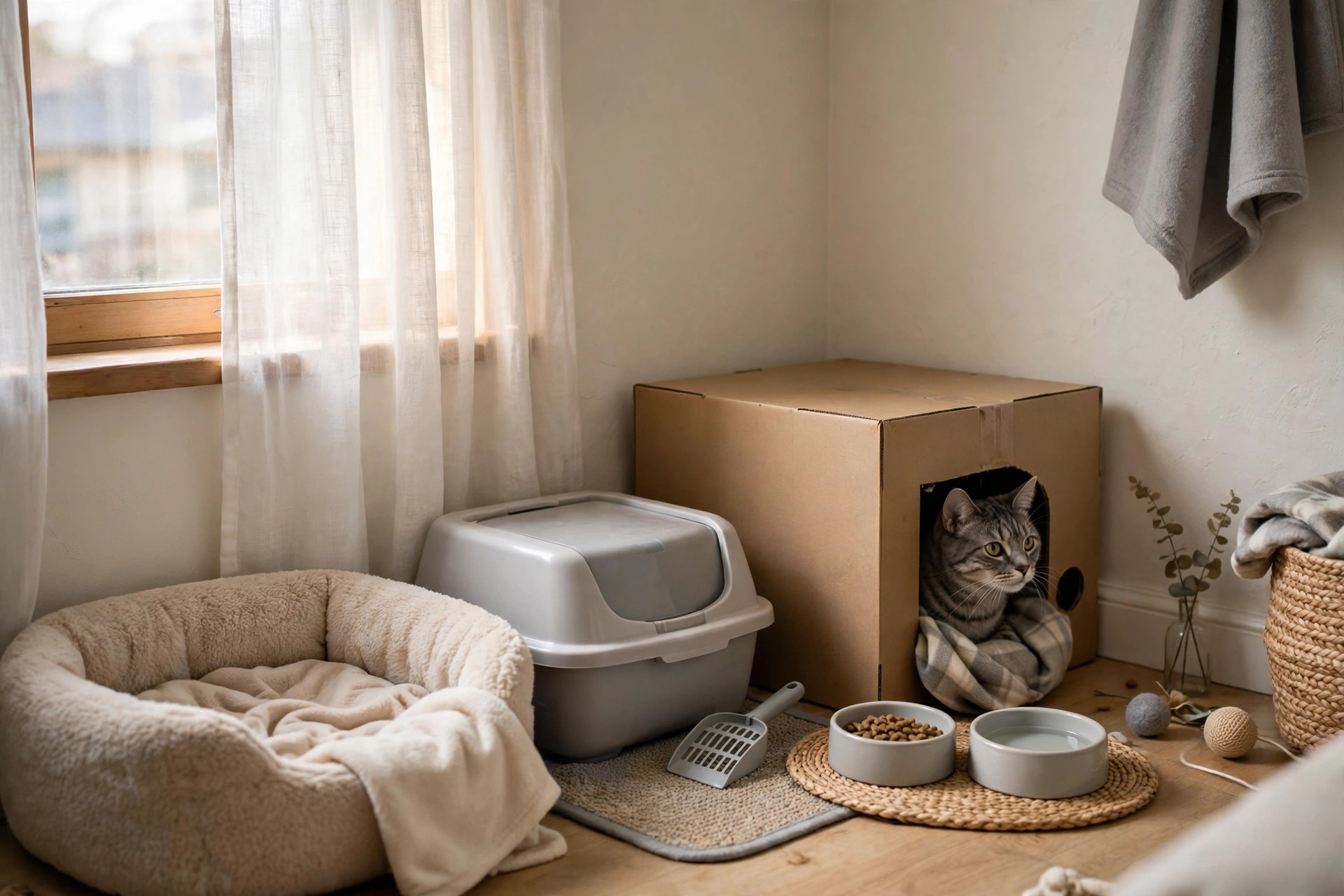
- Pick the quietest room. Somewhere away from the front door and noisy appliances, with a door that closes.
- Put the litter box as far from food and water as the room allows. Cats prefer their toilet well away from their dining area.
- Add a hiding spot and a bed. The cardboard box goes in a corner; the bed goes somewhere warm and slightly raised if possible.
- Set up food, water and a scratcher. Keep water away from food bowls — many cats drink more when water sits in a separate spot.
- Leave the carrier open in the room. With a soft blanket inside, it becomes a second hiding spot rather than a trap.
- Close the room and leave it calm. Dim lighting, no loud music, and a door that stays shut for the first day or two.
Let your cat explore this room first. When they are eating, using the litter box and moving around confidently — usually after a few days — open the door and let them explore the rest of the apartment at their own pace. For a deeper day-by-day plan, see our new kitten first-week survival guide and our room-by-room cat-proofing guide.
Your First-Week Routine
Cats love routine, and a predictable week makes a new apartment feel like home fast.
Days 1–2: Quiet and close
Keep your cat in the safe room. Sit in the room reading or working, speak softly, and let your cat approach you. Feed at the same times each day, scoop the litter box daily, and play for a few minutes with the feather wand before bed.
Days 3–4: Slow expansion
Open the safe-room door for a few hours while you are home. Let your cat explore one new room at a time, with the safe room always available as a retreat. Keep the carrier and litter box locations unchanged — moving them now causes confusion.
Days 5–7: Real life begins
By now most cats have a favourite perch, a favourite toy and a routine. Start the habits you want long-term: a play session before bed to burn off energy, a quick brush a few times a week, and a consistent feeding schedule. If your cat hides a lot, that is normal — patience beats coaxing every time.

Small-Space Tips That Make Apartment Life Easier
Go vertical. Shelves, a tall cat tree and the top of a wardrobe give your cat territory without taking floor space.
Play before bed. Ten minutes of active play in the evening, followed by a small meal, helps many cats sleep through the night instead of racing around at 3am.
Manage litter smells. Scoop daily, use a lidded bin, and keep the box in a ventilated spot. In a small apartment, this one habit makes the biggest difference to your own comfort.
Rotate toys weekly. Put half the toys away and swap them each Sunday. Old toys become new again, and you spend nothing.
Give them a job. Puzzle feeders and treat-dispensing toys turn mealtimes into entertainment — especially valuable for indoor-only cats.
5 Mistakes New Apartment Cat Owners Make
1. Giving them the whole apartment on day one. Too much space too fast is the top cause of hiding and litter-box misses. Start small.
2. Moving the litter box around. Pick a spot and keep it there for at least the first month.
3. Buying everything expensive first. Cats choose their favourites unpredictably. Start basic, then upgrade what they actually use.
4. Skipping play. Indoor cats need daily play for exercise and confidence. A bored cat finds its own entertainment — usually your curtains.
5. Punishing accidents. If your cat misses the litter box, stay calm, clean it with an enzymatic cleaner, and check whether the box location, litter type or cleaning routine needs changing.
Frequently Asked Questions
How much does it cost to prepare an apartment for a cat?
Most owners spend the equivalent of a modest weekly shop on the basics: carrier, litter box, litter, bowls, food, a scratcher and a few toys. You can keep costs down by starting with plain, sturdy versions and adding extras only once you know what your cat likes.
Is one room really enough for a cat's first days?
Yes — in fact, one room is ideal. Cats feel safer in a small, predictable space with everything they need close by. Most cats are ready to explore the rest of the apartment within a few days, and the safe room stays available as a retreat afterwards.
Do apartment cats need a balcony or outdoor access?
No. Indoor cats live happily in apartments with window perches, vertical space and daily play. If you have a balcony, only allow access when it is fully secured and you can supervise.
How many litter boxes does an apartment cat need?
Start with one large box, and add a second if you have space — the general guideline is one box per cat, plus one extra. In a small apartment, one well-maintained box in a quiet spot works well for a single cat.
When should I book the first vet visit?
Book it before adoption day if you can, for sometime in the first week. Having the clinic picked and the appointment made means one less thing to organise while your cat is settling in.
Can I prepare everything in one day?
Yes. The shopping list fits in one trip, and the safe room takes under an hour to set up. The only thing worth doing early is the landlord check — get that permission in writing before you fall in love at the shelter.
Ready When Adoption Day Arrives?
Run through the checklist one last time the night before: lease permission confirmed, safe room set up, food and litter in place, carrier open with a soft blanket inside. Then relax — you have done the hard part, and the fun part starts tomorrow.
Once your cat is home, try the CalcPet cat age calculator to see your new companion's age in human years — a fun first fact to share with friends and family. And for more practical help, browse the rest of the CalcPet blog for cost guides, checklists and name ideas. Further reading from trusted authorities: the ASPCA's tips for a new cat and the Cornell Feline Health Center's health information pages.