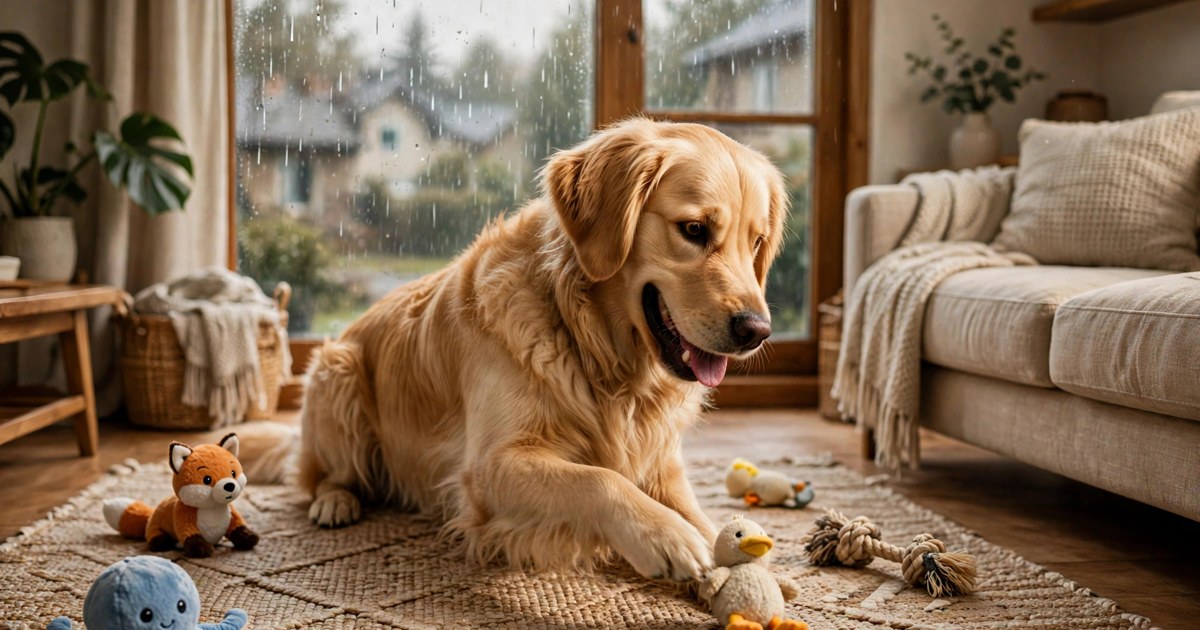
Rain hammering the windows, a bored dog staring at you, and a whole afternoon still to fill. A rainy day does not have to mean a dull day. Dogs love a job to do, a puzzle to solve, and a game that ends with praise and a treat, and almost all of that can happen in your living room, hallway, or kitchen.
This guide gives you 20 fun indoor games for dogs, grouped by type so you can pick what suits your dog, your space, and your energy level today. Most games use cups, boxes, towels, and toys you already own. Keep sessions short and stop while your dog is still enjoying it. A happy ending beats a long session every time.
Before You Start: The Rainy-Day Play Rules
Clear a safe space first: move anything breakable and shut doors to rooms you do not want your dog charging into. Keep sessions to about 5 to 15 minutes, and always supervise games involving cardboard, plastic bottles, or small parts. If your dog looks frustrated, make the game easier at once. End every session with something your dog already does well, followed by praise.
Scent Games: Let the Nose Do the Work
A dog's nose is their superpower, and scent games are the easiest way to tire a dog out indoors without needing much space. Start easy and make hiding spots harder only when your dog is succeeding most of the time.
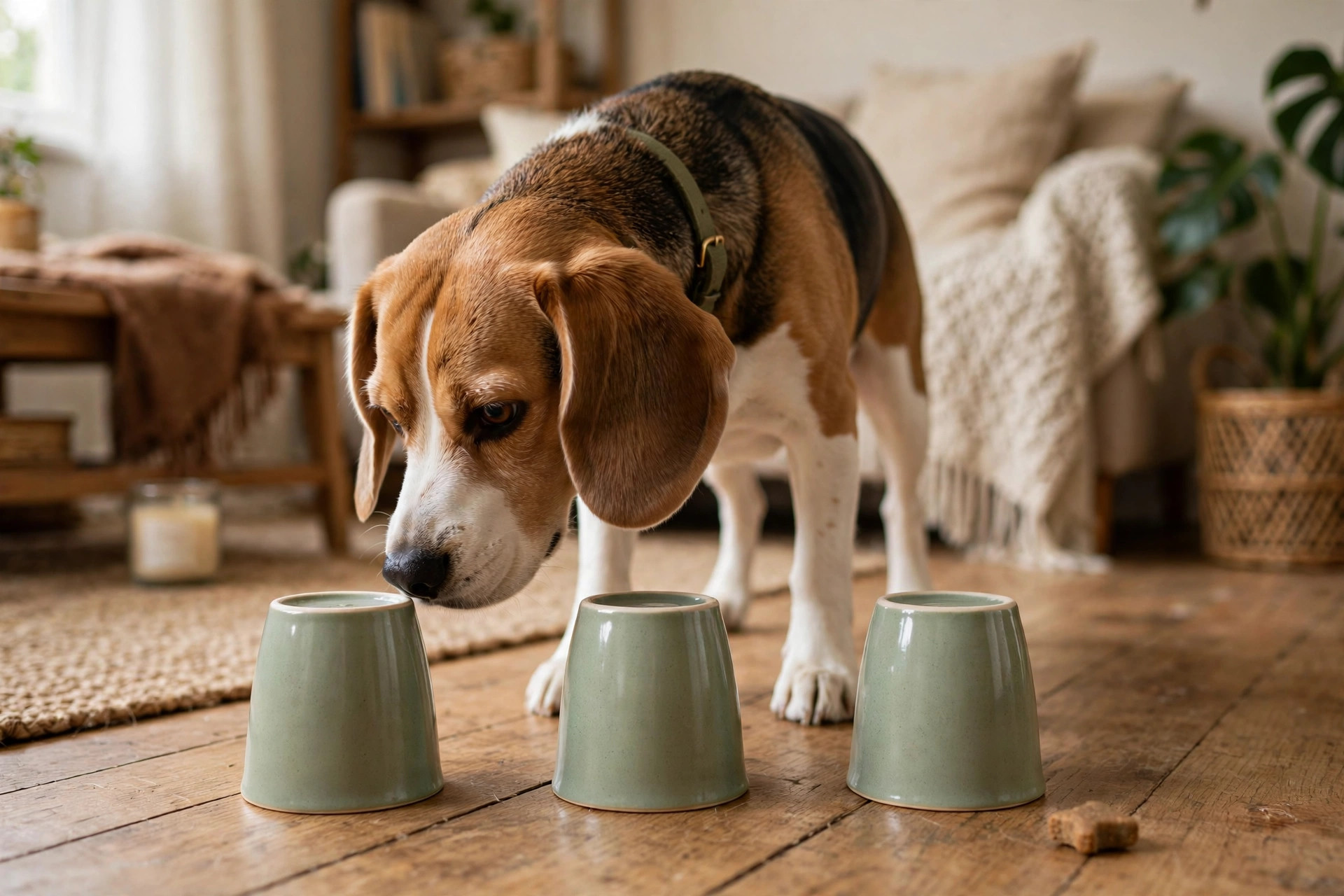
1. The Cup Game
Place a treat under one of three cups while your dog watches, then ask them to find it. Start with one cup, then two, then three, and slide the cups around first once they are getting it right.
2. Treasure Hunt Boxes
Put a few empty cardboard boxes on the floor, some upright and some on their sides. Hide a treat in one box, let your dog search, and change the winning box every round.
3. Towel Roll-Up
Spread an old towel flat, scatter a few treats across it, and roll it up loosely. Let your dog unroll it with nose and paws to find the treats, rolling it tighter as they get better.
4. Hot and Cold
Hide a treat or a favourite toy while your dog is in another room. Guide them with your voice: a calm tone when they move away from the hiding spot, and a bright, excited tone when they get closer.
5. Which Hand?
Hold a treat in one closed hand and offer both fists to your dog. When they nose or paw the correct hand, open it and reward them. It is perfect for tiny spaces or a quick game while dinner cooks.
6. Muffin Tin Puzzle
Put a treat in a few cups of a muffin tin and cover each cup with a tennis ball. Your dog lifts the balls to reach the treats. Supervise closely and take the balls away when the game is over.
Active Games: Burn Off Energy Indoors
When your dog is bouncing off the walls, a calm puzzle will not cut it. These games use movement but are designed for indoor space, so keep throws low and soft and watch out for slippery floors.
7. Hallway Fetch and Roll
A hallway is a perfect indoor fetch lane because the walls keep the toy in play. Roll a soft toy along the floor, keep the distance short, and ask for a drop before the next throw.
8. Hide-and-Seek With You
Ask your dog to wait in one room while you hide in another, somewhere easy at first, like behind a door or a curtain. Then call them, and celebrate when they find you. Pick harder hiding spots over time.
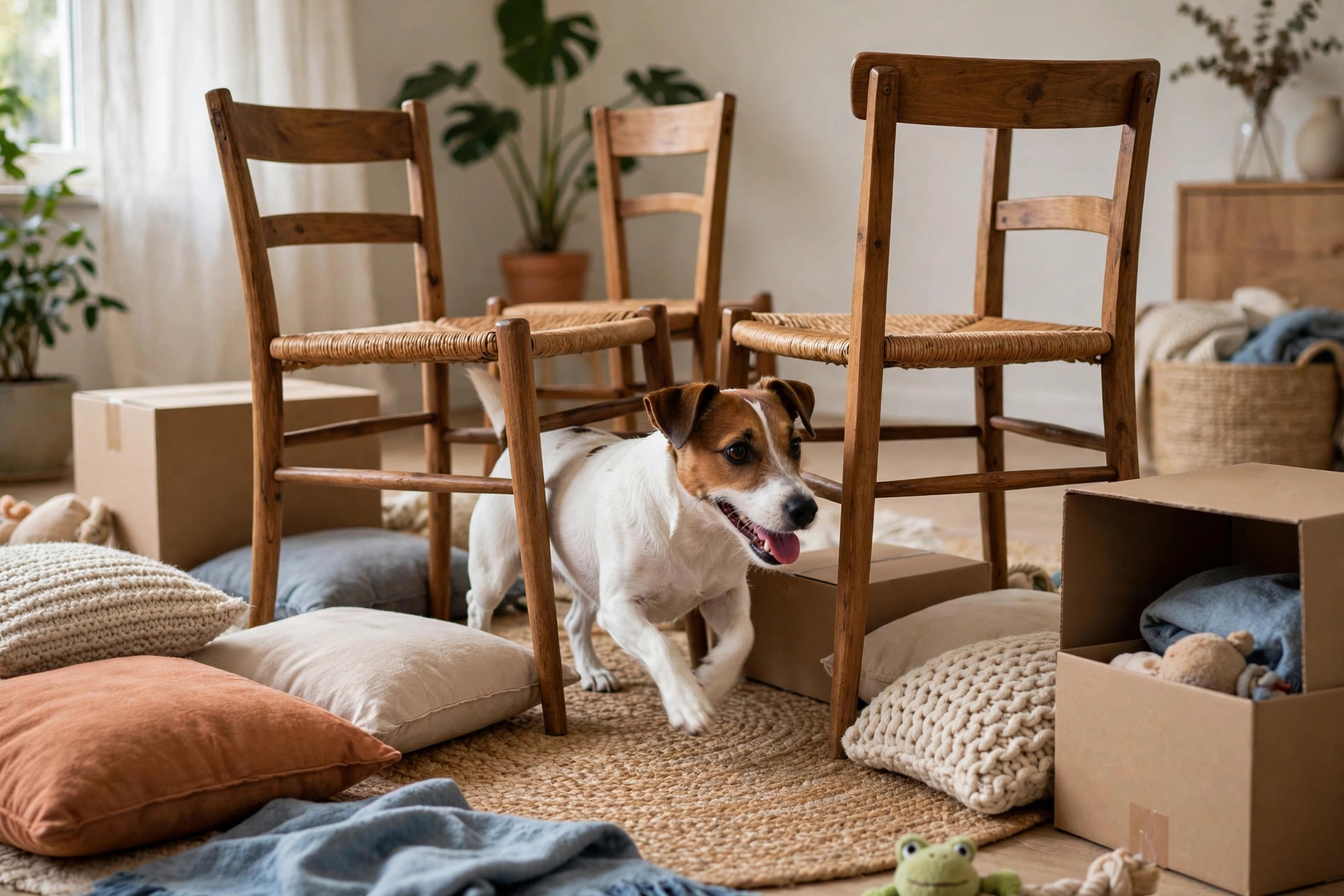
9. Living Room Obstacle Course
Build a simple course from things you already own: chairs to weave between, a blanket tunnel made from a sheet over two chairs, cushions to step over, and a cardboard box tunnel. Guide your dog through slowly first, then let them try it faster.
10. Tug With Rules
Tug is a great indoor energy burner when it has clear rules: the game starts when you offer the toy, pauses when you ask for a drop, and restarts only when your dog waits calmly. Keep tugs short and the toy low.
11. Follow the Leader Weave
Set out a row of chairs or cushions and walk a weaving path through them with your dog at your side. Change your pace, slow, then a little faster, so your dog has to pay attention to you.
12. Bubble Chase
Many dogs love chasing bubbles, and it is a good indoor game on a washable floor. Use only bubbles made for dogs, blow them low, and keep sessions short. Skip it if your dog tries to eat the bubbles.
Training Games: Skills Disguised as Fun
Short training games are some of the best rainy-day activities because they build focus and confidence. Keep each round to a few minutes, reward generously, and teach only one new thing at a time.
13. Trick of the Day
Pick one small trick and practise it for five minutes: a spin, a paw shake, a touch of your hand with their nose, or going to a mat on cue. Break it into tiny steps and reward each step.
14. Name Your Toys
Teach your dog the name of one toy at a time. Say the name, reward them for touching or picking up that toy, and repeat. Once they know two or three names, place the toys in a row and ask for one by name.
15. The Settle Mat Game
Place a mat on the floor and reward your dog for stepping onto it, then sitting on it, then lying down and relaxing on it. A dog who can settle on a mat is easier to live with at cafes, at friends' houses, and during busy family evenings.
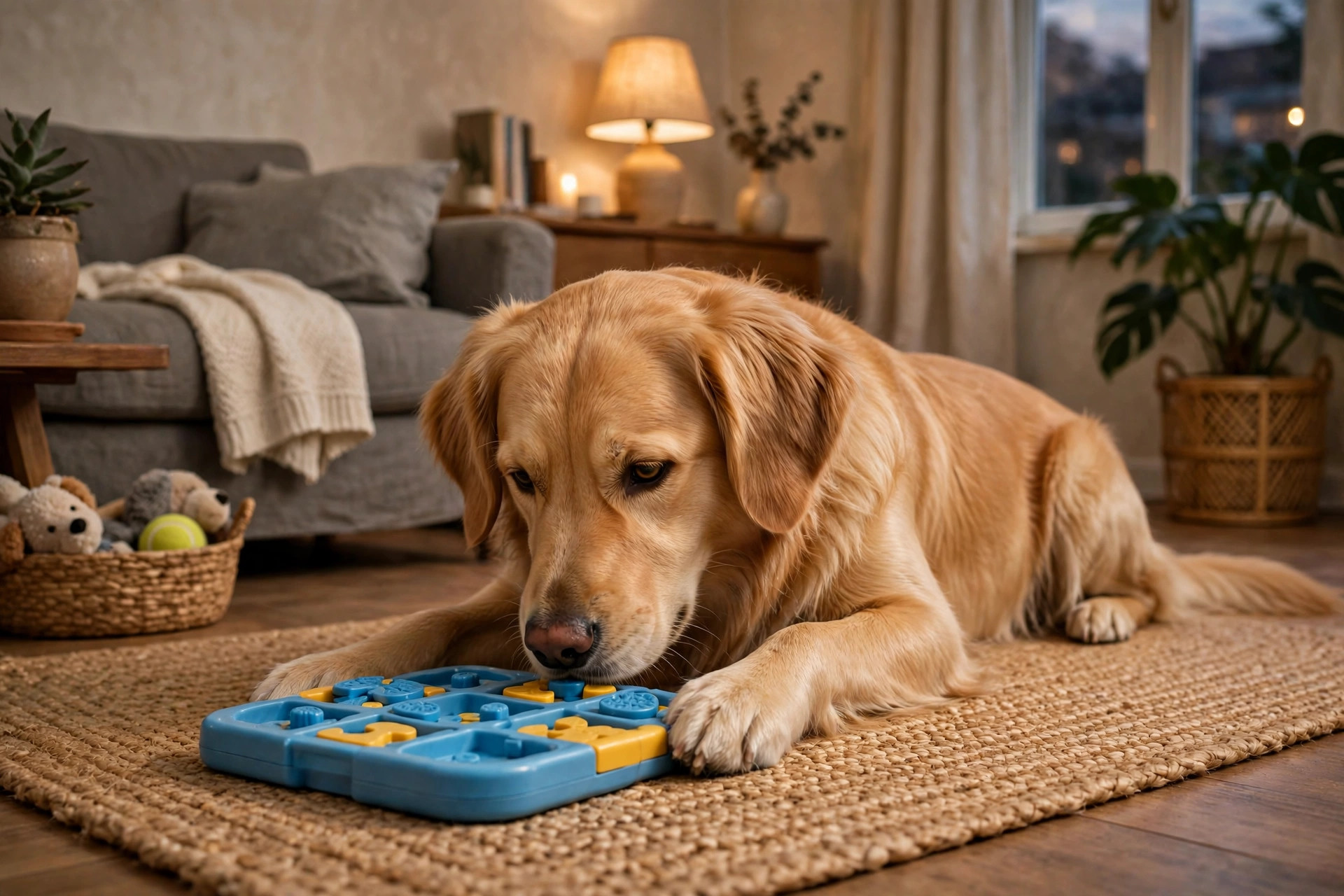
16. Puzzle Feeder Dinner
Serve one meal in a puzzle feeder, a snuffle mat, or a slow-feeder bowl instead of a regular bowl. Your dog works for dinner, turning an ordinary meal into ten minutes of entertainment. Start with an easy puzzle and move to harder ones only when your dog finishes happily.
DIY Puzzles: Household Items, Big Payoff
These games use things headed for recycling anyway. Always supervise DIY puzzles, remove loose pieces as your dog works, and throw the puzzle away once it is torn apart.
17. Bottle Spin Puzzle
Thread a clean, dry plastic bottle onto a sturdy rod balanced between two chairs, low to the ground. Put a few treats inside. Your dog spins the bottle with nose or paw to tip the treats out. Stay nearby so the bottle never becomes something to chew.
18. Cardboard Box Surprise
Put treats inside a small cardboard box, close the flaps loosely, and let your dog open it. Next time, nest a smaller box inside a bigger one, or add crumpled paper around the treats. Play it on an easy-to-clean floor.
19. Blanket Find-It
Hide a treat under a folded blanket or cushion while your dog watches, then ask them to find it. Make it harder by folding the blanket over the treat twice, or hiding treats under two different cushions.
20. Two-Toy Swap
Play with one toy until your dog is engaged, then offer a second toy and trade. When your dog drops the first toy for the second, praise and play with the new toy. This teaches your dog that giving something up leads to something just as good.
Sample Rainy-Day Schedule
You do not need to play all 20 games in one day. Try Treasure Hunt Boxes in the morning, Hallway Fetch and the Obstacle Course at midday, Trick of the Day and Name Your Toys in the afternoon, and Blanket Find-It plus Puzzle Feeder Dinner in the evening. Rotate the games each rainy day.
What If Your Dog Loses Interest?
Losing interest usually means the game is too hard, too easy, or too long. Make the hiding spot obvious again, use a higher-value treat, or cut the session to two minutes and try again later. Some dogs prefer scent games, others prefer chasing and tugging. Follow that preference.
Frequently Asked Questions
How long should an indoor play session last?
Most dogs do best with sessions of 5 to 15 minutes, several times a day, rather than one long session. When your dog starts making mistakes or wanders off, the session has done its job.
Do I need to buy special toys for indoor games?
No. Cups, boxes, towels, muffin tins, and toys you already own cover almost every game here. Puzzle feeders and snuffle mats are useful but optional. Start with what you have.
Can puppies and older dogs play these games?
Yes, with the difficulty adjusted. Keep games very short and very easy for young puppies, and choose gentle games like Blanket Find-It and the Cup Game for older dogs. Let your dog set the pace.
What should I do if my dog gets too excited during active games?
Pause, ask for a simple behaviour your dog knows well, like a sit, and wait for calm before restarting. If excitement keeps spilling over, switch to a scent game or a calm puzzle.
How do I stop rainy days from getting boring?
Rotate your games, change the rooms you play in, and make one small change each time: a new hiding spot, a different toy, or a harder version of a game your dog already knows.
Are DIY puzzle games safe?
They are safe when supervised. Remove small or torn pieces as your dog works, never leave your dog alone with cardboard or plastic bottles, and throw the puzzle away when it falls apart.
Conclusion: Rainy Days Can Be the Best Days
A rainy day is not a lost day. With a few cups, boxes, and toys, you can give your dog scent work, active play, training, and calm puzzles, all without leaving the house. Start with the games that match your dog today, keep sessions short, and end on a success. Your dog will not remember the rain. They will remember that you played.
Want to know more about your dog, including how their age compares in human years? Try the dog age calculator and see where your rainy-day playmate sits in their life story. You can also test your match with the quiz that matches a dog breed to your lifestyle, stock up with the puppy training supplies checklist, or start from the CalcPet homepage to explore all our pet tools.
For more ideas from trusted sources, see the American Kennel Club's fun indoor games to play with your dog, their brain games for dogs, and their rainy-day memory game.