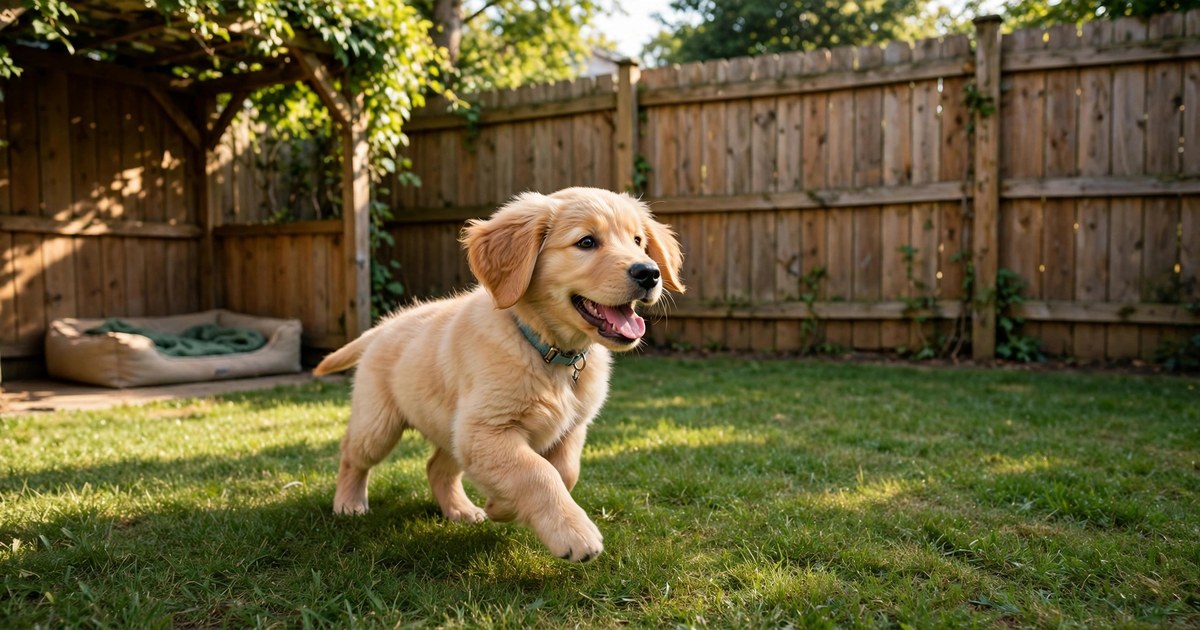
Your puppy will spend a surprising amount of time in the yard — first potty breaks at dawn, midday play, evening zoomies. The problem is that most yards look safe from the porch and only reveal their gaps and escape routes at puppy height. A puppy can squeeze through a fence gap you would never notice, or slip into a pool in the seconds you turn away.
This 15-point checklist fixes that. Work through it in order, the same way you would walk the yard with your puppy, and you will have a space that is safe on day one — not after the first escape. Set aside about an hour and check each item off as you go.
Before You Start: The 10-Minute Yard Walk
Before you touch a single fence board, do one slow lap of your yard at puppy height. Crouch down every few steps and look at it the way a curious eight-week-old puppy sees it: low gaps, dangling cords, loose stones, anything that can be chewed, climbed, or squeezed through.
Mark every spot that needs work. Most puppy-proofing jobs are small — a board here, a latch there — but only if you find them before your puppy does. Do this walk before bring-home day, then repeat it monthly.
The 15-Point Puppy-Proofing Checklist
Here is the full checklist, grouped so you can work through it in one pass: the boundary first, then hazards, then comfort, then the daily setup.
1. Walk the entire fence line, board by board
Start at one corner and walk the whole perimeter slowly, pushing on every board and post. Look for loose boards, rotted wood at ground level, and gaps under the fence — a gap of just a few inches is enough for a small breed puppy.
2. Close the gaps at ground level
Where the fence meets the ground, fill gaps with bricks, landscape stones, or buried wire mesh. A puppy that finds soft soil under the fence will keep returning to it, so bury a strip of mesh a few inches deep along the base to stop the digging before it becomes an escape.
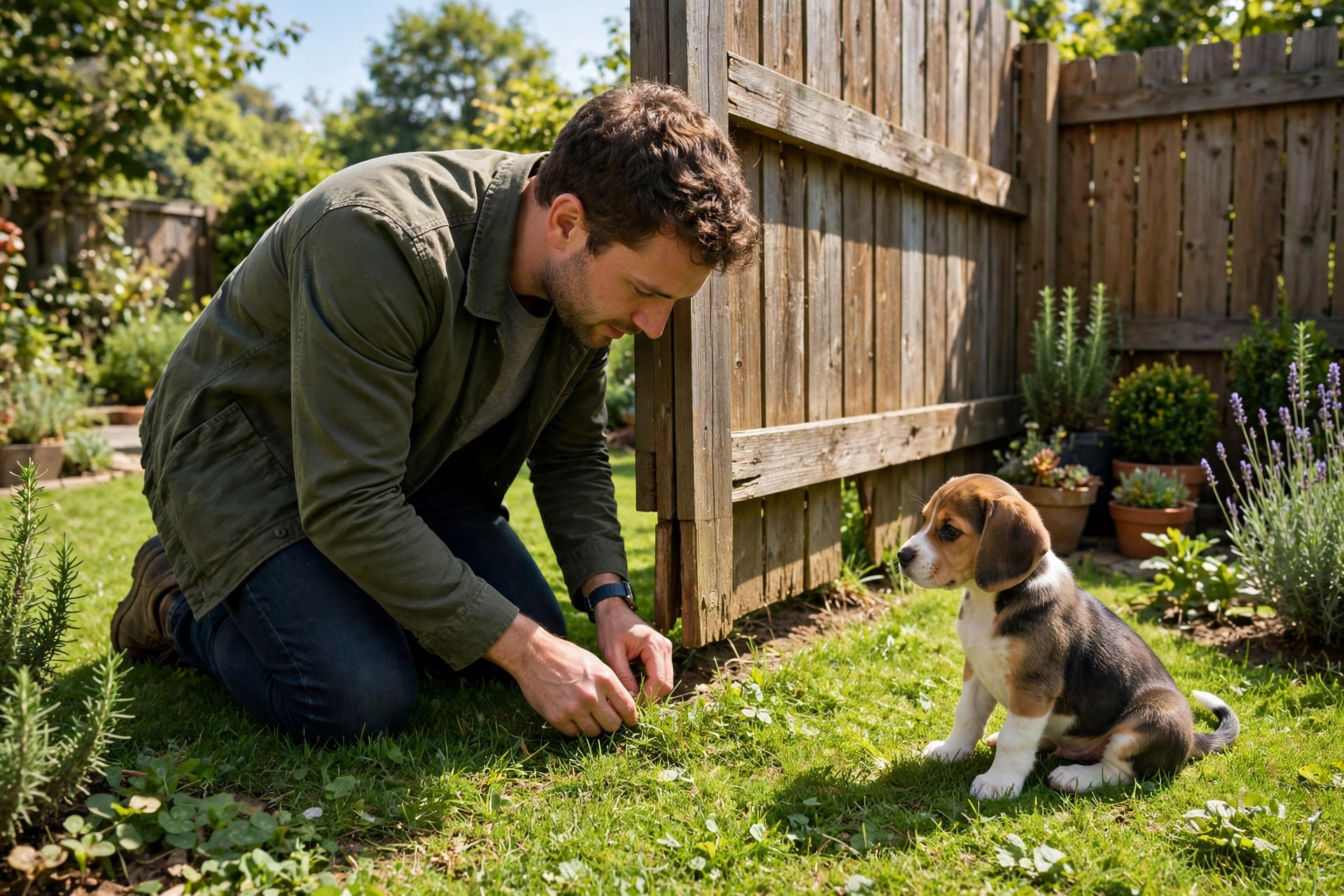
3. Check fence height against your puppy's breed
A fence of at least 4 feet suits most small and medium breeds, while athletic or large breeds need 5 to 6 feet. If your puppy is a jumper or a climber, add height or a lean-in top section first. The AKC's puppy-proofing guide makes the same point: the fence must be high enough that your puppy cannot jump over it, with no holes to crawl through.
4. Test every gate, latch, and hinge
Open and close every gate. Does the latch click shut every time, or does it need a lift or a push? Replace rusty latches and add a self-closing spring hinge if the gate is ever left open by visitors or delivery drivers — a gate that swings shut on its own is the cheapest insurance you will ever buy. Check the gap under the gate too.
5. Block the climb-and-jump launch pads
Move anything your puppy can climb on away from the fence: stacked firewood, compost bins, patio furniture, and large planters — a chair left against the fence is a staircase over it. Keep a clear strip of about three feet along the inside of the fence.
6. Lock away garden tools, chemicals, and supplies
Move every garden chemical, fertilizer bag, and sharp tool into a locked shed or onto a high shelf. That includes the half-used bag of fertilizer by the garage, the rat poison in the shed, and the antifreeze bottle on the floor. Store everything up high or behind a latched door, and wipe up any spill immediately.
7. Check the plants — and the mulch
Walk your beds and borders and identify what is growing there. Some common garden plants are unsafe for dogs, so check anything you cannot identify against the ASPCA's toxic and non-toxic plant list before your puppy arrives — and use plain wood or pine mulch instead of cocoa-shell mulch, which is a known risk.
8. Fence off pools, ponds, and water features
Any open water is a hazard for a young puppy, which may not be able to climb out. Fence off pools, ponds, and large water features, keep the pool gate latched, and never leave a puppy unsupervised near open water — even a paddling pool should be emptied after use.
9. Give your puppy real shade
Puppies overheat faster than adult dogs, so make sure the yard has at least one genuinely shaded spot at midday — a tree, a canopy, or a covered patio corner. Shade that exists at 9 a.m. may be gone by noon, so check it at the hottest part of the day.
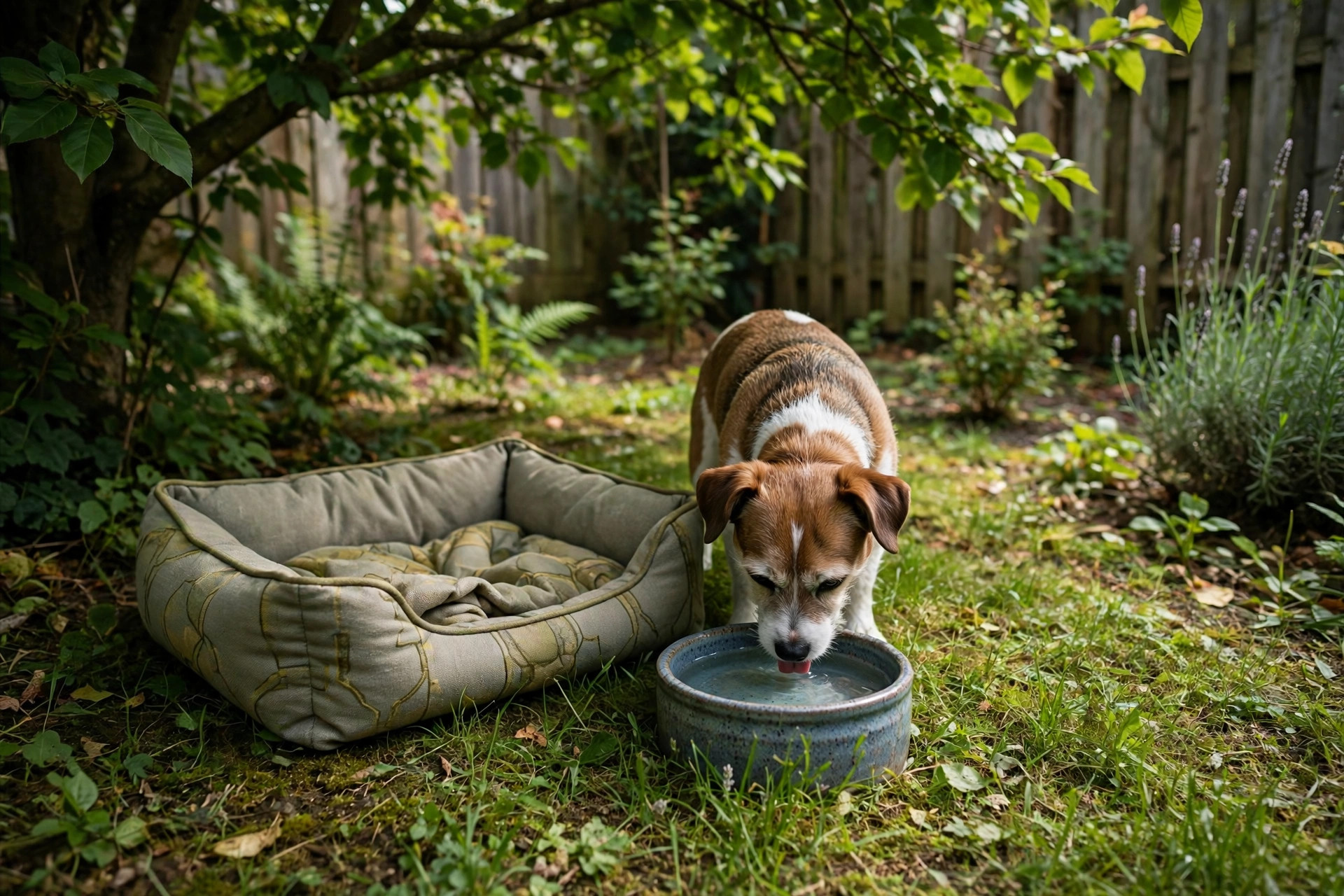
10. Set up a fresh-water station
Place a heavy, tip-proof water bowl in the shaded spot and refill it every time your puppy goes out — a light bowl gets knocked over in minutes. In warm weather, drop in a few ice cubes to keep it cool.
11. Choose puppy-safe ground cover
Check what your puppy will actually be walking and lying on. Sharp gravel, broken paving, and rough concrete can cut soft paws, and freshly treated lawns should be off-limits until the product label says the area is safe again. Natural lawn, smooth pavers, and pet-safe mulch are the friendliest surfaces.
12. Pick a potty spot and stick to it
Choose one corner of the yard as the potty spot — easy to reach from the back door and easy to clean. Take your puppy to the same spot every time: a consistent spot speeds up housetraining. Keep a scoop and bags by the door so cleanup takes seconds.
13. Build a dig zone (and save the rest of the garden)
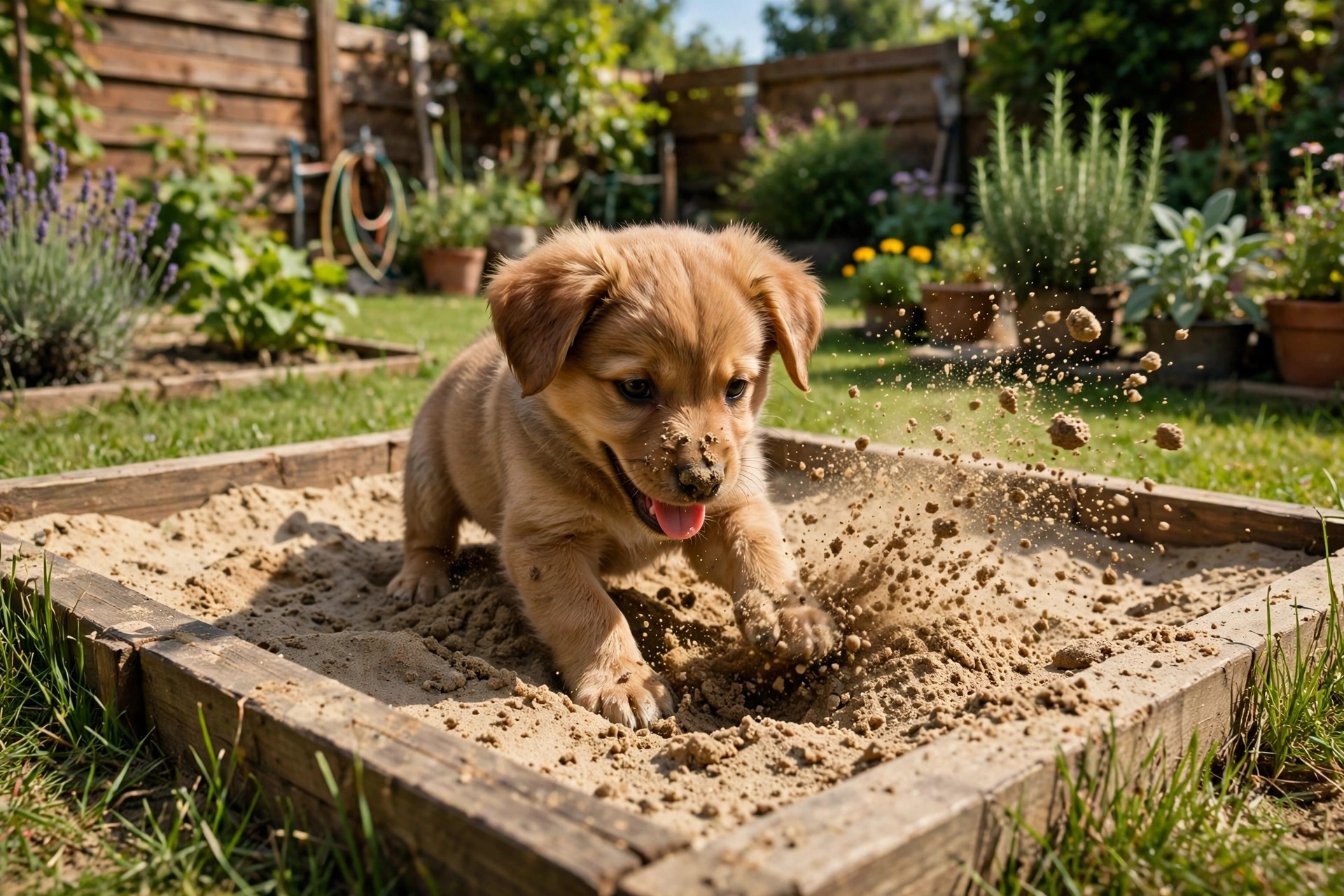
Most puppies dig. Instead of fighting it, give digging a legal home: a shallow sandbox or a framed patch of soft soil in a corner of the yard. Bury a toy or two in it on the first day so your puppy learns where digging is allowed.
14. Remove the small stuff a puppy can swallow
Do a final sweep for small hazards: loose stones, acorns, fallen fruit, bottle caps, bits of wire, and anything smaller than a golf ball. A yard that looks clean from standing height can hide a dozen chewable objects at ground level.
15. Set the supervision rule — and stick to it
Young puppies should not be left outside alone, even in a fully proofed yard. Decide the rule before bring-home day: puppy goes out with a person, every time, until you know your puppy's habits and your yard's weak points.
5 Mistakes New Puppy Owners Make in the Yard
1. Proofing once and never re-checking. Fences shift after rain, boards rot, and puppies grow — a yard that was safe at eight weeks may have a new escape route at sixteen weeks. Re-walk the fence line monthly.
2. Trusting a latch that "usually" works. A latch that works nine times out of ten fails on the tenth — usually when a visitor leaves the gate ajar. Replace it now; it costs less than a lost puppy.
3. Forgetting the compost pile. Compost is one of the most overlooked yard hazards. Mouldy food in an open heap can make a puppy seriously ill, so keep the pile fenced or covered and your puppy away from it.
4. Treating the lawn and letting the puppy straight back out. After any lawn treatment, keep your puppy off the grass until the product label says it is safe.
5. No shade, no water, no plan for heat. A sunny yard with no shade and a light bowl that tips over is a heat risk, not a play space. Shade and water are part of the proofing, not extras.
Quick-Reference Checklist: Print This
Run through this list the morning your puppy comes home, then once a month after that:
- Fence line walked, loose boards and gaps fixed
- Ground-level gaps filled or mesh buried
- Fence height suits the breed
- Every gate latches and self-closes
- Climbable objects moved away from the fence
- Tools and chemicals locked away
- Plants and mulch checked against the ASPCA list
- Pools and ponds fenced off
- Real shade available at midday
- Heavy water bowl filled in the shade
- Ground cover safe for paws, no fresh lawn treatments
- Potty spot chosen and used consistently
- Dig zone built and introduced
- Small swallowable objects picked up
- Puppy supervised outdoors, every time
Frequently Asked Questions
When should I puppy-proof my yard?
Before your puppy's first day home — ideally the weekend before, since some fixes take a day or two to arrange.
How high should a fence be for a puppy?
At least 4 feet for most small and medium breeds, 5 to 6 feet for large or athletic breeds. Height matters less than the gaps: most puppy escapes happen through holes under or between boards, not over the top.
Can I let my puppy in the yard unsupervised?
Not while your puppy is young. Supervise every outdoor session until your puppy is reliably trained and you know the yard's weak points.
What should I do about a puppy that digs under the fence?
First, block the spot with buried wire mesh or large stones. Then give your puppy a legal dig zone — a sandbox or framed soil patch — and reward digging there. Most fence-digging fades once the puppy has an approved outlet.
Is artificial turf safe for puppies?
Good-quality artificial turf with proper drainage can work well for puppies. Choose a pet-specific turf, rinse it regularly, and check that it does not get too hot in direct sun.
How often should I re-check the yard?
Do the full 15-point walk once a month and a quick fence-and-gate check weekly. Re-check after heavy rain or wind, when boards loosen and new gaps appear, and after each growth spurt.
Conclusion
Puppy-proofing your yard is not a weekend project you finish once — it is a habit. Walk the fence line, lock away the hazards, give your puppy shade, water, a potty spot, and a place to dig, and supervise every outdoor session while your puppy is young. Do the walk before bring-home day and repeat it monthly.
Once the yard is ready, the next step is the inside of your home. Our dog-proofing checklist for a new puppy covers the house room by room, and our puppy socialization checklist gives you 100 experiences to try in those first important weeks. And to find out how old your puppy really is in human years, try the dog age calculator — it takes ten seconds.
More puppy help: moving with pets checklist · CalcPet home