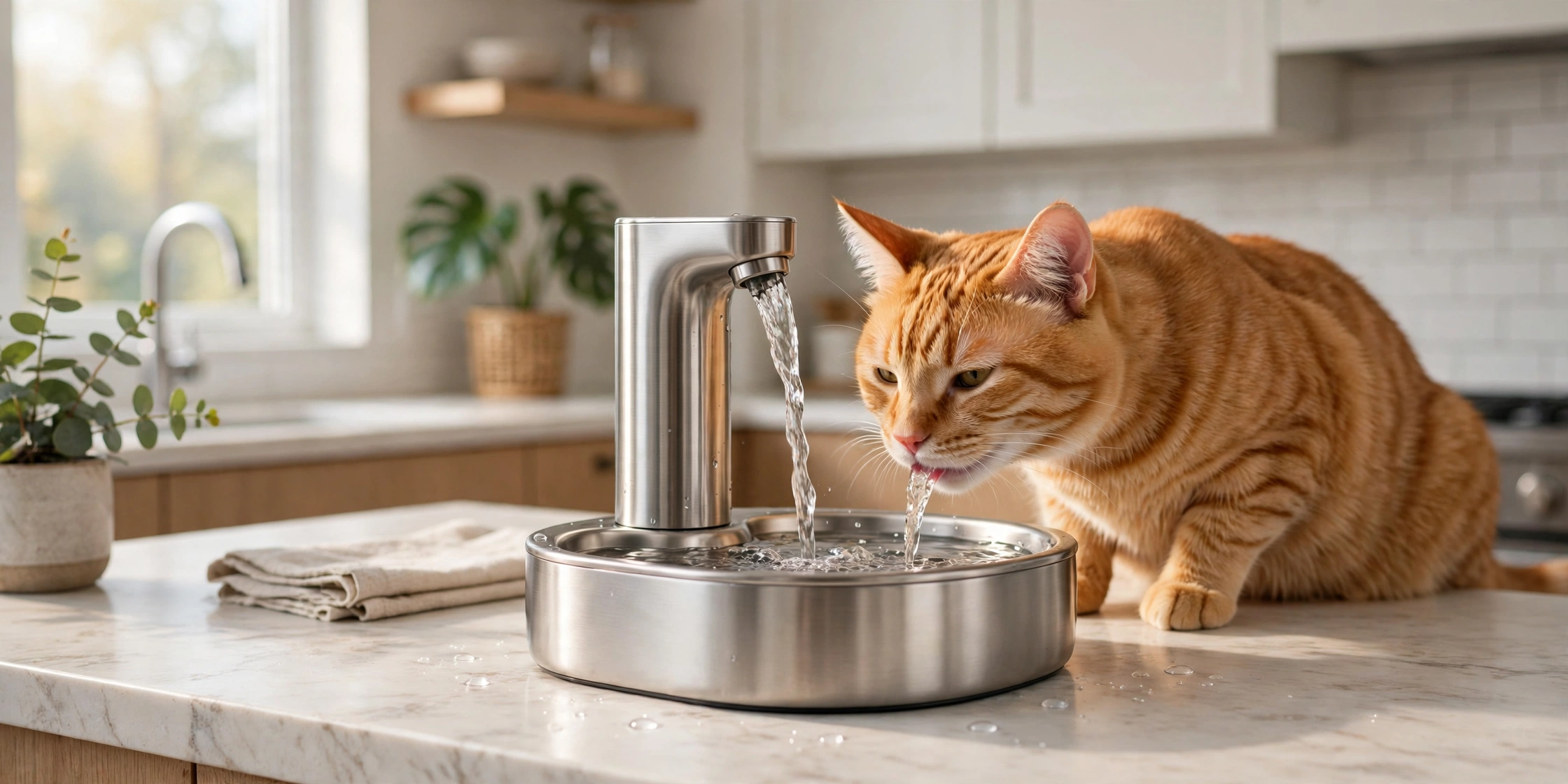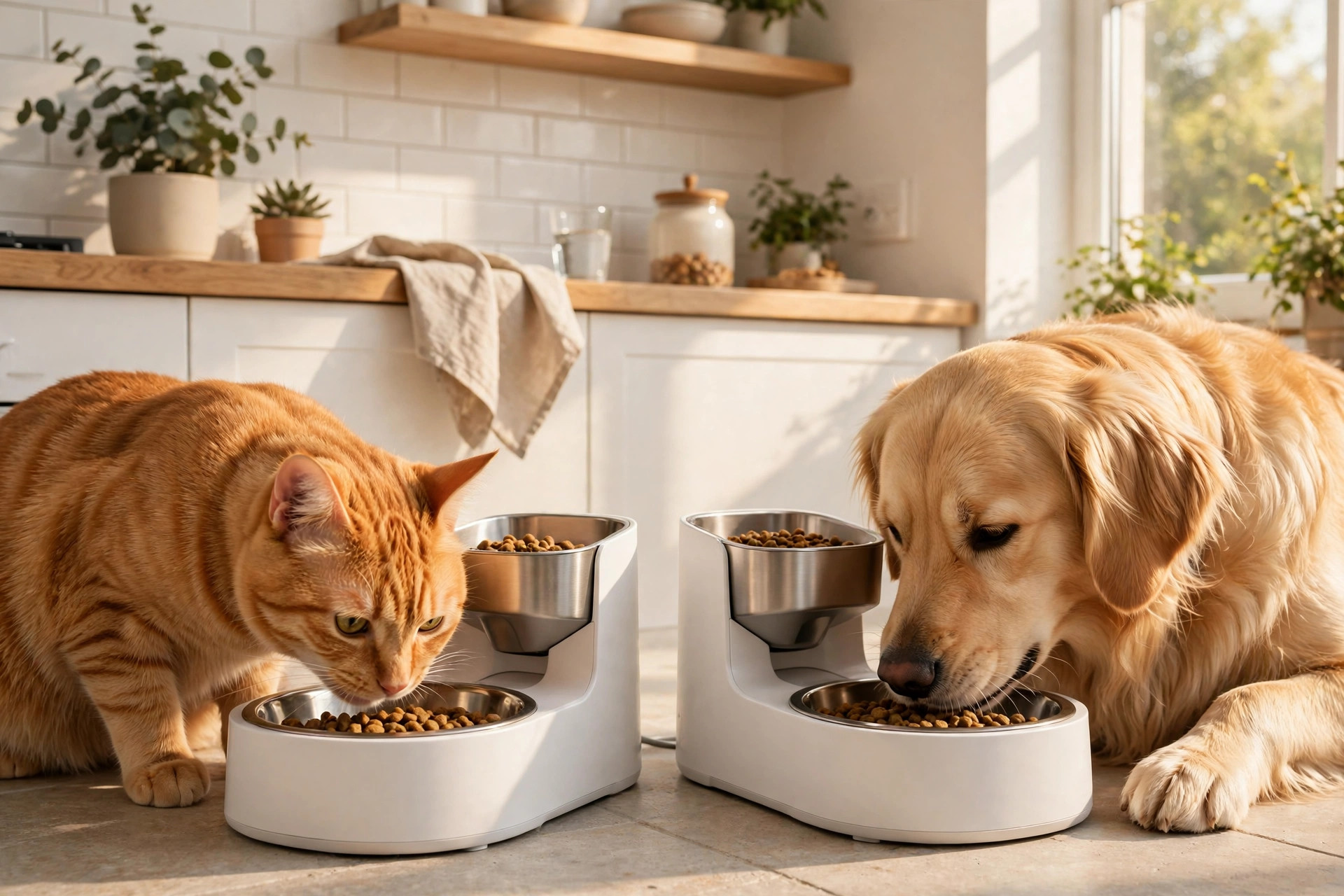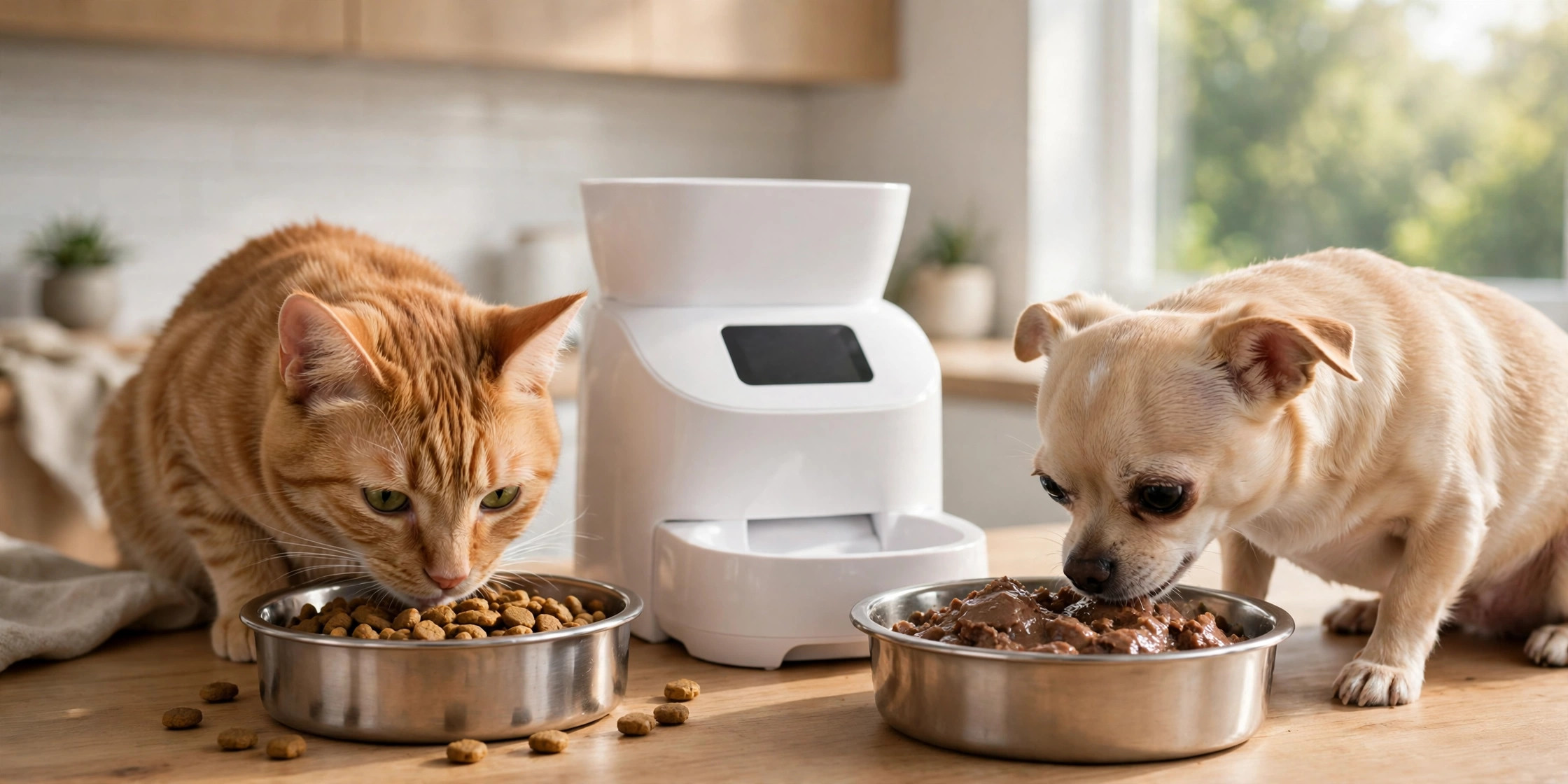
If your pet eats kibble in the morning and wet food at night, you have probably asked the question every automatic feeder buyer asks: can one feeder handle both? The honest answer is that most feeders are built for one of them. A hopper feeder that works beautifully for kibble will jam, clog, or spoil wet food. This guide explains which feeder type fits each food, and the three feeders that cover both sides of the bowl.
Disclosure: CalcPet is reader-supported. As an Amazon Associate, we earn from qualifying purchases made through links on this page, at no extra cost to you. Our recommendations are based on buyer feedback and real-world ease of use — never on commissions.
Top 3 picks at a glance:
- Best for Kibble: PETLIBRO Granary WiFi Feeder (5L) — app scheduling, up to 10 meals a day
- Best for Wet Food: PetSafe 6 Meal Automatic Pet Feeder — timed compartments, no app needed
- Best for Two Cats: WOPET Automatic Cat Feeder for Two Cats — two bowls, one feeder
The Short Answer: Kibble and Wet Food Need Different Feeders
Kibble is a feeder's best friend. It is dry, flows freely, stores for days in a sealed hopper, and dispenses in neat, repeatable portions. That is why almost every WiFi app-controlled feeder is designed for dry food only.
Wet food is the opposite: moist, soft, and perishable. It bridges and clumps inside a hopper, sticks to the mechanism, and should not sit out for hours once exposed to air. The real question is therefore not "which feeder does both?" but "which feeder fits the food my pet actually eats?" Kibble-only pets need a hopper feeder; wet-food pets need a timed-compartment feeder — or a hybrid routine with an automatic feeder for kibble and a manual bowl for wet food.
Why Most Automatic Feeders Are Kibble-Only
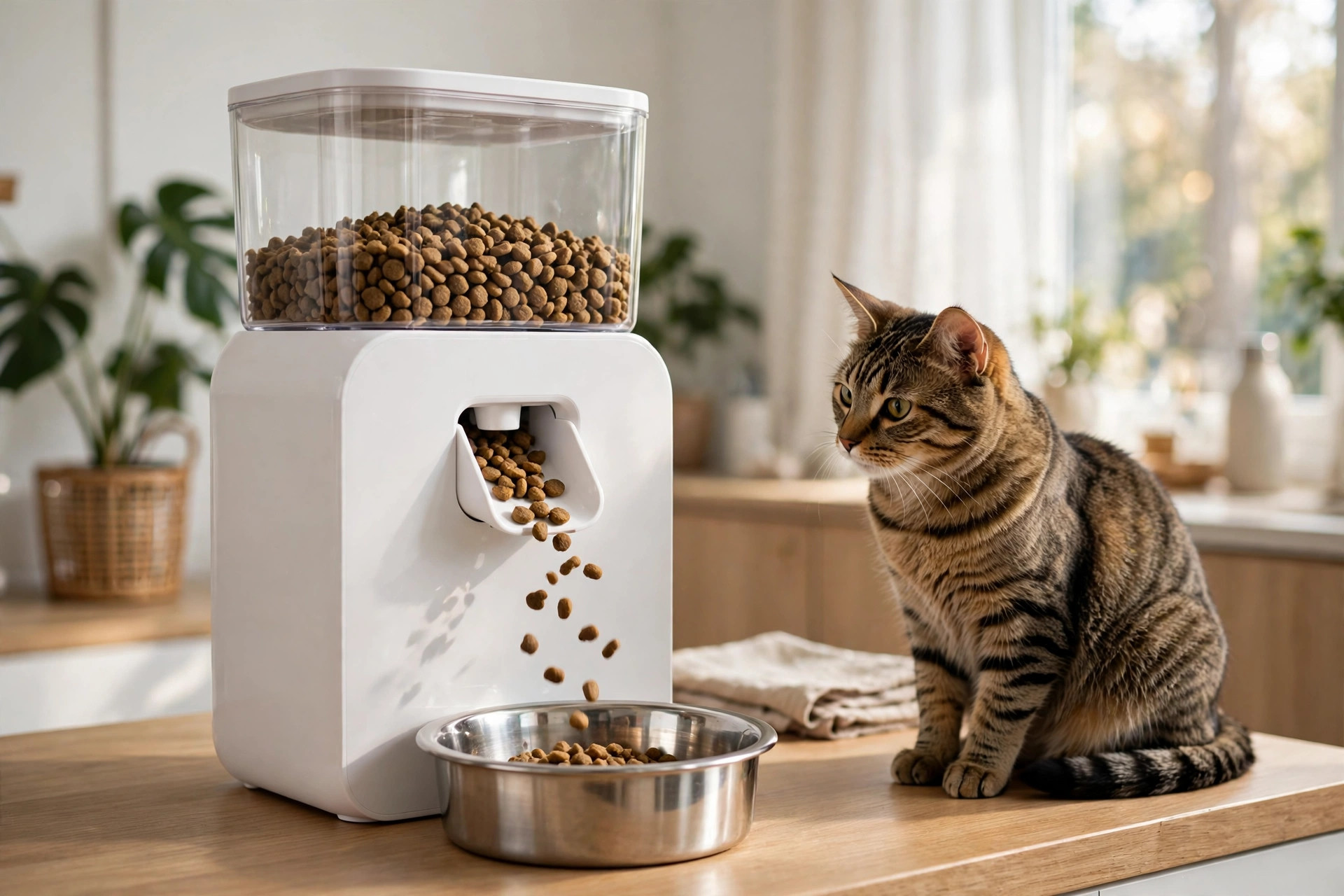
A hopper feeder stores food in a tall container and drops a measured amount through a chute on a timer or app command. That system depends on food that pours like gravel. Dry kibble does. Wet food does not — it sticks, compresses, and blocks the chute. Freshness is the second reason: kibble stays good in a sealed hopper for days, while an opened can of wet food starts to dry out and spoil within a couple of hours at room temperature.
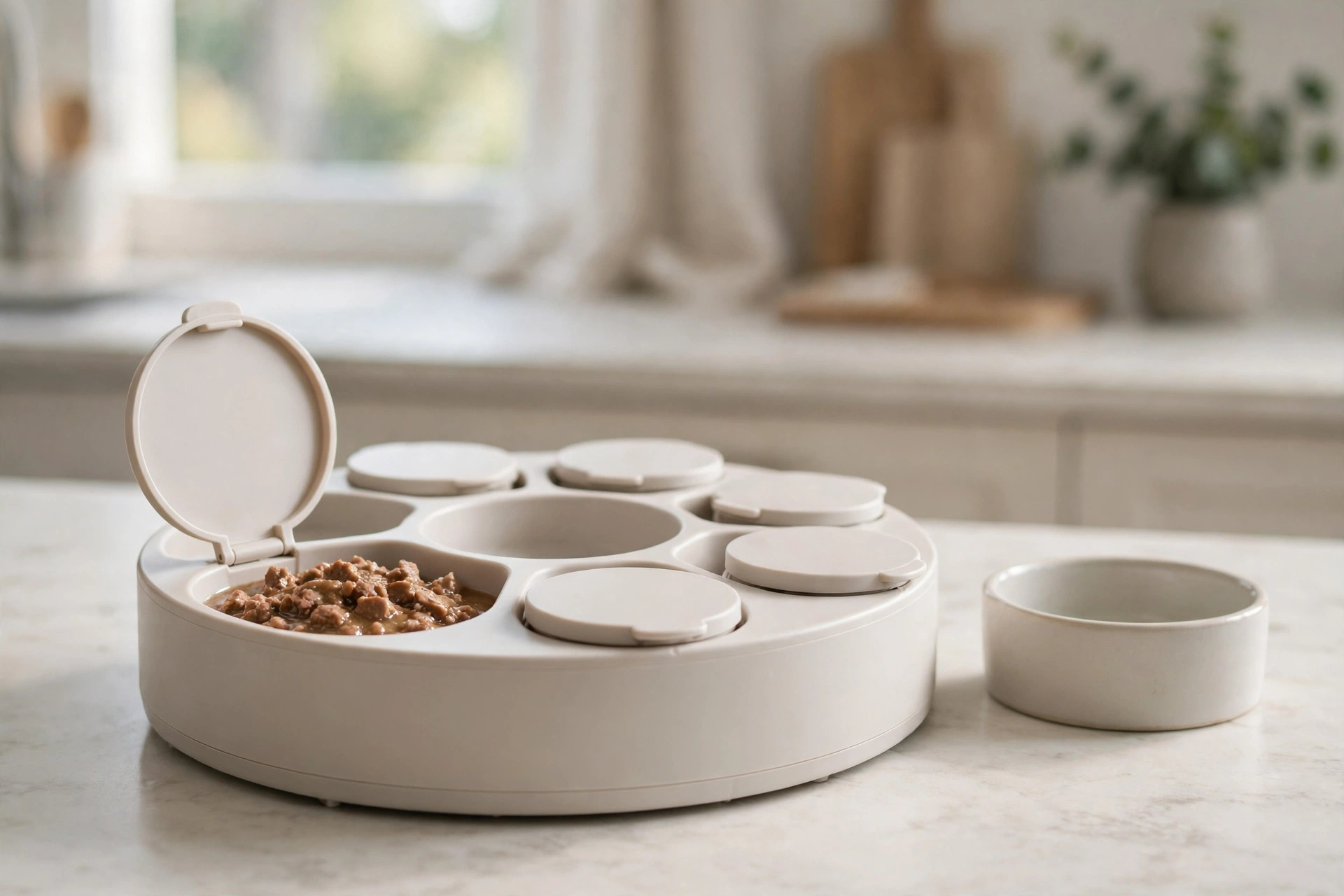
A few specialist feeders do handle wet food, but they work differently — sealed rotating trays with lids that open one compartment at a time, rather than a hopper. That design is the key to the whole wet-food question, and it is exactly what the PetSafe 6 Meal does.
How to Schedule Kibble With an Automatic Feeder
Keep meal times consistent. Pets settle quickly into a routine, and a fixed schedule reduces begging and random snacking. Most adult dogs do well on two meals a day, and most adult cats on two to four smaller meals — the AKC's guide to how often dogs should eat is a useful starting point, and your vet can confirm the right rhythm for your pet's age and size.
Let the feeder handle the portions. The real benefit of a scheduled feeder is consistency: the same amount, at the same times, every day. If your pet free-fed from a full bowl before, switch to scheduled portions gradually over a few days.
Have a backup plan. Battery backup covers a power cut, but it does not cover a jam. Test the dispense cycle weekly, clear the chute of packed kibble dust, and keep a manual bowl and a measuring scoop as a standing backup.
How to Schedule Wet Food Without the Stress
Use a timed-compartment feeder for wet portions. Fill each lidded compartment with one meal's worth of wet food, set the timer, and the feeder opens one compartment at a time. The food stays covered until its turn — the only safe way to automate wet food.
Fill compartments just before you leave. Load the wet food in the morning for the day's meals rather than the night before, and keep portions to what your pet finishes in one sitting. Refrigerate anything uneaten when you get home. The ASPCA's cat nutrition tips and International Cat Care's feeding guidance both stress fresh food and clean bowls as the basics of good feeding.
Try the hybrid routine. Many owners find the simplest setup is a split one: the automatic feeder handles kibble meals, and wet food is served by hand in a regular bowl at the meals when someone is home. It needs no special equipment, nothing can jam, and the wet food is always fresh.
The 3 Feeders That Cover Both Sides
These three cover the whole decision: one for kibble scheduling, one for wet food portions, and one for two-cat kibble households.
PETLIBRO Granary Automatic Pet Feeder (WiFi, 5L)
- 5L hopper with 5G/2.4G Wi-Fi app control — up to 10 meals per day
- Freshness preservation with desiccant bag plus low-food sensor alerts
- Twist-lock lid keeps clever paws out of the food hopper
As an Amazon Associate, CalcPet earns from qualifying purchases.
With roughly 10,000 verified-buyer ratings, the Granary has been refined through years of real-world use: app scheduling is flexible, portions are consistent, and the twist-lock lid defeats determined midnight snackers.
Pros: huge review base (~10,000 ratings); flexible app scheduling suits shift workers and travellers; made for cats and small-to-medium dogs. Cons: dry kibble only — wet food will clog it; app features need Wi-Fi; the 5L hopper needs more frequent refills for large dogs. Best for: owners who feed kibble and want flexible app-controlled scheduling.
PetSafe 6 Meal Automatic Pet Feeder
- 6 timed compartments plus 1 always-open tray
- Digital clock timer — no Wi-Fi or smartphone needed
- Tamper-resistant locking lid; dishwasher-safe trays
As an Amazon Associate, CalcPet earns from qualifying purchases.
The classic carousel feeder: six lidded compartments rotate open on a digital timer, plus one tray that is always available. It runs on batteries, so it keeps working through power cuts.
Pros: dead simple — no accounts, no apps, no updates; the only feeder here that handles wet food portions properly; battery-powered, so it keeps working in power cuts. Cons: only 6 scheduled meals maximum; 1 cup per compartment limits very large dogs; no portion flexibility within a single meal. Best for: wet-food portions on a timer, and simple, reliable timed meals without an app.
WOPET Automatic Cat Feeder for Two Cats
- Dual stainless steel bowls feed two cats simultaneously
- Programmable timer — up to 6 meals per day
- 10-second voice recording plays a meal call
As an Amazon Associate, CalcPet earns from qualifying purchases.
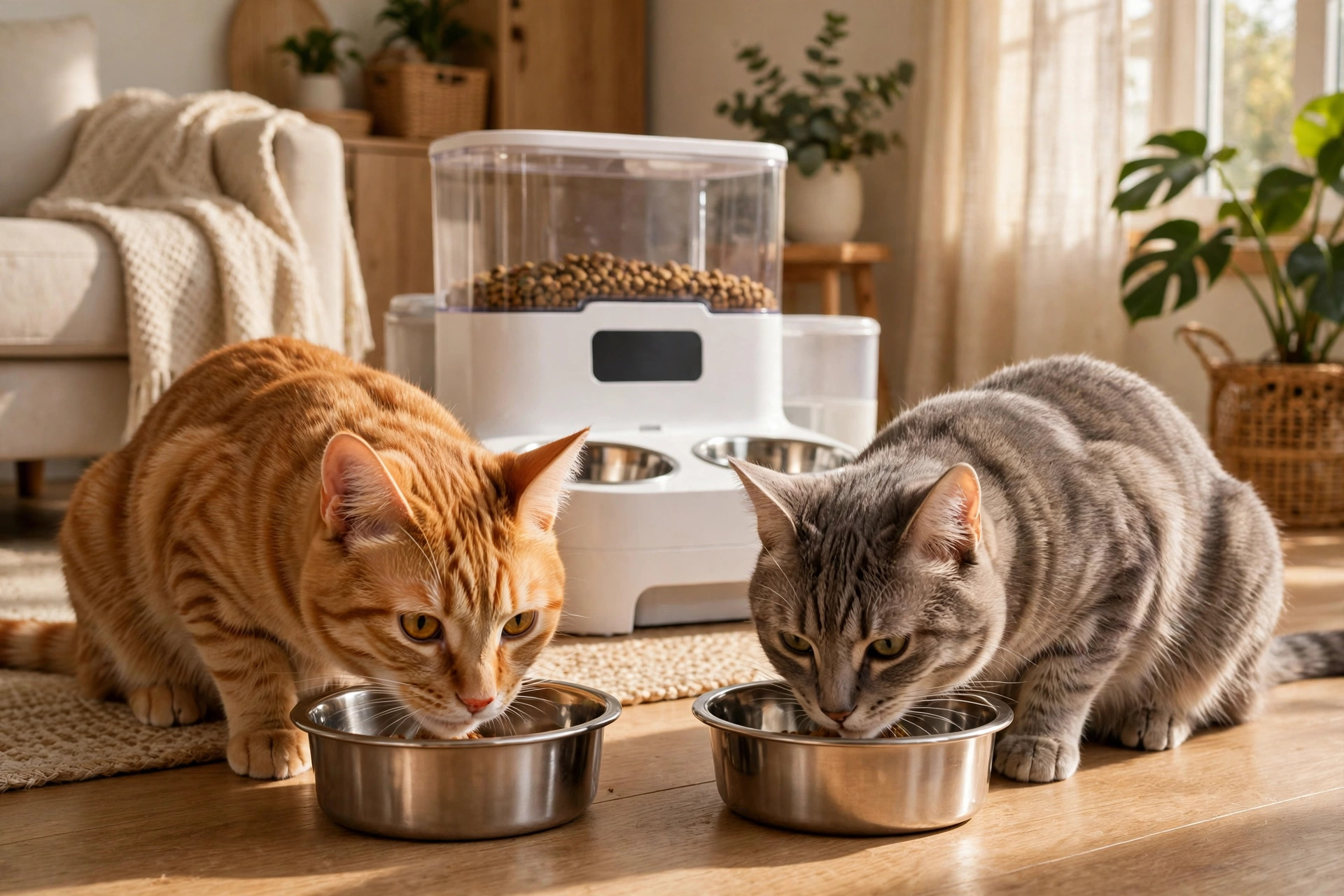
Two cats usually means buying two feeders — or one cat stealing the other's dinner. The WOPET solves this with a meal splitter that divides each dispensed portion evenly between two stainless steel bowls.
Pros: purpose-built for two-cat homes — no second feeder needed; dual power: adapter plus battery backup for outages; simple LCD setup. Cons: newer listing with a smaller review base; dry food only (2–12mm kibble); larger footprint than single-bowl feeders. Best for: two-cat households that feed kibble.
Quick Comparison: Which Feeder Fits Your Food?
| Feeder | Food type | Meals per day | App / Wi-Fi | Best for |
|---|---|---|---|---|
| PETLIBRO Granary (5L) | Dry kibble only | Up to 10 | Yes — Wi-Fi app | Flexible kibble scheduling |
| PetSafe 6 Meal | Wet or dry portions | Up to 6 | No — digital timer | Wet food on a schedule |
| WOPET Dual Feeder | Dry kibble only | Up to 6 | No — LCD panel | Two cats, one feeder |
Which Setup Fits Your Household?
All kibble, one pet: the PETLIBRO Granary. App scheduling, portion control, and the low-food alert cover everything, including weekends away.
Mostly wet food: the PetSafe 6 Meal. Load the compartments in the morning, let the timer open them through the day, and refrigerate anything left over when you get home.
A mix of kibble and wet: run the hybrid routine — the Granary for kibble meals and a manual bowl for wet food at the meals when someone is home. If you need the wet meals automated too, add the 6 Meal for those portions.
Two cats: the WOPET for kibble, with a 6 Meal alongside if either cat eats wet food. One feeder per food type is simpler than one feeder trying to do everything. Away for a weekend: kibble in the Granary plus a full water fountain, with a sitter or camera check-in — wet food and weekends away do not mix unless someone is there to serve it fresh.
5 Mistakes That Ruin a Feeding Schedule
1. Mixing wet food into a dry hopper. Moisture makes kibble clump — the most common cause of dispenser jams — and the mixture spoils faster than either part alone. Keep wet and dry in separate systems.
2. Leaving wet food out all day. A compartment that opened at 8 a.m. should not still hold food at 6 p.m. Serve portions your pet finishes in one sitting, and refrigerate leftovers.
3. Topping off stale kibble endlessly. Old kibble at the bottom of the hopper goes stale and puts pets off their food. Empty and clean the hopper regularly instead of just refilling it.
4. Trusting the feeder with no backup. A jam, a dead battery, or a knocked-over bowl all mean a missed meal. Keep a manual bowl and a scoop handy, and check the feeder weekly.
5. Picking a feeder before picking the food routine. Decide what your pet eats and when first, then buy the feeder that matches.
Frequently Asked Questions
Can you put wet food in an automatic feeder?
Only in a feeder designed for it — a timed-compartment feeder with lidded trays, like the PetSafe 6 Meal. Standard hopper feeders are dry kibble only; wet food clogs the mechanism and spoils quickly once exposed to air.
How long can wet food sit in a feeder?
Not long. Fill the compartments just before you leave and use portions your pet finishes in one sitting. Wet food should not sit out for hours — refrigerate anything uneaten when you get home.
Can one feeder handle both kibble and wet food?
No single feeder does both well. The practical answer is a split routine: a hopper feeder such as the PETLIBRO Granary for kibble, and a compartment feeder such as the PetSafe 6 Meal — or a manual bowl — for wet food.
How many meals a day should an automatic feeder serve?
It depends on the pet, but a common pattern is two meals a day for adult dogs and two to four smaller meals for adult cats.
Do automatic feeders work during a power cut?
Feeders with battery backup — including all three in this guide — keep their schedule through a power cut. WiFi features may pause until the connection returns, but the programmed meals still dispense.
Is a camera feeder worth it for feeding schedules?
If you travel, yes — seeing the bowl fill is the fastest way to catch a jam or an empty hopper.
The Bottom Line
Kibble and wet food are two different scheduling problems, and the feeder you buy should match the food your pet actually eats. Hopper feeders like the PETLIBRO Granary make kibble scheduling effortless; compartment feeders like the PetSafe 6 Meal are the only safe way to automate wet food; and the WOPET keeps two-cat kibble homes to a single feeder.
Want more help planning your pet's routine? Try our cat age calculator to see your cat's age in human years, or read our guide to the best automatic pet feeders and how to choose the right feeder size before you buy.