Buying an automatic feeder is easy. Buying the right size is where most pet parents go wrong — a hopper that runs dry mid-week, a bowl your cat has to stretch to reach, or a giant feeder that dominates a small kitchen. This guide fixes that: you will learn how to match feeder size to your pet, your household, and your routine, with a simple capacity check you can do in five minutes.
Disclosure: This post contains affiliate links. As an Amazon Associate, CalcPet earns from qualifying purchases — at no extra cost to you. Product ratings below are the ratings shown on Amazon at the time of writing; always check the live listing before you buy.
Top 3 picks at a glance
- Best overall for most homes: PETLIBRO Granary (5L) — flexible app scheduling in a mid-size hopper.
- Best for large dogs: PetSafe Smart Feed (6L) — the biggest hopper and the biggest single meals here.
- Best simple timer pick: PetSafe 6 Meal — no WiFi, no app, just reliable timed portions.
Step 1: Start with your pet's usual portion, not the feeder
Feeder size is really a maths problem with three inputs: how much your pet usually eats in one meal, how many meals a day they get, and how many days you want between refills. You already know the first two — they are whatever you already serve today. Do not change your pet's routine to fit a feeder; pick a feeder that fits the routine you already have. If you are unsure about portions, the feeding guide on your pet food bag and your vet are the right sources — this guide only helps you size the machine.
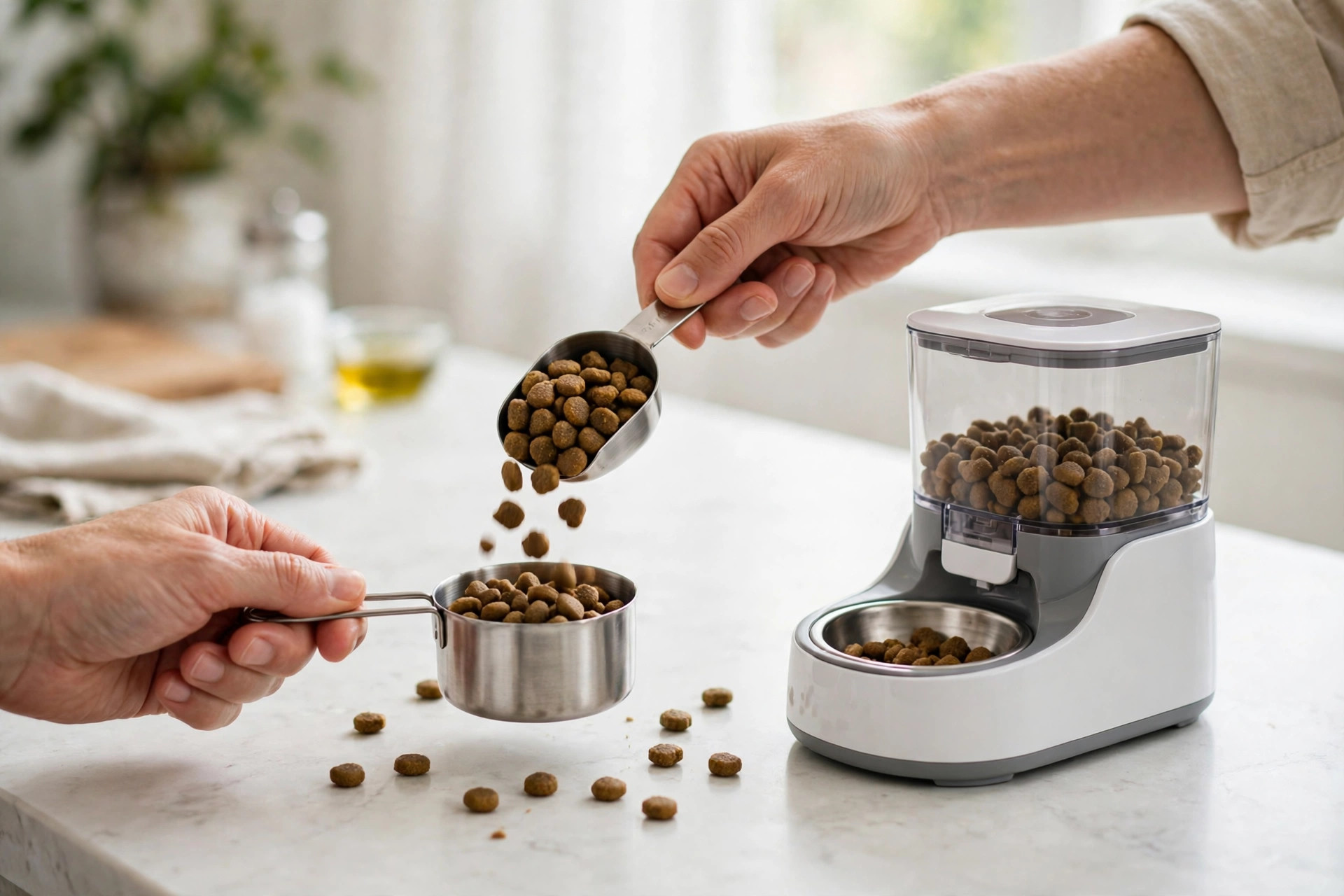
Worked example: if a cat usually eats 1/4 cup per meal, twice a day, that is 1/2 cup a day. A 5-litre hopper holds roughly 20 cups of typical dry kibble, so that household would refill roughly every 40 days on capacity alone.
Step 2: Match hopper capacity to pet size
As a rough sizing map:
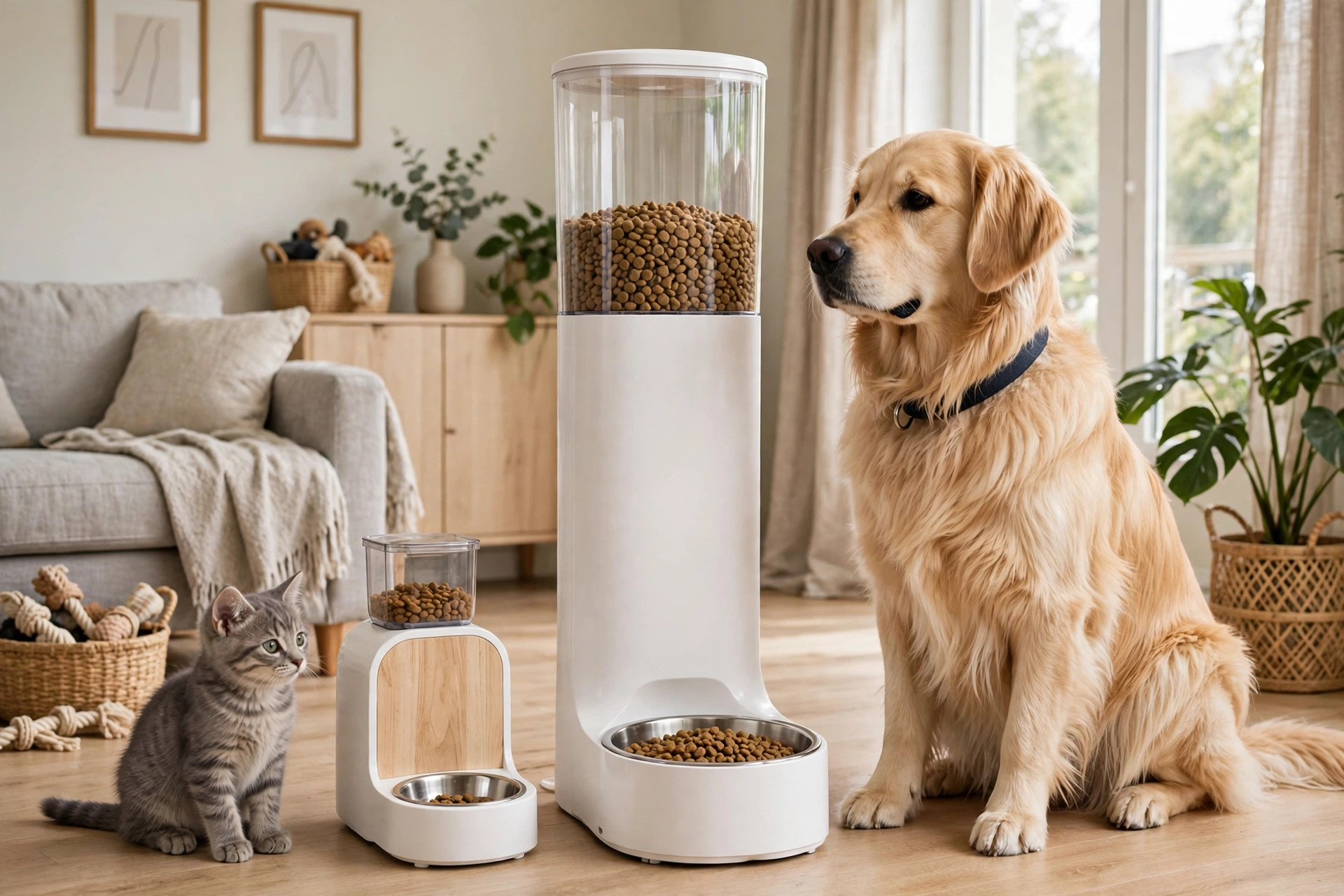
- Cats and small dogs (under 10 kg): 2–5 litres is plenty. Smaller hoppers keep kibble fresher and take up less counter space.
- Medium dogs (10–25 kg): 4–6 litres hits the sweet spot — weekly refills without a bulky machine.
- Large and giant dogs (over 25 kg): 6 litres or more, and check the maximum portion per meal, not just the hopper. A big hopper with a small dispenser still means small meals.
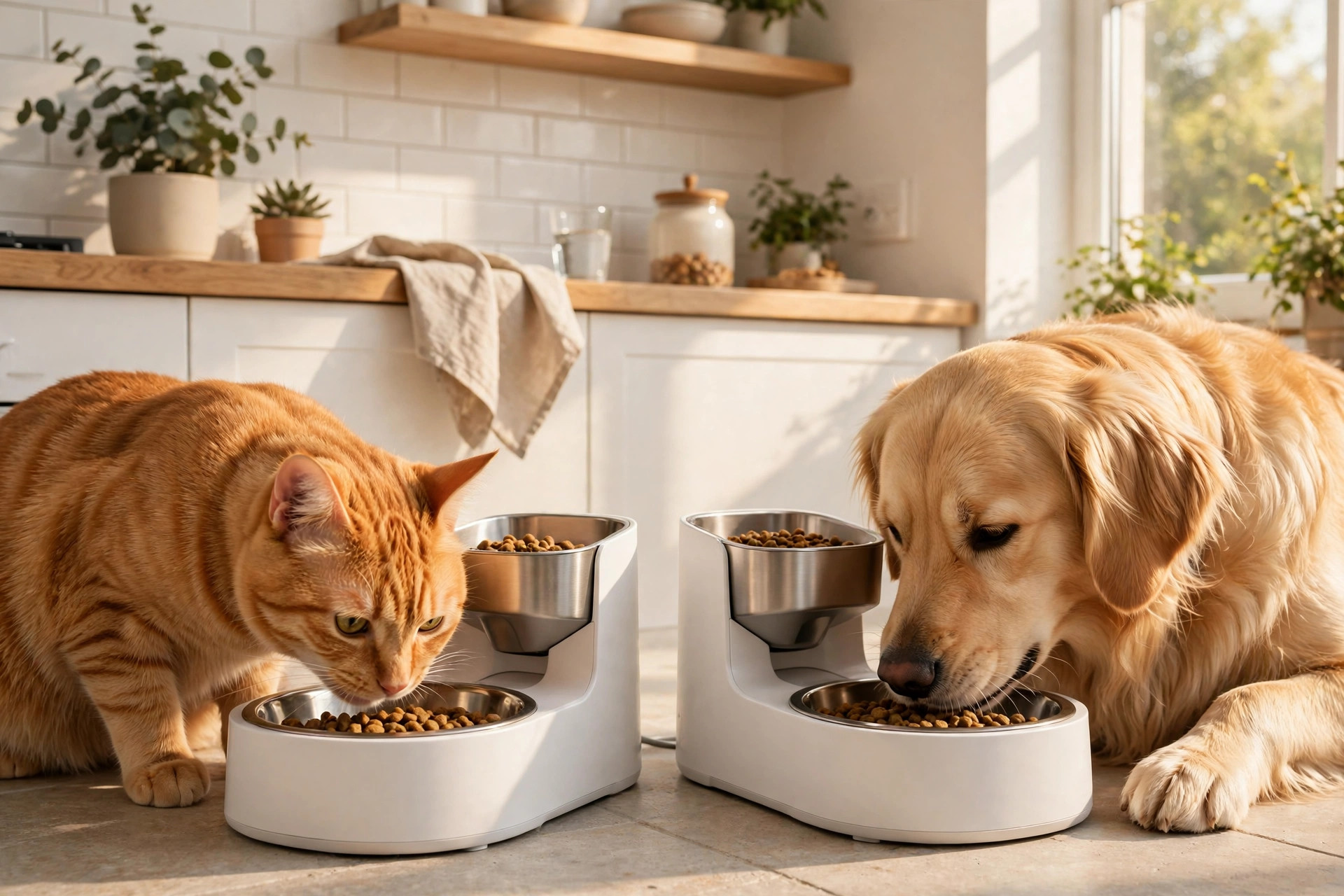
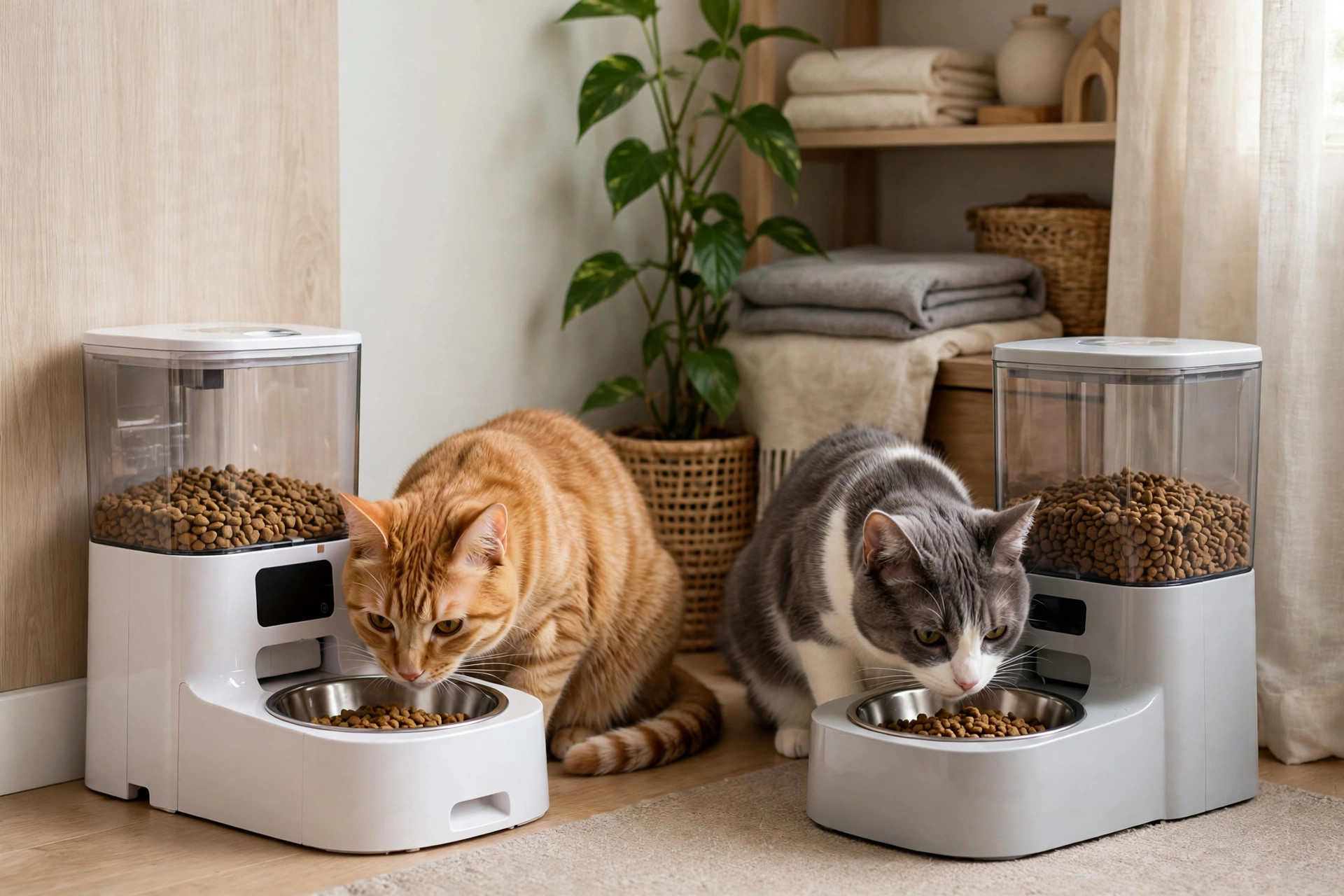
- Multi-pet homes: size for the combined daily total, or — usually better — buy one feeder per pet so portions stay separate.
Step 3: Check meals per day and portion limits before you buy
Two specs matter more than the headline litre number. First, how many meals per day can it schedule? Cats that do better on several small meals need a feeder that handles 6–10 meals a day; a two-meal feeder will not suit them. Second, what is the smallest and largest portion it can dispense? A feeder that only dispenses in 1-cup steps cannot serve a cat that eats 1/4 cup at a time, and one capped at 1 cup per meal cannot serve a large dog. Read both numbers on the product page before ordering.
Step 4: Bowl height, kibble size, and placement
Size is not only litres. Check that the bowl height suits your pet — very small pets and older, stiff pets do better with a lower, stable bowl they do not have to stretch for. Check kibble compatibility too: most automatic feeders handle standard dry kibble, but very large kibble pieces can jam narrow dispensers, and wet food does not belong in a hopper feeder at all (use a timed tray feeder for wet food instead). Measure your spot too, leaving room for the lid to open and for refilling.
The 5-minute feeder-size checklist
- Write down your pet's usual portion per meal and meals per day.
- Multiply: portion × meals = daily total. Multiply by 7 for a weekly total.
- Pick a hopper at least 1.5× that weekly total, so you are never refilling daily.
- Confirm the feeder's minimum and maximum portion covers your pet's usual meal.
- Confirm meals-per-day covers your schedule, including weekends away.
- For two or more pets, repeat for each pet — and strongly consider one feeder per pet.
- Measure the counter space, including lid clearance.
Three feeders that cover the size range
These three catalog picks span the sizes most homes need, from a flexible mid-size WiFi feeder to a big-dog workhorse to a simple timer tray.
PETLIBRO Granary Automatic Pet Feeder (WiFi, 5L)
- 5L hopper with WiFi app control — up to 10 meals per day
- Freshness preservation with desiccant bag plus low-food sensor alerts
- Twist-lock lid keeps clever paws out of the food hopper
As an Amazon Associate, CalcPet earns from qualifying purchases.
The Granary is the size most cat and small-dog homes should start with. Five litres is generous without being bulky, and the 10-meal schedule covers both two-meal routines and several-small-meals routines. The twist-lock lid and low-food alerts solve the two most common feeder complaints: pets breaking in, and owners discovering an empty hopper too late.
Pros: huge verified review base (~10,000 ratings); flexible app scheduling suits shift workers and travelers; freshness features built in.
Cons: WiFi setup can be fiddly on some networks; replacement desiccant bags are an ongoing cost; dry kibble only.
Best for: cats and small-to-medium dogs that need flexible, app-controlled scheduling.
PetSafe Smart Feed Automatic Pet Feeder (6L)
- Large 6L (24-cup) hopper — fewer refills per week
- Schedules up to 12 meals/day, 1/8 to 4 cups per meal
- Slow-feed mode dispenses over 15 minutes; works with Alexa
As an Amazon Associate, CalcPet earns from qualifying purchases.
Large dogs break most feeders on capacity alone: the hopper empties in days and the per-meal limit is too small. The Smart Feed answers both, with a 24-cup hopper and up to 4 cups in a single meal. The 15-minute slow-feed mode is a bonus for dogs that inhale dinner.
Pros: big capacity suits large dogs; handles dry and semi-moist kibble; slow-feed mode included.
Cons: bulky footprint on the counter; some owners report app connectivity hiccups; smaller review base than the category leaders.
Best for: large dogs and multi-pet homes needing big capacity.
PetSafe 6 Meal Automatic Pet Feeder
- 6 timed compartments plus 1 always-open tray
- Digital clock timer — no WiFi or smartphone needed
- Tamper-resistant locking lid; dishwasher-safe trays
As an Amazon Associate, CalcPet earns from qualifying purchases.
Sometimes the smartest buy is the simplest one. You measure portions into six compartments yourself, set the clock timer, and it rotates each portion into reach on time. No WiFi to drop, no app to update, and battery power keeps it working through power cuts. Each compartment holds up to 1 cup, so it suits cats and small-to-medium dogs best — very large dogs should look at the Smart Feed above.
Pros: dead simple: no accounts, no apps, no updates; great for short trips and weekends away; battery-powered.
Cons: only 6 scheduled meals maximum; 1 cup per compartment limits very large dogs; no portion flexibility within a single meal.
Best for: simple, reliable timed meals without an app.
Comparison table
| Feeder | Hopper / trays | Meals per day | Best for |
|---|---|---|---|
| PETLIBRO Granary (WiFi) | 5L hopper | Up to 10 | Cats & small-to-medium dogs, app control |
| PetSafe Smart Feed | 6L / 24 cups | Up to 12 | Large dogs, big portions |
| PetSafe 6 Meal | 6 compartments + open tray | Up to 6 | Simple no-WiFi timed feeding |
Common sizing mistakes to avoid
- Buying on litres alone. Always check portion range and meals per day too.
- One feeder for two pets. Unless pets eat identical portions at identical times, separate feeders prevent food stealing and portion mix-ups.
- Ignoring kibble size. Very large kibble can jam narrow dispensers — check the product page for kibble-size limits.
- Forgetting freshness. A hopper that lasts a month is not a goal; refill weekly and clean the bowl regularly.
- Skipping the tape measure. A feeder that does not fit its spot, or whose lid cannot open fully, is a return waiting to happen.
Frequently asked questions
What size automatic feeder do I need for a cat?
Most cats do well with a 2–5 litre hopper. What matters more is portion control: the feeder must dispense your cat's usual small meal accurately, and schedule enough meals per day for your routine.
What size feeder does a large dog need?
Look for 6 litres or more, plus a per-meal maximum that covers your dog's usual meal — up to 4 cups in the PetSafe Smart Feed above. Check both numbers, not just the hopper.
How often should I refill an automatic feeder?
Weekly top-ups suit most homes, even if the hopper could last longer. Regular refills keep kibble fresh and let you spot low-food alerts, jams, or cleaning needs early.
Can two cats share one automatic feeder?
Only if they eat the same portions at the same times and do not steal each other's food. In most homes, one feeder per pet is the calmer, fairer setup.
Do automatic feeders work with wet food?
No — hopper feeders are for dry kibble. For wet food, use a timed tray feeder with compartments, and follow the manufacturer's guidance on how long food can sit out.
What if my pet eats very fast?
Look for a slow-feed mode that stretches a meal over several minutes, or a feeder with a slow-feed tray design. Smaller, more frequent scheduled meals can also help — check that the feeder supports enough meals per day.
Verdict
Do the five-minute check first — usual portion, meals per day, days between refills — then buy for those numbers, not for the biggest hopper on the page. For most homes, the PETLIBRO Granary covers it. Large-dog homes should step up to the PetSafe Smart Feed, and anyone who wants zero apps or WiFi will be happiest with the PetSafe 6 Meal. For more help choosing, read our best automatic feeders guide, our WiFi vs timer feeder comparison, and our in-depth Granary review.
Further reading
The AKC's guide to automatic feeders for dogs explains feeder types and portion control, the AKC on how often dogs should eat covers meal frequency, and the ASPCA's dog nutrition tips explain portion-control, free-choice, and timed feeding methods.
Not sure how old your pet is in human years — or which tool fits their life stage? Try CalcPet's dog age calculator and cat age calculator to put their age in context before you buy.