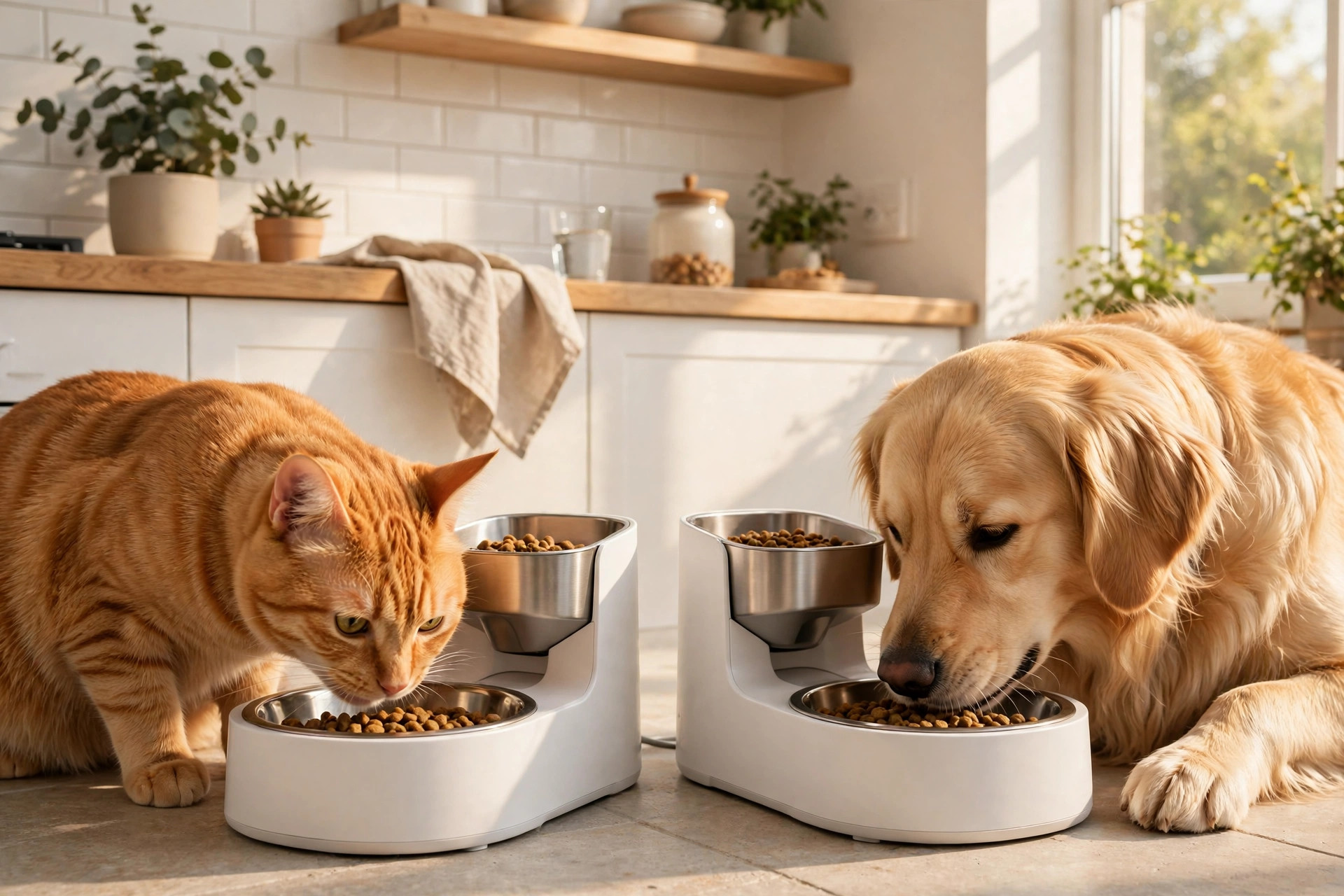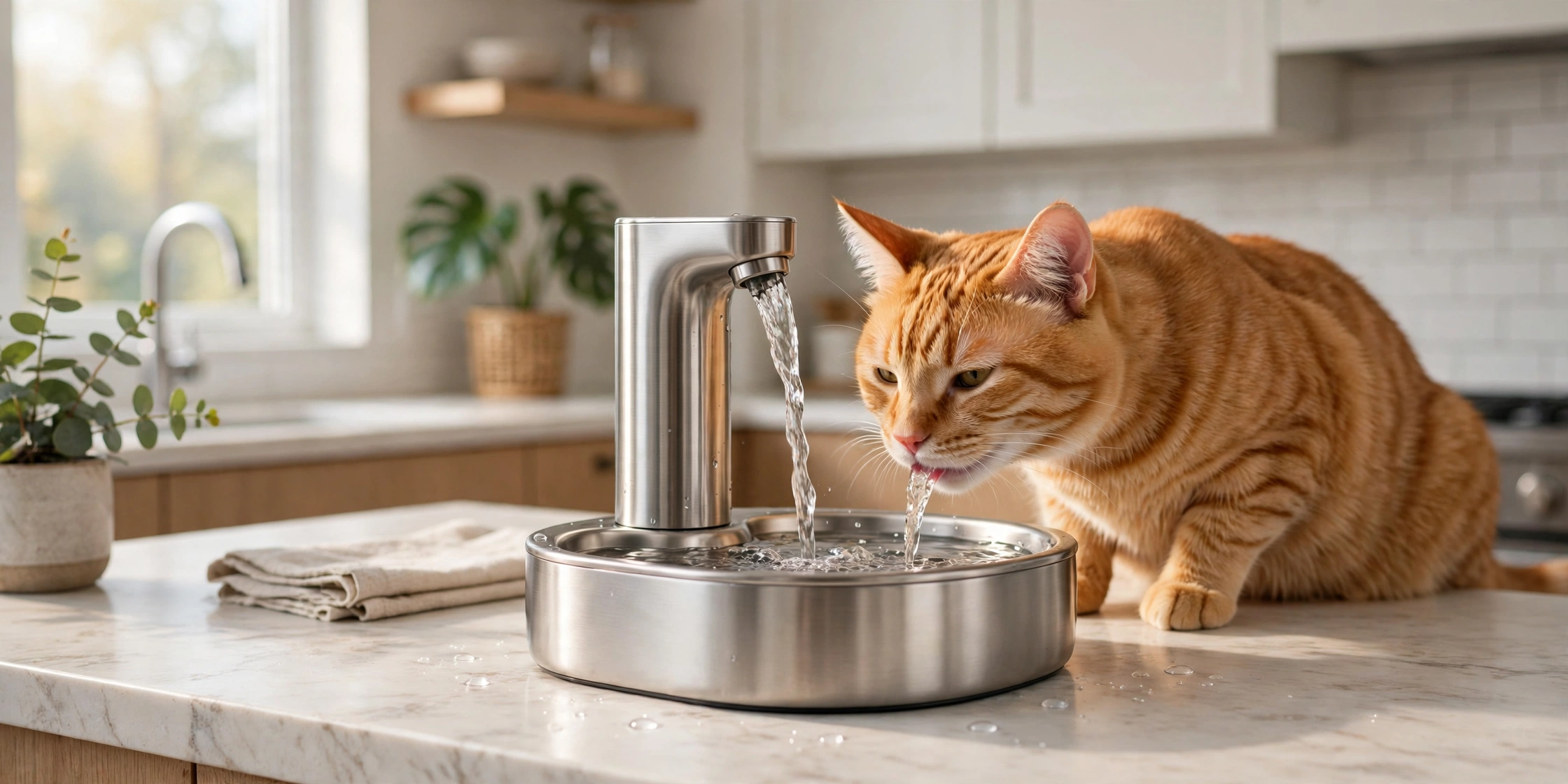
A pet water fountain only does its job when it is clean. The moment the bowl turns slimy, the pump starts to rattle, or the water smells stale, most cats and dogs quietly stop drinking from it — and a fountain your pet ignores is just an expensive ornament. The good news: keeping a fountain fresh takes about five minutes a week once you know the routine. If your cat is a reluctant drinker, International Cat Care's hydration advice explains why flowing water appeals to cats in the first place.
Disclosure: CalcPet is reader-supported. As an Amazon Associate, we earn from qualifying purchases made through links on this page, at no extra cost to you. Our recommendations are based on buyer feedback and real-world ease of use — never on commissions.
The Cleaning Schedule That Actually Works
PetSafe's own guidance is simple: rinse and top up the water every day or two, wash the visible parts with mild soap about once a week, and take the pump apart to clear any buildup on the same weekly schedule. Filters get replaced every two to four weeks — sooner in hard-water areas where limescale builds up fast.
| Task | How often | Why it matters |
|---|---|---|
| Top up the water | Every day | A pump that runs dry overheats and fails |
| Rinse the bowl and wipe the rim | Every 1–2 days | Removes food, fur, and dust before they sink in |
| Full wash with mild soap | Once a week | Stops the slimy film that puts pets off drinking |
| Deep clean + take the pump apart | Every 2–4 weeks | Clears hair and mineral deposits from the impeller |
| Replace the carbon filter | Every 2–4 weeks | A spent filter stops removing tastes and odours |
| Replace the foam filter | Every 1–2 months | It traps hair and debris before they reach the pump |
Households with several pets, or pets that drool a lot, should use the shorter end of every range above.
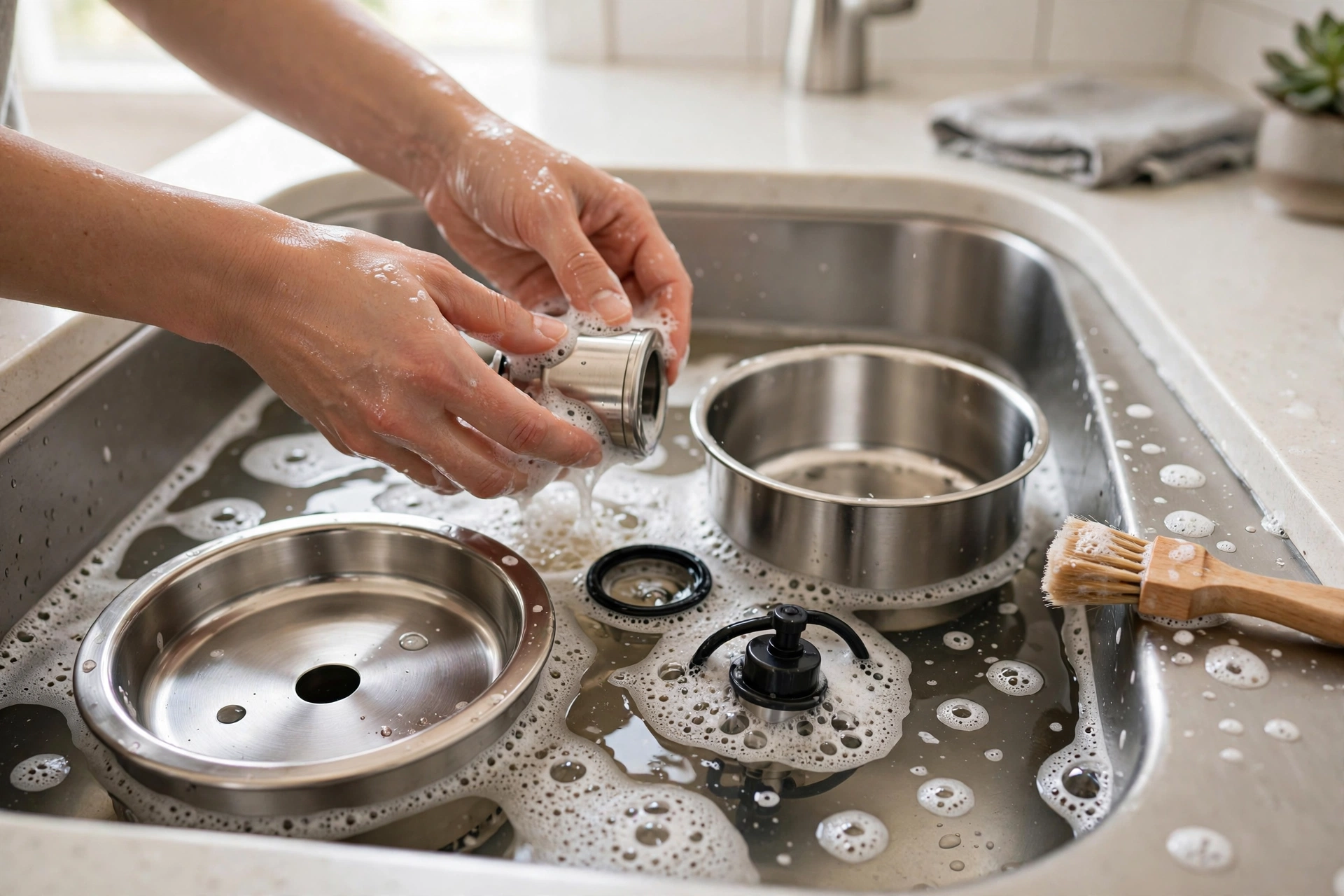
How to Deep-Clean a Pet Fountain, Step by Step
You will need mild dish soap, warm water, a small brush (an old toothbrush works), and white vinegar for mineral buildup.
- Unplug the fountain and disconnect the pump. Never clean it while plugged in.
- Empty the water and take it apart: lift off the tower or lid, remove the filter housing, and take out the carbon filter. Set the filter aside — it never gets washed with soap.
- Wash the bowl, tower, and filter housing with warm water and mild dish soap. Most parts can go on the top rack of the dishwasher — check your manual first. The pump, power adapter, and filters never go in the dishwasher.
- Clean the pump. Remove the faceplate, pull out the stator, then lift out the magnetic impeller. Wash every piece with soap and warm water. For white mineral crust, soak in a 50/50 mix of white vinegar and water for fifteen minutes, then scrub.
- Rinse the filters — do not soap them. Rinse the carbon filter under cold running water until it runs clear. A little black carbon dust is normal and harmless. Rinse the foam filter the same way, or replace it if it is due.
- Reassemble and refill. Put the pump back together, seat the filters, fill with fresh water, and plug it in. Watch the flow for a minute to make sure the pump runs quietly.
Two things to never do: never use bleach or harsh chemicals — residue can linger in the plastic and the pump — and never let the pump run dry. A pump needs at least an inch of water over it. If you own a PetSafe fountain, their step-by-step disassembly guide shows exactly which parts come apart on their models.
Filters: What They Do and When to Replace Them
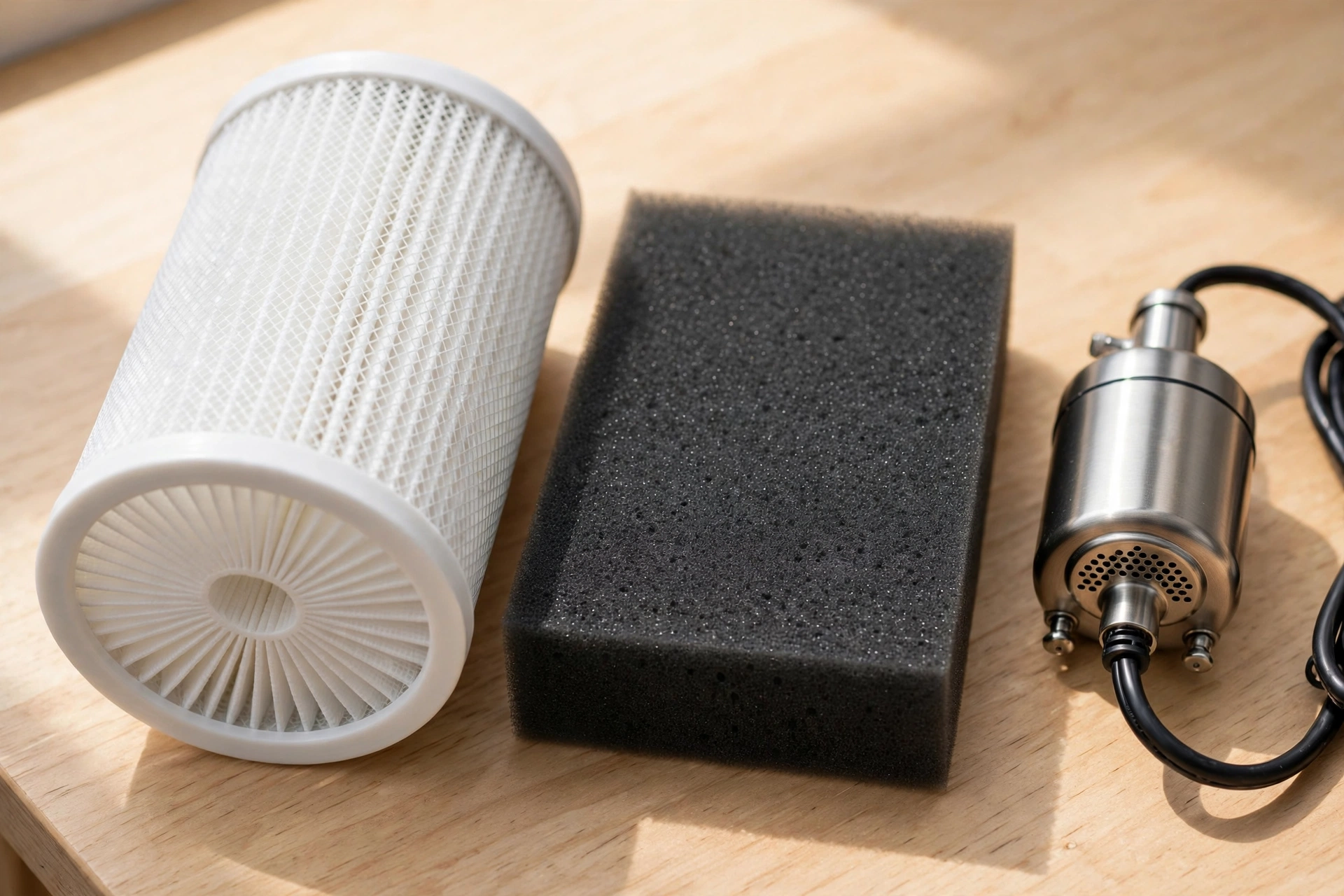
Most fountains use two filters. The carbon filter removes bad tastes and odours and keeps the water tasting fresh. The foam filter catches hair, food crumbs, and debris before they reach the pump.
Replace the carbon filter every two to four weeks and the foam filter every one to two months. Rinse a carbon filter under cold water before first use — a little charcoal dust is normal. If you clean your fountain every two weeks, you can rinse and reuse a carbon filter once, then replace it at the next cleaning. Never wash filters with soapy water: soap residue does not rinse out of carbon and ends up in your pet's drinking water.
Buy replacement filters when you buy the fountain. The most common reason fountains get abandoned is that the owner runs out of filters, puts off ordering more, and the fountain sits dirty in a cupboard.
The 3 Easiest Fountains to Keep Clean
Veken 95oz Stainless Steel Pet Fountain
- 95oz (2.8L) capacity with a stainless steel drinking top
- Quiet pump with replaceable filters and pre-filter sponges
- 2-year warranty from Veken
As an Amazon Associate, CalcPet earns from qualifying purchases.
Steel is the easiest fountain material to keep clean: the smooth surface resists the slimy film that builds up fast on plastic, and the wide bowl wipes down in under a minute. At 95oz it holds several days of water for a cat or small-to-medium dog, and the quiet pump comes apart easily for the monthly deep clean.
Pros: steel resists buildup and odours; large capacity; quiet pump; cheap filters. Cons: needs an outlet nearby; steel shows water spots in hard-water homes. Best for: owners who want the lowest-effort cleaning routine.
PETKIT Eversweet Max Cordless Fountain (3L)
- Cordless design — place it anywhere, no outlet needed
- App tracks daily water intake; smart pump adjusts to water level
- Multi-stage filtration with a quiet, efficient pump
As an Amazon Associate, CalcPet earns from qualifying purchases.
The Eversweet Max earns its place on cleaning merit alone: because it is cordless, the whole fountain lifts off its base and goes straight to the sink — no cables to unplug. The app tracks how much water your pet drinks and reminds you when a filter change is due, which removes the most common reason fountains get neglected: forgetting.
Pros: cordless for easy sink washing; app filter reminders; tracks water intake. Cons: premium price; app needs a phone nearby. Best for: owners whose best fountain spot is nowhere near an outlet.
Catit LED Flower Fountain (3L)
- 3L reservoir with 3 water-flow settings for picky drinkers
- Triple-action filter; BPA-free materials
- LED nightlight plus handy water-level window
As an Amazon Associate, CalcPet earns from qualifying purchases.
Some cats will only drink from moving water, and the Catit Flower's three flow settings — gentle stream, bubbling top, or calm surface — cover almost every preference. Cleaning is straightforward: the flower top lifts off, the parts are few and chunky, and the LED nightlight doubles as a water-level check.
Pros: three flow settings win over fussy cats; simple parts; nightlight and water-level window. Cons: plastic needs the weekly wash without fail; small for multi-pet homes. Best for: cats that ignore still water, and first-time fountain owners.
Quick Comparison: Which Fountain Is Easiest to Clean?
| Fountain | Material | Capacity | Why it is easy to clean | Best for |
|---|---|---|---|---|
| Veken Stainless 95oz | Stainless steel | 95oz (2.8L) | Steel resists slime; wide open bowl | Lowest-effort upkeep |
| PETKIT Eversweet Max | BPA-free plastic | 3L | Cordless — lifts off for sink washing; app filter reminders | No-outlet spots |
| Catit LED Flower | BPA-free plastic | 3L | Few chunky parts; flower top lifts off | Picky cats |
If cleaning effort is your deciding factor, the steel Veken wins. If your fountain spot has no outlet, the cordless PETKIT wins. And if your cat is the one making the decision, the Catit Flower's three flows are the safest bet.
Signs Your Fountain Needs Attention Right Now
Do not wait for the scheduled deep clean if you notice any of these:
- Slimy walls or a slippery film — the biofilm is already established; wash it today.
- Cloudy water or a stale smell — the carbon filter is spent, or the water has sat too long.
- A rattling or grinding pump — hair or grit is caught in the impeller; take the pump apart and clean it.
- Your pet stops using it — a fountain a cat suddenly avoids is almost always a dirty fountain.
5 Mistakes That Shorten a Fountain's Life
- Letting the water run low. Pumps burn out fast when they run dry. Top up daily.
- Soaping the filters. Soap never fully rinses out of carbon. Rinse filters in plain cold water only.
- Using bleach or harsh cleaners. Residue can linger in plastic and the pump. Mild dish soap and vinegar are all you need.
- Skipping the pump clean. The bowl can look spotless while the impeller is choked with hair. Take the pump apart every deep clean.
- Forgetting filter refills. A fountain with a spent filter is barely better than a still bowl. Keep spares on the shelf.
Frequently Asked Questions
How often should I clean my pet's water fountain?
Top up daily, rinse the bowl every one to two days, wash all parts with mild soap weekly, and deep-clean — including taking the pump apart — every two to four weeks. Multi-pet homes should clean more often.
How often do I need to replace the fountain filter?
Replace the carbon filter every two to four weeks and the foam filter every one to two months. In hard-water areas, or homes with several pets, use the shorter end of those ranges.
Can I wash a pet fountain in the dishwasher?
Most bowls, towers, and filter housings are top-rack dishwasher safe — but check your manual first. The pump, power adapter, and filters must always be hand-washed.
Why does my pet fountain get slimy?
The slippery film is biofilm: bacteria and organic matter that grow on any surface sitting in standing water. It is normal, but it needs a weekly soap wash to stay under control. Stainless steel fountains build it up more slowly than plastic ones.
Can I use vinegar to clean a pet water fountain?
Yes. A 50/50 mix of white vinegar and water dissolves mineral scale on fountain parts and inside the pump. Soak for fifteen minutes, scrub, then wash with mild soap and rinse well before refilling.
What happens if I don't clean the pump?
Hair, food, and mineral deposits collect around the impeller, so the pump gets louder, pushes less water, and eventually fails. A two-minute pump clean at each deep clean is the cheapest way to make a fountain last years instead of months.
The Bottom Line
Clean water is the whole point of a pet fountain, and the routine that protects it is simple: top up daily, wash weekly, deep-clean and swap filters every two to four weeks. Pick a fountain that makes that routine easy — stainless steel for the least scrubbing, cordless for a spot with no outlet, multi-flow for a fussy cat — and it will do its job for years.
Want more help caring for your pet? Try our cat age calculator to see your cat's age in human years, or read our guide to the best pet water fountains for cats and our Veken stainless steel fountain review before you buy.