On a hot afternoon, most dogs do the same thing: they flop belly-down on the cool kitchen tiles. A dog cooling mat gives them that same relief on demand — a portable cool surface they can lie on anywhere. But how does a mat actually cool a dog, how long does the effect last, and which type is worth your money? This guide explains the science in plain language, compares all five mat types, and ends with a checklist you can use before you buy.
How Dogs Cool Themselves (And Why a Mat Helps)
Dogs cannot sweat the way people do. Panting is their main cooling system: rapid breathing evaporates moisture from the tongue, mouth and airways, but it works poorly in hot, humid air. Conduction is the second: heat moves from a warm body into a cooler surface it touches, mostly through the thinly furred belly and armpits. Dogs also have a few sweat glands in their paw pads. The AKC's guide to how dogs cool down in hot weather explains these mechanisms in more detail.
A cooling mat works through conduction. It gives your dog a surface cooler than the floor or their bed, so heat flows out of their body and into the mat. It does not change the temperature of the room, and it only cools the part of the dog actually touching it. Think of it as a comfort tool, not an air conditioner — and never as a treatment for overheating. If your dog ever shows signs of serious overheating, skip the mat and contact your vet right away.
How a Cooling Mat Actually Works
Every cooling mat does the same basic job: it holds a material that starts out cooler than your dog and absorbs body heat on contact. The mat gradually warms up, and once mat and dog are roughly the same temperature, the cooling effect fades — which is why dogs often shift position or step off a gel mat after a while. Given a break, most mats release the stored heat and feel cool again. That cycle — absorb, warm up, recharge — is the whole trick. The AKC's overview of how cooling mats for dogs work covers the same mechanisms.
The 5 Types of Dog Cooling Mats
Shop for a cooling mat and you will meet five main designs. They look similar, but they cool in different ways and suit different dogs.
1. Pressure-Activated Gel Mats
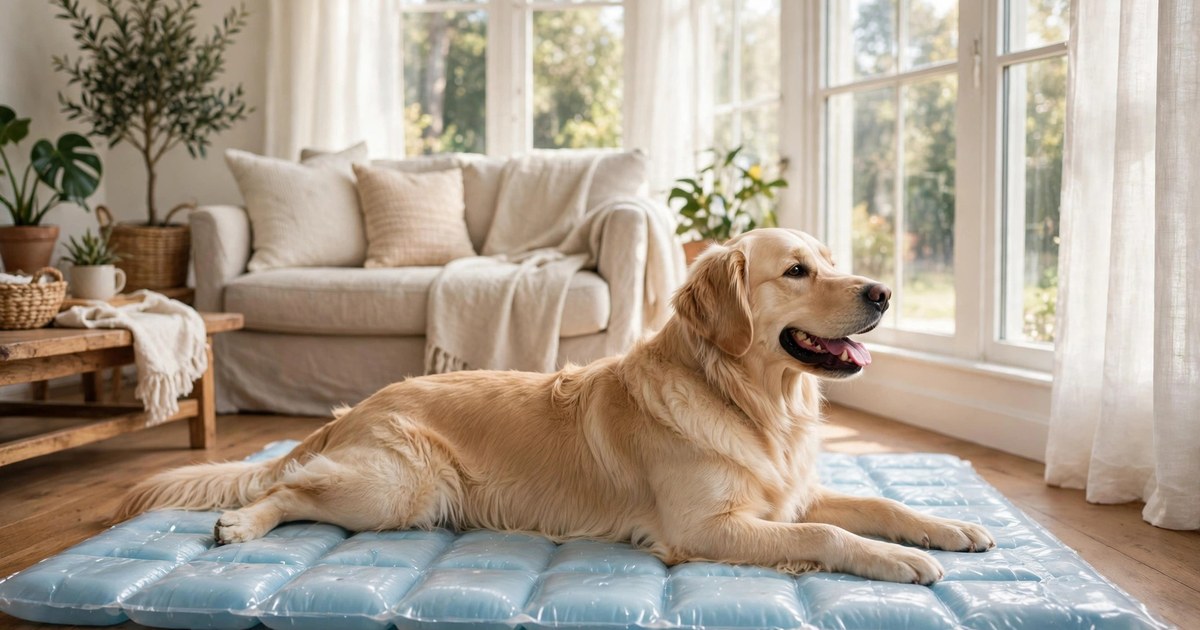
A sealed pad filled with cooling gel that activates the moment your dog lies on it — no water, no electricity, no freezer needed. The gel absorbs body heat, then recharges on its own once your dog steps off, usually within 15 to 30 minutes. Most gel mats feel noticeably cool for one to three hours. The downside: a determined chewer can puncture the sealed pad, so heavy chewers need supervision.
2. Water-Filled Mats
Filled with water, which is naturally good at absorbing heat. Some are filled once and sealed; others let you add cold water, or chill the whole pad in the fridge first. Water mats tend to stay cool longer than gel mats and suit larger dogs. The trade-offs are weight — a large water-filled mat is heavy to move — and the need to check for leaks.
3. Evaporative (Wet) Mats
Evaporative mats work the way sweating does: you pour water over the mat, and as the water evaporates it draws warmth away from your dog's body. They can be re-wetted as often as needed, so the cooling lasts as long as you keep the mat damp. They suit thick-coated dogs and outdoor use in dry heat; in humid weather the effect is weaker.
4. Phase-Change Material (PCM) Mats
The most advanced option. PCM mats contain a material that absorbs a large amount of heat as it changes from solid to liquid, holding a steady temperature while it does so — a longer, more even cooling effect than a basic gel mat, without any power or water. PCM mats are usually heavier and pricier than gel mats, and they still need time away from your dog to reset.
5. Cooling-Fabric Mats
Smooth, breathable pads made from cooling fibres that feel cool to the touch. They use no gel, water or power, they are light, washable and easy to travel with, and they never need recharging. The cooling is the mildest of all five types — more "slightly cooler than a blanket" than a real temperature drop. They are best as an everyday comfort layer or a travel mat.
One more option is often sold alongside mats: the elevated mesh bed. It cools differently, by lifting your dog off the warm ground so air can flow underneath. It pairs well with a mat — a gel mat on top of a mesh cot gives a dog both conduction and airflow.
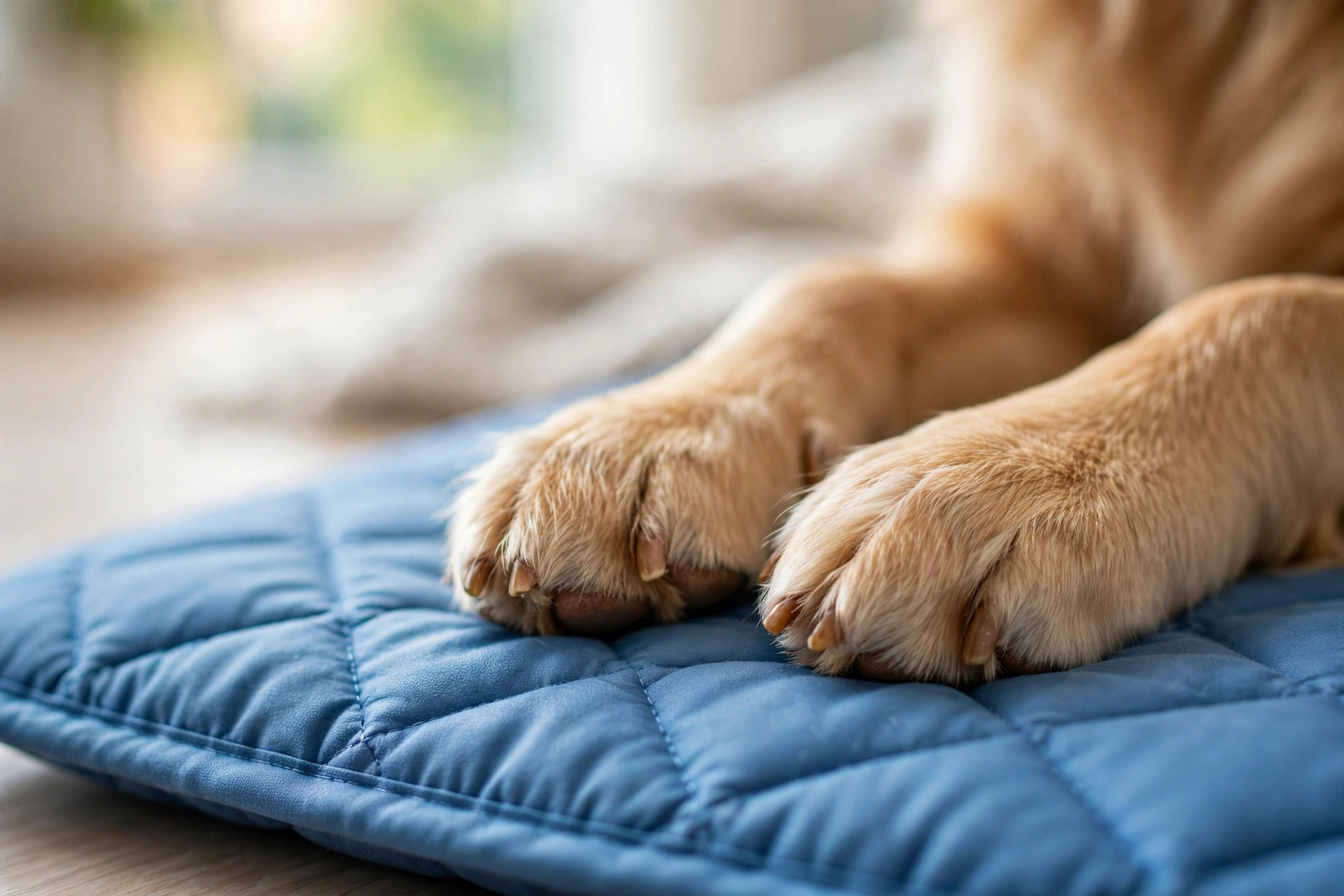
Cooling Mat Types Compared
| Type | How it cools | Cooling time | Setup | Best for |
|---|---|---|---|---|
| Pressure-activated gel | Gel absorbs body heat | 1–3 hours, then 15–30 min recharge | None — just lay it down | Quick cool-downs, indoor use |
| Water-filled | Water absorbs heat | Several hours; longer if chilled | Fill once (some chill in fridge) | Large dogs, longer rest |
| Evaporative | Water evaporation draws heat away | As long as you keep it damp | Pour water over before use | Thick-coated dogs, dry heat, outdoors |
| Phase-change material | Material absorbs heat as it melts | Longest passive cooling | None | Owners wanting the longest effect |
| Cooling fabric | Breathable fibres feel cool | Mild, all day | None — machine washable | Everyday comfort, travel |
How to Use a Cooling Mat the Right Way
A mat only helps if your dog actually lies on it — and in the right place. Put it where your dog already rests, such as next to their bed or in their favourite shady corner. Let your dog choose: place the mat flat and let them step onto it on their own, never trapping them on it or in a crate with no way off. Introduce it with a treat, dropping a few on the mat the first couple of times so your dog connects it with something good. Keep it out of direct sun, since a mat baking in sunlight starts warm and cools nothing. Pair it with the basics — fresh water, shade and moving air matter far more on a hot day; the mat is the bonus on top. Finally, clean it on a schedule: wipe gel and water mats weekly, wash fabric mats as the label allows, and check for punctures or leaks.
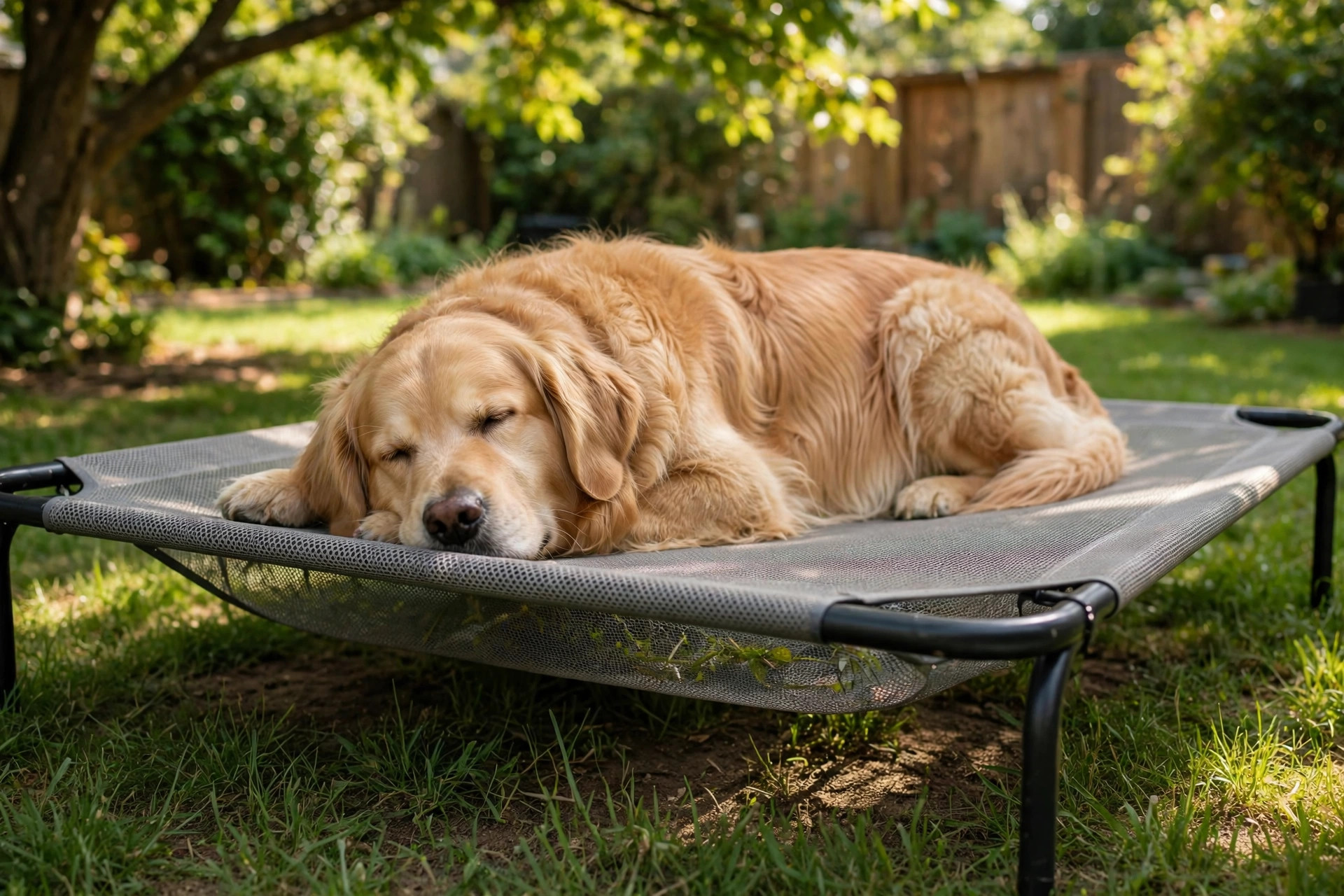
Choosing the Right Cooling Mat: 8-Point Checklist
Use this checklist before you buy, and you will avoid the most common regrets:
- Size: your dog should be able to stretch out fully on it, with a few inches to spare. Measure your dog lying flat, then add 5–10 cm each side.
- Weight and portability: gel and fabric mats are light; water-filled and PCM mats are heavier. If the mat travels between rooms or to the car, lighter wins.
- Chew resistance: if your dog chews bedding, pick a tough, puncture-resistant mat and supervise use. A chewed gel mat is a ruined mat.
- Washability: fabric mats usually machine-wash; gel and water mats wipe clean. Pick the routine you will actually do.
- Indoor or outdoor: gel and fabric mats suit indoor use; evaporative and water-filled mats handle outdoor heat better.
- Recharge time: check how long the mat needs off the dog before it cools again — 15 to 30 minutes is typical for gel.
- One mat per dog: each dog needs their own mat — two dogs sharing one warm it up twice as fast.
- No power needed: all five types work without electricity — no cables, no plugs, nothing to break.
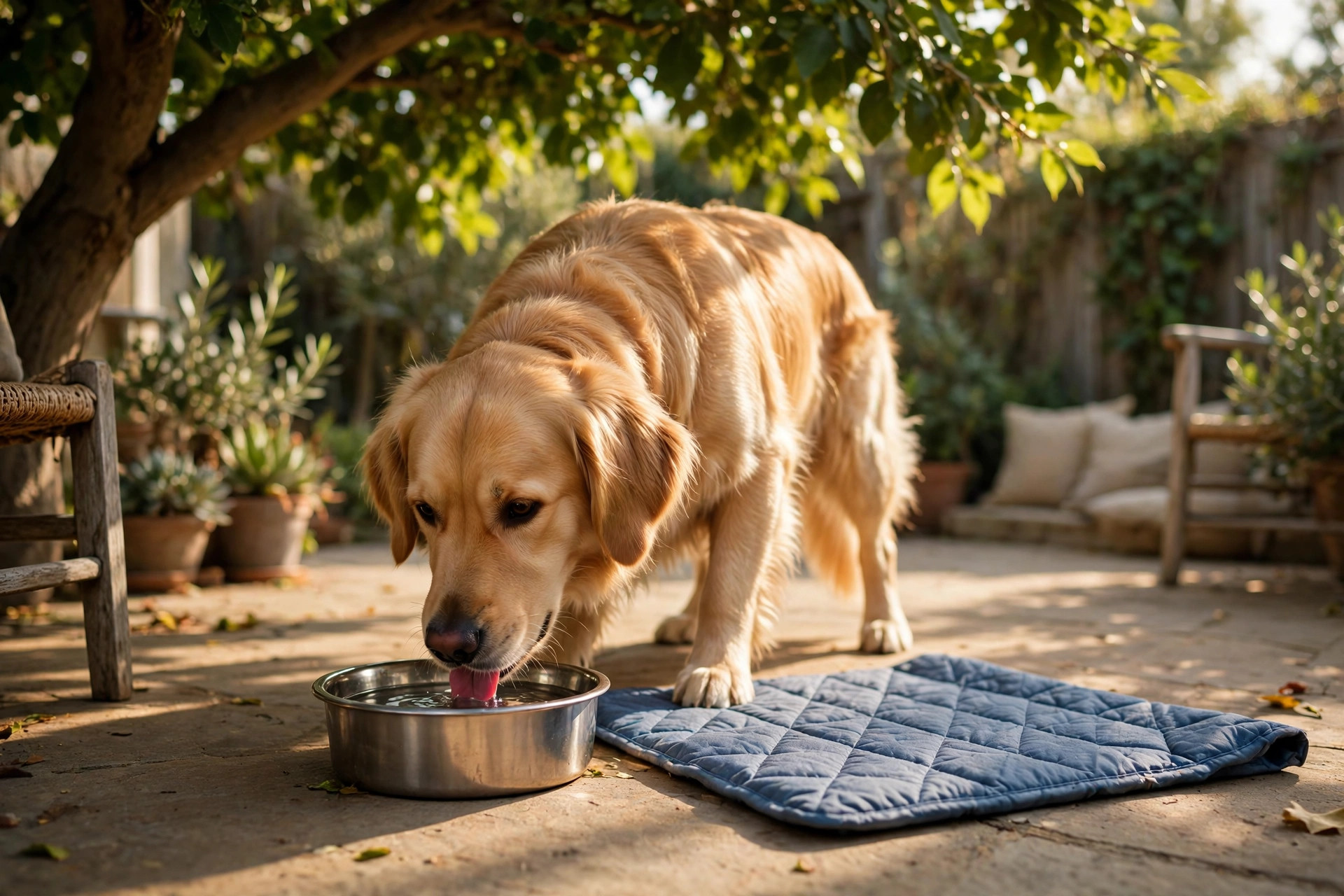
When a Cooling Mat Is Not Enough
Cooling mats are honest, simple tools — but they have clear limits, and knowing them keeps your dog safe. A mat only cools the body part touching it, it does nothing for the air your dog is breathing, and on an extremely hot day even the best mat warms up fast. Heavy-coated, flat-faced, older and overweight dogs feel heat sooner than others, and no mat changes that. On the hottest days the plan is the same with or without a mat: shade, plenty of fresh water, airflow or air conditioning, rest during the hottest hours, and never leaving a dog in a parked car. The ASPCA's hot weather safety tips cover the same basics. If your dog is panting heavily and cannot settle, seems weak or disoriented, or will not drink, do not rely on a mat — contact your vet immediately. A cooling mat is for comfort on warm days; overheating is a veterinary matter.
FAQs About Dog Cooling Mats
Do dog cooling mats really work?
Yes, within their limits. They cool through conduction, so a dog lying on one genuinely feels cooler than on a regular bed. They do not cool the room, and they cannot prevent overheating on their own. Used alongside shade, water and airflow, they are a useful comfort tool.
How long does a gel cooling mat stay cool?
Most gel mats feel noticeably cool for one to three hours, depending on room temperature and how long your dog lies in one spot. Once the gel warms up, the mat needs about 15 to 30 minutes away from your dog to release the stored heat and feel cool again.
Do cooling mats need water, power or freezing?
It depends on the type. Gel, phase-change and cooling-fabric mats need nothing at all. Water-filled mats are filled once, and some can be chilled in the fridge first. Evaporative mats need water poured over them before use. None of the five types needs electricity.
Are gel cooling mats safe if my dog chews them?
Supervise any dog that chews bedding. A punctured gel mat should be thrown away — it will not cool properly again, and you do not want your dog swallowing the filling. If your dog is a heavy chewer, a tough fabric mat or an elevated mesh bed is a safer pick, and any swallowing is a reason to call your vet.
Can I put a cooling mat in my dog's crate or bed?
Yes, as long as it fits and your dog can move off it. Cover only part of the sleeping area, so your dog can slide onto the mat when hot and off it when cooled down. Never fill a whole crate with a mat and leave no warmer spot.
Are cooling mats good for puppies and senior dogs?
Yes, with supervision and the right size. Older dogs and heavy-coated breeds often appreciate a cool surface most, while puppies need closer watching since they chew more. In every case, pair the mat with shade and fresh water — the mat alone is never the whole hot-day plan.
Conclusion
A dog cooling mat is a simple idea done well: a cool surface that draws heat out of your dog's body while they rest. Gel mats are the easiest all-round pick, water-filled and phase-change mats last longer, evaporative mats shine outdoors in dry heat, and cooling-fabric mats are the light, washable everyday option. Match the type to your dog's size, coat and chewing habits, keep the mat in the shade, and always pair it with fresh water and airflow. Still deciding? Run through the 8-point checklist above — size, chew resistance and recharge time matter most. And for a quick, fun extra, try our dog age calculator to see how old your dog really is in human years.
Related reading: our guide to whether orthopedic dog beds are worth it, our winter pet care checklist for the cold half of the year, and the CalcPet homepage for more free pet tools.