Boarding your dog for the first time can feel like a lot. You are handing your best friend to strangers for a few nights, and the questions pile up fast: what paperwork do they need, what should you pack, and how do you know your dog will be okay? The good news is that a smooth boarding stay is mostly decided before drop-off day. Get the fifteen things on this checklist sorted, and your dog will settle in within a day or two — and you will actually enjoy your trip.
This guide works for boarding kennels, pet hotels, and sitters' homes, and it follows a simple timeline: four weeks out, two weeks out, one week out, and drop-off day. If your trip is sooner than four weeks, start at the top and work through the list as fast as you can — the order matters more than the timing.
The 15-Item Boarding Checklist at a Glance
Short on time? Here is the whole list in one place. The sections below explain each item in detail.
- Choose the right type of boarding for your dog
- Book early, especially for holidays
- Ask the facility for its vaccination and paperwork requirements
- Confirm your dog's records are current with your vet
- Visit the facility in person before you book
- Do a meet-and-greet with your dog
- Book a trial day or trial night
- Write a one-page routine sheet
- Check your dog's ID tag and microchip registration
- Pack your dog's regular food in labeled portions
- Pack medications in their original containers with written instructions
- Pack one or two comfort items from home
- Confirm drop-off and pick-up times in writing
- Leave a local emergency contact and your vet's details
- Keep the goodbye short and calm
4 Weeks Before: Paperwork and Booking
1. Choose the right type of boarding for your dog
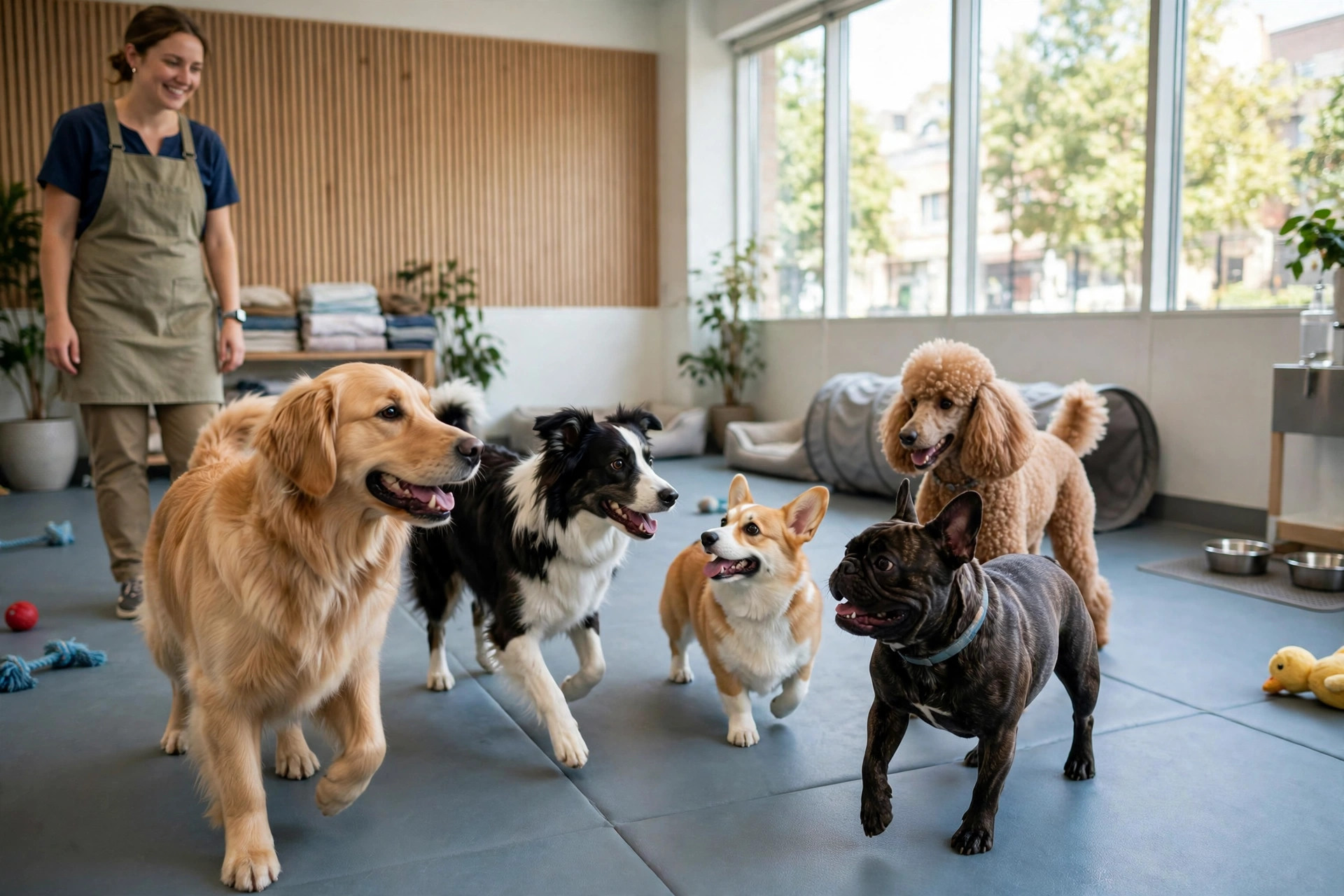
Not all boarding is the same, and the best fit depends on your dog's personality. A social adult dog who loves other dogs will usually enjoy a kennel with group play. A nervous, older, or reactive dog often does better in a sitter's home with one or two dogs, or in a kennel that offers private suites and one-on-one play instead of group sessions. If your dog has never slept in a crate, pick a facility that does not crate overnight. Match the setting to the dog, not to the prettiest website.
2. Book early, especially for holidays
Weekend nights fill up a week or two in advance, and holiday periods fill a month or more ahead. If you are travelling at Christmas, Thanksgiving, or over a school break, book as soon as your own travel is confirmed. Early booking also gives you time for the trial stay in item 7 — the single most useful step on this list. If you are comparing costs at the same time, our guide to how much dog boarding costs in 2026 breaks down nightly rates, what's usually included, and where you can save.
3. Ask the facility for its vaccination and paperwork requirements
Every boarding facility has its own requirements, so ask for them in writing before you do anything else. Most ask for proof of rabies and the distemper/parvo combination vaccines, and many also require Bordetella (kennel cough). Some ask for canine influenza as well, and that one is a two-dose series, which is why this step belongs four weeks out — not the week of your trip. Ask which records they need, in what format, and by what date. A facility that cannot answer clearly is telling you something about how organised it is.
4. Confirm your dog's records are current with your vet
Once you know what the facility requires, call your vet and confirm your dog is current, then ask for a copy of the record to hand over at drop-off. If anything is due, book the appointment now — some vaccines need a waiting period before they count as valid, and a facility can turn a dog away at the door without proof. Keep a photo of the records on your phone as a backup, and keep the paper copy in the bag you pack for drop-off day.
2 Weeks Before: Trial Stay and Routine Sheet
5. Visit the facility in person before you book
A website can hide a lot. Visit in person and look at the things that matter: clean sleeping areas, fresh water, safe fencing, separate areas for big and small dogs, and staff who actually interact with the dogs rather than just watching them. Ask about staff-to-dog ratios, overnight supervision, and what happens if a dog needs a vet at night. Trust what you see — if the place smells bad, the dogs look stressed, or the staff dodge questions, keep looking. The ASPCA's travel safety tips are a useful second opinion on what safe boarding and travel should look like.
6. Do a meet-and-greet with your dog
Most good facilities offer a short meet-and-greet before the stay, and you should always take it. It turns the facility from a strange place into a known one, and it lets the staff see how your dog actually behaves — how it greets new people, how it plays, what makes it nervous. Watch how your dog settles during the visit. A dog that relaxes, sniffs around, and takes a treat from a staff member is telling you it will be fine. A dog that stays frozen by the door for the whole visit may need a slower introduction, or a different type of boarding.
7. Book a trial day or trial night
If your trip is longer than a weekend, a trial stay is cheap insurance. One night — or even one daycare day — lets your dog learn the place, the people, and the smells before a long stay. It also lets you learn how the facility handles your dog: do they report back honestly, do they follow your feeding instructions, does your dog come home tired and happy or stressed and shut down? If the trial goes badly, you still have time to change plans. If it goes well, drop-off day becomes routine instead of a leap of faith.
8. Write a one-page routine sheet
This is the single most useful thing you can hand a boarding facility. One page, printed, with everything the staff need to look after your dog exactly the way you do. Include meal times and portion sizes, walk times and length, sleep habits, commands your dog knows, quirks and fears, and how your dog tells you it needs something. Keep it short and specific — "two cups at 7am and 6pm" beats "feed twice a day". Staff look after many dogs; a clear sheet means yours gets its own routine instead of the generic one.
1 Week Before: Packing and Final Prep
9. Check your dog's ID tag and microchip registration
Confirm the ID tag on your dog's collar has your current phone number, and check that your microchip registration is up to date with your current number and address. This takes five minutes and it matters most exactly when things go wrong — a dog that slips a lead on a walk, or a facility mix-up at pick-up. If you have moved house or changed numbers since the chip was registered, update it now, not after your trip.
10. Pack your dog's regular food in labeled portions
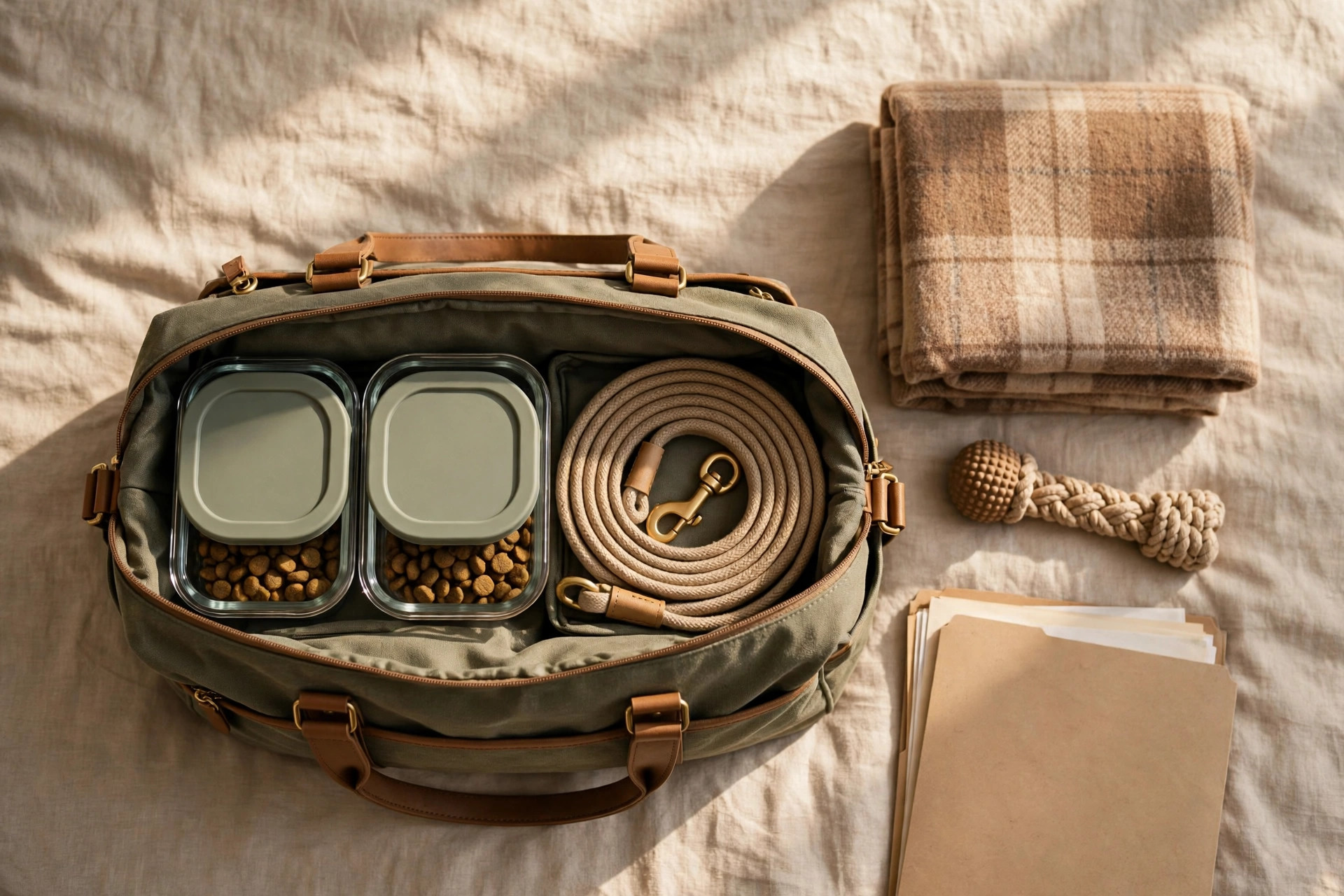
Bring enough of your dog's regular food for the full stay, plus two extra days in case travel delays stretch the trip. A sudden food change in a new environment is one of the fastest ways to upset a dog's stomach, so stick to the food your dog already eats. Pre-portion each meal into labeled bags or containers — one per feeding, marked with the day and time. It removes all guesswork for the staff and guarantees your dog eats the right amount every time.
11. Pack medications in their original containers with written instructions
If your dog takes any medication, pack it in its original packaging with the prescription label visible, plus a written note with the dose, the time, and how it is given. Never decant pills into an unmarked bag — a boarding facility cannot safely give a dog medicine it cannot identify. Tell the staff in person at drop-off that the medication is in the bag, and point out the note. This is also the moment to mention anything else the staff should know, like a food allergy or a fear of thunderstorms.
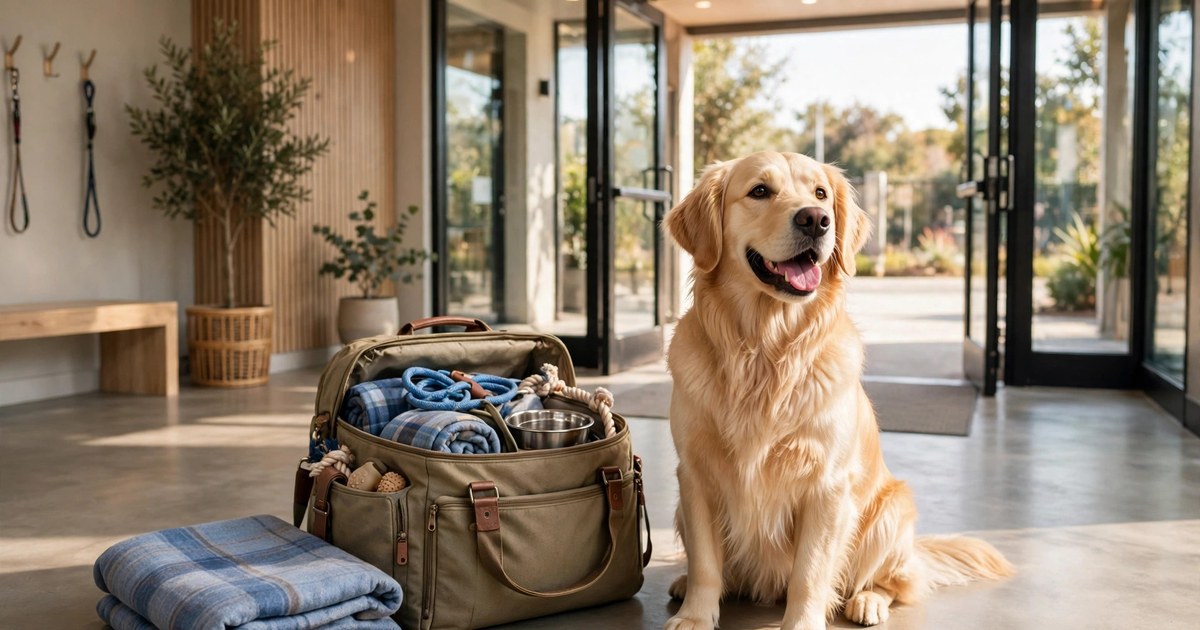
12. Pack one or two comfort items from home
A familiar-smelling blanket or a favourite toy can make a strange room feel like a safe one. Pack one or two comfort items — not a suitcase full. Too many things get lost, and a boarding facility is not your living room. Pack the comfort items last, the night before drop-off, so they still smell like home. If your dog sleeps in its own bed, ask the facility whether you can bring it; many allow it, and it is the single best comfort item there is.
Drop-Off Day: The Calm Handover
13. Confirm drop-off and pick-up times in writing
The day before, confirm the drop-off time, the pick-up time, and the pick-up person's name with the facility — in writing, by text or email. Boarding days are often charged by the calendar day or by a fixed check-out time, so a late pick-up can mean an extra night's charge. Knowing the exact times also keeps the day calm: you are not rushing, and the staff are expecting you. While you are at it, confirm your phone number is the one they will call, and that you will have signal where you are travelling.
14. Leave a local emergency contact and your vet's details
Leave the name and number of a local person who can make decisions for your dog if you cannot be reached, plus your vet's name, number, and address — and the nearest 24-hour animal hospital if your vet is not one. Write it on the routine sheet and say it out loud at drop-off. Facilities need this on file before an emergency happens, not during one. If your dog has any ongoing condition your vet manages, a short note from the vet in the bag saves everyone a phone call.
15. Keep the goodbye short and calm
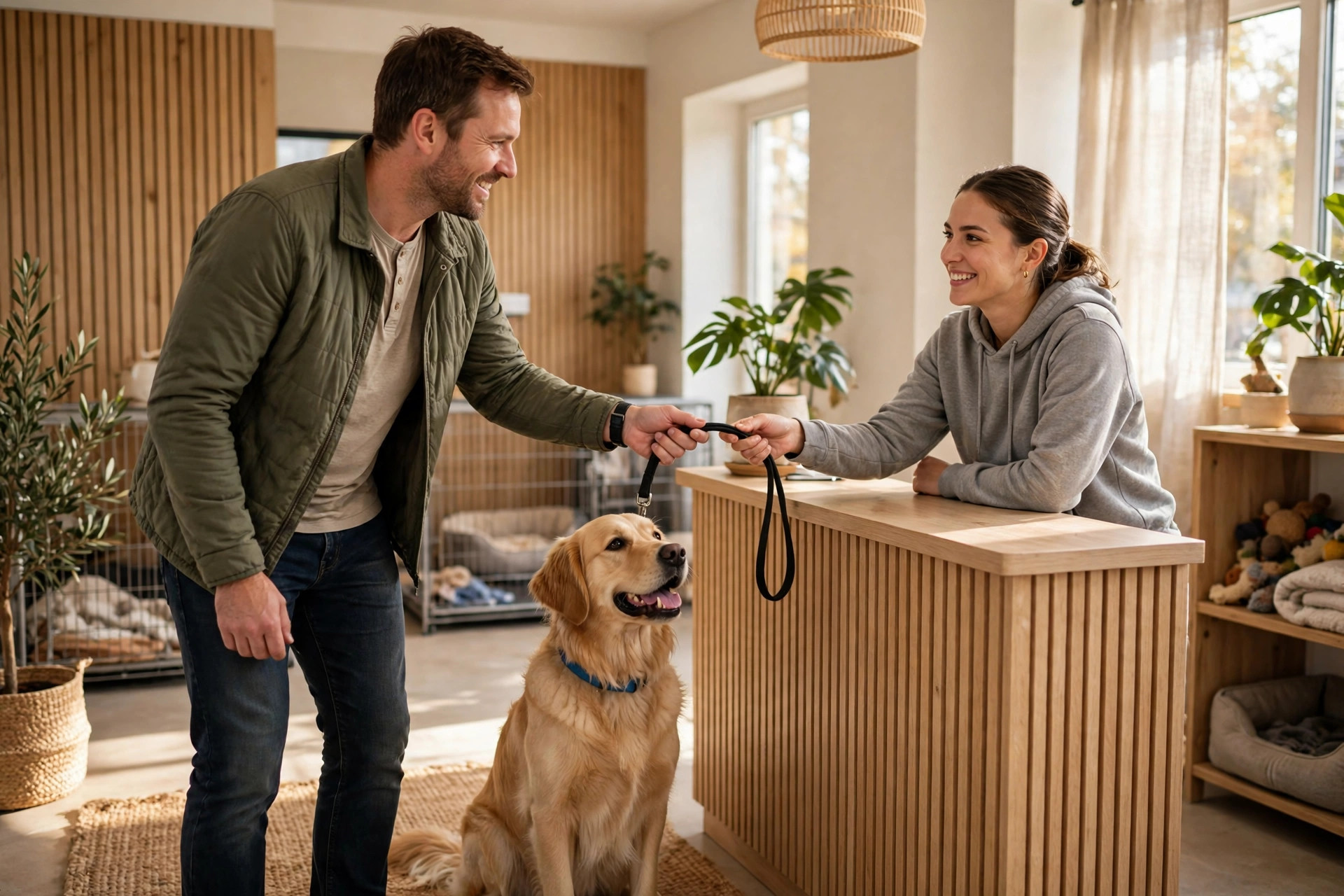
Dogs read your energy. A long, emotional goodbye tells your dog something is wrong; a calm drop-off with a treat and a cheerful tone tells it this is normal. Walk in, hand over the bag and the paperwork, share any last details, and leave with confidence. Do not linger at the door, and do not sneak away — a short, honest goodbye is easier on your dog than disappearing. Most dogs settle within the first day, and the staff will usually let you know how the first night went if you ask.
What to Ask the Boarding Facility Before You Book
Use these questions on your visit or your first phone call. The answers tell you more about a facility than any review can.
- How many dogs does each staff member look after at once, and is anyone on site overnight?
- How much exercise and playtime does each dog get, and is group play optional or mandatory?
- What happens if my dog needs a vet — which clinic do you use, and do you call me first?
- Can I bring my dog's own food, bed, and blanket?
- How do you handle a dog that will not eat, or a dog that is anxious on the first night?
- What is included in the nightly rate, and what costs extra?
- Can you send a photo or a short update during the stay?
A good facility answers all of these easily. A facility that rushes you, or cannot say what happens overnight, is a facility to skip. The VCA guide to boarding your dog covers the same ground from the veterinary side and is worth a read before your visit.
What to Pack for Dog Boarding
Here is the packing list in one place. Tick it off the night before drop-off.
- Your dog's regular food, pre-portioned and labeled, plus two extra days
- Medications in original containers, with written instructions
- Copy of vaccination records
- One-page routine sheet with feeding, walks, commands, quirks, and fears
- Vet's details and a local emergency contact
- Collar with current ID tag, plus a spare leash
- One familiar blanket and one favourite toy
- Your dog's bed, if the facility allows it
- Anything the facility specifically asked for — some ask for a signed intake form in advance
What not to pack: expensive items, anything you would be upset to lose, and a whole wardrobe of toys. One blanket and one toy do the job. If you are travelling by air instead of boarding, our flying with a dog checklist covers the same kind of prep for flights, and our holiday pet travel checklist covers trips where your dog comes along.
5 Mistakes First-Time Boarders Make
Leaving everything until the last minute. Vaccination paperwork, the trial stay, and the facility visit all need lead time — start four weeks out and the whole thing is relaxed.
Skipping the trial stay. It feels like an extra cost, but one trial night tells you more about a facility than ten reviews.
Packing a new food "for the trip". New food plus a new place is the classic recipe for an upset stomach — keep the food boring and familiar.
Writing a novel instead of a routine sheet. Staff need one page they can read in a minute. Long essays get skimmed; a clear one-pager gets followed.
Making a scene at drop-off. A tearful twenty-minute goodbye stresses your dog and delays the staff. Short, calm, and cheerful — then go and enjoy your trip.
After Pick-Up: Helping Your Dog Settle Back Home
Most dogs come home tired and a little clingy after a few days of new smells, new dogs, and a different routine — a day or two of extra sleep and cuddles is normal. Keep the first evening quiet, offer water and the usual food, and let your dog sleep. If your dog refuses food for more than a day or two after coming home, or seems unwell in any way, call your vet and mention the boarding stay — they can tell you whether it needs a visit. Check your dog's belongings before you leave the facility, too: blankets and toys are the items most often left behind.
Frequently Asked Questions
How far in advance should I book dog boarding?
Book as soon as your travel dates are fixed. Weekend nights often fill a week or two ahead, and holiday periods can fill a month or more in advance. Early booking also leaves time for a trial stay, which is the best way to know your dog will be comfortable.
What vaccinations do boarding kennels require?
Requirements vary by facility, so ask yours for its list in writing. Most ask for proof of rabies and the distemper/parvo combination vaccines, and many also require Bordetella. Some ask for canine influenza as well. Start checking four weeks before your trip — some vaccines need a waiting period before they count as valid.
Should I do a trial stay before boarding my dog?
Yes, especially if the trip is longer than a weekend or it is your dog's first time boarding. One trial night shows you how your dog settles, how the staff handle your dog, and whether the facility follows your instructions. It is cheap insurance before a long trip.
What should I pack for dog boarding?
Your dog's regular food in labeled portions plus two extra days, any medication in its original container with written instructions, a copy of vaccination records, a one-page routine sheet, your vet's details and a local emergency contact, a collar with a current ID tag, and one or two comfort items from home.
How much does dog boarding cost?
It depends on your area, the type of facility, and your dog's size, but most owners pay roughly $35–$65 per night for standard boarding, with budget options from around $25 and luxury pet hotels from $45–$125 or more. Our full breakdown of dog boarding costs in 2026 explains what's usually included and how to save.
Will my dog be sad while I am away?
Most dogs settle within the first day or two, especially if they have met the staff and the place before. A familiar blanket, their own food, and a clear routine all help. A short, calm goodbye on drop-off day helps more than a long one. If you are worried, ask the facility for a photo or a short update during the stay.
Conclusion
Boarding your dog is mostly a preparation job, not a luck job. Choose a facility that fits your dog, book early, sort the paperwork four weeks out, do a trial stay, and hand over a one-page routine sheet with a bag of familiar food and a blanket that smells like home. Do those fifteen things and drop-off day becomes a quick, calm handover instead of a worry. Your dog gets a few days of new friends and playtime, and you get a trip you can actually enjoy.
Planning a trip with your dog in mind? Use our dog age calculator to check your dog's age in human years — it helps you judge whether your senior dog needs the quieter boarding setup, or your young pup is ready for the group-play kennel.