Choosing a dog when you have kids is different from choosing one for yourself. The right family dog needs patience for sticky hands and loud games, a sturdy body for clumsy hugs, and a temperament that stays friendly when the house gets chaotic. The wrong match is not a bad dog — it is a bad fit, and the whole family feels it.
This guide covers the 12 breeds that do best in busy family homes, matched to your children's ages, plus breeds to avoid with toddlers, a five-step choosing method, and a first-30-days checklist.
What Actually Makes a Dog Good With Kids
Forget "cutest breed" lists. Four traits predict whether a dog will thrive with children:
- Patience: the dog tolerates sudden noise and grabbing hands without snapping or hiding.
- Sturdiness: medium and large breeds — or sturdy small ones — cope better with accidental bumps than fragile toy breeds.
- Trainability: a dog that learns "leave it" and "gentle" quickly is one your kids can safely help train.
- Energy match: a high-energy dog in a quiet home gets bored and destructive; a low-energy dog in a sporty family gets overwhelmed. Match the dog to your real weekly routine, not your ideal one.
One honest note: breed is a starting point, not a guarantee. How a dog is raised, trained, and socialized matters at least as much as its breed — meeting the individual dog with your kids present always beats trusting a ranking.
The 12 Best Dog Breeds for Families With Kids
| Breed | Size | Energy | Shedding | Best with |
|---|---|---|---|---|
| Labrador Retriever | 55–80 lb | High | Moderate | Ages 5+ |
| Golden Retriever | 55–75 lb | High | Heavy | All ages (supervised) |
| Beagle | 20–30 lb | High | Light | Ages 5+ |
| Cavalier King Charles Spaniel | 13–18 lb | Moderate | Moderate | All ages, apartments |
| Poodle (Standard) | 40–70 lb | Moderate–high | Low | Allergy-aware families |
| Boxer | 50–80 lb | High | Light | Ages 6+ |
| Newfoundland | 100–150 lb | Low–moderate | Heavy | Toddlers (supervised) |
| Bulldog | 40–50 lb | Low | Light | Calmer homes |
| Pug | 14–18 lb | Moderate | Moderate | Apartments, ages 5+ |
| Bichon Frise | 12–18 lb | Moderate | Low | All ages, apartments |
| Bernese Mountain Dog | 70–115 lb | Moderate | Heavy | Ages 6+, cool climates |
| Collie | 50–75 lb | Moderate | Heavy | Ages 5+ |
1. Labrador Retriever
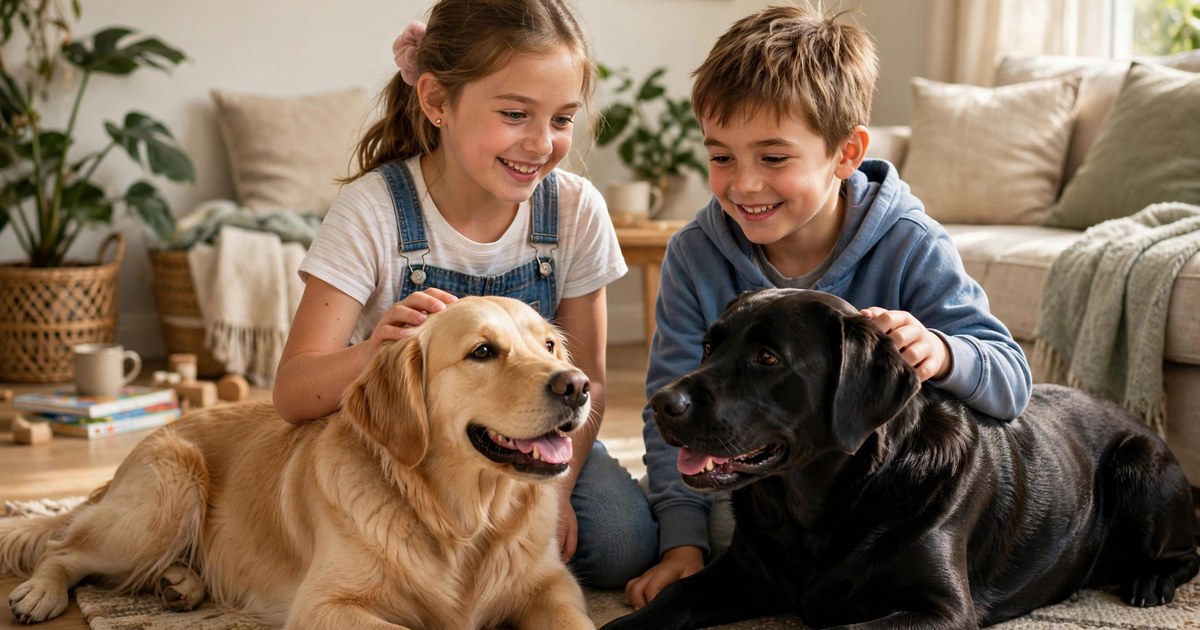
The default family dog for a reason: forgiving, food-motivated, and endlessly willing to join whatever the household is doing. Sturdy enough for rough play, and easy enough that older kids can genuinely help train. Watch out for: a long, bouncy puppyhood — Labs stay adolescent for up to three years and need real daily exercise.
2. Golden Retriever
Patient, gentle, and famously friendly — the breed most families picture with kids. They settle well around anxious children and get along with other pets too. Watch out for: heavy shedding and high energy — budget for daily brushing and an hour of activity.
3. Beagle
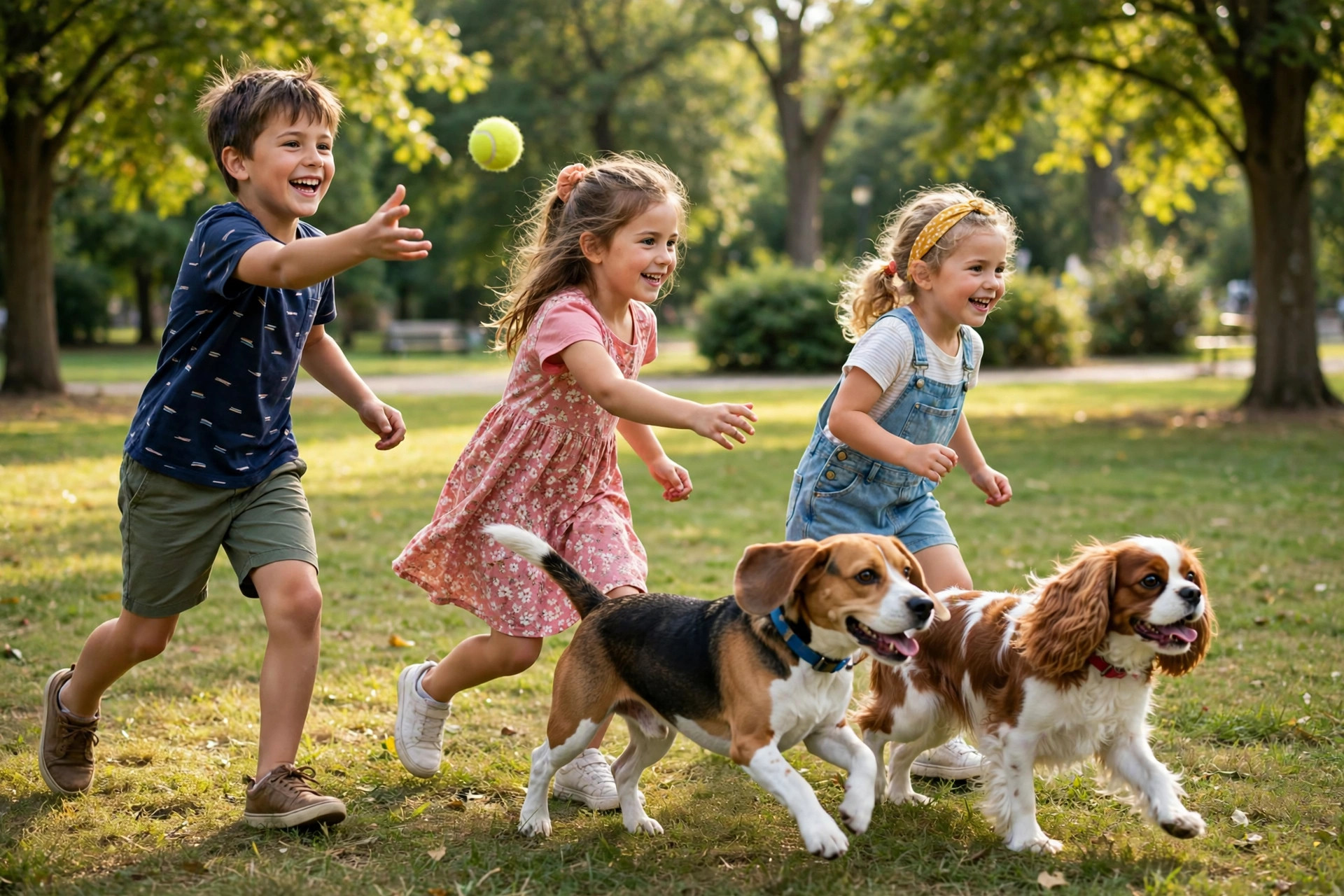
Cheerful, curious, and a manageable size, Beagles are happiest in a busy house. They love children and rarely have an aggressive bone in their body. Watch out for: the nose rules the dog — a fenced yard and reliable recall are non-negotiable, and Beagles can be vocal.
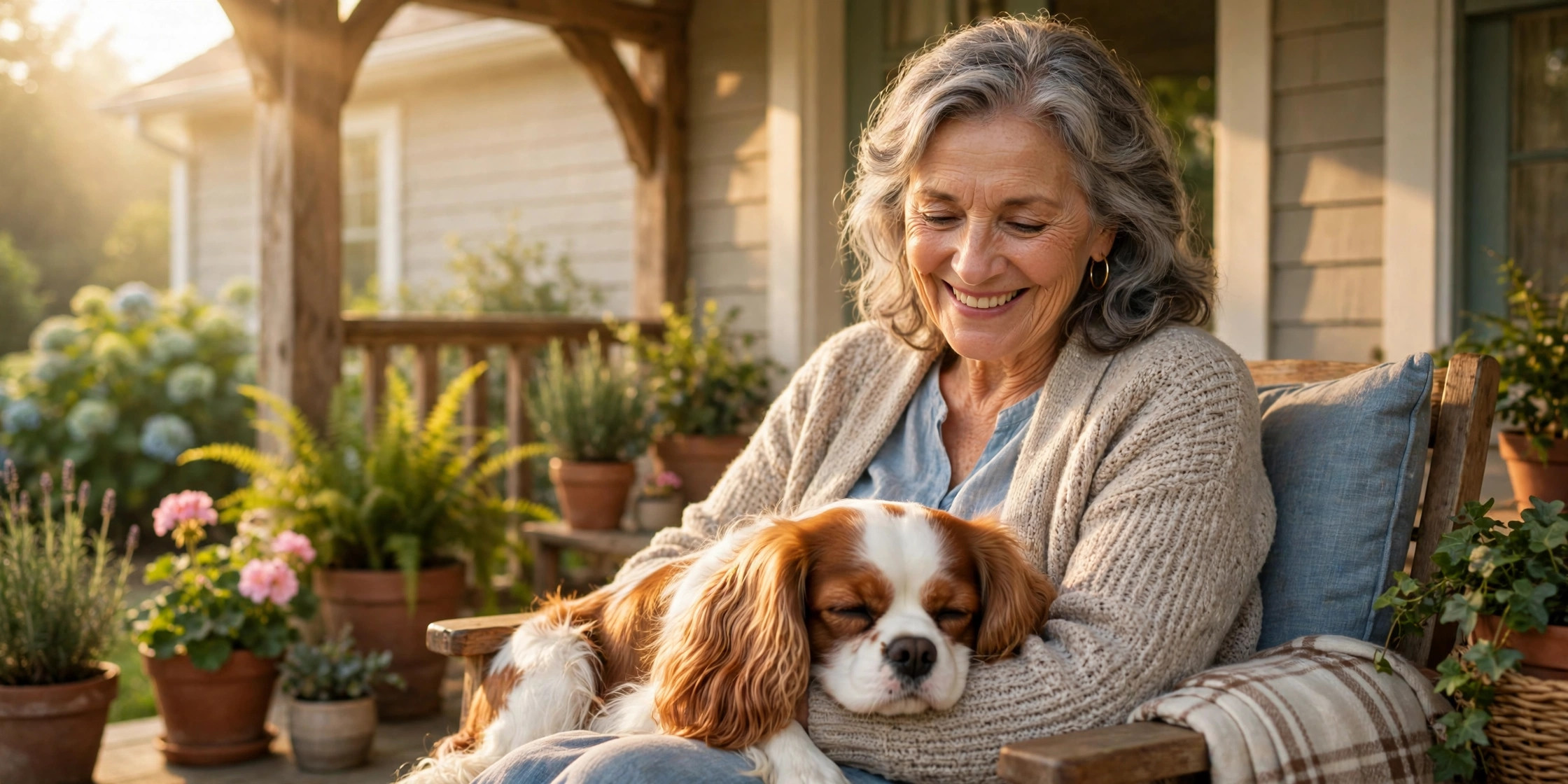
4. Cavalier King Charles Spaniel
Sweet, gentle, and adaptable, Cavaliers are happy in an apartment or a house and get along with almost everyone — one of the best small breeds for families because they are sturdy for their size and rarely snappy. Watch out for: they bond hard and hate being left alone long.
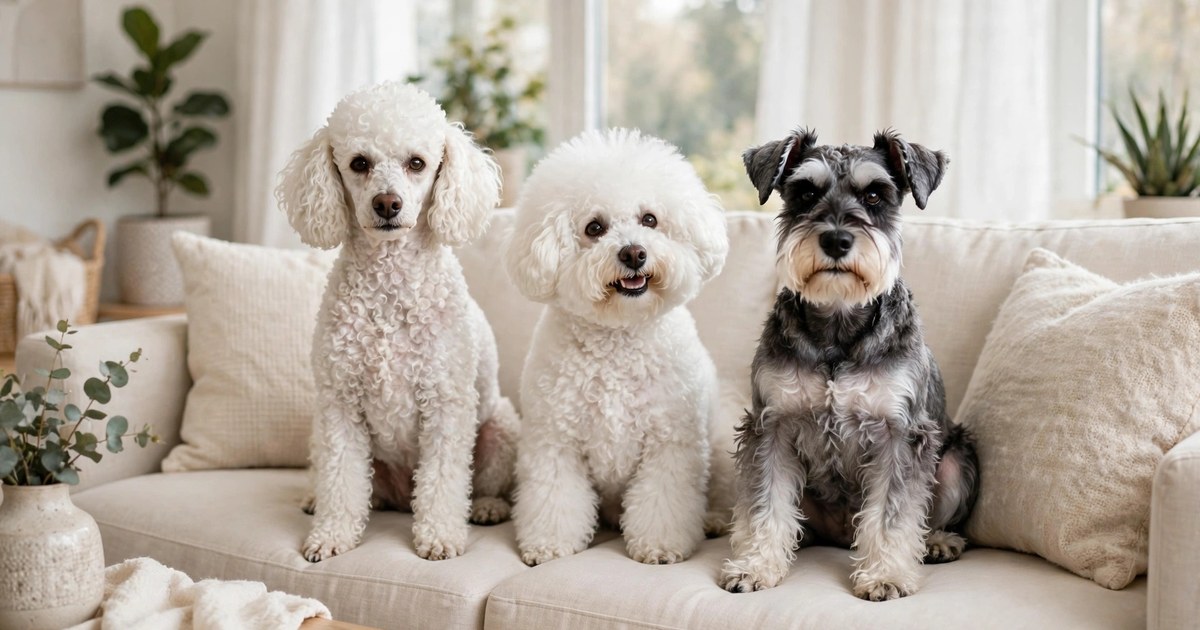
5. Poodle (Standard)
One of the most intelligent breeds available, in a low-shedding package. Standard Poodles are athletic, trainable, and great with kids who enjoy teaching tricks. Watch out for: they need daily mental work and regular grooming — both real time and money commitments.
6. Boxer
Playful well into adulthood and deeply attached to their people, Boxers are the family clown with a loyal streak. Watch out for: they stay puppy-like for years and can be boisterous — better with school-age kids than toddlers.
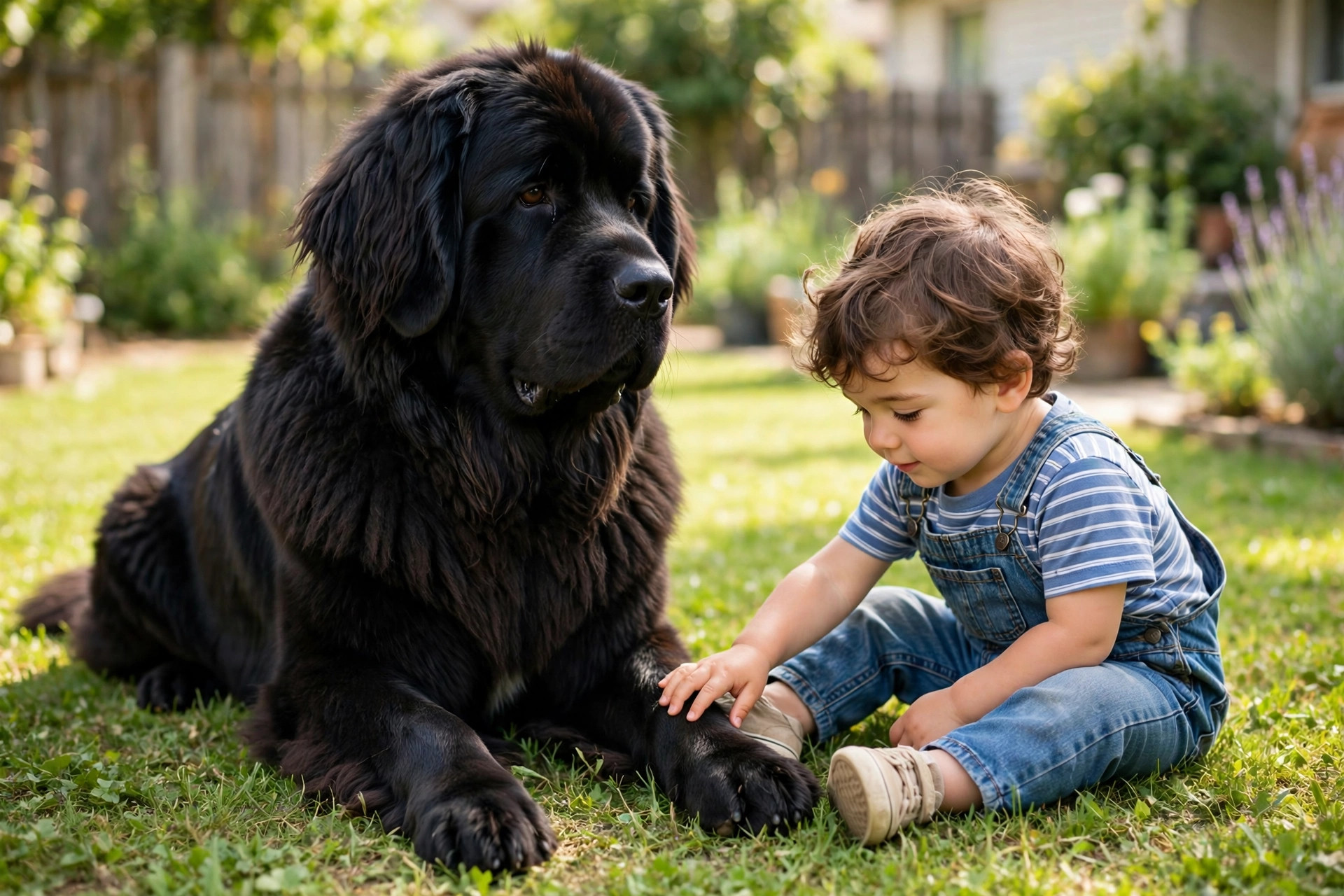
7. Newfoundland
A sweet, patient giant famous for gentleness with children — calm, tolerant, and famously steady around small kids. Watch out for: size and hair — at 100–150 lb they take up a lot of house, shed heavily, and drool.
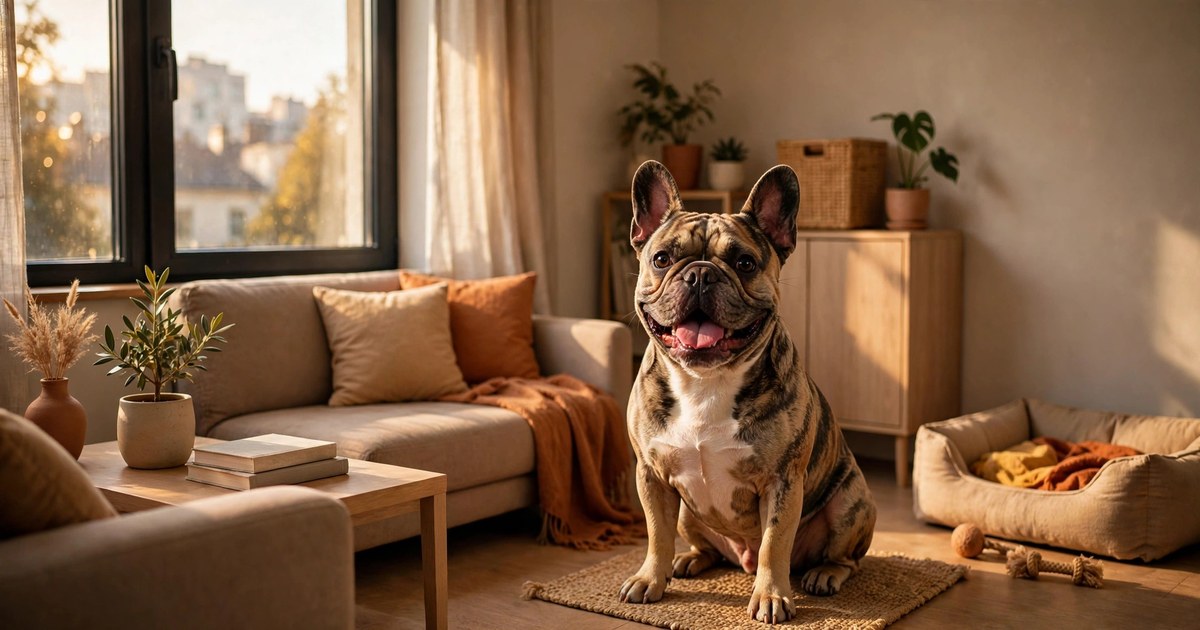
8. Bulldog
Calm, sturdy, and low-energy, Bulldogs suit quieter families and apartment living. They are patient with children and ask for very little exercise. Watch out for: heat — flat faces make hot weather hard work, so summer walks need shade, water, and short sessions.
9. Pug
Funny, loving, and happy to nap all day, Pugs are excellent apartment dogs and wonderful with children — small but sturdy, with a clownish personality kids love. Watch out for: the same flat-face heat caution as Bulldogs — keep summer activity gentle.
10. Bichon Frise
A cheerful, fluffy companion that gets along with everyone. Bichons are low-shedding, easy for beginners, and sturdy enough for family life despite their small size. Watch out for: the coat — soft white fur that mats quickly without regular brushing and grooming.
11. Bernese Mountain Dog
A gentle giant that loves families and cold weather. Berners are calm, affectionate, and famously patient with children. Watch out for: large size, heavy coat, and a shorter lifespan than smaller breeds.
12. Collie
Gentle, devoted, and easy to train, Collies are classic family dogs with a watchful, protective streak. They are wonderful with respectful school-age kids. Watch out for: heavy shedding, a coat that needs regular brushing, and a herding instinct with running children.
Best Breeds by Your Child's Age
The same breed can be perfect for one family and wrong for another — often the deciding factor is the age of your youngest child.
Toddlers (under 3)
Go for calm, sturdy, and tolerant: Newfoundland, Golden Retriever, Bulldog, Cavalier. The dog must cope with grabbing, ear-pulling, and sudden screams. Always supervise — no breed is safe left alone with a toddler.
Ages 5–9
Kids can now help with feeding, walking, and simple training. Great fits: Labrador, Beagle, Boxer, Collie, Bichon Frise. This is the sweet spot for most breeds on this list — kids are sturdy enough for boisterous play and old enough to learn the house rules.
Ages 10 and up
Almost any breed on this list works, including higher-energy ones like Poodles and Bernese Mountain Dogs, because older kids can take real responsibility: daily walks, grooming, and training sessions.
Breeds to Think Twice About With Very Young Kids
These are not bad breeds — just harder matches for a house with toddlers:
- Tiny toy breeds (Chihuahua, Yorkie): fragile enough to be injured by rough handling, and some snap defensively when frightened.
- High-drive working breeds (Border Collie, Australian Shepherd, Belgian Malinois): brilliant but need intense exercise and a job, and may herd or nip running children.
- Very strong guardian breeds: powerful, protective dogs need experienced handling and structured training most busy families cannot give a puppy and a toddler at once.
If your heart is set on one of these, wait until your youngest is at least 6, or adopt a calm adult of that breed with a known history around children.
How to Choose in 5 Steps
- Audit your week honestly. Note how many hours a day someone is home, how much walking you will really do, and how much grooming you will really pay for — then pick the breed that fits that week.
- Match energy first, looks second. A calm family with a Border Collie and a running family with a Bulldog will both be unhappy.
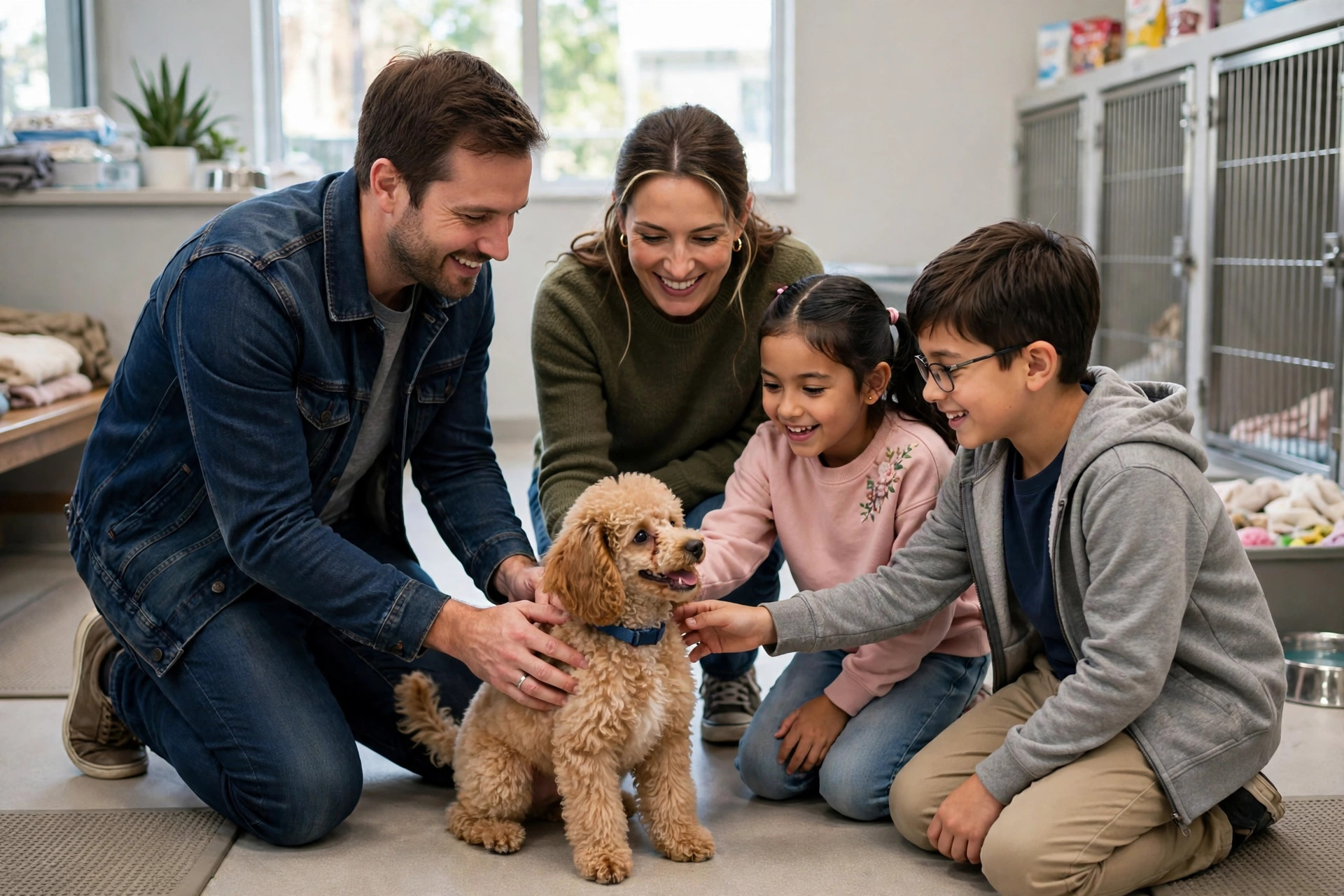
- Meet the actual dog. Visit the breeder or shelter with your kids and watch how the dog reacts to noise, sudden movement, and small hands.
- Ask about the parents and the history. A good breeder or shelter will tell you about temperament, health testing, and behaviour around children. If they will not answer, walk away.
- Plan the first month before the dog arrives. Food, bed, crate, vet visit, and a training class booked in advance.
The First 30 Days Checklist
- Set up a quiet "dog zone" with a bed and water, where kids leave the dog alone when it retreats there.
- Teach kids the three rules on day one: no hugging around the neck, no taking food or toys from the dog, and no chasing a dog that walks away.
- Keep the first week low-key: short garden play, calm visitors only, no big gatherings until the dog knows the house.
- Start one simple training routine the whole family uses — same words, same rules.
- Book a vet check in the first week and a training class in the first month.
- Use our dog age calculator to work out your new dog's age in human years.
Frequently Asked Questions
What is the best dog breed for a family with toddlers?
There is no single answer, but calm, sturdy breeds are the safest starting point: Newfoundlands, Golden Retrievers, Bulldogs, and Cavaliers. Whatever breed you choose, never leave a toddler unsupervised with any dog.
What is the best small dog breed for kids?
Beagles, Cavaliers, Pugs, and Bichon Frises are the strongest small picks — sturdy for their size, friendly, and apartment-friendly. Avoid very fragile toy breeds with children under 5.
Are Labradors or Golden Retrievers better with kids?
Both are excellent, and the difference is small. Labs are slightly more boisterous and forgiving of beginner mistakes; Goldens are slightly softer and more sensitive. A very active family suits a Lab; a calmer home suits a Golden.
Which family dog breeds shed the least?
Poodles and Bichon Frises shed the least on this list, thanks to their curly, low-shedding coats. No breed is guaranteed allergy-free, so spend time with the breed first if allergies are a concern — see the AKC breed directory for coat details.
Should we get a puppy or an adult dog?
A puppy lets you shape training from the start but needs months of house training and supervision — hard with a toddler in the house. A calm adult dog from a shelter with a known history around kids is often the easier choice for young families. See also our guide to the best dog breeds for first-time owners.
How much exercise does a family dog really need?
It depends on the breed: Bulldogs and Cavaliers are happy with 30–45 minutes a day, while Labradors, Boxers, and Beagles need 60–90 minutes plus play and training. Involve the kids — a daily family walk meets the dog's needs and tires everyone out. If you live in a small space, our apartment dog breeds guide matches lower-energy breeds to smaller homes.
Conclusion
The best dog for your family is not the top-ranked breed on any list — it is the dog whose energy, size, and temperament fit your real life, your schedule, and your children's ages. Start with the traits that matter, narrow it down by your youngest child's age, meet the actual dog with your kids, and plan the first 30 days before you bring it home.
Once you have a shortlist, puppy-proof the house with our dog-proofing checklist for a new puppy, and use the dog age calculator to understand your new companion's life stage. Done right, a family dog is not just a pet — it is your kids' first best friend. For more, the ASPCA dog care guide and VCA's pet care library are solid next reads.