Why Do Dogs Like Chew Toys? 6 Reasons Explained (2026)
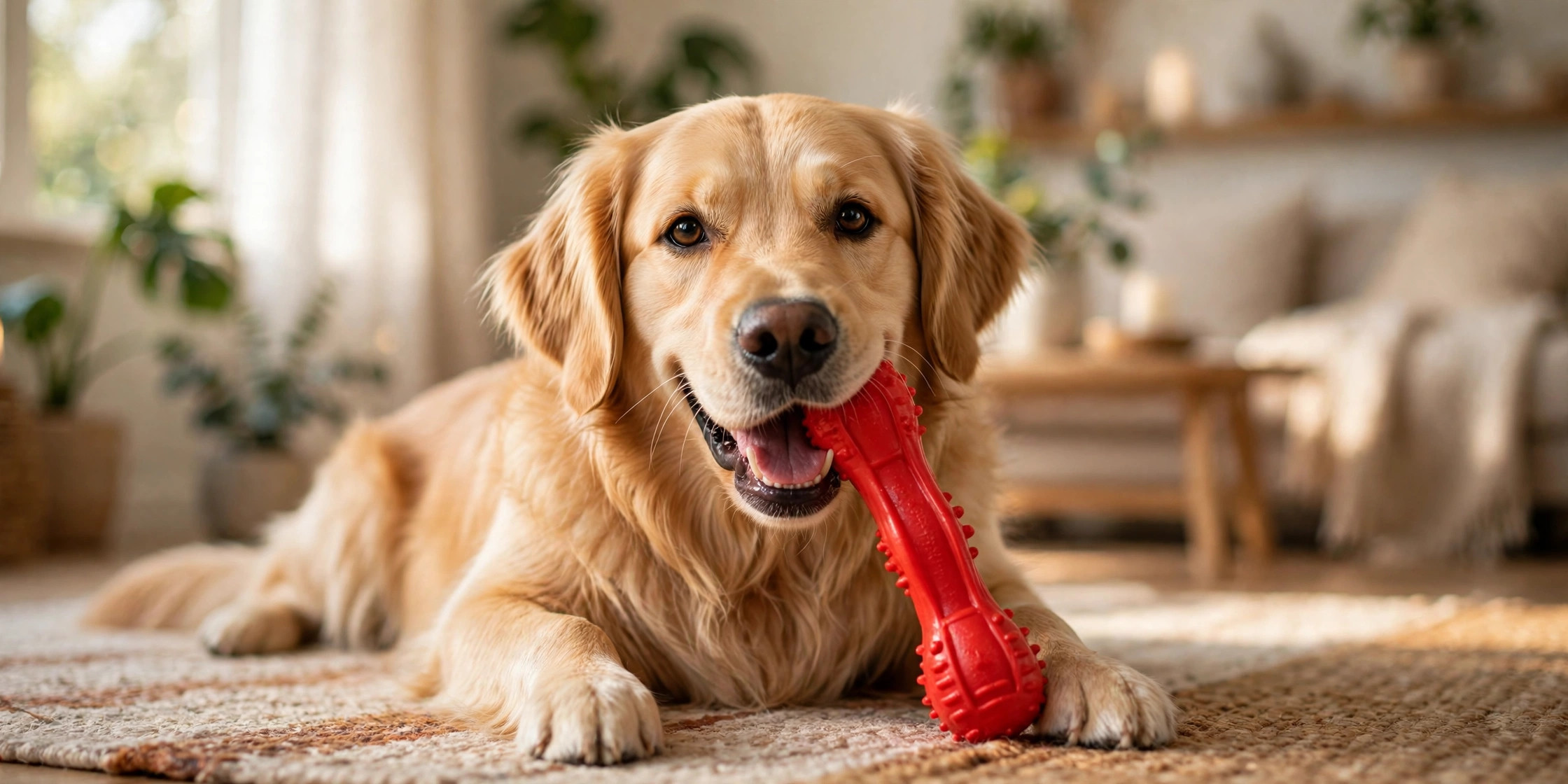
Watch a dog with a favourite chew toy and you will see pure joy: focused eyes, a thumping tail, and a total refusal to give it up. It looks like play, but it is much more than that. Chewing is one of the oldest, deepest instincts a dog has, and a good chew toy taps straight into it.
Here are the six real reasons dogs love chew toys, a five-step method for picking the right one, a safety checklist, and answers to the questions owners ask most.
The Short Answer: Chewing Is Hardwired Into Dogs
Dogs do not chew because they are naughty. Chewing is natural for dogs of all ages. Puppies chew to explore and to soothe sore gums. Adult dogs chew to pass the time, to relax, and to keep their jaws strong. The wild ancestors of the domestic dog spent much of every day tearing and gnawing, and that urge never left. A chew toy is the modern, safe outlet for it.
6 Reasons Dogs Love Chew Toys
1. It Is in Their DNA
Dogs descend from wolves, and wolves chew. Their sharp teeth and powerful jaws evolved for tearing food apart and crunching through bone to reach the rich marrow inside. That hardware is still there in your living-room Labrador or terrier, and chewing a toy exercises the jaw muscles and satisfies an urge thousands of years old.
2. Chewing Feels Good — Literally
Chewing is genuinely pleasurable. The repetitive action releases endorphins, the same feel-good chemicals that make exercise enjoyable for people. That is why a stressed or overexcited dog often settles down once you hand over a chew toy: the act itself is calming. A dog that paces when guests arrive will often relax within minutes of starting to chew. The toy is not a distraction. It is a self-soothing tool your dog reaches for on purpose.
3. It Soothes Sore Puppy Gums
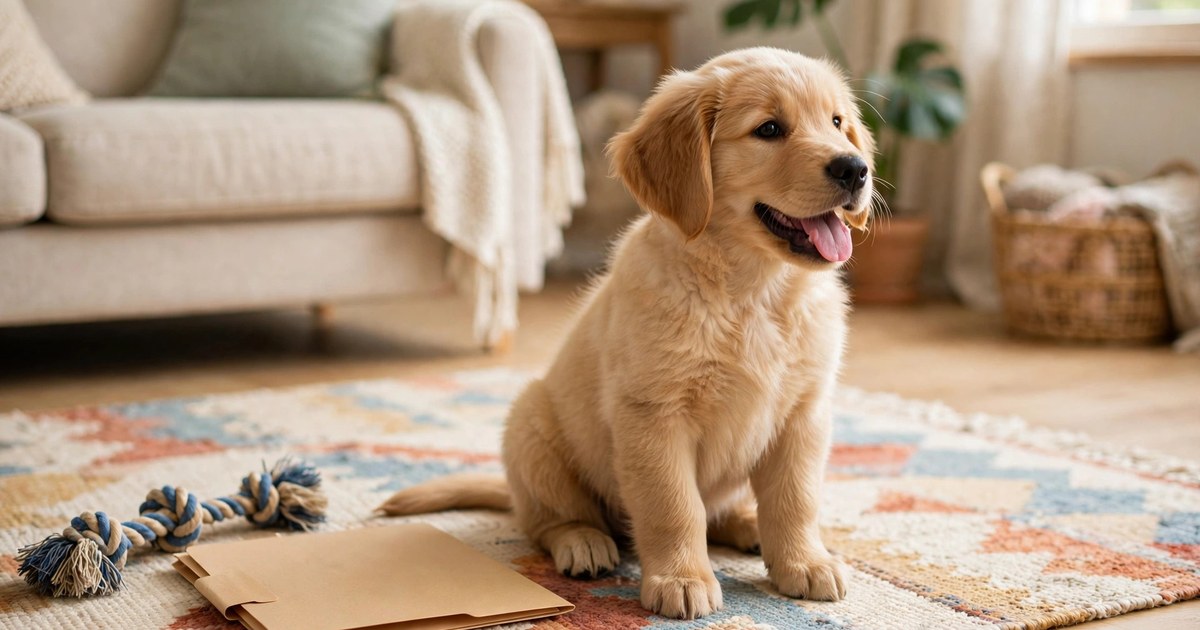
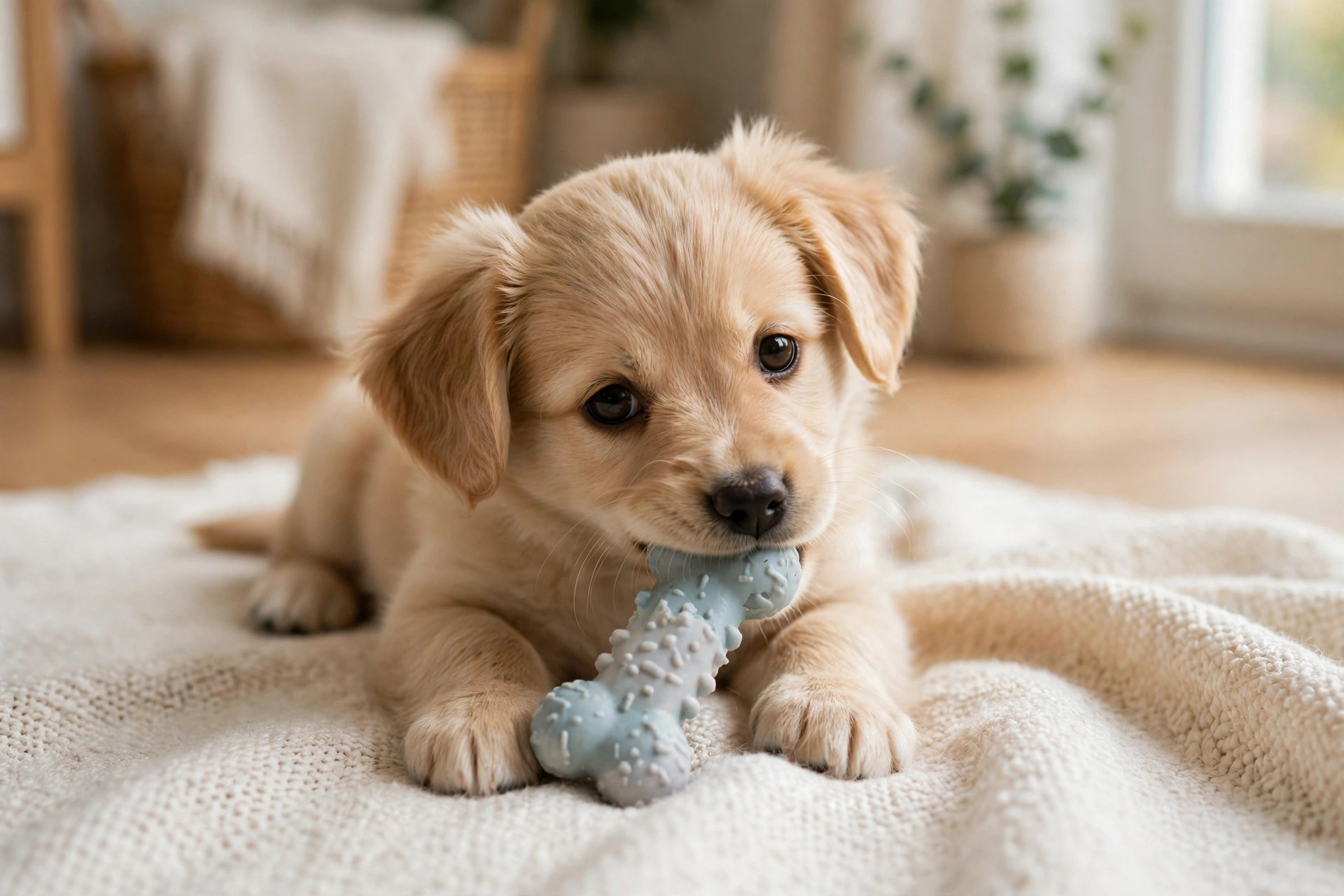
For puppies, chewing is relief. Puppies get their baby teeth as early as two weeks old, and those teeth start falling out at about three to four months to make room for 42 adult teeth. The process is usually finished by six months, and the gums are sore for much of it. That is why puppies chew everything: shoes, table legs, your fingers. A soft rubber teething toy, especially one chilled in the fridge, gives sore gums something safe to press against. The American Kennel Club lists freezable rubber toys and flavoured puppy chew toys as good options, and reminds owners to always supervise chewing and playtime.
4. It Beats Boredom
A bored dog is a destructive dog. Dogs that do not get enough exercise or mental stimulation invent their own entertainment, and their invention is usually your sofa or your shoes. Chew toys solve this in the simplest way: they give a restless mind a job. Treat-dispensing toys are the best version of this — a hollow rubber toy stuffed with kibble turns ten minutes of chewing into a puzzle, and a dog that has worked for its food naps happily afterwards.
5. It Helps Keep Teeth Cleaner
The mechanical action of chewing scrapes the tooth surface as a dog gnaws, and toys with ridges or nubs can help dislodge bits of food stuck between the teeth. But be honest about the limits: a chew toy is not a toothbrush and does not replace brushing or professional dental care. If your dog has bad breath, bleeding gums, or a broken tooth, that is a job for your vet, not a toy.
6. It Comforts Anxious or Lonely Dogs
Some dogs chew because they are worried. Dogs that chew mostly when left alone may be coping with separation stress, and dogs that chew when frustrated are blowing off steam the only way they know how. A familiar chew toy becomes a comfort object, like a child's favourite blanket: it smells like home and the chewing rhythm is soothing. That is why shelters often give new arrivals a chew toy on their first day.
If chewing suddenly turns frantic or constant, add more exercise and company and calm your leaving routine — that often helps more than a new toy. The ASPCA guide to destructive chewing explains the common causes and the first steps for redirecting the behaviour.
How to Pick the Right Chew Toy in 5 Steps
Not every chew toy suits every dog. A toy perfect for a gentle senior can be shredded in minutes by a powerful chewer, and a toy that is too hard can damage teeth. Use these five steps every time you shop:
Step 1: Match the size to your dog. The toy should be too big to fit entirely in your dog's mouth, but small enough to carry. Too small is a choking risk; too big will be ignored.
Step 2: Match the toy to your dog's chew style. Gentle chewers do well with softer rubber and plush toys. Moderate chewers need durable rubber. Power chewers need the toughest toys made for aggressive chewing, and should still be supervised.
Step 3: Choose the right material. Hard rubber is the safest all-rounder. Nylon chew toys suit strong chewers if sized for your dog's weight. Avoid anything rock-hard, like antlers or real bones, unless your vet says it is fine. Avoid cooked bones entirely: they splinter.
Step 4: Do the thumbnail test. Press your thumbnail into the toy. If you can make a small dent, it has enough give to be kind to teeth. If it is completely unyielding, it is probably too hard.
Step 5: Watch the first session. Give the new toy and watch for ten minutes. If your dog chews chunks off it or cracks pieces free, take it away. That toy is not the right match, no matter what the packaging promised.

The Chew Toy Safety Checklist
Save this list on your phone. Run through it once a month, and every time you bring a new toy home:
- Size check: the toy is too large to be swallowed or stuck behind the back teeth.
- No small parts: no buttons, squeakers, or loose pieces your dog can bite off.
- No cooked bones: cooked bones splinter and can injure the mouth, throat, or stomach.
- Weekly inspection: check every toy once a week for cracks, tears, and missing chunks.
- Replace worn toys: throw a toy away as soon as it has rips, deep punctures, or loose stuffing.
- Supervise power chewers: strong chewers should never be left alone with a new toy until you know how they handle it.
- Wash regularly: rubber and nylon toys collect saliva and dirt. Wash with warm soapy water and rinse well.
- Rotate the toys: keep two or three in play and swap them every few days. An old toy feels new again after a week in the cupboard.
VCA Animal Hospitals makes the same point in its guide to destructive chewing: most chewing problems are solved by giving the dog appropriate things to chew and managing the environment, not by punishing a natural behaviour.
What to Do When Your Dog Chews the Wrong Thing
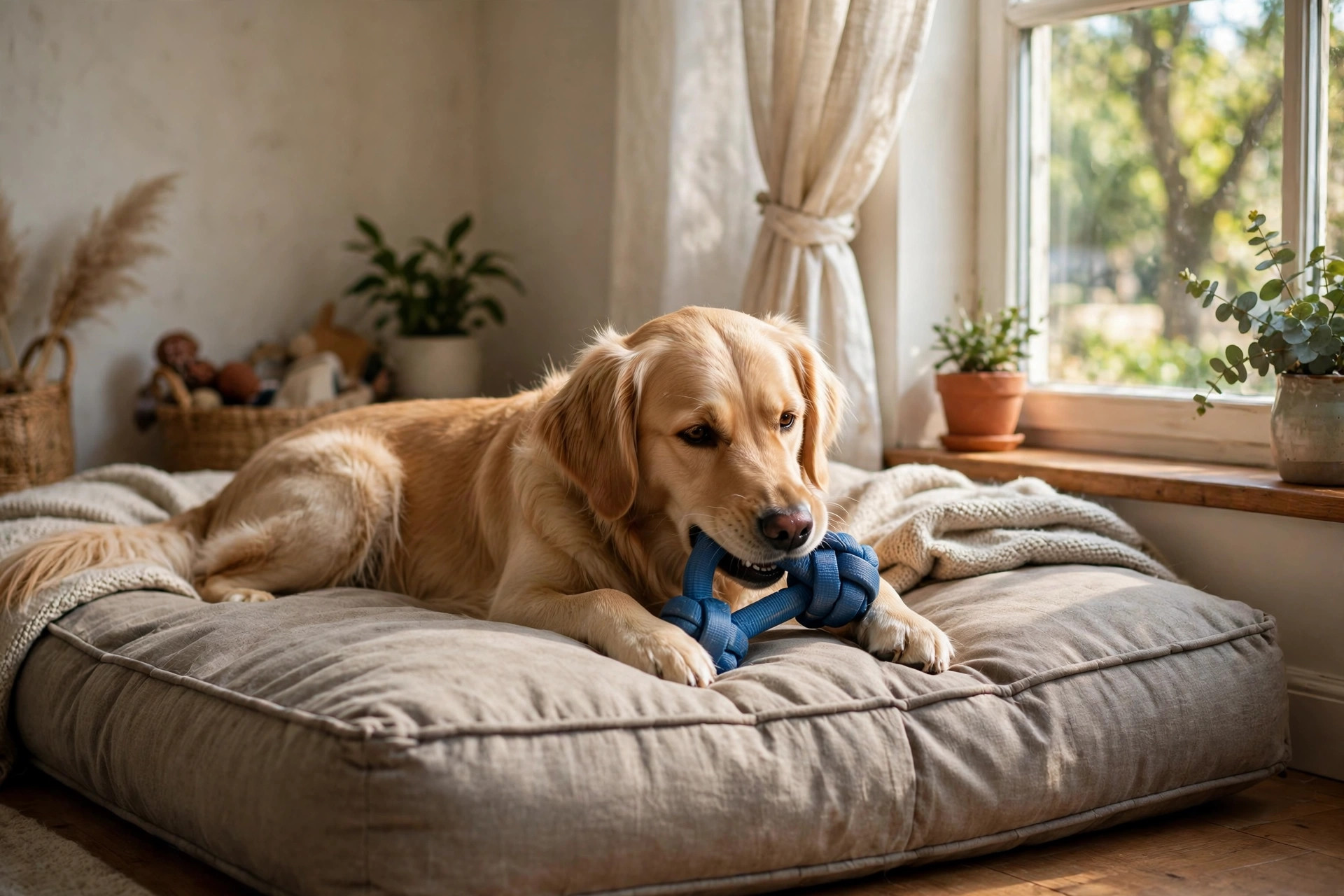
Every dog owner has lost something to chewing: a shoe, a phone charger, a chair leg. The fix is not anger. It is redirection, and it works best when you catch the behaviour in the moment. Take the item away without a fuss, then immediately offer the chew toy and praise your dog warmly the moment they take it. Dogs repeat what gets rewarded.
Prevention matters as much as training. Keep tempting items out of reach, close doors to rooms you cannot supervise, and keep a chew toy within easy reach. A dog with a good toy in front of it rarely goes looking for a bad one. The AKC article on why dogs chew furniture and baseboards explains this trade: provide an appropriate alternative first, and the furniture usually survives.
Frequently Asked Questions
Why does my dog chew only when I leave the house?
Usually boredom or separation stress. A treat-dispensing chew toy given right as you leave gives your dog a job and makes your departure a good thing. If the behaviour is intense — howling, drooling, escape attempts, or damage to doors — talk to your vet or a qualified behaviour professional, because that points to separation anxiety.
Are chew toys safe to leave with my dog unsupervised?
It depends on the toy and the dog. Sturdy rubber toys your dog has chewed safely many times are usually fine. New toys, edible chews, toys with squeakers, and anything your dog has damaged before should only be given under supervision. Remove a toy the moment it starts to break apart.
How long should a dog chew each day?
Most dogs are happy with 20 to 30 minutes spread across the day, plus a longer session with a stuffed or treat-dispensing toy. Puppies and high-energy breeds often want more.
Why does my puppy chew everything?
Puppies explore the world with their mouths, and teething makes it worse. Baby teeth start falling out at about three to four months, and sore gums drive puppies to chew anything they can reach. Give your puppy several safe teething toys, rotate them, and keep shoes, cables, and small objects out of reach until the adult teeth are in at about six months.
Do chew toys replace brushing my dog's teeth?
No. Chewing helps scrape the tooth surface and can support cleaner teeth, but it does not replace brushing or professional dental care. Think of chew toys as a helpful extra alongside brushing, not a substitute for it.
What should I do if my dog swallows a piece of a chew toy?
Stay calm and watch your dog closely. Small, soft pieces often pass on their own, but larger or hard pieces can cause a blockage. If your dog is vomiting, retching, refusing food, or seems in pain, contact your vet straight away and tell them exactly what was swallowed. Prevention — the right size, regular inspection, and supervision — matters more than anything.
The Bottom Line
Dogs love chew toys because chewing is who they are: instinct, pleasure, teething relief, boredom relief, and comfort in one habit. Pick the right toy for your dog's size and chew style, check it regularly, and let your dog enjoy it.
Want more ways to keep your dog happy and busy? Try our 20 indoor games for dogs on rainy days, or take the breed-match quiz to see which dog fits your lifestyle. And if you are curious how old your dog really is in human years, our dog age calculator gives you the answer in seconds.