A 40 lb dog usually needs a 30-inch crate. That is the size most crate makers list for dogs in the 26 to 40 lb range. But weight alone is a shortcut, not a measurement. A stocky 40 lb French Bulldog and a leggy 40 lb Border Collie mix weigh the same and are very different shapes — and the right crate for one can be the wrong crate for the other.
The Short Answer: What Size Crate for a 40 lb Dog?
For most adult dogs that weigh 40 lb, a 30-inch crate is the right size. A standard 30-inch wire crate measures about 30 inches long, 20 inches wide, and 23 inches high on the outside, and it is sold as a medium crate. It fits dogs up to about 26 inches long (nose to base of tail) and about 20 inches tall.
That covers the most common 40 lb breeds and mixes: Beagles, French Bulldogs, Cocker Spaniels, Corgis, and medium mixed-breed dogs. If your dog is still growing, is unusually tall or long for 40 lb, or measures over the limits above, go up to a 36-inch crate instead.
How to Measure Your Dog for a Crate
Weight charts are a starting point — your tape measure decides. PetMD puts it plainly: base crate size on your dog's measurements, not on weight or breed alone.
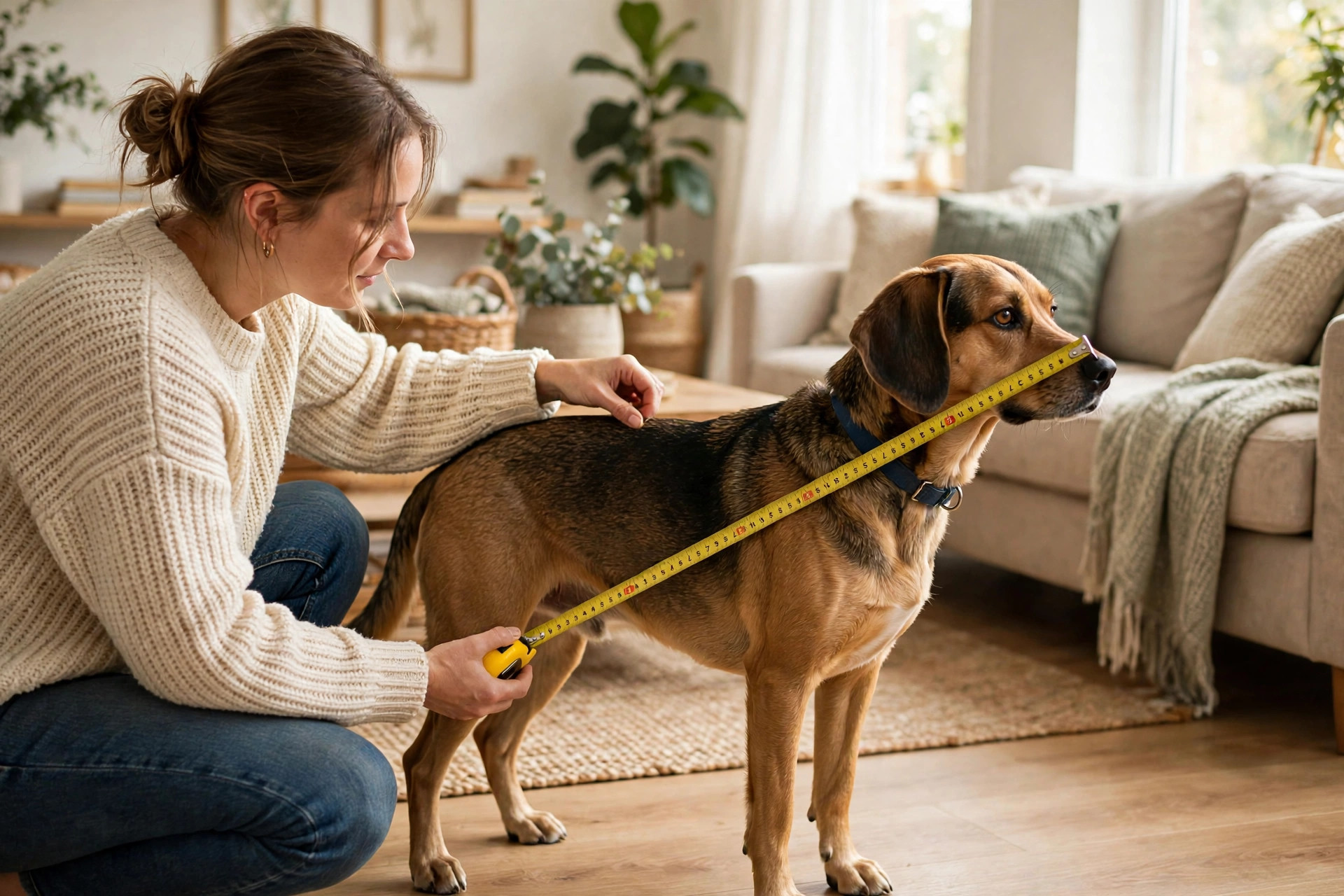
Step 1: Measure length
Have your dog stand on all four paws. Measure from the tip of the nose to the base of the tail — where the tail meets the body, not the tip. For a typical 40 lb dog this is usually 24 to 26 inches.
Step 2: Measure height
Have your dog sit. Measure from the floor to the top of the head, or to the ear tips if the ears stand upright. For a typical 40 lb dog this is usually 19 to 21 inches.
Step 3: Add 2 to 4 inches to each number
Add 2 to 4 inches to the length and 2 to 4 inches to the height. The American Kennel Club suggests 3 to 4 inches, the safer end of the range. This extra room lets your dog stand up without crouching, turn around, and lie down stretched out flat.
Step 4: Compare with the crate's inside dimensions
Check the inside dimensions, not the outside ones. A "30-inch crate" is usually 30 inches on the outside, and the interior is often an inch or two smaller.
Worked example: a 40 lb Beagle mix
Say your dog measures 26 inches long and 21 inches tall sitting. Add 4 inches to each: you need at least 30 inches of interior length and 25 inches of interior height. A standard 30-inch crate gives roughly 29 inches of interior length and about 22 inches of interior height — the length fits, but the height is tight. If your dog is 22 inches or taller sitting, size up to the 36-inch crate.
Crate Size Chart by Dog Weight
Use this chart as a starting point, then confirm it against your own dog's measurements. Sizes are typical wire-crate dimensions and vary by an inch or two between brands.
| Crate length | Typical size (L x W x H) | Dog weight | Example breeds |
|---|---|---|---|
| 18 inch | 18 x 12 x 14 in | Up to 10 lb | Chihuahua, teacup breeds |
| 24 inch | 24 x 18 x 19 in | 11 to 25 lb | Dachshund, Shih Tzu, Miniature Poodle |
| 30 inch | 30 x 20 x 23 in | 26 to 40 lb | Beagle, French Bulldog, Corgi, Cocker Spaniel |
| 36 inch | 36 x 24 x 26 in | 41 to 70 lb | Border Collie, Bulldog, Australian Shepherd |
| 42 inch | 42 x 28 x 30 in | 71 to 90 lb | Labrador, Golden Retriever, Boxer |
| 48 inch | 48 x 30 x 32 in | 91 to 110 lb | German Shepherd, Rottweiler |
The 40 lb Boundary: When to Choose a 36-Inch Crate Instead
Forty pounds is a boundary weight. Most charts put 26 to 40 lb in a 30-inch crate and 41 to 70 lb in a 36-inch crate, but a few start the 36-inch band at 40 lb. At exactly 40 lb, your dog's shape decides. Size up to a 36-inch crate if any of these apply:
- Long or tall for the weight. If nose-to-tail plus 4 inches is over 29 inches, or sitting height plus 4 inches is over 22 inches, the 30-inch crate will be cramped.
- Still growing. A puppy at 40 lb now, expected to reach 50 or 60 lb as an adult, needs the adult-size crate with a divider panel.
- Long-bodied or a sprawler. Long, low dogs such as Basset Hound mixes need the extra length; sprawlers need the extra 6 inches.
One warning about going bigger: a crate that is far too large can slow down house training, because a puppy may use one end as a bathroom and sleep in the other. A 36-inch crate for a 40 lb dog is roomy; a 42-inch crate for the same dog is oversized.
Buying for a Puppy? Get the Adult Size and Use a Divider
If your puppy weighs 40 lb now but will grow past it, do not buy a 30-inch crate you will replace in six months. Buy the crate that fits your puppy's expected adult weight — usually a 36-inch crate — and use a divider panel to shrink the usable space while they are small.
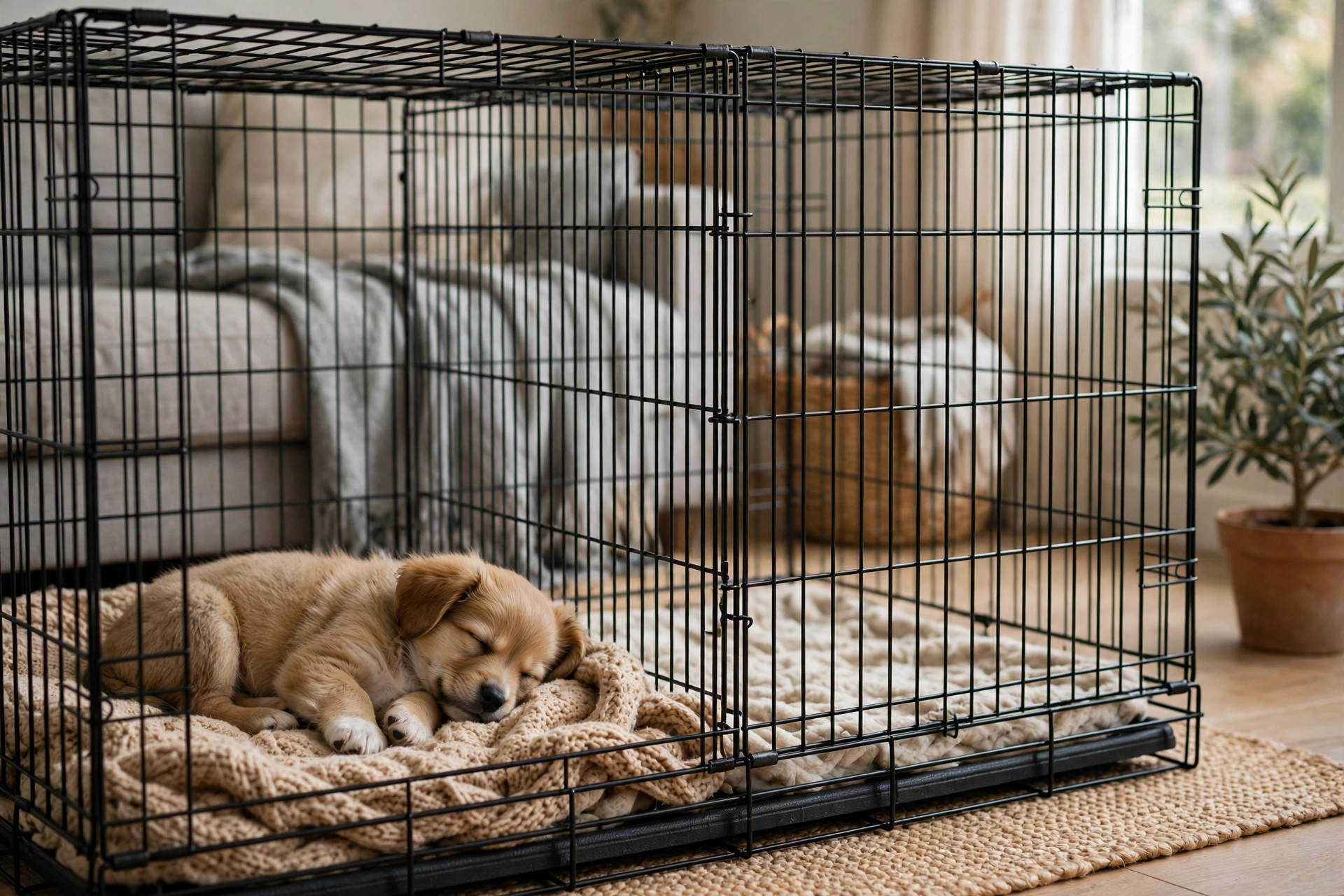
Most 36-inch wire crates either include a divider or sell one as an add-on. Move it back as your puppy grows, a few inches at a time. If you are unsure what your puppy's adult weight will be, ask the breeder or your vet for an estimate before you buy. Puppies under six months old should also not stay in a crate for more than three to four hours at a time during the day.
Wire vs Plastic vs Soft-Sided Crates
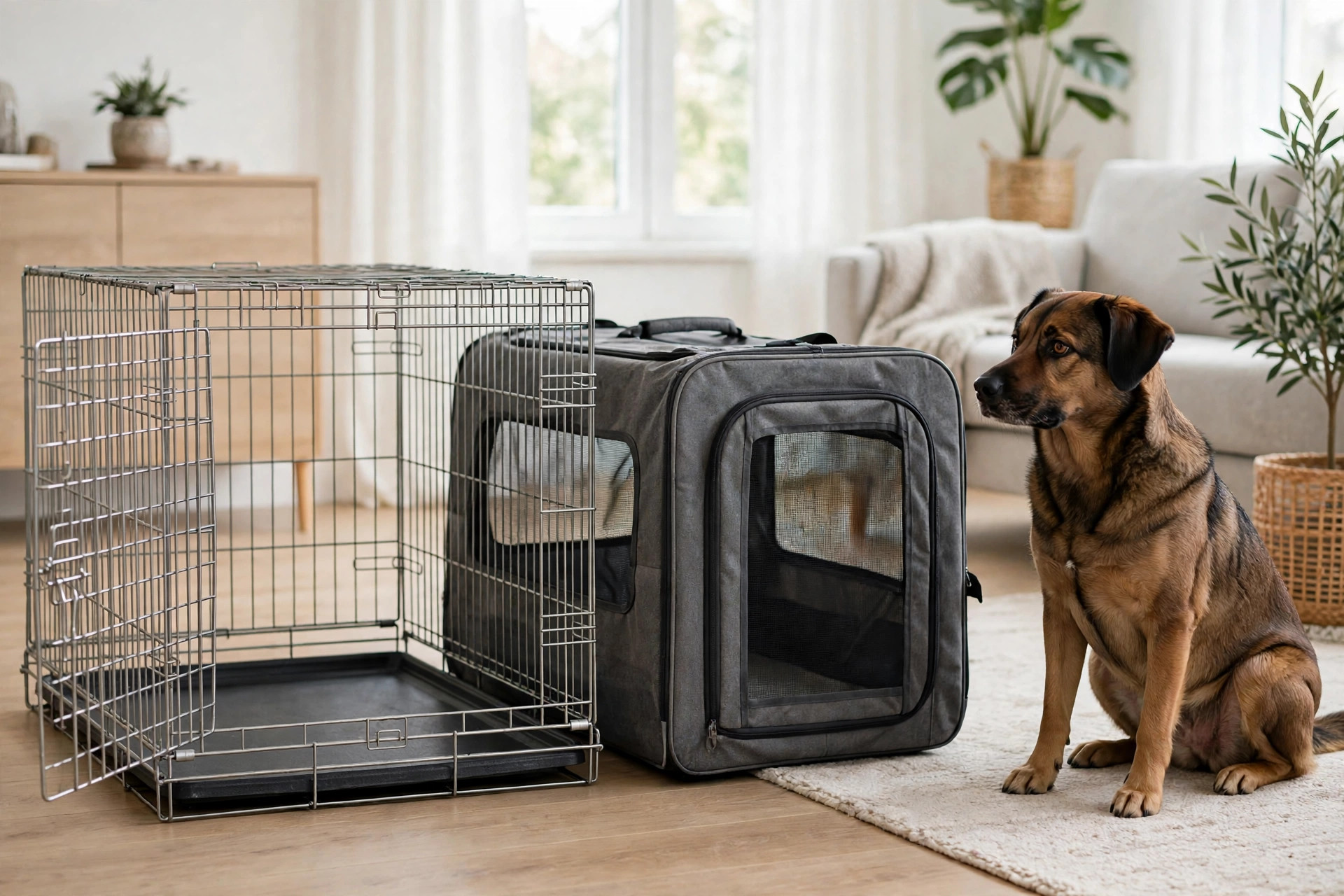
The crate type decides how it is used, how easy it is to clean, and where it can travel.
Wire crates
The most popular choice for a 40 lb dog at home. They fold flat, offer the best airflow, let your dog see out, and usually come with a divider panel and a removable tray.
Plastic crates
Sturdier and more den-like, which suits dogs that like a darker, quieter space, and the type most often accepted for air travel. The trade-off is less airflow and less visibility, and they do not fold flat.
Soft-sided crates
Light and easy to carry, handy for car trips and visits — but not for a dog that chews or scratches fabric. For a calm 40 lb dog that is already crate-trained, a soft-sided crate is a great second crate for travel, not a first crate for training. Check the weight limit: soft-sided models sometimes top out below 40 lb.
5 Crate Sizing Mistakes to Avoid
- Buying by weight alone. Weight charts assume an average build. Measure your dog — a tape measure costs less than a return label.
- Using outside dimensions. A crate listed as 30 inches long may only offer 28 or 29 inches inside. Always check the interior length and height.
- Ignoring the turn-around test. Your dog should be able to stand up without crouching, turn around in a full circle, and lie down stretched out on their side. If any one of these fails, the crate is too small.
- Buying the puppy size instead of the adult size. A puppy grows fast. Buy the adult size with a divider, or budget for a second crate within the year.
- Using a regular crate as a car safety device. A standard wire or soft-sided crate is not the same as a crash-tested car crate. If you want your dog secured in the car, look for crates that are specifically crash-tested.
Quick Checklist Before You Buy
- Measured nose to base of tail: ______ in + 4 = ______ in minimum interior length
- Measured sitting height to head or ear tips: ______ in + 4 = ______ in minimum interior height
- Checked the crate's interior dimensions, not just the outside label
- Decided 30-inch or 36-inch using the boundary rules above
- If a puppy: divider panel included or ordered
- Weight limit on the product page is above 40 lb
- Crate fits the spot in your home or car where it will actually live
Frequently Asked Questions
What size crate for a 40 lb Beagle?
A 30-inch crate. Measure nose to tail and add 4 inches — if the total is over 29 inches, go to 36 inches.
What size crate for a 40 lb French Bulldog?
A 30-inch crate. French Bulldogs are stocky but low and compact, so a 30-inch crate usually fits. Check sitting height, since a tall Frenchie can be tight on headroom.
Is a 36-inch crate too big for a 40 lb dog?
Not usually. It gives a 40 lb dog comfortable room to stand, turn, and stretch, and it is the right choice if your dog is long, tall, still growing, or a sprawler. For puppies, use a divider panel so the space stays snug for house training.
How long can a 40 lb adult dog stay in a crate?
Healthy adult dogs can usually handle a few hours in a crate during the day, with regular breaks for exercise, play, and bathroom trips. Puppies need much shorter sessions — no more than three to four hours at a time under six months old.
Do I need a divider panel for a 40 lb puppy?
Yes, if you buy the adult-size 36-inch crate while your puppy is still growing. The divider keeps the sleeping space snug, which helps with house training, and you move it back as your puppy grows.
Conclusion
A 40 lb dog usually needs a 30-inch crate — the right starting point for most Beagles, French Bulldogs, Cocker Spaniels, and medium mixes. But the number on the scale is not the final answer. Measure your dog from nose to base of tail and from floor to sitting head height, add 2 to 4 inches to each, and compare the result with the crate's interior dimensions. If your dog is long, tall, still growing, or a sprawler, size up to a 36-inch crate.
Want the exact size for your own dog in seconds? Try the CalcPet crate size finder — enter your dog's weight and measurements and it picks the right crate size for you. You can also check how old your dog is in human years with our dog age calculator, and read our dog-proofing checklist for a new puppy before your crate arrives. For more on crate training, see the American Kennel Club's crate training guide, PetMD's crate sizing guide, and the VCA Hospitals crate training guide.