Cats are famously good at hiding discomfort. One day your cat is bouncing onto the bookshelf; a few years later you notice she pauses before the same jump, or chooses the rug over the cat tree. That is not a tragedy — it is just a new season of life, and a few thoughtful home adjustments can make it a much more comfortable one.
This senior cat comfort checklist walks you through 15 practical home adjustments for aging cats: where they sleep, eat, drink, and play, plus the small daily-routine tweaks that help an older cat feel safe and settled. Nothing here requires renovation or a big budget — just a fresh look at your home from your cat's point of view.
How to Use This Checklist
Read each section, check off what you already have, and tackle the rest one room at a time. Most adjustments take under 20 minutes. A cat is generally considered "senior" from around age 11, with many cats living happily into their late teens — so these tweaks can serve your cat for years.
If anything about your cat's behavior changes suddenly — appetite, litter habits, energy, or mobility — that is a conversation for your veterinarian, not a home checklist. This guide is about comfort and convenience, not health advice.
1. Sleeping & Rest Spots
Senior cats can sleep up to 18–20 hours a day, so where they sleep matters more than anything else. The goal is warmth, softness, and easy access — no climbing required.
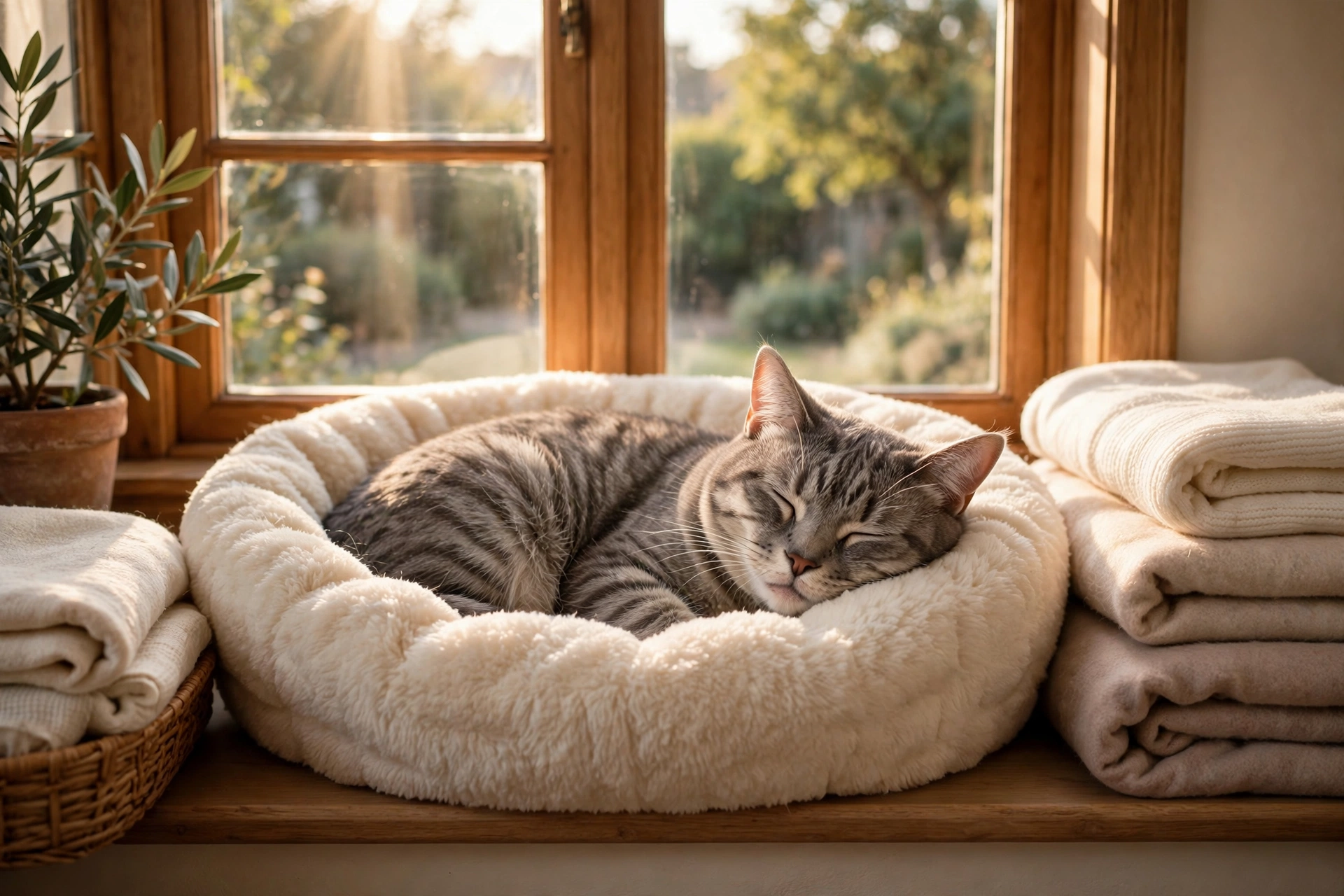
- Add a ground-level cozy bed. Choose a bed with low sides (a donut bed or a cushioned mat) so your cat can walk in rather than climb over a high rim. Place it in the room where the family spends the most time — older cats still want to be near their people.
- Offer a warm window spot. Many senior cats adore sunbeams. A window-seat pad or a chair cushion by a sunny window gives them their favorite warmth without the effort of reaching a high perch.
- Put soft bedding where she already rests. If your cat has claimed the couch corner or a laundry pile, work with it: lay a washable fleece blanket there. You are not training a new habit — you are upgrading the one she chose.
2. Food & Water Stations
Small changes to the feeding corner make daily meals easier and encourage steady drinking, which matters more as cats age.
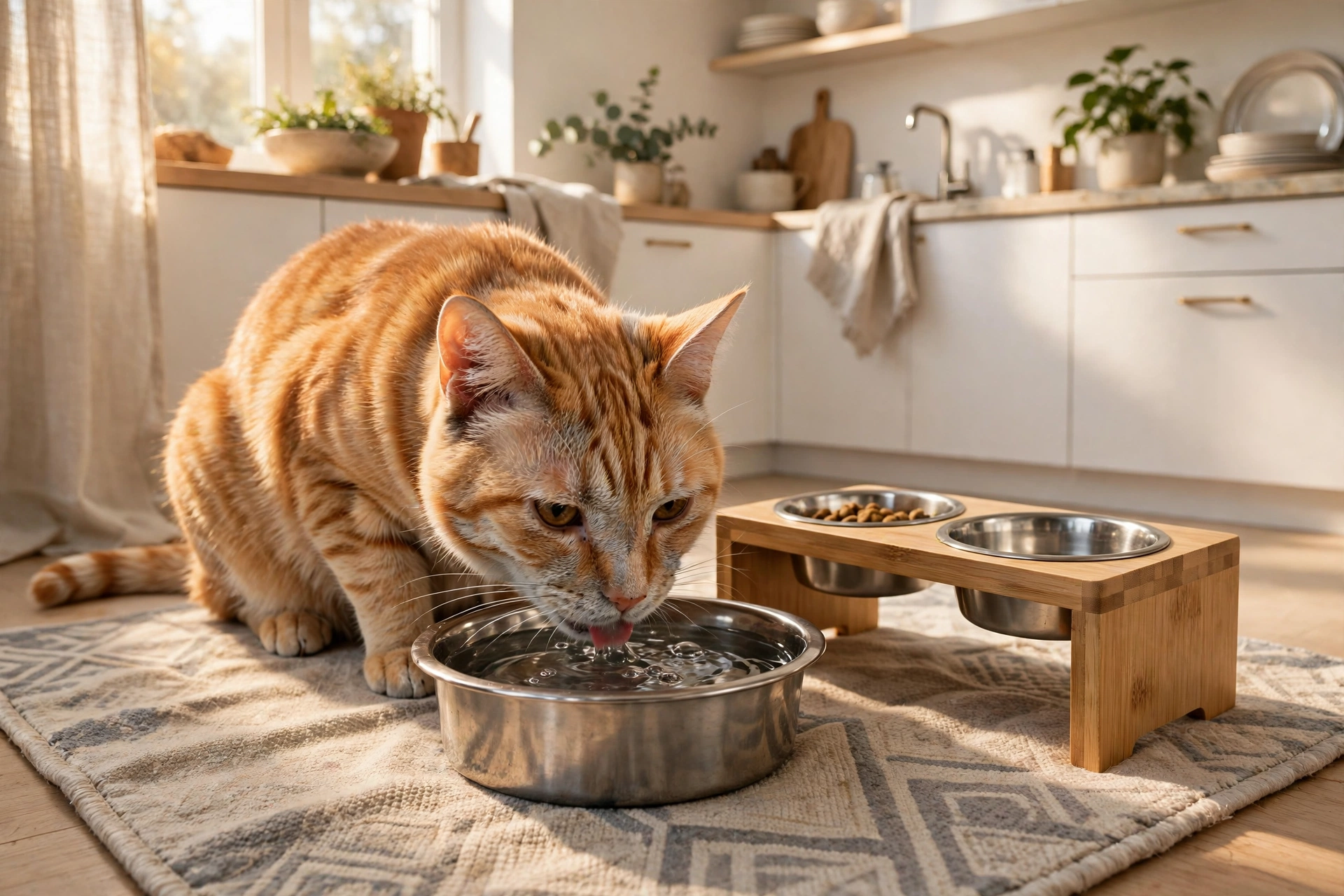
- Raise the food bowl slightly. A bowl on a low stand (a few inches off the floor) means less neck bending. Stainless steel or ceramic bowls are easy to clean and do not hold odors the way scratched plastic can.
- Set up water in more than one spot. Place a water bowl near the bed and one near the feeding area. Senior cats may not bother walking across the house for a drink, so bring the drink to them.
- Use a low, wide bowl or saucer. Wide bowls keep sensitive whiskers from touching the sides, and a lower rim is easier on stiff necks.
3. Litter Box Access
This is the single highest-impact area of the checklist. An older cat that struggles with a tall-sided box may start avoiding it — and the fix is almost embarrassingly simple.
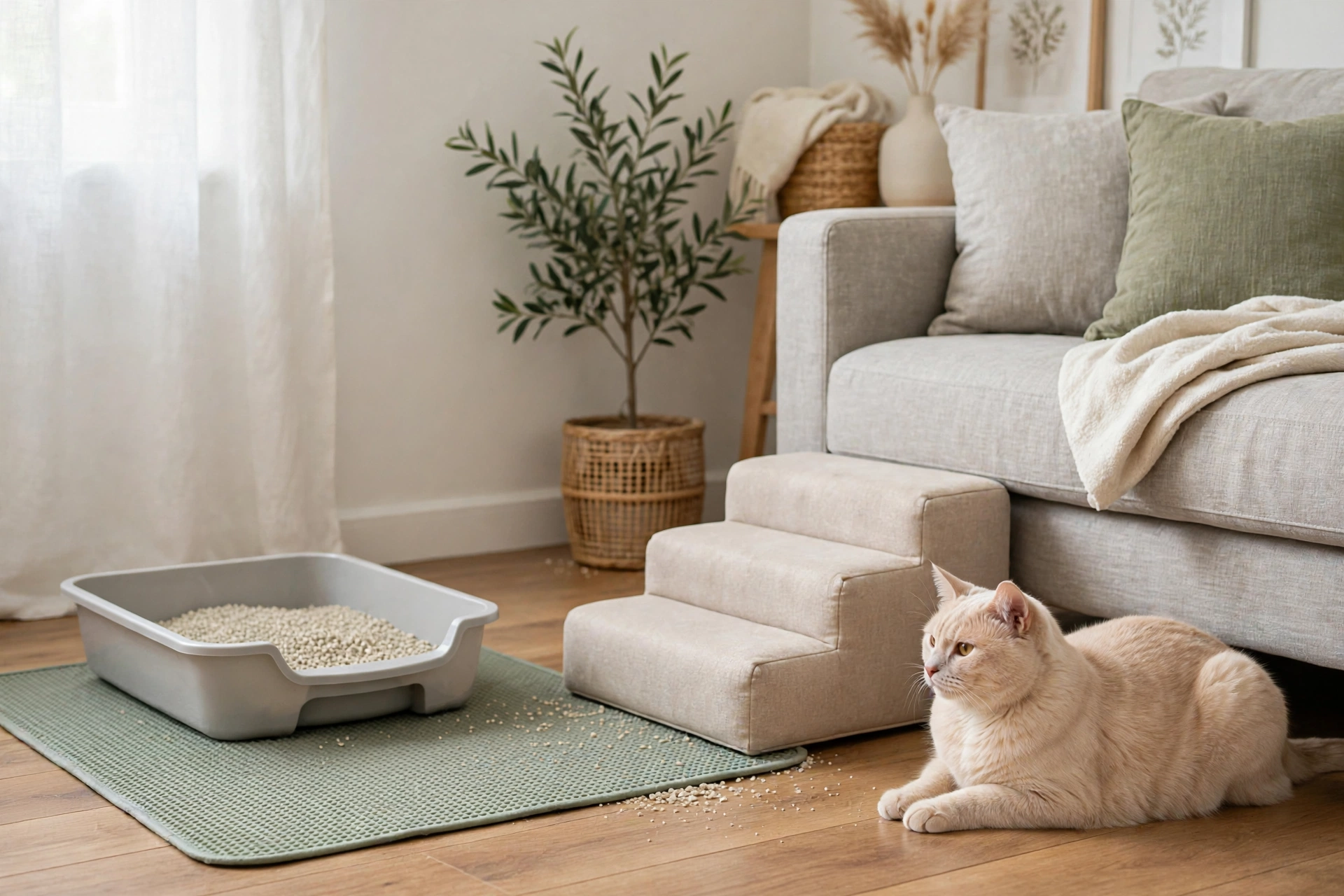
- Switch to a low-entry litter box. Look for a box with at least one side cut down to about 3–4 inches high so your cat can step in instead of hopping over. Keep the same litter she is used to — now is not the time for surprises.
- Add one more box than you think you need. The old rule of thumb is one box per cat plus one extra, and it matters even more for seniors. Put boxes on the floor your cat uses most — avoid making stairs part of the journey.
- Place a low-pile mat around the box. A washable mat catches stray litter and gives footing on slippery floors, which helps a cat that steps a little less surely than she used to.
4. Play & Enrichment Without Overdoing It
Senior cats still need mental stimulation — just at a gentler pace. Short, calm play keeps muscles moving and minds bright without tiring them out.
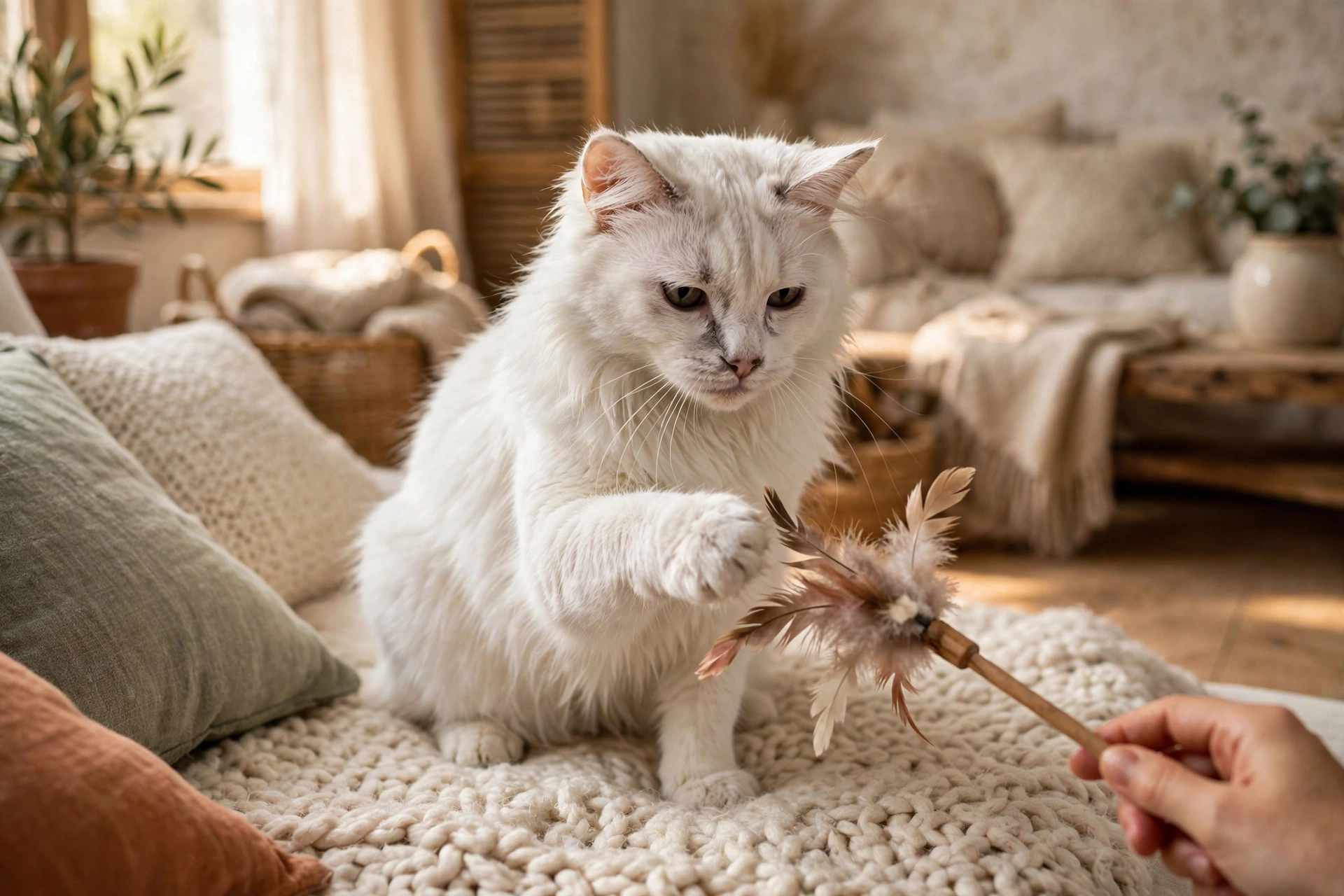
- Keep play sessions short and low. Five minutes with a feather wand dragged along the floor beats an exhausting chase. Watch your cat's energy and stop while she is still enjoying it.
- Offer horizontal scratching surfaces. A flat cardboard scratcher or a low sisal mat lets her stretch and scratch without rearing up on a tall post.
- Rotate simple toys weekly. Put out two or three toys at a time and swap them every week or so. A crinkle ball or a paper bag (handles cut off) is plenty exciting to a cat seeing it "fresh."
5. Daily Routine & Home Safety
Older cats are creatures of habit. A predictable routine and a few safety touches go a long way toward keeping them confident.
- Keep the routine steady. Feed, play, and settle down at roughly the same times each day. Predictability lowers stress for a cat whose senses are not as sharp as they were.
- Add traction and night lighting. A runner rug on a slippery hallway and a soft night light near the litter box help a cat navigate confidently after dark.
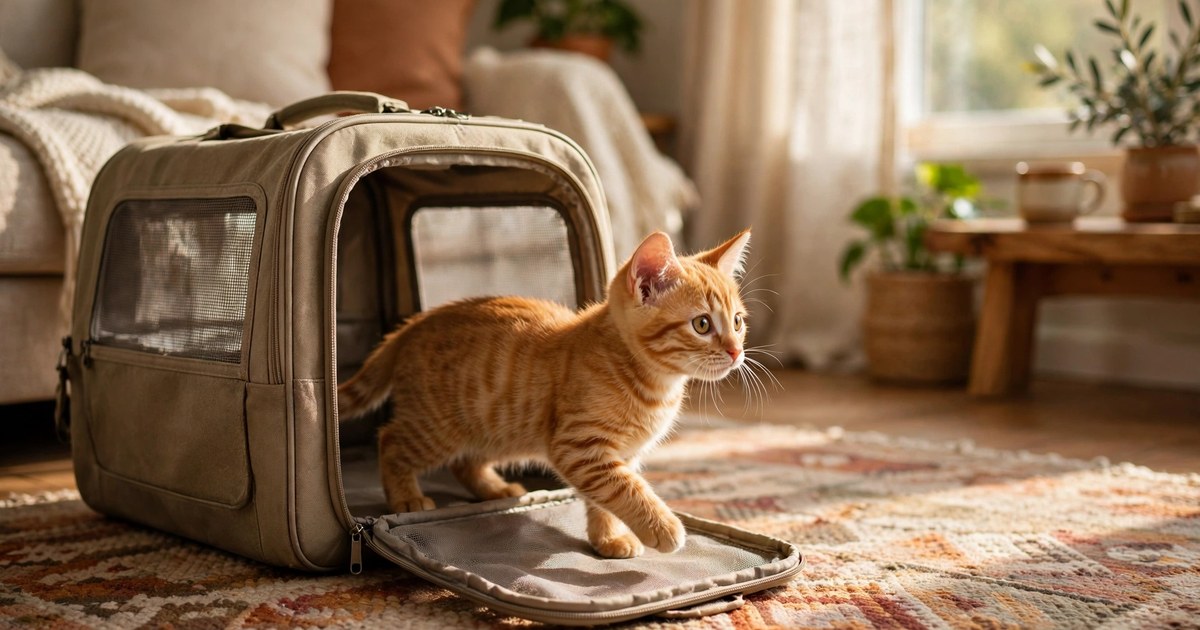
- Keep the carrier out and open. Leave the carrier in a corner with a soft blanket inside year-round, so it becomes a familiar nap spot instead of a once-a-year stress event.
Your Printable 15-Point Senior Cat Comfort Checklist
Here is everything in one place. Copy it to your phone's notes app or print it for the fridge:
- Ground-level cozy bed with low sides in the family room
- Warm window spot or sunny chair pad
- Washable blanket on your cat's favorite existing resting place
- Food bowl on a low stand (stainless steel or ceramic)
- Water bowls in at least two rooms
- Low, wide bowls to keep whiskers comfortable
- Low-entry litter box (3–4 inch entry side)
- One box per cat plus one extra, on the main floor
- Low-pile washable mat around each litter box
- Short, gentle daily play sessions (about 5 minutes)
- Horizontal scratcher at floor level
- Two to three toys out, rotated weekly
- Consistent daily feeding and play times
- Runner rugs on slippery floors + a night light near the litter box
- Carrier left out and open as a familiar resting spot
Frequently Asked Questions
At what age is a cat considered senior?
Most veterinarians consider cats senior from around age 11, with cats 15 and older often called "super seniors." These comfort adjustments are useful from the first signs of slowing down, whatever the number.
Should I change my senior cat's food?
That is a question for your veterinarian, who can advise based on your individual cat. This checklist focuses on the home environment — bowl height, placement, and routine — not nutrition.
Is it normal for an older cat to sleep more?
Yes. Cats in their teens commonly sleep 18–20 hours a day. What matters more than the total is the pattern — sudden changes in sleep, appetite, or behavior are worth mentioning to your vet.
Do senior cats still need playtime?
Absolutely, just adapted. Short, gentle sessions keep them engaged and mobile. Many senior cats prefer puzzle-style play, like batting at a toy you drag slowly along the floor, over fast chasing.
How many litter boxes does a senior cat need?
The guideline of one box per cat plus one extra applies even more strongly to seniors, since a longer trip to the box can discourage use. Place them where your cat already spends time, ideally all on one floor.
Small Changes, Big Comfort
You do not need to do all 15 items this weekend. Pick the three that jump out at you — usually a cozier bed, a low-entry litter box, and water in a second spot — and add the rest over the next few weeks. Your cat will not thank you in words, but a relaxed purr from a sun-warmed window seat says it clearly enough.
Wondering exactly where your cat is on the age scale? Try the CalcPet Cat Age Calculator to see your cat's age in human years — it takes 30 seconds and helps you plan which of these comfort upgrades to prioritize.
For more practical cat guides, see our New Kitten Checklist (great if you are adding a second cat) and Bringing Home a New Cat: The First 30 Days. The ASPCA's cat care guide, Cornell Feline Health Center, and the Cat Fanciers' Association are excellent further reading on general feline care.