If you've ever multiplied your dog's age by seven, you're not alone — generations of dog owners have done exactly that. The trouble is, the "seven dog years" rule is wrong, and in some cases it's very wrong. A 1-year-old dog is not a 7-year-old child. And a 10-year-old Great Dane and a 10-year-old Chihuahua are in completely different life stages, even though the old formula treats them identically.
This guide explains how dog years actually work, why size matters more than you think, and how to estimate where your dog is in their life journey — so you can match your care, activities, and expectations to the dog in front of you right now.
Why the "Multiply by 7" Rule Doesn't Work
The 7-to-1 rule likely started as a rough observation: dogs live about 10 years, humans live about 70, so one dog year roughly equals seven human years. Simple — but biology isn't simple. Dogs mature far faster than humans in their first two years, then age more slowly afterward. Their aging curve is steep at the start and flattens out later, which no single multiplier can capture.
Modern research makes this even clearer. A well-known 2019 study on canine aging used DNA methylation (a molecular marker of aging) to map dog years to human years, and found that a 1-year-old dog is physiologically closer to a 30-year-old human, not a 7-year-old. You can read the American Kennel Club's breakdown of this research here: How to Calculate Dog Years to Human Years.
The practical takeaway: your puppy grew up far faster than the 7x rule suggests, and your middle-aged dog is aging more gently than it implies. Use a better formula instead.
The Formula That Actually Works
The American Veterinary Medical Association offers the most widely used practical approximation, which accounts for the fast early years:
- Year 1 of a medium-sized dog's life ≈ 15 human years
- Year 2 ≈ 9 more human years (so a 2-year-old dog is about 24 in human years)
- Each year after that ≈ 4–5 human years, depending on size
So a 5-year-old medium dog is roughly 24 + (3 × 5) = 39 in human years — not 35. A 10-year-old is roughly 24 + (8 × 5) = 64. Already you can see why the flat 7x rule misleads: it underestimates your young dog's maturity and overstates the pace of their later years.
Want the exact number for your own dog in seconds? Use our free Dog Age Calculator — enter your dog's age and size and it does the math for you.
Size Changes Everything
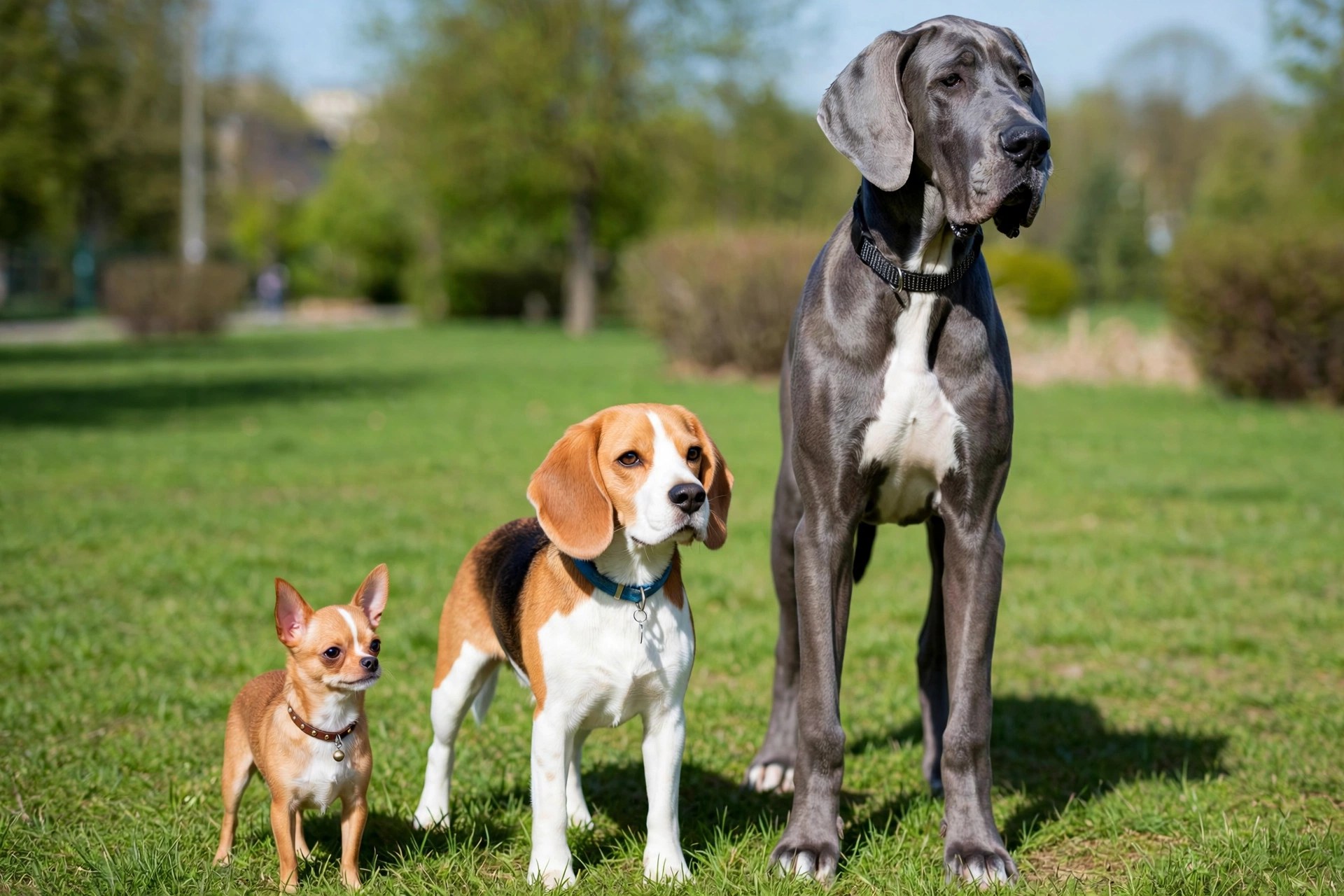
Here's the biggest factor the old rule ignores: a dog's size predicts how fast they age. Small dogs mature quickly but then age slowly and live long lives. Giant breeds mature at a similar pace but age much faster as adults and have shorter lifespans.
That's why, for the "each year after year two" step, veterinarians adjust by size:
- Small dogs (under 20 lbs) — about 4 human years per dog year after age 2
- Medium dogs (20–50 lbs) — about 5 human years per dog year after age 2
- Large dogs (50–90 lbs) — about 6 human years per dog year after age 2
- Giant dogs (90+ lbs) — about 7 human years per dog year after age 2
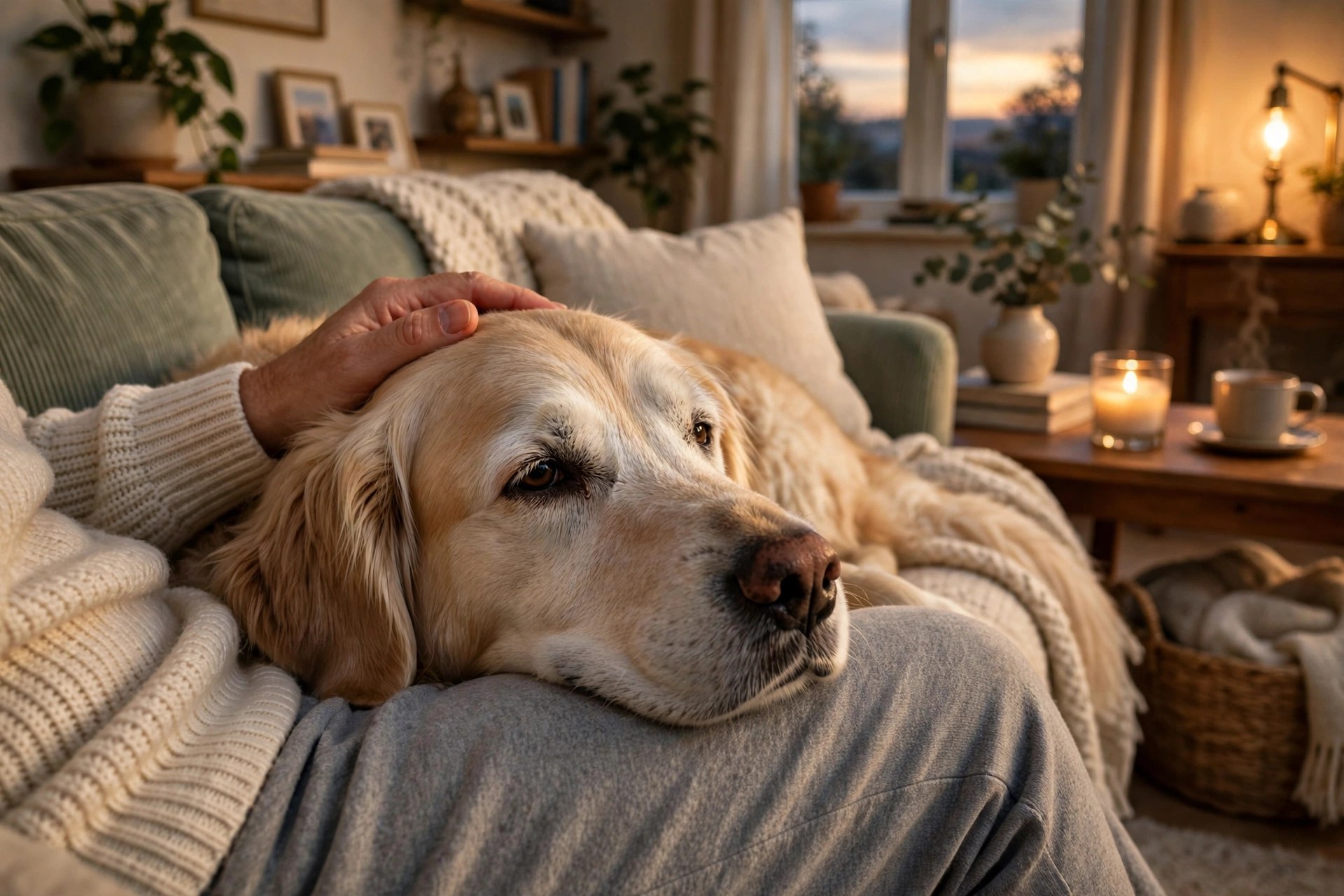
This is the real reason a 10-year-old Chihuahua is often still bouncing around while a 10-year-old Great Dane is a distinguished senior. Same chronological age, totally different life stages.
Dog Years to Human Years: The Quick Chart
Use this chart for a fast estimate. Find your dog's size row, then read across to their age:
| Dog's age | Small (under 20 lbs) | Medium (20–50 lbs) | Large (50–90 lbs) | Giant (90+ lbs) |
|---|---|---|---|---|
| 1 year | 15 | 15 | 15 | 15 |
| 2 years | 24 | 24 | 24 | 24 |
| 3 years | 28 | 29 | 30 | 31 |
| 4 years | 32 | 34 | 36 | 38 |
| 5 years | 36 | 39 | 42 | 45 |
| 6 years | 40 | 44 | 48 | 52 |
| 7 years | 44 | 49 | 54 | 59 |
| 8 years | 48 | 54 | 60 | 66 |
| 9 years | 52 | 59 | 66 | 73 |
| 10 years | 56 | 64 | 72 | 80 |
| 12 years | 64 | 74 | 84 | 94 |
| 14 years | 72 | 84 | 96 | 108 |
| 16 years | 80 | 94 | 108 | 120 |
These are approximations, not medical measurements — individual dogs vary with genetics, lifestyle, and care. But they'll land you far closer to reality than multiplying by seven ever did.
The Four Life Stages of a Dog
Knowing the stage matters more than knowing the number, because each stage comes with different energy, needs, and quirks.
1. Puppy (birth to ~6–18 months)
The explosive-growth phase. A puppy's first year packs in roughly the equivalent of 15 human years of development — that's why an 8-month-old "baby" can already look and act like a teenager. Small breeds finish this stage sooner (around 9–12 months); giant breeds can take up to 18–24 months to fully mature. Everything is training, socialization, and routine-building here.
2. Young adult (roughly 1–3 years)
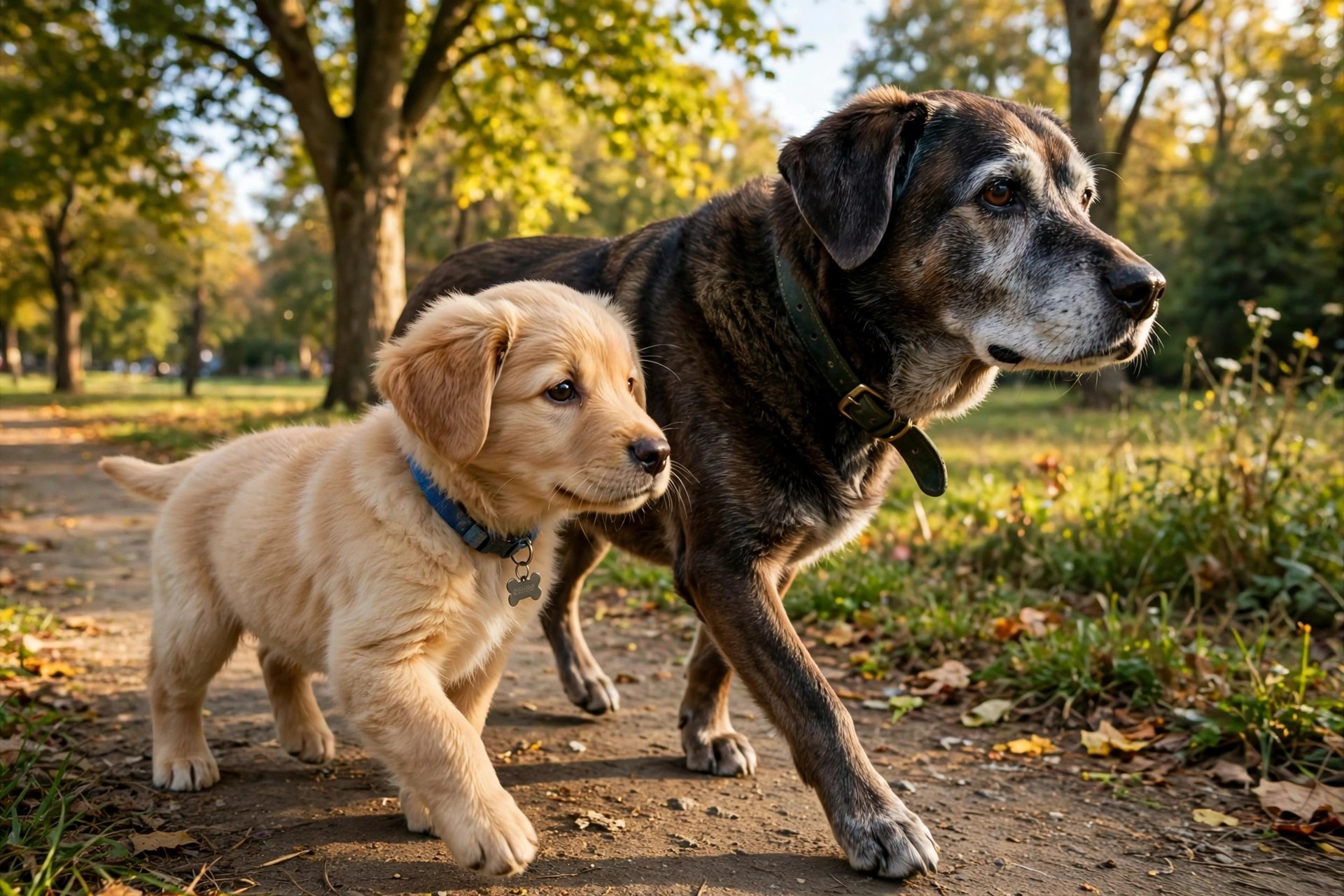
Your dog is now physically mature but still mentally young — think human twenties. Energy is high, habits are forming, and this is the prime window for advanced training, sports, and adventures. Most dogs are at their athletic peak in this stage.
3. Mature adult (roughly 3–7 years, varies by size)
The settled years. Energy levels even out, personality is fully formed, and your dog knows the household routine cold. Large and giant breeds enter this stage's later half sooner — a 6-year-old Great Dane is already approaching senior territory, while a 6-year-old Chihuahua is barely middle-aged.
4. Senior (roughly 7+ years, varies by size)
Small breeds typically become seniors around 10–12, medium breeds around 9–10, large breeds around 7–8, and giant breeds as early as 6–7. Seniors slow down, sleep more, and appreciate comfort over chaos — but many stay playful and engaged for years with the right routine.
7 Everyday Signs Your Dog Is Entering Their Senior Years
These are normal, observable changes of aging — not diagnoses. If you notice several appearing together, it's simply your cue to adjust routines and mention the changes at your dog's next regular vet visit.
- Greying muzzle and eyebrows — the classic first sign, usually appearing around the face first.
- Longer naps, slower mornings — they still enjoy walks but need a warm-up lap before hitting full stride.
- Less interest in marathon play sessions — shorter, gentler play replaces hours of fetch.
- Stiffness after rest — slow to rise from a nap, especially on cold mornings; a supportive bed helps.
- Cloudy or bluish eyes — often just normal aging of the lens; vision usually still works fine for daily life.
- Selective hearing — responding more slowly to cues, especially from another room.
- Clinginess or restlessness at night — older dogs often want more closeness and can get mildly anxious after dark.
None of these mean your dog's good years are over. Most senior dogs adapt beautifully when their humans adapt with them — shorter walks, warmer beds, and a little more patience.
How to Estimate a Rescue Dog's Age
Adopted a dog with an unknown birthday? Vets estimate age from a combination of physical clues. You can make a decent guess at home:
- Teeth: clean white teeth suggest under 2; tartar buildup and worn teeth suggest middle age or older.
- Eyes: bright, clear eyes skew young; cloudy lenses skew senior.
- Coat: soft, full coat skews young; coarse coat with grey around the muzzle skews older.
- Energy and muscle tone: boundless energy and firm muscle suggest youth; a slower pace and softer muscle tone suggest senior years.
- Behavior: mouthy, easily distracted behavior is puppy-like; calm, settled house manners suggest an adult or senior.
Your vet can narrow it down further at a regular checkup — ask them for their best estimate and write it down, so you can celebrate a "gotcha day" birthday every year.
Making Every Year Count: 6 Things That Matter at Any Age
You can't change your dog's birthday, but daily life quality is largely in your hands:
- Keep their brain busy. Puzzle feeders, scent games, and new tricks work at every age — mental exercise tires dogs out as effectively as physical exercise.
- Keep a consistent routine. Dogs of all ages thrive on predictable meal times, walk times, and bedtimes. Seniors especially find comfort in routine.
- Adjust exercise, don't cancel it. Swap the 5-mile run for two pleasant 20-minute walks as the years add up. Movement keeps joints and spirits healthy.
- Watch the waistline from the couch. You should be able to feel (not see) the ribs. Weight creeps up as metabolism slows — adjust portions rather than cutting meals.
- Make the house senior-friendly early. Ramps over stairs, non-slip rugs on slick floors, and a warm orthopedic bed pay off for years.
- Schedule regular vet checkups. Annual visits for adults, twice-yearly for seniors — catching small changes early is the single highest-leverage habit in this list.
For more on the senior stage specifically, the AVMA's guidance on caring for senior cats and dogs is a solid reference.
Dog Years FAQ
Is it true that one dog year equals seven human years?
No — it's a rough myth. Dogs age much faster in their first two years (roughly 15 + 9 human years) and then slow down. Size also matters enormously: small dogs age slower as adults than giant breeds do.
How old is a 10-year-old dog in human years?
It depends on size: about 56 for a small dog, 64 for a medium dog, 72 for a large dog, and around 80 for a giant breed. Check the chart above for the full breakdown.
Why do small dogs live longer than big dogs?
It's one of the more interesting puzzles in biology — in most species, bigger animals live longer, but in dogs the pattern reverses. Research suggests large and giant breeds age faster at the cellular level, possibly linked to their rapid growth and lifetime cancer risk — and programs like Cornell University's canine healthy-aging program (CHAMP) are studying how to keep aging dogs mobile and comfortable for longer.
At what age is a dog considered a senior?
There's no single number: giant breeds around 6–7, large breeds around 7–8, medium breeds around 9–10, and small breeds around 10–12. When in doubt, ask your vet — they judge by the individual dog, not just the calendar.
Can I really tell my rescue dog's age at home?
You can estimate within a range using teeth, eyes, coat, energy, and behavior (see the section above), but a vet's estimate is more reliable. Either way, pick a gotcha-day and celebrate it — dogs don't check IDs.
Does neutering or spaying affect how a dog ages?
Studies show mixed, breed-dependent effects on longevity — there's no simple universal answer. It's a decision best made with your vet based on your specific dog's breed, size, and lifestyle, not something an age chart can settle.
The Bottom Line
Forget multiplying by seven. Your dog's first year was worth about fifteen of yours, their second about nine more, and every year since has depended largely on their size — roughly four human years per year for small dogs up to about seven for giants. Knowing where your dog truly sits on that timeline helps you train smarter, play appropriately, and give them exactly the life stage they're in.
Curious about your own dog's number? Try our free Dog Age Calculator — pick your dog's size, enter their age, and get their human-years equivalent instantly. And if you're still choosing a companion, our guide to the best dog breeds for first-time owners pairs nicely with this one.