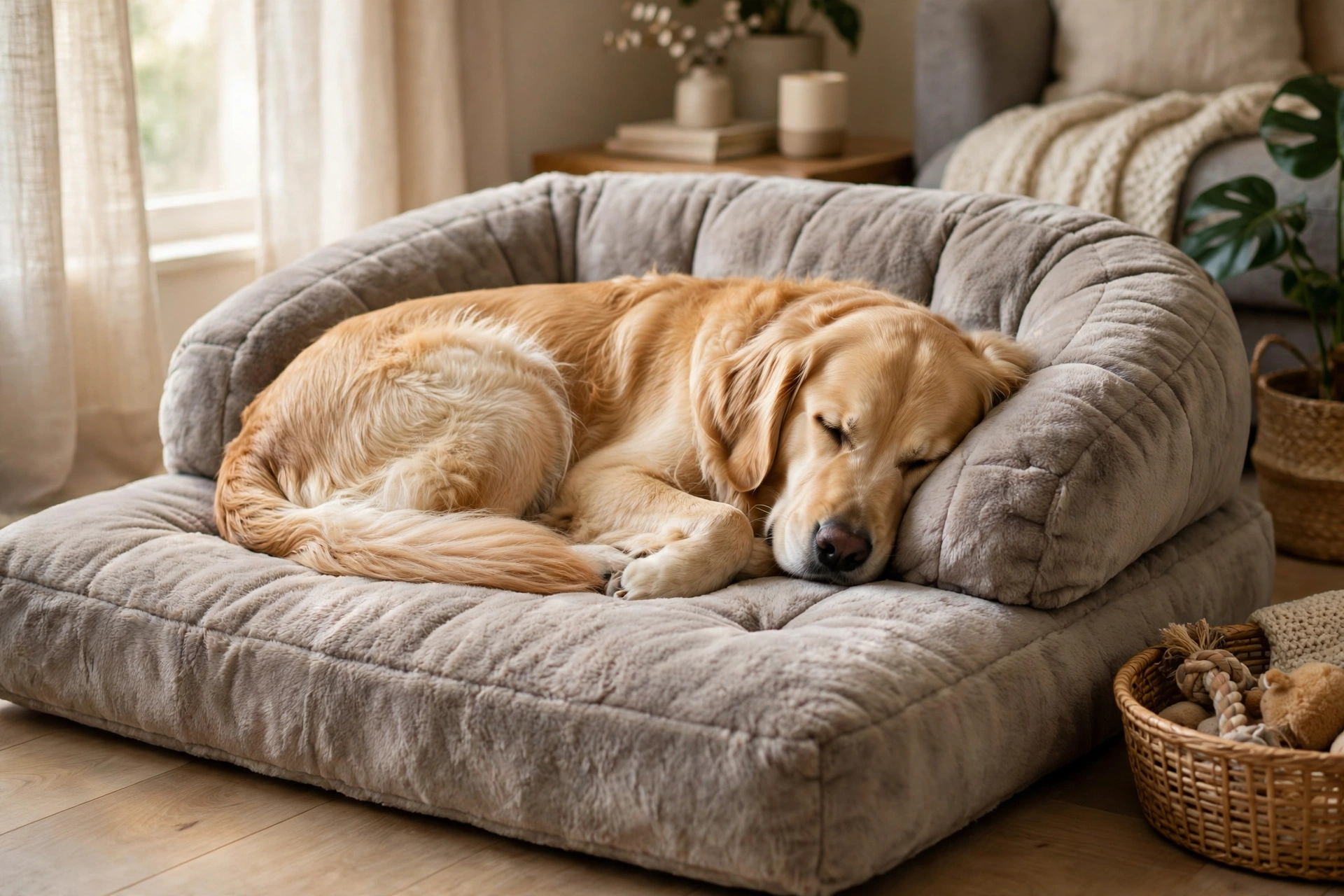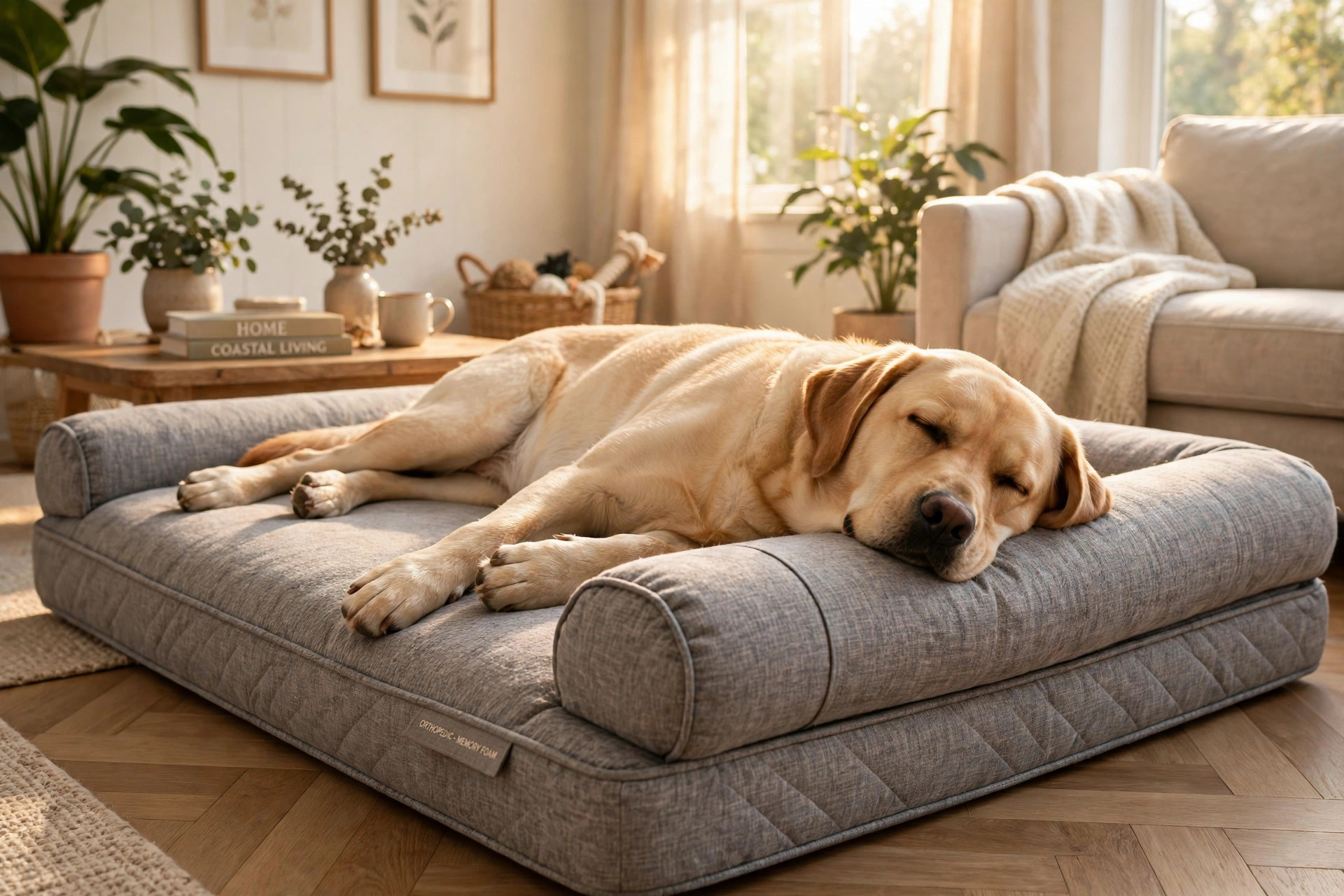
Buying an orthopedic dog bed is one of the best comfort upgrades you can give a dog — but most people pick the size the wrong way. They glance at the weight label ("for dogs up to 50 lbs"), order it, and then wonder why their Labrador's head hangs off the edge or why a perfectly good bed sits empty in the corner.
Here's the short answer to the question everyone asks — how big should a dog bed be? Measure your dog lying on its side, from the tip of the nose to the base of the tail. Add 6 inches if your dog curls up to sleep, or 10–12 inches if it sprawls flat. Then pick a bed whose sleeping surface (not the total footprint) matches that number. Keep reading for the full 2026 size chart, foam-depth rules by weight, sleeping-position guide, and four beds that are sized right for bigger dogs.
Disclosure: This post contains affiliate links. As an Amazon Associate, CalcPet earns from qualifying purchases — at no extra cost to you. We never list products that aren't in our live catalog, and every pick below is rated by thousands of verified buyers.
Why sizing an orthopedic bed is different
Regular dog beds are just cushions — an inch or two off doesn't matter much. Orthopedic beds work differently, because the size determines whether the memory foam can actually do its job:
- Foam depth must match your dog's weight. A 90 lb dog sinks straight through 2 inches of foam and ends up sleeping on the floor with a pillow around it. Heavy dogs need 4–7 inches of real support.
- Bolsters shrink the sleeping area. A bed listed as 44 x 34 inches with thick bolsters on three sides may only offer a 34 x 24 inch sleeping surface. Always check the sleeping dimensions, not the footprint.
- Hanging body parts defeat the foam. If your dog's head or hips rest on the floor instead of the bed, the orthopedic benefit is lost exactly where it matters most. That's why lying-length measurement beats weight labels every time.
How to measure your dog for a bed (2-minute method)
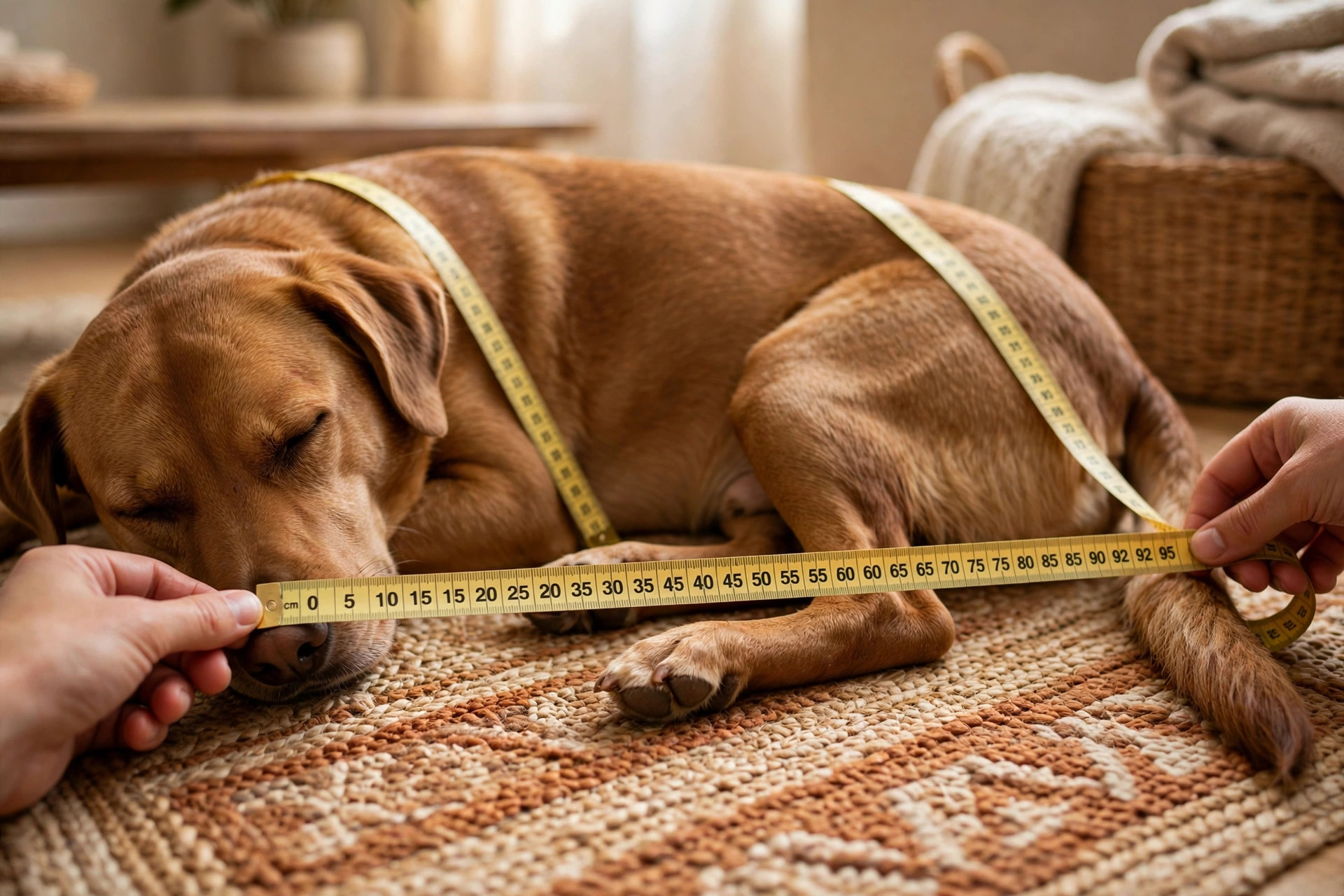
Forget breed charts as a starting point — two 50 lb dogs can differ by six inches in body length. One tape measure gives you a better answer than any breed list:
- Catch your dog relaxed. Wait until it's sleeping on its side or lounging stretched out. Never measure while it stands — standing length has nothing to do with sleeping length.
- Nose to tail base. Run a soft tape measure from the tip of the nose to the base of the tail (where the tail starts, not the tip). This is your lying length — the only number that matters.
- Add stretch room. Add 6 inches if your dog sleeps curled in a ball. Add 10–12 inches if it stretches flat on its side. This is your minimum sleeping-surface length.
- Note the weight. Use it only for foam depth (see the chart below), not for the length decision.
For broader canine care topics beyond sizing, the ASPCA's dog care resources are a solid starting point, and the AKC's health advice hub covers breed-specific considerations.
Orthopedic dog bed size chart (2026)
Match your dog's lying length to the sleeping surface — not the weight range printed on the box:
| Bed size | Lying length it fits | Dog weight | Min. foam depth | Typical breeds |
|---|---|---|---|---|
| XS | Up to 18 in | Up to 10 lbs | 2 in | Chihuahua, Yorkie |
| Small | 18–24 in | 10–25 lbs | 2–3 in | Dachshund, Shih Tzu, Pug |
| Medium | 24–32 in | 25–50 lbs | 3 in | Beagle, Cocker Spaniel, French Bulldog |
| Large | 32–40 in | 50–90 lbs | 4 in | Labrador, Golden Retriever, Border Collie |
| XL | 40–48 in | 90–120 lbs | 5–6 in | German Shepherd, Boxer, Rottweiler |
| XXL / Jumbo | 48 in and up | 120+ lbs | 6–7 in | Great Dane, Mastiff, Saint Bernard |
One caution from experience: sizes are not standardized between brands. "Large" at one brand can be "Medium" at another. Always compare your lying-length number to the actual listed dimensions before you click buy.
Sleeping position matters: curlers vs. sprawlers
The same dog in the same size chart needs a different bed depending on how it sleeps:
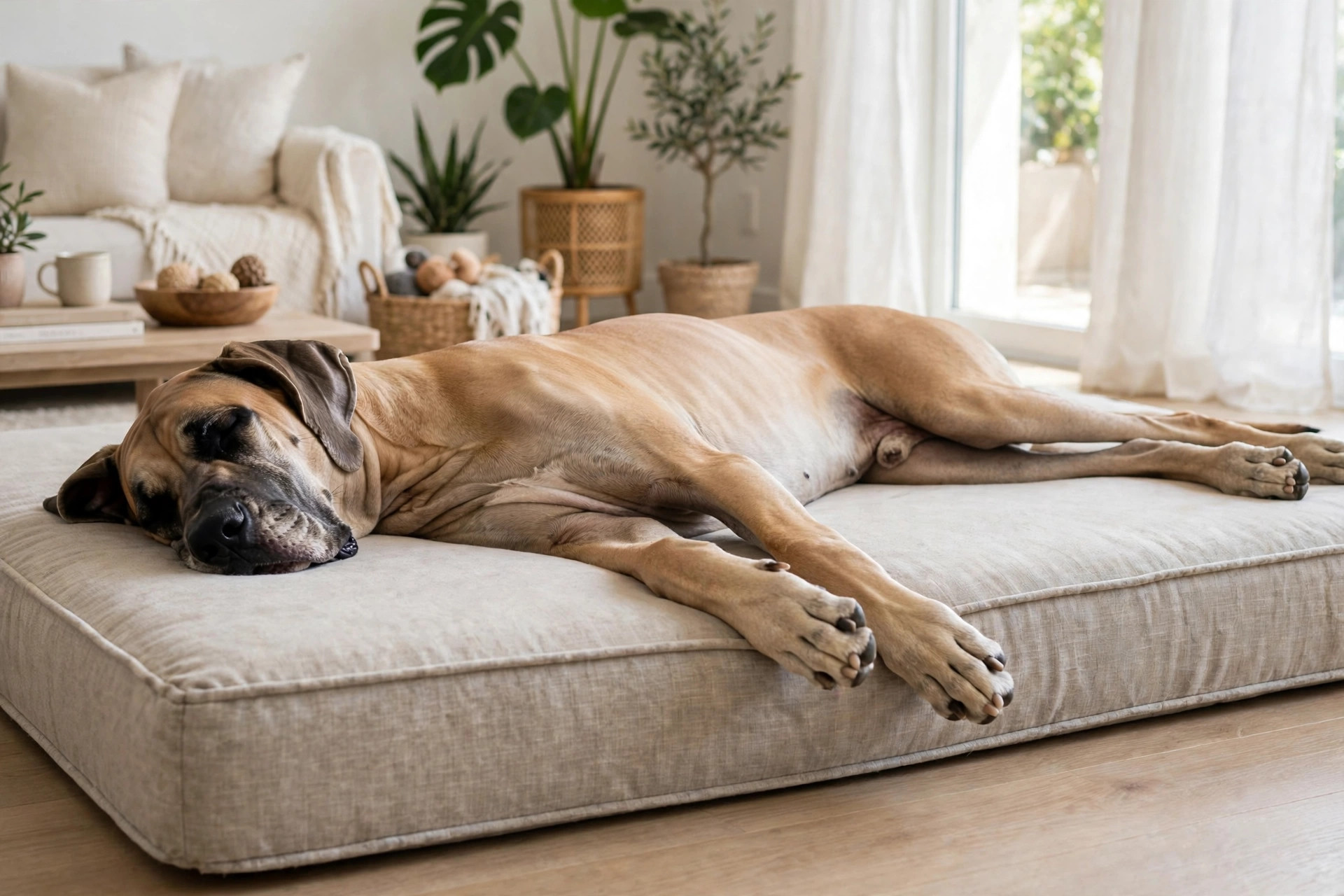
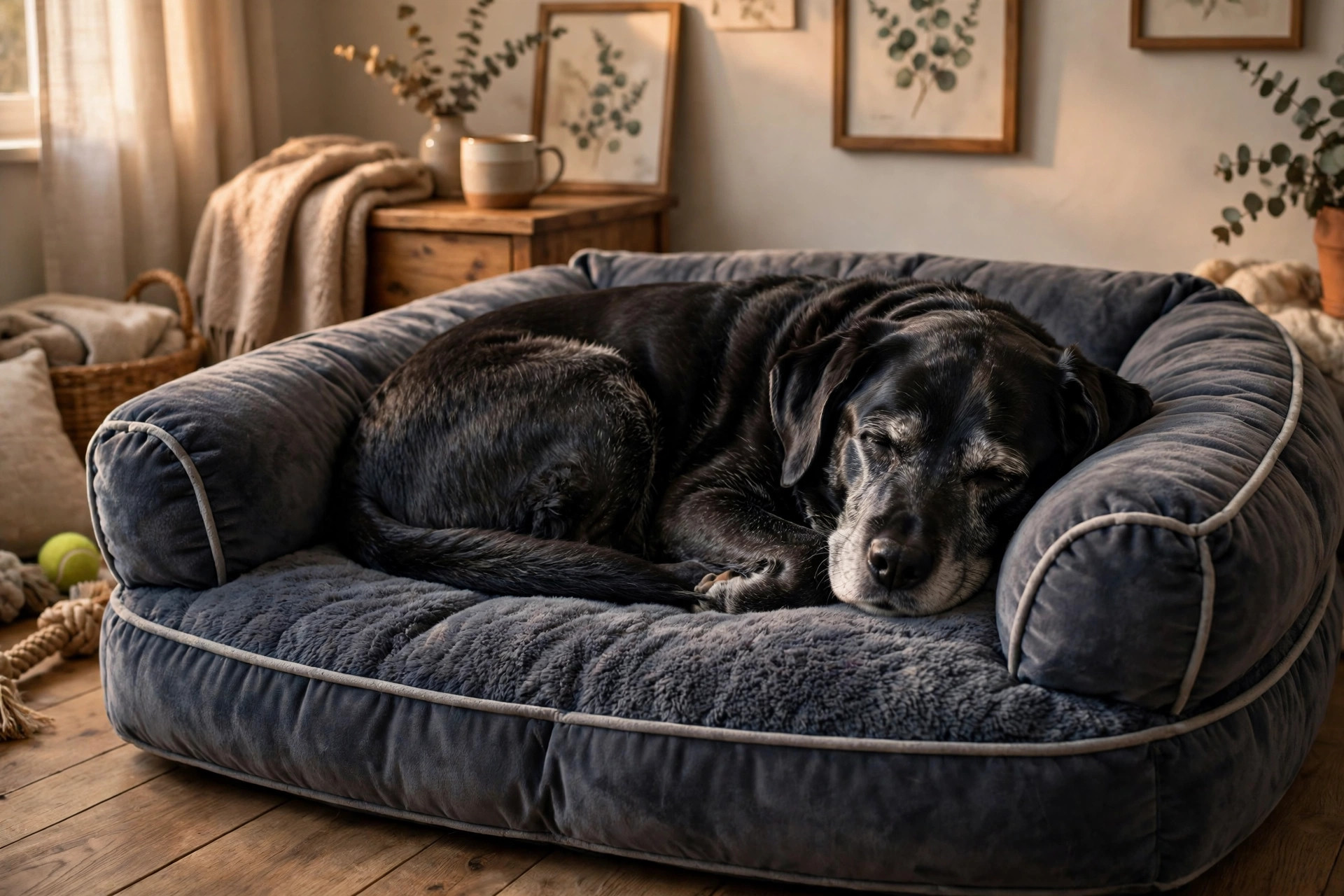
- Curlers (sleep in a tight ball): fit fine in a snugger bed and often prefer bolstered "sofa" shapes that give a den feeling. Add only 6 inches of stretch room.
- Sprawlers (flat on the side, legs out): need the full flat length of their body plus 10–12 inches. Bolstered edges they can't use just eat into the sleeping surface — a flat rectangular mattress suits them best.
What size bed does my breed need?
Once you have your dog's lying length, this quick reference helps you sanity-check your choice. Breed weights come from the AKC's breed standards — but your tape measure still wins over the breed column:
| Breed | Typical bed size | Typical sleeping length |
|---|---|---|
| Beagle, French Bulldog | Medium (30–36 in) | 24–30 in |
| Labrador, Golden Retriever | Large (36–42 in) | 32–38 in |
| German Shepherd, Boxer | XL (42–48 in) | 38–44 in |
| Great Dane, Mastiff | XXL / Jumbo (50 in+) | 48 in and up |
5 signs your dog's bed is the wrong size
Too small — size up if you see any of these:
- Head, hips, or paws hang off the edge while it sleeps
- Your dog abandons the bed for the floor or the couch
- It used to sprawl on the old bed but now sleeps curled tight
Too big — size down if you see these:
- Your dog only curls into one corner and ignores the rest
- It chooses a crate, couch cushion, or your feet over the big bed
- The bed looks like an empty football field with a dog lost in the middle
Dogs are den animals — most sleep best with a few inches of spare room, not a ballroom.
4 orthopedic beds sized right for bigger dogs
Every bed below is from CalcPet's live catalog, sized for medium-to-giant dogs where getting the fit right matters most. All are top-rated by thousands of verified buyers on Amazon — we describe them as their reviewers describe them, never as "tested by us."
KOPEKS Jumbo Orthopedic Dog Bed
- Full 7 inches of memory foam plus a headrest pillow for neck support
- Waterproof inner liner protects the foam from accidents
- Machine-washable suede cover with anti-slip bottom
As an Amazon Associate, CalcPet earns from qualifying purchases.
The KOPEKS is the sizing chart's answer to the 100+ lb dog: 7 inches of memory foam is the deepest support in this guide, and the XL's 50 x 34 inch sleeping surface genuinely fits a stretched-out giant breed. The built-in pillow headrest also works well for dogs that like a chin rest.
Best for: large and giant dogs that sink through thinner beds.
Pros: Exceptionally thick for heavy dogs; pillow headrest keeps the neck in a natural position; anti-slip base adds stability.
Cons: Heavy and bulky to move; flat style without full surrounding bolsters; needs 24–48 hours to fully expand.
FurHaven Plush & Suede Orthopedic Sofa Dog Bed
- Three-sided bolsters double as a headrest for neck comfort
- Orthopedic foam mattress supports joints and pressure points
- Fully removable, machine-washable cover with two-zipper design
As an Amazon Associate, CalcPet earns from qualifying purchases.
The FurHaven sofa is built for the curler: three-sided bolsters turn the bed into a nest, and the largest sizes reach the 44+ inch range large dogs need. With ~45,000 ratings it's one of the most-reviewed dog beds on Amazon — that many happy buyers is a useful signal.
Best for: dogs that love resting their chin on bolsters; maximum cosiness.
Pros: One of the most-reviewed dog beds on Amazon; cosy plush sleep surface; sofa shape suits curlers and chin-resters.
Cons: Softer foam than therapeutic beds; plush surface traps hair; very heavy dogs may bottom out over time.
EHEYCIGA Orthopedic XL Dog Bed
- Waterproof film between fleece surface and foam keeps the core dry
- Memory foam plus egg-crate layer for balanced support and airflow
- Three-sided bolsters with an open side for easy step-in access
As an Amazon Associate, CalcPet earns from qualifying purchases.
The EHEYCIGA's open-sided design is a practical detail for older, heavier dogs that struggle to climb over tall bolsters. The waterproof layer between the fleece and the foam keeps the core dry in messy households, and the XL sizing fits large sprawlers.
Best for: large dogs in messy households; best waterproofing per dollar.
Pros: Waterproof layer keeps the foam core dry; open side for easy entry; excellent value backed by huge sales volume.
Cons: Fleece top needs frequent lint-rolling; cover must be washed cold; bolsters only on three sides.
Bedsure Orthopedic Dog Bed
- Orthopedic memory-foam support with bolstered sides
- Waterproof liner plus removable, machine-washable cover
- Non-slip bottom keeps the bed in place
As an Amazon Associate, CalcPet earns from qualifying purchases.
Bedsure's entry point is lower than most orthopedic beds, which makes it a sensible everyday pick for medium and lighter-large breeds. The lowered entry side is a nice touch for dogs that don't like climbing onto tall beds, and the ~26,000 ratings show it holds up in real homes.
Best for: budget-conscious owners and lighter large breeds.
Pros: Huge review base at this price; lowered entry suits dogs that struggle to climb; waterproof liner and washable cover.
Cons: Thinner foam than premium therapeutic beds; very heavy dogs may bottom out; bolster fill can flatten with long use.
The verdict
- Giant-breed sprawler (90+ lbs): KOPEKS Jumbo — deepest foam, biggest real sleeping surface.
- Curler or chin-rester: FurHaven Sofa — the nest shape they actually prefer.
- Messy household / easy-clean priority: EHEYCIGA XL — waterproofing plus easy step-in.
- Everyday large-breed bed on a budget: Bedsure — solid support for the money.
Frequently asked questions
How much bigger should a dog bed be than the dog?
Add 6 inches to your dog's lying length if it curls up, or 10–12 inches if it sprawls flat. That extra room is for the dog to stretch and shift — not empty space for looks.
Should I size a dog bed by weight or by measurement?
By measurement. Lying length (nose to tail base) predicts fit far better than weight, because two dogs of the same weight can differ by several inches in body length. Use weight only to choose foam depth.
How thick should orthopedic bed foam be for a large dog?
As a rule: 3 inches up to 50 lbs, 4 inches for 50–90 lbs, and 5–7 inches for dogs over 90 lbs. If you can press your hand through the foam to the floor, it's too thin for that dog's weight.
What size bed does a Golden Retriever need?
Most Golden Retrievers (lying length ~32–38 in) fit a Large bed with a 36–42 inch sleeping surface. If your Golden is a flat-out sprawler, consider sizing up to XL.
Is a bigger bed always better?
No. A bed far larger than the dog can feel insecure — many dogs curl into one corner of an oversized bed or abandon it entirely. A few inches of spare room is the sweet spot.
How do I know if my current bed is too small?
Watch for hanging head or hips, your dog moving to the floor or couch, or a former sprawler that now sleeps curled tight. Any of those means it's time to size up.
Conclusion
The right orthopedic bed size comes down to one measurement and one habit: your dog's lying length, plus 6–12 inches of stretch room, matched against the bed's sleeping surface — and checked again after you read the actual dimensions, not the label size. Get those two things right and the foam can do its job for years.
As dogs get older, their sleeping needs shift along with everything else. If you want a quick sense of where your dog is in life, run its age through our dog age calculator — it pairs well with the senior-dog guidance in our best orthopedic beds for senior dogs roundup and our large-dog orthopedic beds guide.