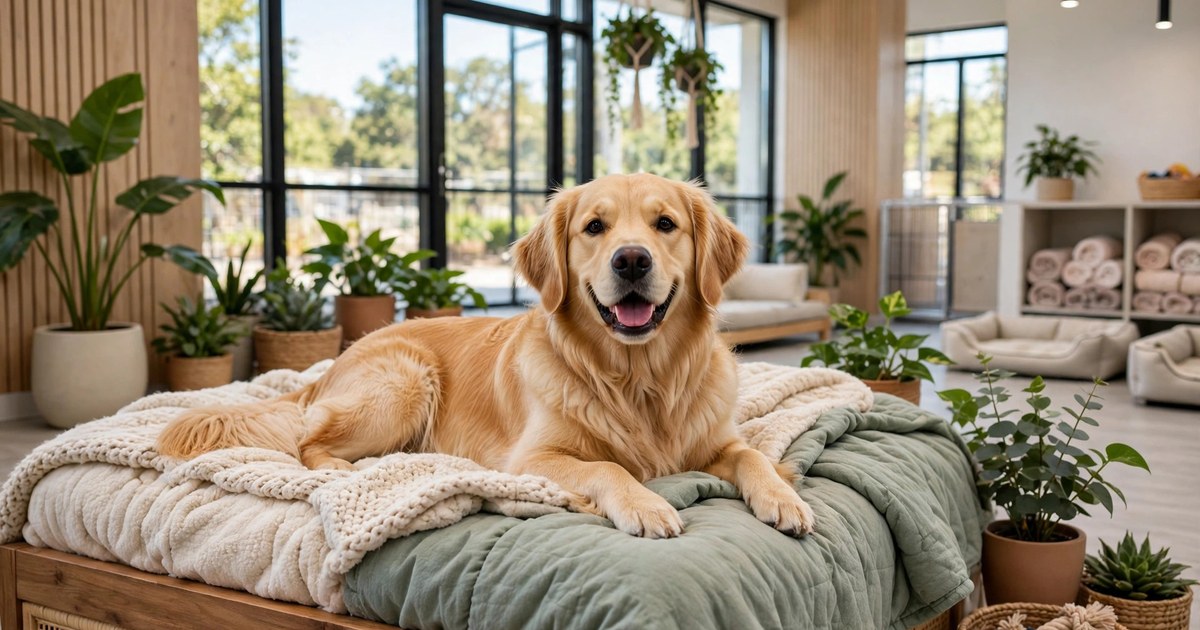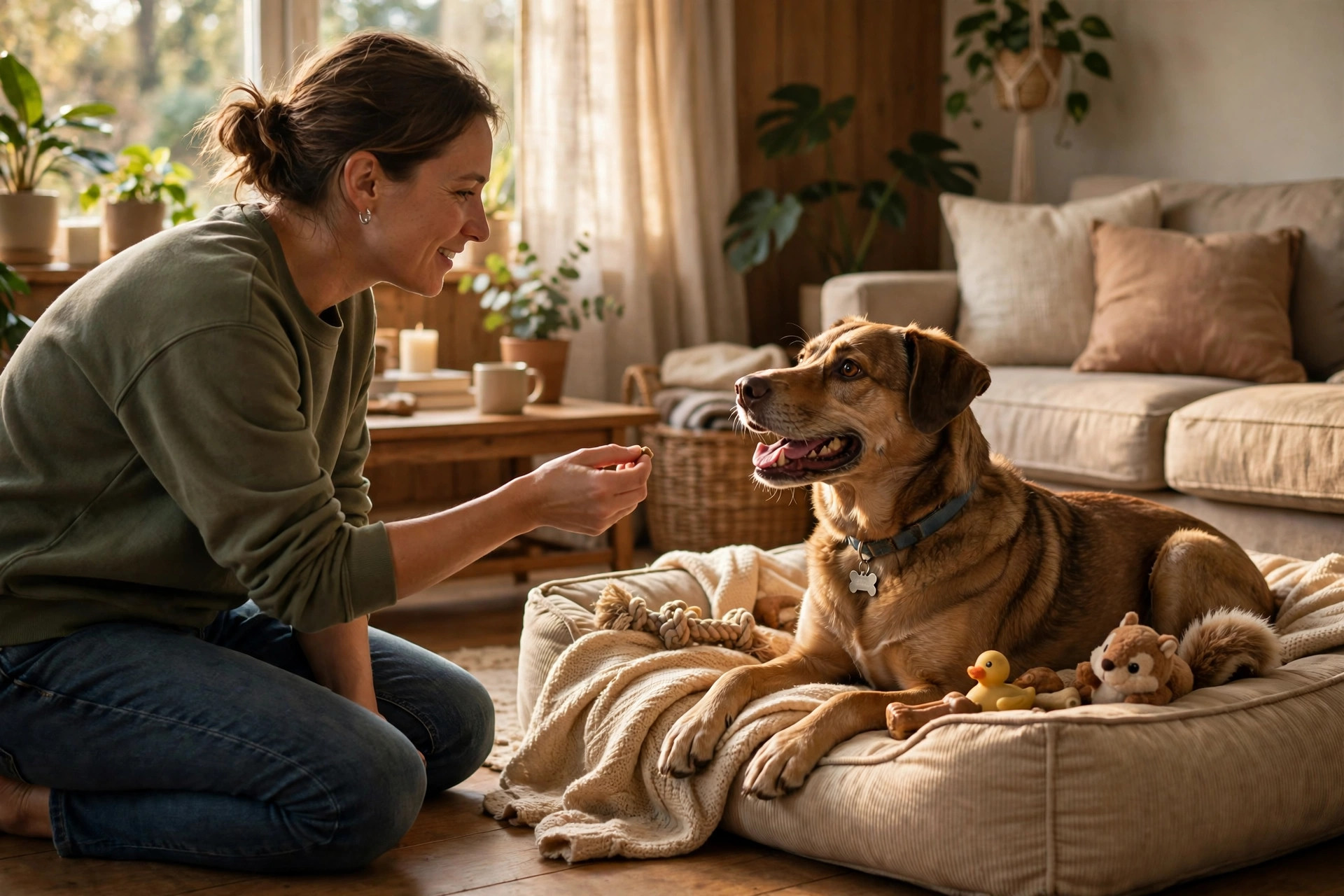
Adoption day is exciting — and then the front door closes, the house goes quiet, and your new rescue dog looks at you like you are a stranger. That is completely normal. A rescue dog has just lost everything familiar: the shelter routine, the kennel smells, the people who fed them. Your job in the first week is not to train a perfect dog. It is to prove, calmly and consistently, that this strange new place is safe. This guide gives you the whole first week as a checklist — work through it day by day, and by day seven you will know your dog's real personality, and your dog will know they are home.
The 3-3-3 Rule: What to Expect in Week One
Rescue groups and trainers talk about the 3-3-3 rule for adopted dogs, and it is the single most useful expectation-setter for your first week:
- 3 days to decompress. Your dog may be overwhelmed, quiet, off their food, or unusually sleepy. Some dogs hide; some pace. Both are normal.
- 3 weeks to learn your routine — mealtimes, walk times, and where they sleep.
- 3 months to feel fully at home. Trust and the real personality arrive on this timeline, not before.
Your first week covers the first two milestones: decompression, then the first shape of a routine. If your dog seems "different" from the dog you met at the shelter, they are not being difficult — the shelter version was a stressed dog in a strange place, and so is the dog in your living room now. The American Kennel Club's guide to questions to ask when rescuing a dog explains the 3-3-3 framework the same way. Keep one rule on your fridge all week: slow is fast.
Before Adoption Day: Get Ready First
Buy and set up everything before your dog arrives — shopping with a stressed new dog in tow is a recipe for chaos.
Gear to buy
- Collar with an ID tag (your phone number), a sturdy 6-foot leash, a bed or crate with a soft blanket, two bowls, the same food the shelter was feeding, small soft treats, two or three simple toys, poop bags, an enzymatic cleaner, and old towels.
Paperwork and people to sort out
- Ask the shelter for everything they have: adoption paperwork, behaviour notes, feeding schedule, and the food they were eating.
- Book a first vet visit for the first week and bring the shelter paperwork. Decide house rules in advance: off-limits rooms, sleeping spot, who feeds and walks the dog.
- Arrange time off or work-from-home for the first two or three days if you can, tell visitors to hold off for the first week, and check fences and gates for escape gaps.
Still deciding? Our quiz: which dog breed matches your lifestyle checks the match before you commit.
Day 1: The Calm Arrival
Make day one boring — in the best way.
Before you go inside: take your dog for a short walk around the block first. Let them sniff and relieve themselves before they cross the threshold, then walk in calmly on leash and let them explore one room at a time.
Set up a safe room: pick one quiet room as your dog's base. Put the bed, water bowl, and a couple of toys there, and leave the door open so the dog can choose to retreat. This is their decompression zone, and for the first few days it should be the calmest place in the house.
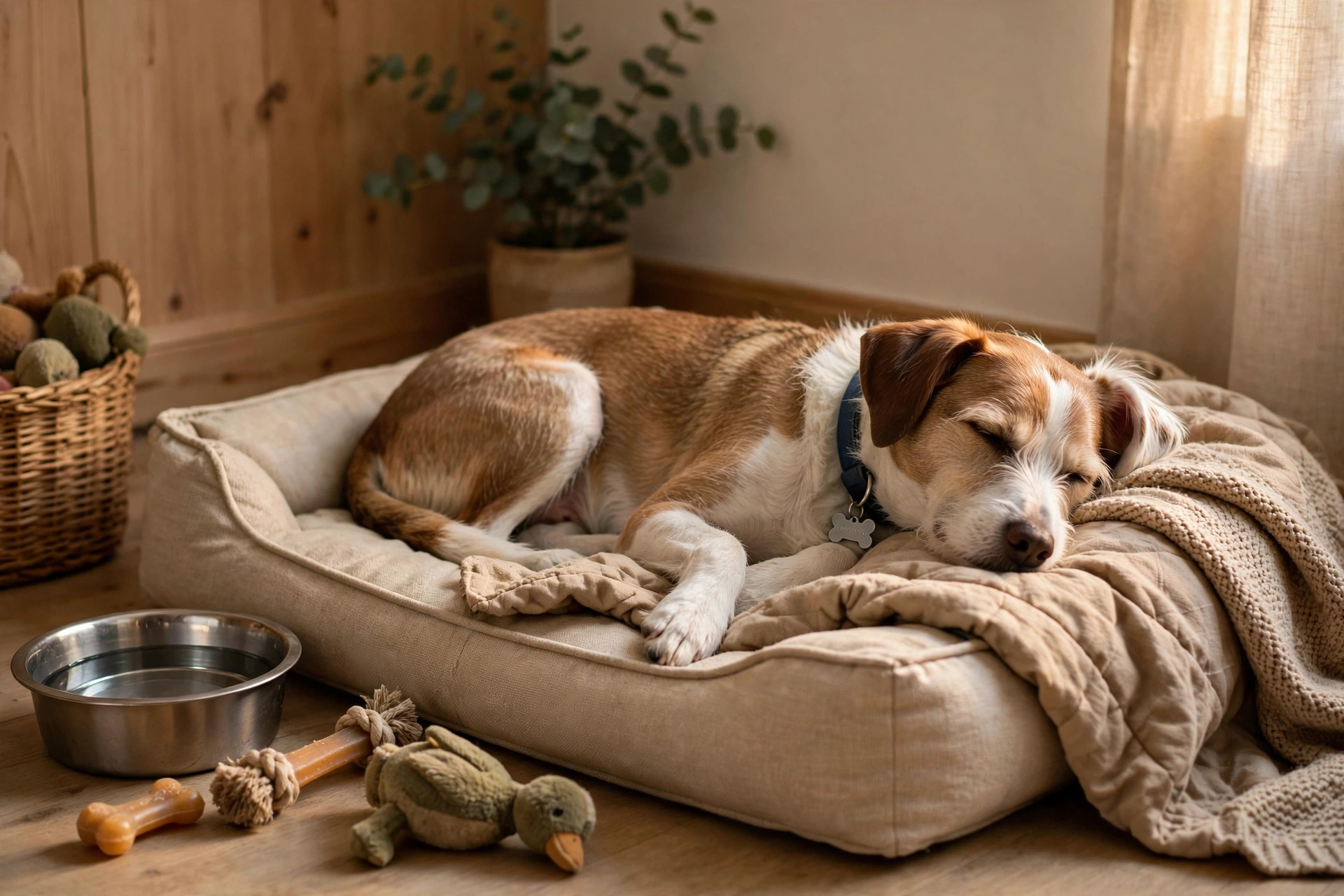
Keep it low-key: no welcome party, no bath, no nail trim, no trip to the pet store. The ASPCA's tips for a new dog make the same point: wait on baths and grooming, because those interactions can be frightening for a dog that does not trust you yet. Let your dog come to you — sit on the floor nearby and toss a treat in their direction when they glance at you.
First night: keep the bed or crate in or near your bedroom — many rescue dogs settle far better when they can hear you nearby. Expect some whining; stay calm, take them out for a toilet break if needed, then settle them again without a fuss.
Days 2–3: Decompression Mode
These are the quietest days of the week, and that is by design. The AKC's guide on decompression when bringing home a new dog stresses that every new dog needs space, a simple routine, and time to get to know you on their own terms.
- Stick to a simple schedule: same feeding times, same walk times, same bedtime. Predictability is what makes a nervous dog feel safe.
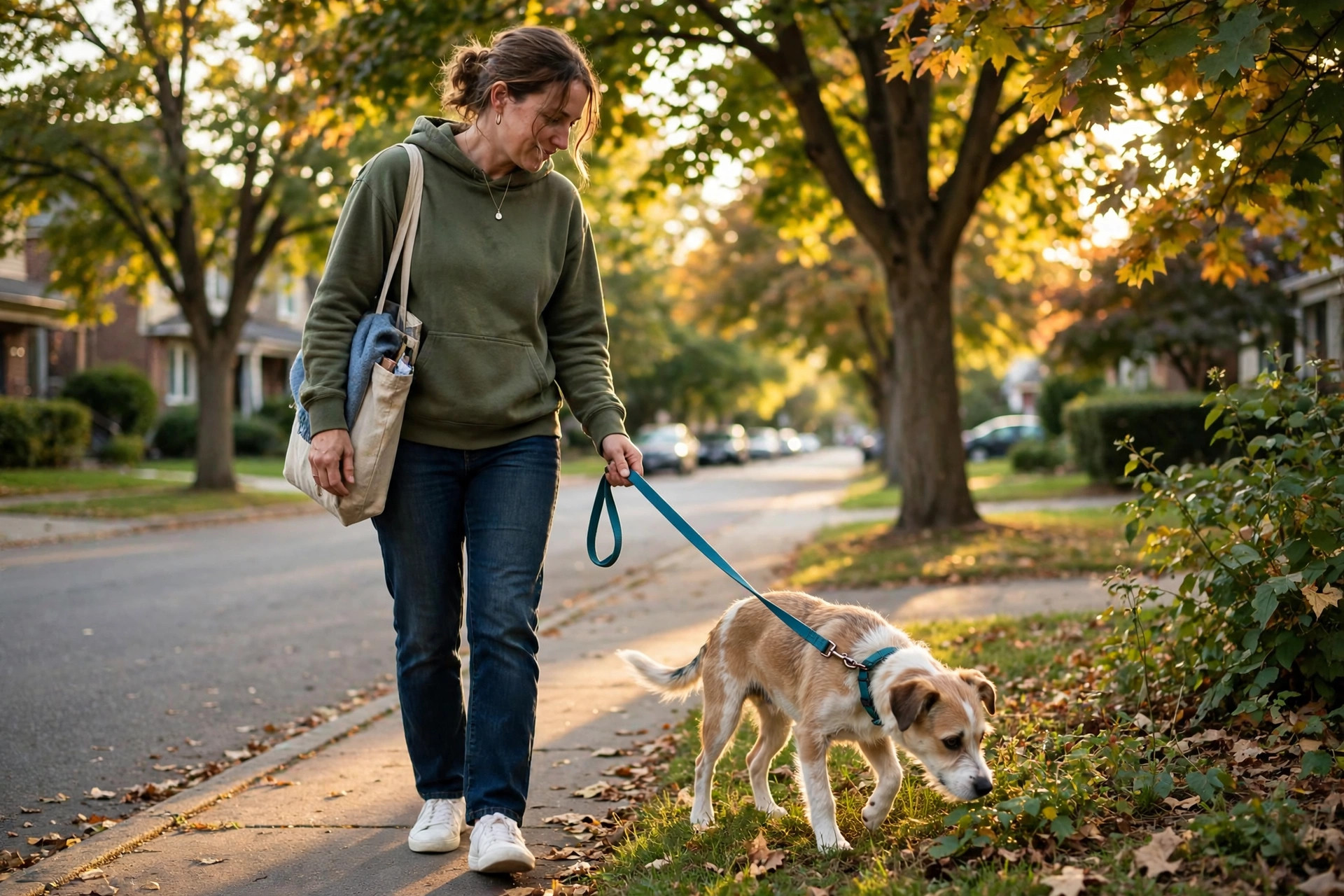
- Short, sniffy walks only: two or three 10–15 minute walks a day in quiet streets. Let the dog sniff as much as they want — sniffing is calming, and it is how dogs learn a neighbourhood.
- Do not force affection: some rescue dogs want cuddles immediately; others need days before they will sit next to you. Both are fine. Offer your hand, let them sniff, and let them walk away.
- Watch for stress signals: yawning when not tired, lip-licking, turning away, a tucked tail, or refusing food all mean your dog needs more space, not more attention.
- Start house training from day one: take your dog out first thing in the morning, after meals, after naps, after play, and last thing at night. Reward every outdoor toilet with a treat and a calm "good".
If your dog will not eat for the first day or two, do not panic. Offer the food for 20 minutes, then try again at the next meal. A dog still refusing food after 48 hours is worth a call to your vet.
Days 4–7: Building the Routine
By midweek most rescue dogs start to show you who they really are.
The daily routine to build
Morning: toilet break, breakfast, a 15–20 minute walk, then a calm settle with a chew or puzzle toy. Midday: toilet break and a five-minute play or training session. Evening: dinner, a longer walk, then quiet time together. Night: last toilet break at the same time every night, then bed in the same spot. Dogs that know what happens next relax faster.
Start gentle training now
Keep sessions to five minutes, twice a day, and use treats your dog actually loves. Teach "sit", "come", and their name first — these three make everything else easier. If your dog ignores you, they are not being stubborn; they just do not know you well enough yet. Our puppy socialization checklist is written for puppies, but its gentle-exposure ideas work just as well for an adult rescue meeting the world for the first time.
Introducing Other Pets and People
Rushed or unsupervised introductions can set a new dog back weeks. Go slow here.
Meeting a resident dog
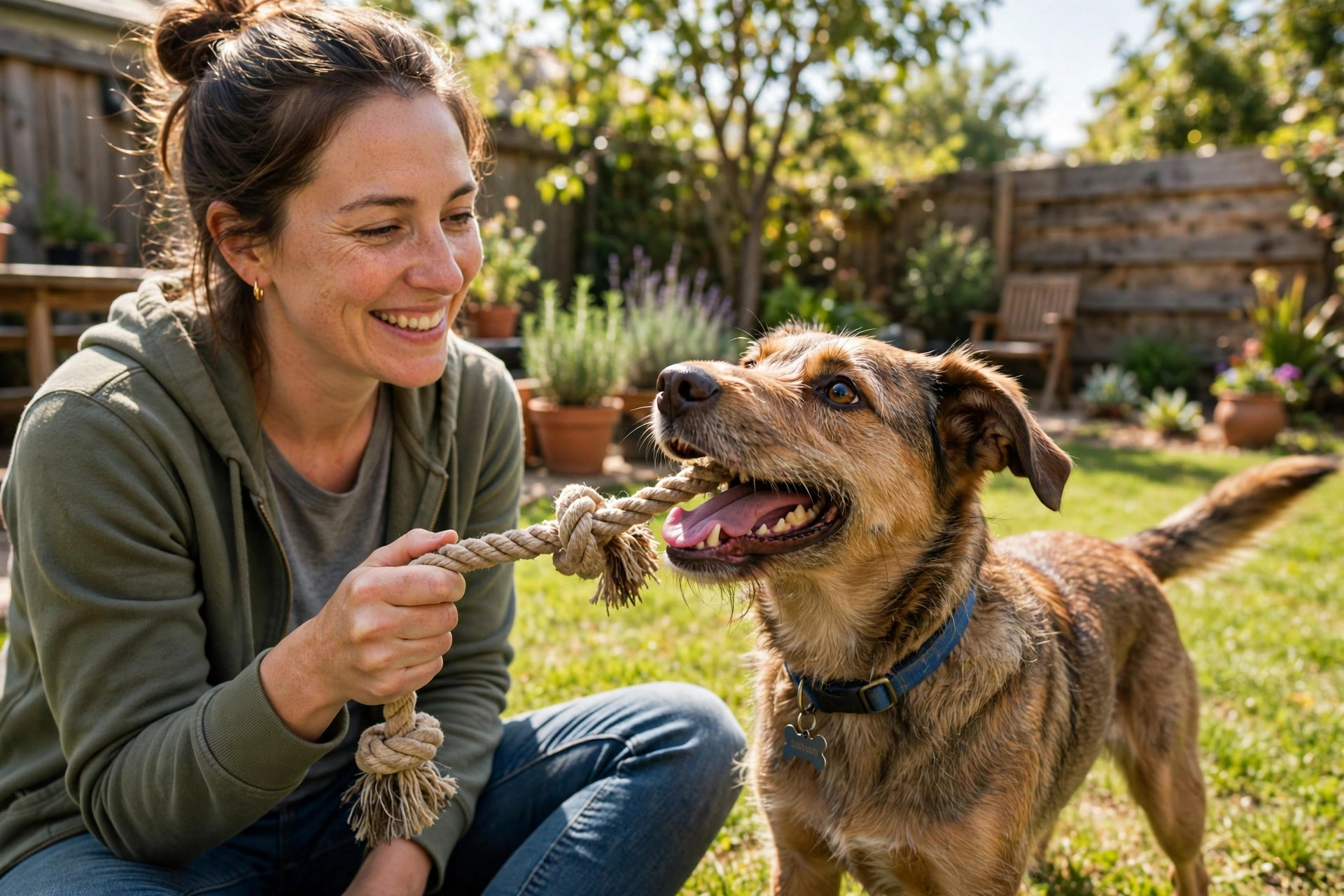
Meet on neutral ground first — a quiet street, not inside your home. Walk the dogs parallel for 10–15 minutes before letting them greet, keep the meeting short, and end calmly. Inside, keep food bowls, toys, and chews separate for the first week, and never leave the dogs unsupervised together until you have seen a full week of calm behaviour between them.
Meeting cats and small pets
Keep the new dog and the cat completely separate for the first few days, with a closed door between them. Swap blankets so they learn each other's scent, then allow a first look through a baby gate with the dog on a leash. If either animal is stressed, go back a step.
Meeting children and visitors
Children should meet the dog calmly, sitting down, letting the dog approach them. The rule for the whole first week: no hugging the dog, no chasing, no grabbing toys from its mouth. Keep visits short and supervised — one calm visitor at a time beats a house full of well-meaning relatives.
3 Mistakes New Rescue Owners Make
- Too much freedom, too soon. A new dog roaming the whole house unsupervised will find trouble — and will not learn where to toilet. Use baby gates and the safe room for the first week.
- Punishing accidents or fear. A dog punished for toileting indoors learns to hide it, not to stop it. Clean up calmly and take them out more often.
- Expecting the shelter dog on day one. The dog you met in the kennel was stressed; the dog in your kitchen is stressed. The real dog — the one that leans on you and brings you a toy — shows up around week three. Give them that time.
Your First-Week Daily Checklist
Tick it off each day for seven days.
- ☐ Toilet breaks: first thing, after meals, after naps, after play, last thing at night
- ☐ Meals at the same times, same food as the shelter; fresh water all day
- ☐ Two or three short walks, quiet routes, plenty of sniffing time
- ☐ One 5-minute training session (name, sit, come)
- ☐ No forced cuddles, no baths, no visitors unless the dog asks for it
- ☐ First vet visit booked (or completed) within the first week; ID tag on, microchip details updated
Frequently Asked Questions
How long does it take a rescue dog to settle in?
About three days to decompress, three weeks to learn your routine, and three months to feel fully at home — the 3-3-3 rule. Confident dogs settle faster; shy dogs take longer.
Should I crate my rescue dog at night?
A crate can help if your dog already likes one. If they have never used one, do not lock them in on the first night — let them sleep in their bed in your bedroom instead.
Can I take my rescue dog to the dog park in the first week?
Wait. The dog park is loud and crowded — the opposite of what a new rescue dog needs. Stick to quiet walks for the first week or two.
What should I do if my rescue dog has an accident indoors?
Clean it calmly with an enzymatic cleaner and take your dog out more often. Never punish an accident you find after the fact — your dog will not connect the punishment with the act.
Conclusion: A Calm Week Builds a Lifelong Bond
Your rescue dog's first week is not a test to pass — it is a promise to keep. Keep the days quiet, the routine predictable, and the expectations low, and your dog will reward you with the fastest trust you will ever earn.
Want to know how old your new best friend really is? Try our dog age calculator — enter their age and see it in human years. And if you are gathering the rest of your first-week gear, our puppy training supplies checklist covers the budget-friendly basics that work just as well for an adult rescue.