Every dog owner eventually stands in the pet aisle (or stares at an Amazon search page) facing the same fork in the road: dog nail grinder vs clippers — which one should you actually buy? Ask five owners and you'll get five passionate answers. The honest truth is that neither tool is universally better. The right choice depends on your dog's nails, your dog's temperament, and your own confidence level.
This guide settles the debate properly: how each tool really works, an honest side-by-side comparison, who each tool suits (and who should skip it), and four top-rated tools — one grinder and three clippers — so you can buy once and trim with confidence.
Affiliate disclosure: CalcPet is reader-supported. As an Amazon Associate, we earn from qualifying purchases at no extra cost to you. Every product below is picked from real verified-buyer ratings — never from sponsorships.
Quick verdict: grinder vs clippers in 30 seconds
If you want the short answer before the deep dive, here it is:
- Choose a nail grinder if your dog has dark or thick nails (where you can't see the quick), flinches at the clipper's crunch, or you want maximum control with a smooth, rounded finish.
- Choose nail clippers if your dog sits calmly, has light nails with a visible quick, or you want the fastest possible trim — seconds per nail, no charging, no noise.
- Use both if you want the pro result: clippers take down the bulk length fast, then the grinder smooths the edges. Many professional groomers work exactly this way.
How dog nail grinders work
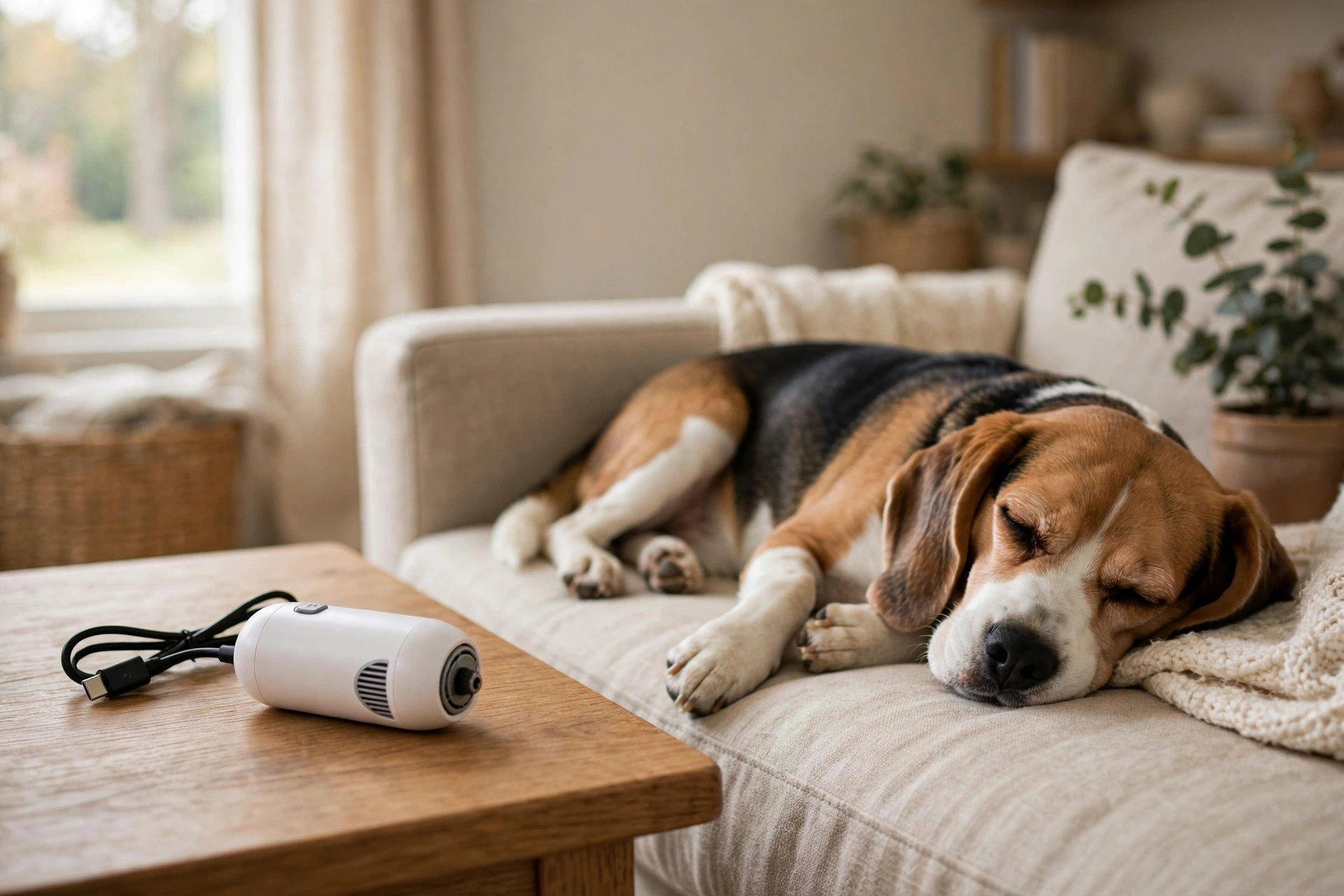
A nail grinder is a small handheld rotary tool with an abrasive bit or sanding band. Instead of cutting the nail in one squeeze, you touch the spinning head to the nail tip and file it down a little at a time — the same principle as a nail file, powered.
Where grinders shine: control. Because you remove nail gradually, there's no single moment where you can take off too much — ideal for dark nails (where the quick is invisible), dogs startled by a bad clipper experience, and nervous owners. The finish is a smooth, rounded edge that won't snag carpet or scratch skin.
Where grinders struggle: patience. Grinding takes a few minutes per paw versus seconds per nail, the motor hums and vibrates (some dogs hate that more than a quick clip), and pressing one spot too long creates friction heat — so short passes are the technique. Grinding heads also wear out and need replacing.
How dog nail clippers work
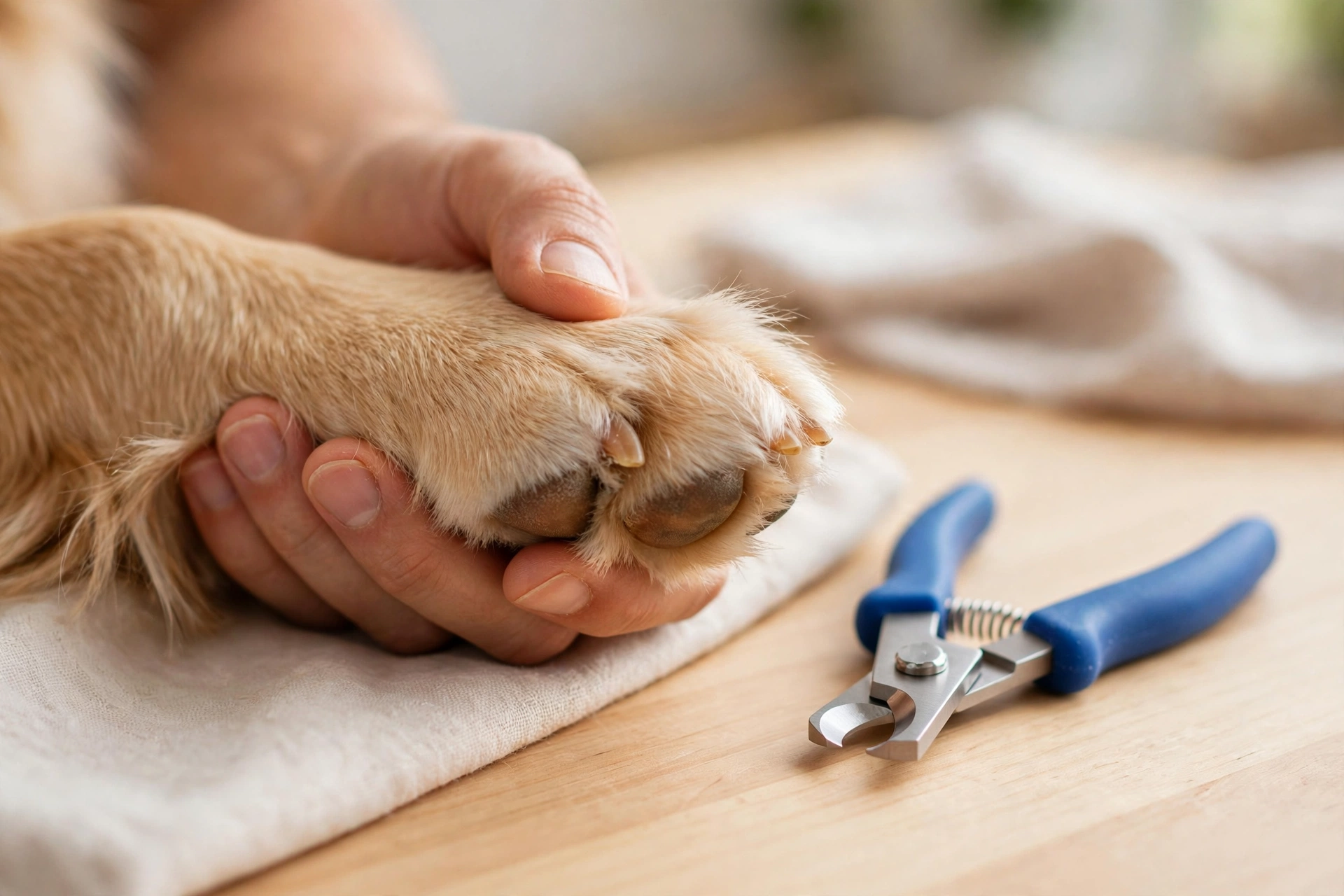
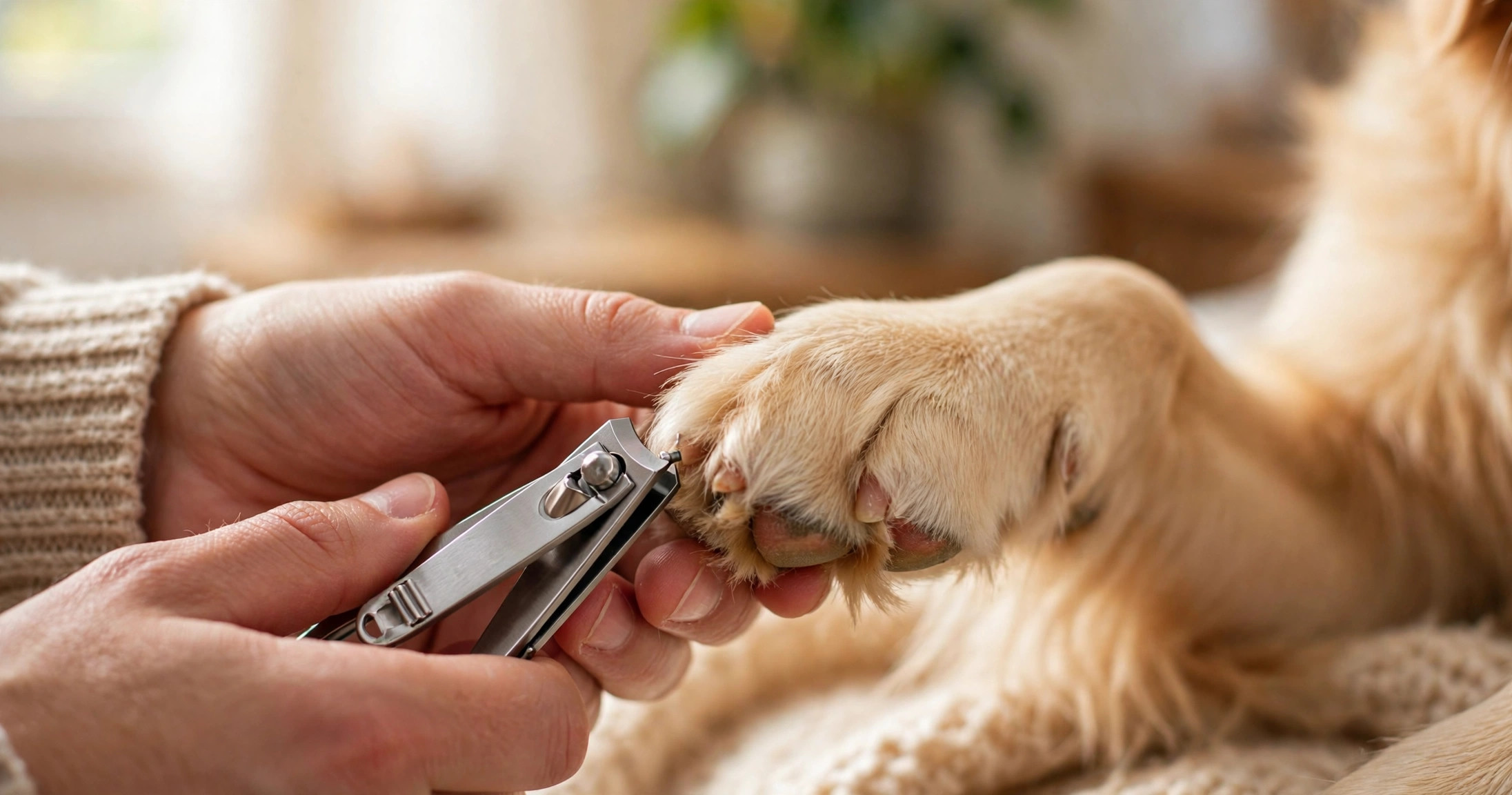
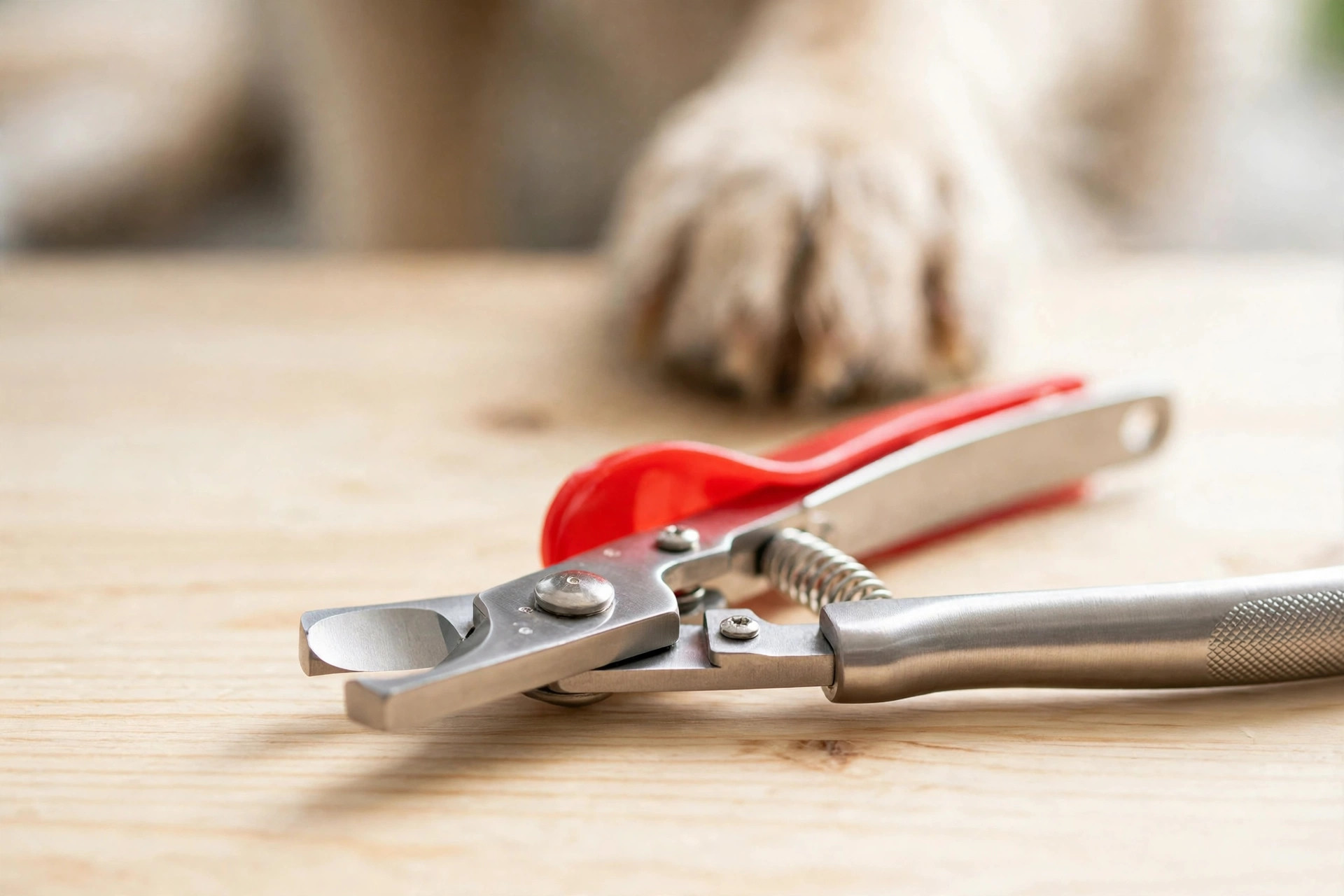
Clippers — usually scissor-style, where two blades cross like scissors — remove the nail tip in one squeeze. Line up the cut, squeeze, done. It's the fastest at-home method and the one most owners learn first.
Where clippers shine: speed and simplicity. A calm dog's full pedicure takes a couple of minutes. They're nearly silent, need no charging, cost less, and slip into a drawer. For light nails where you can see the pink quick, placement is straightforward.
Where clippers struggle: margin for error. One squeeze removes a real chunk, so a misjudged cut or sudden head-turn can go too deep. Dull blades can crush or split instead of cutting cleanly, and the squarer edge often needs filing after. Dogs that fear the sudden "crunch" may never accept clippers calmly.
If you've never trimmed nails before, the AKC's step-by-step trimming guide is worth reading first — their chief veterinarian suggests having your vet or a vet tech demonstrate the technique once before you try it yourself.
Grinder vs clippers: side-by-side comparison
| Nail grinder | Nail clippers | |
|---|---|---|
| How it works | Files the nail down gradually with a rotary abrasive bit | Cuts the nail tip off in one squeeze of scissor-style blades |
| Best for | Dark or thick nails, nervous dogs, owners who want maximum control | Calm dogs, light nails with a visible quick, fast trims |
| Speed | Slower — a few minutes per paw | Fast — seconds per nail |
| Noise | Motor hum plus vibration | Nearly silent (one soft crunch) |
| Finish | Smooth, rounded edge | Can leave a squarer edge; often needs filing after |
| Risk profile | Very gradual — hard to take too much at once | One misplaced cut can go too deep |
| Learning curve | Easy to start; needs patience and short passes | Needs confidence and quick awareness |
| Upkeep | Needs charging; grinding heads wear out | Blades eventually dull; nothing to charge |
4 top-rated dog nail tools (2026)
We picked one standout grinder and three standout clippers from Amazon's verified-buyer data — the same products featured in our full nail-clipper roundup, now matched to the tool type they suit best.
Casfuy Dog Nail Grinder (2-Speed, USB Rechargeable)
- 2 speeds (7,000 / 8,000 RPM) with whisper-quiet under-50 dB motor
- 3 grinding ports for different nail sizes + LED light
- USB rechargeable with advanced diamond bit head
As an Amazon Associate, CalcPet earns from qualifying purchases.
The Casfuy N10 is the best-selling pet nail grinder on Amazon — roughly 97,300 verified ratings at 4.3 stars — and it exists for one reason: dogs that can't handle clippers. Instead of one decisive cut, it files the nail down a little at a time, so there's no sudden crunch and no single moment where you can take off too much. The LED light helps you see what you're doing on dark nails, and the sub-50 dB motor is quiet enough that many noise-wary dogs accept it after a short introduction. Note for 2026: Casfuy now also sells a 6-speed N60, but the classic 2-speed N10 remains the flagship with the biggest buyer base. Who it's for: nervous dogs, dark-nailed dogs where the quick is invisible, and owners who want maximum control over each pass. Who it's NOT for: very thick nails on big dogs, where clippers remove bulk faster — and impatient owners, because grinding takes longer. Pros: best-selling grinder with a massive rating base; quiet enough for anxious dogs; gradual removal, no sudden cuts. Cons: slower than clipping on very thick nails; grinding heads need occasional replacement.
Boshel Dog Nail Clippers and Trimmer with Safety Guard
- Adjustable safety guard to prevent over-cutting
- 3.5mm thick stainless steel blades, sized for medium and large dogs
- Free mini nail file stored in the handle
As an Amazon Associate, CalcPet earns from qualifying purchases.
If you want the safest-feeling first clipper, the Boshel is the default answer for a reason: 4.5 stars across roughly 53,700 verified buyers. The adjustable safety guard caps how much nail fits in the blades, so a nervous beginner physically can't take a big chunk. The 3.5mm stainless blades cut cleanly on medium and large dogs, and the mini file hidden in the handle smooths the edge afterward. Who it's for: most dog owners, especially first-timers who want a guard against beginner mistakes. Who it's NOT for: toy breeds — the full-size tool feels bulky on tiny nails; a small or cat-size clipper fits better. Pros: huge verified-buyer base; guard makes first trims safer; file included. Cons: bulky on toy breeds; blades will eventually need replacing after years of use.
Epica Professional Dog Nail Clipper
- Semi-circular blades for precise cut visibility
- Safety guard plus blades-lock-closed
- Rubber-coated non-slip handles; two sizes (under / over 60 lbs)
As an Amazon Associate, CalcPet earns from qualifying purchases.
The Epica is the groomer-style pick. Its semi-circular blades let you see exactly where the nail sits before you squeeze — the feature that matters most on thick, tough nails where guesswork is risky. It comes in two sizes split at 60 lbs, so large-dog owners get a properly sized tool instead of an oversized generic, and grooming experts recommend it. Who it's for: owners of large dogs with thick, tough nails who want pro-level cut control. Who it's NOT for: small hands and toy breeds — it's bulky, and it costs more than a basic clipper. Pros: expert-recommended; blade shape helps you avoid deep cuts; sturdy on thick nails. Cons: bulky for small hands and toy breeds; pricier than basic clippers.
gonicc Dog and Cat Nail Clippers and Trimmers
- Safety guard to avoid over-cutting
- Razor-sharp stainless steel blade with free file in the handle
- Blade lock for safe storage, non-slip handles
As an Amazon Associate, CalcPet earns from qualifying purchases.
The gonicc is the budget proof that you don't need to spend much: a "Best Seller in Dog Claw Care" track record, 4.5 stars from tens of thousands of ratings, and over 20,000 bought in a single recent month. You get the essentials — safety guard, sharp stainless blade, file in the handle, locking blades for storage — and nothing you don't need. Who it's for: budget-minded owners who want a proven, no-frills clipper. Who it's NOT for: toy breeds or very small hands — the single size skews medium and large. Pros: best-seller track record; huge recent sales volume; very affordable. Cons: less ideal for toy breeds; basic packaging.
Product specs compared
| Tool | Type | Rating | Standout feature | Best for |
|---|---|---|---|---|
| Casfuy N10 | Grinder | 4.3/5 · ~97,300 ratings | 2 speeds, LED light, USB rechargeable | Nervous dogs, dark nails |
| Boshel | Clipper | 4.5/5 · ~53,700 ratings | Adjustable safety guard | Beginners |
| Epica | Clipper | Highly rated · thousands of reviews | Semi-circular blades, two sizes | Thick nails, large dogs |
| gonicc | Clipper | 4.5/5 · tens of thousands of ratings | Best-seller, blade lock | Budget buyers |
The pro move: use both tools
Here's the quiet secret from grooming tables: you don't have to pick a side. Many professionals clip first to remove the bulk length quickly, then finish with a grinder to round the edges smooth. You get the speed of clippers and the finish of a grinder — and the dog only endures the clipper for a few seconds per nail before the gentler grinding phase.
If you go this route, the pairing that makes most sense from our picks is the Boshel (guarded, beginner-safe clipping) plus the Casfuy (quiet grinding to finish). Keep a styptic powder in the drawer before your first session either way — the AKC recommends it, and VCA's first-aid guidance for broken nails explains why short nails are worth the routine.

FAQs: dog nail grinder vs clippers
Is it better to grind or clip a dog's nails?
Neither is universally better — it depends on your dog. Grinders suit dark or thick nails, nervous dogs, and owners who want maximum control with a smooth finish. Clippers suit calm dogs with light nails and owners who want the fastest trim. Many owners end up using both: clippers for bulk length, grinder for the finish.
Do dog nail grinders hurt dogs?
A grinder used correctly doesn't hurt — it files rather than cuts. The real issues are behavioral: some dogs dislike the noise and vibration, and pressing in one spot too long creates friction heat. Short passes, a proper introduction with treats, and stopping if your dog gets stressed keep the experience comfortable.
Are nail grinders good for black nails?
Yes — this is the grinder's best use case. On dark nails you can't see the quick, so the gradual filing lets you approach it in tiny steps instead of gambling on one cut. Watch the nail surface as you go and stop when you see the darker center appear.
How often should I trim my dog's nails?
Most dogs need a trim every 3–4 weeks, though it varies with activity — dogs that walk a lot on pavement wear nails down faster. The simple test: if you hear clicking on hard floors, it's time. If you're unsure about your dog's schedule, ask your groomer or vet.
My dog is scared of the grinder's noise. What helps?
Desensitize in stages: first let your dog sniff the tool while it's off and give treats, then run it nearby (not touching) while treating, then touch one nail briefly. A few short, treat-heavy sessions beat one long stressful one. If your dog truly can't tolerate the vibration, quiet clippers are the kinder choice.
Can I use clippers and a grinder together?
Absolutely — it's what many groomers do. Clip the clearly safe length first, then grind the last bit and the edges for a smooth, rounded finish that won't snag carpet or scratch skin. The only requirement is a dog that tolerates both tools.
Verdict: which should you buy?
Buy the tool your dog will actually tolerate — a grinder that terrifies your dog is worse than clippers used calmly, and clippers that make you nervous are worse than a grinder used patiently. For most first-time owners, the decision tree is simple: dark nails or a clipper-shy dog → grinder (Casfuy); calm dog with light nails → clippers (Boshel for beginners, Epica for thick nails, gonicc on a budget); want the best finish → both.
Whichever you choose, the real win is consistency: short nails, trimmed regularly, beat the perfect tool used twice a year. Browse more vetted gear on our Pet Parent Picks page — and if you're new to dog ownership altogether, our dog age calculator is a fun place to start learning your pup's life stage needs.