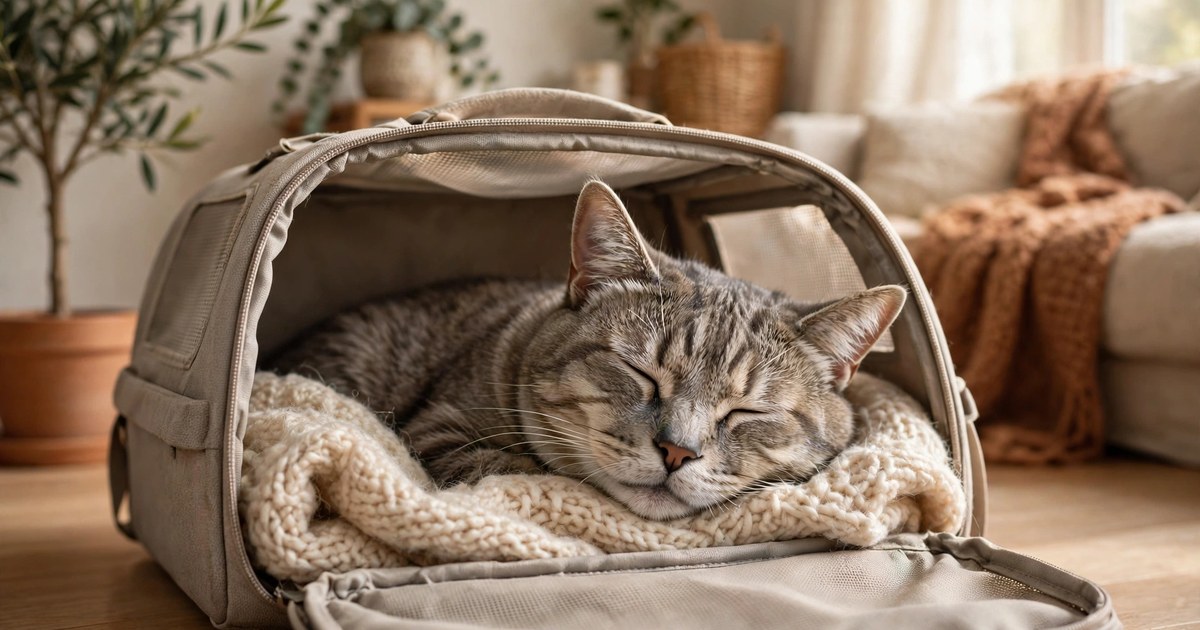
Getting an older cat into a carrier for a vet visit can turn into the hardest part of the whole trip. A young cat might forgive a tight front door and a bit of a squeeze. A senior cat will not. What you want now is a carrier that loads easily, carries lightly, and feels like a safe little den instead of a trap — and the four carriers below do exactly that, each in a different way.
This guide covers the four carriers in CalcPet's catalog that genuinely suit senior cats, with honest pros and cons for each, a buying guide, and a comparison table, so you can pick the one that fits your cat's size and temperament — not just the one with the prettiest listing photo.
Disclosure: CalcPet is reader-supported. As an Amazon Associate, CalcPet earns from qualifying purchases made through links on this page, at no extra cost to you. The ratings shown are the ratings listed for each product on Amazon.
Our top 3 picks at a glance
- Best Top-Load Pick: Petmate Two Door Top Load Dog & Cat Kennel — open the lid, lower your cat straight in, no pushing through a front door.
- Best Escape-Proof Pick: Morpilot Soft-Sided Pet Carrier for Large Cats — locking zippers on every opening for strong or clever cats.
- Best Lightweight Pick: Henkelion Soft-Sided Pet Carrier — a 2.1-lb frame you can carry one-handed to the car.
What makes a carrier senior-friendly? 5 things to check
Senior cats are not just "older cats" — they are cats who have had years to form strong opinions about being handled, and who tire faster and startle easier than they used to. Judge every carrier on these five points before you buy.
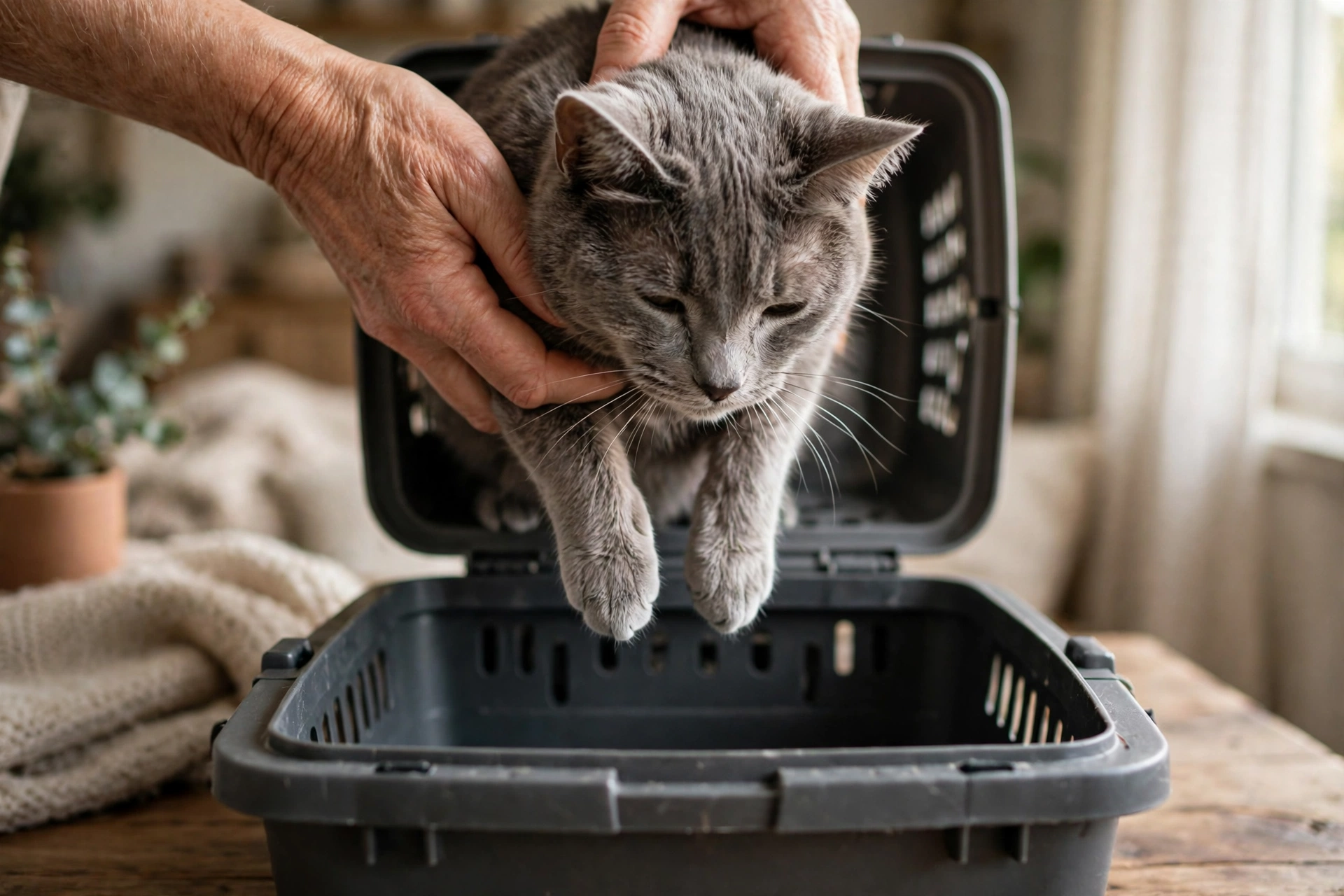
1. How the cat gets in. This is the single biggest difference. A top-loading carrier lets you lower the cat in from above, which is far calmer than pushing a reluctant cat through a small front door. If your cat freezes or backs away at the sight of a carrier, a top-load or wide opening matters more than any other feature.
2. Step-in height and floor space. Your cat should be able to turn around, sit upright without hunching, and lie down flat. Measure your cat nose-to-tail and add 3–4 inches — that is the minimum interior length to look for. A low entry helps a cat that hesitates to climb or jump in.
3. Weight — for you, not just the cat. You carry the carrier, the cat, and often a bag, up steps and across parking lots. A hard kennel is heavier by nature; a soft carrier under 3 lbs is noticeably easier on a longer walk to the clinic.
4. Airflow and visibility. Mesh panels and ventilation slots keep air moving and let your cat see out, which keeps many cats calmer than a dark box. A carrier that is too enclosed can make a nervous cat panic; one that is all mesh can leave a shy cat feeling exposed. A mix — solid base, mesh windows — is the best compromise for most seniors.
5. Zippers and latches that actually stay shut. A senior cat that has escaped a carrier once will try again. Locking or self-locking zippers and strong latches are worth paying for, especially if your cat is a determined paw-worker.
1. Petmate Two Door Top Load Dog & Cat Kennel — Best Top-Load Pick
Petmate Two Door Top Load Dog & Cat Kennel
- Top door plus front door for two easy loading options
- Ventilation slots and a tie-down hole for safe car travel
- Hard plastic shell rated for airline travel
As an Amazon Associate, CalcPet earns from qualifying purchases.
The Petmate is the pick for the cat who will not walk into a carrier on her own. Open the top door, lower her straight down onto a familiar blanket, close the lid — the whole loading takes seconds, and there is no wrestling match at a front opening. The front door stays available for cats that do walk in willingly, so you get both options in one kennel. The hard shell feels solid in the hand, the latches close with a firm click, and the ventilation slots plus a tie-down hole make it straightforward to secure in the car.
Pros: Easy to load a nervous cat through the top; tough build that survives checked travel; strong latch design.
Cons: Heavy for a soft-carrier budget; measure carefully — size labels vary.
Best for: Anxious cats and vet visits; top-loading pick.
Who it is NOT for: Anyone who carries the carrier a long distance on foot — this is the heaviest pick here, so if you walk to the clinic, look at the Henkelion instead. Also, the catalog stores no dimensions or weight limit for this kennel, so check the listed dimensions for the exact size you order, and measure your cat first.
2. Morpilot Soft-Sided Pet Carrier for Large Cats — Best Escape-Proof Pick
Morpilot Soft-Sided Pet Carrier for Large Cats (Locking Zippers)
- Anti-escape locking zippers on all openings
- Breathable mesh panels and a padded shoulder strap
- Spacious interior fits cats up to 15 lbs
As an Amazon Associate, CalcPet earns from qualifying purchases.
The Morpilot is the pick for the senior who still has opinions — the cat who has learned how zippers work and uses that knowledge. Every opening has an anti-escape locking zipper, so a paw working at the zipper from inside gets nowhere. The mesh panels keep air moving and let your cat see out, the padded shoulder strap spreads the weight, and the whole carrier folds flat between trips, which matters if you live in a small home and the carrier otherwise lives in a closet.
Pros: Locking zippers stop most escape attempts; roomy enough for large cats; folds flat for storage.
Cons: No seat-belt attachment point; mesh can scratch over time.
Best for: Strong or clever cats; best escape-proof pick.
Who it is NOT for: Bigger seniors — the listing fits cats up to 15 lbs, so a large senior over that limit needs a bigger carrier (see our large-cat carriers guide). Also note there is no seat-belt attachment point, so secure it on the car floor or wedged on the seat rather than relying on a belt clip.
3. Henkelion Soft-Sided Pet Carrier — Best Lightweight Pick
Henkelion Soft-Sided Pet Carrier
- Airline-approved size fits under most seats
- Folds flat for storage; top and side entries
- Lightweight 2.1-lb frame with mesh windows
As an Amazon Associate, CalcPet earns from qualifying purchases.
The Henkelion is the pick when the carrying matters as much as the cat. At 2.1 lbs empty, it is the lightest carrier here by a clear margin, and the difference shows on a walk across a parking lot or up a flight of stairs. Top and side entries give you two ways to load a reluctant cat, the mesh windows keep air moving, and it folds flat between trips. It is also the best-selling soft-sided carrier in its category on Amazon, which tells you how many owners have landed on the same simple formula.
Pros: Very light and easy to carry; two entry points for nervous pets; folds flat between trips.
Cons: 15-lb limit — not for bigger dogs; soft sides will not contain determined chewers; shoulder-strap comfort varies by reviewer.
Best for: Vet visits and airline travel with small pets.
Who it is NOT for: Big seniors — this is the standard 15-lb version, so a large senior will outgrow it. It is also soft-sided, so a determined chewer can work through the mesh over time; if your cat chews, the hard-sided Petmate is the safer choice.
4. Petsfit Expandable Cat Carrier — Best Expandable Pick
Petsfit Expandable Cat Carrier, Airline Approved
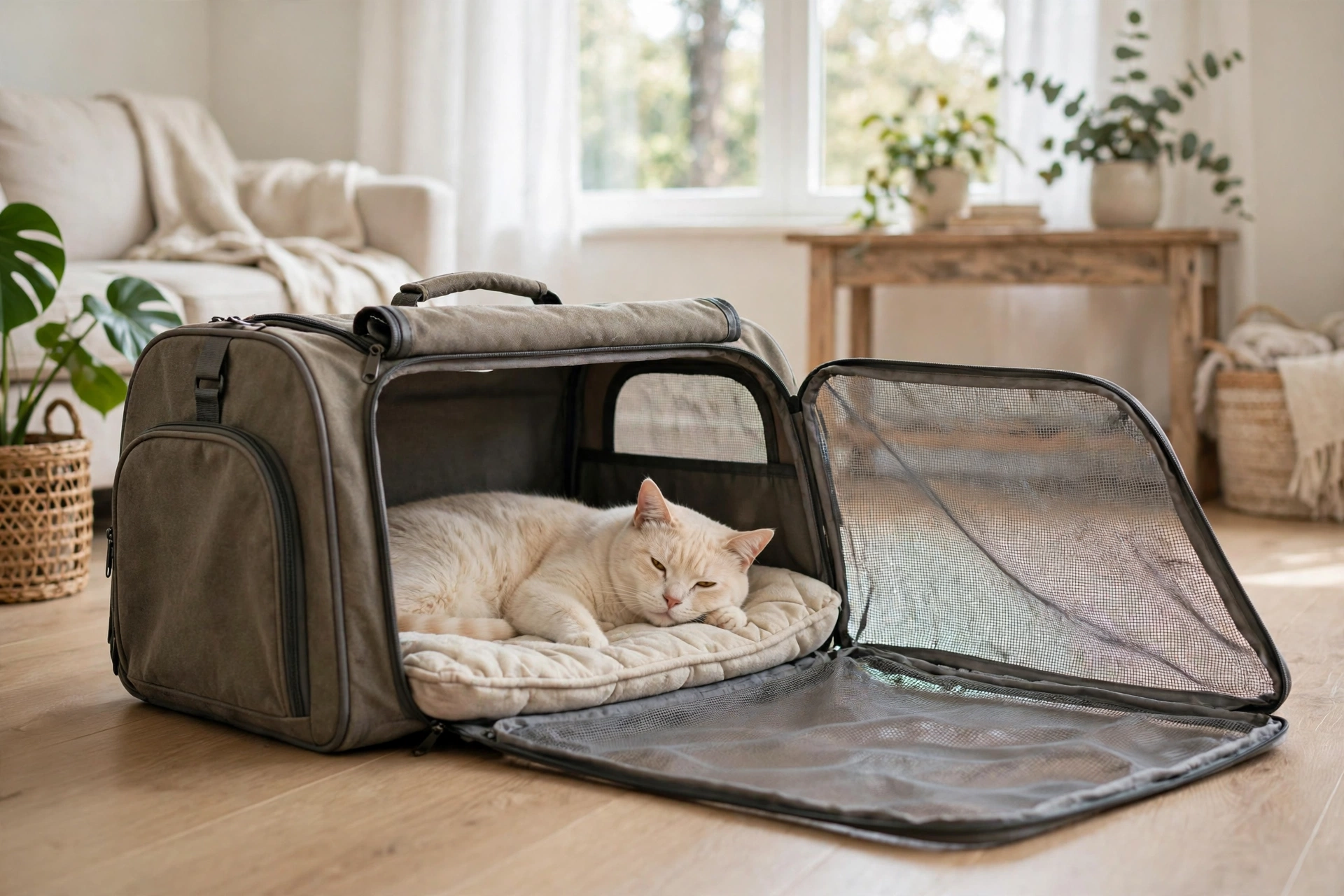
- Side panels unzip to expand floor space at the gate or in the car
- Airline-sized footprint that fits under most seats when zipped up
- Self-locking zippers, interior safety tether, washable plush mat
As an Amazon Associate, CalcPet earns from qualifying purchases.
The Petsfit is the pick for long waits. Zipped up, it is an airline-sized carrier that fits under most seats. Once you are parked at the clinic or waiting at the gate, the side panels unzip and the floor space roughly doubles, so your cat can stretch out, turn around, and settle instead of sitting curled in a small box for an hour. The self-locking zippers, interior safety tether, and washable plush mat round out a thoughtful design — the mat alone is worth it, since you can wash away the smell of a stressful trip before the next one.
Pros: Extra room exactly when it matters; good ventilation; doubles as a travel den.
Cons: Expanded sections are soft mesh, not rigid; measure your cat against the weight limit first.
Best for: Long trips and layovers; best expandable pick.
Who it is NOT for: Larger seniors — this carrier is sized for smaller cats (around 8 lbs per Catster's testing notes), so it is a short-trip carrier for a small senior, not a roomy pick for a big one. And the expanded sections are soft mesh, so do not leave an unsupervised cat in the expanded position.
Comparison table
| Carrier | Best for | Rating | Size note | Entry style |
|---|---|---|---|---|
| Petmate Two Door Top Load | Top-loading a reluctant cat | 4.8/5 · 4,500+ Amazon ratings | Check listed dimensions — none stored in catalog | Top door + front door |
| Morpilot Locking Zipper | Escape-proof travel | Strong Amazon review base | Fits cats up to 15 lbs | Top + side, locking zippers |
| Henkelion Soft-Sided | Lightest carry | #1 Best Seller in Dog Soft-Sided Carriers | 15-lb limit — small to average seniors | Top + side entries |
| Petsfit Expandable | Long waits, extra room | 4.6/5 · ~1,972 Amazon ratings | Smaller cats only (~8 lbs) | Side expansion panels |
When a stroller makes sense instead
One thing worth saying plainly: if you no longer drive, or the walk to the clinic is the hard part, a carrier is not the only option. A four-wheel pet stroller lets you push rather than carry, which matters with a heavier senior cat. That is a different category from the carriers above — none of the four picks here is a stroller — but if carrying weight is your main problem, it is worth looking at before you buy another bag-style carrier. For most owners, though, one of the four carriers above is the right answer.
How to make the next vet trip calmer
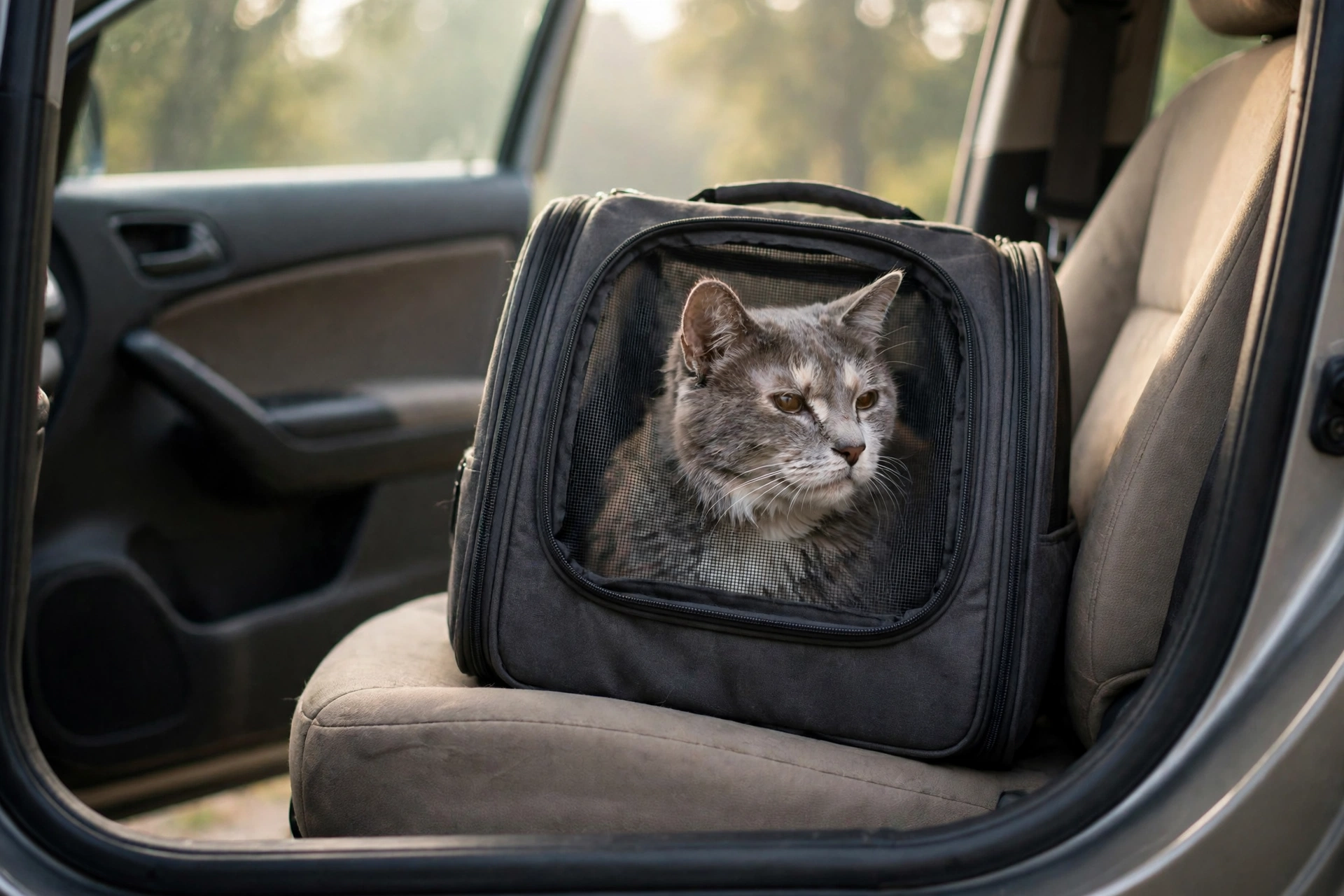
The carrier is half the battle; the routine is the other half. Leave the carrier out in the living room for a few days before the trip, door open, with a familiar blanket inside, so it stops being the scary box that only appears on vet day. Put a treat or two inside each day. On the day itself, load the cat calmly — top-load if you have that option — cover the carrier with a light towel to cut down visual stimulation, and keep the car quiet: no loud music, no sudden braking if you can help it. Short practice trips around the block, with a treat at the end, help a cat learn that the carrier does not always mean a needle. None of this replaces your vet's advice for your individual cat, but it makes the carrier itself a smaller part of the stress.
One safety note that applies to all four picks: none of these carriers is crash-tested, and no soft carrier should be treated as a car seat. Always secure the carrier so it cannot slide or tip — on the floor behind a front seat, or wedged snugly on the back seat — and never leave a cat in a parked car.
Our verdict
For most senior cats, the Petmate Two Door Top Load is the pick: the top door solves the loading struggle that causes most of the stress, and the hard shell and strong latches make it the most secure option here. If your cat has learned to unzip carriers, get the Morpilot for its locking zippers. If you carry the carrier a long way, the Henkelion at 2.1 lbs is the one your shoulder will thank you for. And if your trips involve long waits, the Petsfit earns its place with the expandable panels — just make sure your cat is small enough for it first.
Whichever you choose, measure your cat before you order, leave the carrier out for a few days so it becomes furniture instead of a threat, and pack a familiar blanket. The right carrier does not just move your cat — it makes the whole trip quieter for both of you.
FAQs
What makes a carrier good for a senior cat?
Easy loading above all — a top door or wide opening so you are not pushing a reluctant cat through a small hole. After that: a low entry, enough room to turn around and lie flat, light weight for the person carrying it, good airflow through mesh or vents, and zippers or latches that stay shut. A familiar blanket inside helps more than any feature on the box.
Should I choose a hard-sided or soft-sided carrier for an older cat?
Hard-sided carriers like the Petmate load easier from the top and protect better in the car, but they are heavier. Soft-sided carriers like the Henkelion and Morpilot are lighter and fold flat for storage, but a determined chewer can work through mesh. If loading is your main struggle, go hard-sided with a top door; if carrying weight is the problem, go soft-sided. Our full soft-sided vs hard-sided carriers guide compares the two types in detail.
How do I get a senior cat into a carrier without a struggle?
Use a top-loading carrier if you have one: open the lid, lower the cat in gently, close it. Leave the carrier out open in the house for several days beforehand with a familiar blanket and a treat inside, so it becomes ordinary furniture. Load the cat calmly and steadily rather than quickly — rushing is what turns a routine loading into a chase. Never tip the carrier or shake it to get the cat in.
What size carrier does a senior cat need?
Measure your cat nose-to-tail and add 3–4 inches for the minimum interior length. Your cat should be able to stand, turn around, and lie down flat without hunching. When in doubt, size up — a slightly roomy carrier is far better than a tight one. Check the listed dimensions for the exact size you order, since size labels vary between brands.
Can I use the same carrier for vet visits and car trips?
Yes — all four picks here work for both. Secure the carrier so it cannot slide or tip, ideally on the floor behind a front seat or wedged on the back seat. Note that the Morpilot has no seat-belt attachment point, so do not rely on belting it in. None of these carriers is crash-tested, so treat the carrier as a secure container, not as a car seat.
How do I keep my cat calm on the way to the vet?
Cover the carrier with a light towel to cut visual stimulation, keep the car quiet, and drive smoothly. A familiar blanket from home inside the carrier helps, and short practice trips around the block — ending with a treat at home — teach the cat that the carrier does not always mean a stressful appointment. If your cat is very distressed by travel, talk to your vet about the trip itself before the day arrives.
Final thoughts
A senior cat has earned an easy trip. The right carrier — one that loads without a fight, carries without wearing you out, and gives your cat room to settle — turns the worst part of a vet visit into a minor errand. Pick the one that matches your cat's size and temperament, measure before you order, and let the carrier live in the house for a few days first.
Not sure how old your cat is in human years? Try CalcPet's cat age calculator — and if you are shopping for a younger cat too, our kitten carriers guide and Pet Parent Picks page cover the rest of the range.
Further reading: the ASPCA's general cat care guide, International Cat Care's travelling-with-your-cat advice, and the Cornell Feline Health Center.