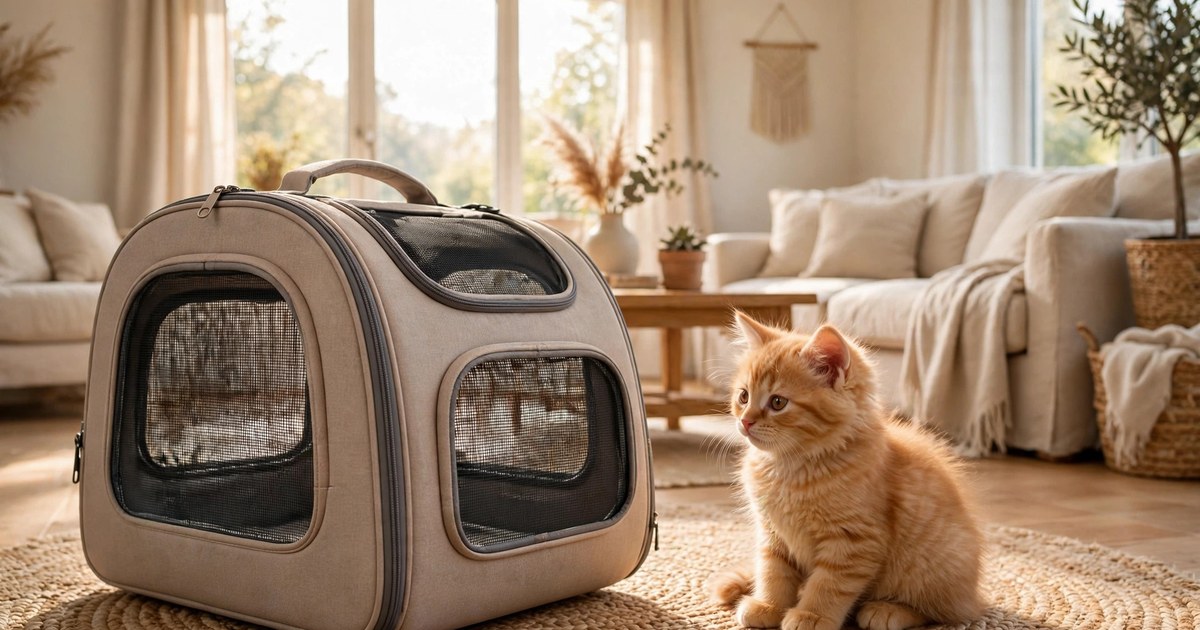
A kitten's first carrier matters more than most new owners expect. The first vet visit usually happens within days of bringing a kitten home, and that first trip sets the tone for every journey after it. A carrier that is hard to load, easy to escape from, or outgrown in a month turns a simple check-up into a wrestling match. You do not need the most expensive carrier on the shelf — you need one that opens the right way, holds a growing kitten safely, and is easy to clean. Here are four carriers from CalcPet's live catalog that fit kittens well, each with a different strength, plus a short buying guide to help you choose.
Disclosure: As an Amazon Associate, CalcPet earns from qualifying purchases made through links in this guide. Prices change often, so check the current price on Amazon — this guide never lists exact prices.
Top picks at a glance
- #1 — Petmate Two Door Top Load Kennel: Best top-load pick for kittens — lower your kitten in instead of pushing them through.
- #2 — Morpilot Soft-Sided Carrier: Best grow-with-your-kitten pick — locking zippers and room for cats up to 25 lbs.
- #3 — Henkelion Soft-Sided Carrier: Best budget pick — light, foldable, and a best seller for small pets.
- #4 — Petsfit Expandable Carrier: Best expandable pick — unzips for extra floor space on long trips.
What makes a good kitten carrier?
Kittens are small, fast, and surprisingly strong for their size. A carrier that works for an adult cat is not automatically right for a kitten — and one that fits today may not fit the same cat in six months. Judge every option against these five points.
1. Top loading beats front loading
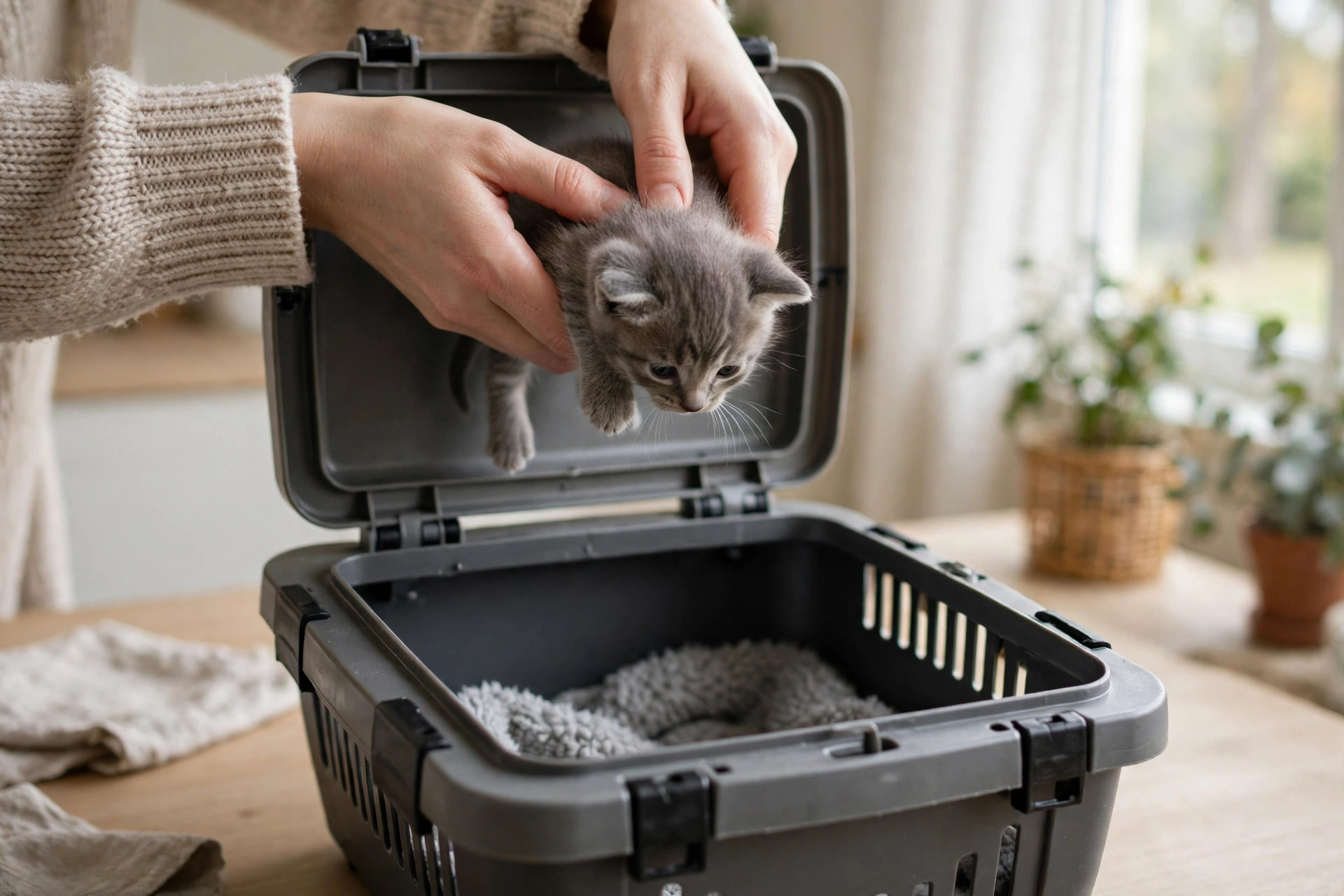
Most kittens resist being pushed head-first through a small front door. A top door lets you lower the kitten in gently, with both hands, and lift them out the same way at the vet. International Cat Care's guide to taking your cat to the vet makes the same point: a top-opening carrier lets the vet reach your kitten while they stay in the bottom half.
2. Escape-proof closures
Kittens learn zippers fast. A single standard zipper is not enough for a determined kitten — look for locking zippers, a safety buckle, or an interior tether. If a small paw can open it from inside, it will.
3. Room to grow — with limits
Buy for the cat your kitten will be in a few months, not just the tiny ball of fluff you brought home. The International Cat Care travelling guide gives a good rule: the carrier should be large enough for the cat to stand up and turn around with ease. But do not go too big — a kitten rattling around in a huge carrier slides about on every turn. Measure nose-to-tail, add a few inches, and check the listed weight limit before ordering.
4. Ventilation you can see through
Mesh windows or ventilation slots on several sides keep air moving and let a kitten see out, which calms many kittens. Solid walls with one small vent make a dark, stuffy box.
5. Easy to clean
Kittens have accidents, especially on their first car rides. A carrier with a removable, washable cushion — or a hard shell you can hose down — will save you far more trouble than a pretty fabric you cannot wash. The ASPCA's general cat care guide lists a cat carrier as a basic supply for every new kitten, right alongside food, a litter box, and a bed.
The 4 best cat carriers for kittens in 2026
Every carrier below is in CalcPet's live catalog with a working Amazon link. Ratings are shown exactly as stored in the catalog — either a star rating with a review count, or a text rating where no numeric rating is stored.
Petmate Two Door Top Load Dog & Cat Kennel
- Top AND front doors — lower your cat in instead of pushing them through
- Sturdy hard-sided shell with 360-degree ventilation slots
- Steel-wire front door with secure latch; easy to hose down and clean
As an Amazon Associate, CalcPet earns from qualifying purchases.
The Petmate is the classic first carrier for a reason, and our top pick for kittens. The top door is the whole story: you lower a wiggly kitten straight down instead of coaxing them through a front opening, and the vet can lift them out the same way. Ventilation slots run all the way around, and when the inevitable accident happens, the whole thing hoses down. At 4.8/5 from more than 4,500 Amazon ratings, it is the highest-rated carrier in this roundup.
Pros: Top loading removes the biggest stress point; durable and easy to clean; great value. Cons: Basic looks, no padding included — add a small blanket. Bulkier to store than a folding soft carrier. Best for: Anxious cats and vet visits — the top-loading pick. One caveat: the catalog stores no dimensions or weight limit for this model, so check the listed dimensions for the exact size you order.
Morpilot Soft-Sided Pet Carrier for Large Cats (Locking Zippers)
- Locking zippers plus interior safety buckle for determined escape artists
- Roomy boxy shape with real headroom; rated for cats up to 25 lbs
- Three entry points (top, front, back); removable washable cushion
As an Amazon Associate, CalcPet earns from qualifying purchases.
If you would rather buy one carrier than two, the Morpilot is the smart buy. Rated for cats up to 25 lbs, it will still fit your kitten as a full-grown adult — no second purchase in six months. The locking zippers and interior safety buckle are the real difference: a clever kitten cannot nose a zipper open from inside. Three entry points (top, front, and back) mean you can load from whichever side your kitten resists least.
Pros: Genuinely escape-resistant hardware; spacious for large cats; folds flat. Cons: Dark fabric shows light pet hair; bulkier than ultra-light carriers. Best for: Strong or clever cats — the best escape-proof pick, and the only carrier here you can reasonably expect to still use when your kitten is a year old.
Henkelion Soft-Sided Pet Carrier
- Soft-sided carrier for pets up to 15 lbs
- Airline-approved dimensions; collapses flat
- Machine-washable with multiple mesh windows
As an Amazon Associate, CalcPet earns from qualifying purchases.
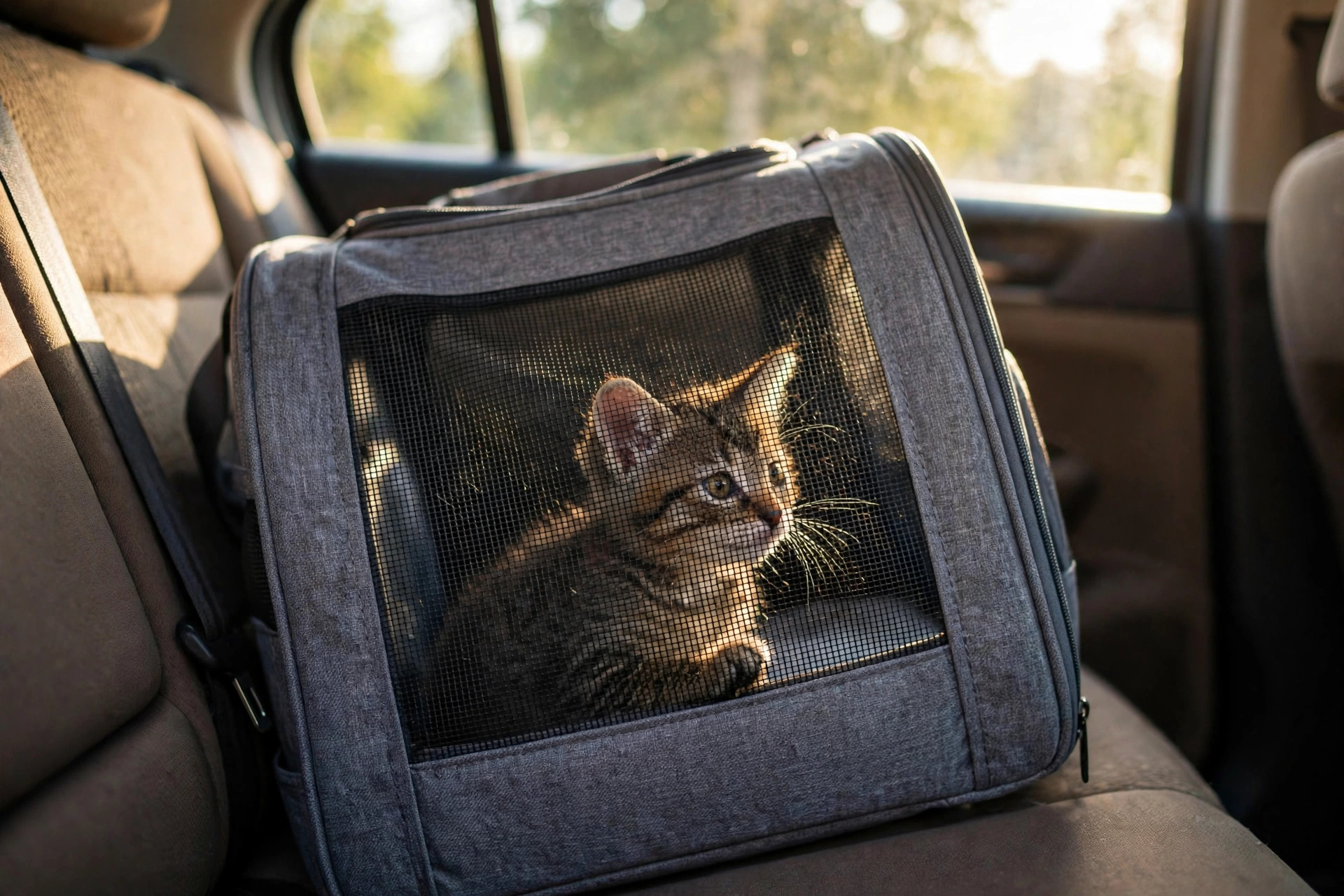
The Henkelion is the budget pick that does not feel like a compromise. A best seller in its category, with more than 8,000 bought in a recent month according to its listing, it covers the basics well: multiple mesh windows, a machine-washable body, and a frame that collapses flat. The airline-approved dimensions are a bonus if you ever fly with your kitten.
Pros: #1 Best Seller in Dog Soft-Sided Carriers; 8,000+ bought in a recent month; light and easy to store flat. Cons: The 15-lb limit means a fast-growing kitten will outgrow it — a first carrier, not a forever carrier. Soft sides will not contain determined chewers, and the shoulder strap is less comfortable on longer carries for some owners. Best for: Vet visits and airline travel with small pets — a solid first carrier at the lowest price. Buy it knowing you may size up later.
Petsfit Expandable Cat Carrier, Airline Approved
- Side panels unzip to expand floor space at the gate or in the car
- Airline-sized footprint that fits under most seats when zipped up
- Self-locking zippers, interior safety tether, washable plush mat
As an Amazon Associate, CalcPet earns from qualifying purchases.
The Petsfit solves the one problem the other three cannot: a long trip. Zipped up, it is an airline-sized carrier that fits under most seats. Unzipped at the gate or in a parked car, the side panels open out and give your kitten extra floor space to stretch and settle. Self-locking zippers and an interior safety tether cover the escape risk, and the plush mat washes when it needs to. At 4.6/5 from around 1,972 Amazon ratings, it is well-liked by owners who travel.
Pros: Extra room exactly when it matters; good ventilation, and it doubles as a travel den. Cons: The expanded sections are soft mesh, not rigid — for supervised rest stops, not for carrying while expanded. The listing advises measuring your cat against the weight limit first, and the catalog stores no weight-limit number, so check the product page. Reviewers note it suits smaller cats best: a small-kitten pick, not a grow-with-them carrier. Best for: Long trips and layovers — the best expandable pick.
Comparison table
| Carrier | Best for | Rating | Key strength | Watch out for |
|---|---|---|---|---|
| Petmate Two Door Top Load | Vet visits, anxious kittens | 4.8/5 · 4,500+ | Top door + hose-down shell | No padding included; no dimensions stored — check the listing |
| Morpilot Locking Zippers | Growing kittens, escape artists | Strong review base | Locking zippers; up to 25 lbs | Bulkier; dark fabric shows light hair |
| Henkelion Soft-Sided | Budget first carrier | #1 Best Seller | Light, foldable, washable | 15-lb limit — kitten will outgrow it |
| Petsfit Expandable | Long trips, layovers | 4.6/5 · ~1,972 | Unzips for extra space | Mesh sides not rigid; check weight limit first |
How to get your kitten used to the carrier (before the first trip)
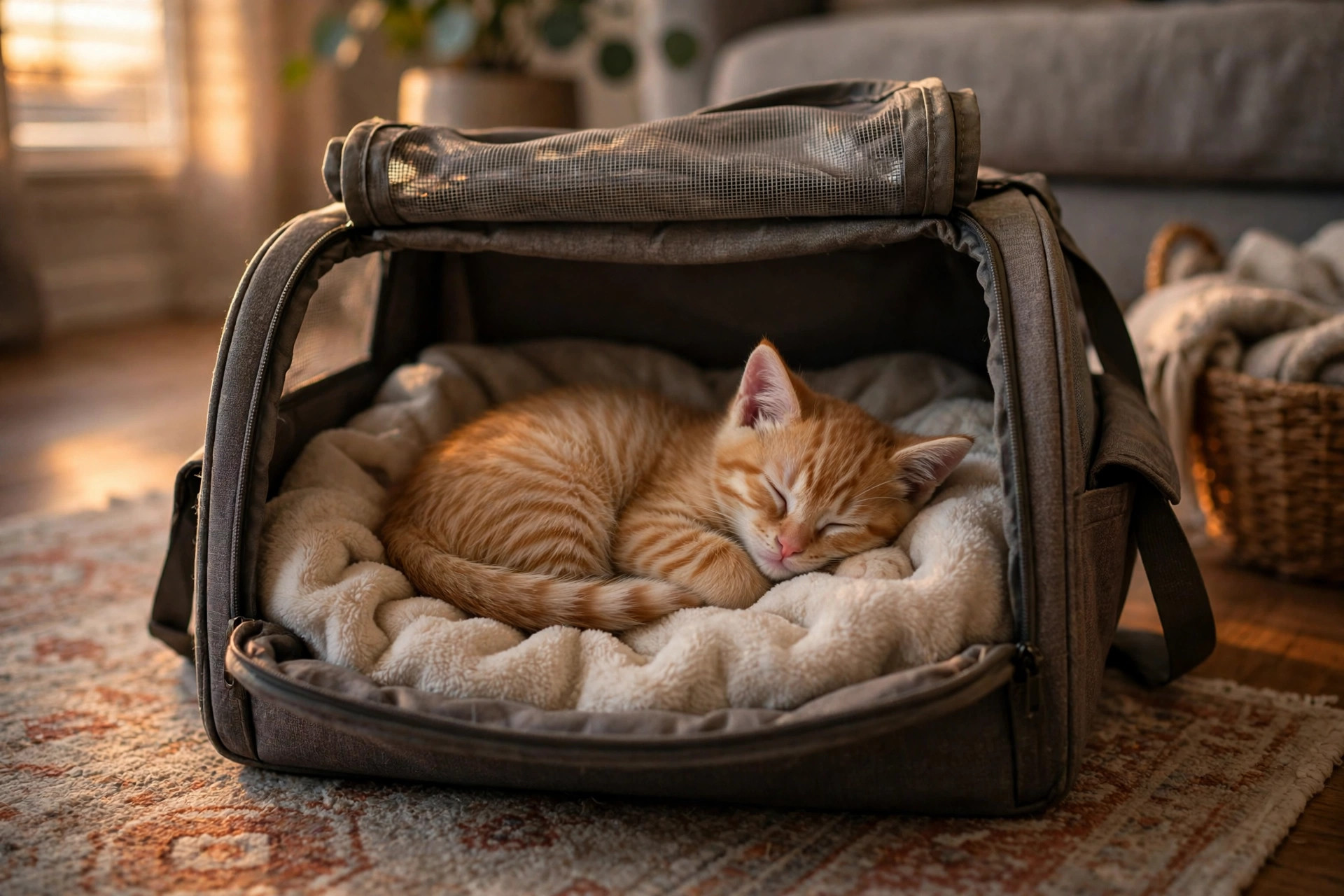
The carrier itself is only half the job. A kitten that meets its carrier for the first time five minutes before a vet visit will panic — and that panic sticks. Spend a few days on this instead:
- Leave it open at home. Put the carrier in a quiet corner with the door open and a soft blanket inside. Let your kitten explore it as furniture, not as a trap.
- Feed near it, then in it. Start with treats just outside the door, then just inside, then a meal inside with the door still open. The carrier should smell like safety and food, not like the car.
- Close the door briefly, then practice-drive. Once your kitten walks in happily, close the door for a few seconds, praise them, and open it again. Then take a five-minute drive around the block — carrier secured with a seatbelt — so your kitten learns car rides end at home. Drape a light towel over the carrier on travel day to block scary sights.
Verdict: which kitten carrier should you buy?
For most new kitten owners, the Petmate Two Door Top Load is the right first buy: the top door makes loading a squirming kitten easy, the hard shell is simple to clean, and the 4.8/5 rating from 4,500+ buyers is the strongest in this roundup. If you want to buy once and skip the upgrade, pick the Morpilot instead — its 25-lb rating and locking zippers mean it will still fit your cat a year from now. On a tight budget, the Henkelion covers the essentials well; just plan to size up as your kitten grows past 15 lbs. For long trips or flights, the Petsfit expandable is the only pick here that gives your kitten room to stretch at the gate. One honest note: none of these four is crash-tested, so always secure the carrier with a seatbelt or in a footwell so it cannot slide or tip.
Frequently asked questions
What size carrier does a kitten need?
Big enough for the kitten to stand up and turn around with ease, with a few inches to spare — measure nose-to-tail and add a few inches. Avoid going far too large, or the kitten will slide around in the car. Always check the listed weight limit on the product page, since limits vary by model.
Is a soft-sided or hard-sided carrier better for a kitten?
Hard-sided carriers are easier to clean and harder to escape from, and a top-loading hard carrier is the easiest way to load a nervous kitten. Soft-sided carriers are lighter, fold flat, and fit better under airline seats. For vet visits, hard-sided is the safer default; for travel, soft-sided wins. Our full comparison is in Soft-Sided vs Hard-Sided Cat Carriers: Which Is Better?
How do I get my kitten into the carrier without a fight?
Use a top-loading carrier and lower the kitten in gently, back feet first. If your carrier only opens from the front, tip it on its end so the door faces up and lower the kitten in the same way. Never push a kitten in head-first — that is what teaches them to fear the carrier.
Will my kitten outgrow its carrier?
Probably, if you buy a small one. Kittens grow fast in the first six months. The Morpilot (rated up to 25 lbs) is the pick in this roundup most likely to last into adulthood; the Henkelion (15-lb limit) is a first carrier you should expect to replace. Check your kitten's weight monthly and size up before they get cramped.
Conclusion
A kitten's first carrier is a small purchase with an outsized effect: get it right and vet visits stay calm for years; get it wrong and every trip becomes a chase. Pick a top-loading or escape-proof design, size it with growth in mind, and spend a few days letting your kitten treat it as a den before the first journey. Any of the four carriers above will do the job — the best one is the one that fits your kitten today and still fits them in six months.
New kitten in the house? Start with our New Kitten Checklist: Your First Week Survival Guide, and check how old your kitten really is with the Cat Age Calculator. If your kitten is already growing fast, see our Best Cat Carriers for Large Cats guide for the next size up.