
If you have ever stood in the pet aisle holding a hard white nylon bone and wondering whether it is actually safe for your dog, you are asking the right question. Nylon chew toys are some of the best-selling dog toys in the world, and also some of the most argued-about. Some owners swear by them. Some vets warn against them. The honest answer sits in the middle: nylon toys can be safe for the right dog, used the right way — and a real problem for the wrong dog.
What Are Nylon Dog Toys Made Of?
Nylon is a synthetic plastic polymer, first developed in the 1930s. Pet brands mould it into bones, rings, and chew sticks, often adding flavouring such as chicken or bacon to keep dogs interested. It is popular for one reason: it is extremely hard and wears down very slowly, so one toy can last a determined chewer weeks or months.
That hardness is also the whole debate. A toy that barely gives under a dog's teeth puts the chewing force somewhere — and that somewhere is the tooth. Not all nylon toys are the same, either: some are solid, rock-hard bones for powerful chewers, others are softer blends for puppies or gentle chewers. Read the checklist later in this guide before you buy.
Are Nylon Toys Safe for Dogs? The Short Answer
For most healthy adult dogs who chew moderately and are supervised, a good-quality nylon chew toy in the right size is generally considered safe. The nylon itself is non-toxic, and reputable brands make their toys free of BPA and phthalates. But "generally safe" comes with three conditions owners often miss:
- The toy must be the right hardness for your dog. A toy that is too hard for your dog's bite strength is the main cause of problems.
- Your dog must chew, not eat. Nylon toys are designed to be gnawed, not eaten, and pieces that break off should never be swallowed.
- You must check the toy regularly and replace it. A nylon bone that was safe on day one can develop sharp ridges and cracks after weeks of chewing.
If any of those three conditions fails, the risk rises fast. Here is each risk in detail, so you can judge them for your own dog.
The 3 Real Risks of Hard Nylon Chews
1. Tooth fractures
This is the risk vets talk about most. Because hard nylon barely deforms under pressure, a strong bite sends the force straight into the tooth instead of into the toy. That can chip, crack, or break a tooth. The American Kennel Club warns that hard chew toys can fracture teeth and recommends toys with some flexibility. Cornell's Riney Canine Health Center says the same in its guide to risks from a fractured tooth.
2. Swallowed pieces and blockages
Nylon is not digestible. When a dog gnaws a nylon bone down to small chunks and swallows them, those pieces can lodge in the digestive tract and cause a blockage. This is most likely with aggressive chewers who bite off chunks, and with toys that have become brittle or cracked with age. The rule is simple: a nylon toy is a chew, not a snack.
3. Cheap materials and mystery additives
Well-made nylon toys from established brands are generally non-toxic and made to safety standards. The problem is the bargain end of the market: unbranded toys with no safety information can contain dyes and coatings you cannot verify. Stick to brands that state their materials plainly — if a listing cannot tell you what the toy is made of, skip it.
The Thumbnail Test: A 10-Second Check Before You Buy
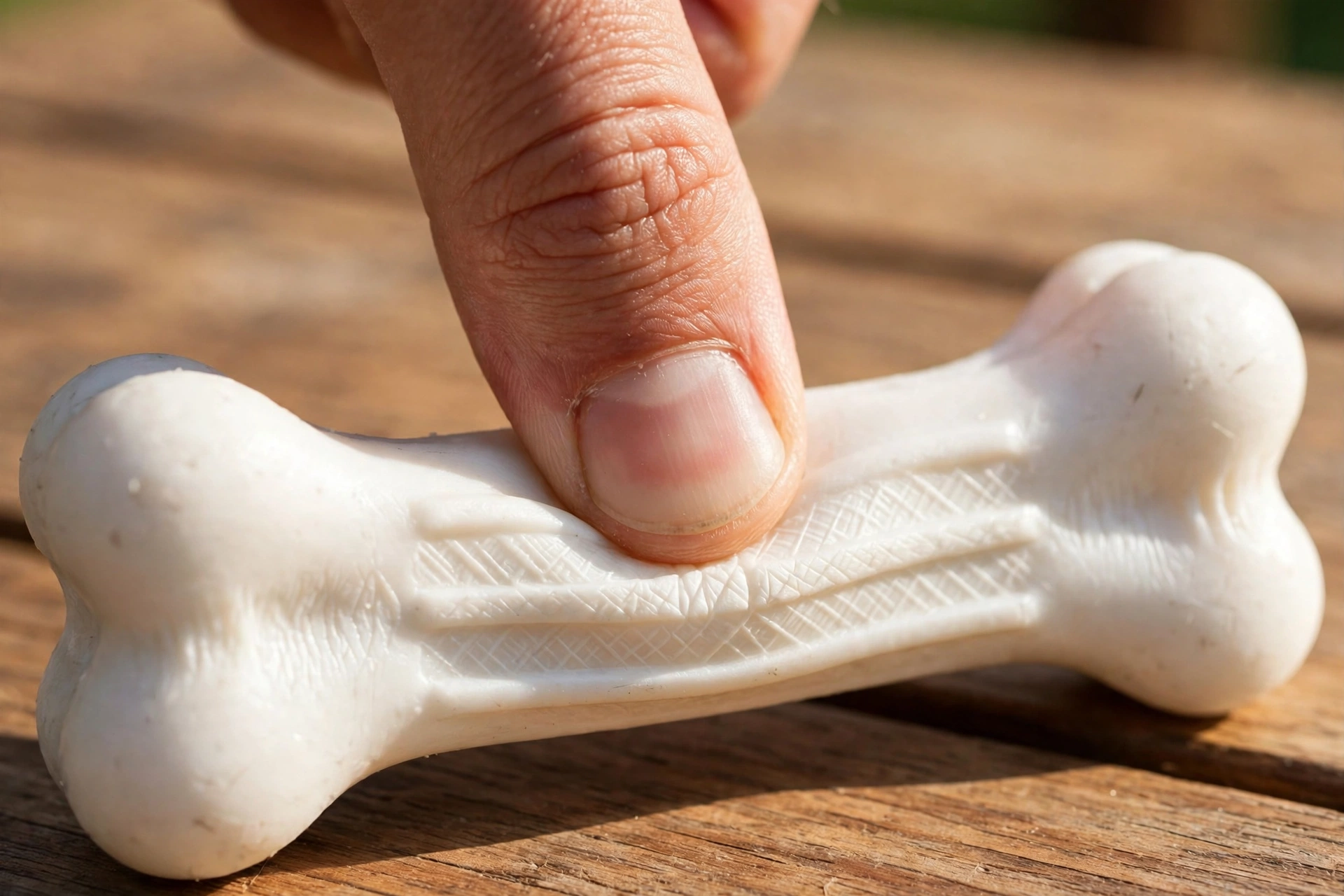
The thumbnail test is the single most useful trick in this guide, and it takes ten seconds in the shop:
- Press your thumbnail firmly into the surface of the chew toy.
- If your nail leaves a visible dent, the toy has some give and is a reasonable hardness for most dogs.
- If your nail slides off without leaving any mark, the toy is very hard — treat it with caution.
- Repeat the test on different parts of the toy. Some toys have hard ends and a softer middle.
This is the same test veterinary dentists use, according to Cornell's Riney Canine Health Center. It is not a guarantee — no chew is risk-free — but it rules out the hardest, riskiest toys before they ever reach your dog's mouth.
Which Dogs Should Skip Hard Nylon?
Hard nylon chews are not for every dog. Skip them if your dog falls into any of these groups:
- Puppies. Puppy teeth are still developing and easier to damage, and puppies are more likely to bite off chunks. Soft rubber teething toys are a better fit until adult teeth are fully in.
- Senior dogs. Older dogs often have worn enamel or more brittle teeth — a hard chew that was fine at age three can crack a tooth at age eleven.
- Aggressive, power chewers. If your dog destroys toys in minutes and bites straight down with full force, hard nylon concentrates that force on the teeth. A thick, flexible rubber toy is the safer outlet.
- Dogs with existing tooth problems. Worn teeth, a previous fracture, or dental work — avoid anything that fails the thumbnail test entirely.
- Dogs who swallow pieces. Some dogs gnaw politely; others try to eat everything. If your dog has ever swallowed chunks of a toy, nylon chews are not the right choice.
How to Choose a Safer Nylon Toy: 7-Point Checklist
Use this checklist every time you buy a nylon chew. If a toy fails even one point, put it back.
- Passes the thumbnail test. Your nail should leave a dent. No dent, no buy.
- Right size for your dog. The toy should be too large to fit entirely behind your dog's back teeth.
- Matched to chew style. Gentle and moderate chewers do best with standard nylon. Power chewers need a flexible rubber alternative, or a nylon toy rated for strong chewers — only with supervision.
- Named brand, clear materials. The packaging should say what the toy is made of and confirm it is non-toxic. Vague or missing information is a red flag.
- No small parts. Avoid toys with attached pieces, squeakers your dog can rip out, or decorative bits that can break off.
- Flavouring you can identify. Flavoured nylon keeps dogs interested — but the flavour should be listed on the label, not a mystery coating.
- Age-appropriate. Many nylon toys are labelled for adult dogs only, or for a specific weight range. Follow the label.
Nylon vs Rubber: Which Is Better for Your Dog?
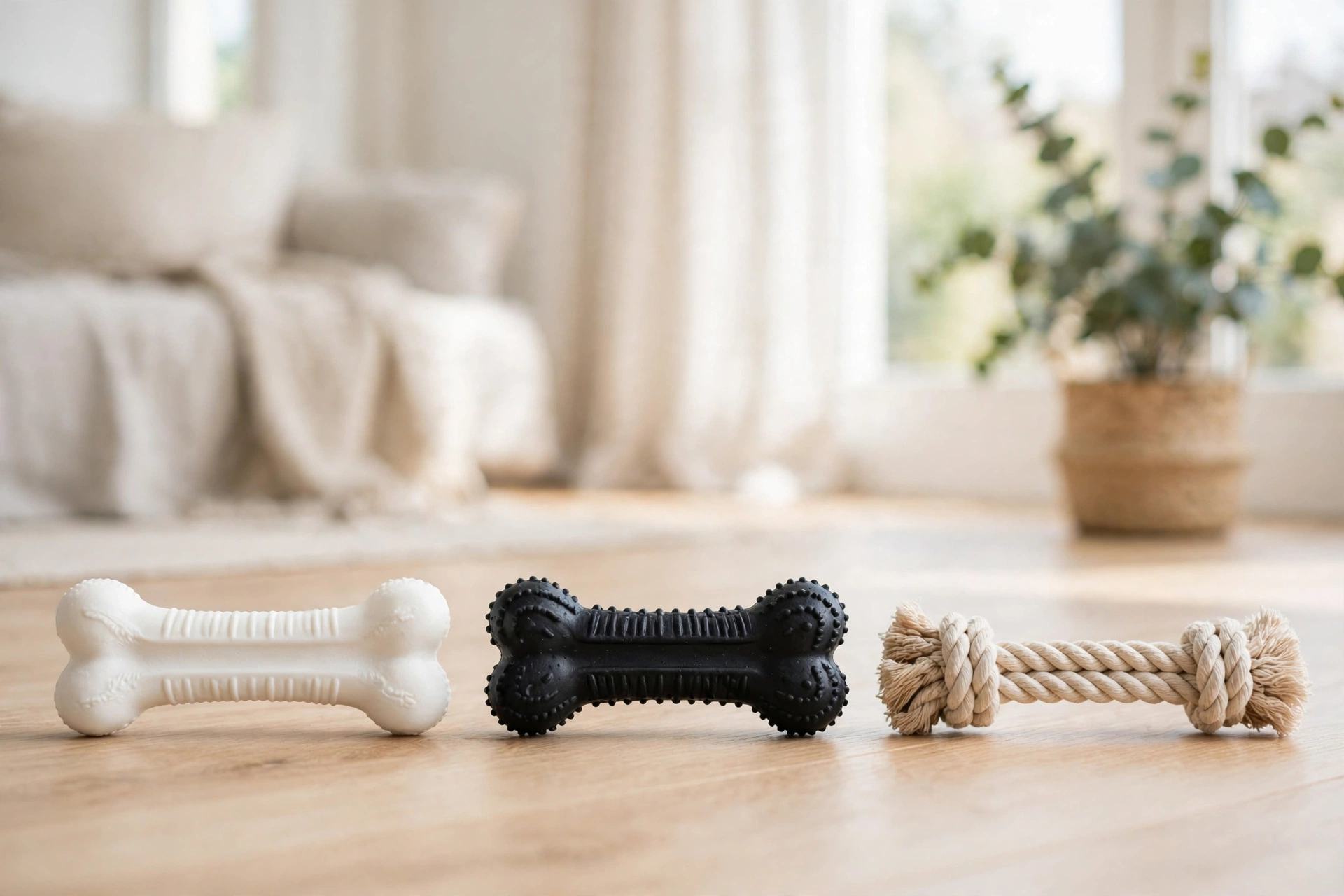
Nylon and rubber behave very differently under a bite:
| Feature | Hard nylon | Thick rubber |
|---|---|---|
| Durability | Excellent — lasts weeks or months | Very good — wears faster than nylon |
| Flex under bite | Very little — force goes to the teeth | Flexes and rebounds — spreads force |
| Tooth-fracture risk | Higher, especially for strong chewers | Lower for most dogs |
| Best for | Moderate chewers who gnaw gently | Strong chewers, puppies, seniors |
| Weakness | Can develop sharp ridges as it wears | Determined chewers can tear chunks off |
The practical takeaway: rubber is the safer default for most dogs, because it flexes. Nylon wins on lifespan and suits a moderate chewer who gnaws rather than crushes. Many owners keep both — rubber for heavy chewing sessions, nylon for calm, supervised gnawing. To understand why your dog chews the way they do, read our guide on why dogs like chew toys.
How to Use Nylon Chews Safely: 5 Ground Rules

Even the right toy needs the right habits:
- Always supervise. Never leave a dog alone with a nylon chew, especially the first few times.
- Inspect before every session. Run your fingers over the toy. If you feel sharp ridges, cracks, or pieces flaking off, throw it away.
- Retire it at the first sign of wear. Replace the toy when chunks start breaking off or the ends become sharp — not when it finally snaps. The ASPCA's guidance on destructive chewing makes the same point about checking toys regularly.
- Limit chewing sessions. Twenty to thirty minutes is plenty.
- One dog, one toy. In multi-dog homes, give each dog their own chew. Competition makes dogs chew harder and faster, which raises the risk.
Frequently Asked Questions
Are nylon bones safe for puppies?
Hard nylon bones are not a good choice for puppies — their teeth are still developing and easier to damage, and puppies tend to bite off chunks. Soft rubber teething toys are the safer option until adult teeth are fully in.
Can dogs eat Nylabones or other nylon chews?
No. Nylon chew toys are made to be gnawed, not eaten. Tiny shavings may come off over time, but if your dog is biting off and swallowing chunks, take the toy away.
Can nylon chew toys break a dog's teeth?
Yes — this is the main risk. Hard nylon barely flexes, so a strong bite sends force into the tooth. Use the thumbnail test before buying, and avoid hard nylon for power chewers, puppies, seniors, and dogs with worn teeth.
How do I know when to throw a nylon toy away?
As soon as you see cracks, sharp ridges, or pieces breaking off — or when the ends become worn down and rough. Do not wait for it to snap. Check the toy before every chewing session.
Are nylon toys better than rubber toys?
Neither is better for every dog. Nylon lasts longer but is harder on teeth; thick rubber flexes and is gentler, but wears out faster. For most dogs, rubber is the safer default.
What should I do if my dog swallows a piece of a nylon toy?
Take the toy away immediately and contact your veterinarian for advice, especially if your dog is vomiting, refusing food, or seems in pain. Do not wait to see whether the piece passes on its own.
The Bottom Line
Nylon toys are neither the danger some headlines suggest nor the worry-free chew some packaging implies. They are a tool with a specific job: giving a moderate chewer something long-lasting to gnaw on. Pick the right hardness with the thumbnail test, match the size and style to your dog, supervise every session, and retire the toy at the first sign of wear. If your dog is a puppy, a senior, a power chewer, or a piece-swallower, a thick rubber toy is the better call.
Still figuring out what suits your dog best? Try our dog age calculator to see where your dog is in life, then match their toys to their age and chewing style. And if rainy days leave your dog bouncing off the walls, our indoor games for dogs guide has twenty ways to burn off that energy.