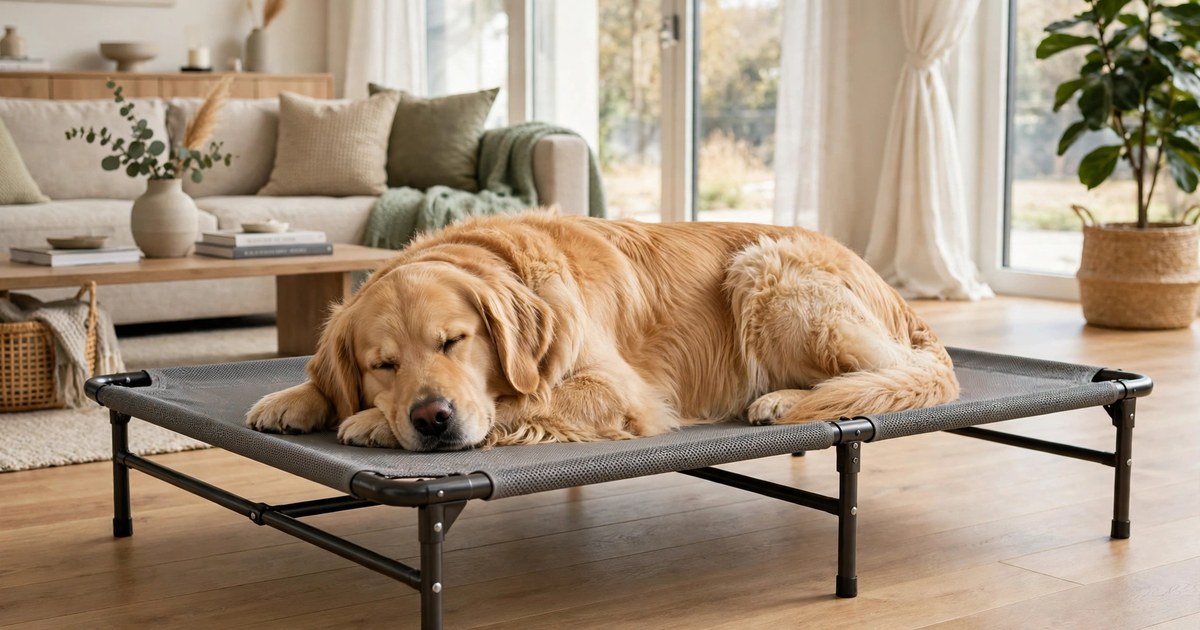
Short answer: yes — for most dogs, an elevated bed is a genuinely good place to sleep. Raising your dog a few inches off the floor improves airflow, keeps the sleeping surface cleaner, and gives firm, even support that many older and larger dogs prefer. But they are not right for every dog: puppies, tiny breeds, and dogs who love to burrow may hate them, and a cheap frame can wobble, slide, or sag within months. Here are the real pros and cons, who should buy one, and a buying checklist.
What Is an Elevated Dog Bed?
An elevated dog bed — also called a raised bed or cot-style bed — is a sleeping surface held a few inches off the ground by a frame, with a taut fabric or mesh panel stretched across it. There is no stuffing and no mattress: your dog lies on the suspended fabric, with air circulating underneath. Most designs sit 3 to 9 inches high, and the fabric is usually a breathable mesh or canvas that can be hosed off or wiped clean.
That is the whole point. A floor bed insulates your dog from the ground; an elevated bed lifts them away from cold floors, dust, damp, and pests, while the open underside lets heat escape. The trade-off: instead of sinking into cushioning, your dog rests on a firm, slightly springy surface.
The Pros of Elevated Dog Beds
1. Better airflow keeps dogs cooler
This is the biggest advantage. Air moves under the bed as well as over it, so heat does not build up the way it does in a thick padded bed. Dogs with heavy coats, large breeds, and dogs that pant through summer nights usually settle faster on a raised surface. If your dog abandons their bed for the bare tile floor on hot days, an elevated bed is often the fix.
2. Firm, even support for joints
The suspended fabric spreads your dog's weight evenly instead of letting hips and elbows sink into soft spots. Many owners of senior and large dogs say their dogs get up more easily from a raised bed than from a flat mattress, because there is less "climbing out of a dip" involved. It suits dogs that like a firm surface and dogs that sprawl flat when they sleep.
3. Cleaner and easier to maintain
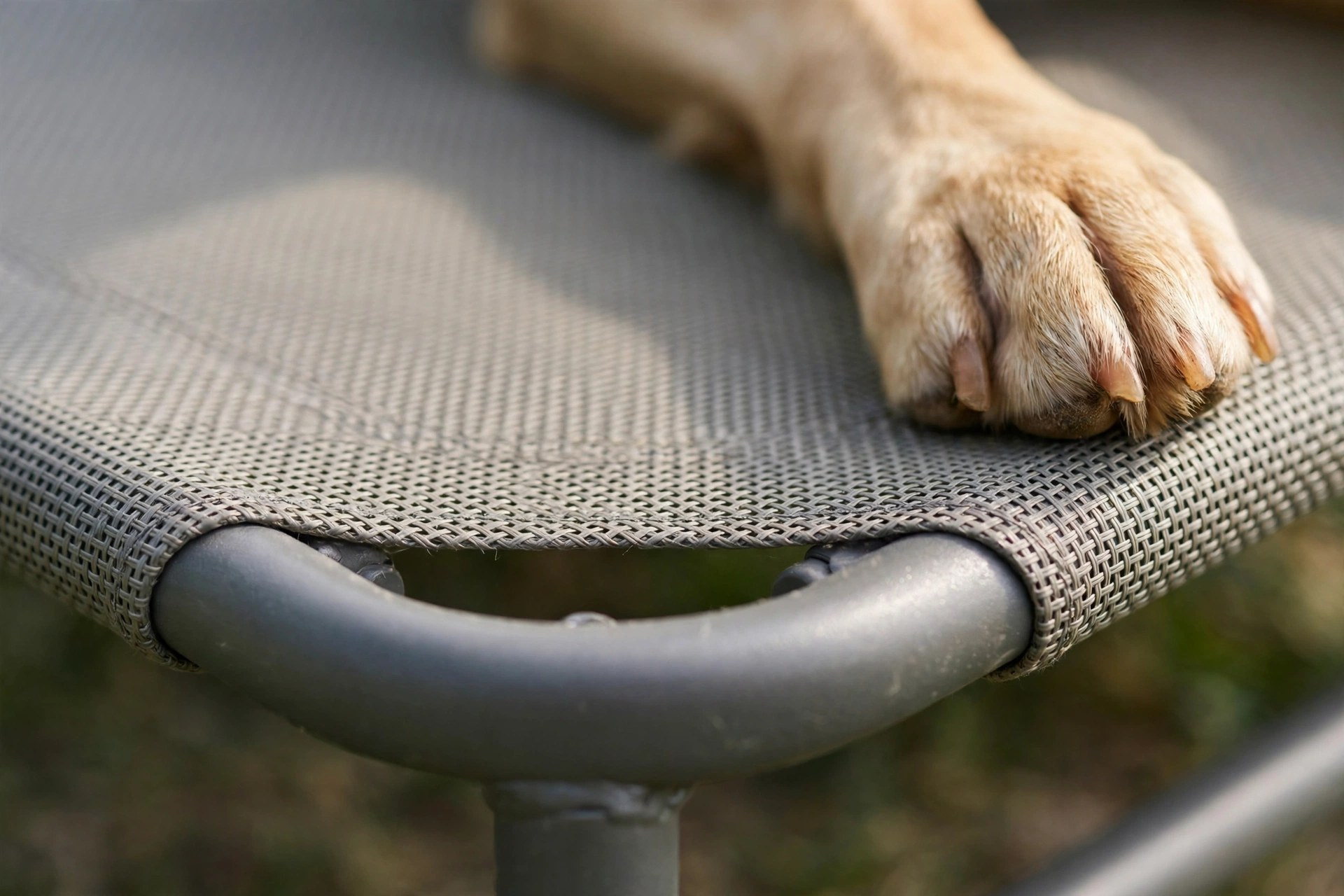
Being off the ground means less contact with dust, dirt, and floor-level allergens. The mesh or canvas cover does not absorb moisture the way stuffing does, so muddy paws and drool wipe off instead of soaking in. Most covers hose down outside and dry quickly.
4. Tough and chew-resistant
There is very little to destroy: no stuffing to pull out, no seams stuffed with tempting fluff. That makes it one of the sturdiest options for dogs that chew their bedding, and metal-frame models tend to outlast soft beds by years.
5. Great for outdoor and travel use
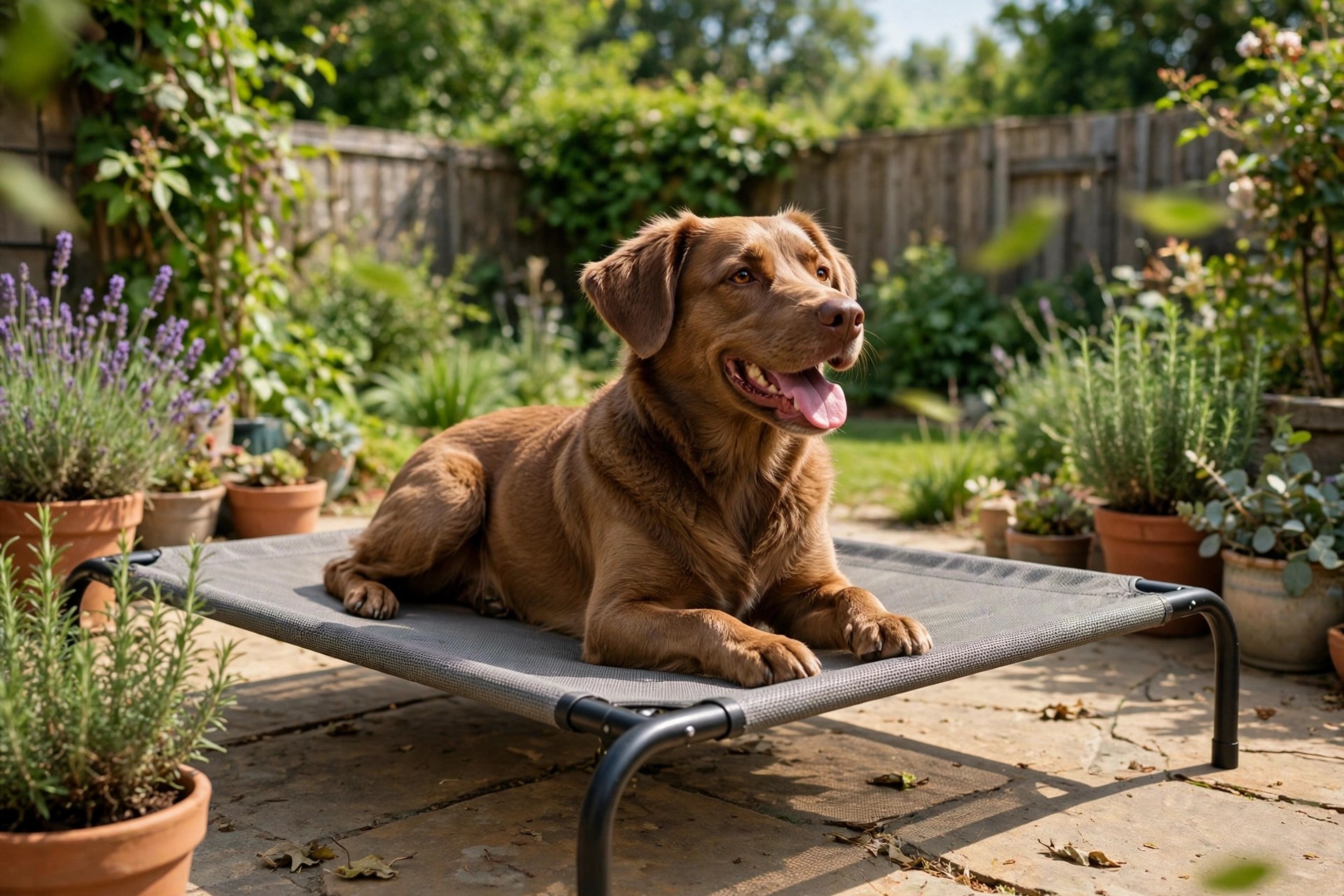
Elevated beds work just as well on a patio, in a yard, or at a campsite as they do indoors. The raised surface keeps your dog off damp grass, hot decking, and cold concrete, and most designs fold for transport.
The Cons of Elevated Dog Beds
1. The firm surface is not for every dog
Some dogs love sinking into a plush bed, and a taut mesh surface feels bare to them. Dogs that nest, dig, and circle before lying down often dislike the flat, springy feel. If your dog is a dedicated burrower, an elevated bed may sit unused.
2. Less warmth in cold weather
The same airflow that cools in summer lets warmth escape in winter. An elevated bed alone is a poor choice for a cold room or unheated porch unless you add a blanket or pad on top.
3. Small dogs and puppies may struggle
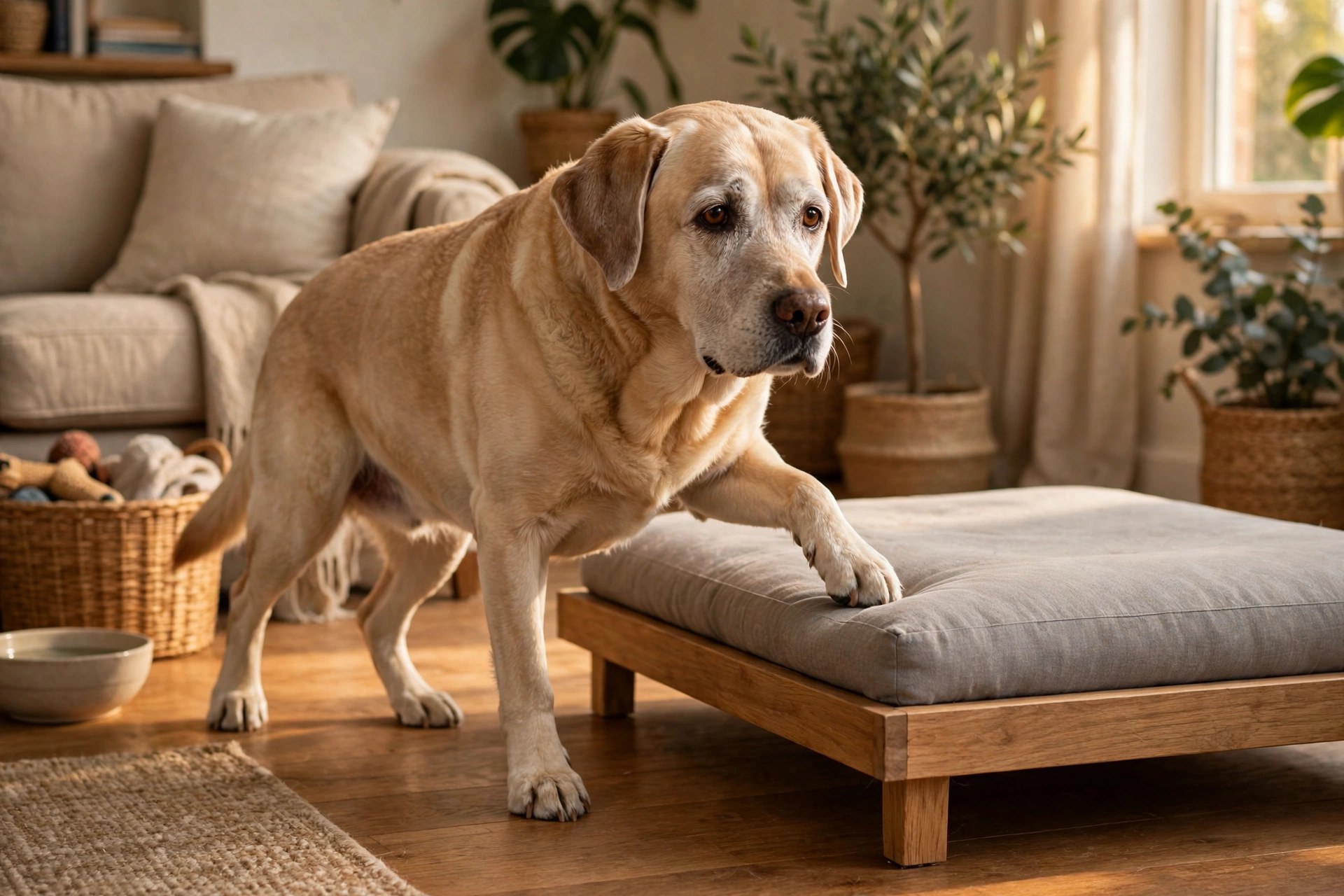
A bed 7 to 9 inches high is a real climb for a tiny dog, a short-legged breed, or a wobbly puppy, and jumping down can end in a slip. Low-profile models of 3 to 5 inches are much safer for small and older dogs. If your dog hesitates at the edge, the bed is too tall.
4. Cheap frames wobble, slide, and sag
This is where most bad experiences come from. Lightweight frames slide across tile and hardwood, thin fabric sags within months, and under-rated beds bow under a heavy dog. A bed that moves when your dog steps on it teaches them not to trust it.
5. Upfront cost can be higher
A well-built elevated bed usually costs more than a basic floor cushion. The value is in the lifespan — a solid frame can last years while cheap soft beds get replaced annually.
Elevated vs Orthopedic vs Standard Bed: Which Wins?
These three bed types solve different problems. Here is how they compare:
| Feature | Elevated bed | Orthopedic bed | Standard floor bed |
|---|---|---|---|
| Cooling | Best — airflow underneath | Average — foam holds heat | Average — depends on filling |
| Joint support | Firm, even support | Best — shaped foam relieves pressure points | Basic — sags over time |
| Cleaning | Easiest — hose or wipe | Hardest — foam absorbs spills | Moderate — washable covers help |
| Warmth in winter | Poorest — needs a blanket | Good — foam insulates | Good — stuffing insulates |
| Durability | Excellent — little to chew | Good — if the cover survives | Fair — stuffing flattens |
If your dog is older and sleeps mostly indoors, an orthopedic bed may still be the better main bed — our guide to whether orthopedic dog beds are worth it covers that decision. An elevated bed shines as a summer bed, an outdoor bed, or a second bed for dogs that run hot.
Who Should Buy One — and Who Should Skip It
An elevated bed is a great fit if your dog:
- Runs hot, pants at night, or abandons their bed for cool tile
- Is large or senior and struggles to get up from a sunken mattress
- Spends time outdoors, on a porch, or in a kennel
- Chews or destroys stuffed beds
- Has muddy paws and a bed that is hard to keep clean
Skip it (or add a soft topper) if your dog:
- Is a puppy, a tiny breed, or unsteady — unless you buy a low 3 to 5 inch model
- Loves to burrow, nest, and dig their bed into a pile
- Feels the cold easily and sleeps in a chilly room
- Has never liked firm surfaces — test with a borrowed bed first
Elevated Dog Bed Buying Checklist
Run through this checklist before you buy:
- Weight rating: choose a bed rated at least 20 to 30 pounds above your dog's weight — an under-rated bed sags to the floor within weeks.
- Frame material: aluminum resists rust outdoors; powder-coated steel is fine indoors; lightweight plastic frames suit small dogs only.
- Height: 3 to 5 inches indoors and for senior or small dogs; 7 to 9 inches outdoors, where ground moisture and insects matter.
- Fabric: tight, UV-resistant mesh or heavy canvas with reinforced edges — loose weave stretches and sags.
- Feet: rubber-tipped or non-slip feet stop the bed sliding on tile and hardwood; without them, add a rug underneath.
- Size: your dog should stretch out fully without paws or tail hanging off the edge — measure them lying down, then add a few inches each way. Our dog bed size guide shows how to measure.
- Cleaning: the cover should come off or hose down easily, with no stuffing that traps smells.
- Stability test: press down on one corner as soon as it arrives — a good bed barely moves.
How to Get Your Dog Used to an Elevated Bed
Most dogs take to a raised bed within a few days, but a few need a nudge:
- Put it where they already sleep. Place the new bed in their usual spot, not a new corner.
- Make it smell familiar. Lay their old blanket or a worn T-shirt of yours on top for the first nights.
- Lure, don't push. Put a treat on the bed and praise them for stepping on it. Never lift a nervous dog onto it.
- Give it a week. Some dogs circle a new bed suspiciously for days before claiming it. If they still avoid it after a week, add a thin pad on top, or accept that this style is not for them.
Frequently Asked Questions
Are elevated dog beds good for large dogs?
Yes — large dogs are often the best candidates. The firm, even surface supports heavy bodies without bottoming out. Pick a bed rated well above your dog's weight with a metal frame, so it stays taut and stable.
Do elevated dog beds help senior dogs?
They can. The raised height and firm surface make lying down and standing up easier for many older dogs. Unsteady seniors need a low model (3 to 5 inches) with non-slip feet, and dogs that need soft cushioning may prefer an orthopedic bed indoors.
Can elevated dog beds stay outside?
Yes, if the frame and fabric are built for it. Aluminum frames and UV-resistant mesh handle rain and sun far better than steel, which can rust, or indoor-only fabric, which fades. Bring it under cover in harsh weather.
Are elevated beds comfortable without a cushion?
For many dogs, yes — the taut fabric has a slight give that most dogs find comfortable once used to it. Dogs that prefer softness can use a thin blanket or pad on top and keep most of the airflow and cleaning benefits.
How do I clean an elevated dog bed?
Brush off loose dirt, hose the mesh down or wipe it with mild soap and water, and let it dry in the sun. With no stuffing, it dries fast and does not hold smells.
The Bottom Line
Elevated dog beds are good for most dogs — especially hot sleepers, large and senior dogs, outdoor dogs, and determined chewers — because they stay cool, clean, and supportive far longer than a stuffed floor bed. They are not universal: burrowers, cold-sensitive dogs, and very small or unsteady dogs often prefer something softer and lower. Buy a bed rated above your dog's weight, with a stable frame and non-slip feet.
Senior dogs gain the most from the right bed, and age is the biggest factor in which bed suits your dog. Use our Dog Age Calculator to see which life stage your dog is in, then match the bed to it: firm and raised for most adults and seniors that run hot, soft and cushioned for the ones that need extra comfort. For general dog-care guidance, try the ASPCA dog care hub, the Cornell Riney Canine Health Center, and the AKC health library.