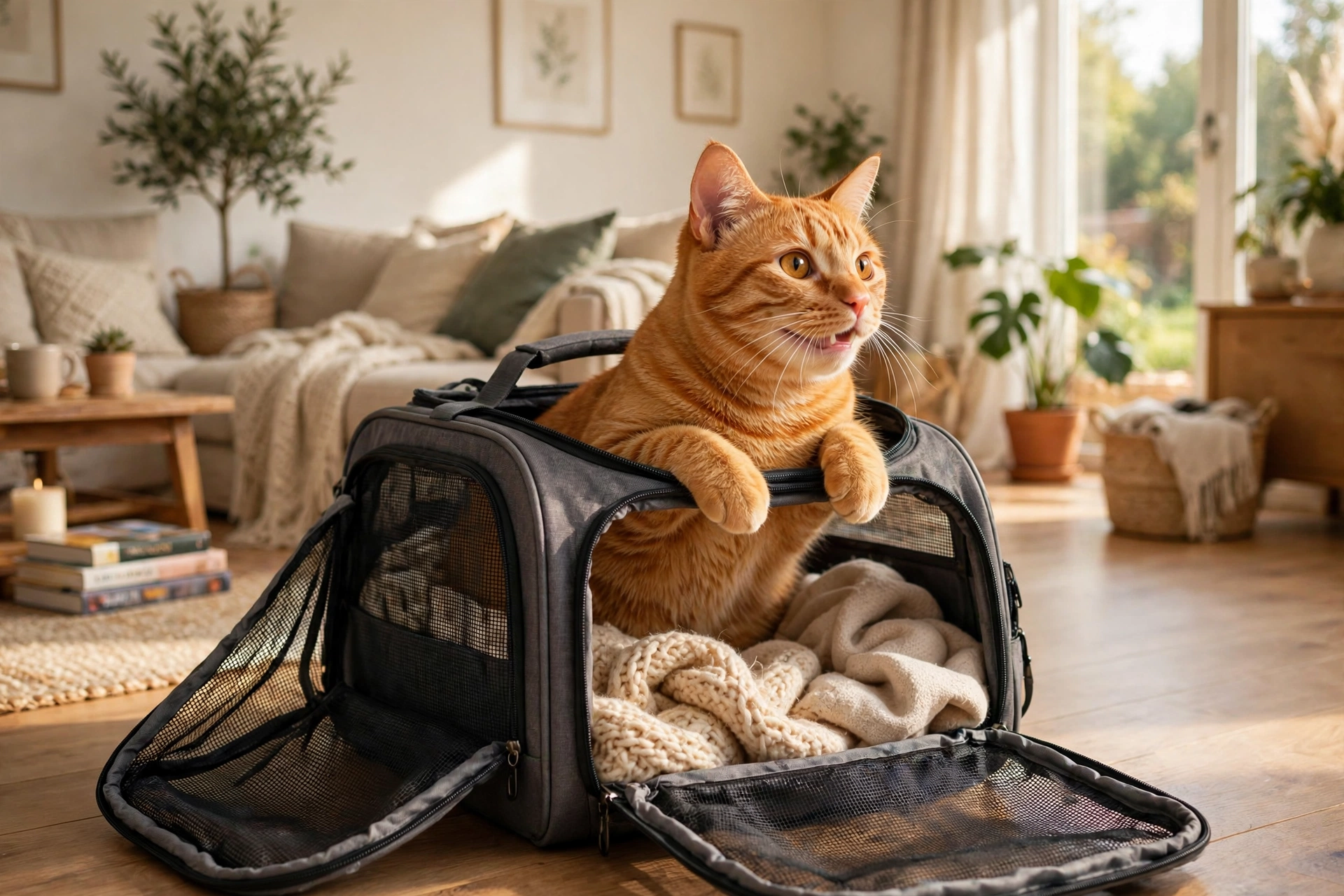
If you are shopping for a cat carrier, you have probably noticed the shelves split into two camps: soft fabric carriers with mesh panels, and hard plastic kennels with steel-wire doors. Both carry a cat from A to B — but they solve very different problems, and buying the wrong type is one of the most common carrier regrets owners report.
The good news: this is not really a "which is better" question. It is a "which is better for your cat and your trips" question. A nervous 18-pound cat that panics at the vet needs a different carrier than a calm 9-pounder flying in the cabin twice a year. This guide breaks down exactly where each type wins — then names the 4 top-rated-by-buyers carriers that cover both sides, so you can match the product to your reality.
Affiliate disclosure: This post contains affiliate links to Amazon. If you buy through them, CalcPet may earn a commission at no extra cost to you — it helps us keep our free pet tools running. We only feature products with strong, verified buyer track records, and ratings quoted are from Amazon buyer reviews and can change.
Quick picks: soft vs hard at a glance
- Best soft-sided pick: Henkelion Soft-Sided Pet Carrier — light, foldable, and the best-selling soft carrier in its class
- Best hard-sided pick: Petmate Two Door Top Load Kennel — top loading ends the stuffing-in fight
- Best escape-proof soft pick: Morpilot Soft-Sided Pet Carrier — locking zippers, built for cats up to 25 lbs
- Best expandable pick: Petsfit Expandable Cat Carrier — unzips into extra room at the gate or on long drives
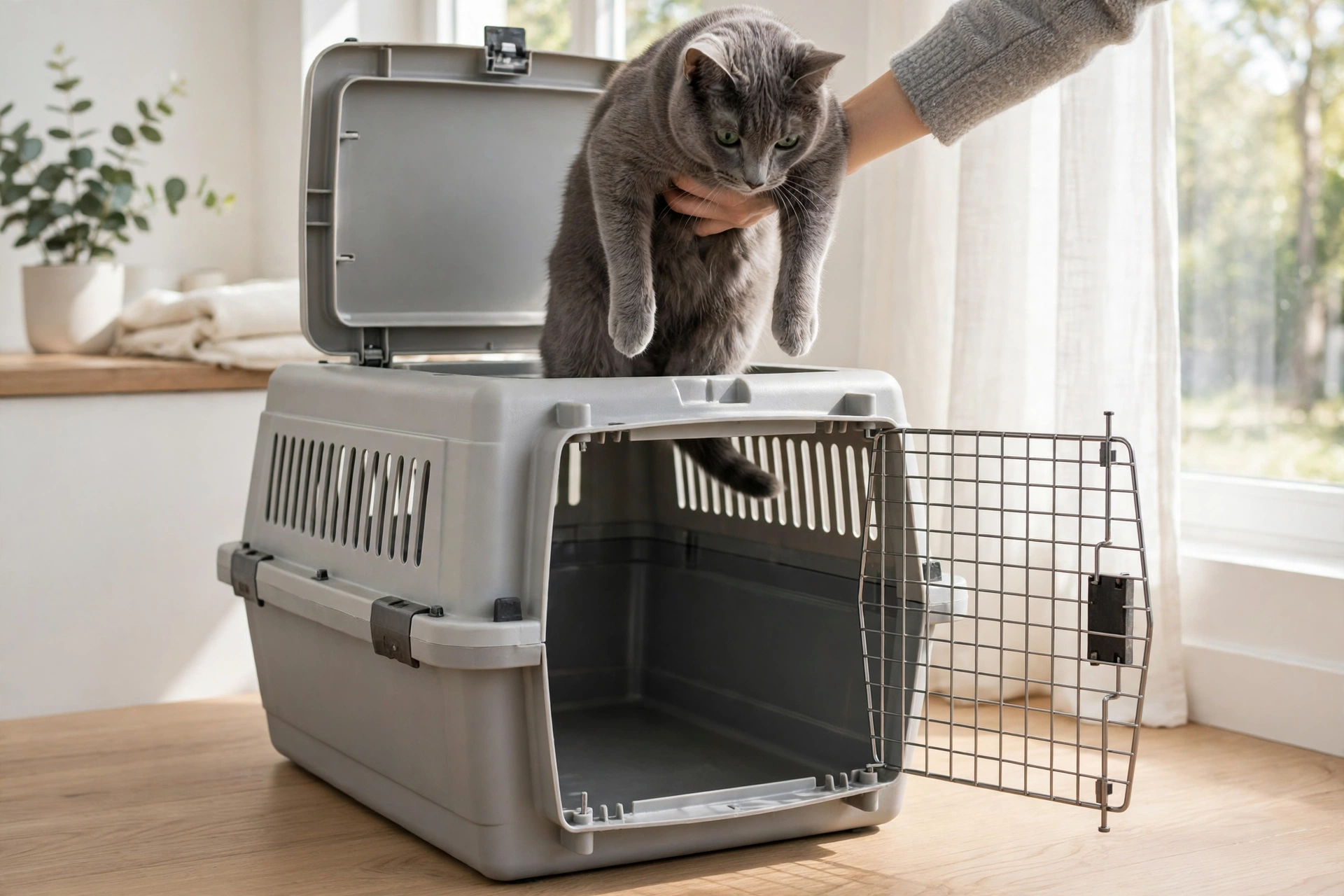
Soft vs hard pet carriers: the honest answer
Neither type wins everywhere. Here is the head-to-head:
| Round | Soft-sided | Hard-sided |
|---|---|---|
| Airline cabin travel | Wins. Light, flexible sides fit under the seat and compress slightly. | Loses. Stricter size limits everywhere; no flex under low seats. |
| Car rides | Fine for short trips; can collapse under pressure. | Wins. Rigid walls hold shape in braking and bumps. |
| Vet visits | Good for calm cats; many soft carriers top-load. | Wins. Top-loading hard kennels make extraction drama-free, and the base lifts off for exams. |
| Cleaning after accidents | Loses. Fabric and mesh absorb odours; washing is a chore. | Wins. Smooth plastic hoses down in seconds. |
| Escape artists | Risky unless it has locking zippers. | Wins. Nearly impossible to claw or bite through. |
| Weight & storage | Wins. Light, folds flat into a closet. | Loses. Heavier and needs dedicated storage space. |
| Cost | Usually cheaper for the same size. | Slightly more for equivalent capacity. |
The pattern is simple: soft-sided carriers win on convenience (flying, carrying, storage), hard-sided carriers win on security and hygiene (car rides, nervous cats, accidents). Now the details that actually decide your purchase.
How to choose: match the carrier to your trips
Vet visits and short errands
For routine vet runs, the deciding feature is loading, not material. A top-loading hard kennel lets you lower a reluctant cat in — no stuffing, no fight. Soft carriers that open from both the top and the front come close. If your cat dreads the vet, prioritise two entry points over soft-vs-hard.
Car rides
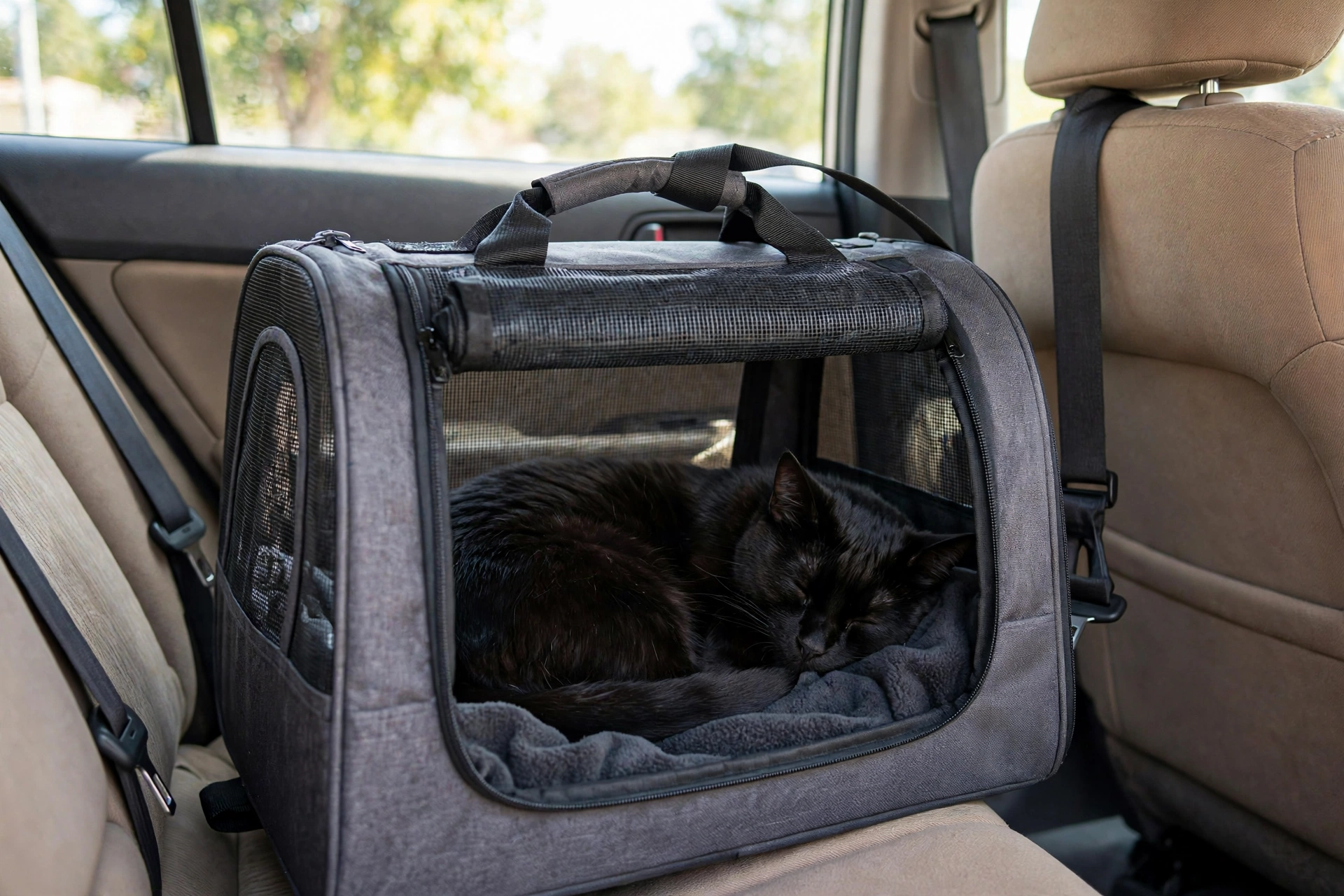
Hard carriers hold their shape when the car brakes hard, and they are harder for a panicking cat to collapse or tear open. For regular car travel, a hard-sided kennel is the safer default. Soft carriers are fine for short, calm trips — thread the seatbelt through the handle or strap loops so the carrier cannot slide.
Flying
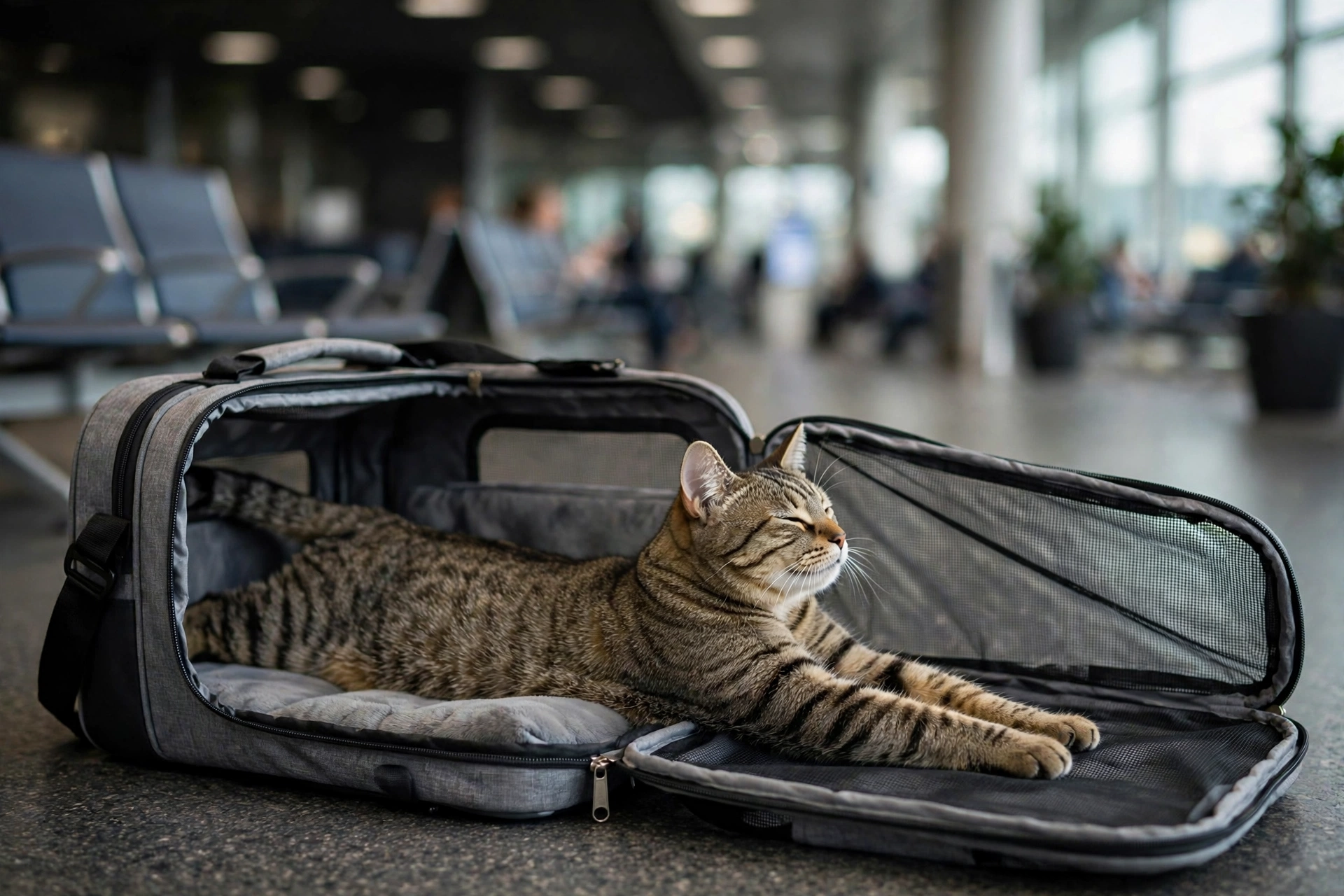
For in-cabin flights, soft-sided carriers are the practical standard: they are lighter to carry through the terminal and their flexible sides settle under low seats. Hard-sided carriers face stricter cabin size limits, so confirm your airline's hard-sided maximum before booking. For pets flying outside the cabin, airlines typically require hard-sided crates — different rules, different product. Our airline-friendly carrier guide covers exact size limits for the major US airlines.
Messes and easy cleaning
Travel accidents happen — motion sickness, nervous bladders, spilled water. A hard plastic shell wipes clean with a cloth and disinfects in minutes. Fabric carriers absorb smells into padding and mesh, and deep-cleaning means machine-washing the whole shell (check the care label; zippers do not love every cycle). If your cat travels queasy or you hate laundry, this single factor can settle the whole decision.
Anxious cats and escape artists
A determined cat can claw through mesh and work at zippers. For strong, clever, or fear-reactive cats, choose either a hard-sided kennel or a soft carrier with locking zippers and an interior safety tether — standard zips are not enough. Nervous cats also tend to do better with the dark, den-like enclosure of a hard carrier, which blocks visual stimulation.
Weight, storage and carrying comfort
Soft carriers weigh far less and fold flat, which matters if you carry them far (terminals, parking lots) or store them in a small home. Hard kennels are bulkier but double as a familiar "den" if you leave them out with bedding inside. Honest self-check: a heavy carrier you dread lifting is a carrier you will avoid using.
The 4 best soft- and hard-sided carriers in 2026
We picked 4 carriers with strong, verified buyer track records — two soft-sided, one hard-sided, and one expandable — so every recommendation in the guide above has a concrete, buyable answer.
Henkelion Soft-Sided Pet Carrier
- Lightweight, foldable soft-sided design — easy to carry and store
- Airline-friendly sizing with mesh panels for ventilation and visibility
- Adjustable shoulder strap and a price that is hard to argue with
As an Amazon Associate, CalcPet earns from qualifying purchases.
The Henkelion is the best-selling soft-sided carrier in its class because it nails the fundamentals at a price that makes it an easy first carrier. It is light enough to carry one-handed through a terminal, folds flat between trips, and the mesh sides give good airflow plus a view — which helps many cats settle faster. It suits calm cats and first-time flyers perfectly; it is not the pick for determined scratchers or very large cats.
Pros: very affordable; lightweight and portable; folds flat; solid for calm cats.
Cons: not for heavy chewers/scratchers; snug for larger cats; minimal padding.
Best for: budget buyers, calm small cats, and first-time flyers who want a proven, affordable carrier.
Petmate Two Door Top Load Kennel
- Top AND front doors — lower your cat in instead of pushing them through
- Sturdy hard-sided shell with 360-degree ventilation slots
- Steel-wire front door with secure latch; easy to hose down and clean
As an Amazon Associate, CalcPet earns from qualifying purchases.
The Petmate earns its place by solving the number-one carrier complaint: loading. The top door lets you gently place an unwilling cat inside, and at the vet's office it means far less extraction drama — the top half lifts off so the cat can stay in the base during the exam. The hard shell is solid, cleans up in seconds after accidents, and the steel-wire front door latches firmly. It is the practical workhorse pick for car travel and vet visits.
Pros: top loading removes the biggest stress point; durable and easy to clean; secure steel-wire door; great value.
Cons: basic looks; no included padding; bulkier to store than soft carriers.
Best for: nervous cats, frequent vet visits, and owners tired of the loading wrestling match.
Morpilot Soft-Sided Pet Carrier for Large Cats
- Locking zippers plus an interior safety buckle — built for determined escape artists
- Roomy boxy shape with real headroom; rated for cats up to 25 lbs
- Three entry points (top, front, back) and a removable washable cushion
As an Amazon Associate, CalcPet earns from qualifying purchases.
If your cat treats zippers as a puzzle to solve, this is the carrier to beat. The locking zippers and interior safety buckle are made for strong, clever cats, and the tall, boxy shape gives bigger cats genuine headroom — rated for cats up to 25 lbs, the only pick here that comfortably handles a large cat. It keeps the soft-carrier advantages (light, foldable, shoulder strap) while removing the standard soft-carrier weakness. Owners of escape-prone cats rate it specifically because their previous carriers failed this exact test.
Pros: genuinely escape-resistant hardware; spacious for large cats; multiple entry points; folds flat.
Cons: fabric shows pet hair; bulkier than ultra-light carriers; overkill for tiny kittens.
Best for: strong, clever, or anxious cats that have defeated lesser carriers — and large cats that need real headroom.
Petsfit Expandable Cat Carrier, Airline Approved
- Side panels unzip to expand floor space — stretch room at the gate or in the car
- Airline-sized footprint that fits under most seats when zipped up
- Self-locking zippers, interior safety tether, and a washable plush mat
As an Amazon Associate, CalcPet earns from qualifying purchases.
Long layovers and long drives are where expandable carriers earn their keep. Zipped up, the Petsfit is a compact airline-friendly bag that fits under most seats. Unzipped at the gate, at cruising altitude, or in the parked car, the side extensions give your cat real room to stretch and settle — exactly when travel stress spikes. It is the "one carrier for every trip" compromise: soft-carrier convenience with hard-carrier-beating room when it counts.
Pros: extra room exactly when it matters; airline-compatible size; good ventilation; doubles as a travel den.
Cons: expanded sections are soft mesh, not rigid; best for cats up to the stated weight limit — measure first.
Best for: flights with layovers, long road trips, and cats that hate feeling boxed in.
Soft vs hard carrier comparison table
| Carrier | Award | Type | Standout feature | Best for |
|---|---|---|---|---|
| Henkelion Soft-Sided | Best Soft-Sided | Soft-sided | Light, foldable, ~18,334 ratings | First-time flyers, budget buyers |
| Petmate Two Door Top Load | Best Hard-Sided | Hard-sided | Top + front doors | Anxious cats, vet visits |
| Morpilot Soft-Sided | Best Escape-Proof Soft | Soft-sided | Locking zippers, 25-lb rating | Large or escape-prone cats |
| Petsfit Expandable | Best Expandable | Soft-sided | Unzips into extra room | Layovers, long trips |
Our verdict
There is no universal winner — but there is a clear winner for each owner:
- Choose soft-sided (Henkelion) if you fly in the cabin, carry the carrier far, or want the lightest, easiest-to-store option.
- Choose hard-sided (Petmate) if you drive a lot, dread vet-visit loading fights, or want the easiest possible cleanup.
- Choose the escape-proof soft carrier (Morpilot) if your cat is large, clever, or anxious — soft convenience without the standard zipper weakness.
- Choose the expandable (Petsfit) if your trips include layovers or long drives and you want one carrier that adapts.
Many experienced owners end up with one of each: a soft carrier for flights and a hard kennel for the vet and the car. That is not upselling — it is the honest outcome of the comparison table above.
Frequently asked questions
Is a soft-sided or hard-sided carrier better for cats?
Neither is universally better. Soft-sided carriers are lighter, easier to store, and better for airline cabin travel. Hard-sided carriers are more secure, easier to clean, and better for car rides, anxious cats, and escape artists. Match the type to your trips.
Which carrier type is better for vet visits?
A top-loading carrier of either type is ideal, because you never force the cat through a single small door. Hard-sided top-loaders are the most popular vet choice since the top half lifts off and the cat can stay in the base during the exam.
Which carrier is better for car rides?
Hard-sided carriers are generally better for car travel: rigid walls hold their shape under braking, and a panicking cat cannot tear or collapse them. Soft carriers work for short, calm trips — just thread the seatbelt through the handle so they cannot slide.
Are soft carriers safe for anxious or escape-prone cats?
Standard soft carriers with basic zippers are not — determined cats can claw through mesh or work zippers open. For these cats choose a hard-sided kennel, or a soft carrier with locking zippers and an interior safety tether, like the Morpilot pick above.
Which type is easier to clean after an accident?
Hard-sided, by a wide margin. Smooth plastic wipes clean and disinfects in minutes, while fabric carriers absorb odours into padding and mesh and need machine washing. If your cat travels queasy, this factor alone can settle the decision.
Should I own both a soft and a hard carrier?
Many owners do, and it is a practical answer: a light soft carrier for flights, a sturdy hard kennel for the car and vet visits. If you buy just one, pick the type that matches the trips you take most often — or the expandable pick, which sits between the two worlds.
The bottom line
Stop asking which carrier type is "best" and start asking which is best for your cat's temperament and your most common trips. Cabin flyers should default to a quality soft-sided carrier; frequent drivers and vet-goers should default to a sturdy hard-sided kennel; owners of large or clever cats should insist on locking zippers. Get the type right and the brand choice becomes easy — and every pick above is already top-rated by thousands of verified buyers.
Ready to shop? Browse the full Pet Parent Picks collection for every top-rated carrier, feeder, fountain and toy we recommend — and before you fly, read our guide to the cost of flying with a cat in cabin. The ASPCA's travel safety tips and the AKC's guide to flying with a pet are solid further reading before any trip.