Puppy Training Supplies Checklist (On a Budget)
Bringing home a new puppy is one of life's great joys — and one of its great shopping lists. Between the crate, the treats, the toys, the leash, and the gadget aisle that seems to grow every year, it's easy to spend hundreds of dollars before your puppy has learned a single trick. The good news? You don't need all of it. This puppy training supplies checklist covers everything a new puppy owner actually needs, with realistic 2026 prices and budget-friendly alternatives that keep the total well under control.
Whether you've just adopted your first puppy or you're adding a new member to a dog-loving household, this guide will help you stock up smart, skip the hype, and start training on the right paw — without draining your wallet.
How Much Do Puppy Training Supplies Cost in 2026?
A full training setup for a new puppy typically runs between $90 and $180, depending on your puppy's size and how many shortcuts you're willing to take. Here's the honest breakdown:
- Bare-bones essentials: $70–$100
- Comfortable starter kit: $120–$160
- Everything-including-nice-extras: $160–$220
Compare that to the $300+ "puppy starter kits" sold at big-box pet stores, which often bundle things you don't need. Building your own kit from this checklist saves real money — and every item below earns its place.
The Puppy Training Essentials Checklist
These are the items every new puppy household needs. No filler, no gimmicks — just the gear that makes training work.
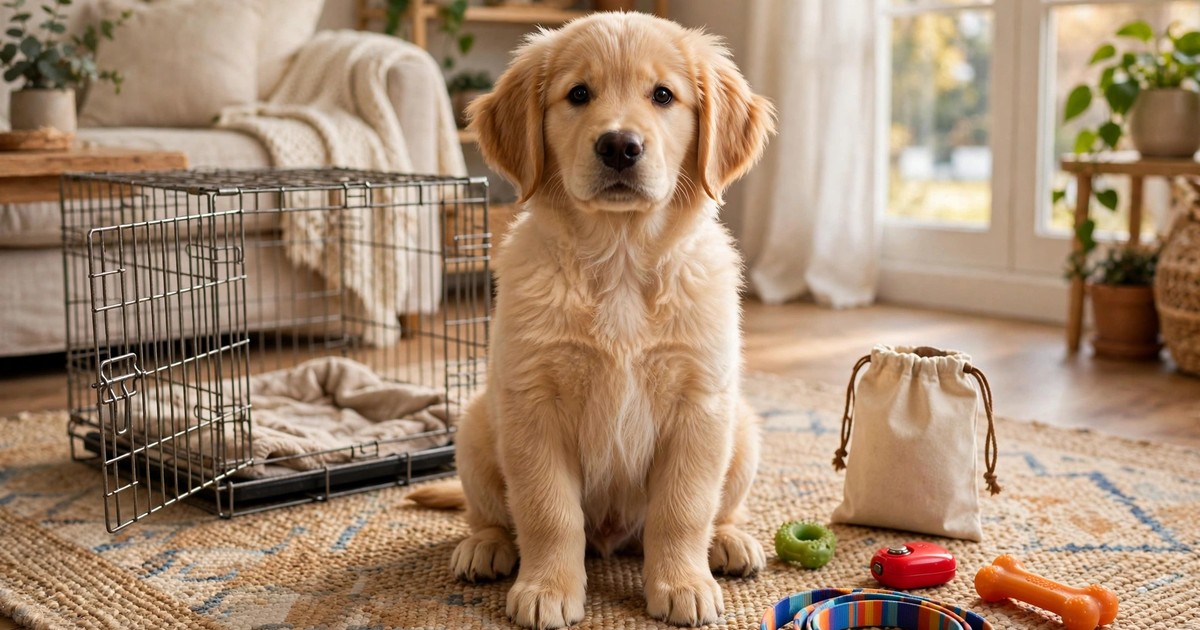
1. A Properly Sized Crate (~$35–$60)
The crate is the single most important training tool you'll buy. It gives your puppy a safe den, makes house training dramatically easier, and keeps a curious pup out of trouble when you can't supervise. Choose a crate big enough for your puppy to stand, turn around, and lie down — many models come with a divider panel so the crate grows with your puppy. For more on how crates fit into your first week together, our holiday pet travel checklist also covers safe-crate travel setups.
2. A Flat Collar and ID Tag (~$12–$20)
Skip the fancy harnesses for now — a simple flat collar that fits snugly (two fingers of room) plus an ID tag with your phone number is all you need to start. Puppies grow fast, so buy the inexpensive one now and upgrade later.
3. A 6-Foot Training Leash (~$10–$18)
Standard leash length is six feet — long enough to practice recalls and loose-leash walking, short enough to keep control. A basic nylon or cotton webbing leash works perfectly; save the leather upgrade for year two.
4. Small, Soft Training Treats (~$8–$15)
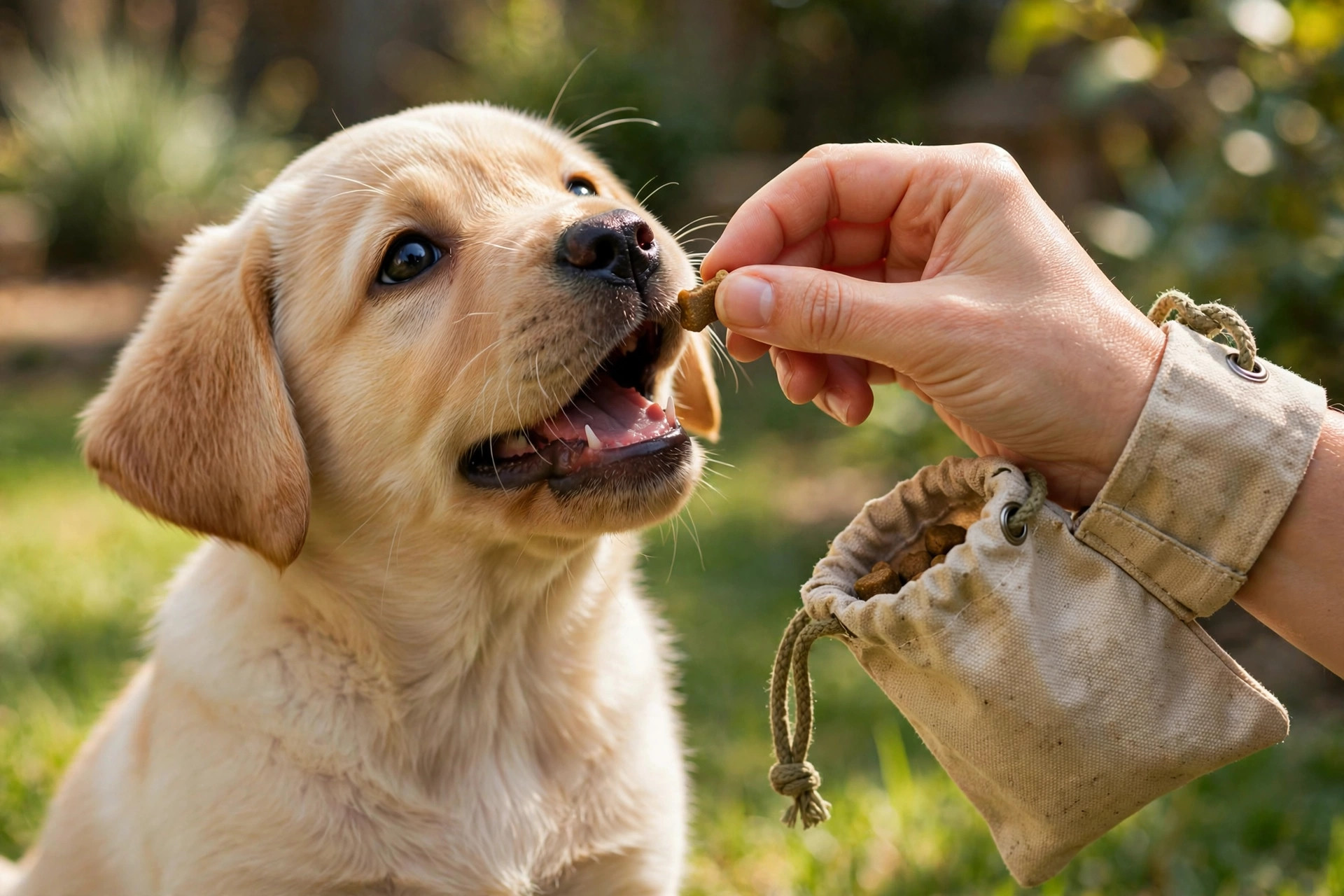
Training runs on treats, so buy small, soft, smelly ones your puppy can gobble down in a second. You can also use bits of plain cooked chicken or cheese from your kitchen as a free alternative. Pro tip: buy in bulk bags rather than tiny boutique pouches — same treats, half the price.
5. A Treat Pouch (~$8–$14)
A clip-on treat pouch keeps rewards at your hip and your pockets crumb-free. Any belt-clipped silicone or canvas pouch works; there's no need for the $30 "professional trainer" versions. This is one item trainers consistently call non-negotiable — fumbling in a plastic bag kills training timing.
6. A Clicker (~$3–$6)
The humble clicker is the cheapest, most effective training tool ever invented. That crisp click marks the exact moment your puppy does something right. Can't find one? A ballpoint pen click or a short word like "yes!" works as a free substitute while you wait for delivery.
7. Chew Toys — 2 or 3 (~$10–$20 total)
Puppies chew. It's not bad behavior; it's how they explore. Give them appropriate outlets — a rubber toy you can stuff, a rope toy, and one textured teether — and they'll bother your furniture far less. Rotate the toys every few days to keep them interesting.
8. Enzyme Cleaner (~$10–$16)
Accidents happen, especially in the first weeks. An enzyme-based cleaner actually breaks down the odor compounds that tempt puppies to return to the same spot — regular soap just masks the smell. One bottle lasts a surprisingly long time.
9. Puppy Pads (optional, ~$12 for a pack)
Useful mainly for apartment dwellers and very young puppies who can't hold it long. If you have quick outdoor access, you can skip pads entirely and save the money.
Budget-Smart Extras Worth Considering
Once the essentials are covered, these extras genuinely make training easier — if your budget allows.
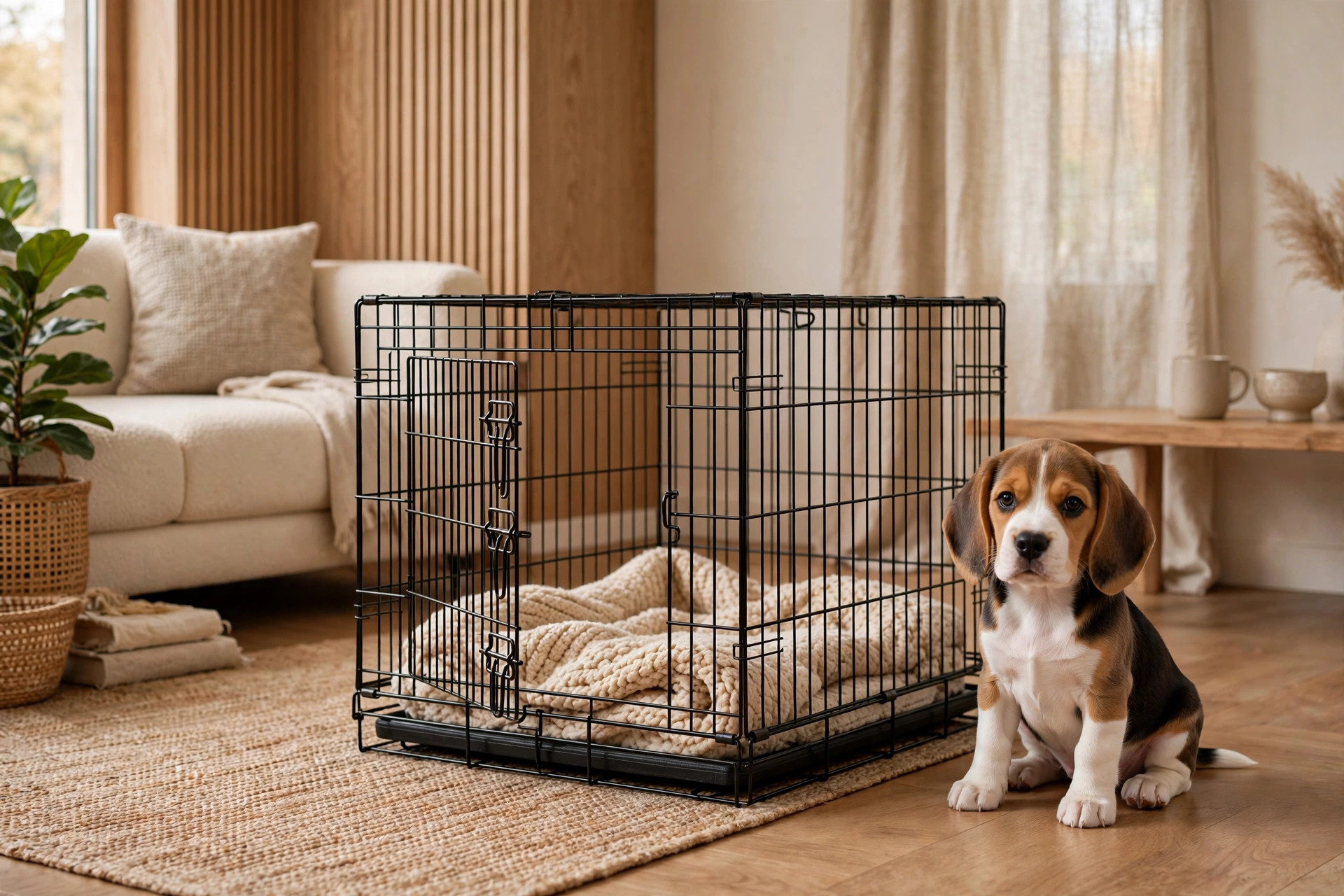
A Comfortable Crate Bed (~$15–$25)
A simple machine-washable crate pad makes the crate feel like a den instead of a cage. Puppies who love their crate settle faster — and a settled puppy trains better. Avoid expensive orthopedic beds until your puppy is past the chewing phase.
A Long Line for Recall Practice (~$12–$20)
A 20–30 foot long line lets you practice recall in parks and open spaces while keeping your puppy safe. It's one of the best-kept secrets of affordable training gear — a single long line replaces a dozen expensive "recall gadgets."
Puzzle Feeders (~$8–$18)
A simple puzzle feeder or snuffle mat turns mealtime into mental exercise. A tired brain is as important as tired legs for a young puppy, and these are far cheaper than most people expect.
A Baby Gate (~$20–$35)
Managing your puppy's access to the house is half the battle. A pressure-mounted baby gate from any big retailer works just as well as a "pet gate" that costs twice as much for the same hardware.
What You Can Skip (Save Your Money)
Pet stores are designed to make you buy more. These are the items new puppy owners most often regret purchasing:
- Expensive "puppy starter kits" — bundled gear at a premium price, usually with lower-quality individual items.
- Designer collars and outfits — adorable, but your puppy will outgrow them in weeks.
- Electronic training gadgets — no gadget replaces consistent, reward-based practice.
- Bulky toy collections — three good toys beat twenty forgotten ones.
- Premium grooming tools (for now) — a basic brush is plenty until the adult coat comes in.
If you want a deeper look at naming your new arrival while you shop, our list of 100 funny dog names trending in 2026 is a fun companion read.
Money-Saving Tips for Puppy Training Gear
- Buy the crate once: get one with a divider panel sized for the adult dog — no need to buy twice.
- Check secondhand first: crates, gates, and exercise pens are widely available used and sanitize easily.
- DIY the rest: old t-shirts make great tug toys, a muffin tin with tennis balls works as a puzzle feeder, and cardboard boxes are free enrichment.
- Subscribe wisely: treat and chew subscriptions can save 10–15%, but cancel anything your puppy doesn't love.
- Ask your vet's office: many clinics hand out free training handouts and starter samples.
For authoritative, science-based training guidance as you start, the AKC's puppy training resources and the ASPCA's dog care library are excellent free references. Cornell University's College of Veterinary Medicine also offers practical puppy-proofing and training tips grounded in veterinary behavioral science.
Your First-Week Training Supplies Timeline
You don't need everything on day one. Here's a sensible order:
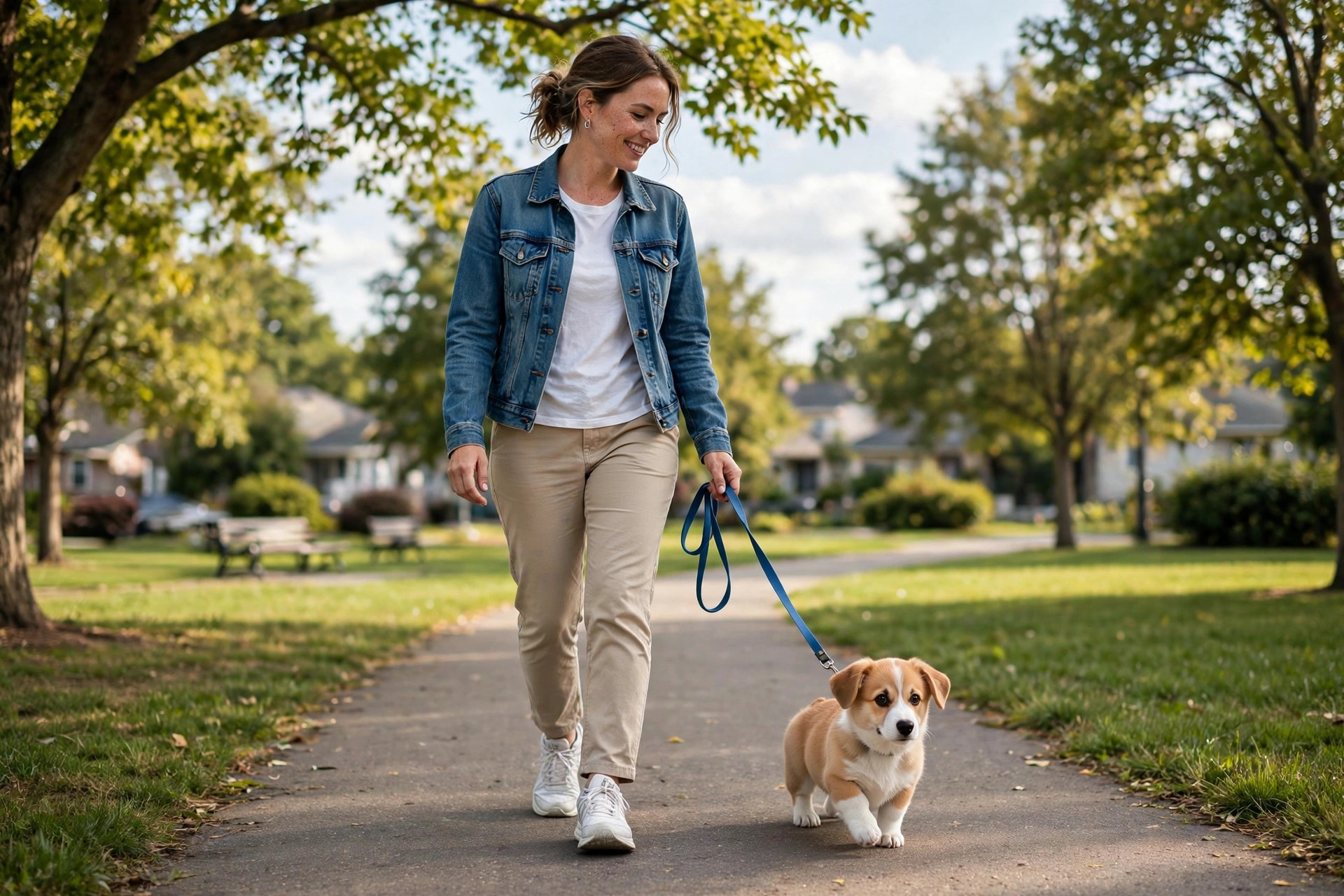
- Before pickup day: crate, collar + ID tag, leash, enzyme cleaner, a few chew toys, food and bowls.
- Day 1–3: start using treats, treat pouch, and clicker for name recognition and "sit."
- End of week 1: add the long line and puzzle feeder once your puppy knows their name.
- Week 2+: baby gate and crate bed as routines settle in.
Spreading purchases over two weeks also spreads the cost — and stops you from buying things you'll never use.
Frequently Asked Questions
How much should I budget for puppy training supplies?
Most new owners spend $90–$180 on a complete training setup. A bare-bones kit with a crate, collar, leash, treats, clicker, and chew toys can come in under $100, especially with a few secondhand finds.
Can I train a puppy without a clicker?
Absolutely. A clicker is convenient, but a consistent marker word like "yes!" works just as well. The key is marking the correct behavior within a second or two, whichever tool you choose.
What size crate do I need for my puppy?
Big enough for your puppy to stand up, turn around, and stretch out lying down — no bigger for house training purposes. Buying a crate sized for the adult dog with a divider panel is the most economical choice.
Do I really need puppy pads?
Not necessarily. If you can take your puppy outside frequently, skip them. They're most useful for high-rise apartments or very young puppies with tiny bladders.
How long do puppy training supplies last?
Consumables like treats last a few weeks; durable gear like crates, gates, and long lines last for years. Budget collars and leashes get replaced as your puppy grows — usually once or twice in the first year.
What's the single best investment for a new puppy owner?
The crate, without question. It supports house training, prevents destructive chewing, and gives your puppy a safe space — all for around $40.
Conclusion
Training a puppy doesn't require a fortune — it requires the right handful of tools and the consistency to use them. With this budget-friendly puppy training supplies checklist, you're set up for the first critical weeks for well under $150, with a clear upgrade path as your puppy grows.
Ready for the next step? Once the gear is sorted, find out exactly how old your puppy is in human years with CalcPet's free puppy age calculator — it's a fun way to track milestones as training progresses. And for more budget-minded pet guides, browse the rest of the CalcPet blog.