Your puppy is coming home. You're excited, nervous, and possibly questioning your life choices at 3 AM when the crying starts. That's normal.
The first week sets the tone for everything — house training, sleep, bonding, and your own sanity. Here's a day-by-day survival guide plus the complete supply checklist.
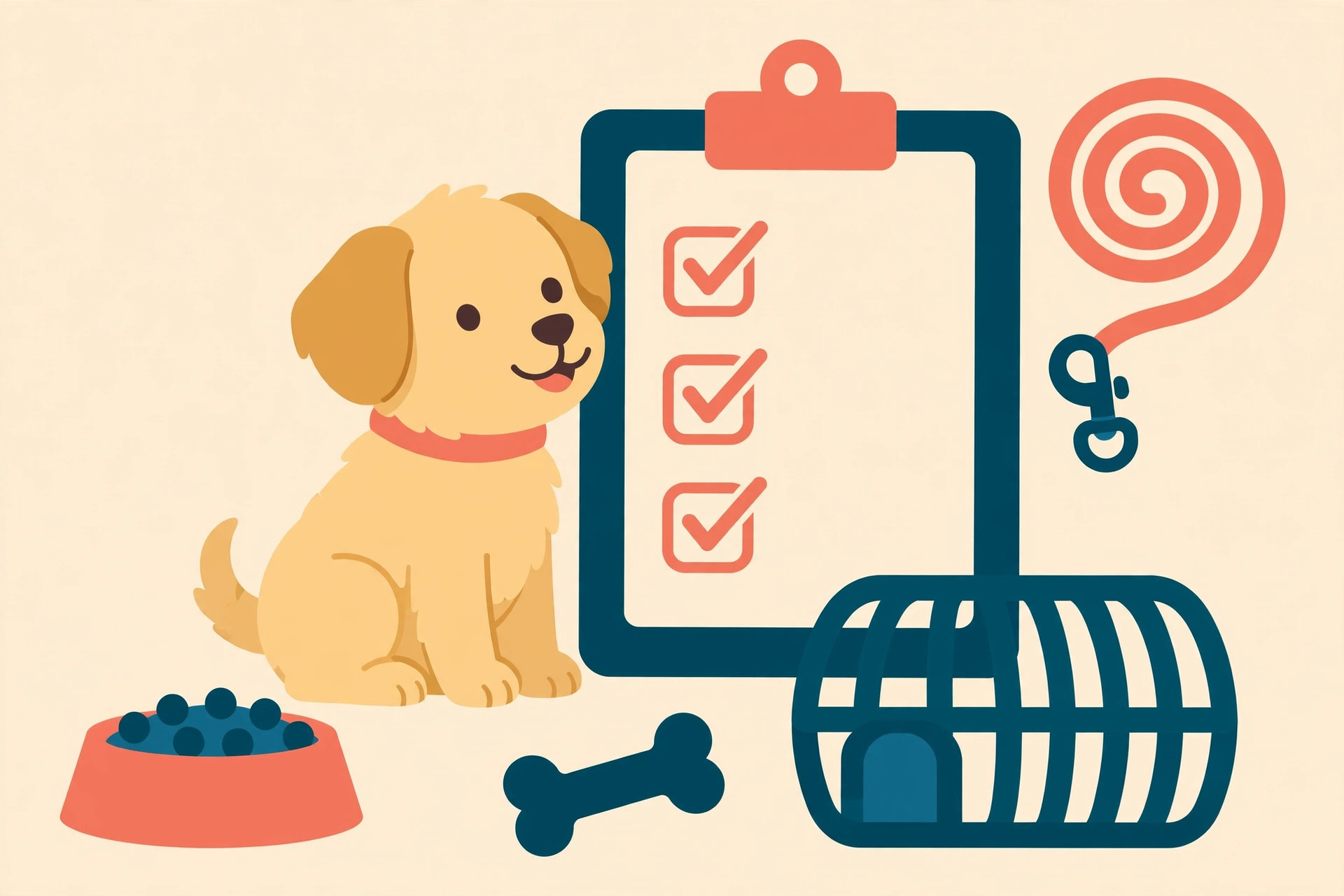
Before Puppy Comes Home: The Supply Checklist
Get all of this before pickup day. Shopping with a new puppy in tow is a special kind of chaos.
- Crate with a divider panel ($40–$120) — sized for adult weight
- Food — the exact brand the breeder or shelter was feeding, enough for two weeks
- Food and water bowls — stainless steel or ceramic ($10–$30)
- Collar, ID tag, and leash ($25–$50)
- Bed or crate pad — washable ($25–$50)
- Baby gates or an exercise pen ($30–$80)
- Chew toys — at least 4–5 sturdy ones ($20–$40)
- Training treats — small, soft, smelly ($10–$15)
- Enzyme-based cleaner ($10–$20) — the only cleaner that truly removes accident odor
- Poop bags — buy in bulk ($10–$15)
- Grooming basics — brush, nail clippers, puppy shampoo ($20–$40)
Want this as an interactive list you can check off on your phone? Use our free New Puppy Checklist tool — it tracks your progress and saves it automatically.
Day 1: Arrival Day — Keep It Boring
The biggest mistake new owners make is overstimulating the puppy on day one. No parade of visitors, no trip to the pet store, no "let's show everyone!"
- Take the puppy straight to the designated potty spot when you arrive home. Praise calmly when they go.
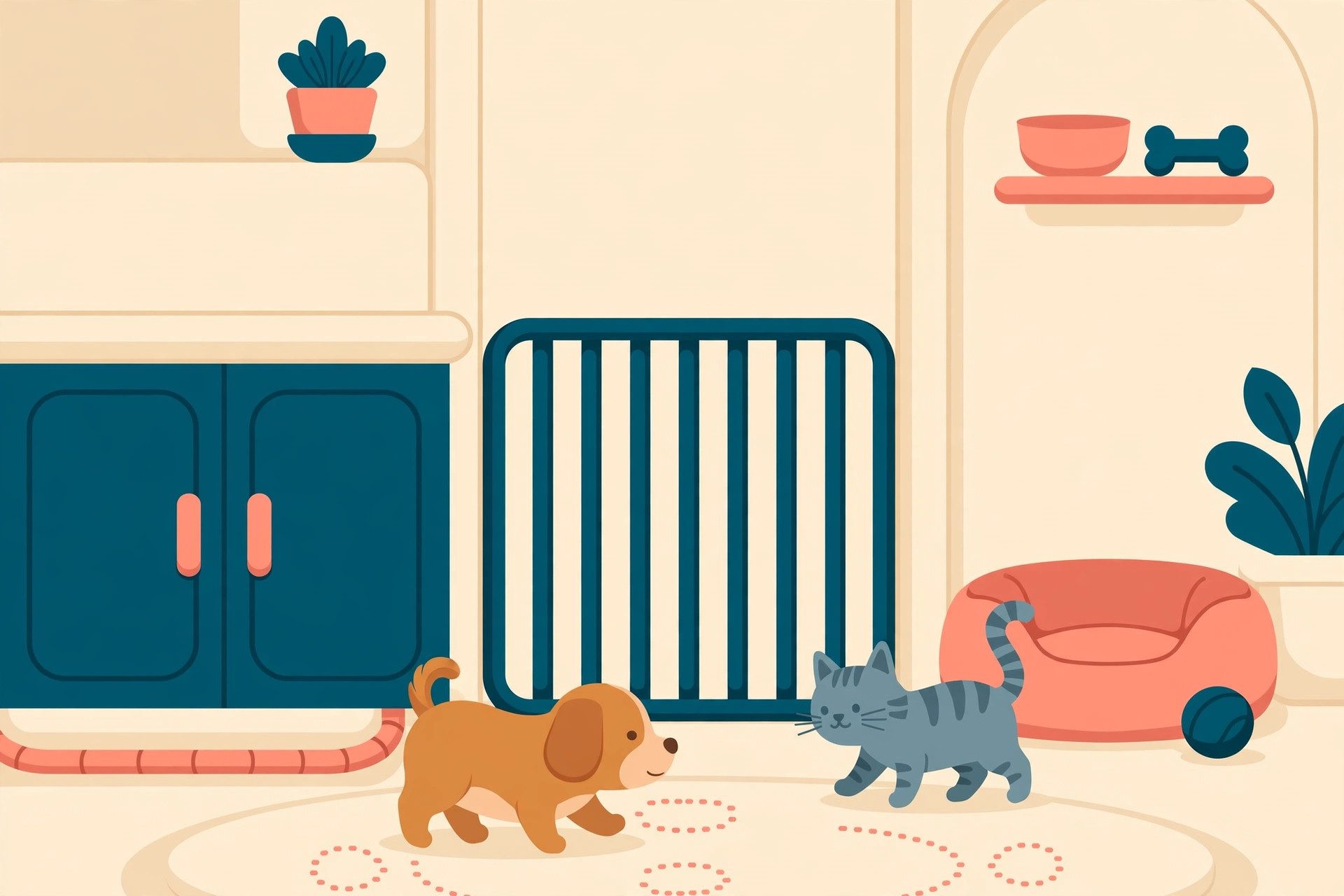
- Let them explore one room — not the whole house. Small world = less overwhelm.
- Show them the crate with treats inside. Don't shut the door yet; let it be a treat cave.
- Feed the same food, same schedule as before. Day one is not the day for diet experiments.
- Start the potty routine immediately: out after waking, after eating, after playing, and every 1–2 hours.
Days 2–3: Routine Is Everything
Puppies thrive on predictability. By day two, lock in a schedule:
- Morning: potty, breakfast, potty, play, nap in the crate.
- Midday: potty, lunch (young puppies eat 3x daily), potty, short training session (5 minutes max), nap.
- Evening: potty, dinner, potty, play, wind-down, last potty right before bed.
- Night: expect 1–2 wake-ups for potty. Set an alarm rather than waiting for crying — you'll both sleep better.
Start name recognition and "sit" with treats. Five-minute sessions, several times a day, always ending on a win.
Days 4–5: The Vet Visit and Socialization Windows
- Schedule the first vet visit within the first week if the breeder or shelter hasn't just done one. Bring all paperwork. This visit is about establishing care and getting your questions answered — write them down beforehand.
- Begin gentle socialization: different floor textures, household sounds (vacuum from another room), friendly visitors — one new thing at a time, always paired with treats.
- Practice brief crate sessions with the door closed while you're home. Build from 5 minutes upward.
- Start handling exercises: touch paws, ears, and mouth daily with treats. Future vet visits and nail trims will thank you.
Days 6–7: Settling In
By the end of week one, you should have:
- A consistent potty routine with fewer accidents than day one (progress, not perfection)
- A puppy who naps in the crate voluntarily at least some of the time
- Basic name recognition started
- A vet relationship established and next steps scheduled
- A sleep-deprived but bonded human
This is also the week to pet-proof your house room by room if you haven't yet — puppies find every hazard you missed within days.
5 First-Week Mistakes to Avoid
- Too much freedom too fast. An unsupervised puppy is a puppy rehearsing bad habits. Gates and leashes are your friends.
- Punishing accidents. It doesn't teach anything except to hide it better. Clean it, move on, take them out more often.
- Skipping the crate. Even if you plan to let the dog sleep in your bed eventually, crate training first gives you a management tool for life.
- Changing food on day one. New home + new food = stomach trouble. Transition over 7–10 days when you switch.
- Expecting too much. Your puppy is a baby in a strange place. Week one is about safety, routine, and trust — not obedience titles.
What Week One Costs
Most owners spend $250–$550 on setup before and during the first week. For the complete first-year money picture, see our first-year puppy cost breakdown or plan it precisely with the Puppy First-Year Budget Planner.
The First Vet Visit: What to Bring and Ask
Book this within the first 3–7 days. Bring:
- All paperwork from the breeder, shelter, or rescue — vaccination records, deworming history, microchip number.
- A fresh stool sample (your vet will tell you — it screens for common puppy parasites).
- A list of questions. The must-asks: what food and feeding schedule do you recommend, what's the vaccine timeline from here, when should we schedule spay/neuter, and what emergency clinic do you recommend for after hours?
Also ask about pet insurance while you're there — not for a sales pitch, but for timing. Many policies have waiting periods, so earlier enrollment means earlier coverage. It's a personal financial decision, but week one is the right time to make it deliberately rather than in a panic later.
Key Takeaways
- Buy all supplies before pickup day — shopping with a new puppy is miserable.
- Keep day one boring: one room, same food, immediate potty routine.
- Lock in a predictable schedule by day two; puppies run on routine.
- Get the first vet visit done in week one and start gentle socialization.
- Track everything with the interactive New Puppy Checklist and browse more planning tools in the Checklists & Planners hub.